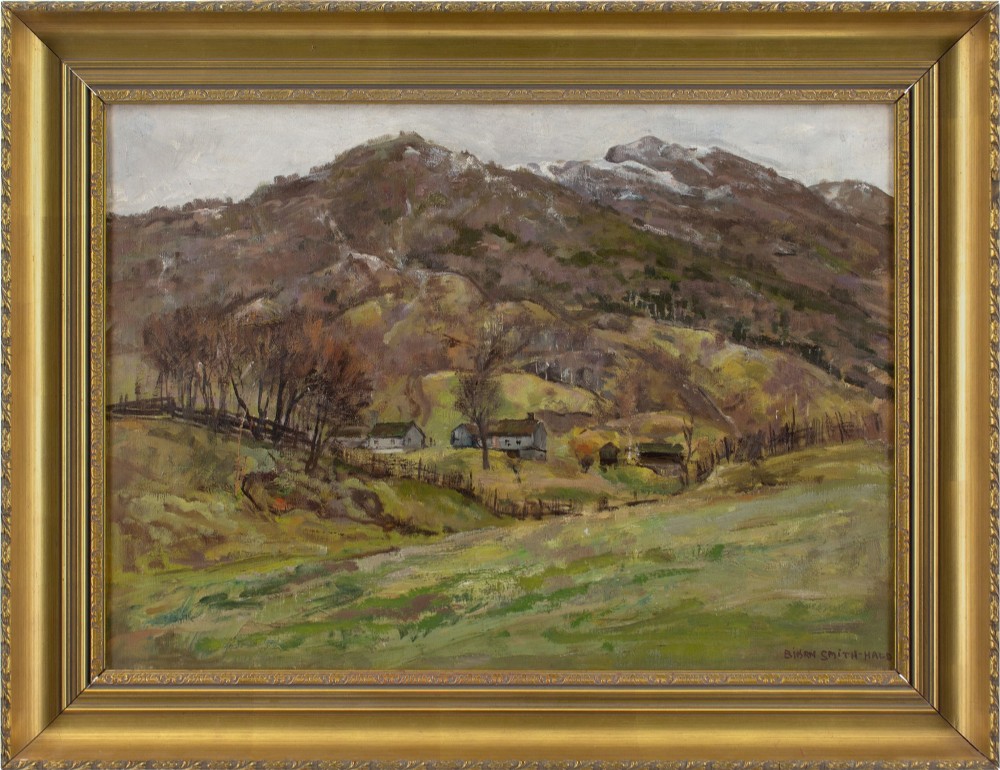
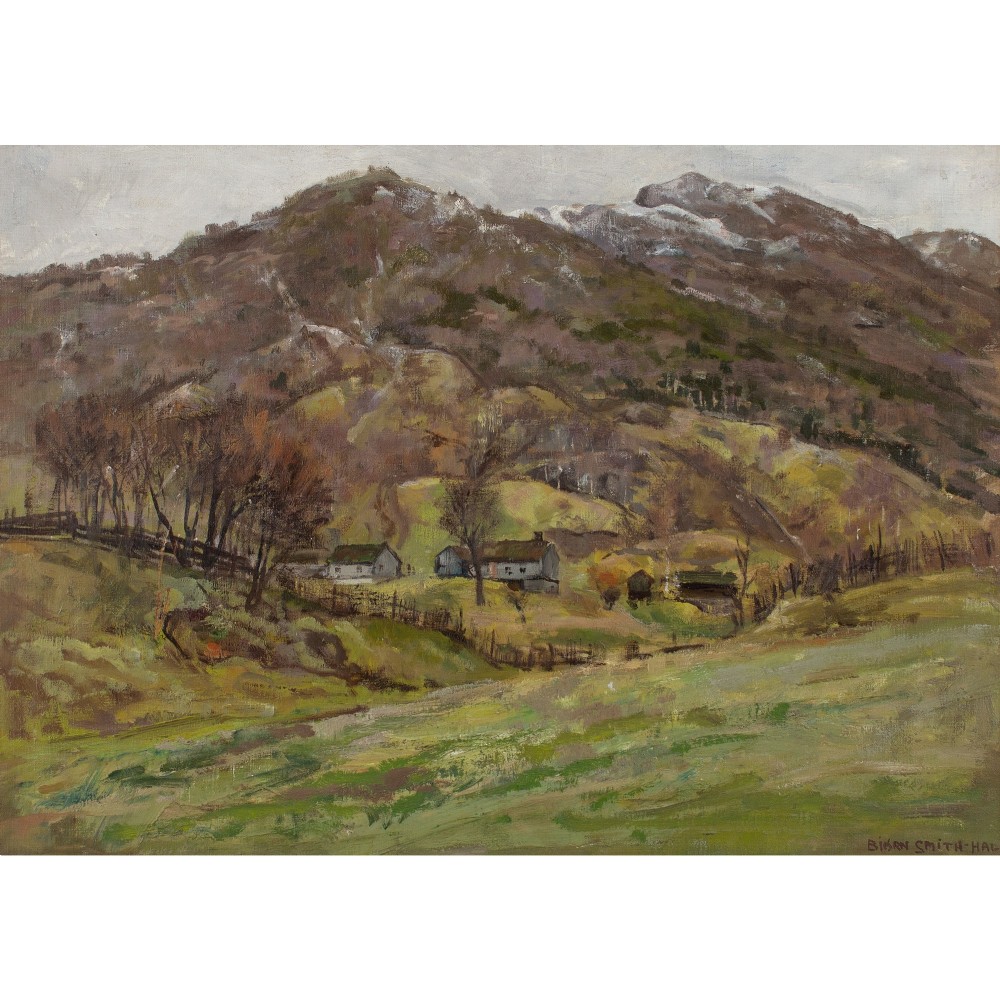
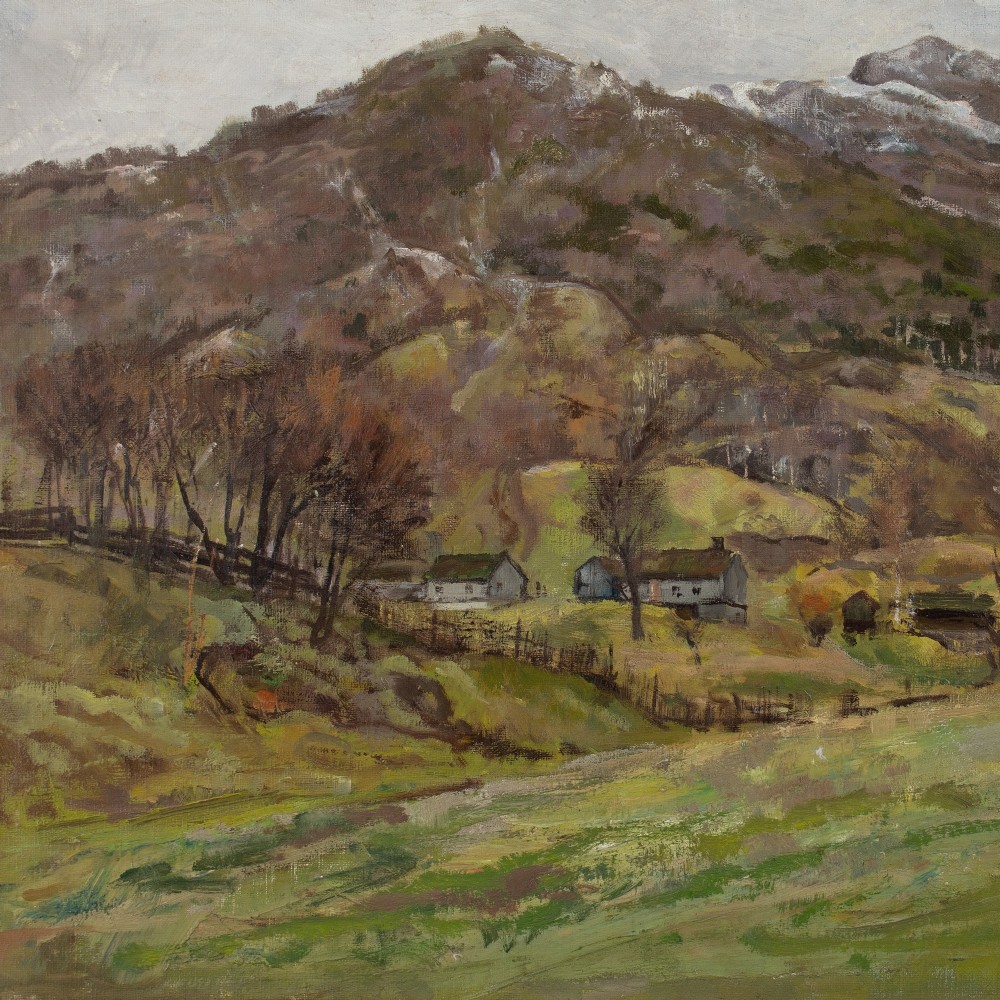
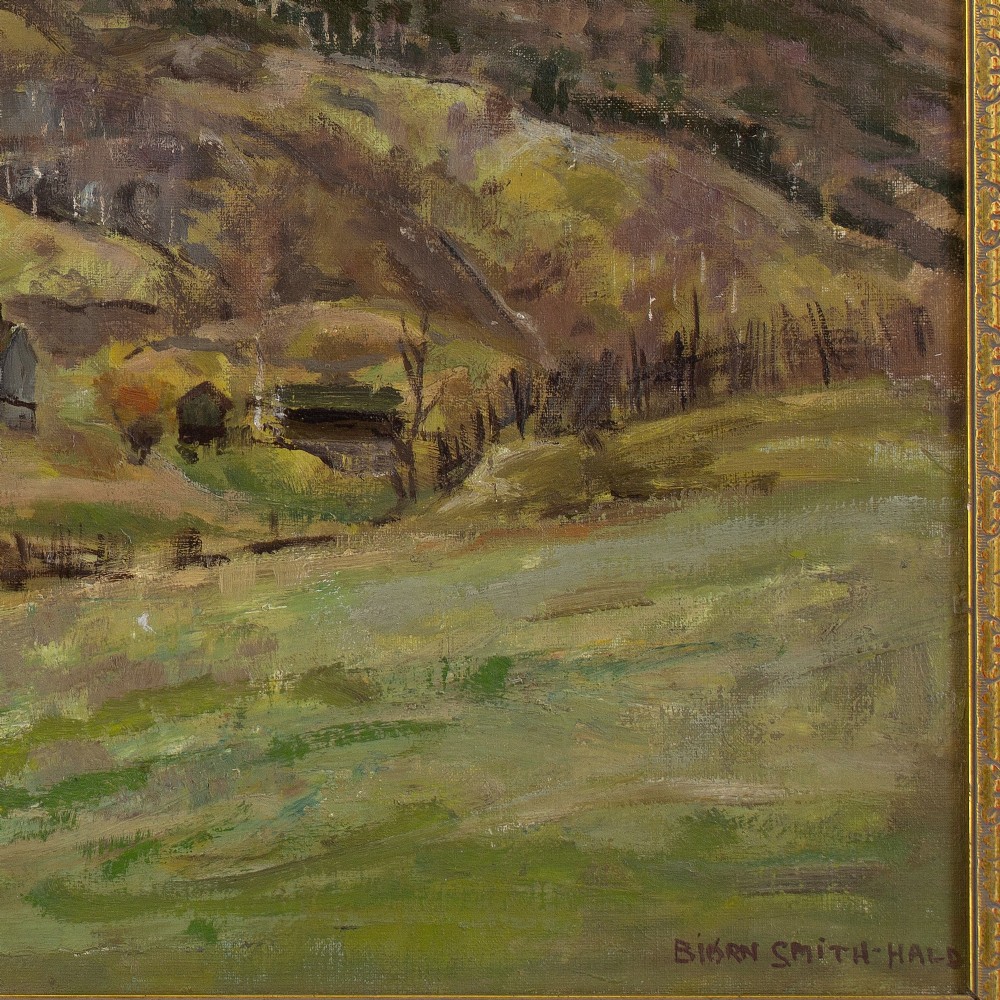
This early 20th-century oil painting by Norwegian artist Bjørn Smith-Hald (1883-1964) depicts a farm at the foothills of a mountain. Smith-Hald was a spirited painter of impressionistic landscapes and, later, expressionistic figurative works.
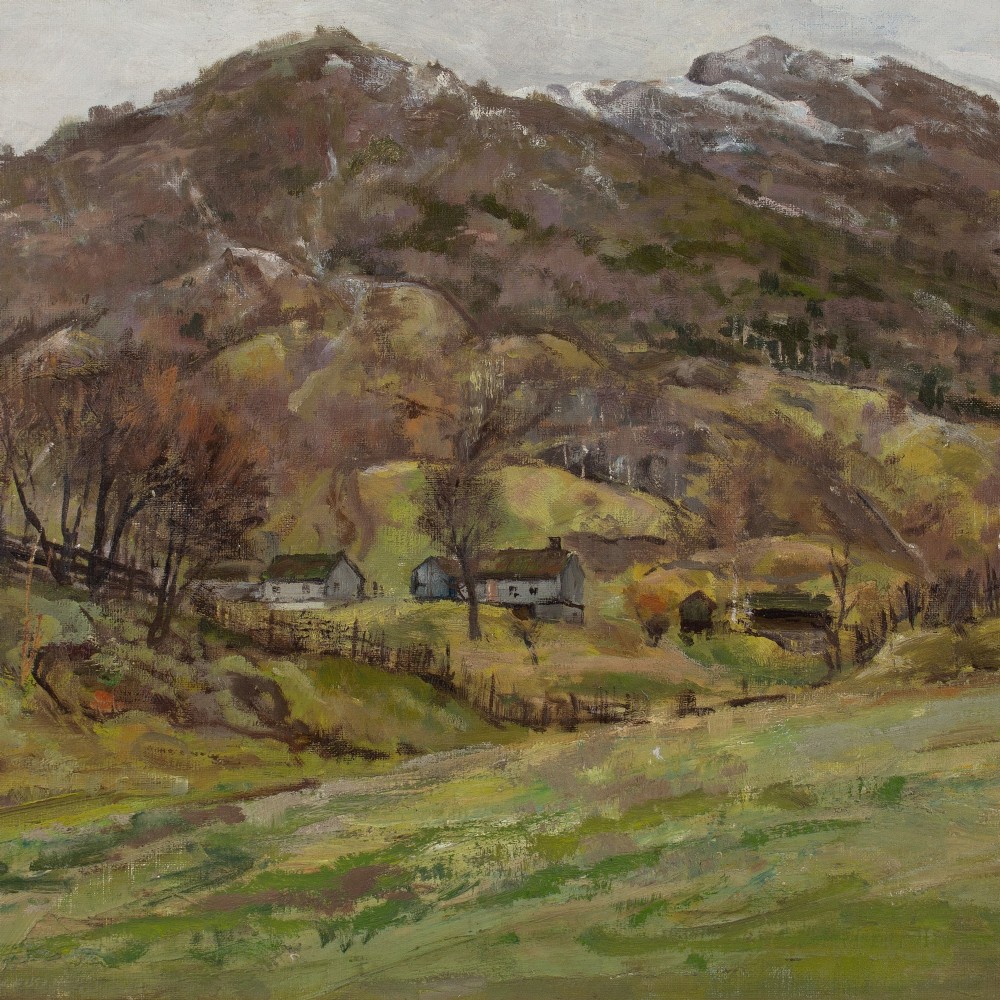
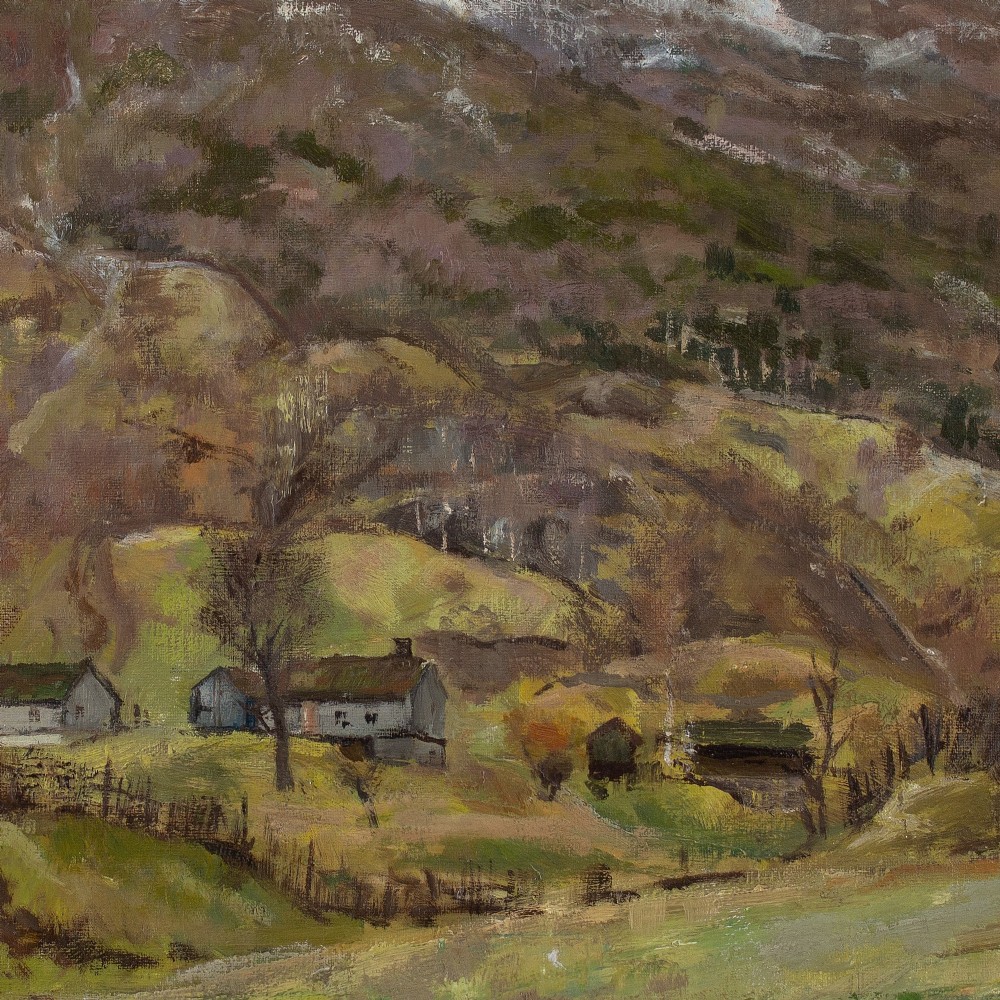
Farm buildings, partially obscured by trees, seem minuscule versus the epic snow-capped peaks. The trees are sinuous and barren, the grass perhaps freshly thawed. The chill in the air is palpable.
Born in Paris, Smith-Hald’s father, Frithjof Smith-Hald (1846-1903), was an esteemed landscape painter who became a key player in a Nordic colony of artists based in the French capital. Hence, his early years would’ve been particularly illuminating. By 1891, his family had returned to Norway and he undertook his education in Bergen before moving to Berlin and Antwerp due to the demands of his father’s career. In 1899, he settled in London where he trained as a shipbuilder like his brother.
However, the artistic life had captured his imagination
...and he soon returned home to work under the tutelage of his father. Smith-Hald Senior was a traditionalist who trained with Johan Fredrik Eckersberg (1822-1870), famed for his grand depictions of epic mountain ranges. By 1900, attitudes were changing, with the advent of post-impressionism in France, and it’s interesting to consider how the young aspiring mind of Smith-Hald Junior felt about his father’s approach.
Stylistically, Bjørn Smith-Hald''s approach was considerably different to his father’s and his landscapes represent a shift in thinking, from traditional academic beliefs to freer, more liberal, plein air studies. He evidently worked predominantly outside, amid the elements, to capture a simpler view of Norway that represented an unembellished truth.
He returned to Paris on numerous occasions including an extended spell from 1918-1919, when he produced an array of bright, impressionistic views, reminiscent of British painter Alfred Sisley (1839-1899). It’s conceivable that Sisley was a role model.
Over the next ten years, he travelled extensively, including sojourns to Denmark, Latvia, Sweden, Switzerland, Lithuania, Spain, Italy and Argentina, and was actively exhibiting until around 1933. For reasons unknown, he dropped off the map for around 26 years until being rediscovered by Per Aabel (1908-1993), who organised a solo show in Oslo. Inspired by Picasso, Edvard Munch and German Expressionism, his final works were expressive, figurative and often featured grotesque cave dwellers. How times had changed in fifty years of art.
He’s represented in various public collections including at the National Gallery in Oslo, Gothenburg Art Museum, the National Museum in Stockholm, and the National Museum in Warsaw.
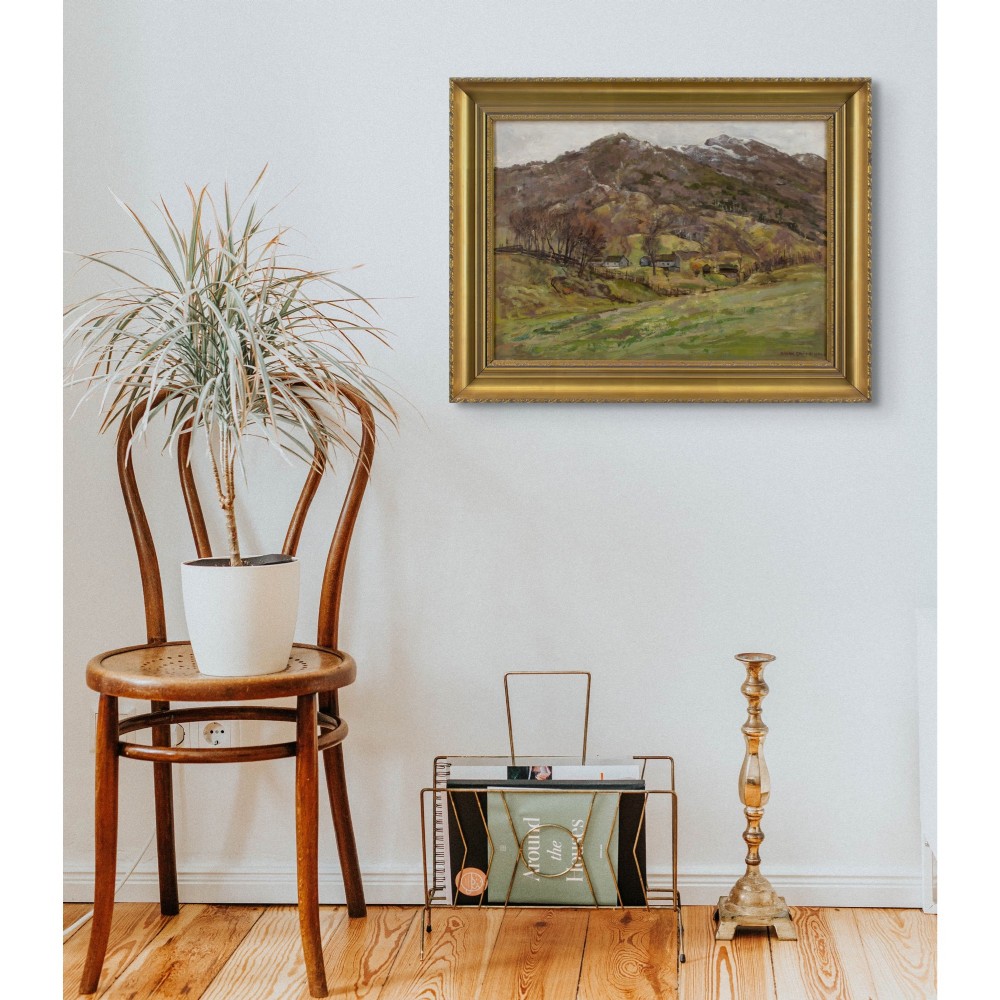
Signed in the lower right and held within a later frame.
Learn more about Bjørn Smith-Hald in our directory.
Medium: Oil on canvas
Overall size: 29½” x 23” / 75cm x 59cm
Year of creation: c. 1920
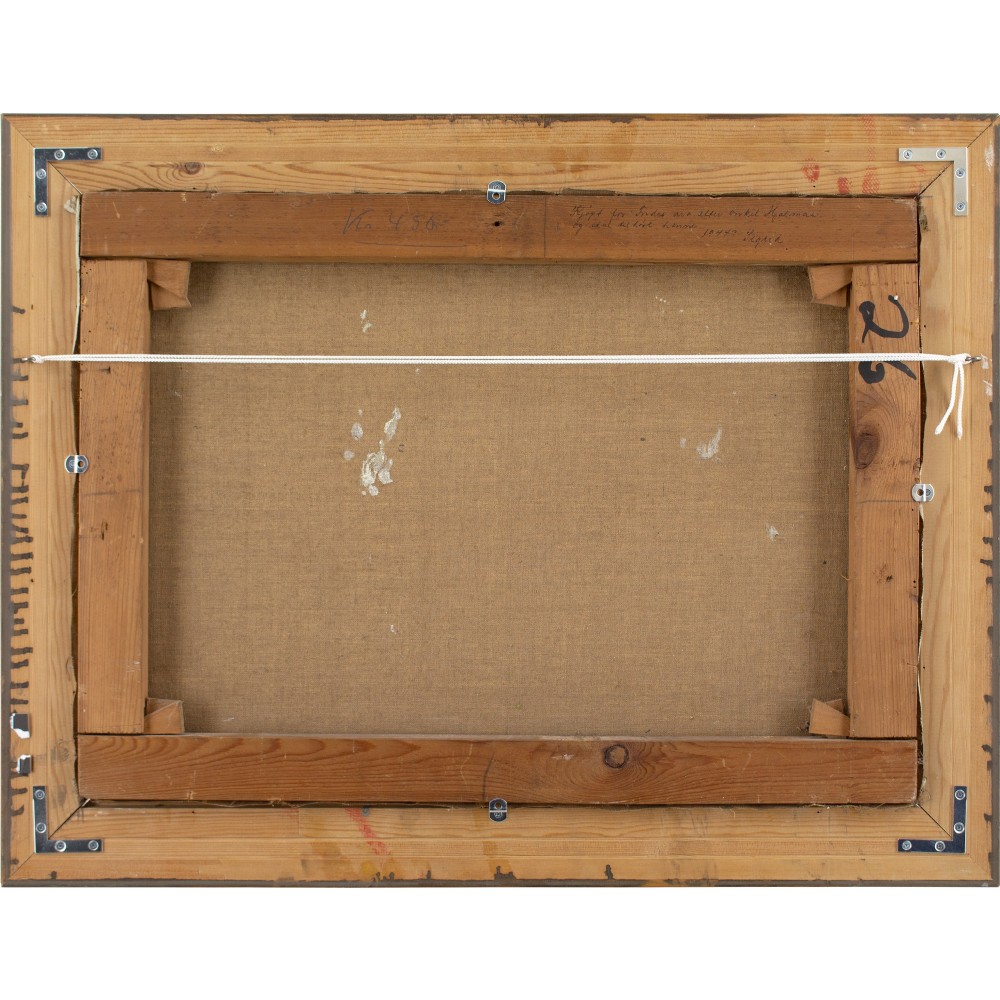
Labels & Inscriptions: Inscribed somewhat illegibly on the reverse with a date of 1944, which probably corresponds to when the painting changed hands.
Provenance: Private collection, Norway.
Condition: Cleaned. Frame with various marks and showing its age.
Artist’s auction maximum: £9,000 for ‘Les Pêcheurs’, Oil on canvas, Sotheby''s, 19th Century European Paintings, Drawings & Watercolours, London, 16 November 1994 (lot 163).
Our reference: BRV2074
Antique ID Number (AIDN): SA1132407
Dateline of this antique is 1920
Height is 59cm (23.2inches)Width is 75cm (29.5inches)Depth is 5cm (2.0inches)




Thank you.
Your comment has been sent to Sellingantiques.