Gill Coe Antiques & Interiors has dated this piece to the Victorian era.
The definitive version of the zoetrope, with replaceable film picture film strips, was introduced as a toy by Milton Bradley in 1866 and became very successful.
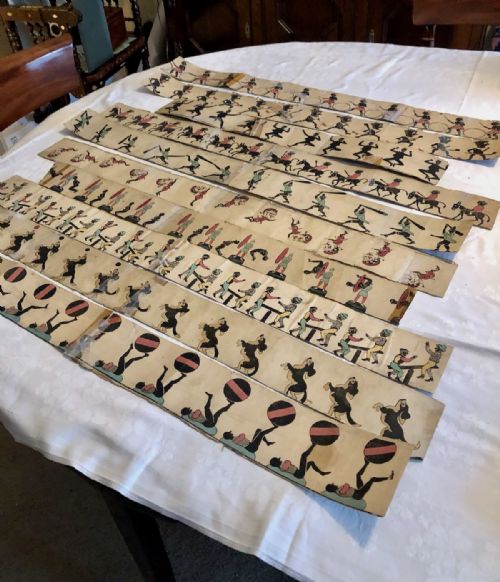
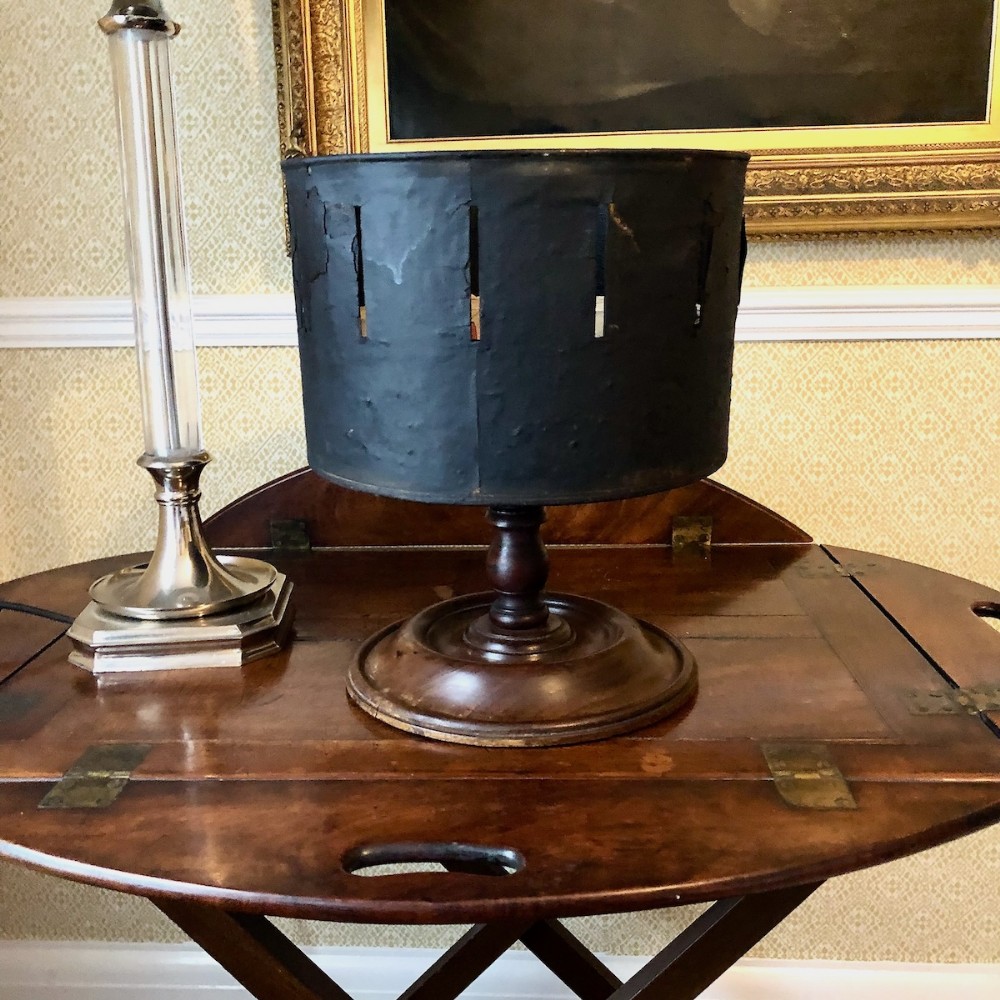
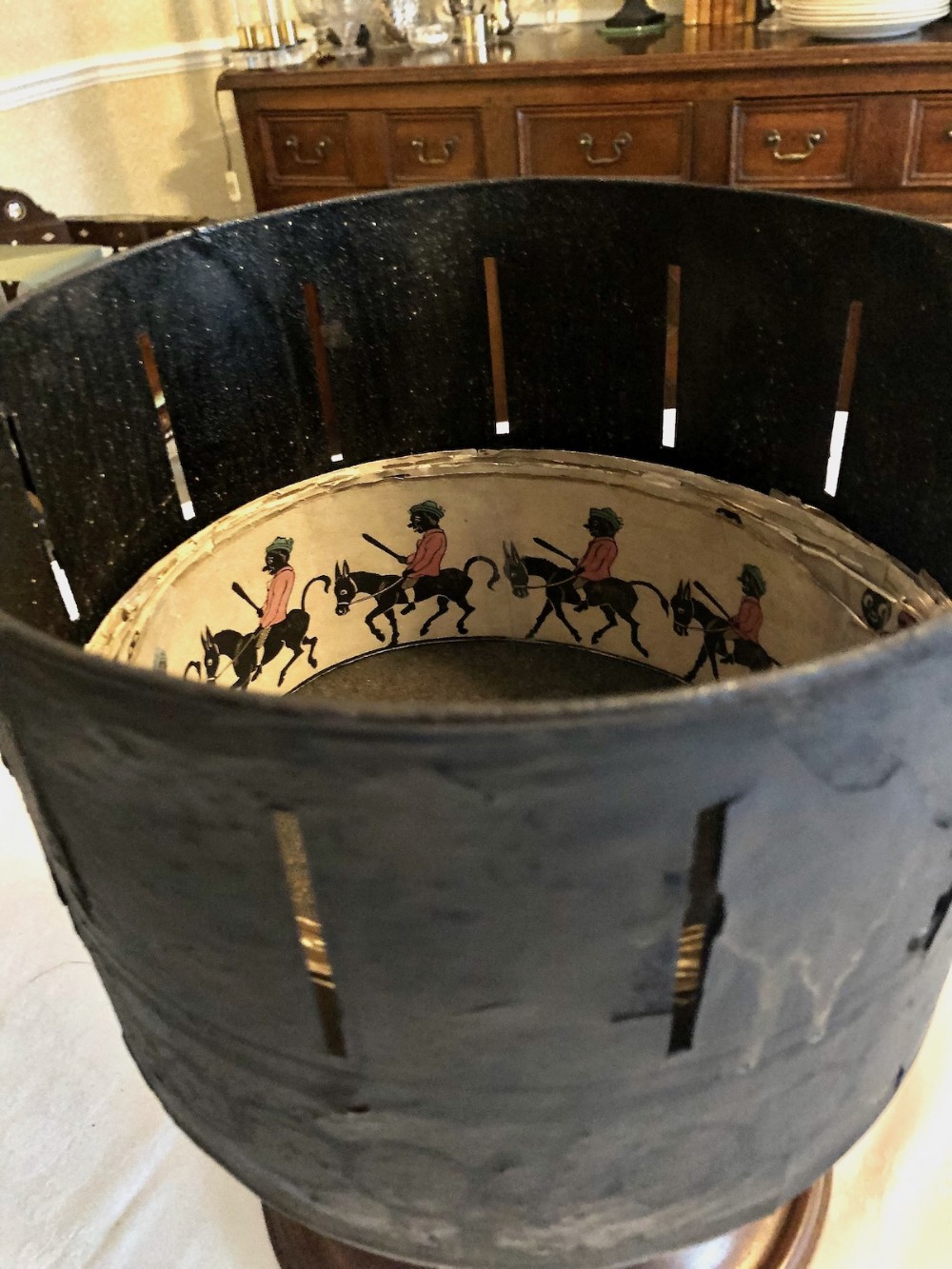
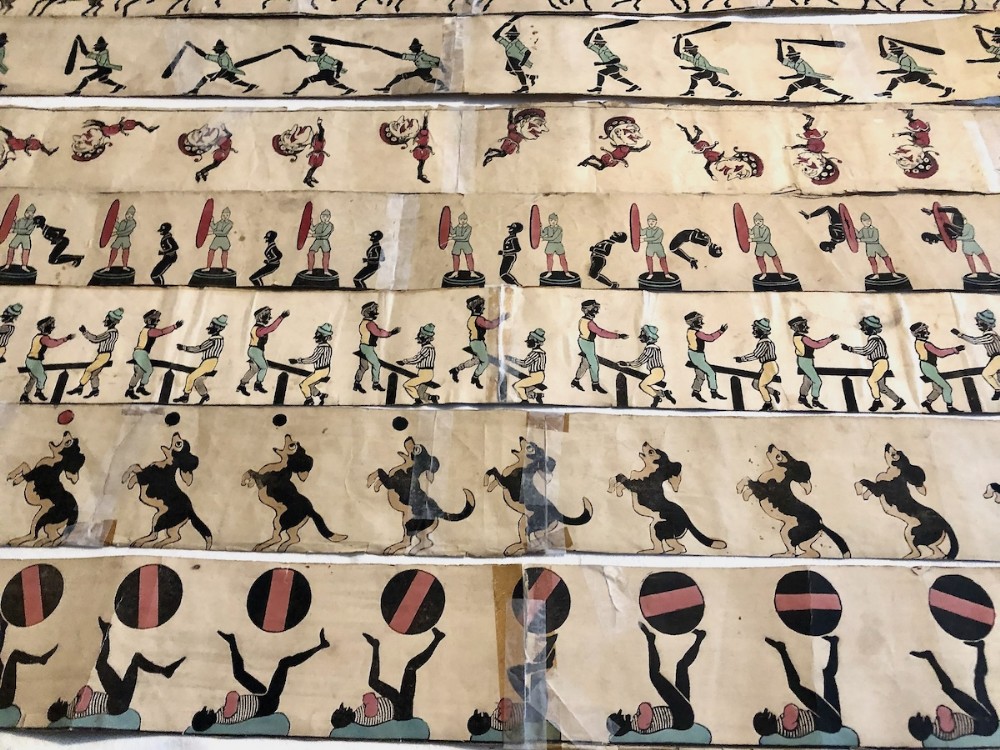
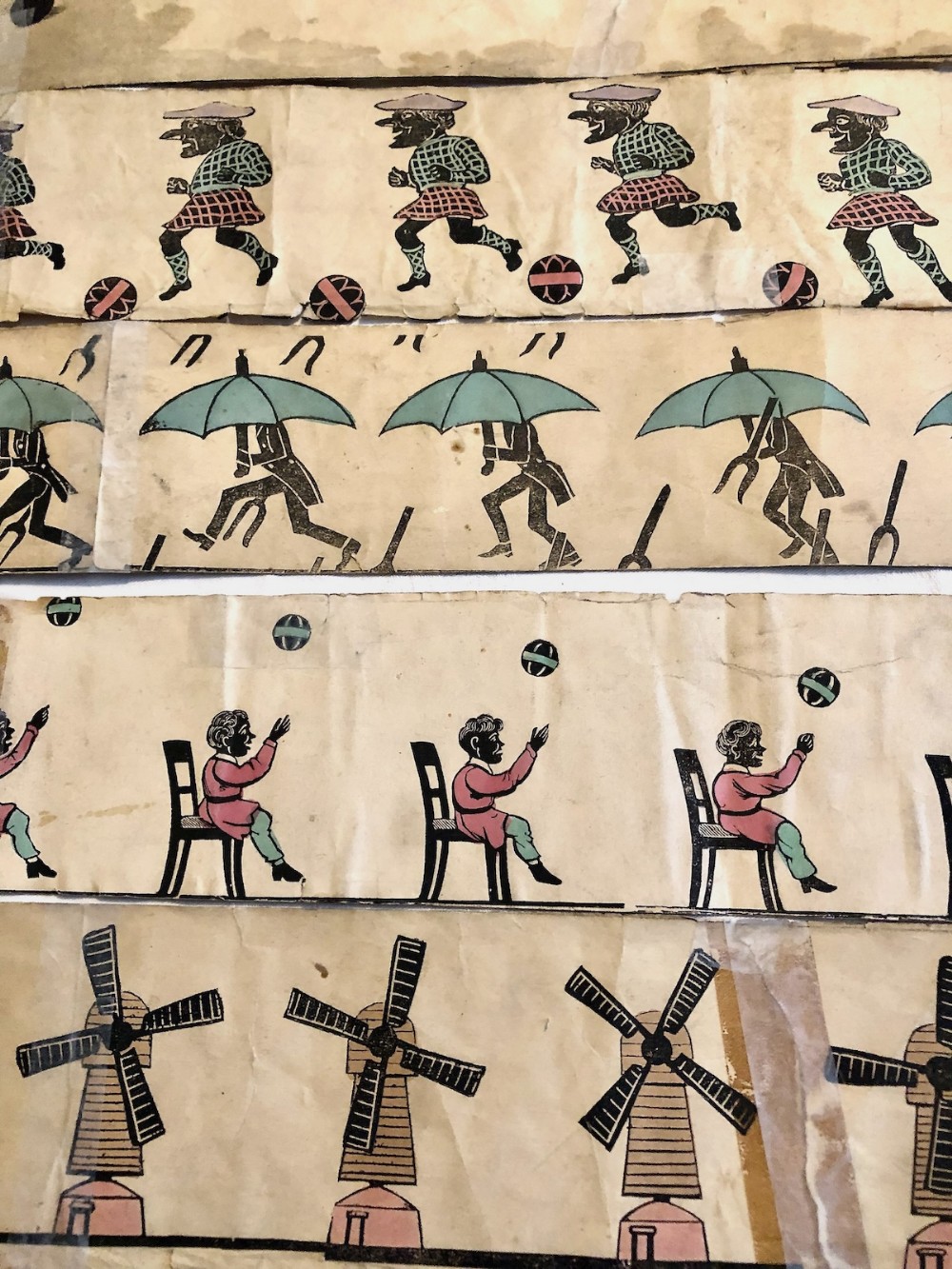
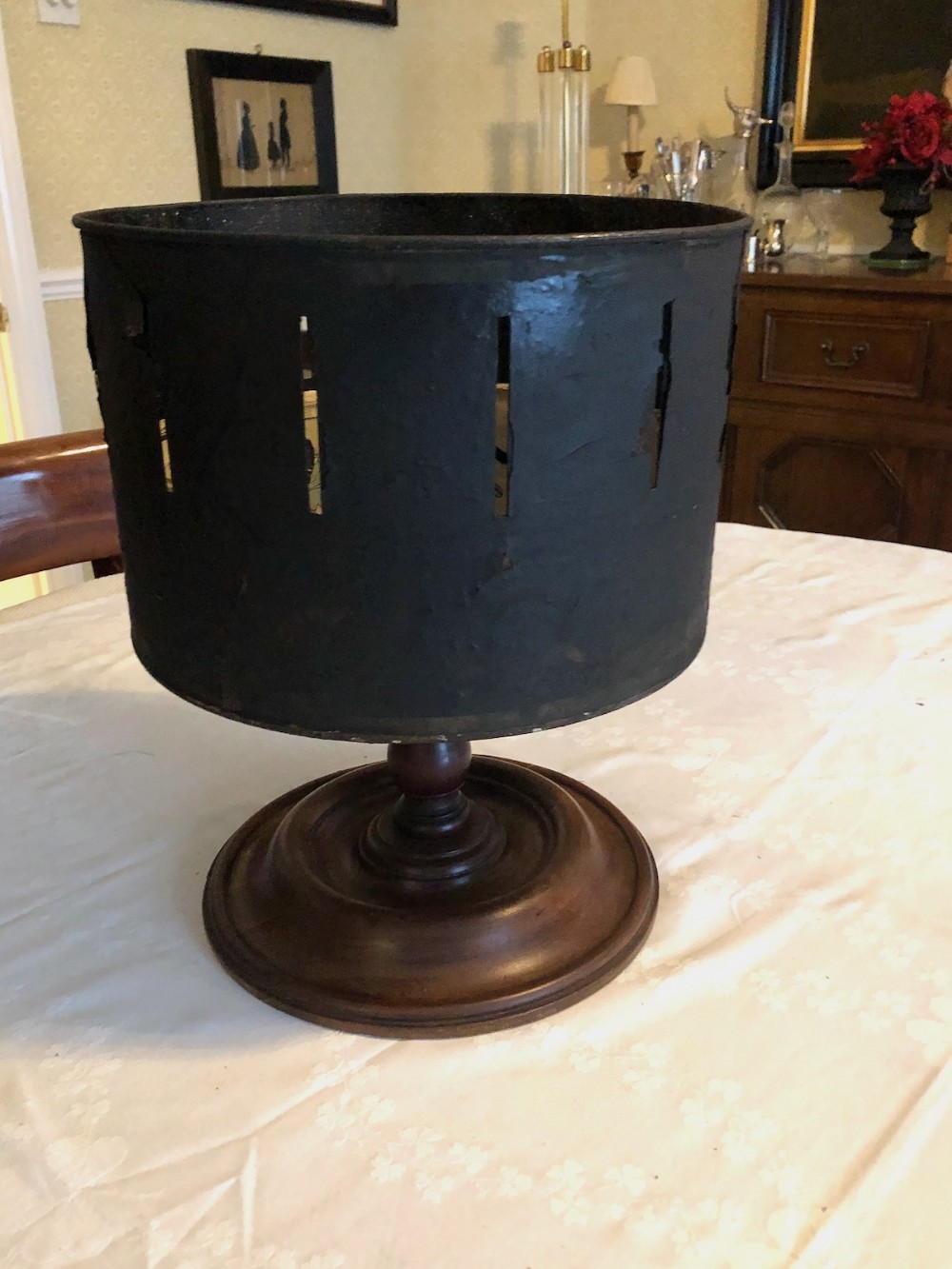
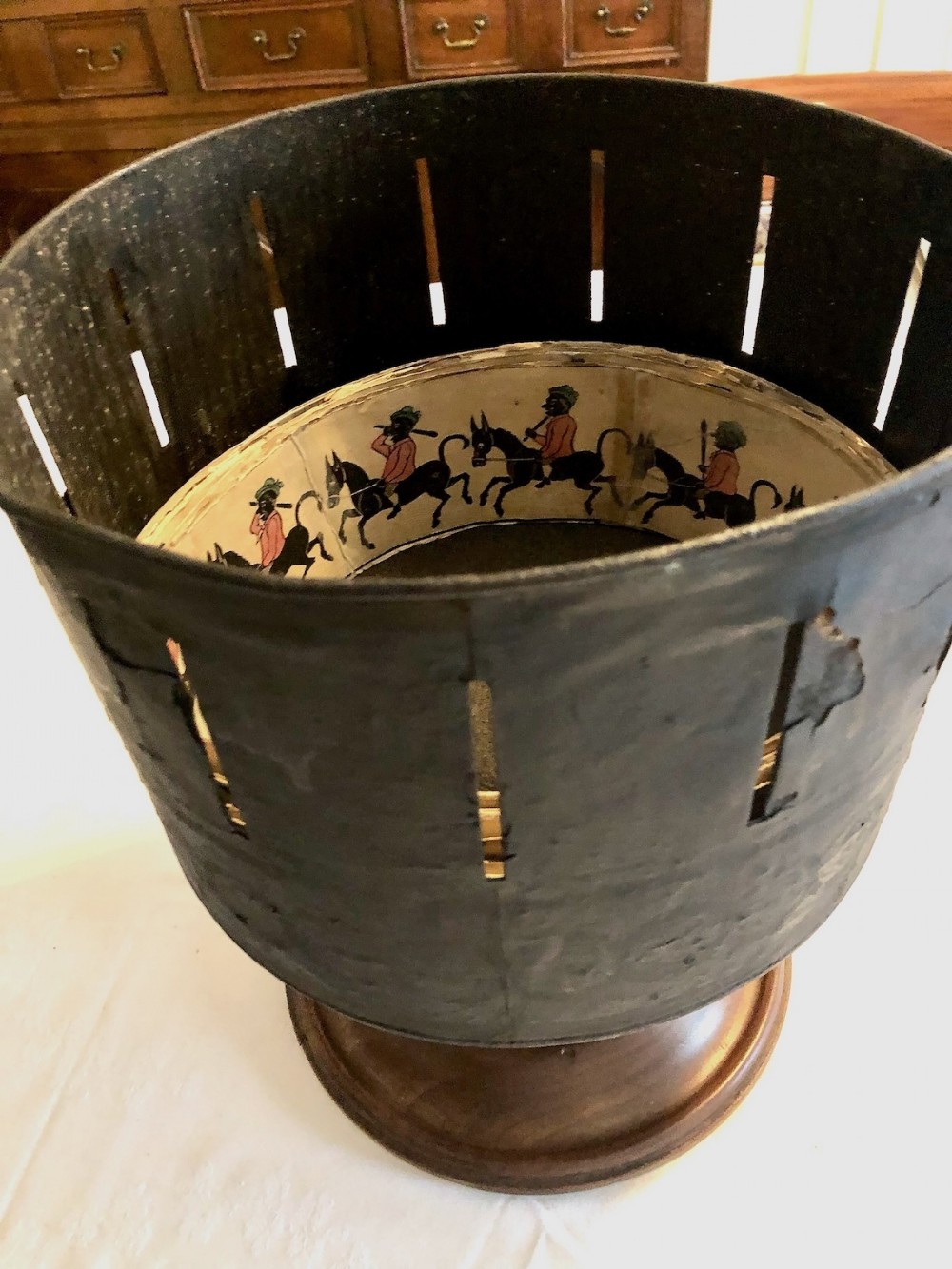
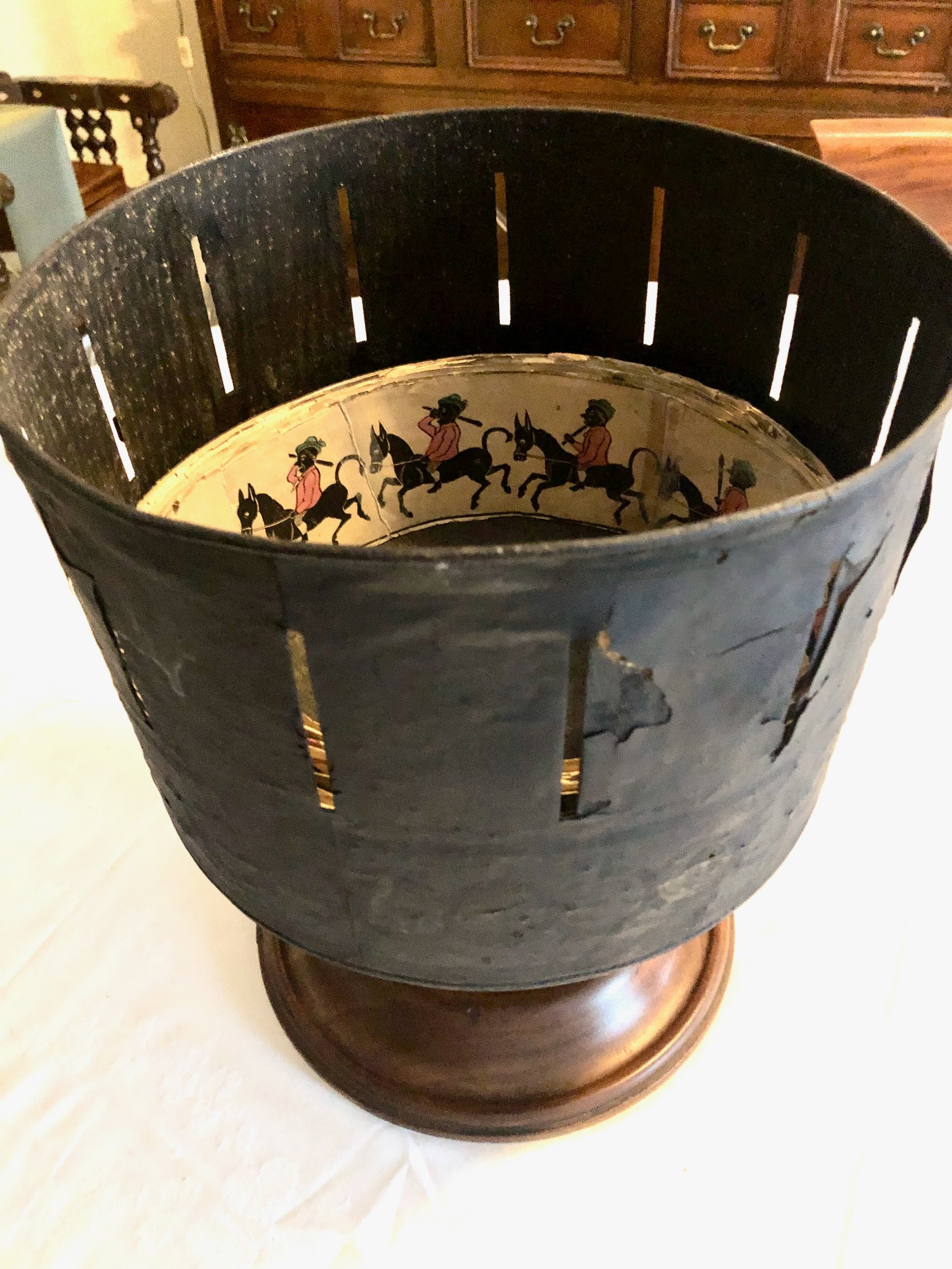
The zoetrope consists of a cylinder or drum with cuts vertically in the sides. On the inner surface of the cylinder is a band of paper strips with images from a set of sequenced pictures. As the cylinder spins, the user looks through the cuts at the pictures across. The scanning of the slits keeps the pictures from simply blurring together, and the user sees a rapid succession of images, producing the illusion of motion. The zoetrope works on the principle of its predecessor, the phenakistoscope, but is more convenient and allows the animation to be viewed by several people at the same time. The sequence of pictures depicting phases of motion is on a paper strip. For viewing, this is placed against the inner surface of the lower part of an open-topped metal drum, the upper part of which is provided with a vertical viewing slit across from each picture. The drum, on a spindle base, is spun. The faster the drum is spun, the smoother the animation appears.
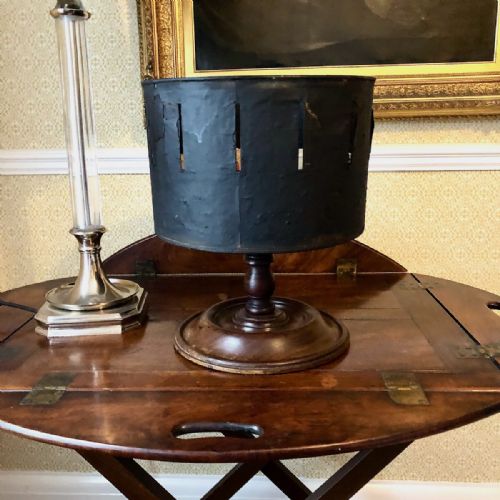
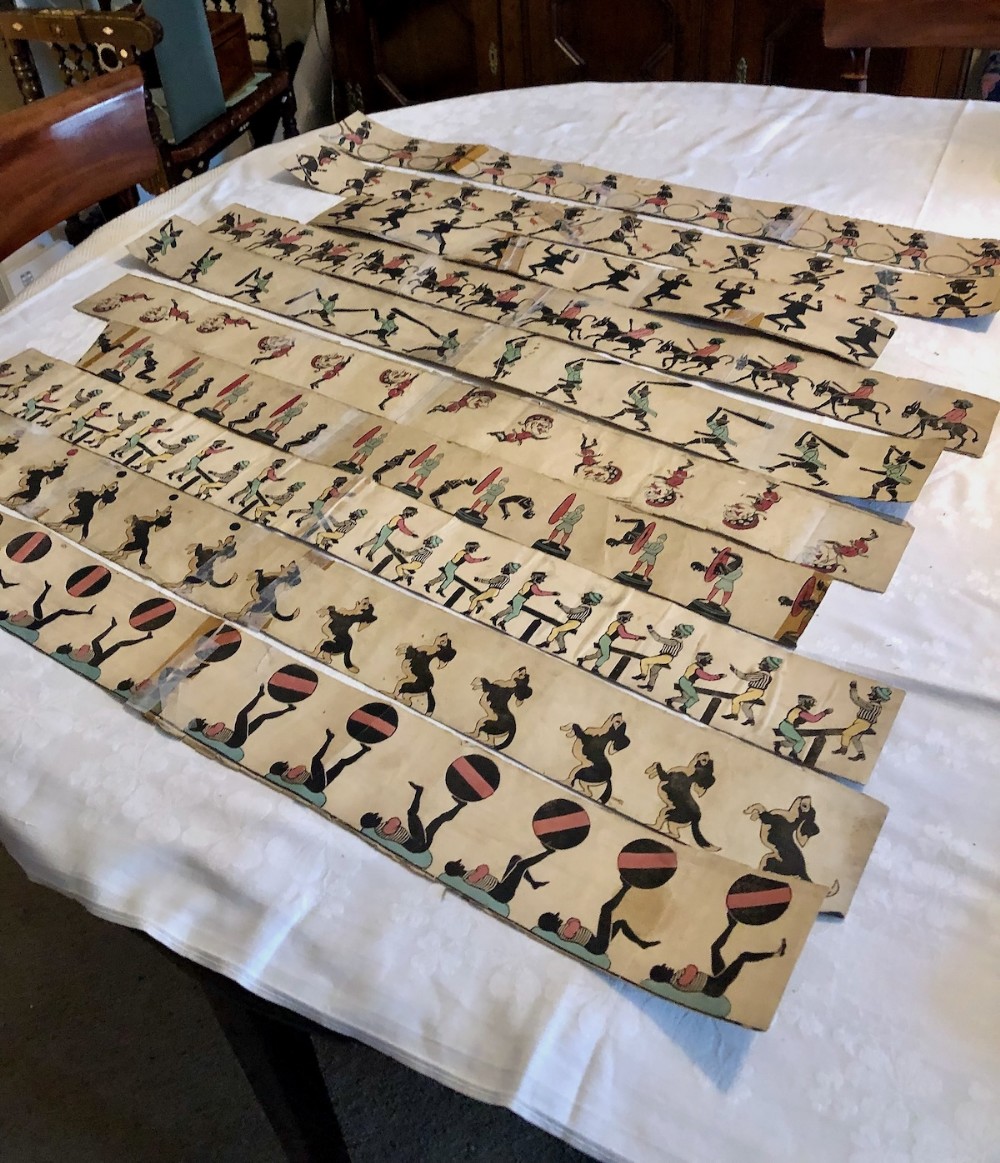
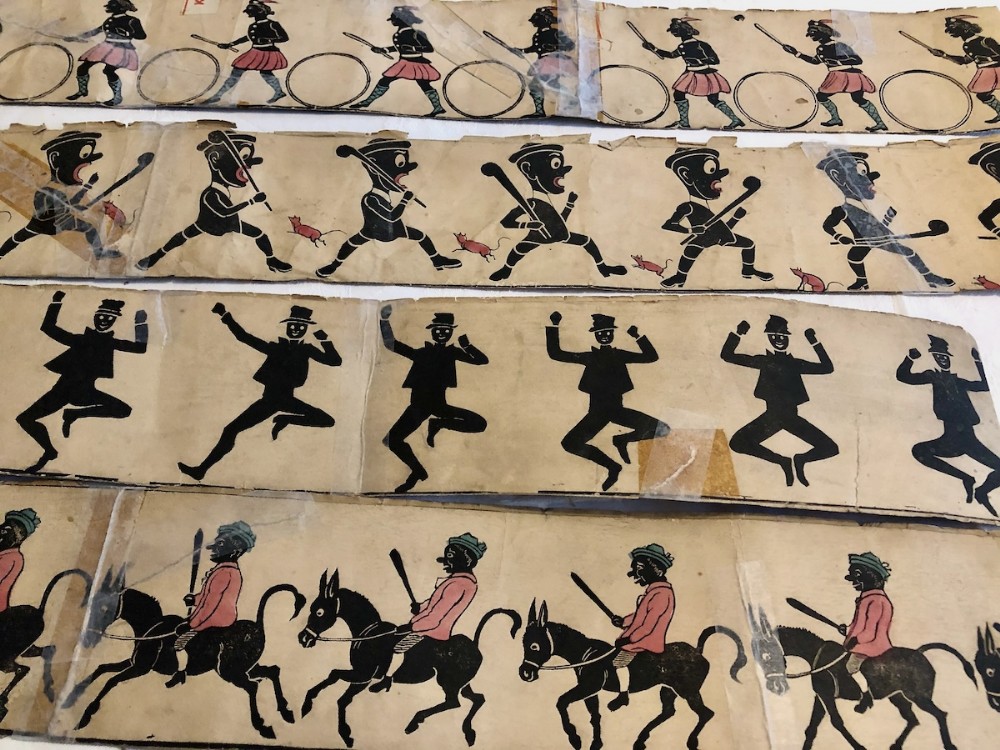
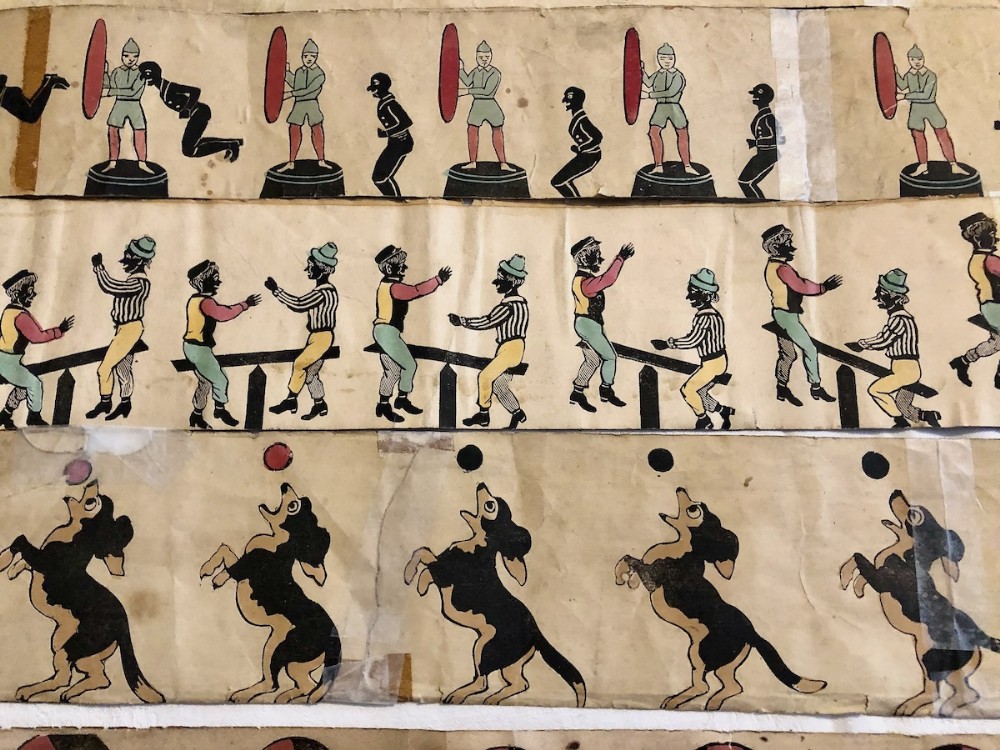
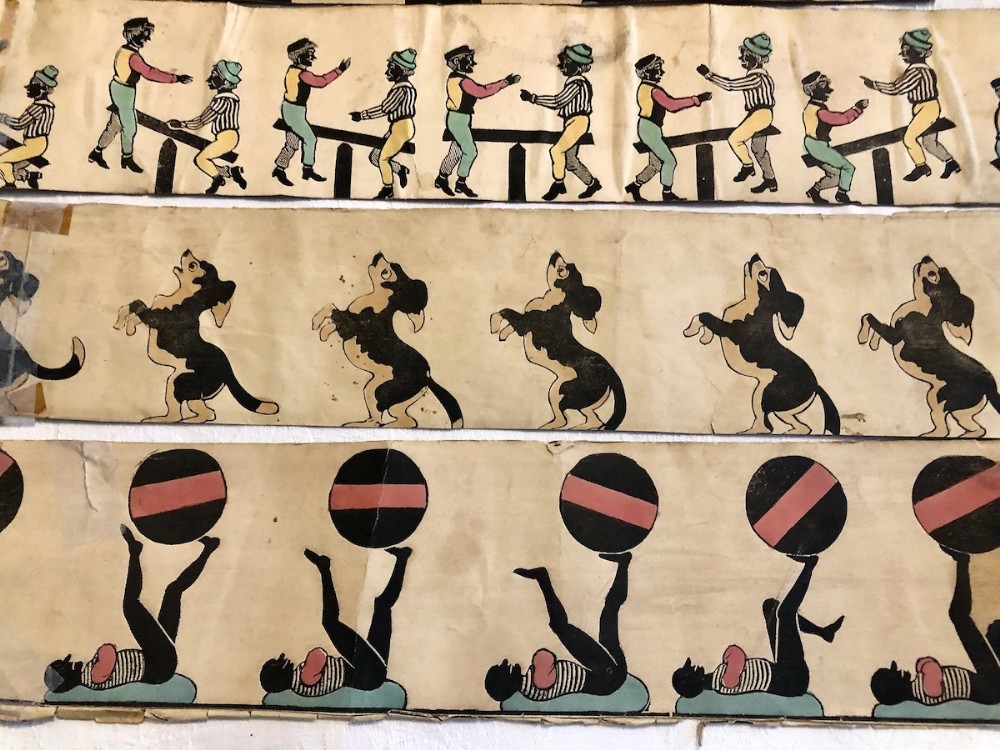
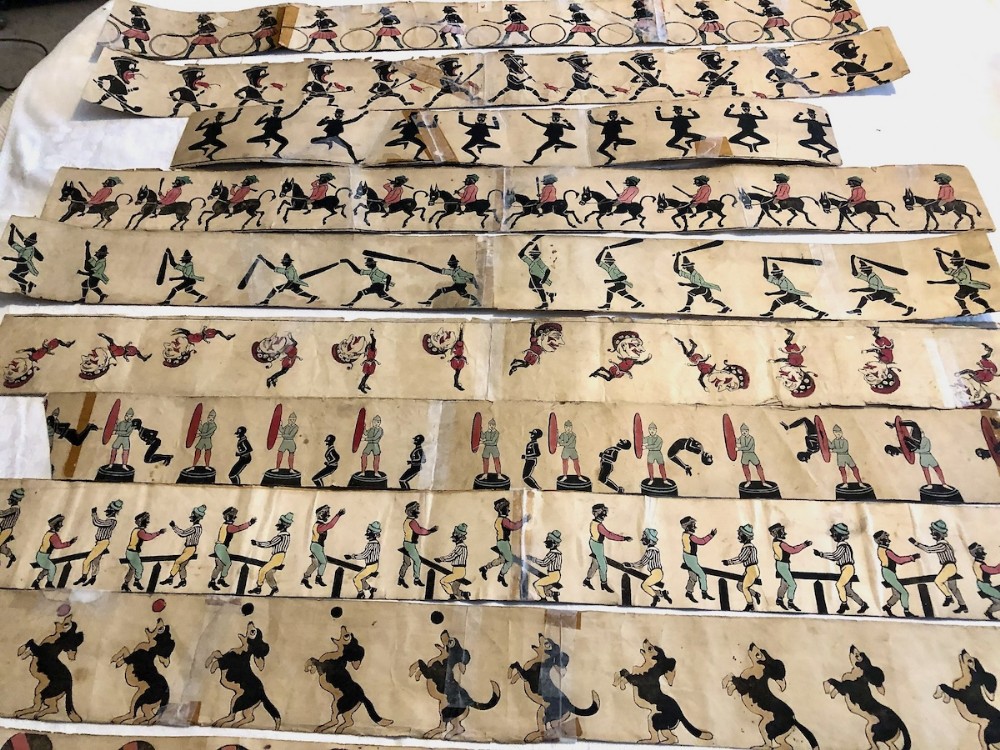
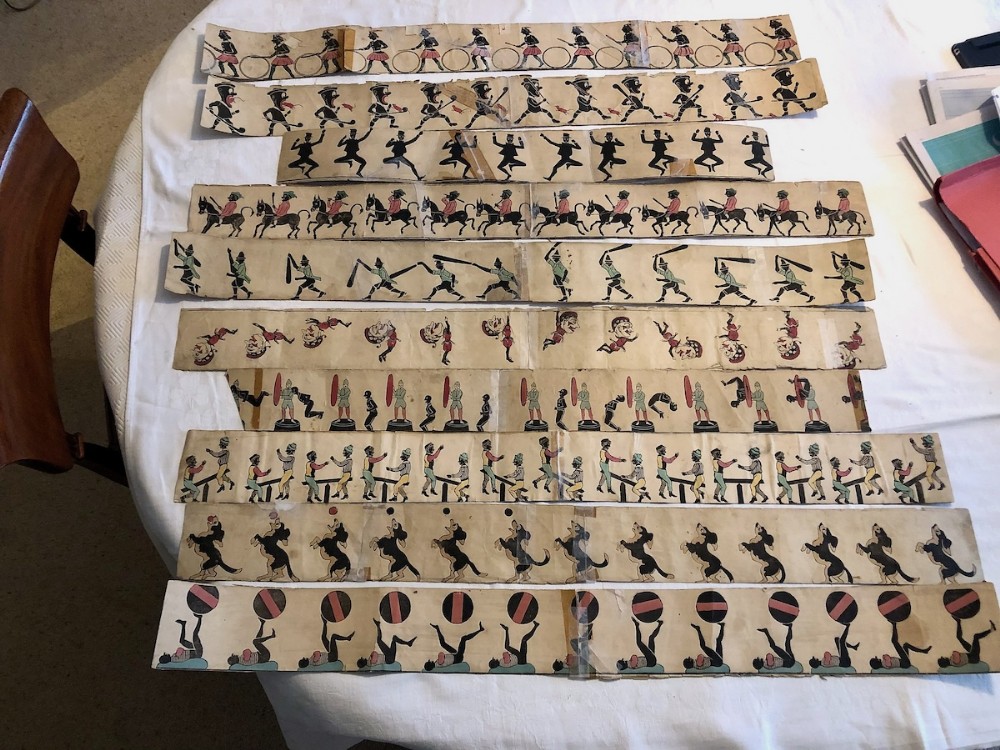
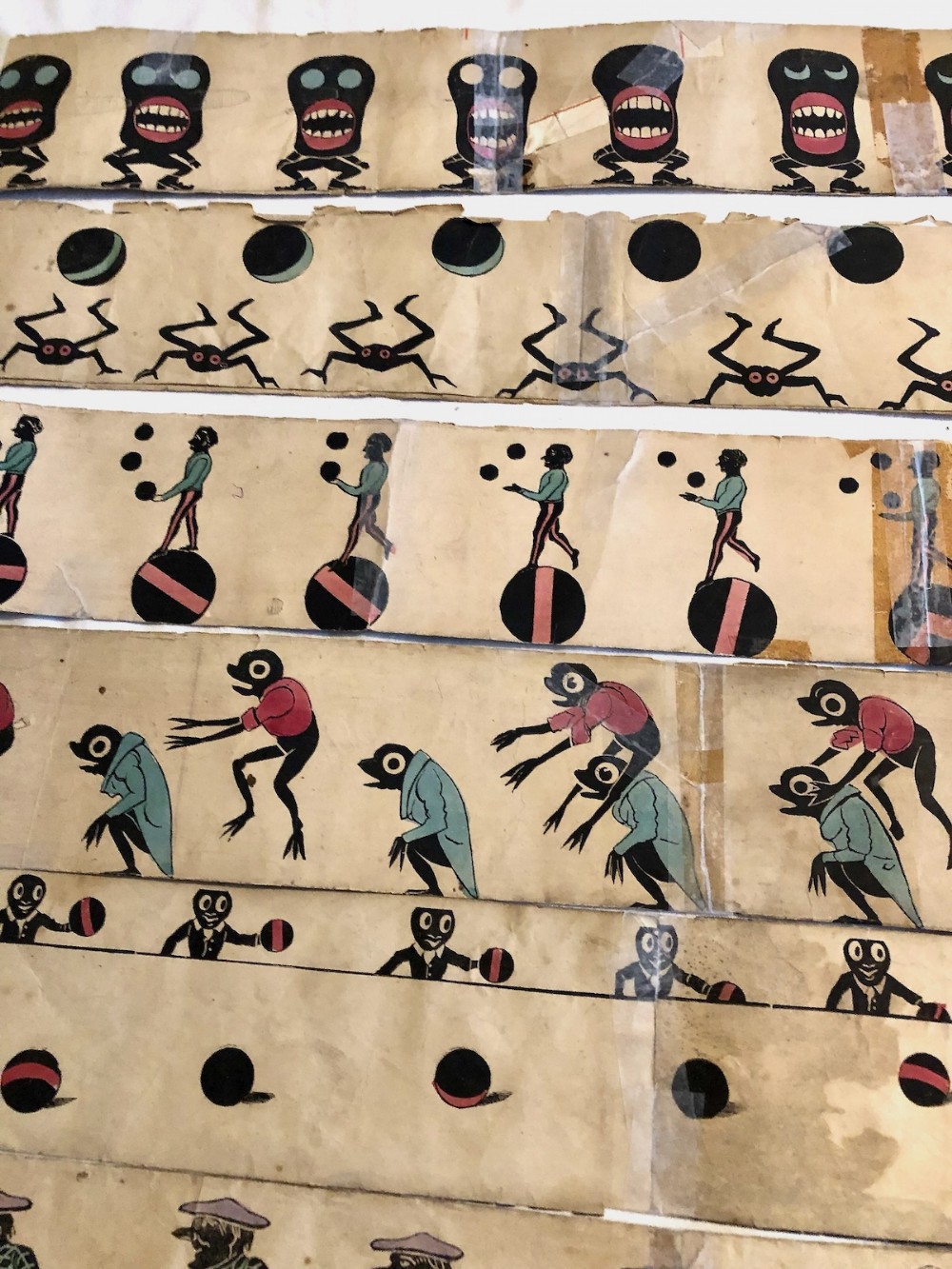
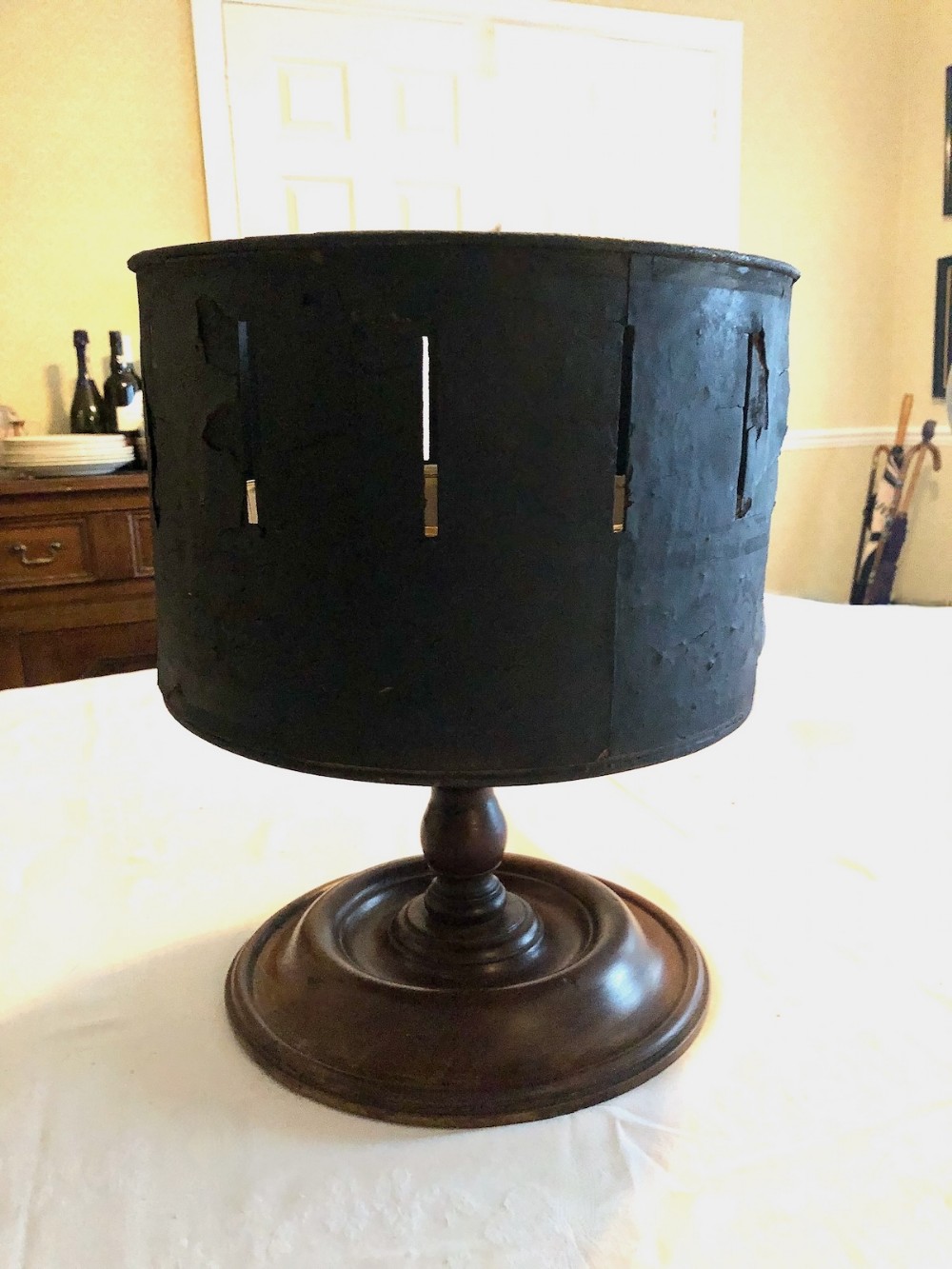
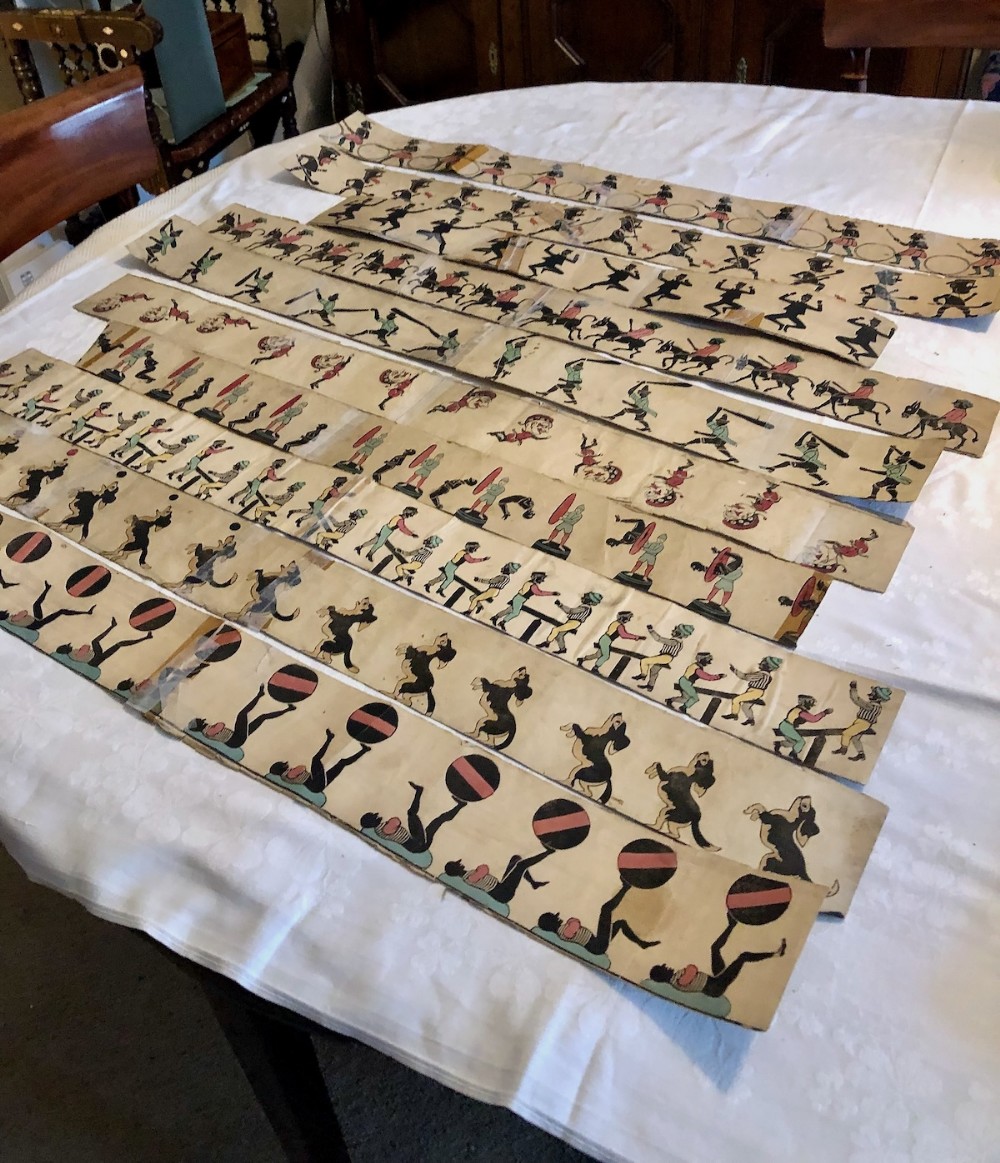
This original Victorian Zoetrope is age worn and has some peeling of the black covering on the outside of the drum. There 10 reversible paper film strips (20 in all), in varying conditions some are good, some are shorter and have been stuck together. This is, in my view, very acceptable because of its authenticity and age. It measures 37cm high x 28cm dimension. Very collectable.
Gill Coe Antiques & Interiors has dated this piece to the Victorian era.
You can view the stock and full dealer information on the Gill Coe Antiques & Interiors Profile Page
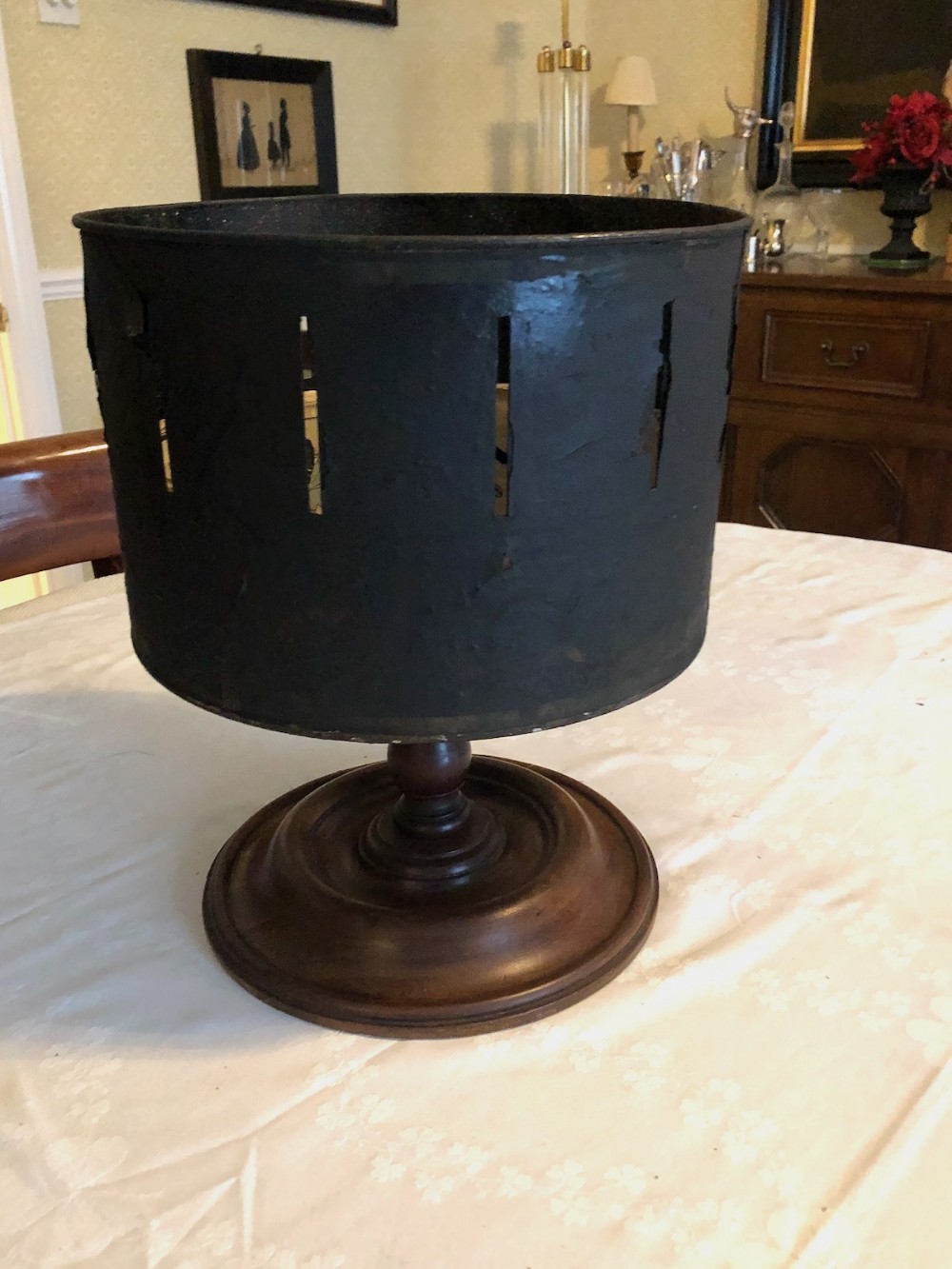
A Rare and Original Victorian Zoetrope 'Wheel of Life' C.1890