Regent Antiques has dated this piece to the 1880s.
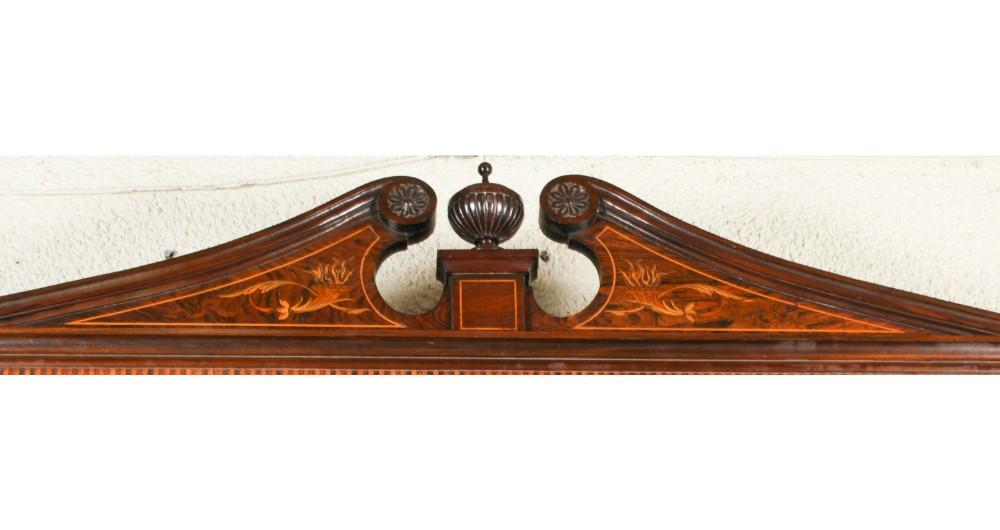
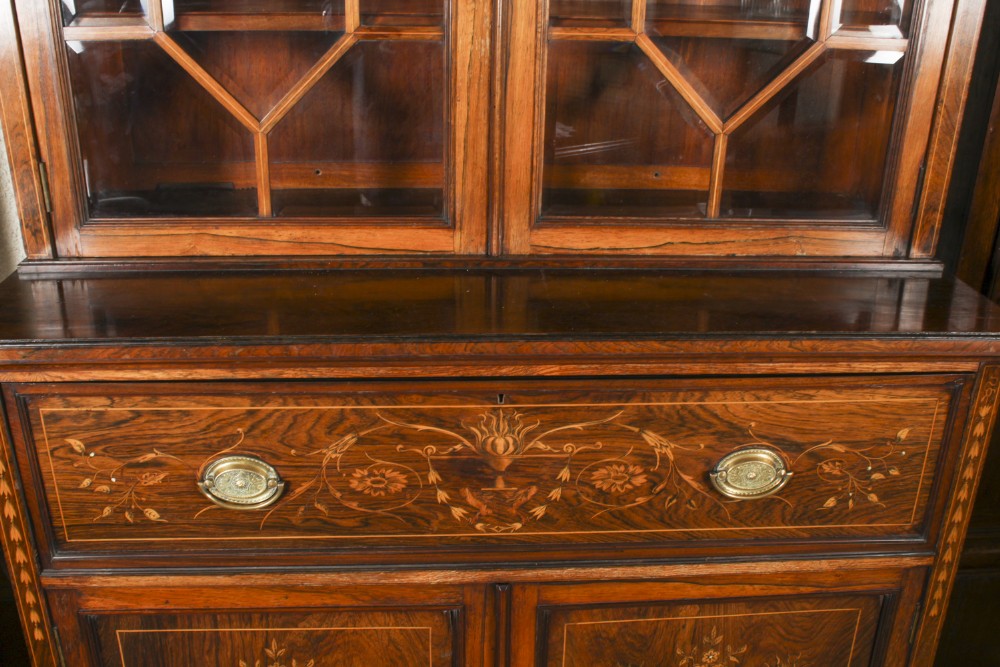
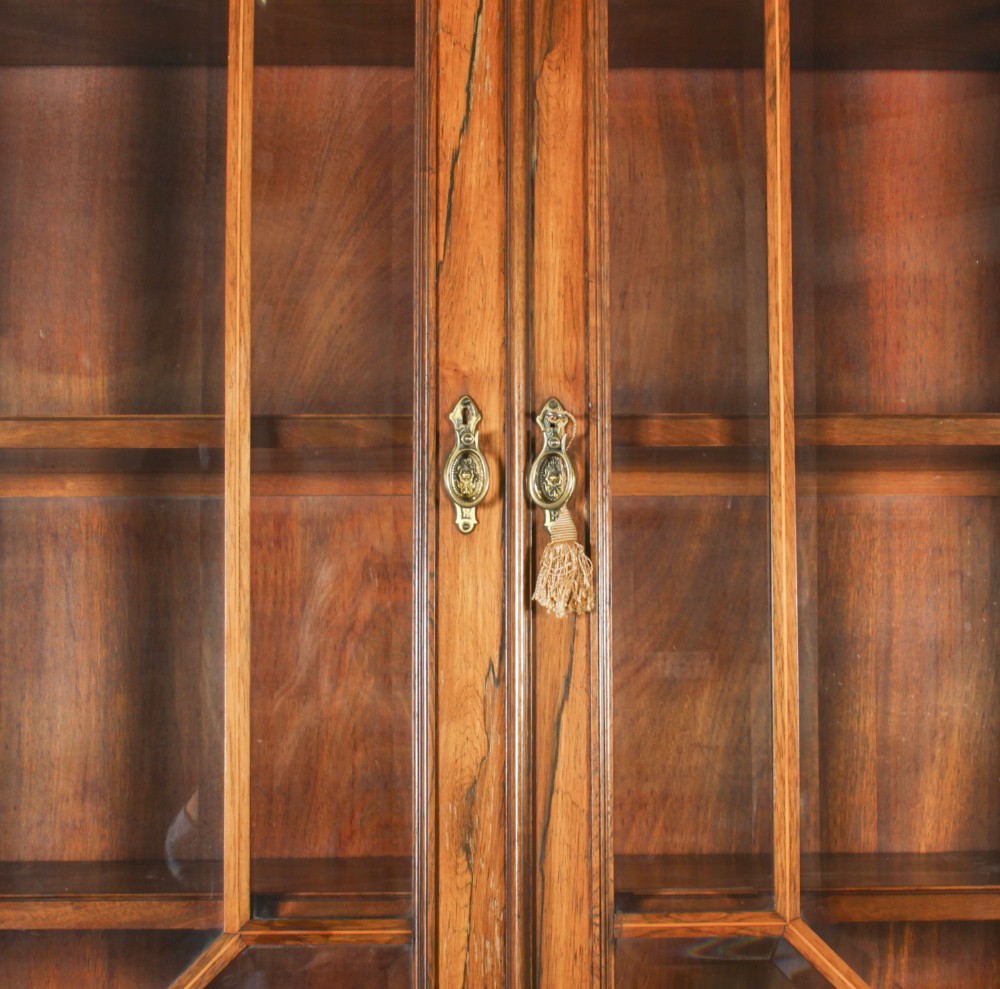
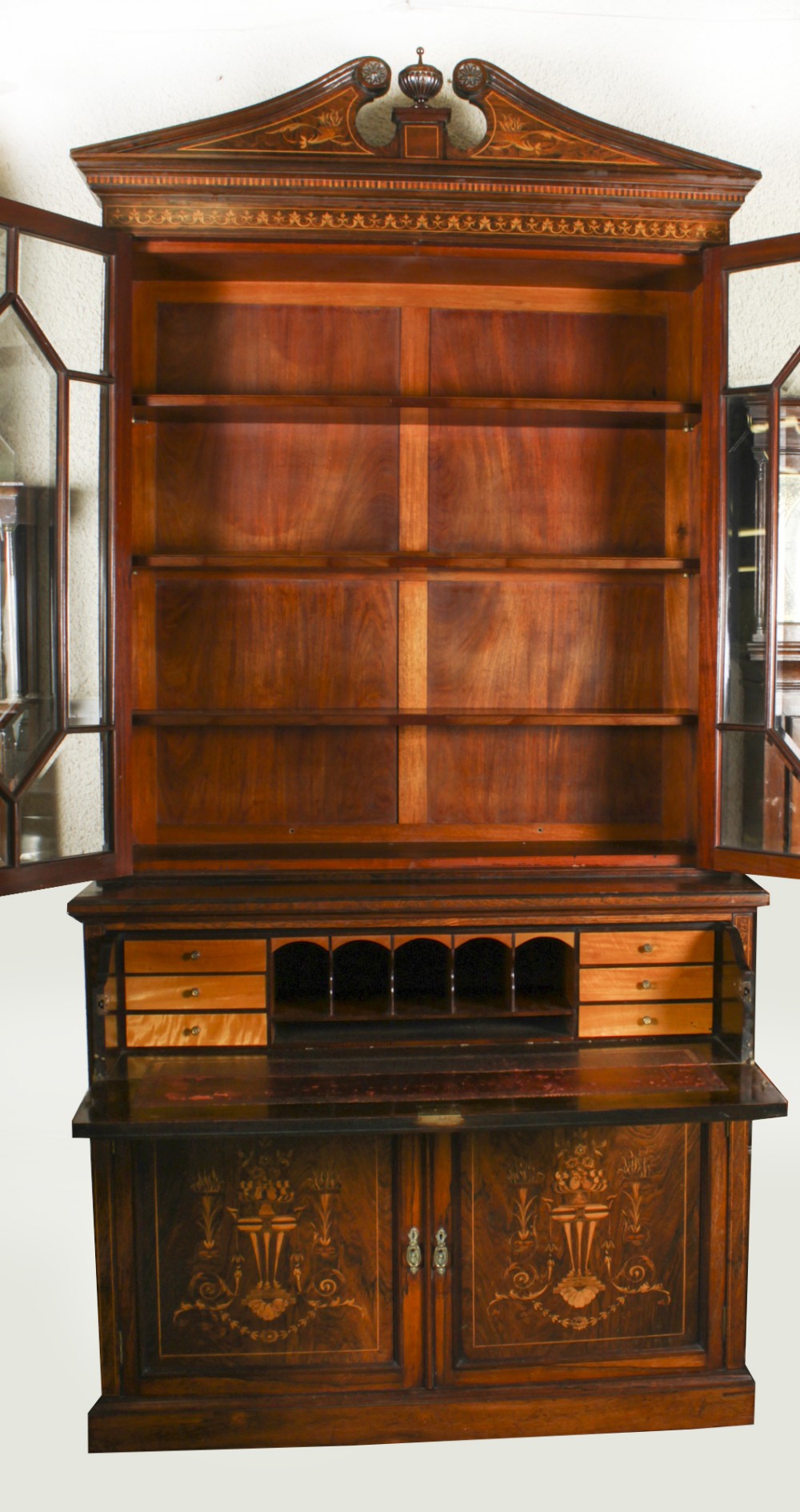
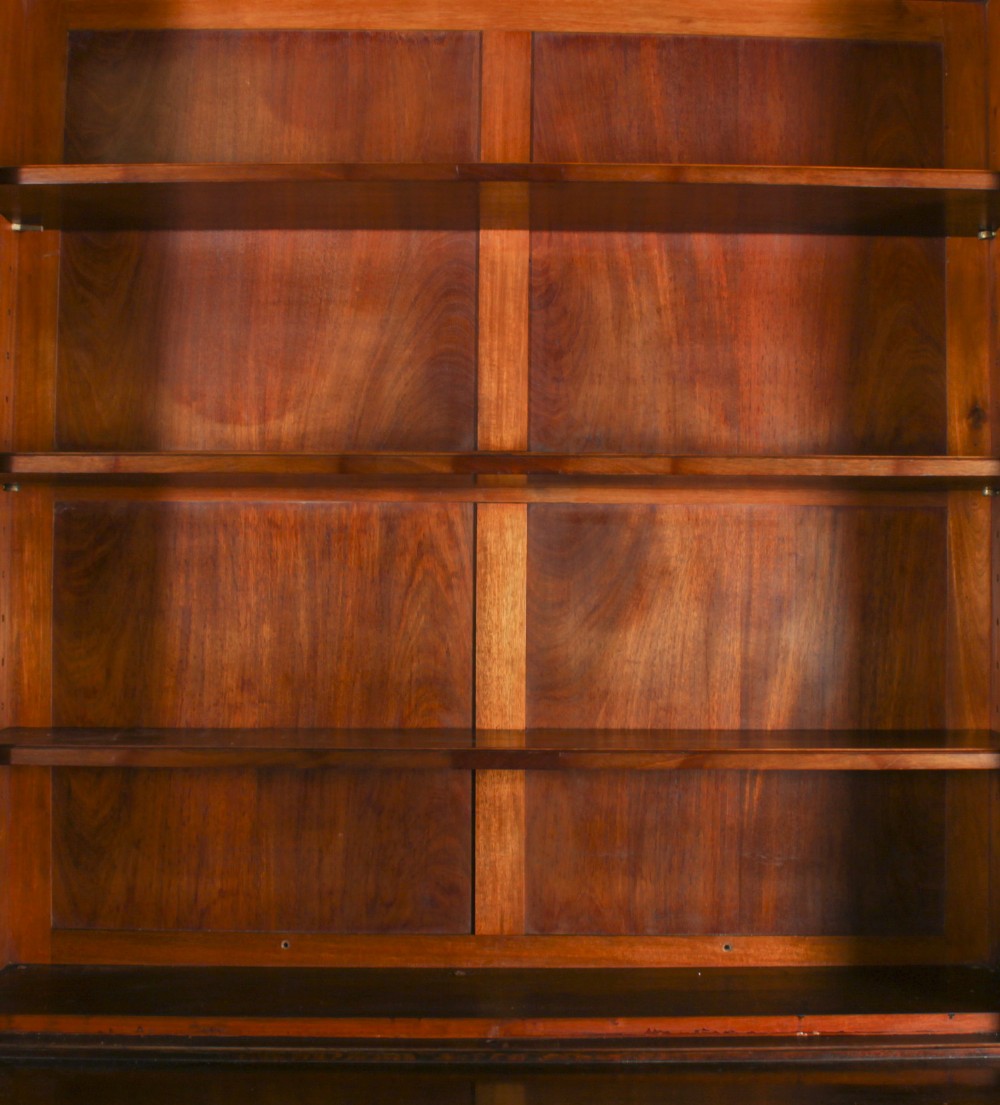
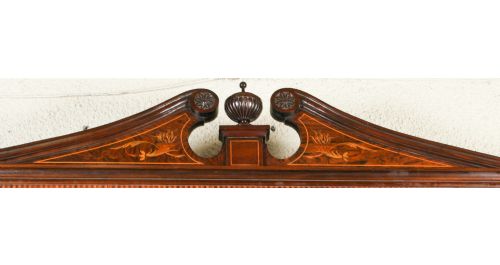
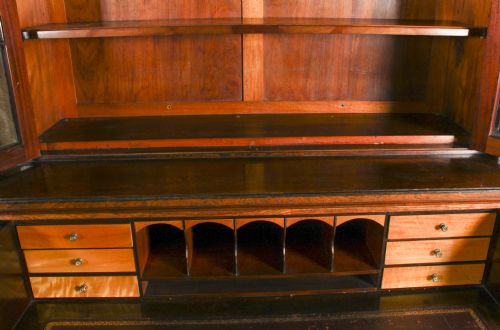
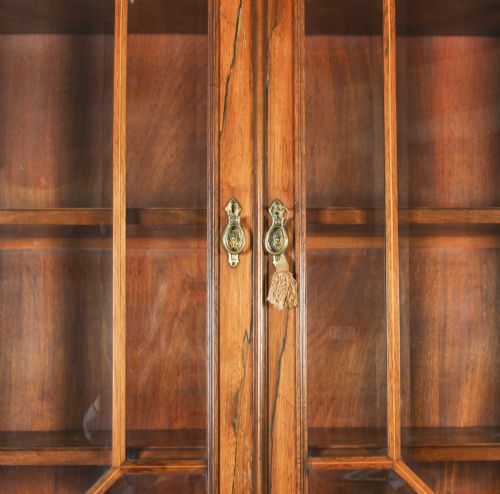
The upper part has a decorative pierced swan neck broken pediment cornice with acanthus scroll carving centred by an urn finial, the frieze with inlaid decoration, the two astragal glazed doors enclose an interior fitted with adjustable shelves.
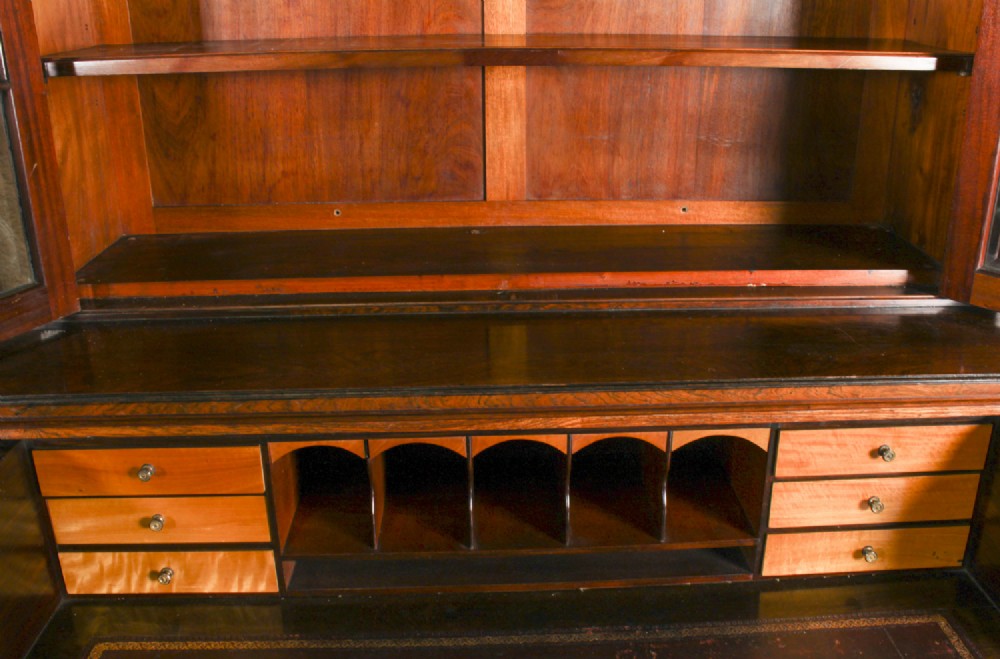
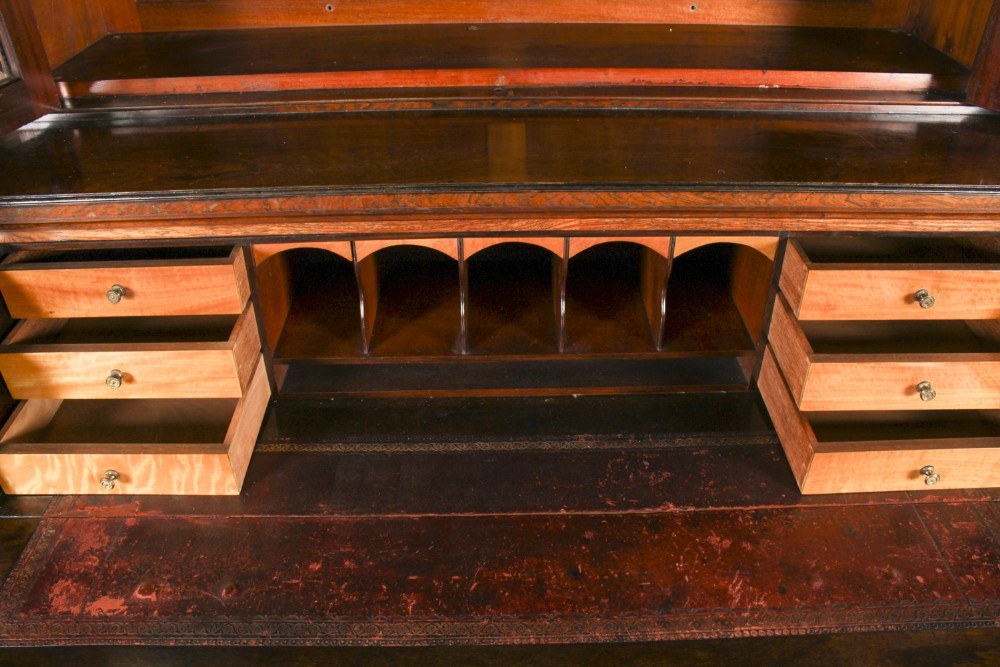
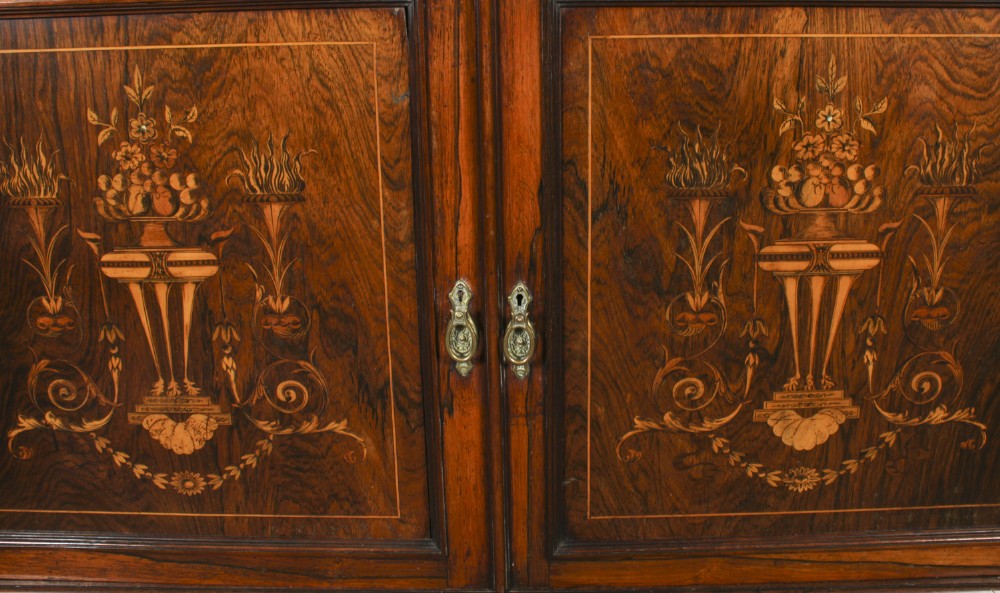
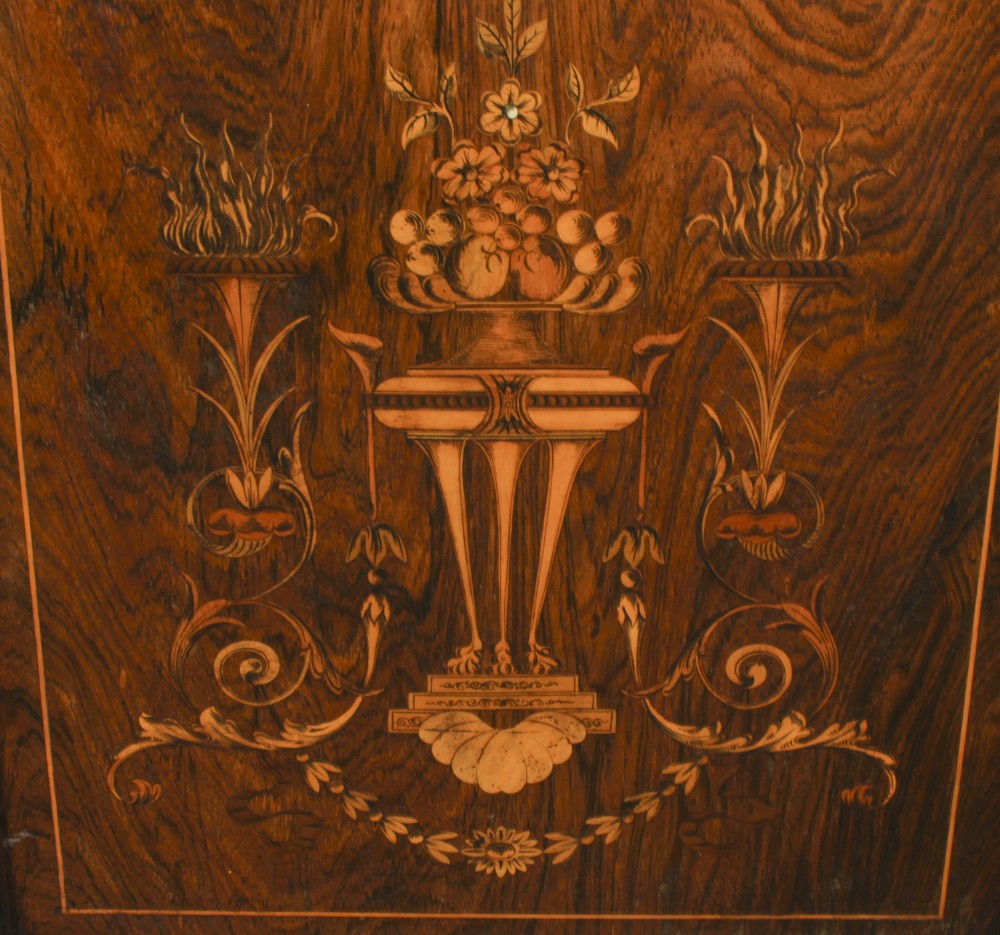
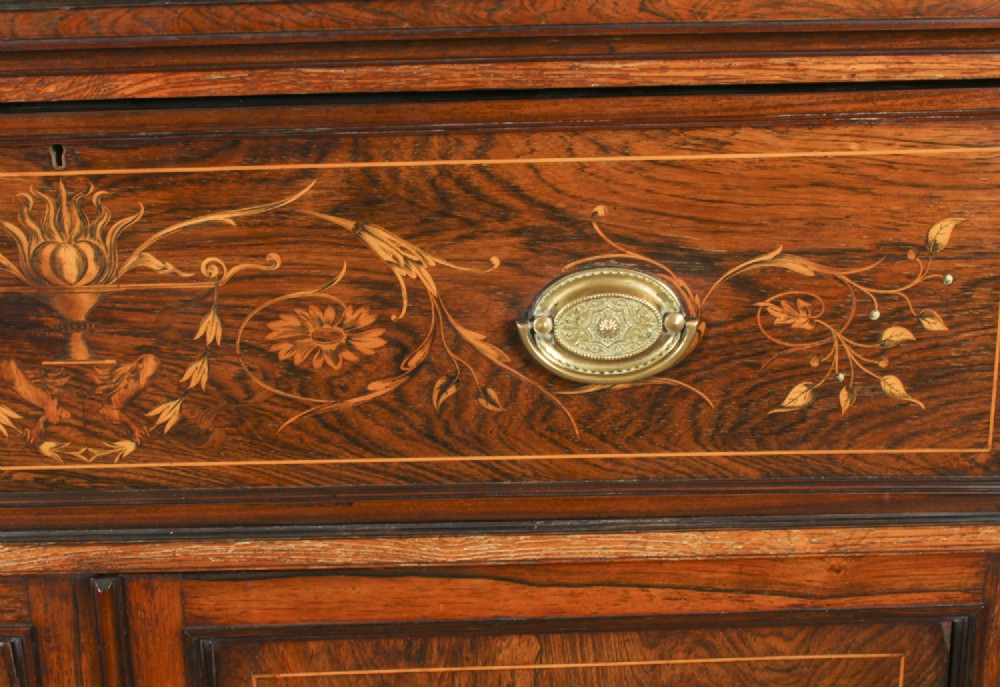
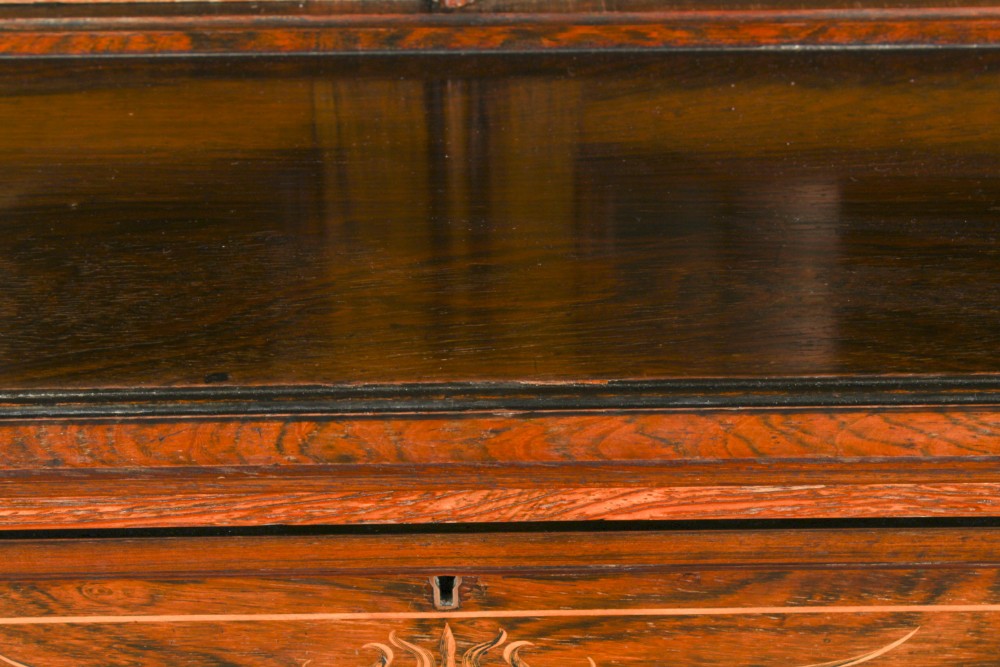
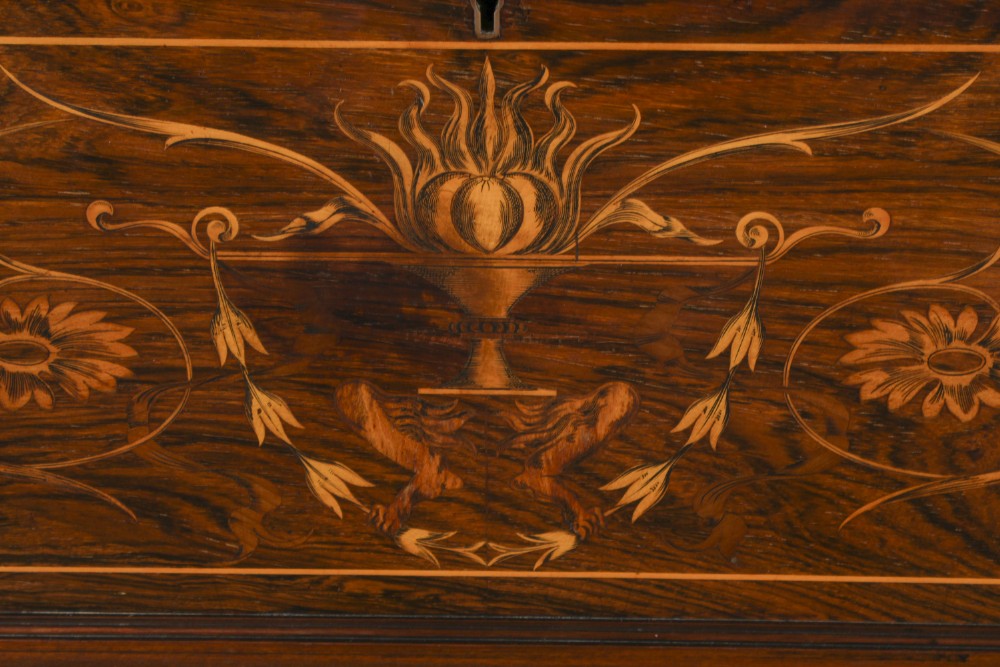
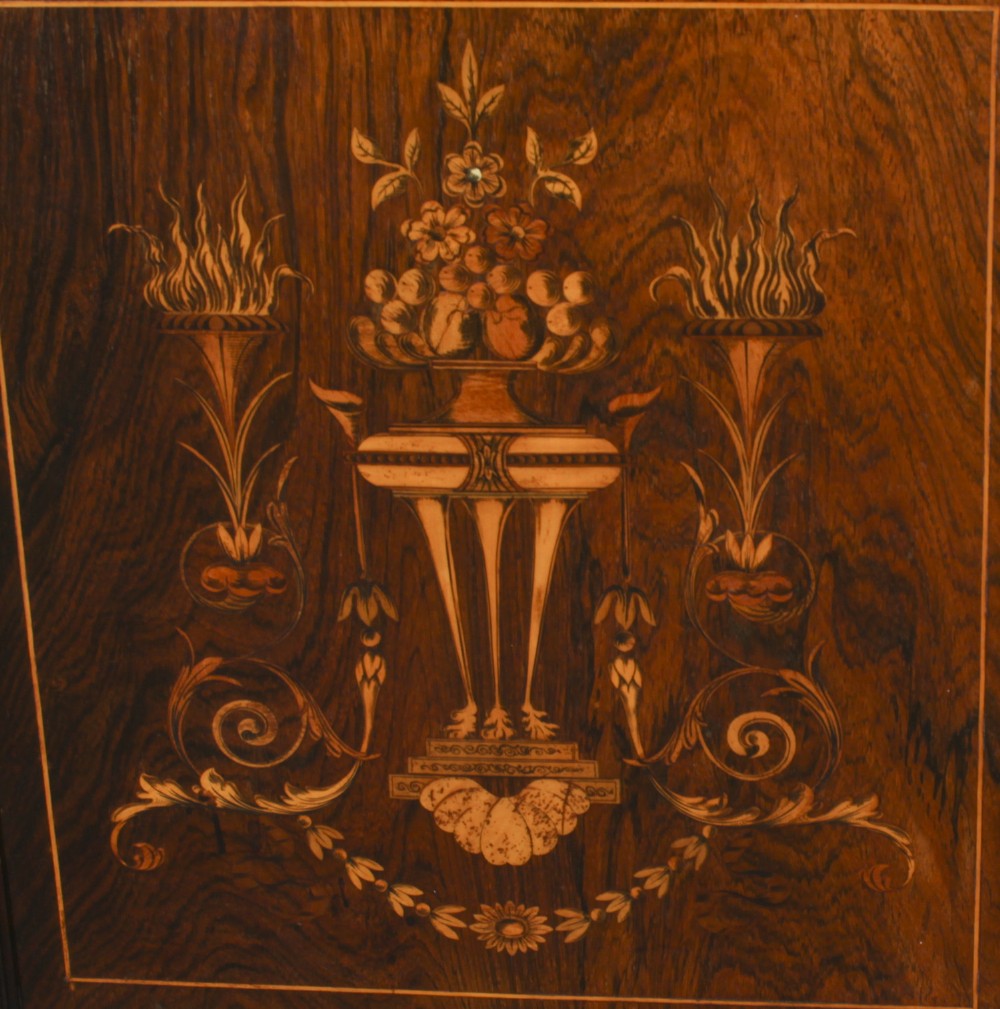
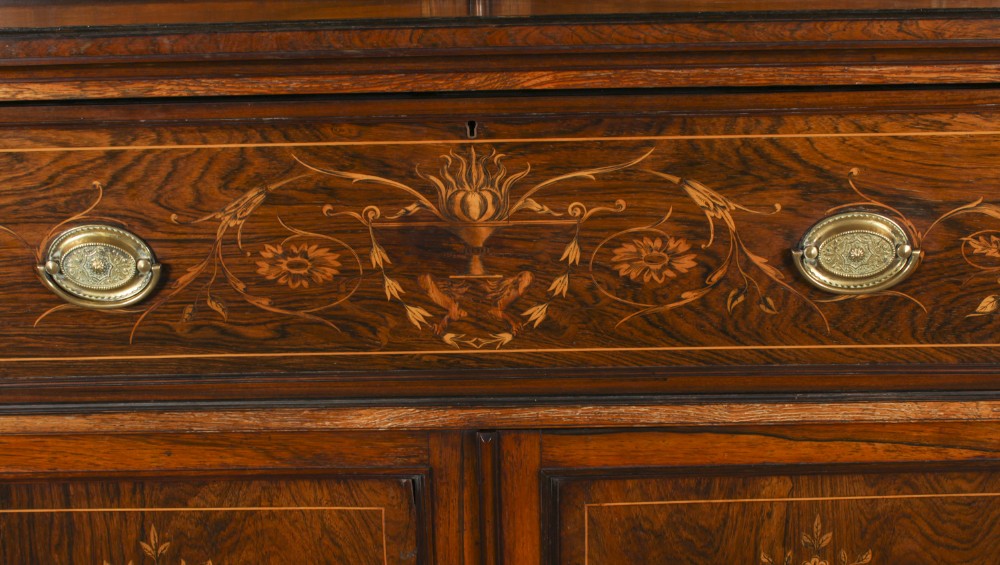
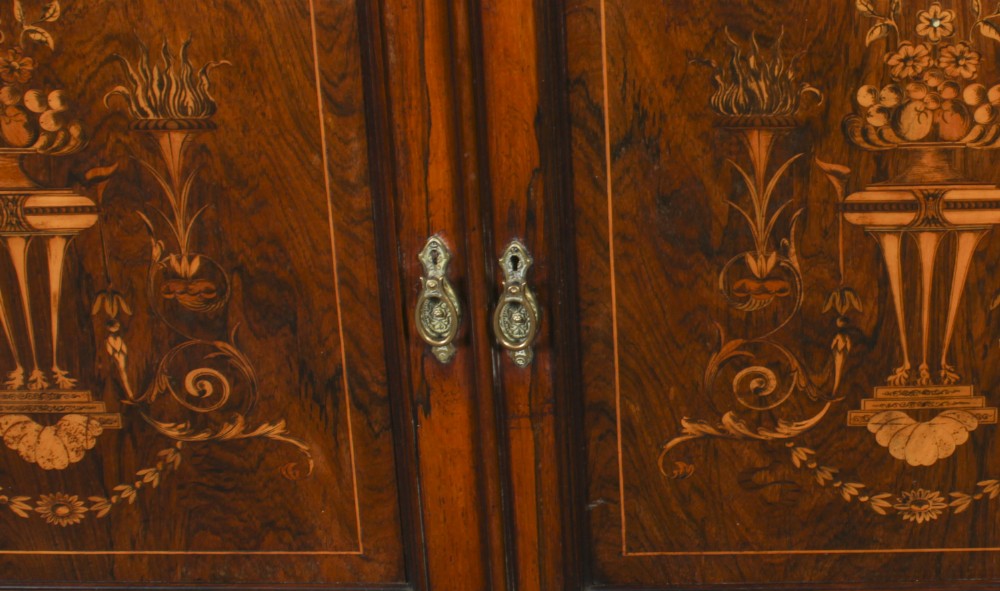
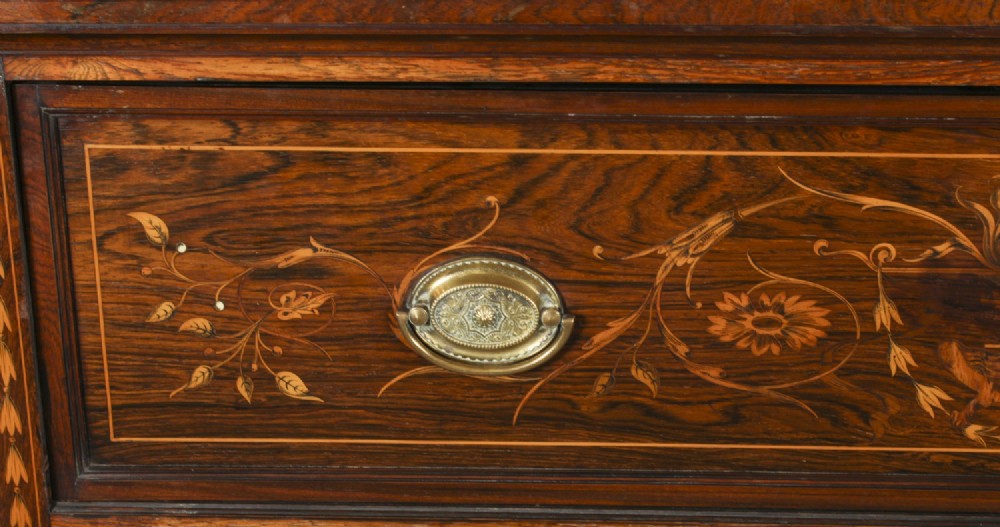
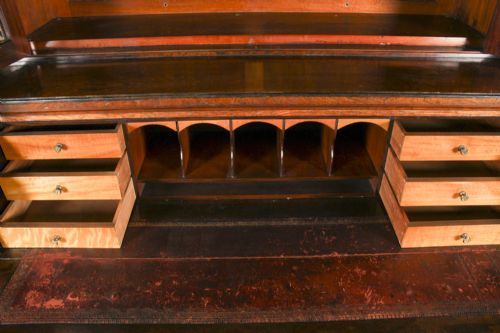
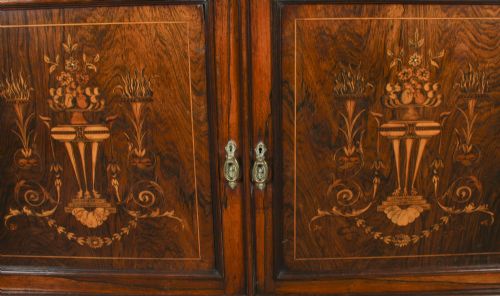
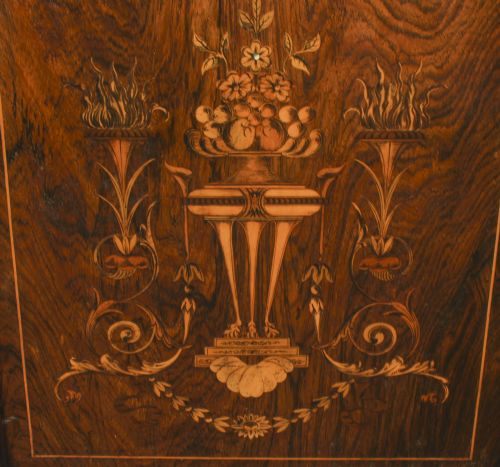
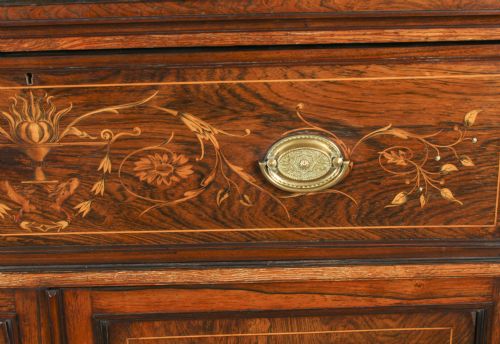
The lower part with a pull out secretaire drawer enclosing a fitted interior with six small drawers and pigeon holes, fitted with the original inset leather writing surface, with wonderful marquetry decoration over a pair of panelled doors opening to a cupboard.
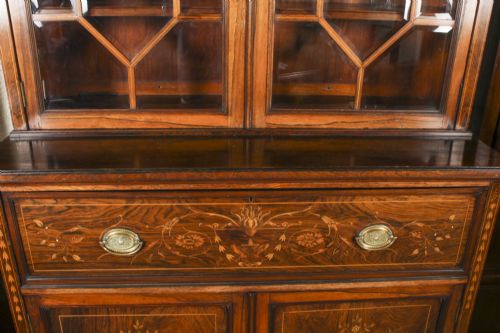
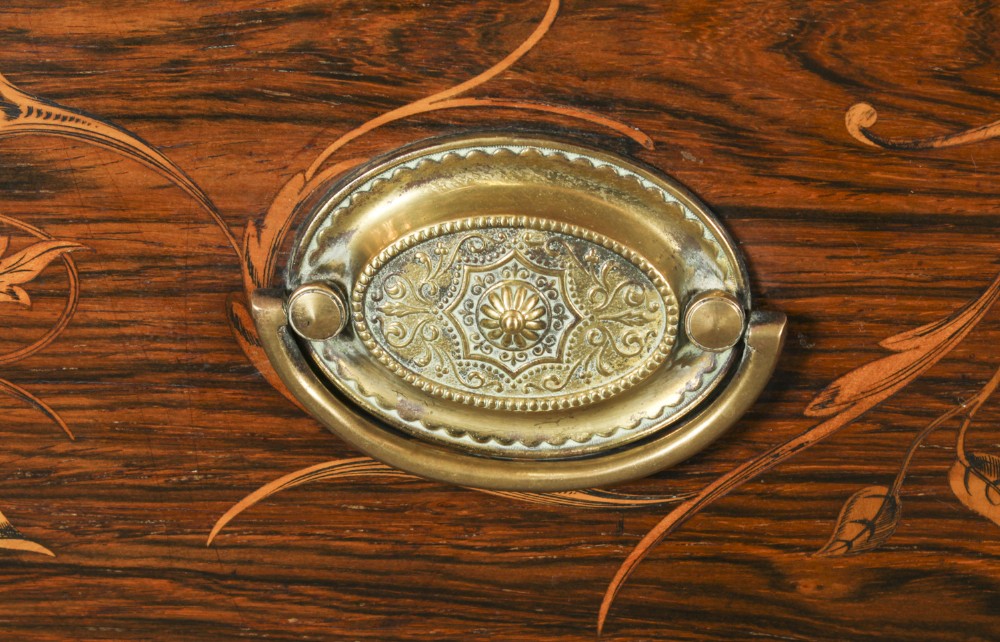
The whole with marquetry urns, ribbon tied scrolling foliage, husks, masks and cornucopia on a Gonçalo Alves ground, and raised o a plinth base.
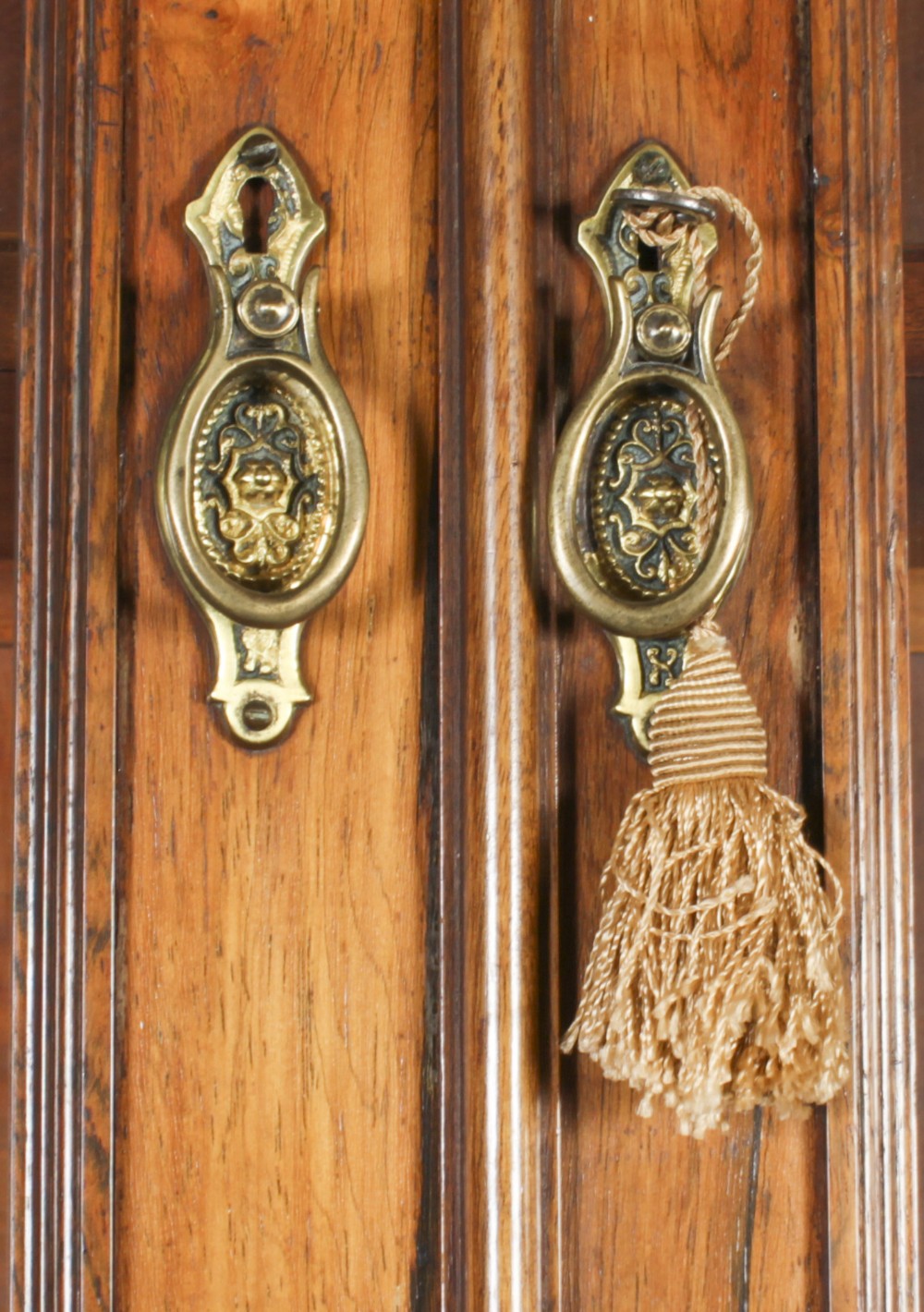
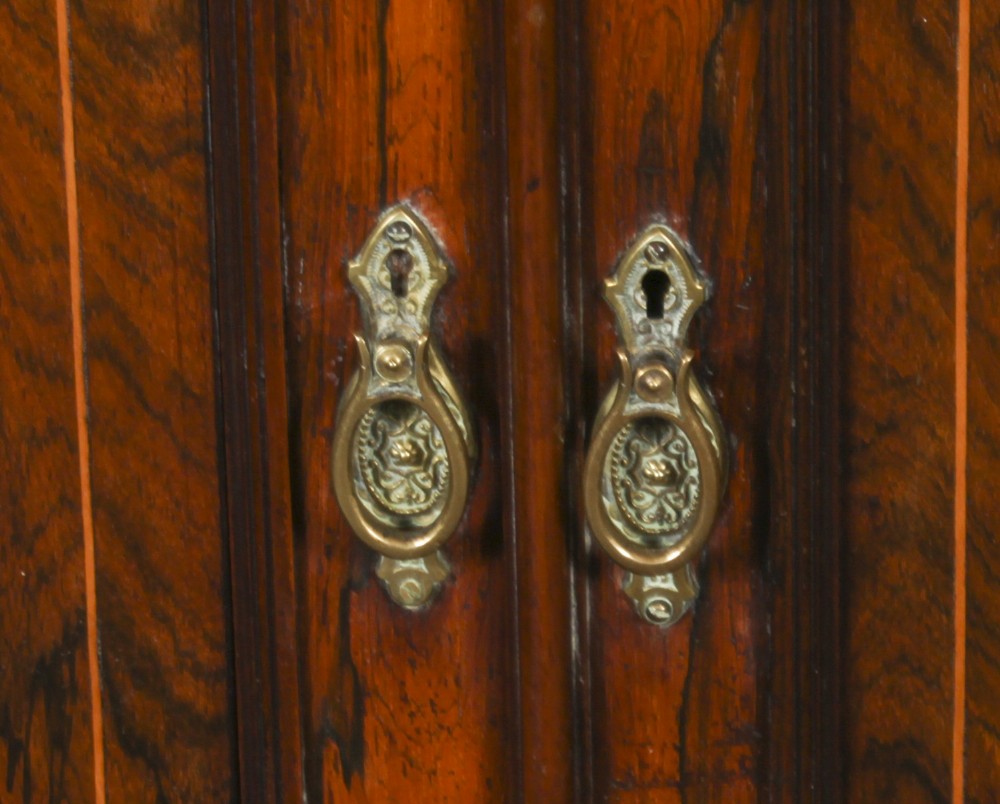
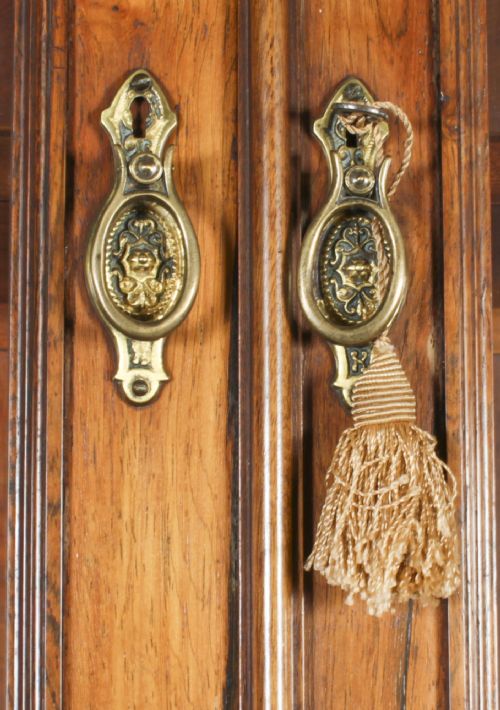
Complete with working locks and keys.
Condition:
In excellent condition having been beautifully cleaned and waxed in our workshops, please see photos for confirmation.
Dimensions in cm:
Height 267 cm x Width 127 cm x Depth 53 cm
Dimensions in inches:
Height 8 foot, 9 inches x Width 4 foot, 2 inches x Depth 1 foot, 9 inches
Gonçalo Alves is a hardwood (from the Portuguese name, Gonçalo Alves). It is sometimes referred to as tigerwood — a name that underscore the wood’s often dramatic, contrasting color scheme.
While the sapwood is very light in color, the heartwood is a sombre brown, with dark streaks that give it a unique look. The wood’s color deepens with exposure and age and even the plainer-looking wood has a natural luster.
Two species are usually listed as sources for gonçalo alves: Astronium fraxinifolium and Astronium graveolens, although other species in the genus may yield similar wood; the amount of striping that is present may vary.
In the high tropical forests of Central and South America, well-drained soils furnish nutrients for a variety of dense, durable hardwoods sought for maritime use, heavyconstruction, and furniture. The Spanish began harvesting in Latin American forests in the early 1500s to provide timber for boatbuilding and repair. By the early 1900s, however, steel ships had replaced wooden ones, and the interest in tropical forests by both Europeans and Americans shifted to appearance-grade woods for furniture.
Although history fails to provide us with a shopping list of species from either harvest period, it's probable that the wood we know today as goncalo alves has always been sought. That's because goncalo alves, considered one of the most beautiful of tropical woods, has a tough reputation, too. Strong and durable, it's used for construction in its homeland and secondarily for fine furniture. Woodworkers elsewhere treasure the wood for decorative items and veneer accents.
Marquetry
is decorative artistry where pieces of material of different colours are inserted into surface wood veneer to form intricate patterns such as scrolls or flowers.
The technique of veneered marquetry had its inspiration in 16th century Florence. Marquetry elaborated upon Florentine techniques of inlaying solid marble slabs with designs formed of fitted marbles, jaspers and semi-precious stones. This work, called opere di commessi, has medieval parallels in Central Italian "Cosmati"-work of inlaid marble floors, altars and columns. The technique is known in English as pietra dura, for the "hardstones" used: onyx, jasper, cornelian, lapis lazuli and colored marbles. In Florence, the Chapel of the Medici at San Lorenzo is completely covered in a colored marble facing using this demanding jig-sawn technique.
Techniques of wood marquetry were developed in Antwerp and other Flemish centers of luxury cabinet-making during the early 16th century. The craft was imported full-blown to France after the mid-seventeen
Regent Antiques has dated this piece to the 1880s.
We specialise in english and continental furniture, silver, porcelain and decorative items.
You can view the stock and full dealer information on the Regent Antiques Profile Page
Regent Antiques is a registered member of LAPADA CINOA
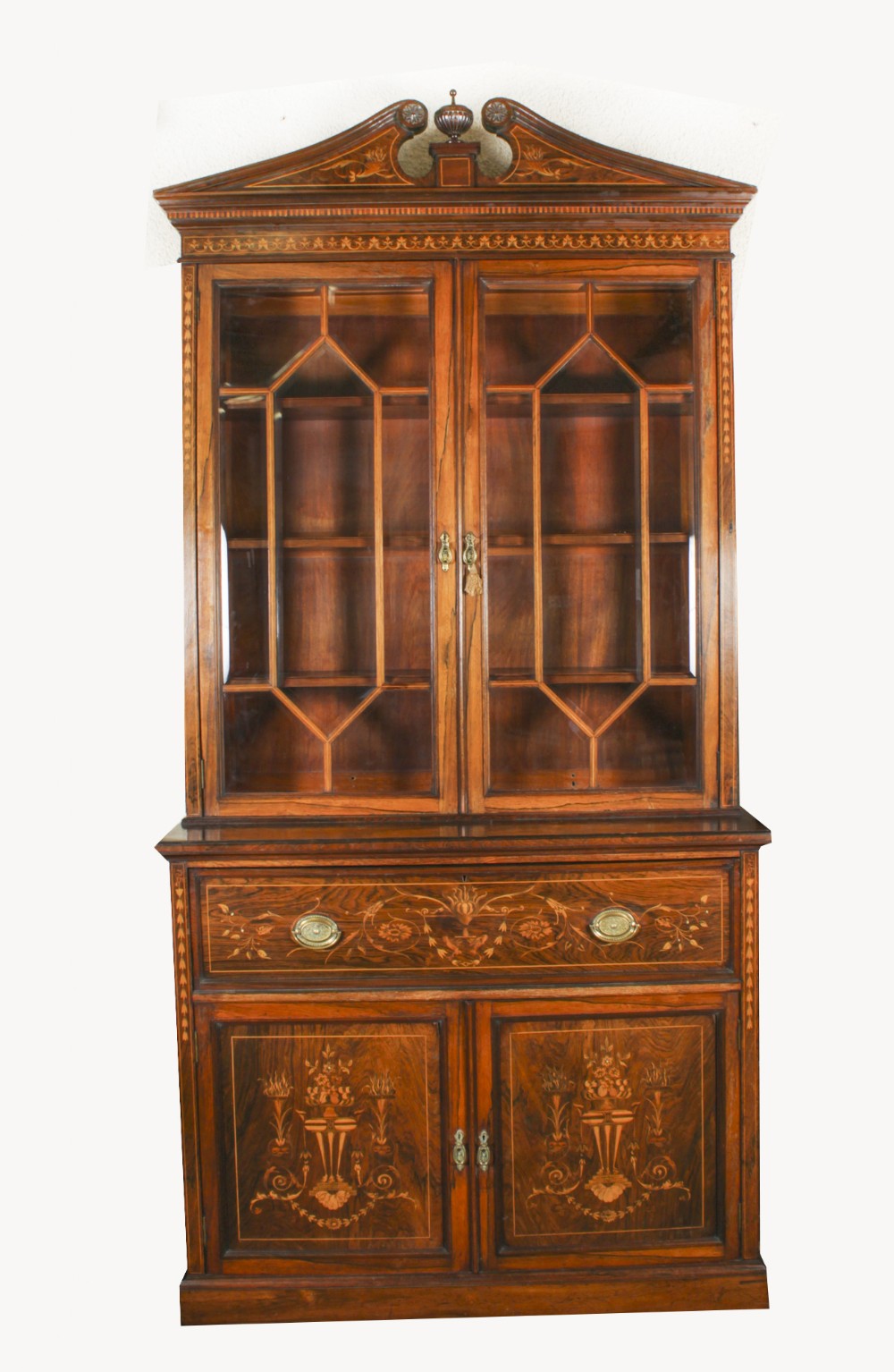
Antique Victorian Gonçalo Alves & Marquetry Secretaire Bookcase 19th C