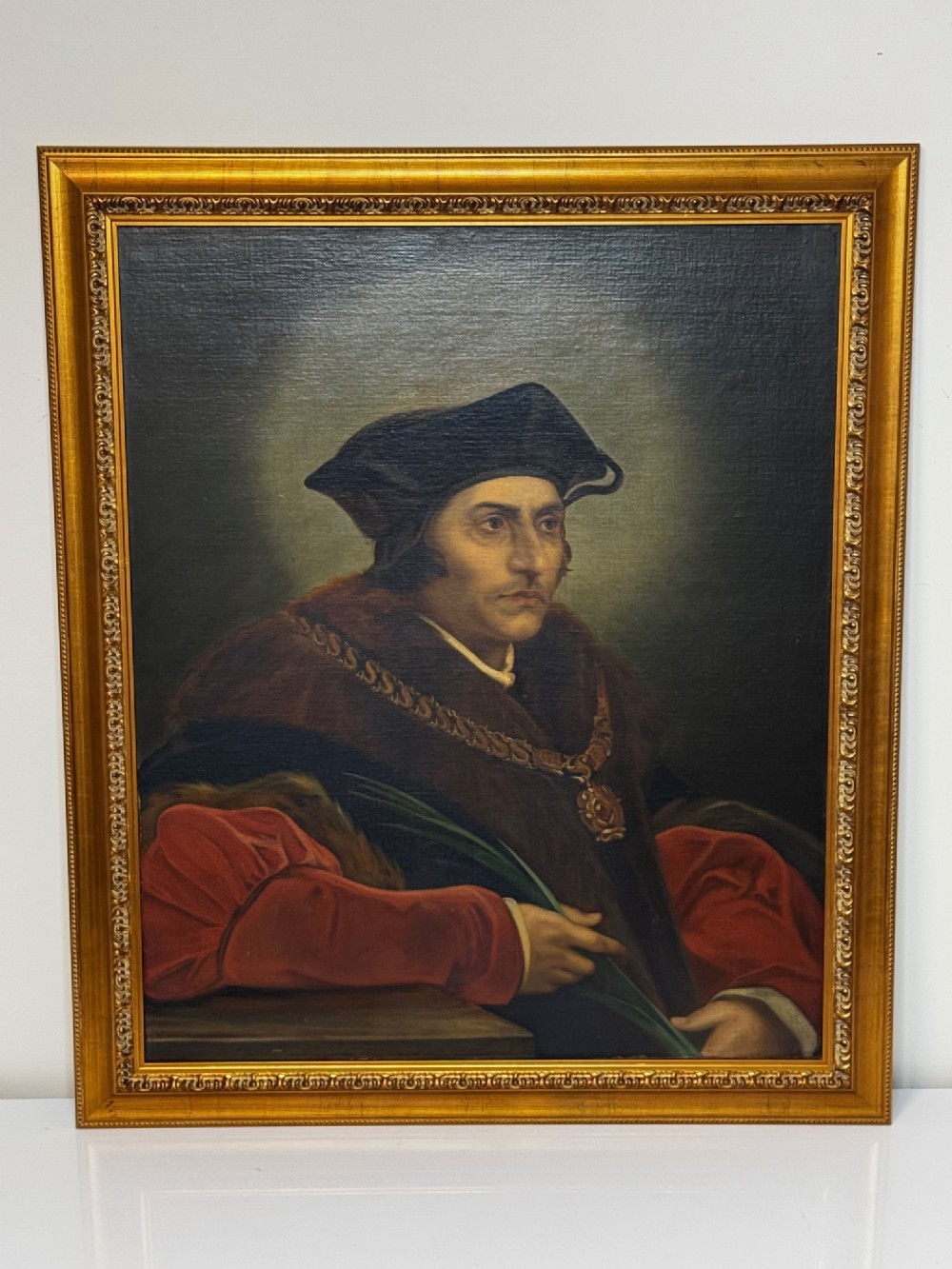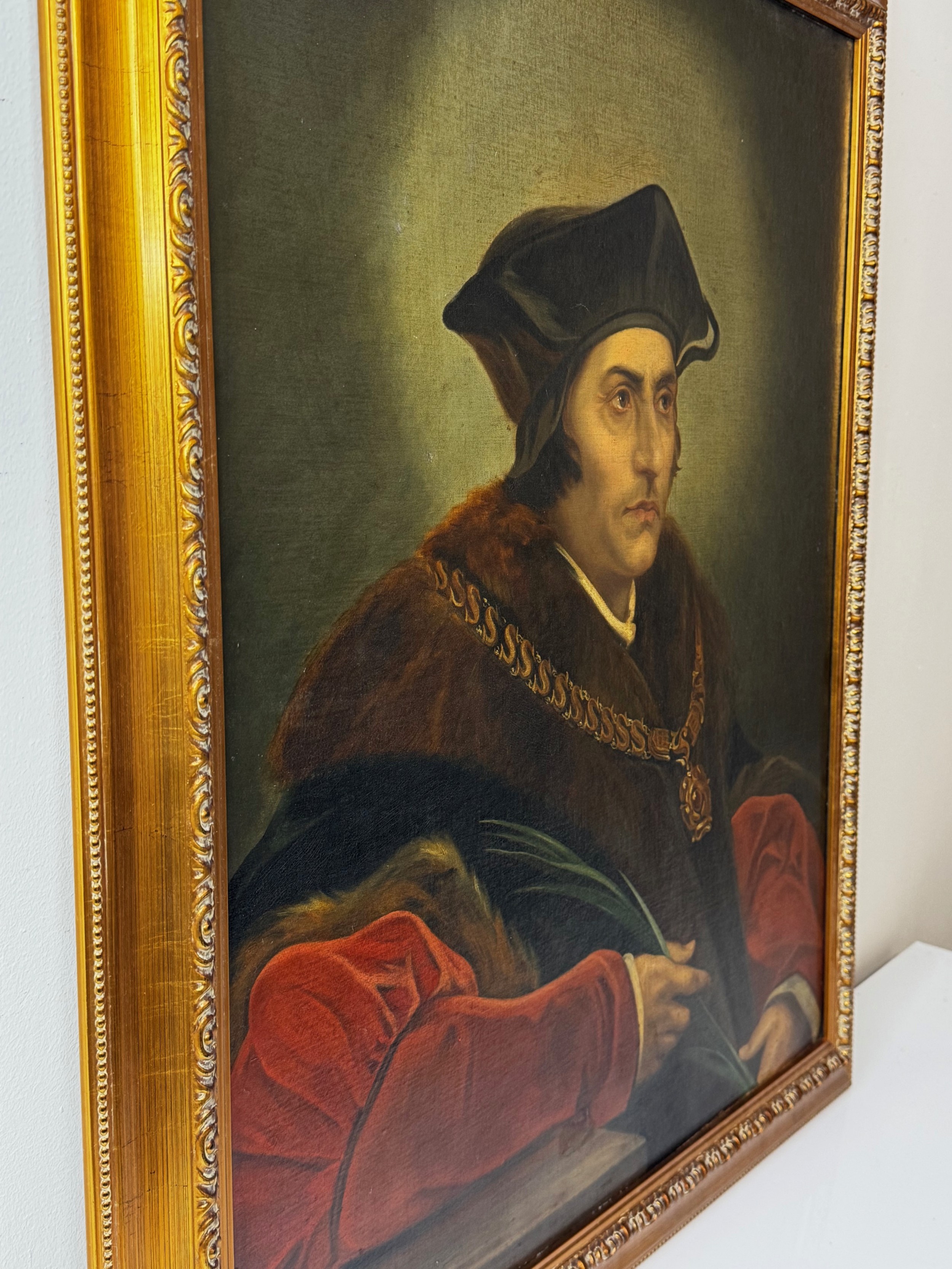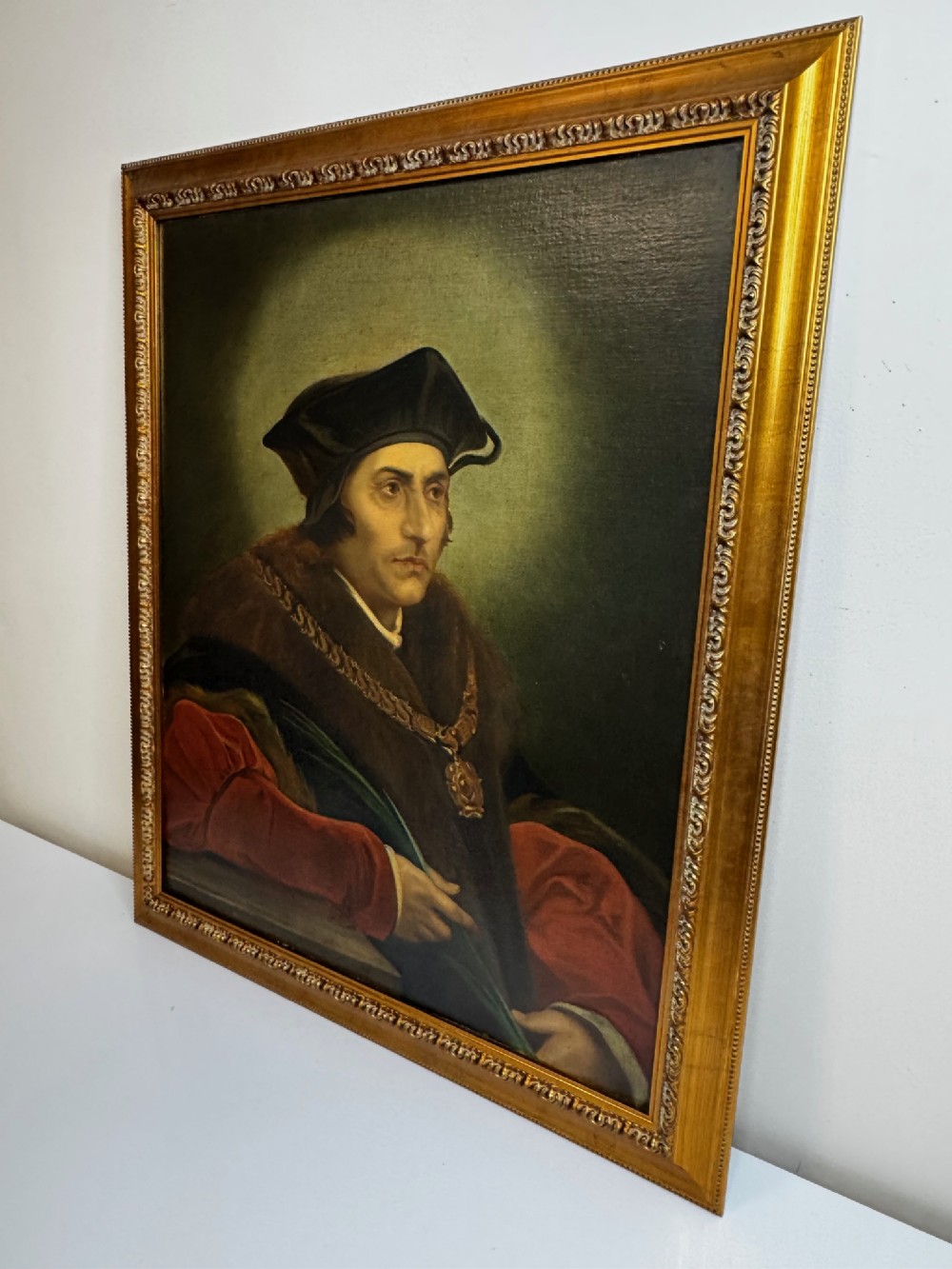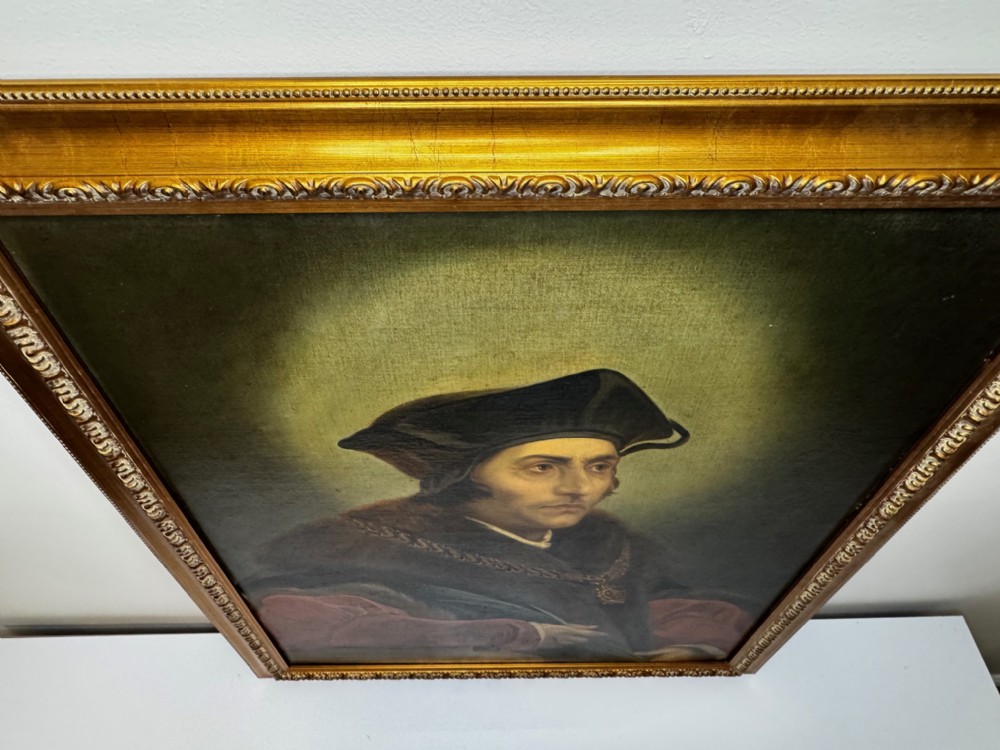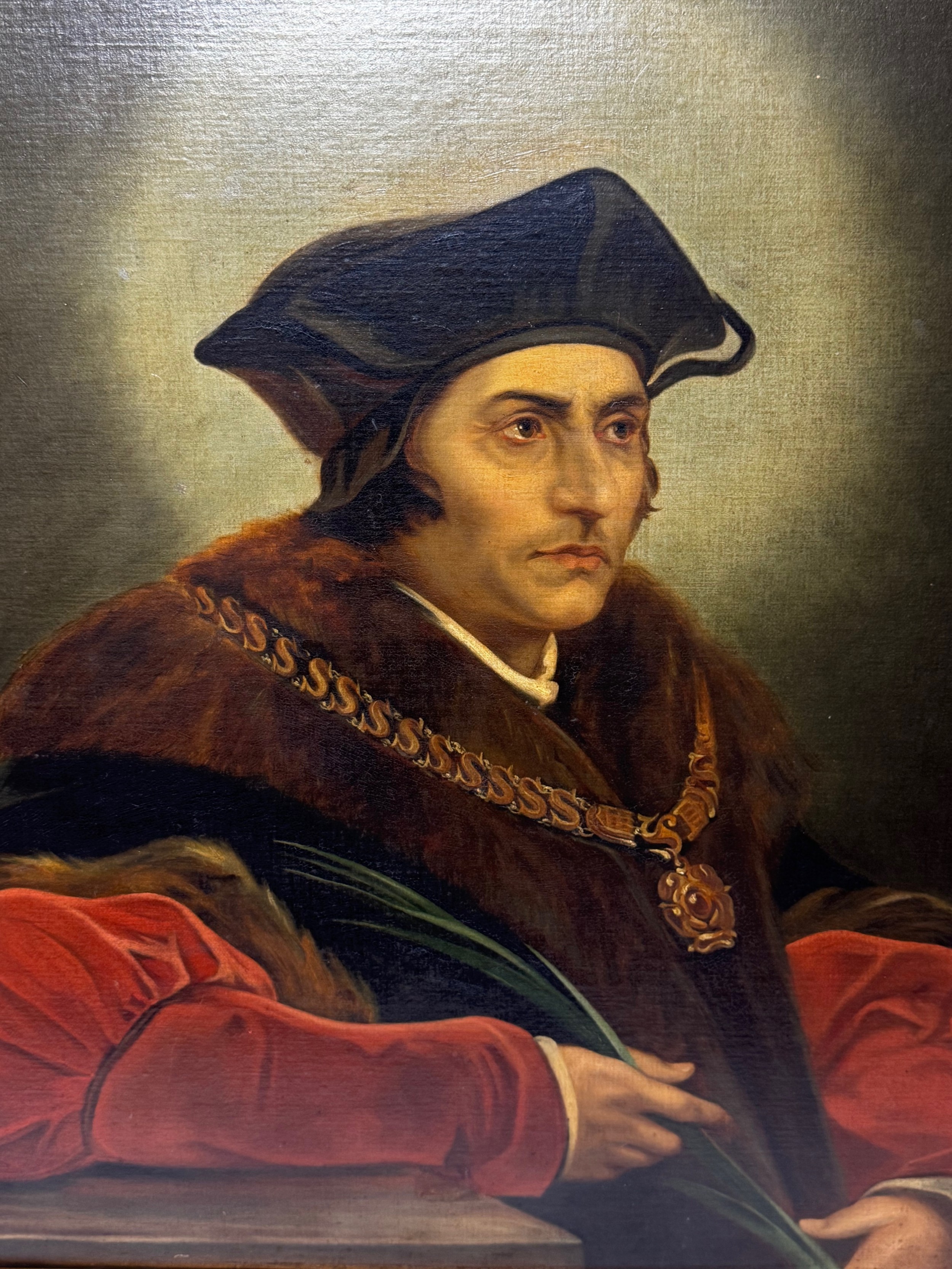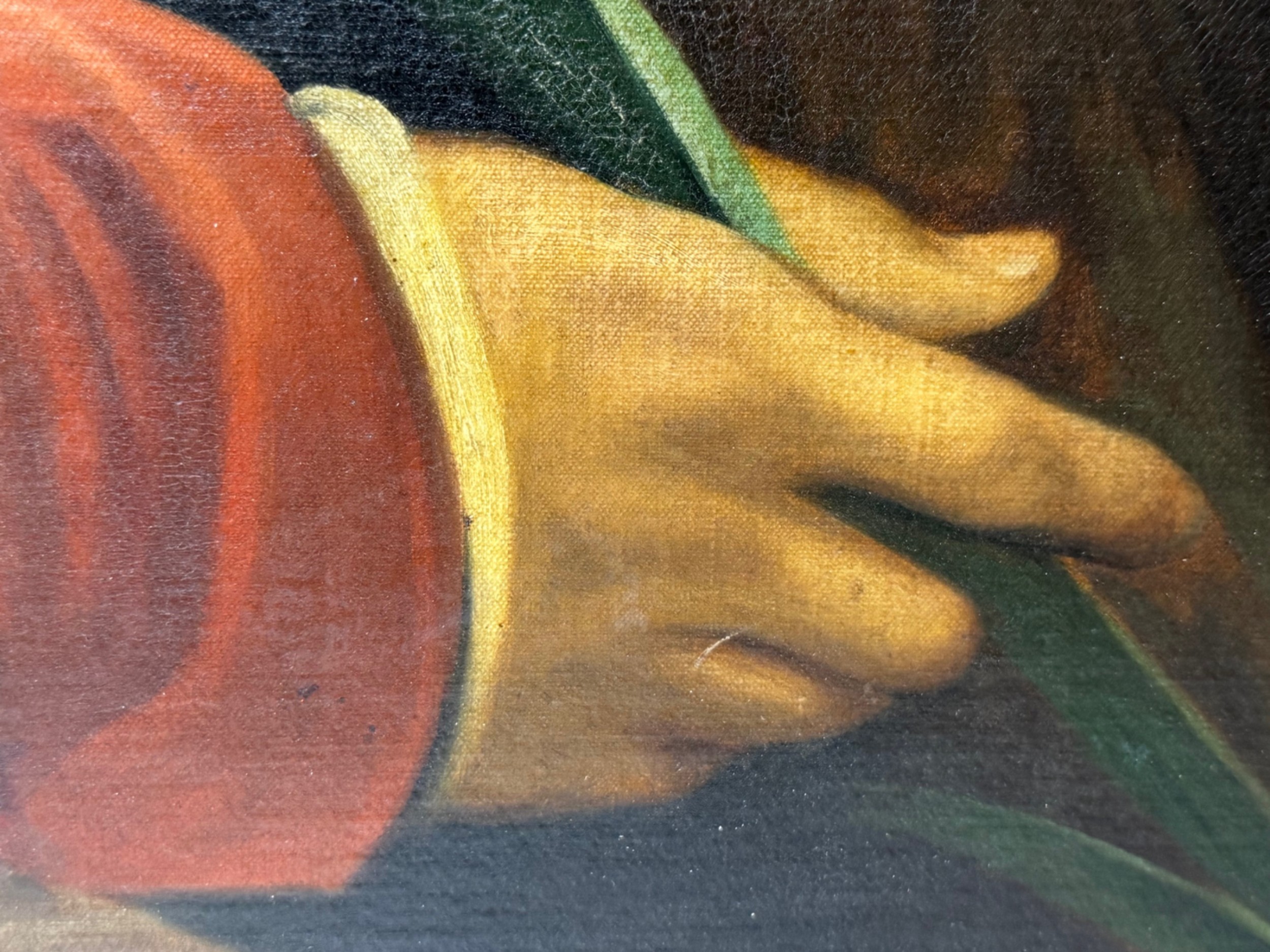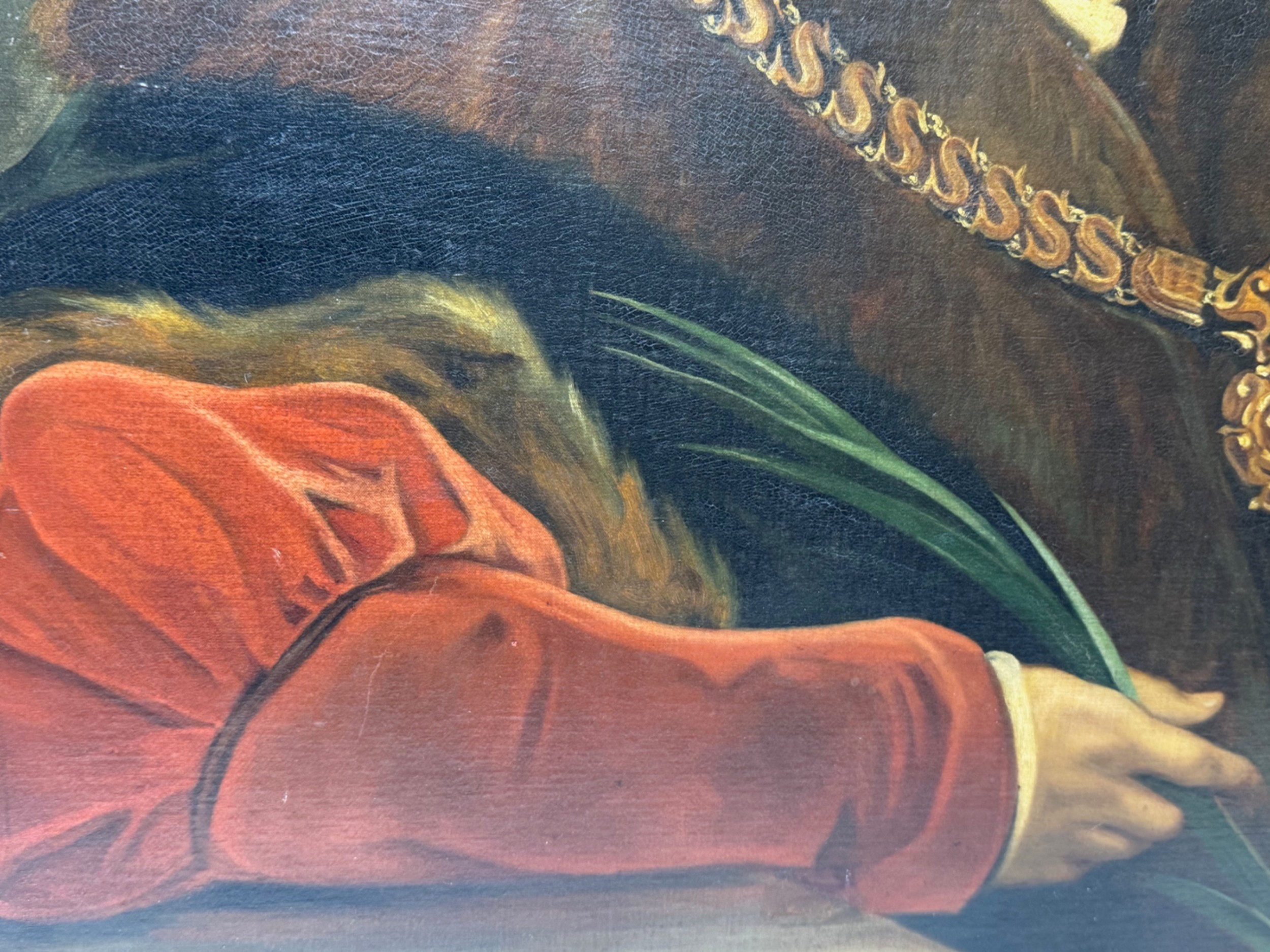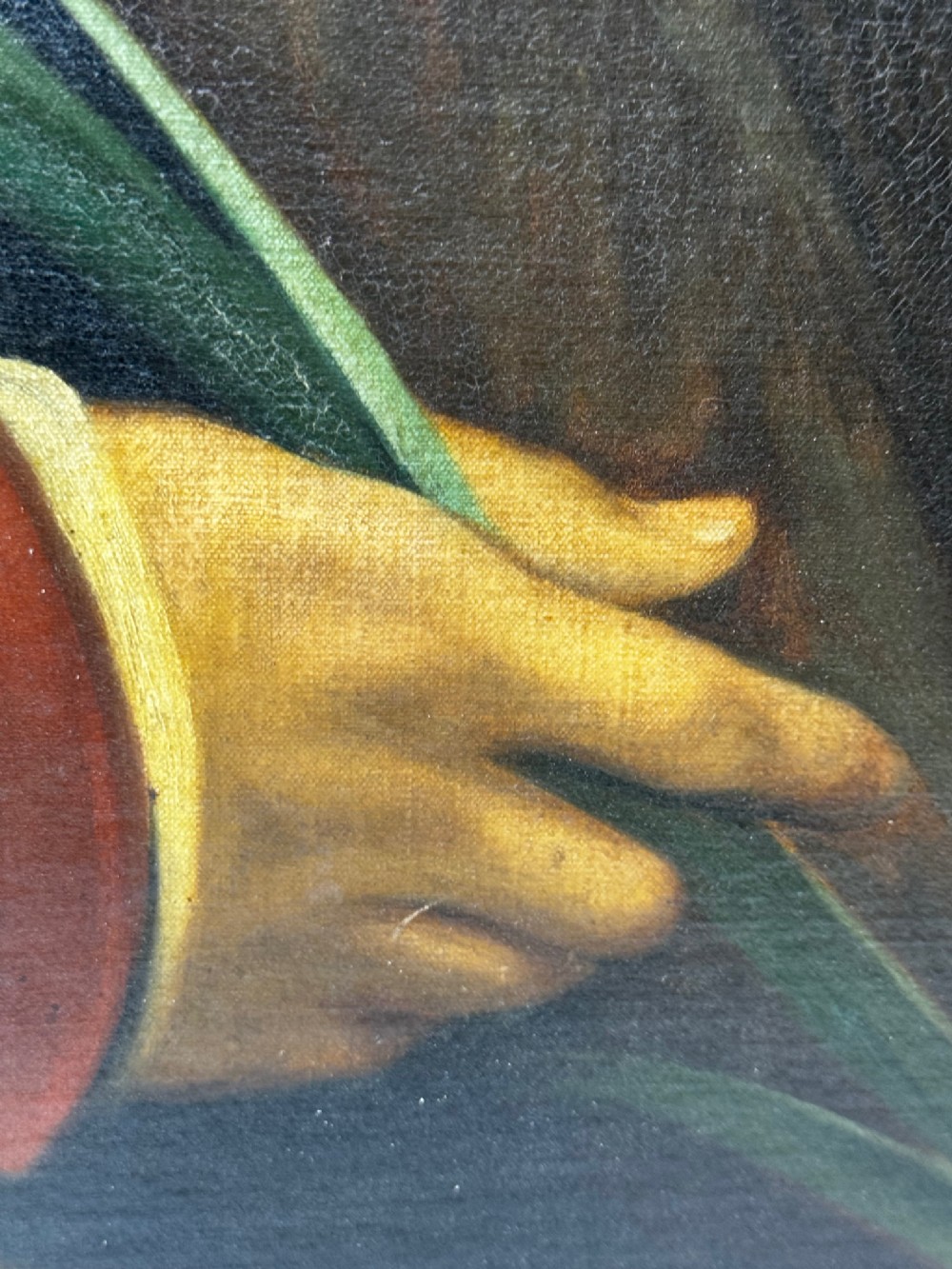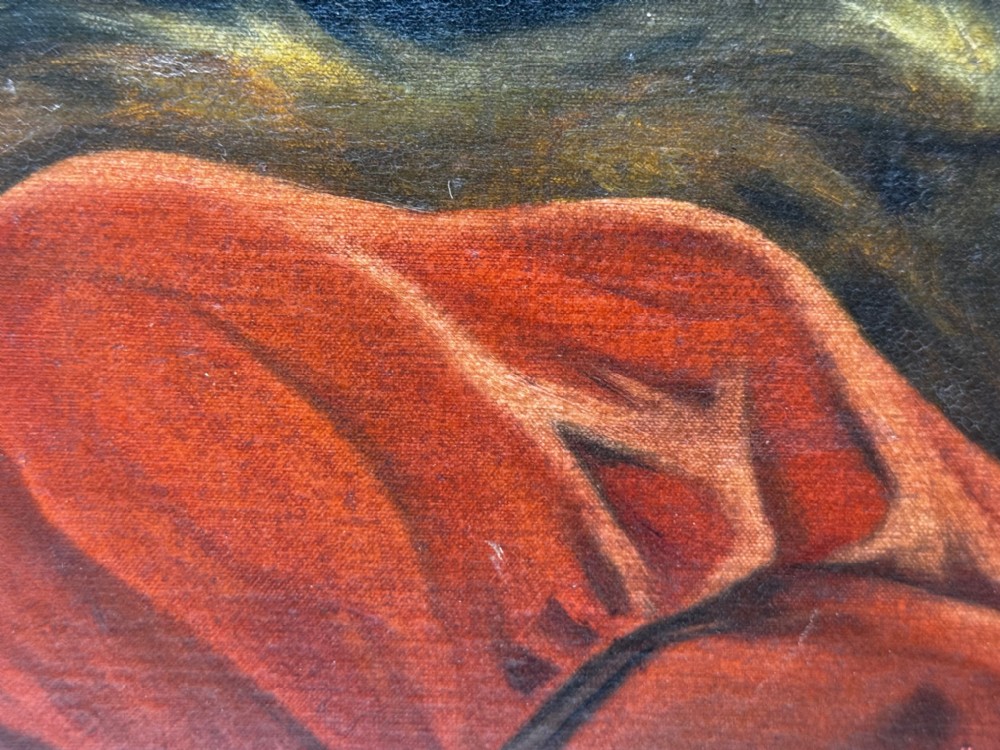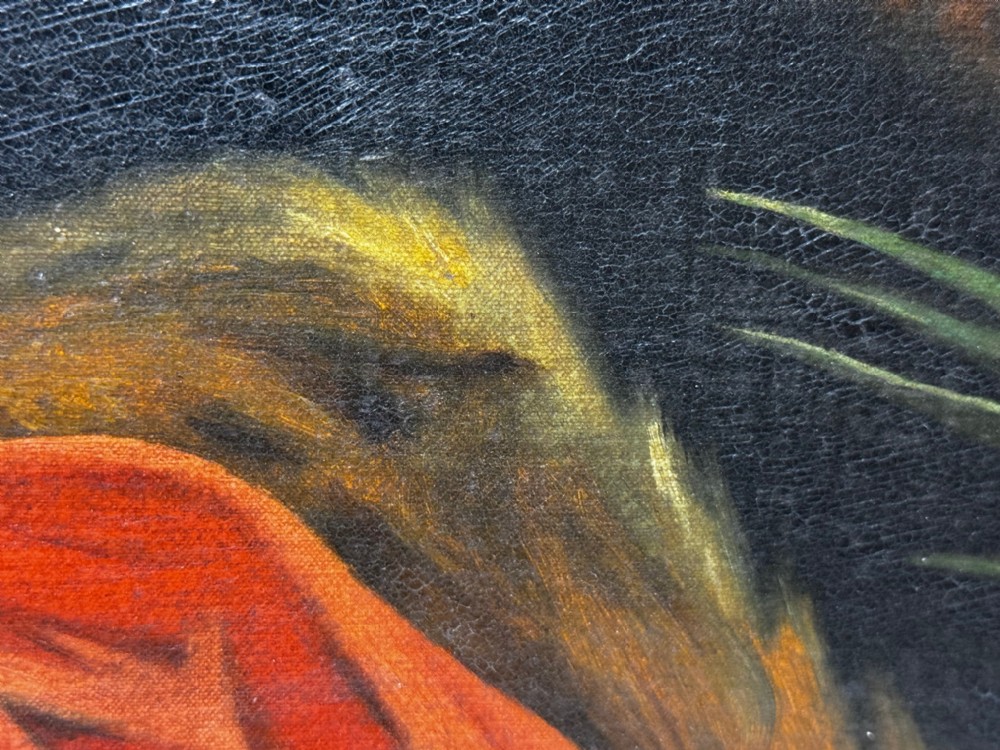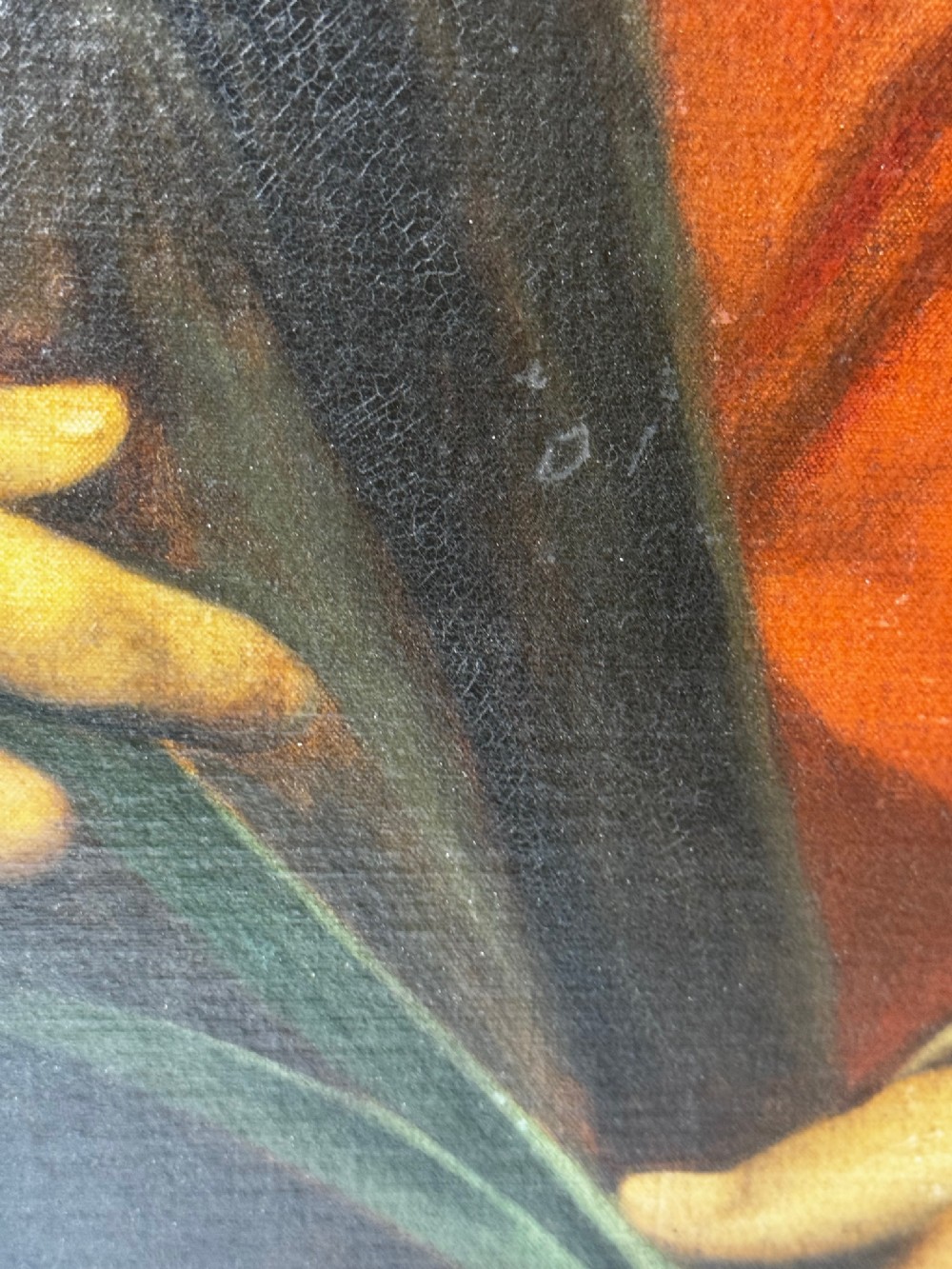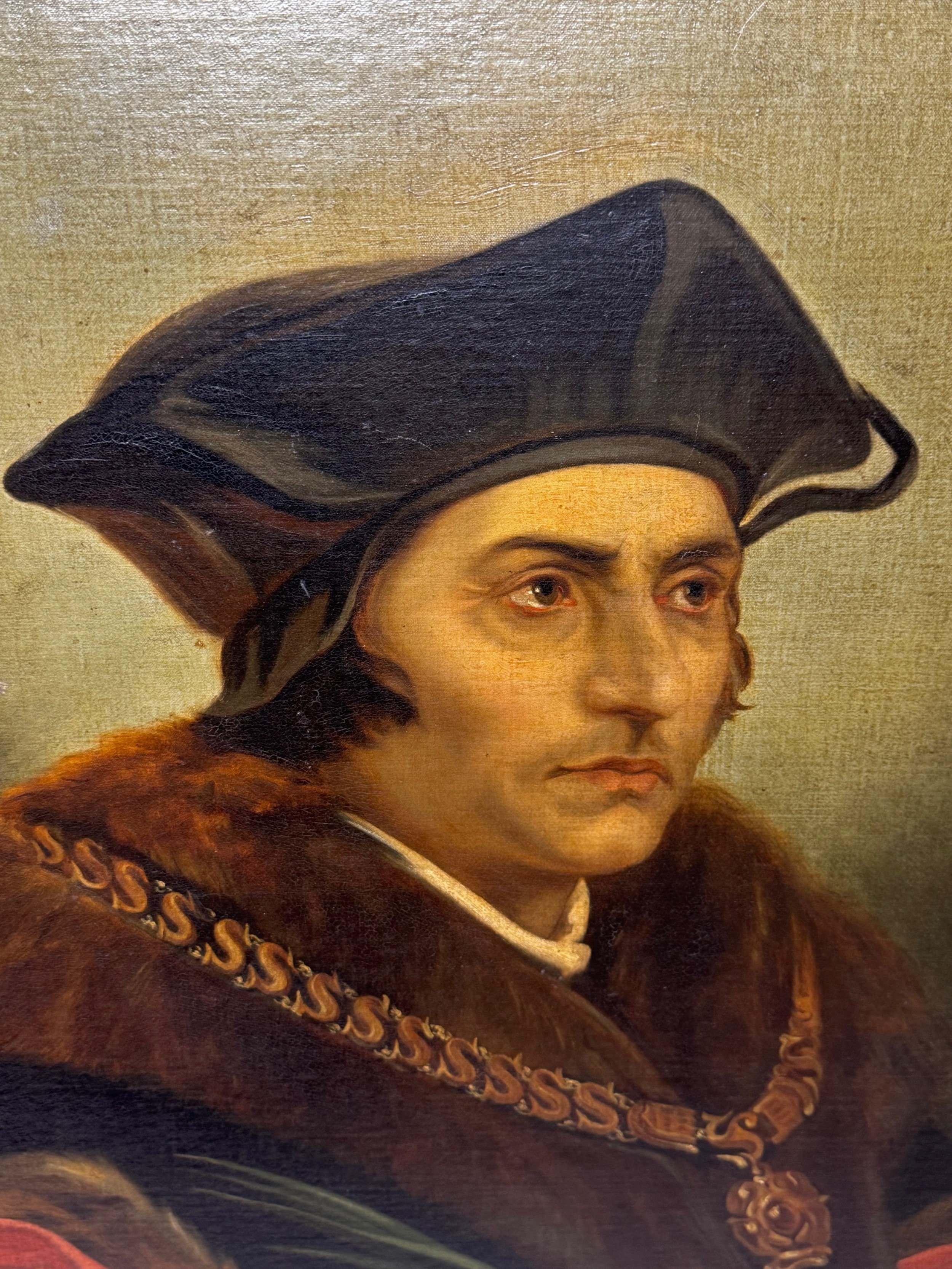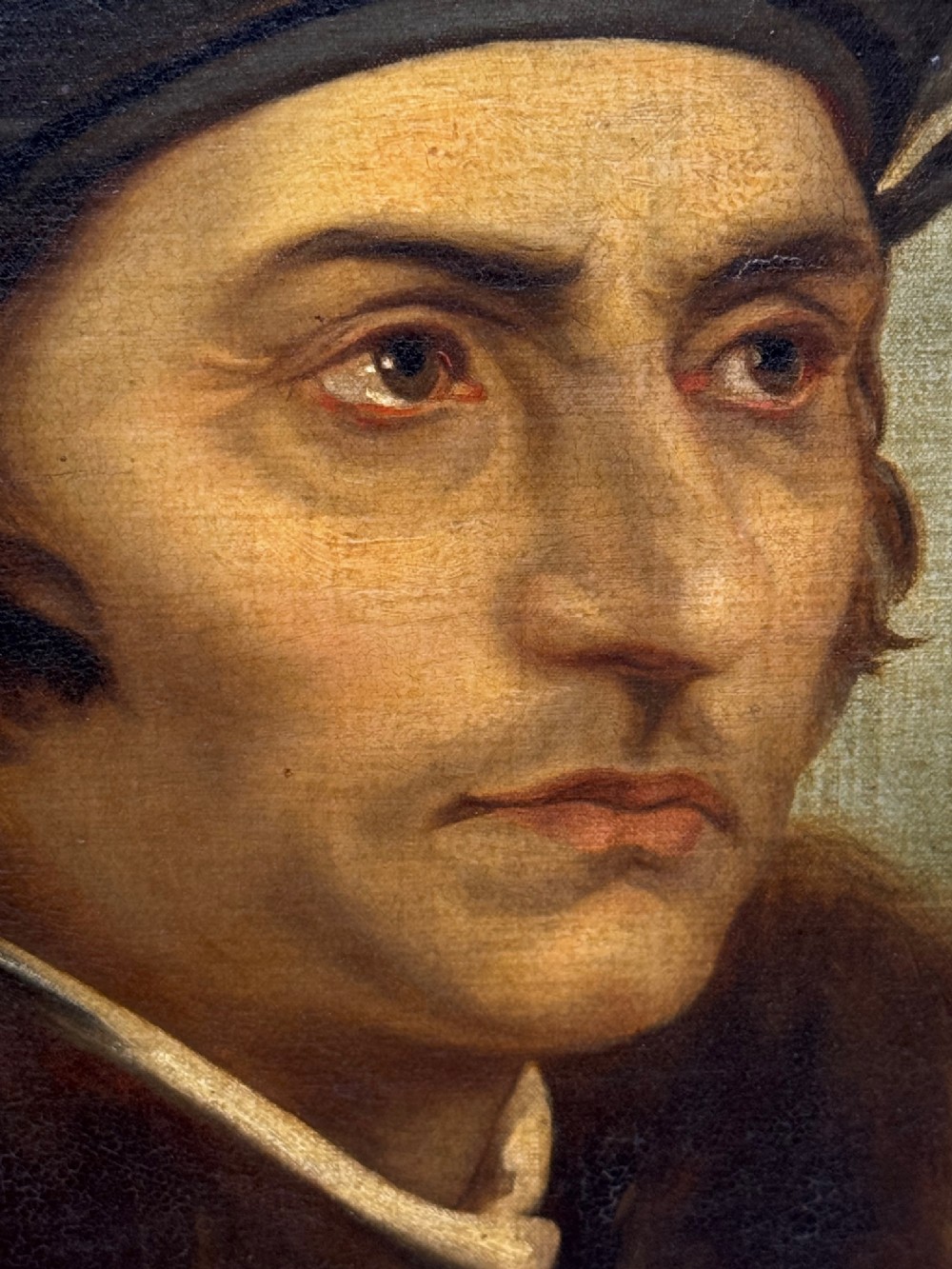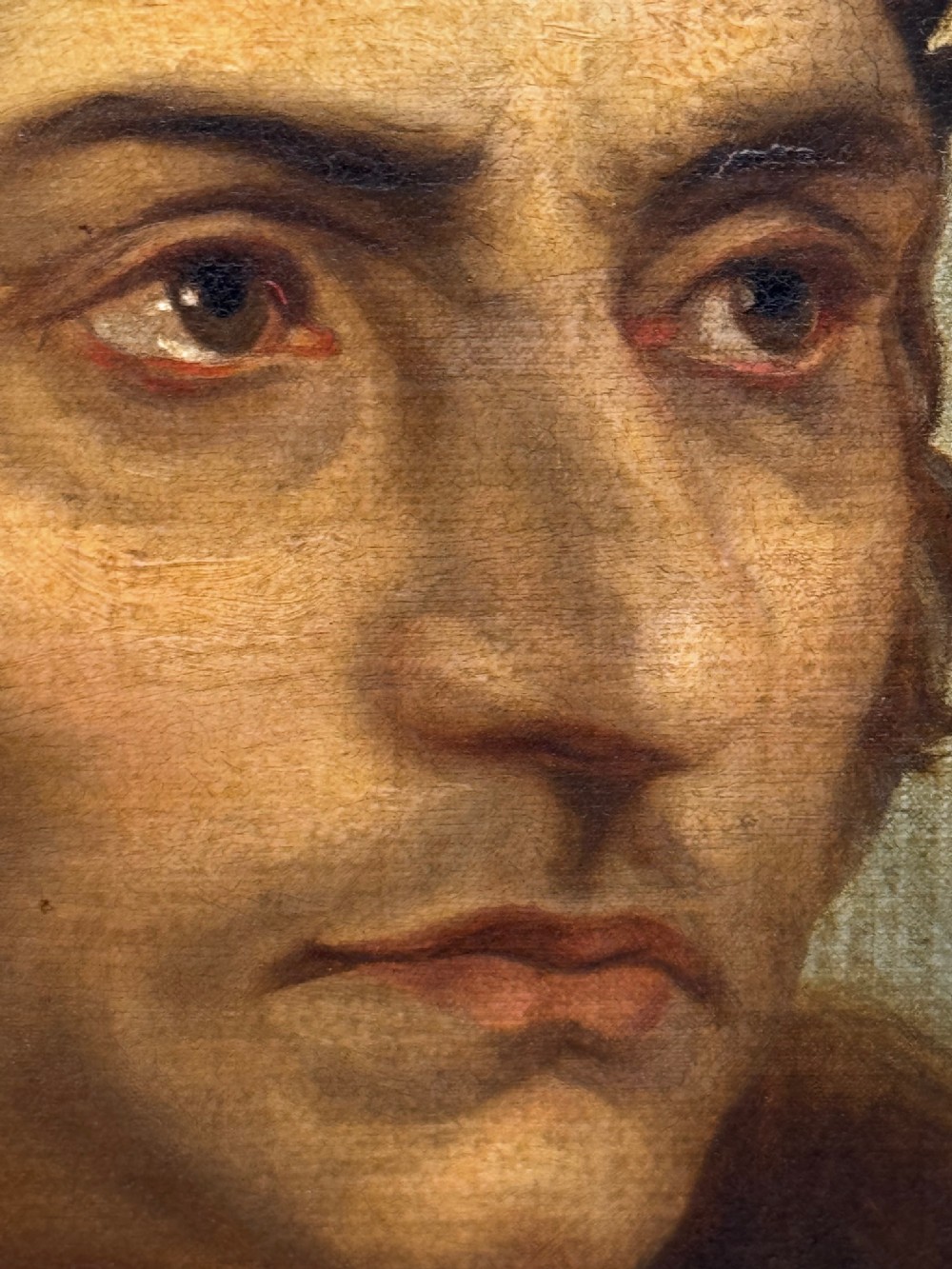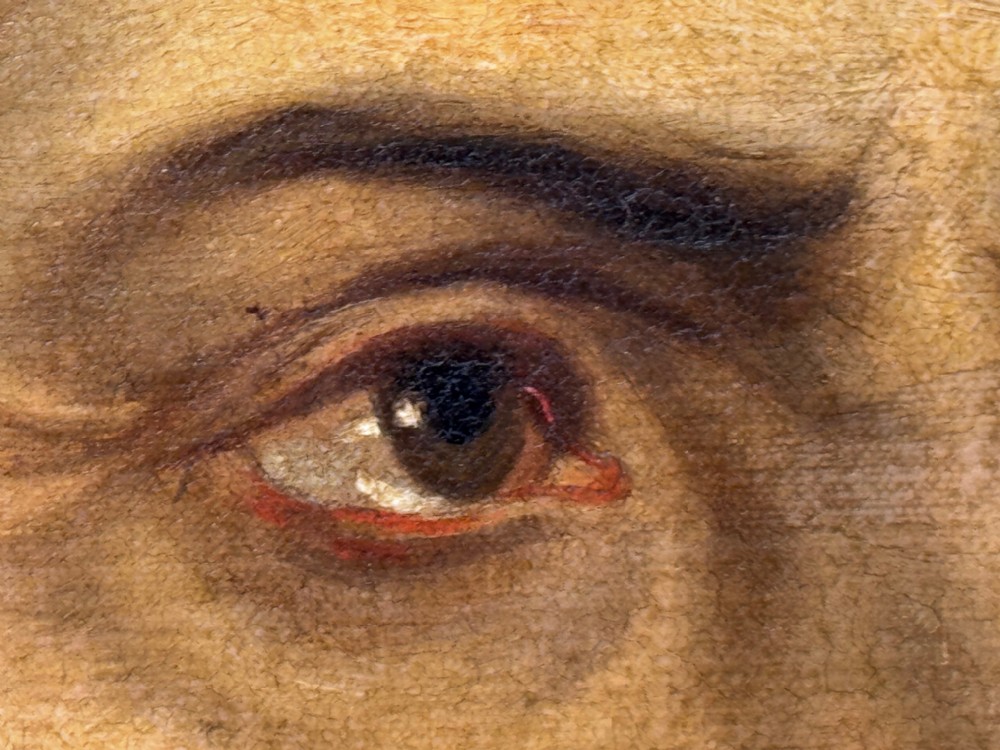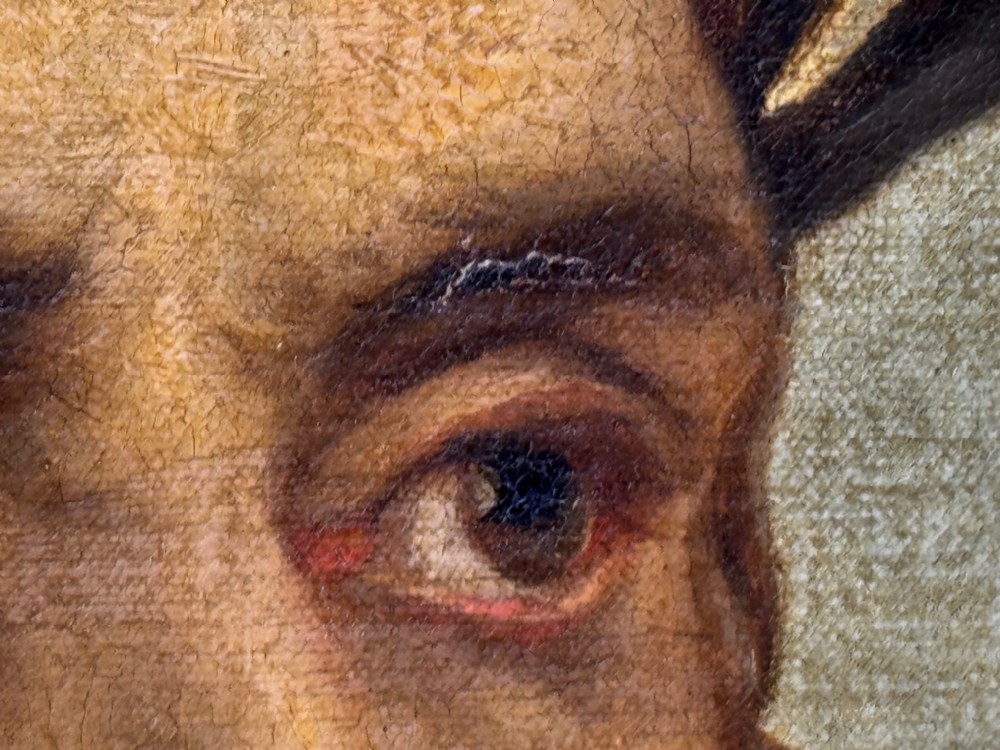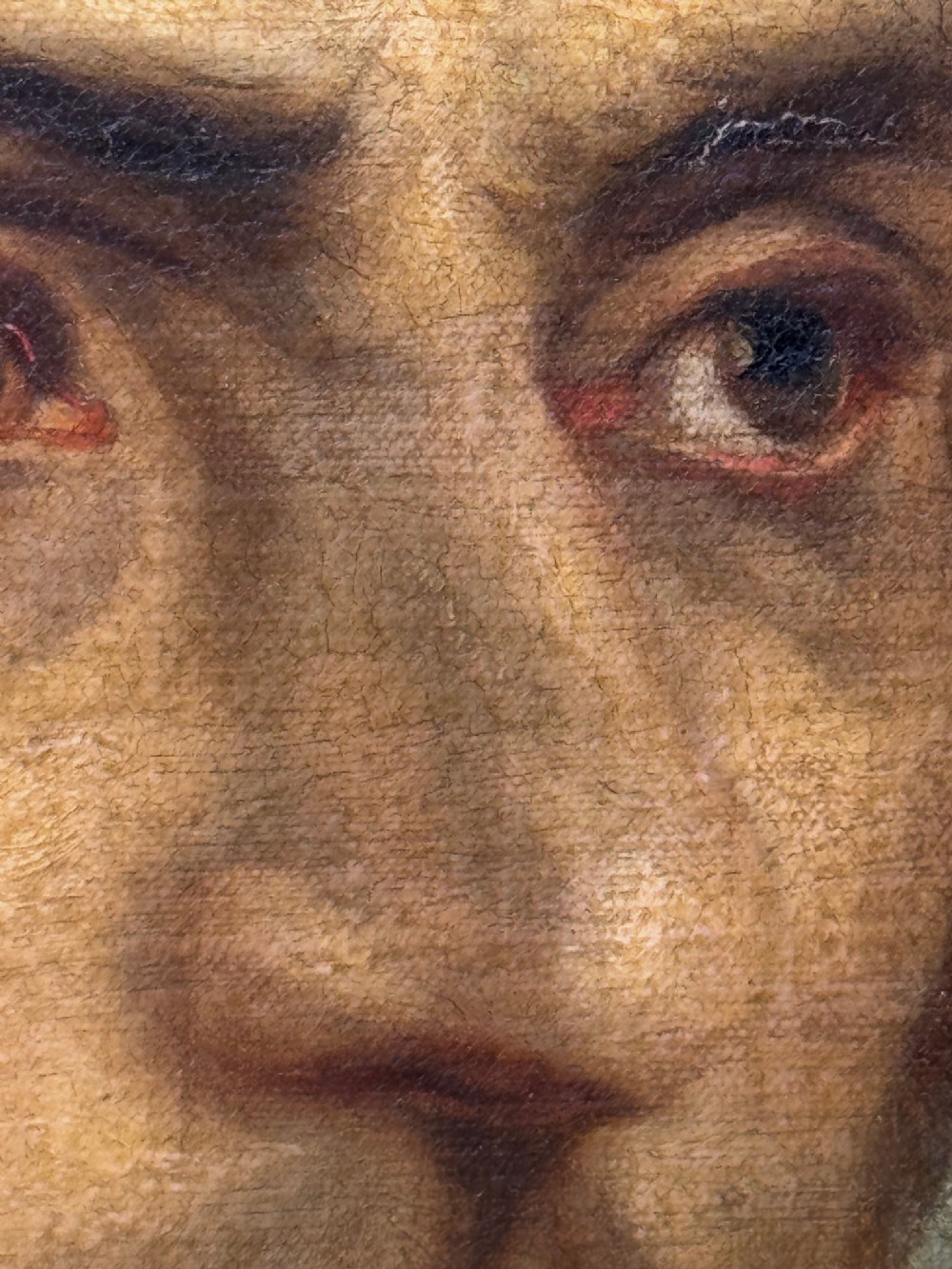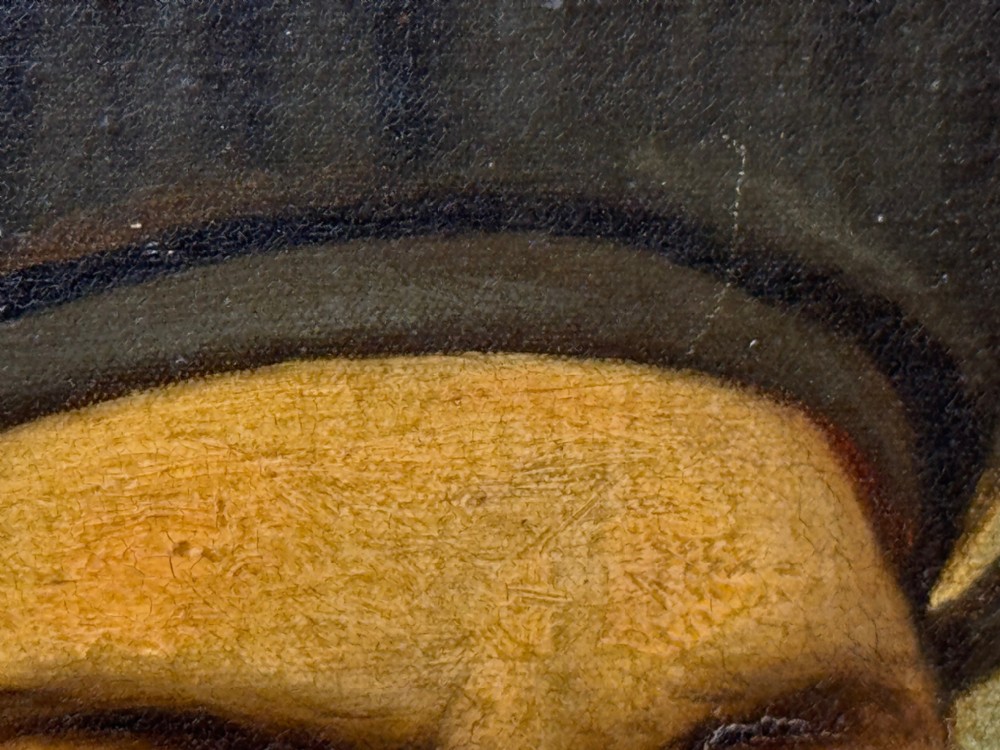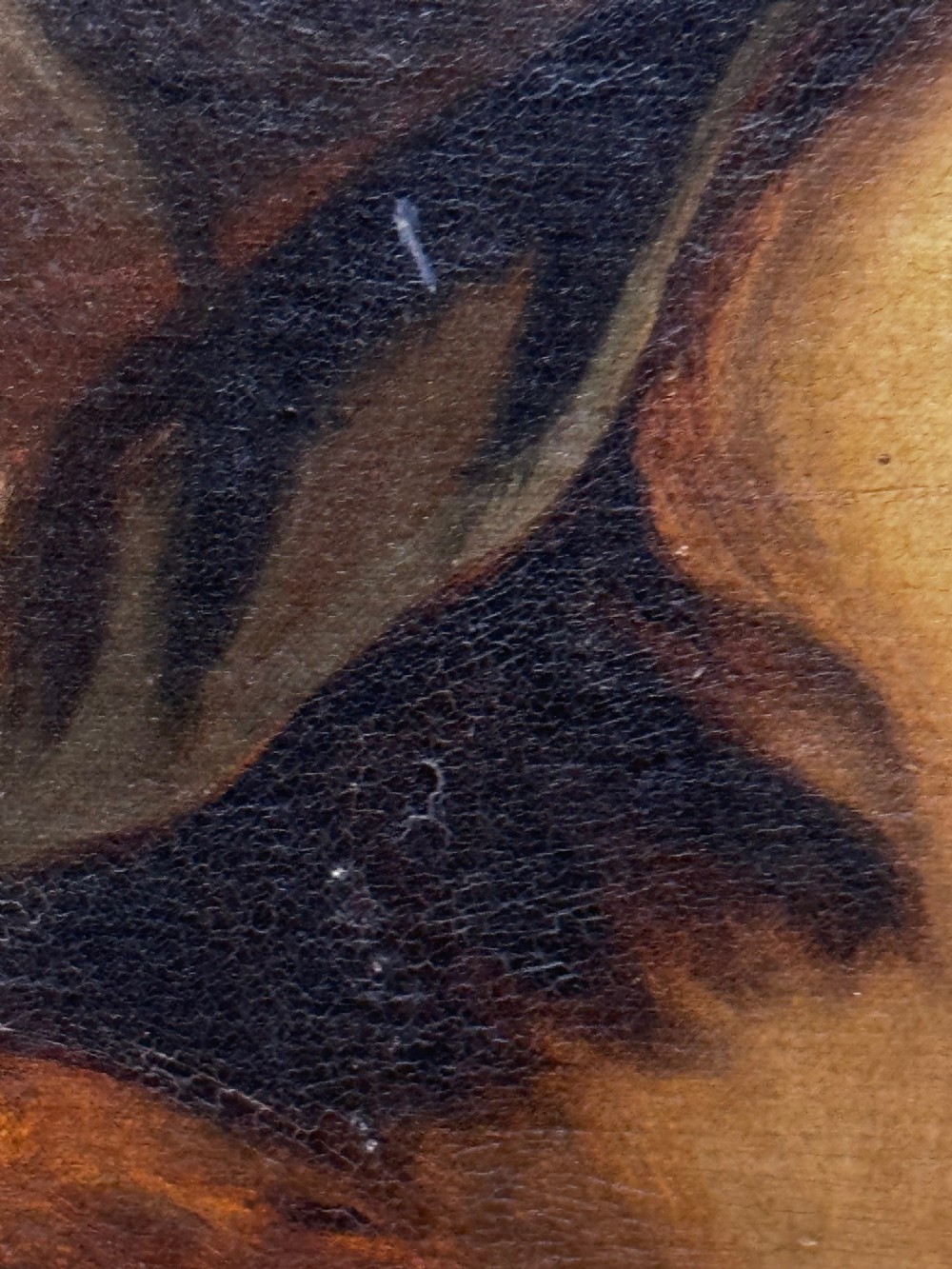
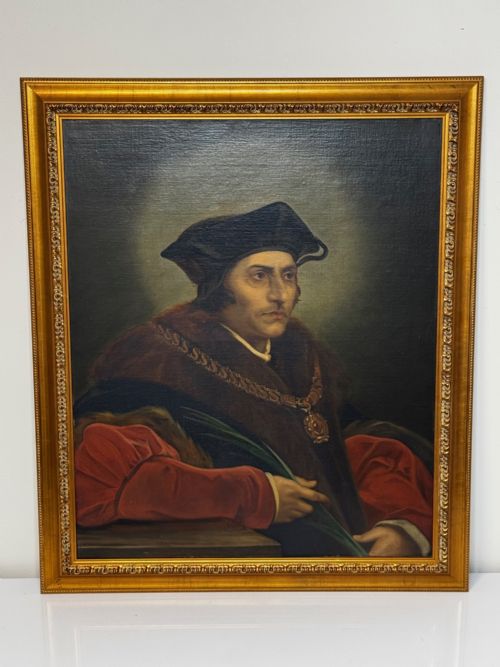
Cheshire Antiques Consultant Ltd has dated this Sir Thomas More Oil Painting to the 1900s.
Impress your clients & guests in your office or home with this notable portrait masterpiece
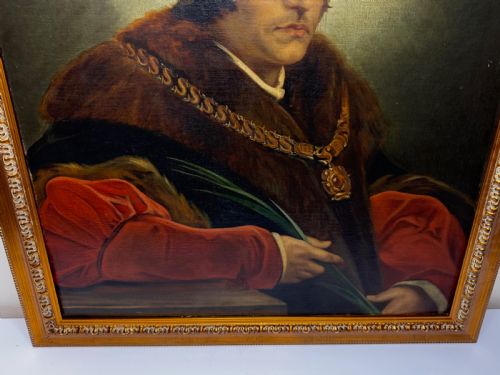
Painted in the style of after Hans Holbein.
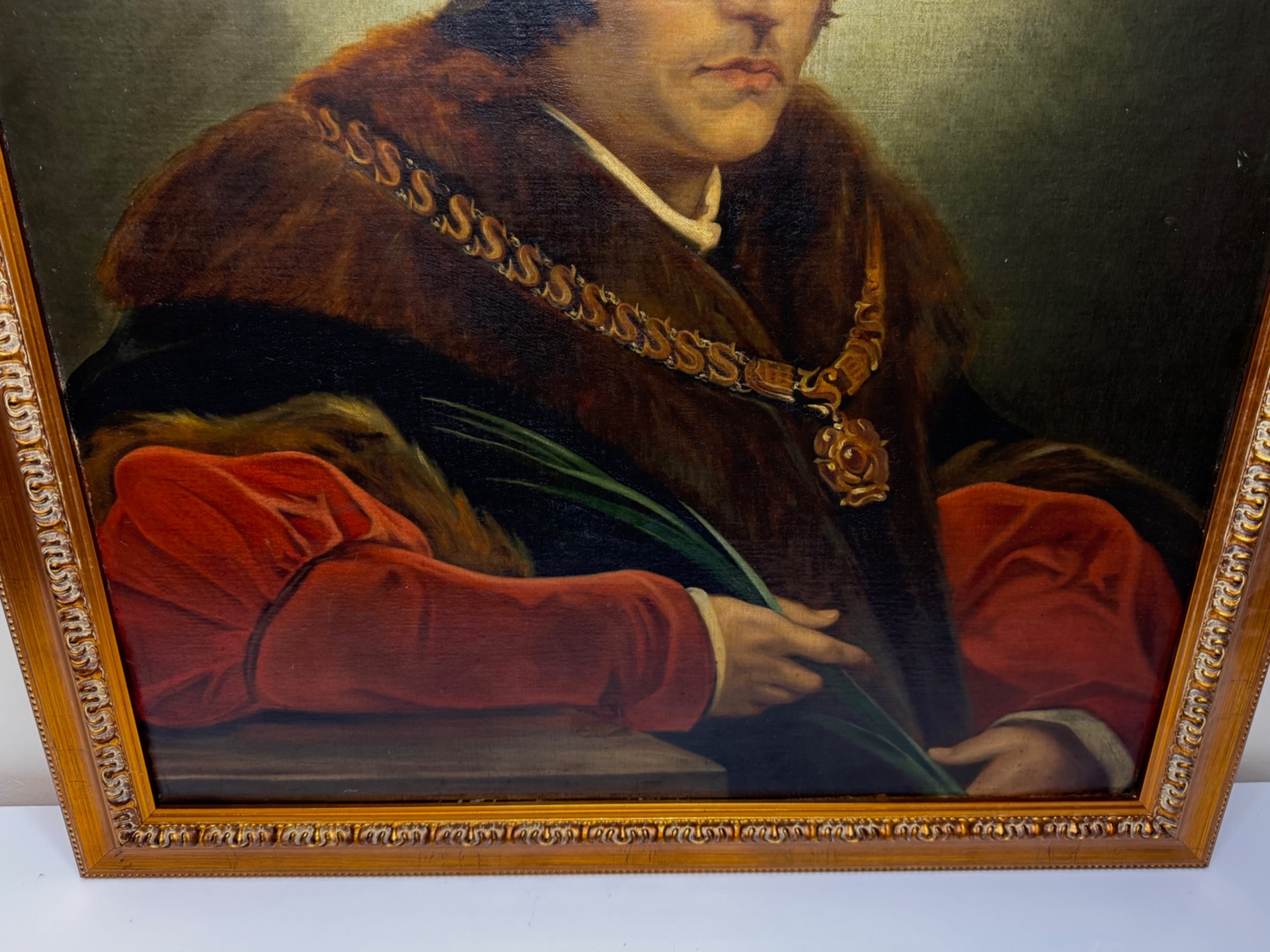
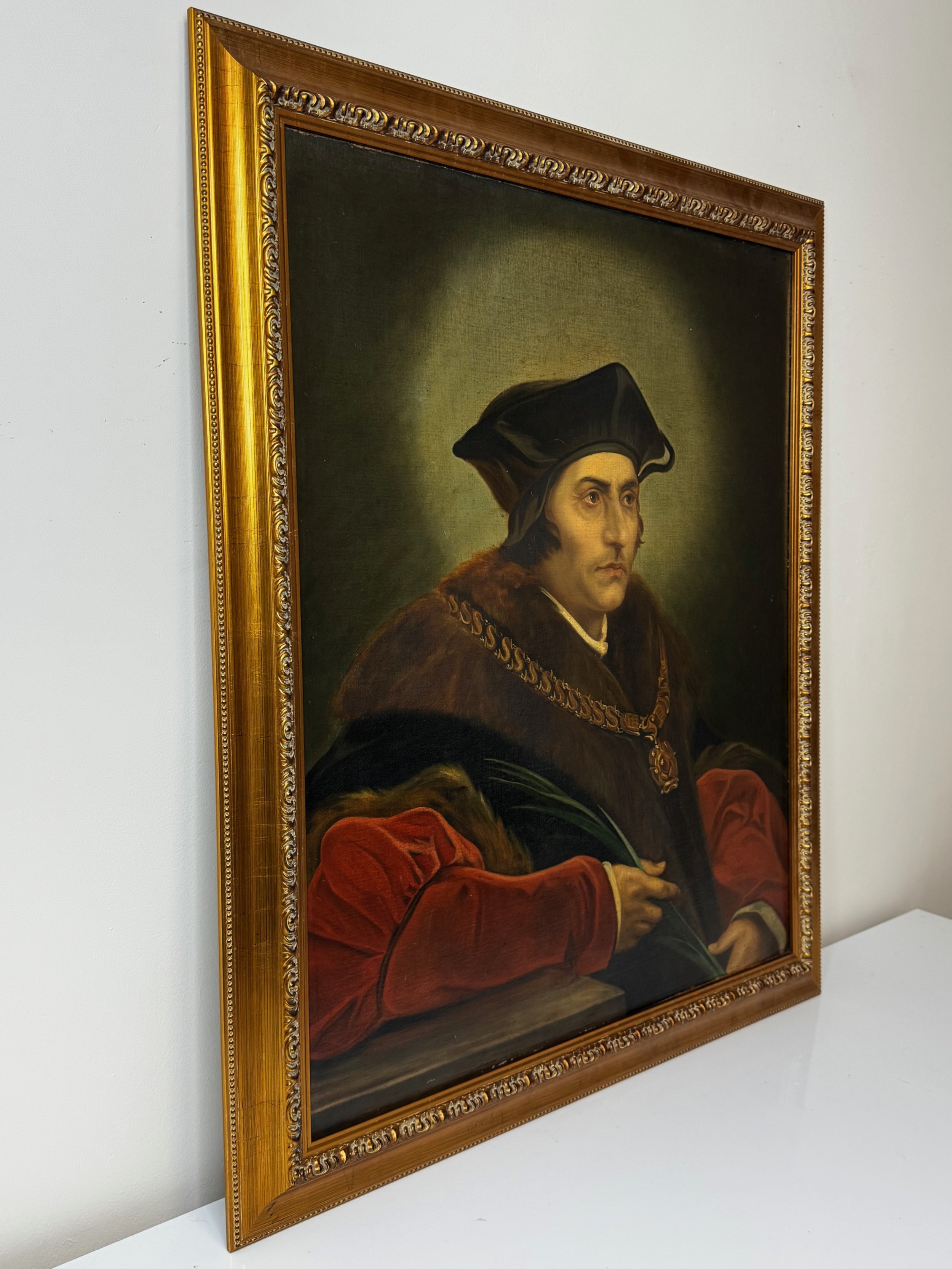
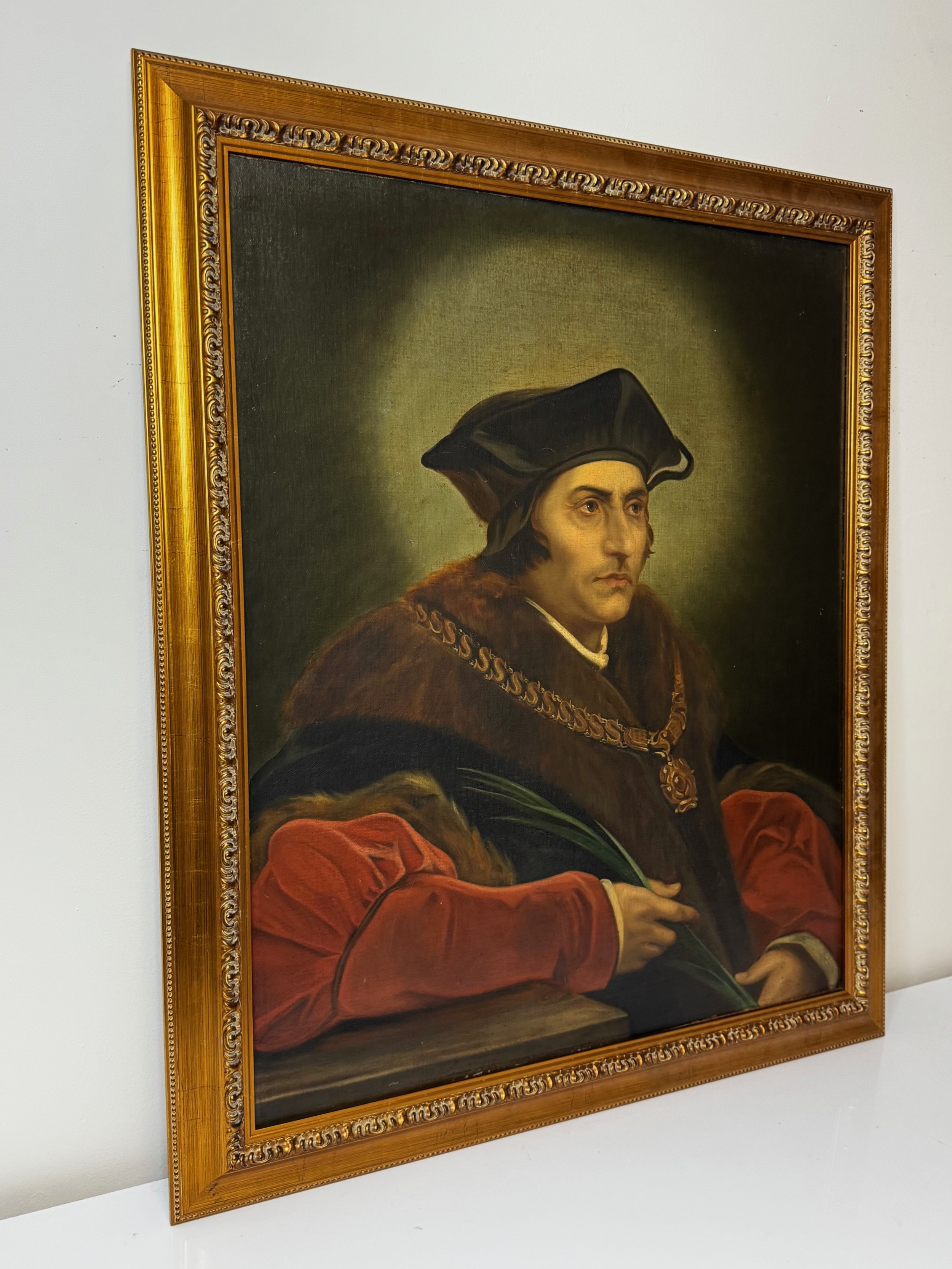
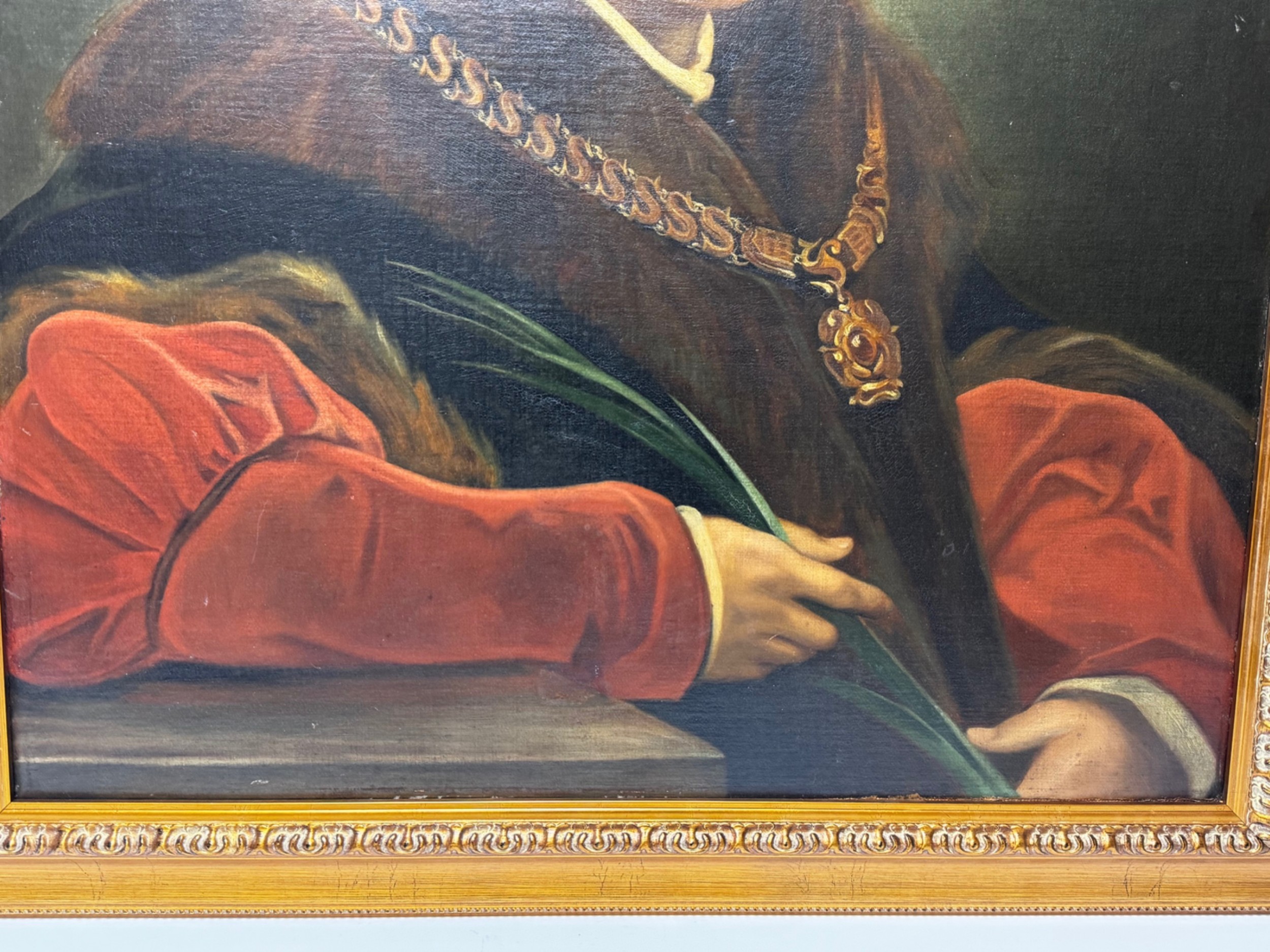
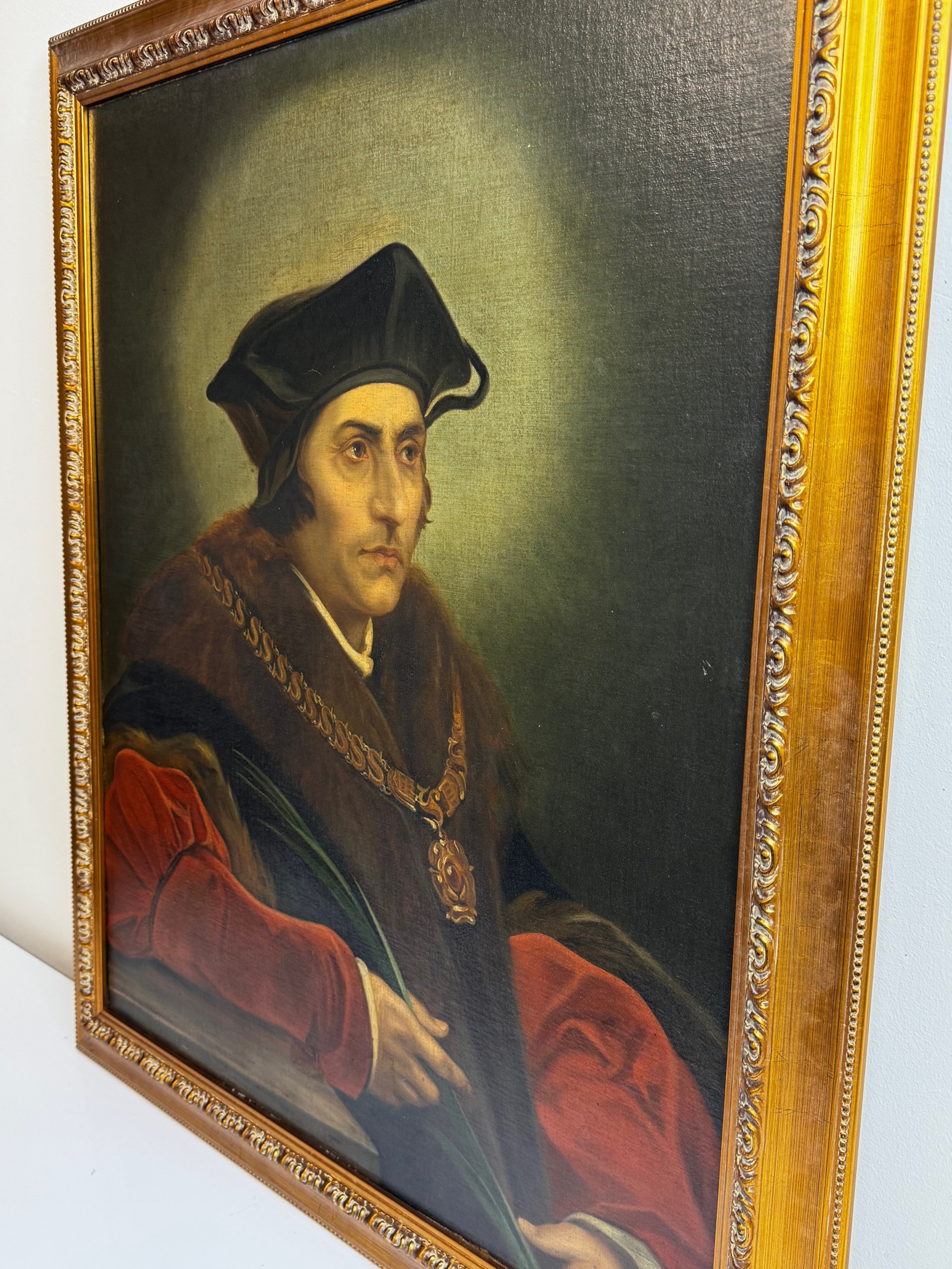
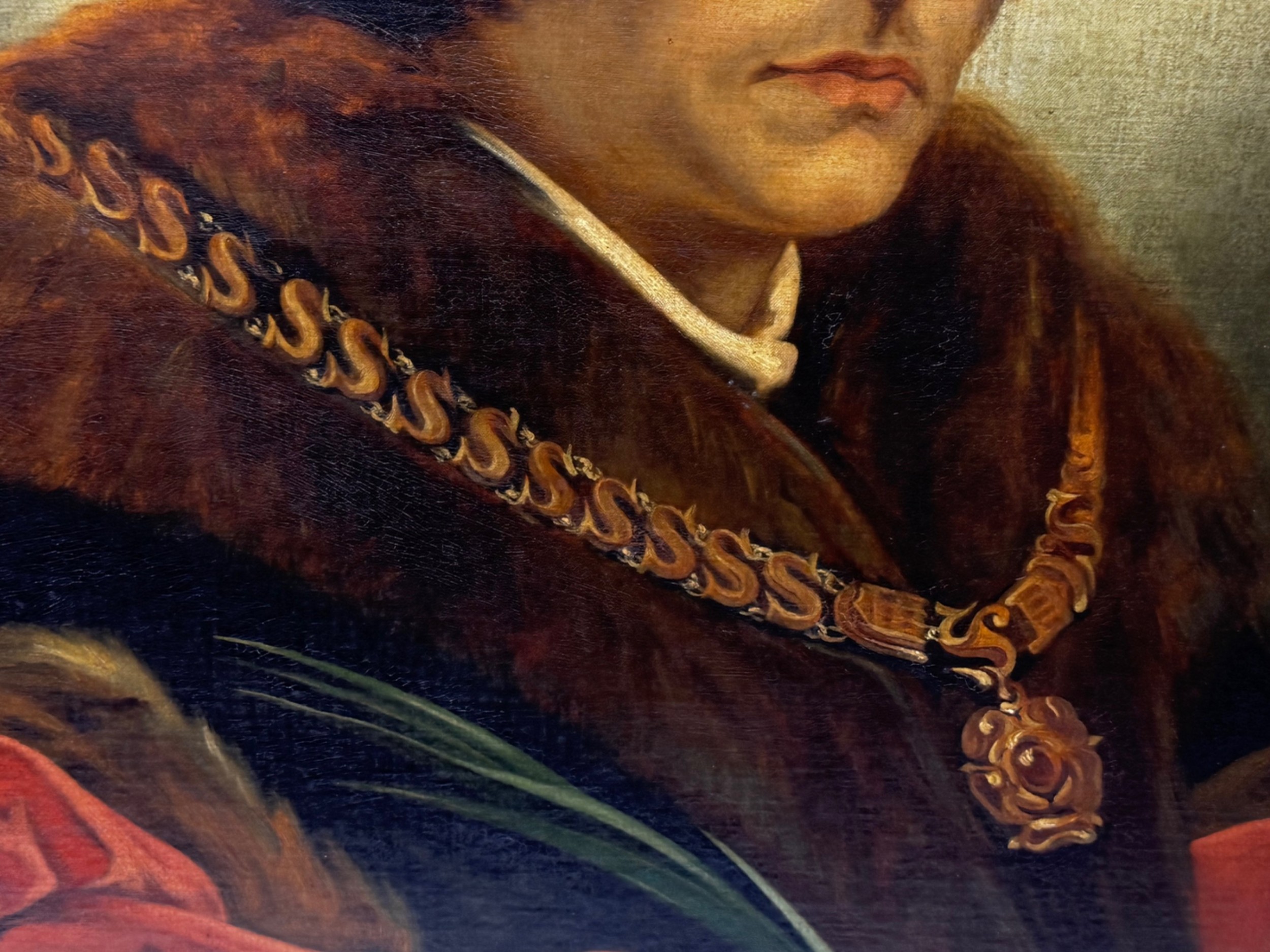
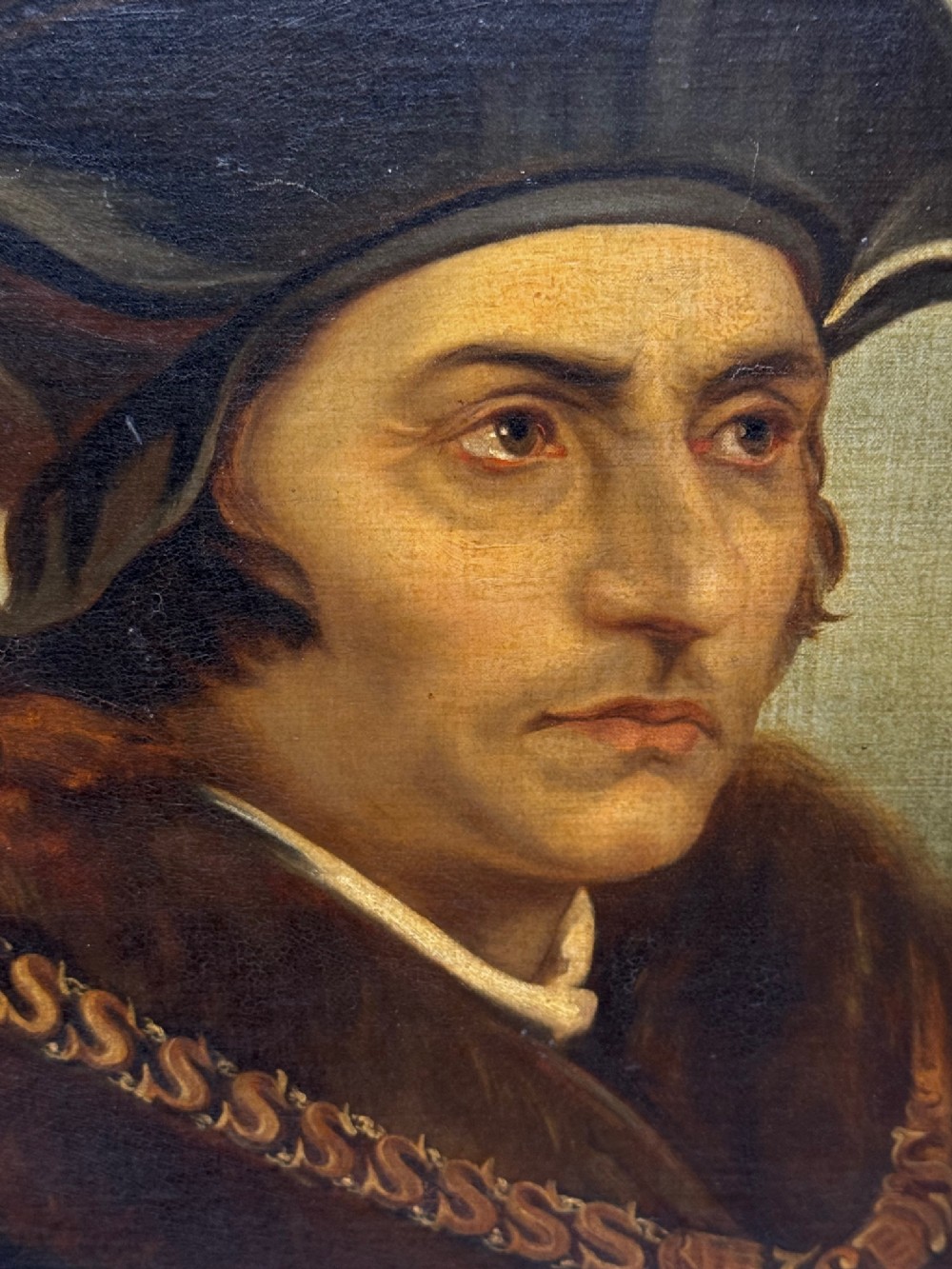
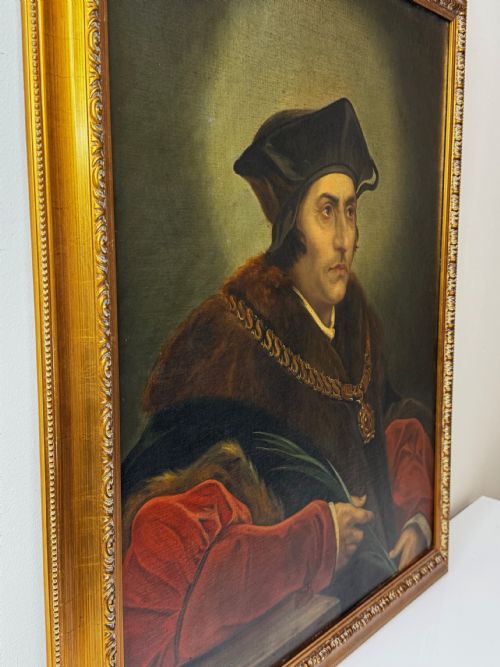
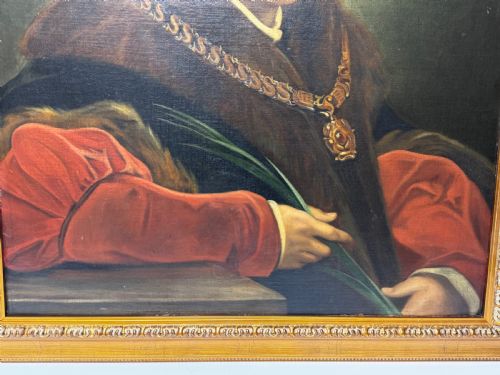
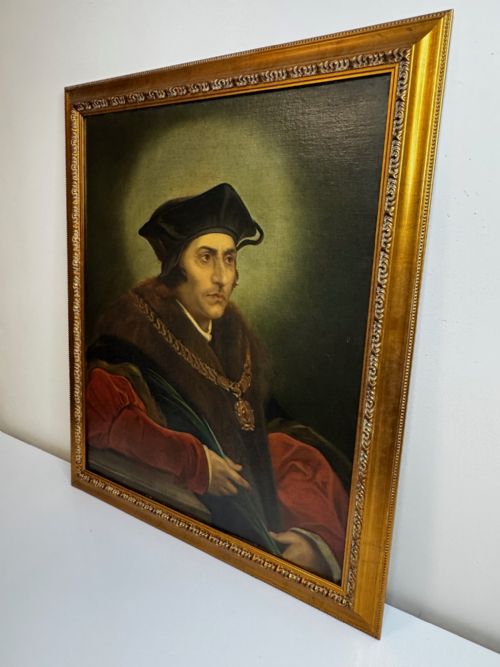
Subject half length portrait of the known historical important Englishman Sir Thomas More Privy Council, who is sitting down, his gaze is focused intently towards the left as shown in 1527 when he was Chancellor of the Duchy of Lancaster. He is in his traditional Elizabethan dress.
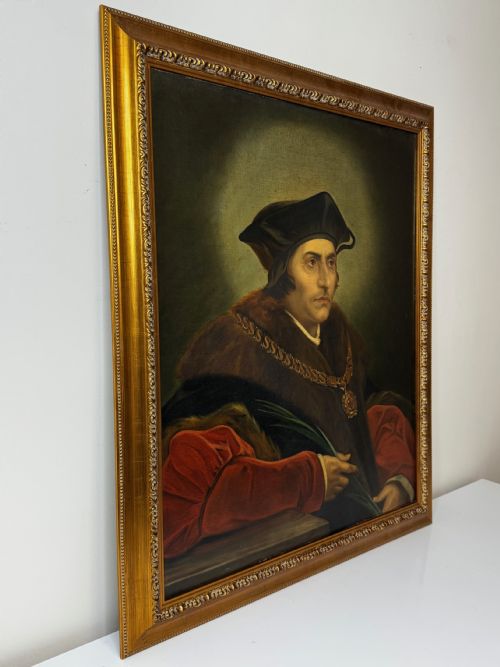
Title The Right Honourable Saint “Sir Thomas More 1527” After Hans Holbein.
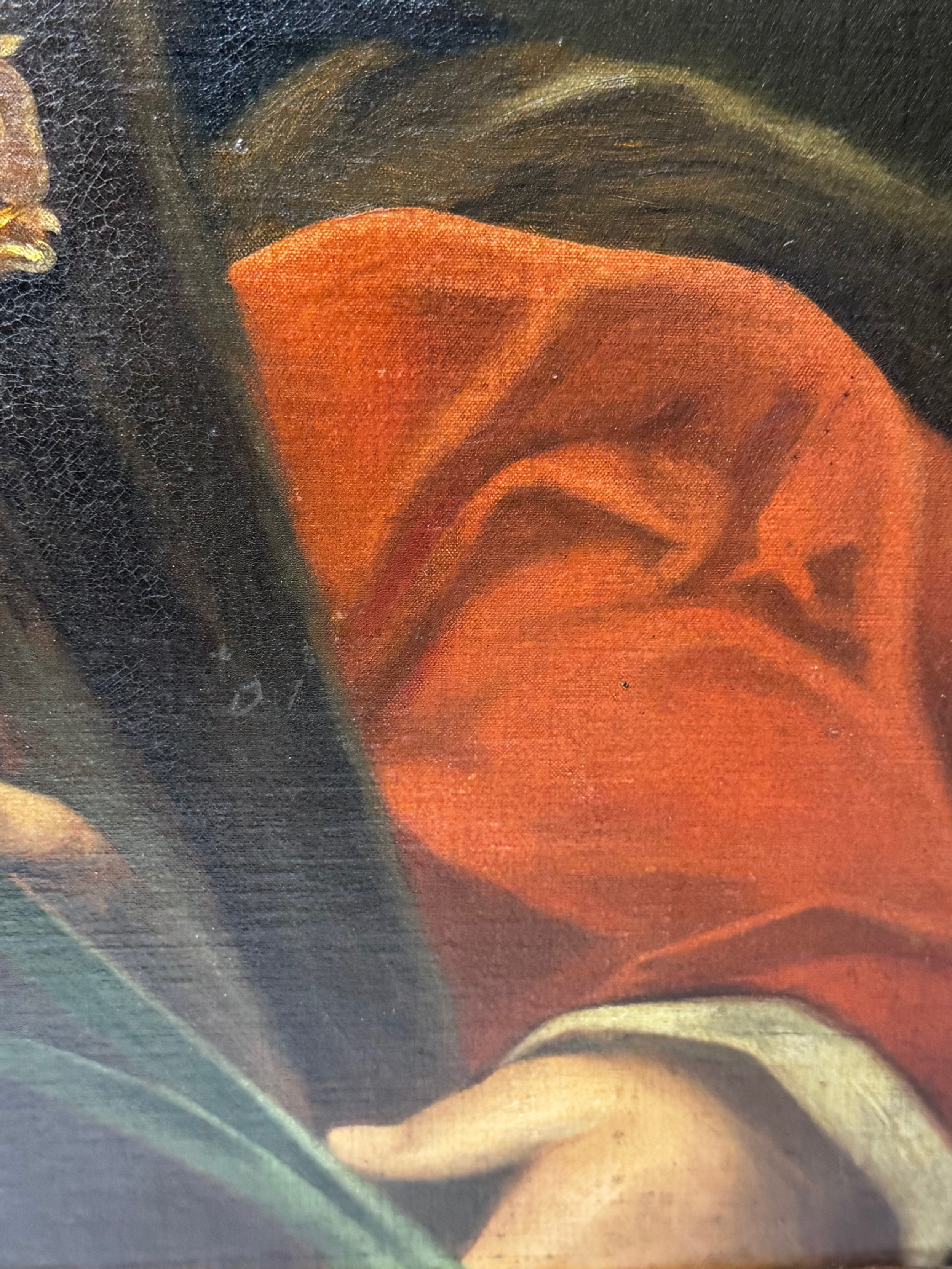
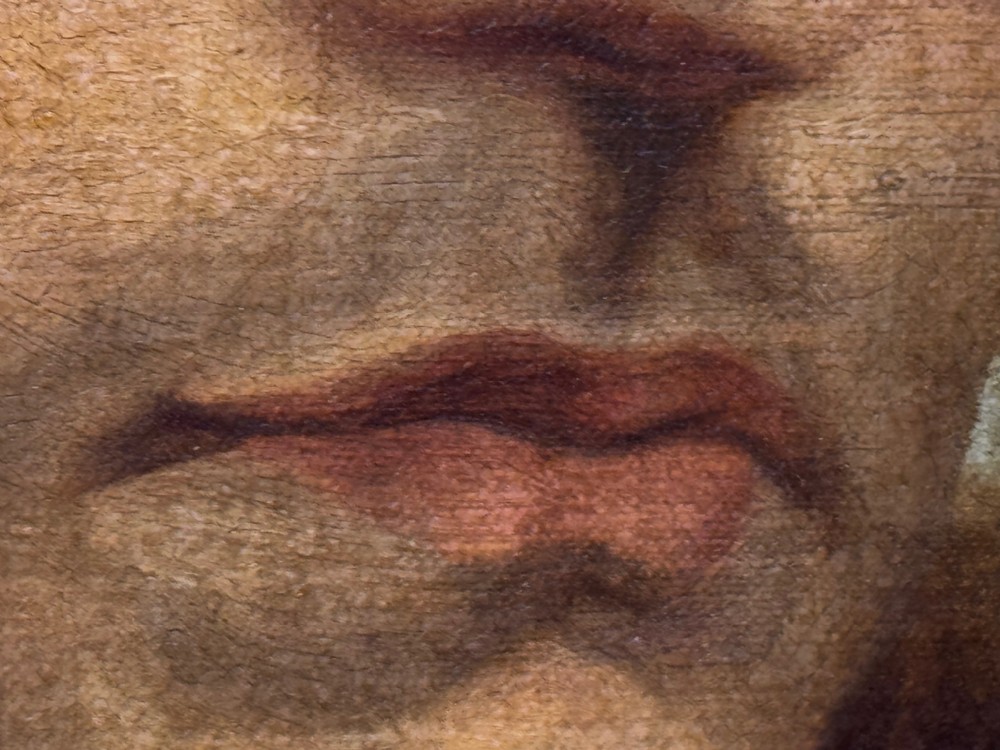
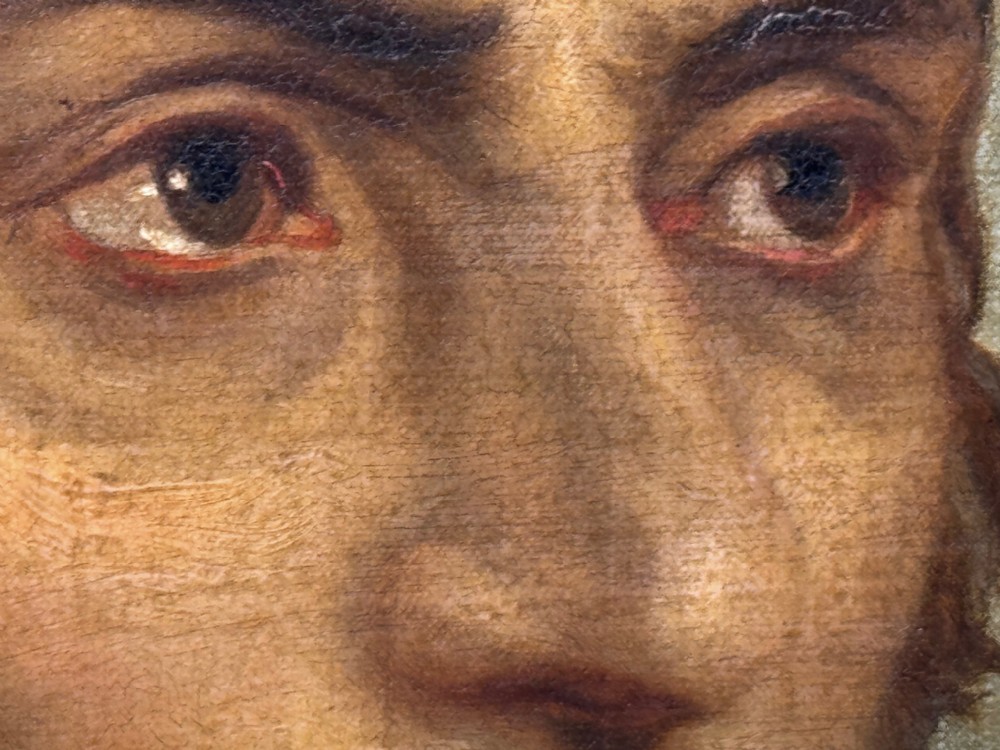
Oil on canvas.
Circa 1900 end of Victorian era early 20th century.
Set in a rather decorative recent gilt frame which enhances this work of art even further, the frame size being 92.8 cm high and 79 cm wide.
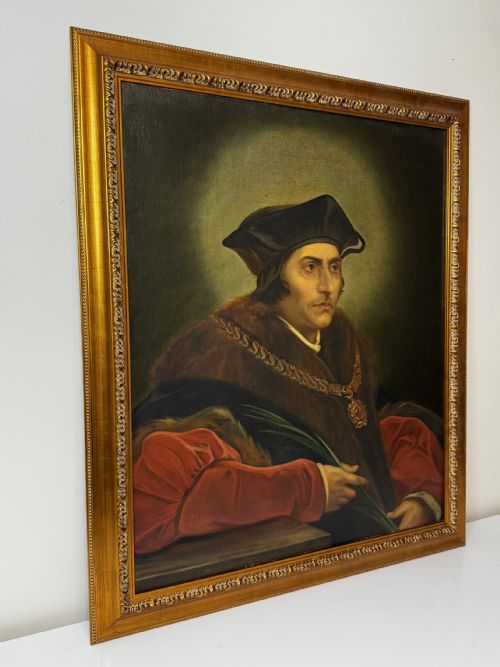
So collectible and sought after the subject portraiture matter.
Unsigned English school artist.
Sir Thomas More PC (7 February 1478 – 6 July 1535) he was born in the City of London, on 7 February 1478, Thomas More was the son of Sir John More. He was venerated in the Catholic Church as Saint Thomas More, was an English lawyer, judge, social philosopher, author, statesman, theologian, and noted Renaissance humanist. He also served Henry VIII as Lord High Chancellor of England from October 1529 to May 1532. He wrote Utopia, published in 1516, which describes the political system of an imaginary island state.
More opposed the Protestant Reformation, directing polemics against the theology of Martin Luther, Huldrych Zwingli and William Tyndale. More also opposed Henry VIII's separation from the Catholic Church, refusing to acknowledge Henry as supreme head of the Church of England and the annulment of his marriage to Catherine of Aragon. After refusing to take the Oath of Supremacy, he was convicted of treason on what he stated was false evidence, and was executed.
More began his studies at Oxford in 1492, and received a classical education. Studying under Thomas Linacre and William Grocyn, he became proficient in both Latin and Greek. More left Oxford after only two years—at his father's insistence—to begin legal training in London at New Inn, one of the Inns of Chancery. In 1496, More became a student at Lincoln's Inn, one of the Inns of Court, where he remained until 1502, when he was called to the Bar. More could speak and banter in Latin with the same facility as in English. He wrote and translated poetry. He was particularly influenced by Pico della Mirandola and translated the Life of Pico into English.
More married Joanna "Jane" Colt, the eldest daughter of John Colt of Essex in 1505. In that year he leased a portion of a house known as the Old Barge (originally there had been a wharf nearby serving the Walbrook river) on Bucklersbury, St Stephen Walbrookparish, London. Eight years later he took over the rest of the house and in total he lived there for almost 20 years, until his move to Chelsea in 1525. Erasmus reported that More wanted to give his young wife a better education than she had previously received at home, and tutored her in music and literature. The couple had four children: Margaret, Elizabeth, Cecily, and John. Jane died in 1511. In 1504 More was elected to Parliament to represent Great Yarmouth, and in 1510 began representing London. More first attracted public attention by his conduct in the parliament of 1504, by his daring opposition to the King's demand for money.
From 1510, More served as one of the two undersheriffs of the City of London, a position of considerable responsibility in which he earned a reputation as an honest and effective public servant. Interested
Cheshire Antiques Consultant Ltd has dated this Sir Thomas More Oil Painting to the 1900s.
Source the historic in 17th, 18th, 19th & 20th century fine arts, painting, sculptures & collectibles
You can view the stock and full dealer information on the Cheshire Antiques Consultant Ltd Profile Page
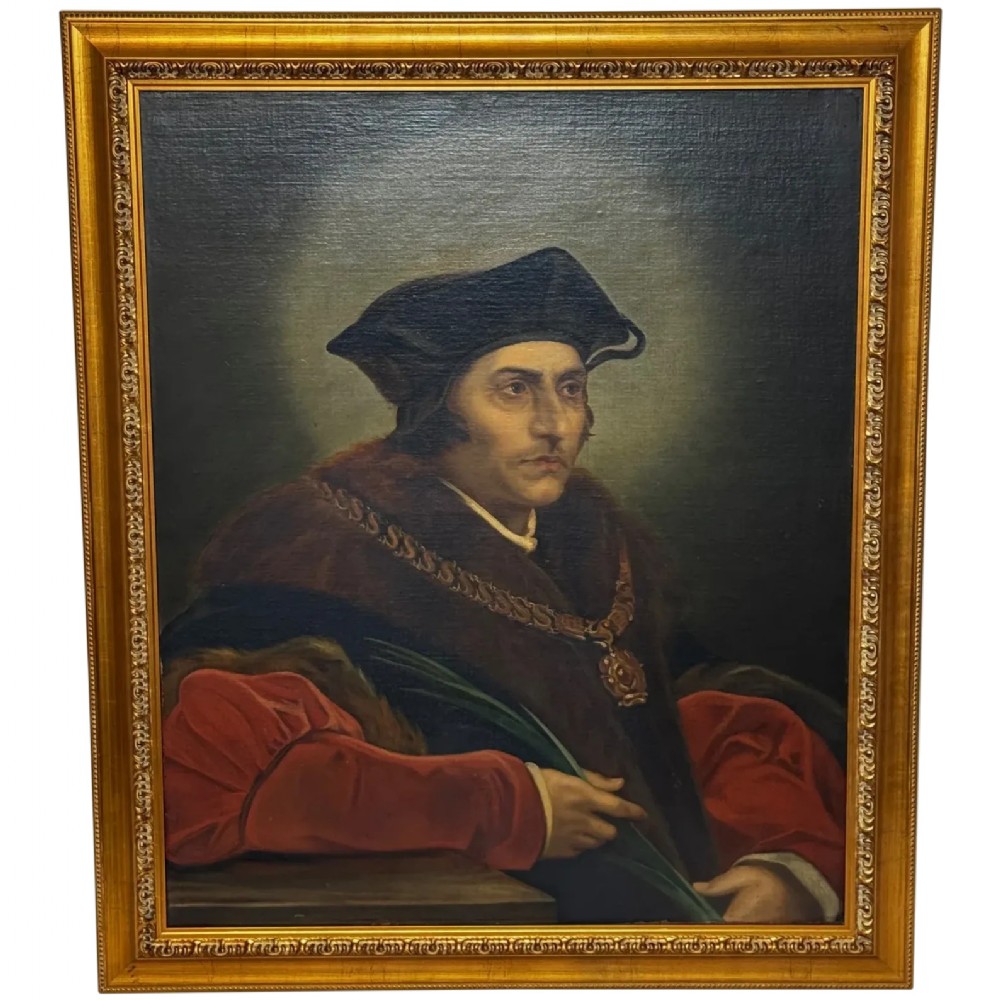
Large Oil Painting Sir Thomas More After Hans Holbein