Regent Antiques has dated this piece to the 1800s.
See Gillows of Lancaster and London, 1730-1840, by Susan Stuart, p. 242, pl.241: In identically designed table made for Broughton Hall in 1813, supplied by Gillows.
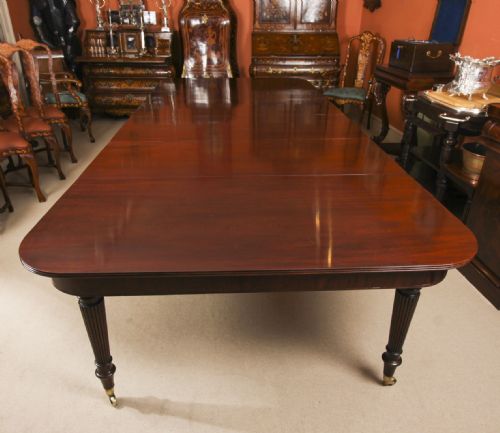
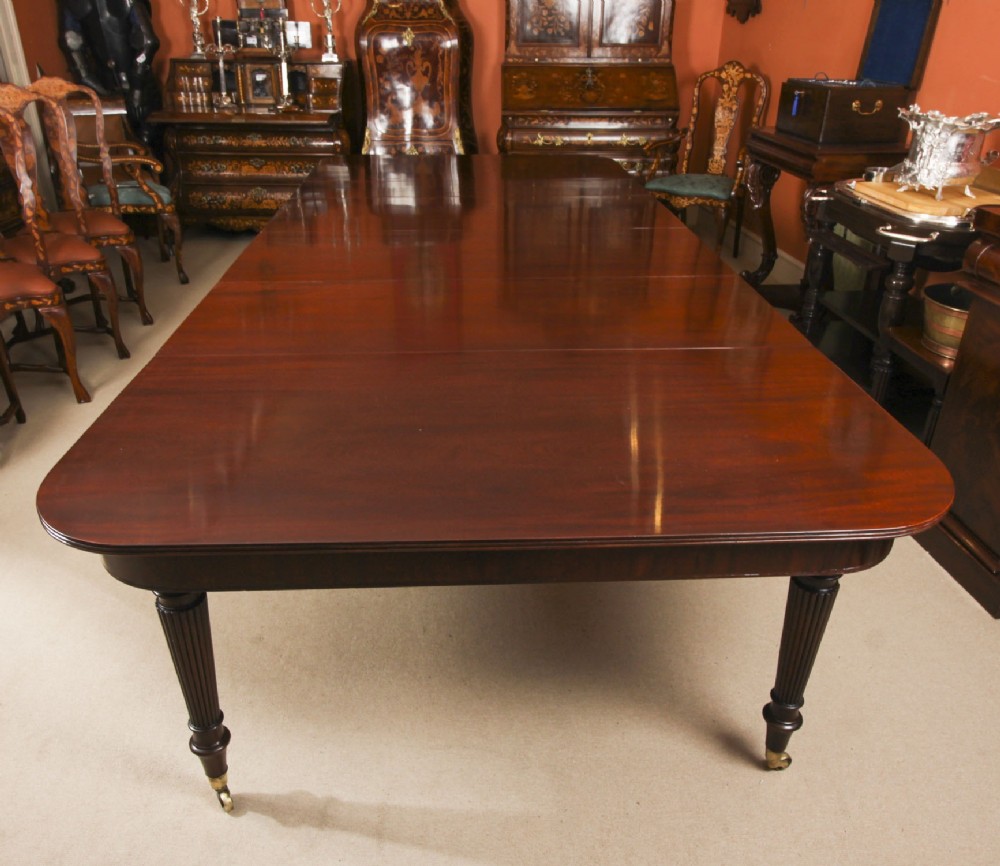
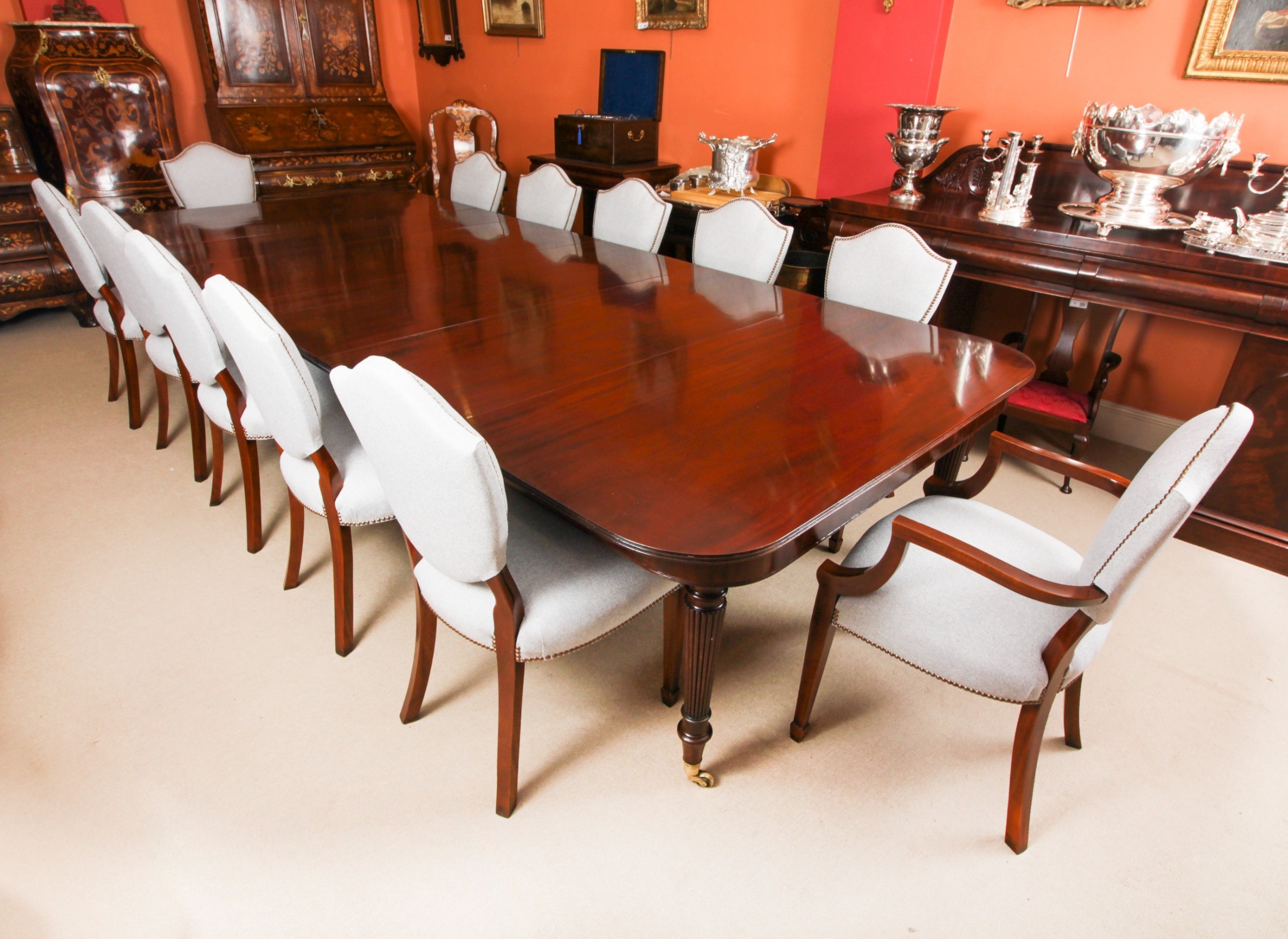
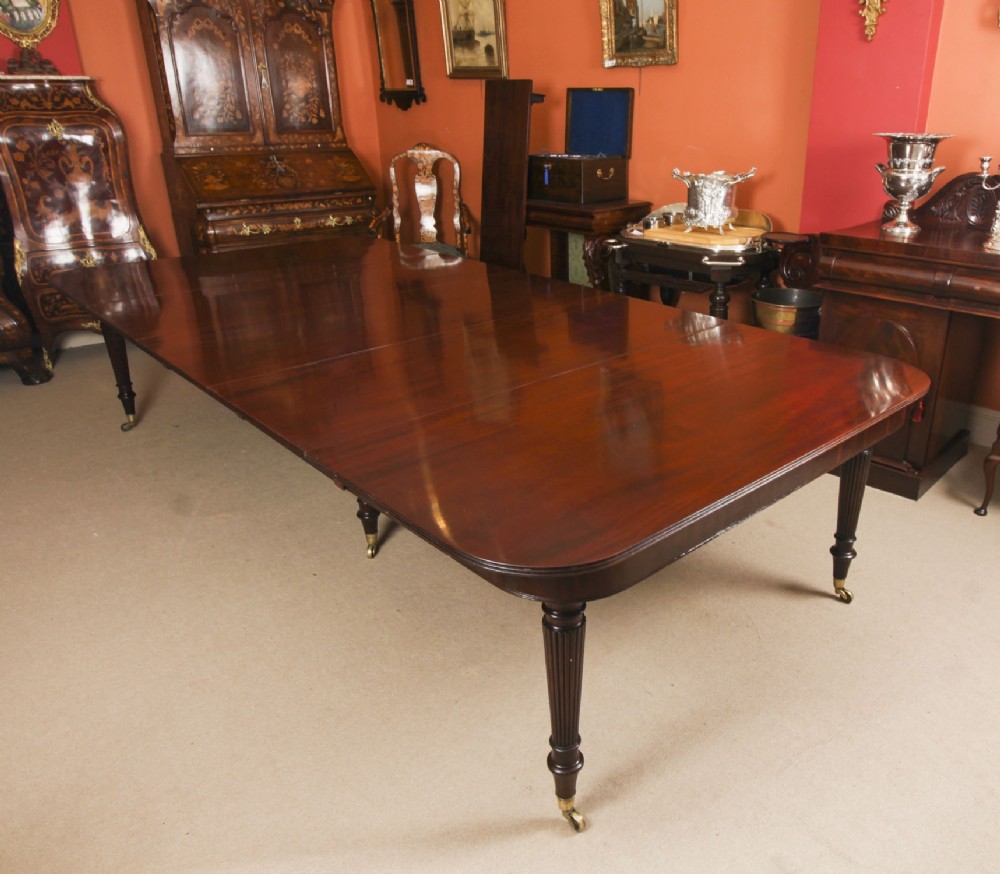
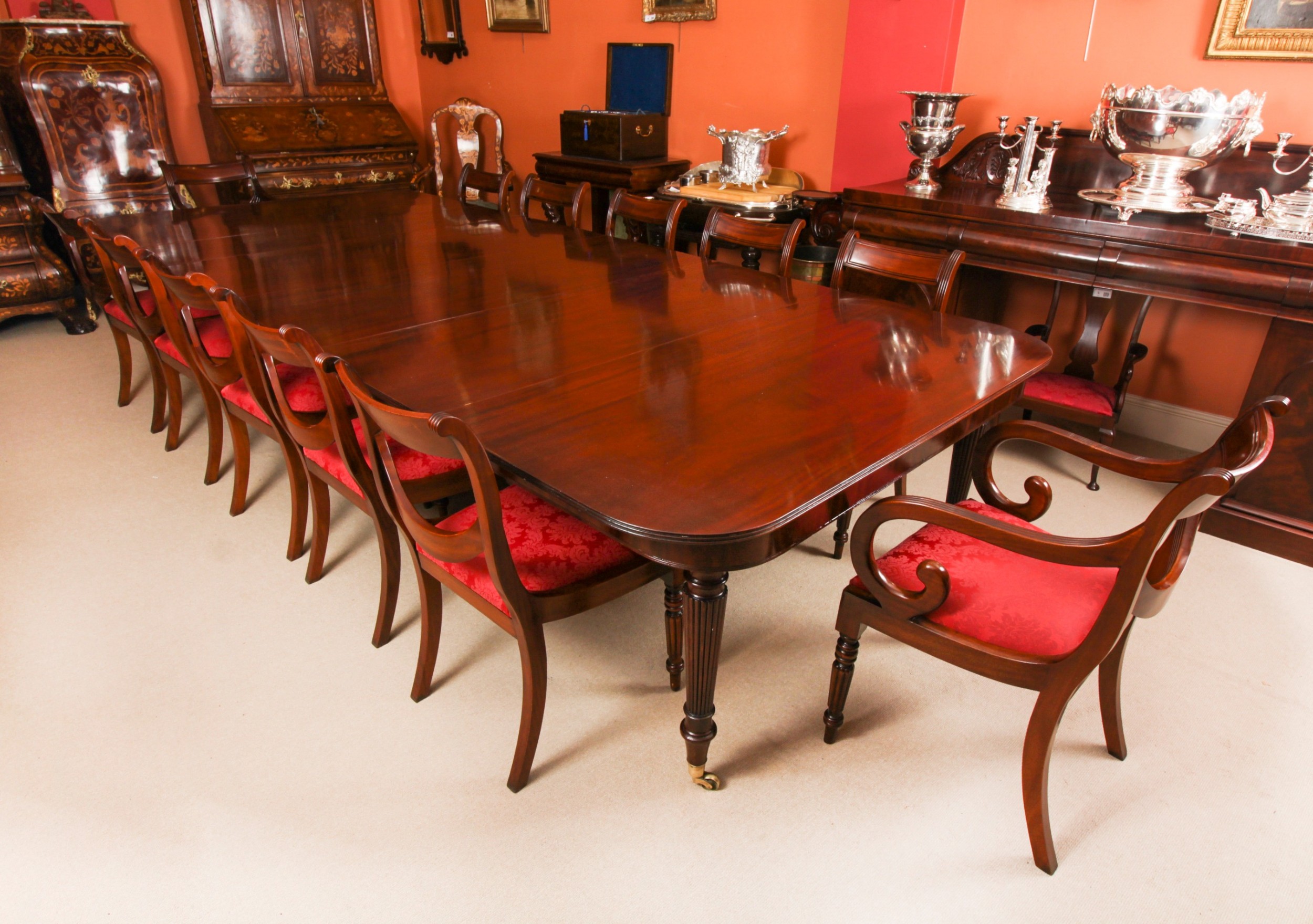
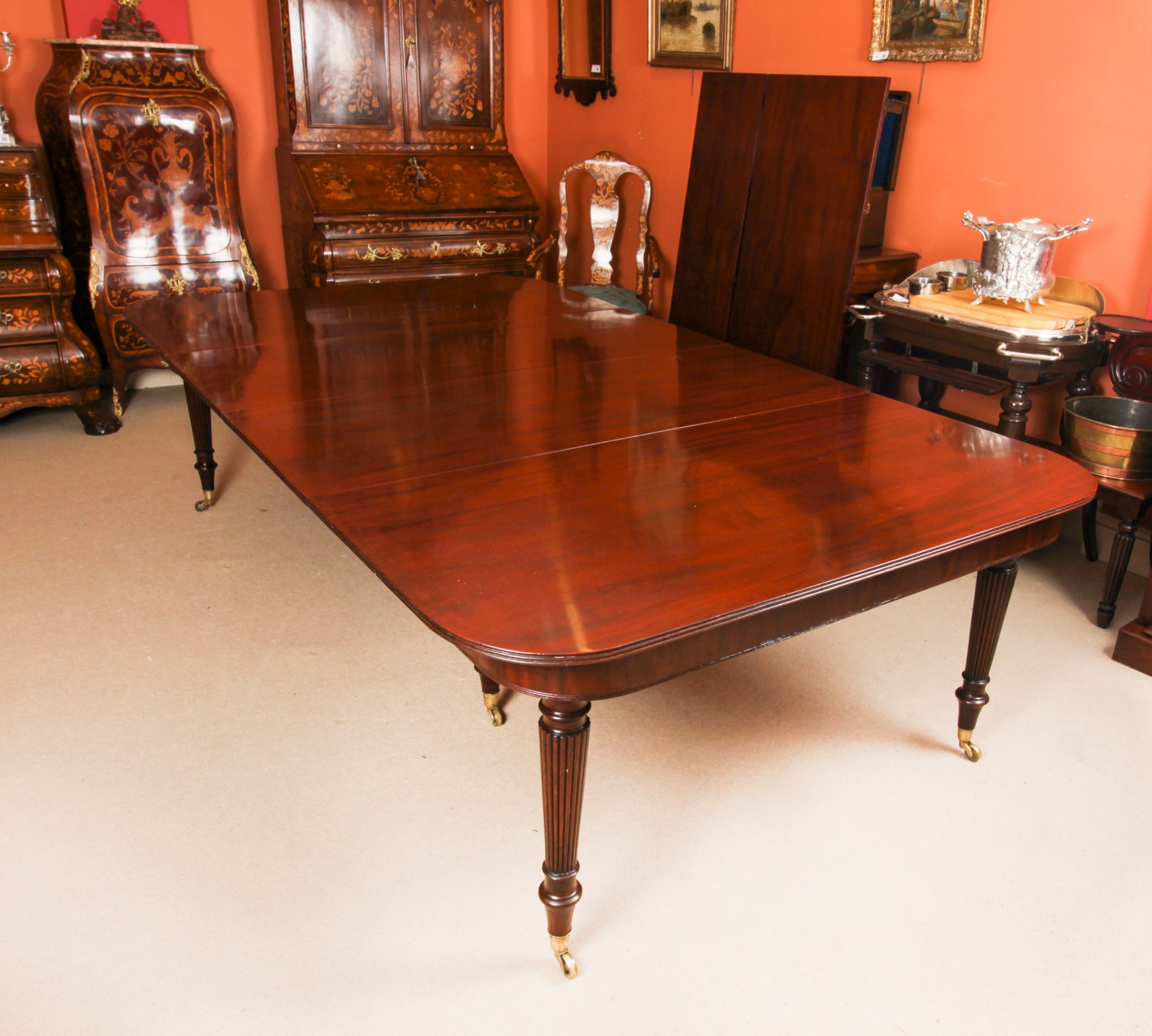
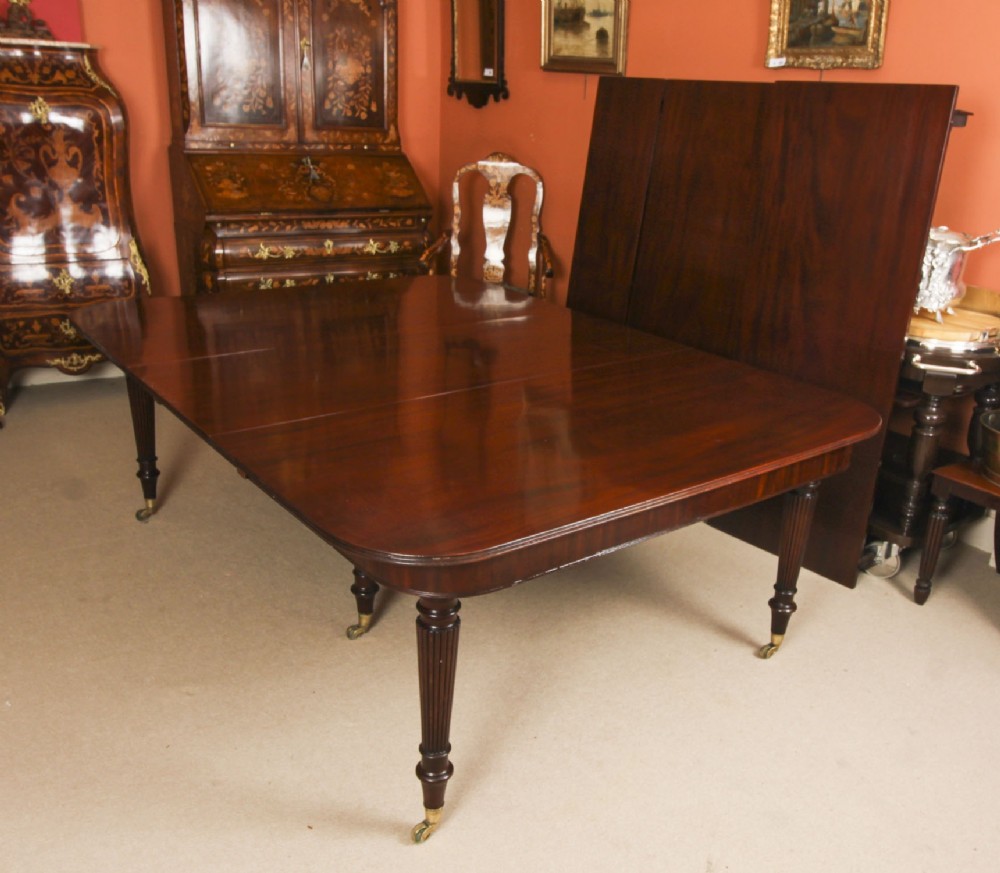
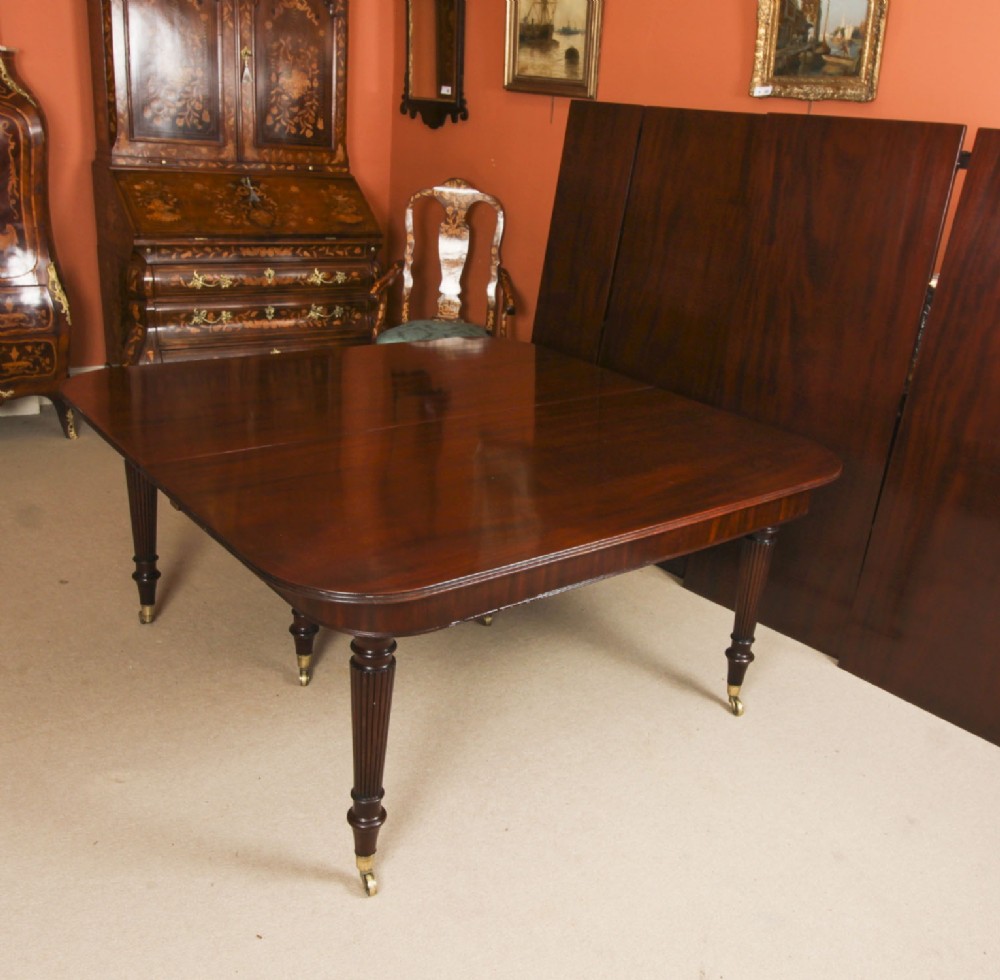
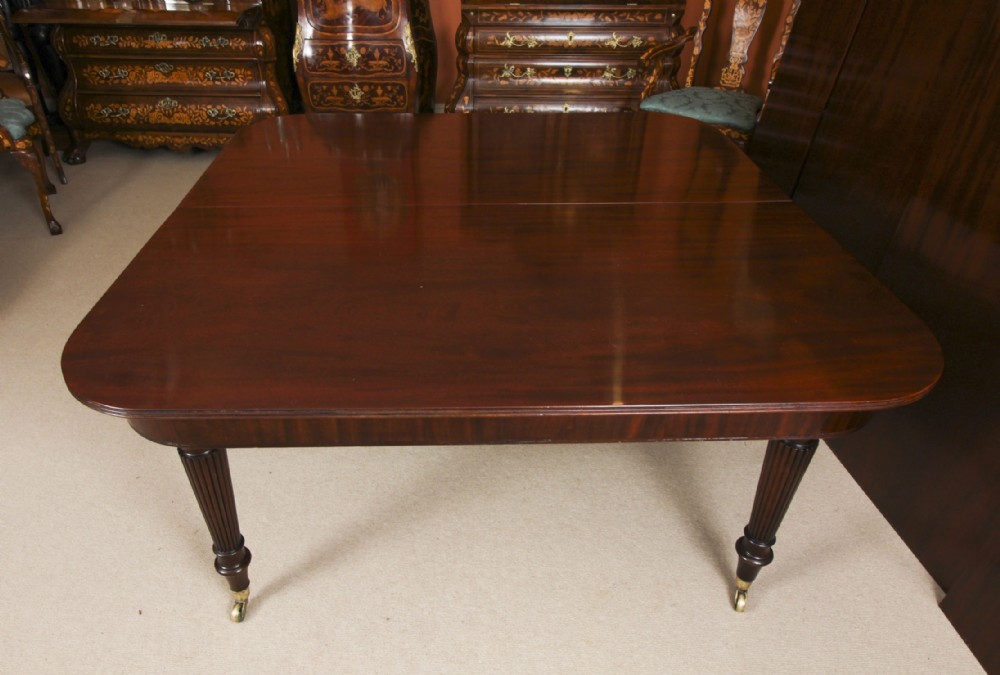
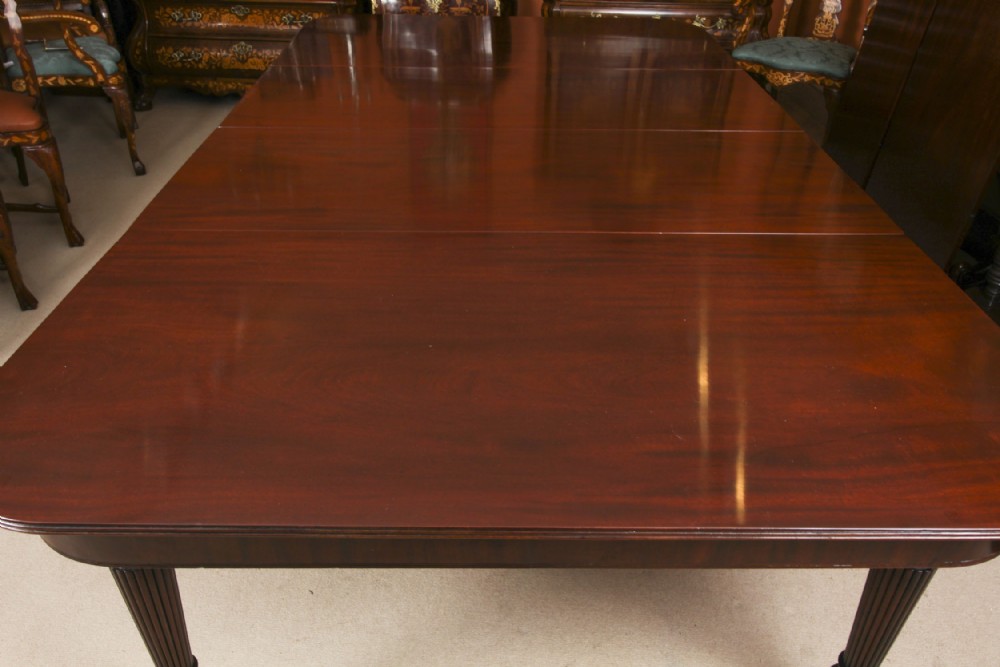
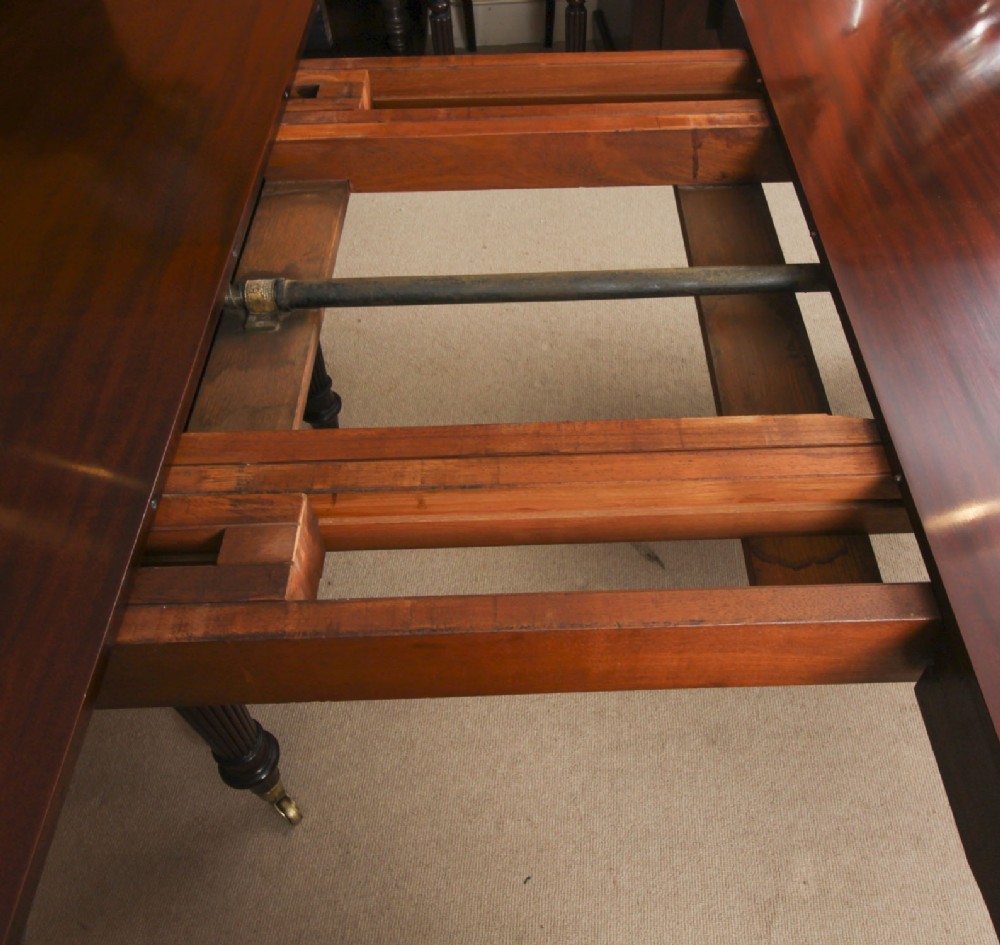
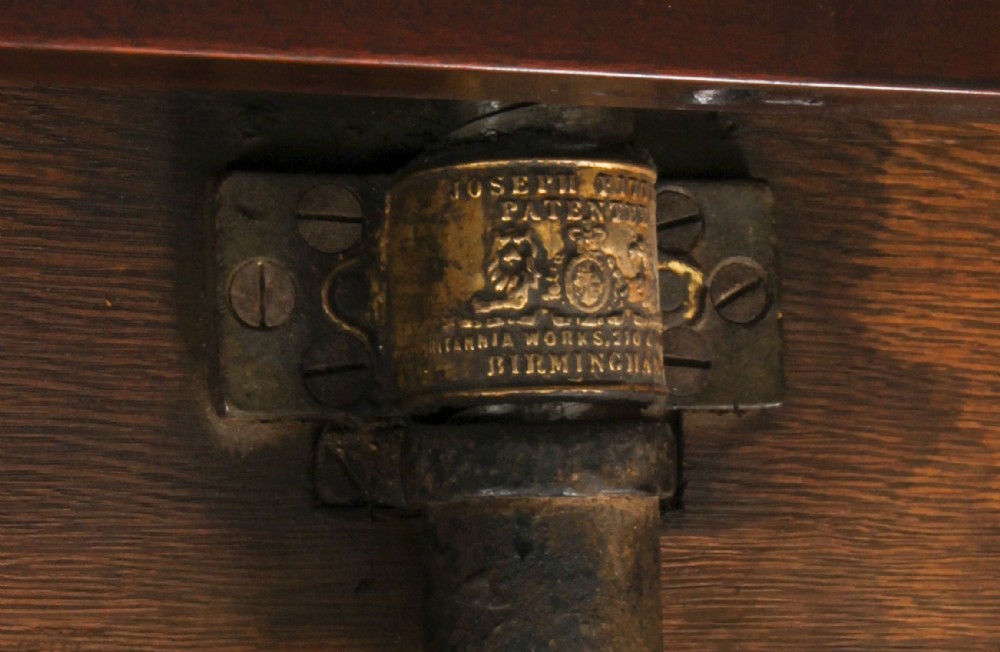
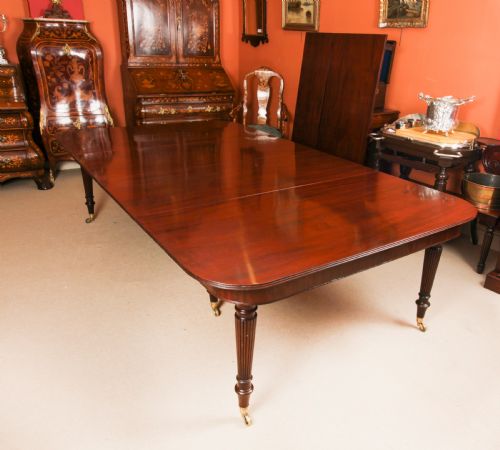
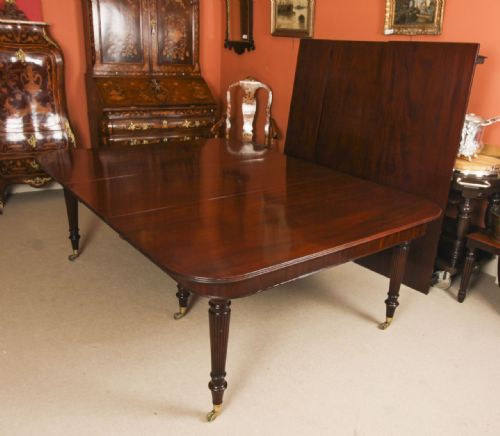
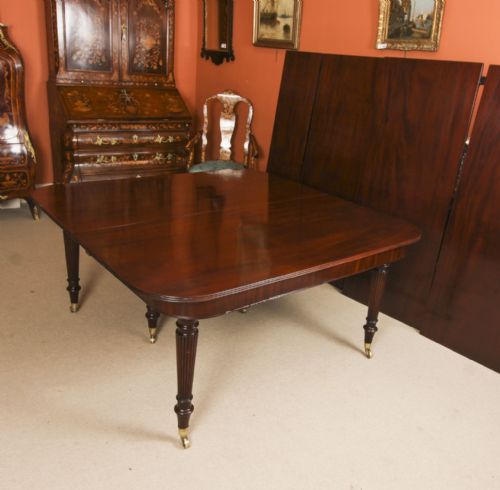
The table with four original leaves, reeded edge and extending on a telescopic oak frame. The leaves can be added or removed as required by a later Joseph Fitter wind out mechanism.
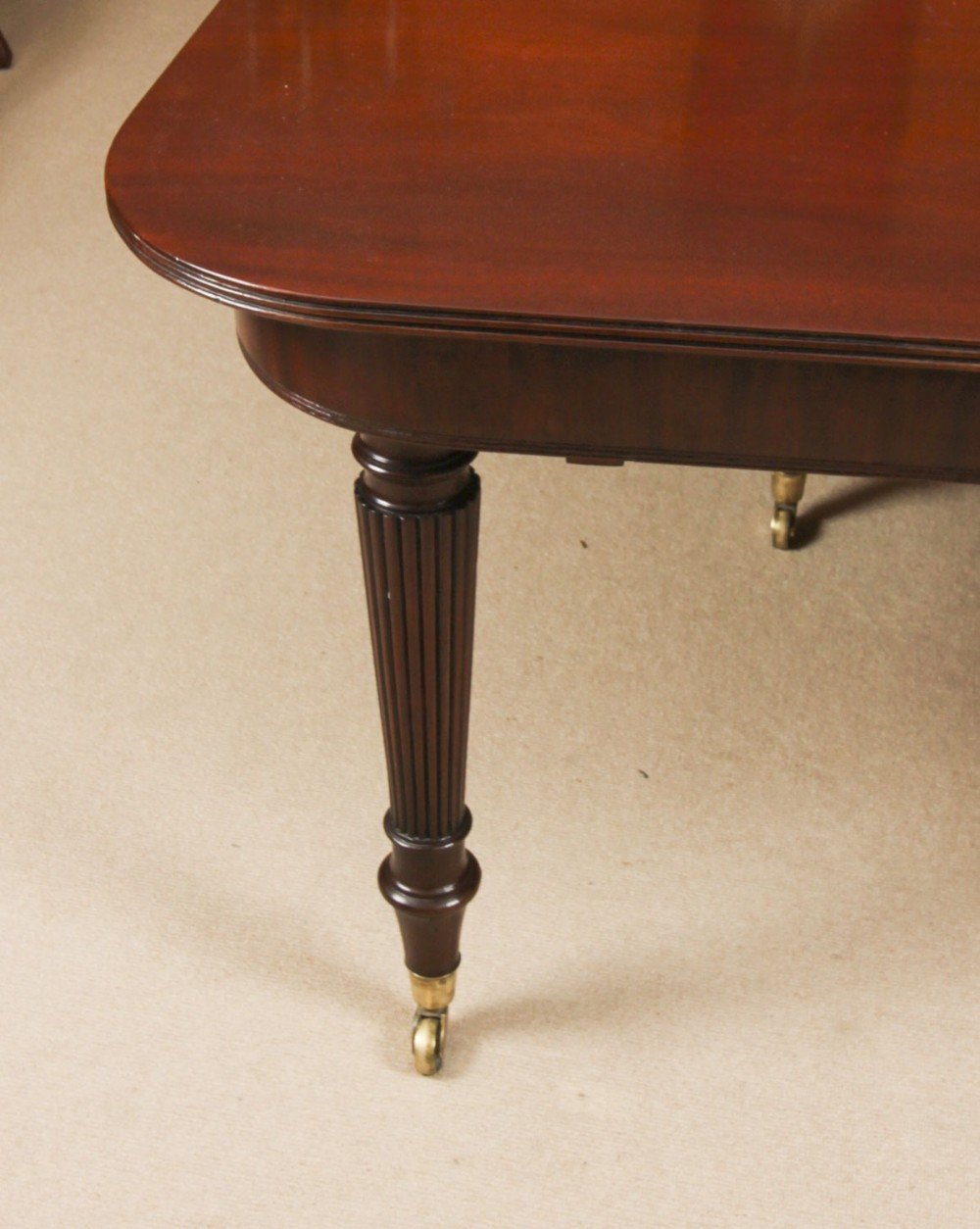
The table is raised on six turned and reeded tapering legs with brass capped toes and castors.
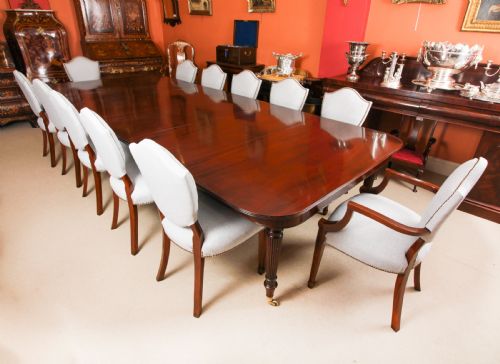
This gorgeous table will make a profound impression on your dinner guests and will receive the maximum amount of attention wherever it is placed.
Condition:
In excellent condition having been beautifully cleaned, polished and waxed in our workshops, please see photos for confirmation.
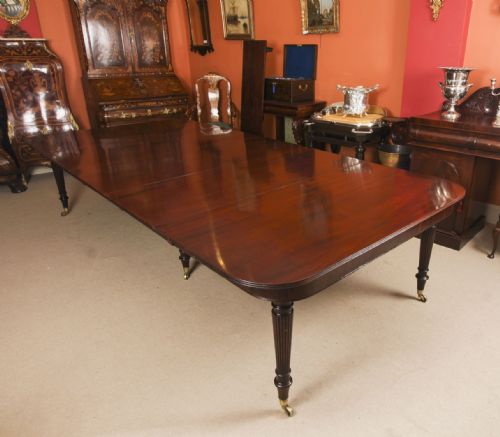
Dimensions in cm:
Height 72.5 cm x Width 361 cm x Depth 152.5 cm - Fully extended
Height 72.5 cm x Width 151 cm x Depth 152.5 cm - With all 4 leaves removed
Dimensions in inches:
Height 2 foot, 4 inches x Width 11 foot, 10 inches x Depth 5 foot - Fully extended
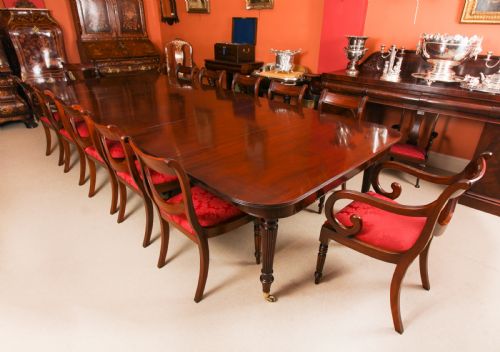
Height 2 foot, 4 inches x Width 4 foot, 11 inches x Depth 5 foot - With all 4 leaves removed
Robert Gillow (1704–1772) was an English furniture manufacturer. He joined with a family of traders called Sattersthwaite and sailed with them to the West Indies as a ships carpenter. In Jamaica he became interested in mahogany and brought samples of the wood back to Lancaster in 1720. This may have been the first mahogany to be imported to England.
He founded the luxury furniture and furnishings firm Gillow of Lancashire in 1730. During the 1730s he began to exploit the lucrative West Indies trade exporting mahogany furniture and importing rum and sugar, in addition to fitting out ships cabins and doing finishing work in construction. The firm rapidly established a reputation for supplying high quality furniture and furnishings to the richest families in the country. They also had a London workshop in Thames Street. In 1764 a permanent London branch of Gillow's was established at 176 Oxford Road, now Oxford Street, by Robert's son, Thomas Robert Gillow, and William Taylor.
As well as working in solid mahogany, Gillows made veneered and painted furniture, and often used japanning to imitate inlay. As textiles came down in price, the firm moved into upholstery – staying ahead of the game in 1785 when it sent an upholsterer from London to work in the Lancaster factory. Gillows can be credited with many innovations. In the mid-1760s initiated and exploited the craze for billiard tables and produced a ladies’ version, the trou-madame. He invented the extending dining table – including, in 1800, the telescopic version, the “Patent Imperial.” The firm was inventive in adapting designs to customer’s requirements – 1795 saw a round library table with a revolving top. It fitted secrétaires with movable drawers and partitions, like early filing cabinets, and it even made a bureau bedstead that served as a desk but pulled out to a bed.
The social or “gentleman’s” table, horseshoe-shaped with japanned ice buckets, appeared around 1800, as did bonheurs du jour (ladies’ writing tables). Another version of the social table was semi-circular, with a firescreen along the straight side and a sliding holder for bottles. The Davenport, a lady’s desk, was featured in the sketchbooks from 1816. Gillows made medicine chests, powdering closets, linen presses, clothes horses, squirrel cages, meat safes, and boot jacks, not to mention coffins.
For over a century, the firm was known for its luxury furniture and furnishings. During the final years of the 19th century the company ran into financial difficulty and from 1897 began a loose fina
Regent Antiques has dated this piece to the 1800s.
We specialise in english and continental furniture, silver, porcelain and decorative items.
You can view the stock and full dealer information on the Regent Antiques Profile Page
Regent Antiques is a registered member of LAPADA CINOA
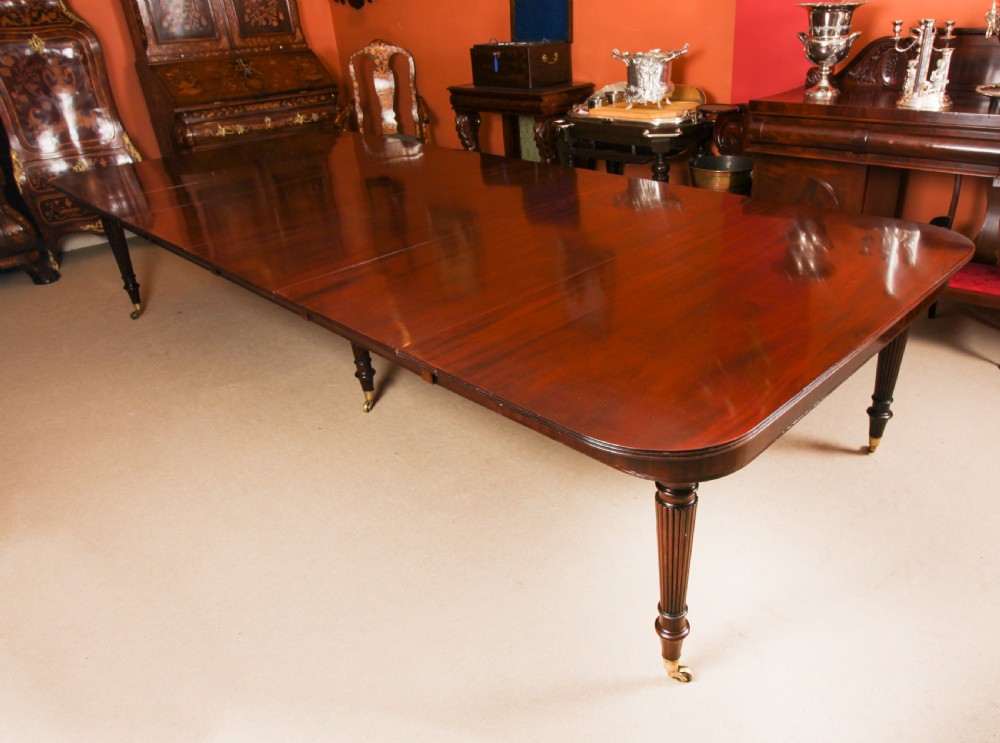

Antique 12ft Imperial Style Extending Dining Table C1810 19th C