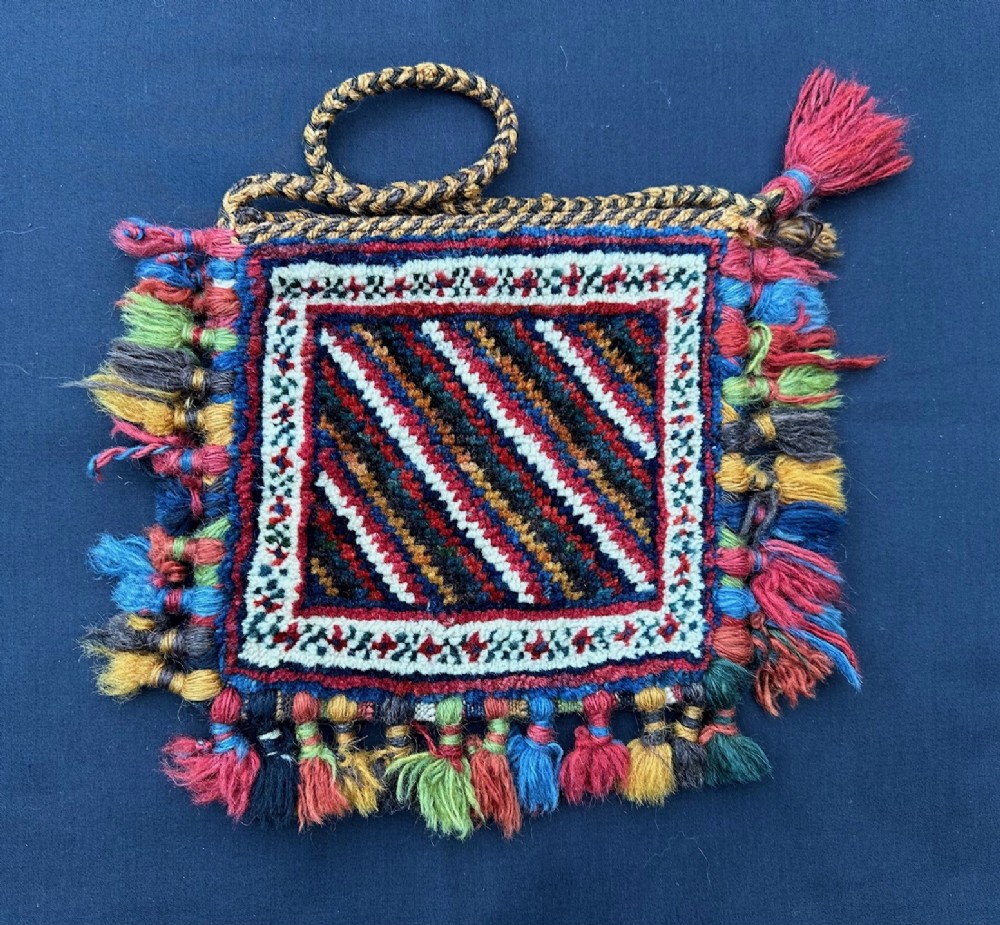
Brian MacDonald Antique Rugs & Carpets has dated this piece to the 1910s.
Why is this? Because plastic bags arrived in the bazaars of Persia during the early part of the 20th century and thus the nomads ceased making such beautiful weavings when a plastic bag could serve the purpose! Thus the demise of the little chanteh.
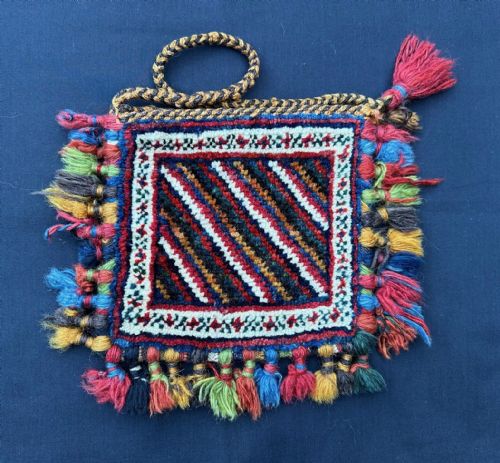
Chantehs were made by the young nomadic bride to contain a mirror, jewellery and coins and were highly prized possessions, never to be sold!
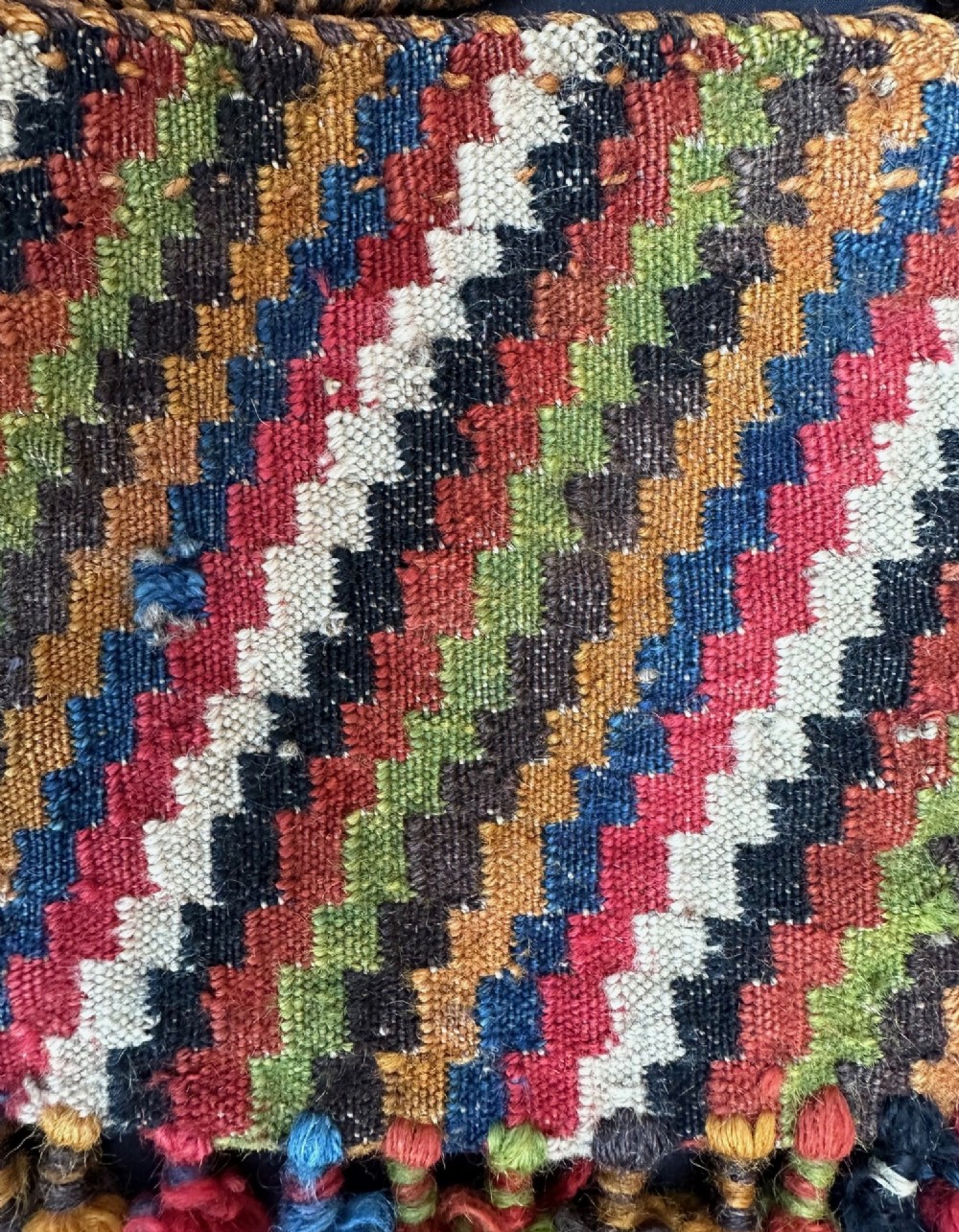
This beautiful little chanteh was made by an Afshar nomad around 1900-1920 and has survived in remarkable condition, complete with the tufts of wool around two sides and along the bottom, symbolising good luck and good fortune. The face of the bag is in knotted-pile with the exciting back, which I much prefer, in slit-tapestry, flatweave technique. This design of diagonal zig-zags, I believe, symbolises flowing water - one of the most important elements in tribal life.
Size: 18cm x 20cm wide (7" x 8").
Brian MacDonald Antique Rugs & Carpets has dated this piece to the 1910s.
Dealing in antique and old tribal rugs, dowry weavings and decorative carpets from the near east and central asia since 1979.
You can view the stock and full dealer information on the Brian MacDonald Antique Rugs & Carpets Profile Page
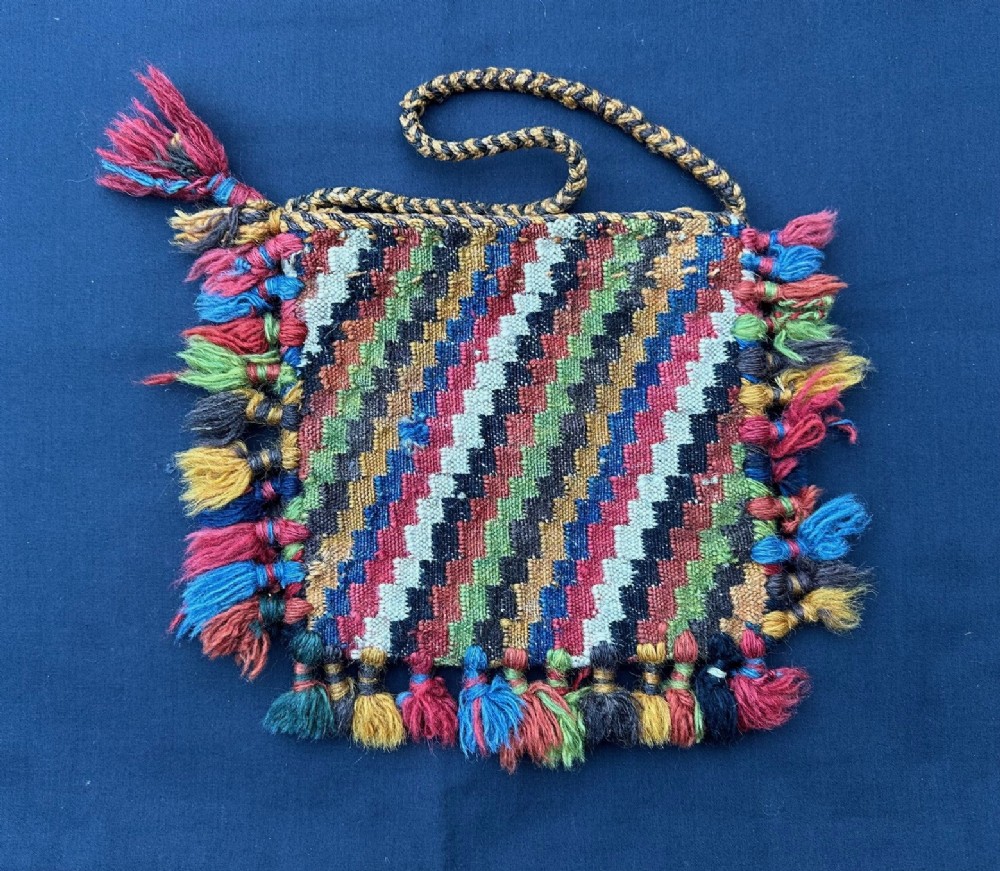
Antique Vanity-bag, Afshar Nomads, Kerman Province, Southern Persia.