Regent Antiques has dated this piece to the 1750s.
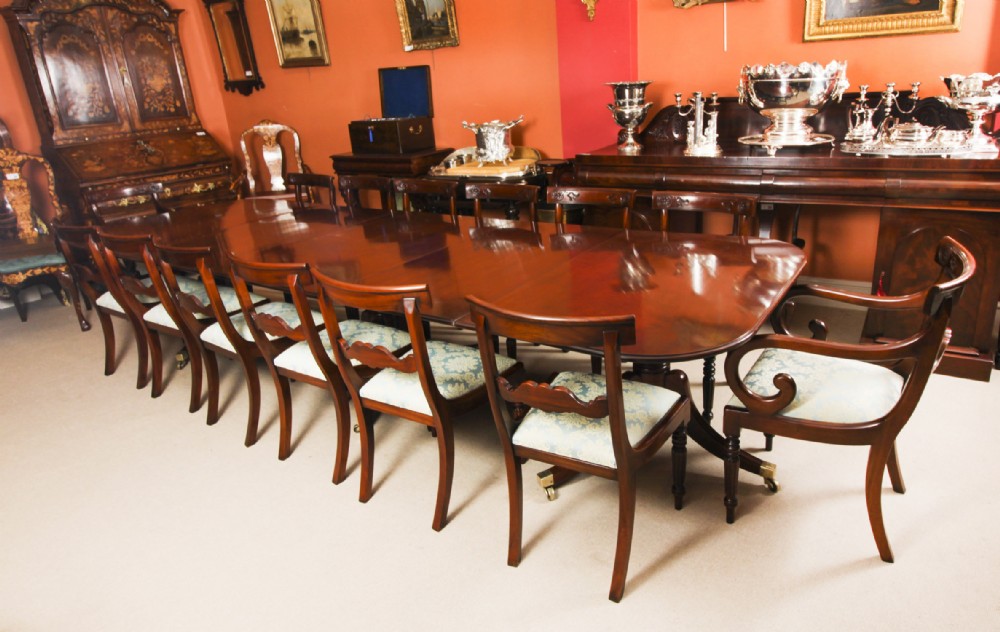
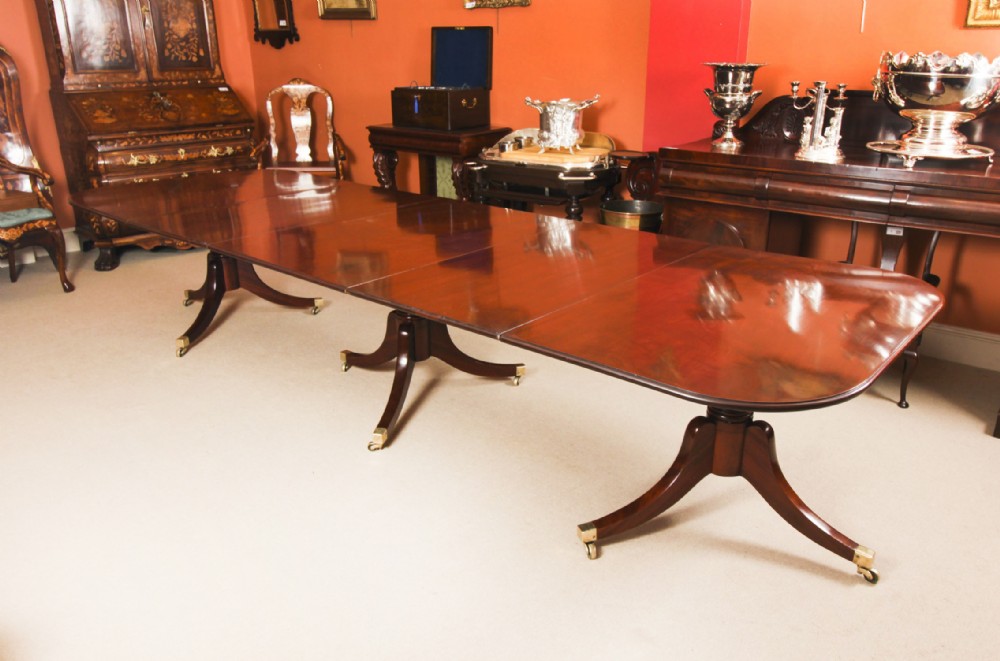
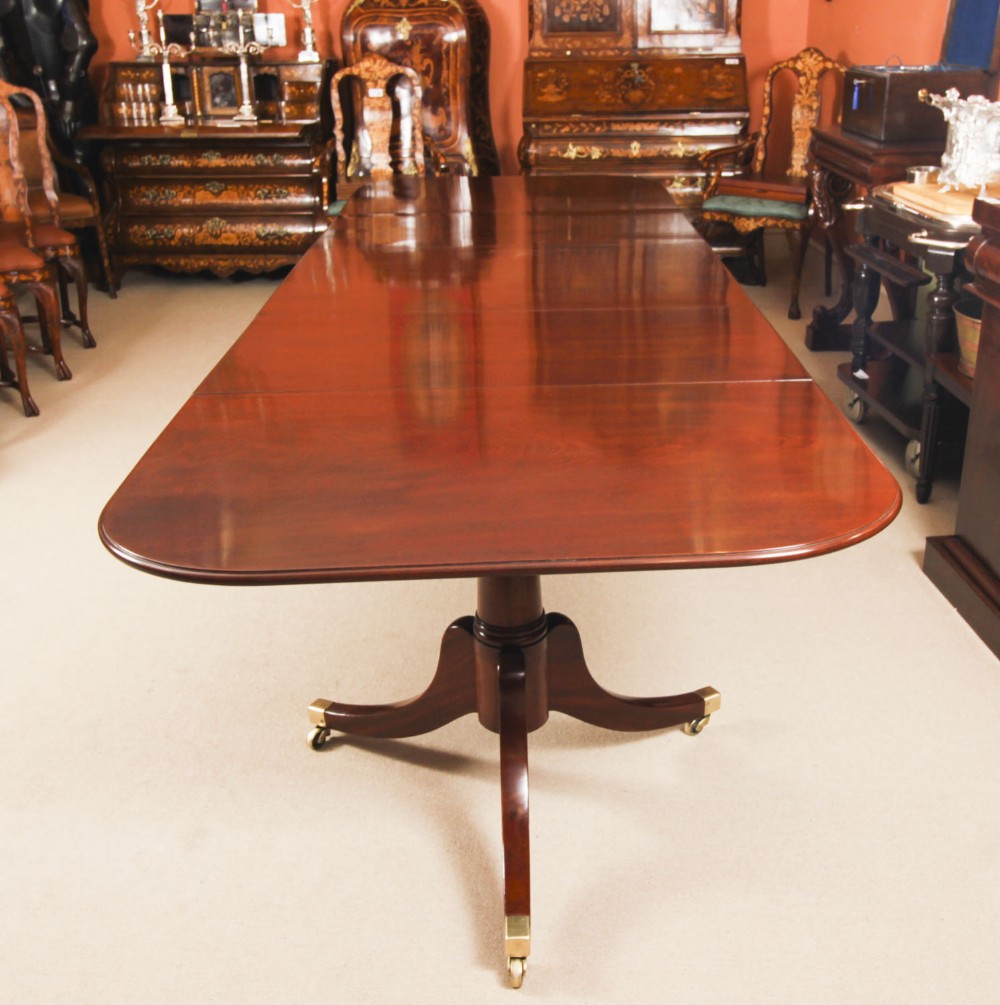
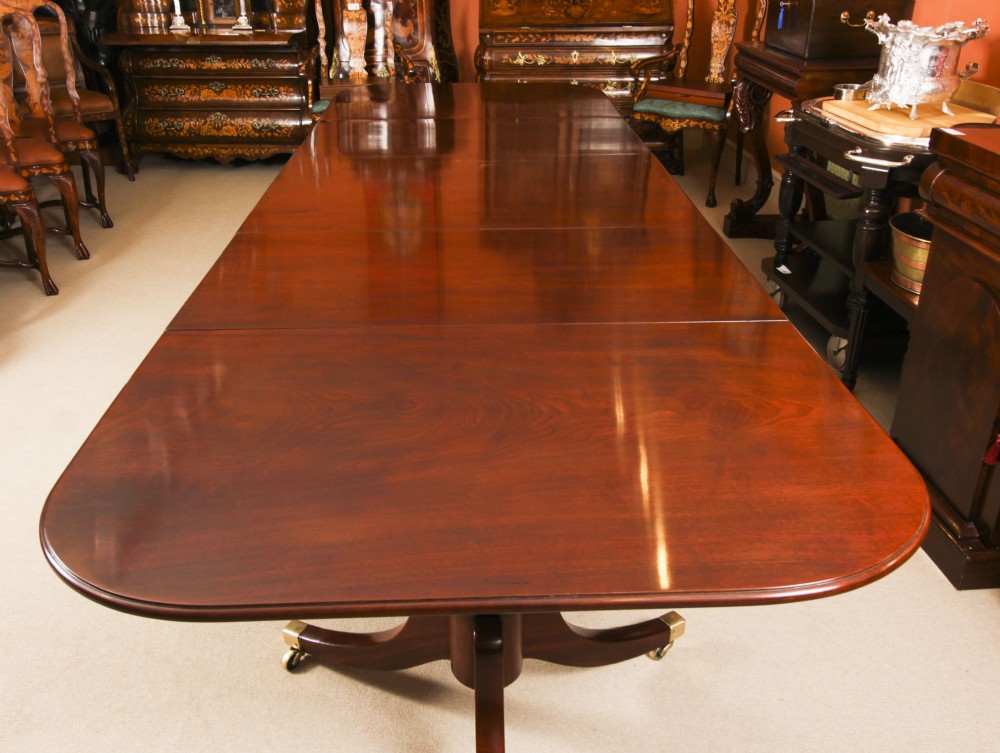
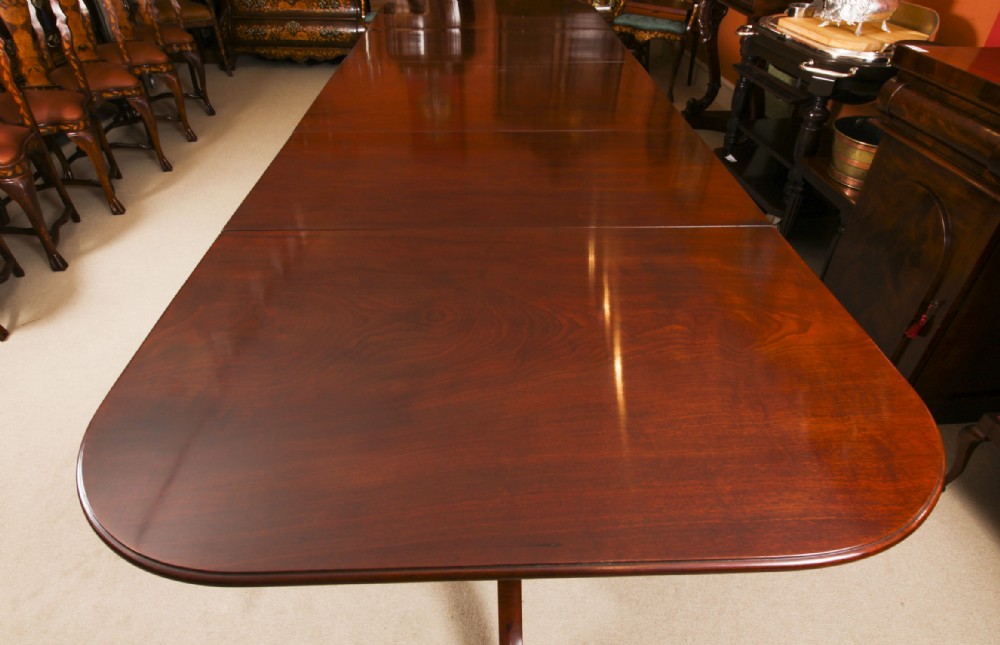
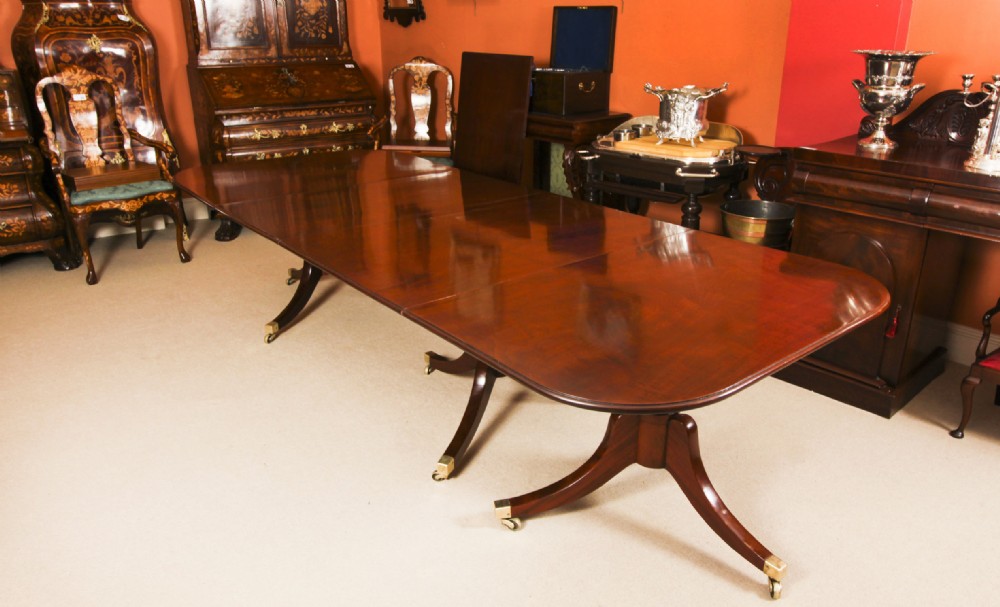
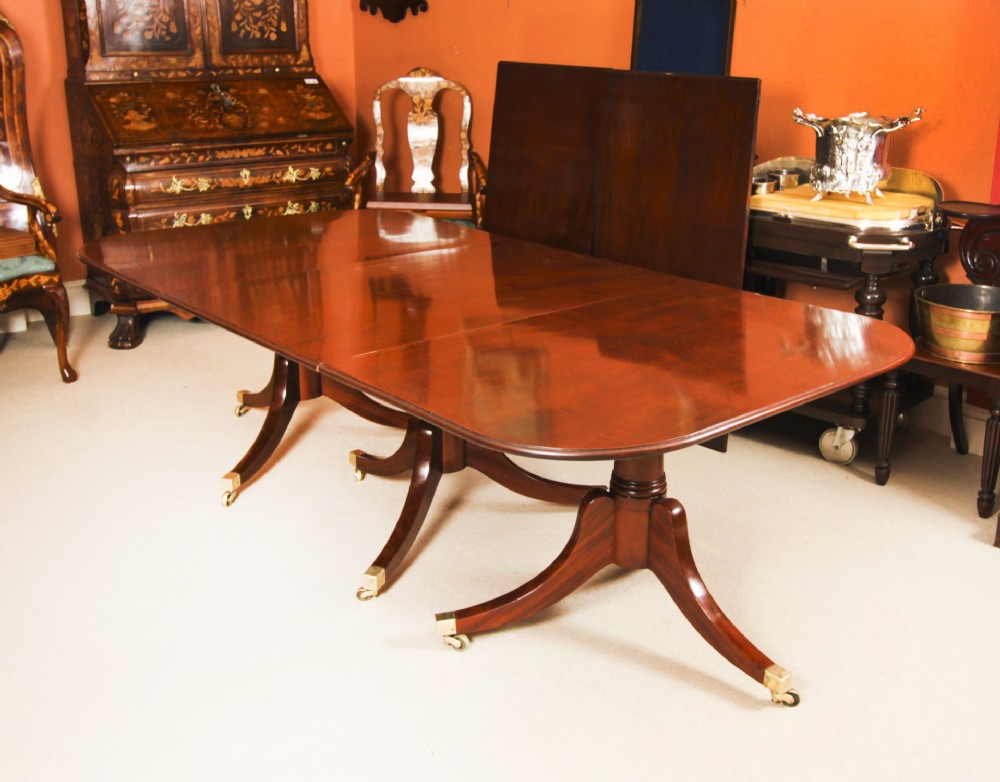
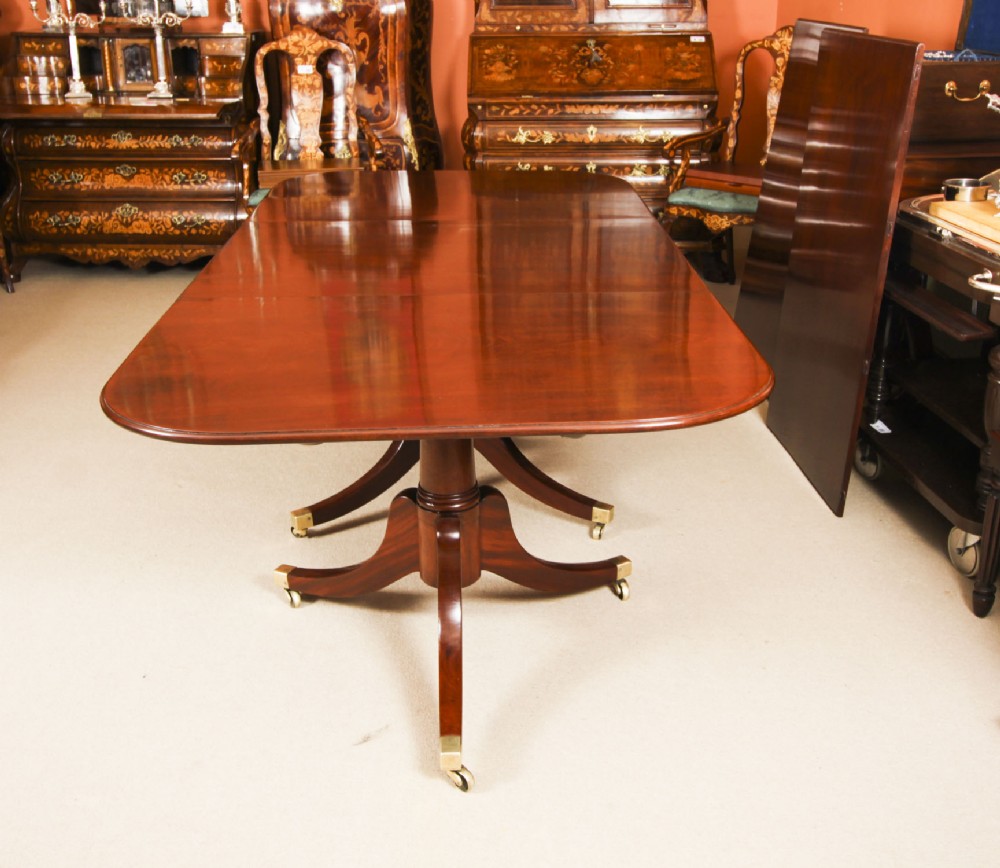
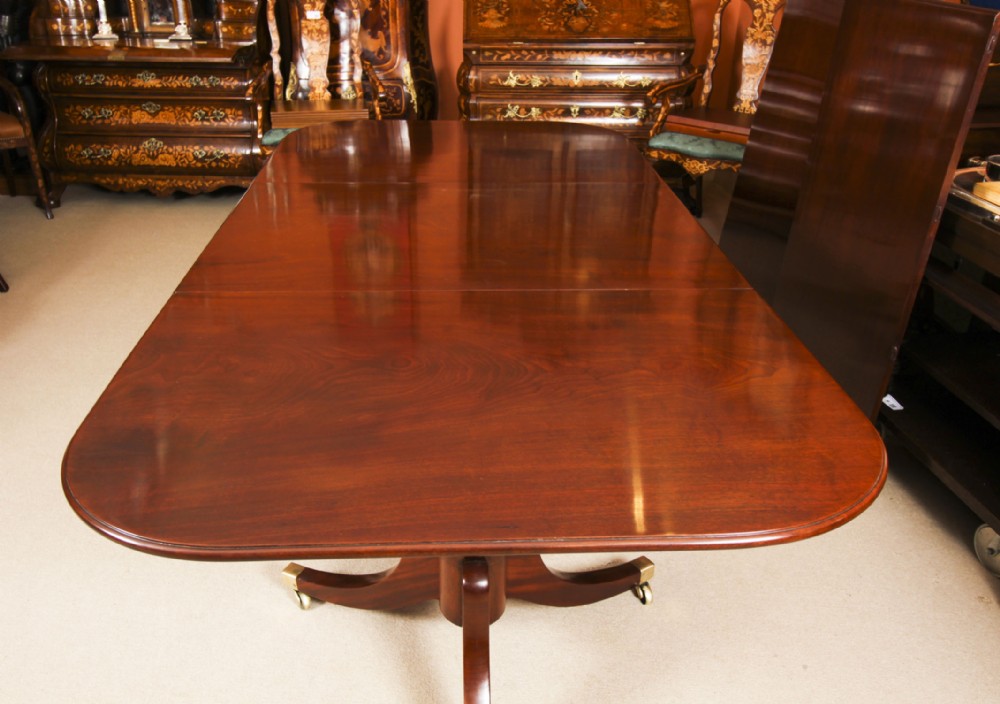
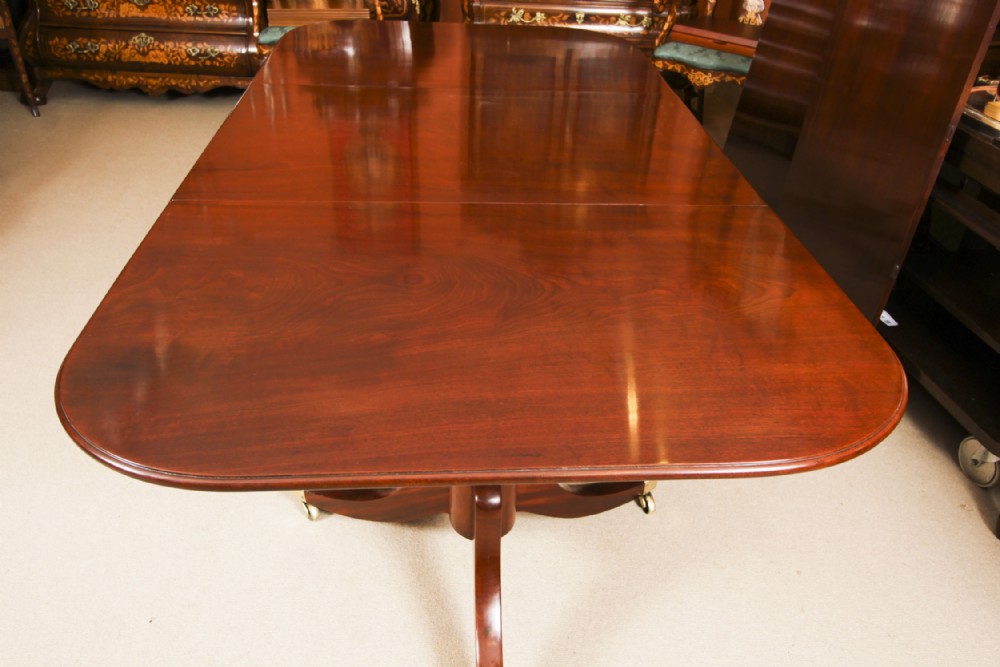
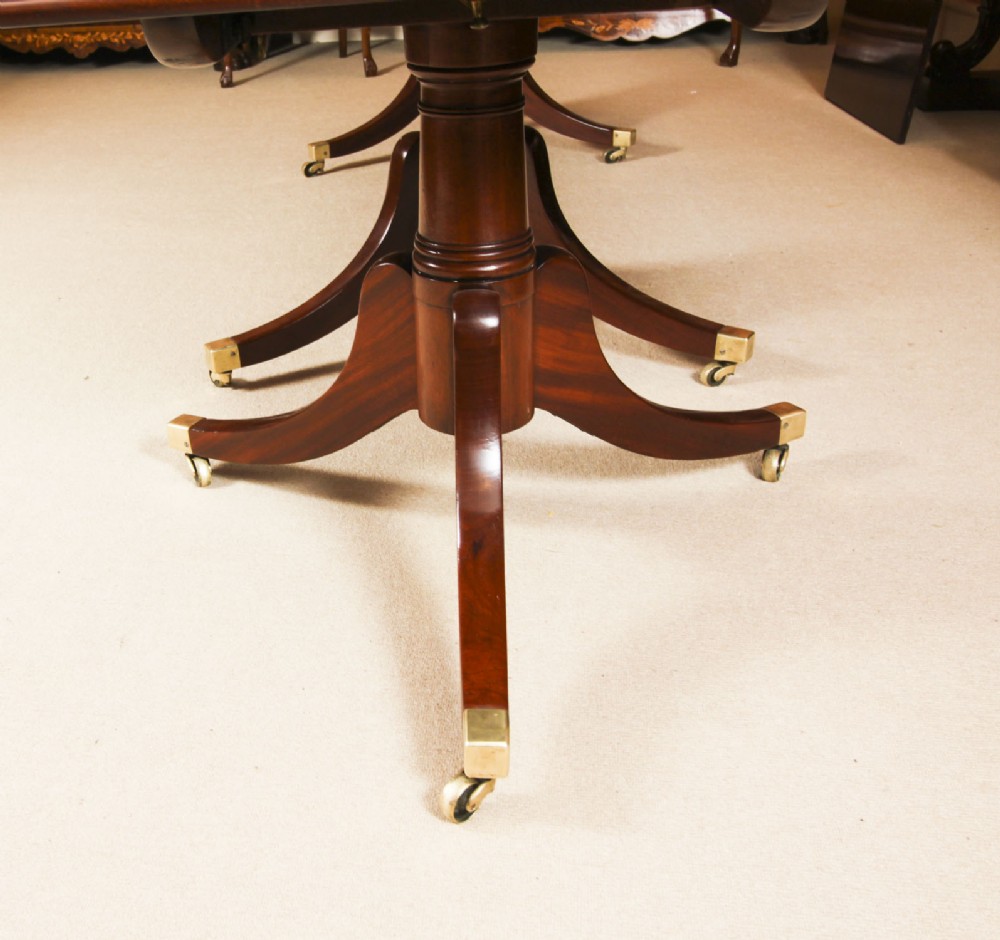
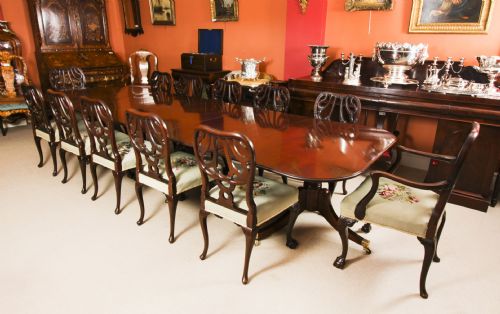
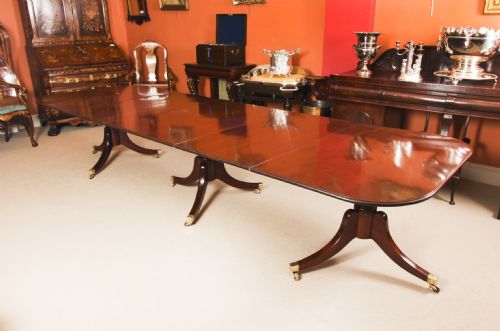
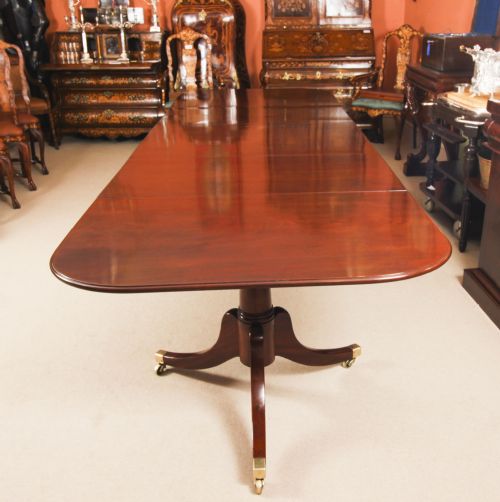
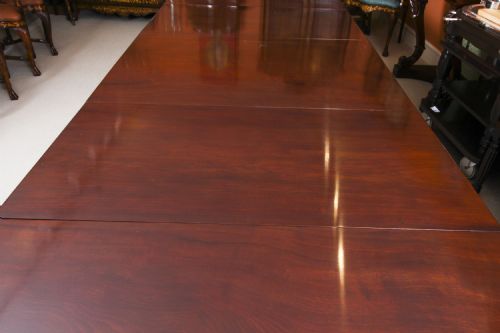
The table features elegant simplicity, with straight, unbroken surfaces and lines. It has two leaves which can be added or removed as required to suit the occasion and it stands on three 'gun barrel' turned pillars on tripod bases with sabre legs terminating in brass toes and castors.
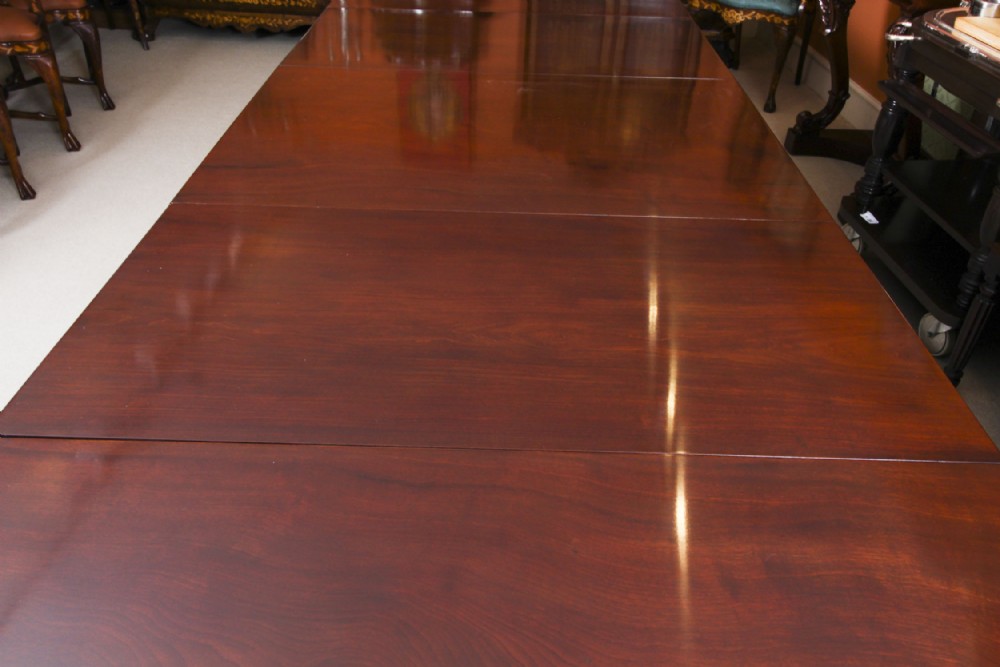
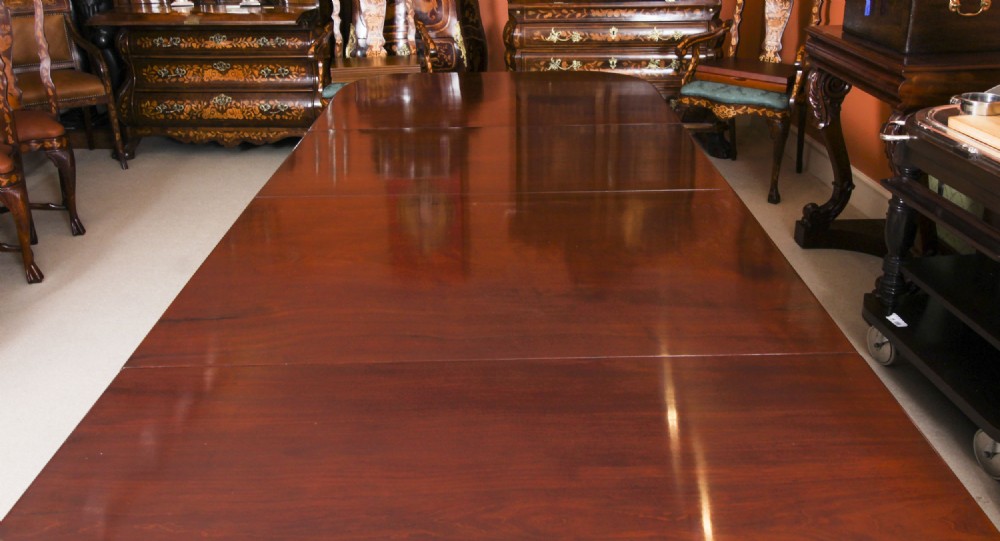
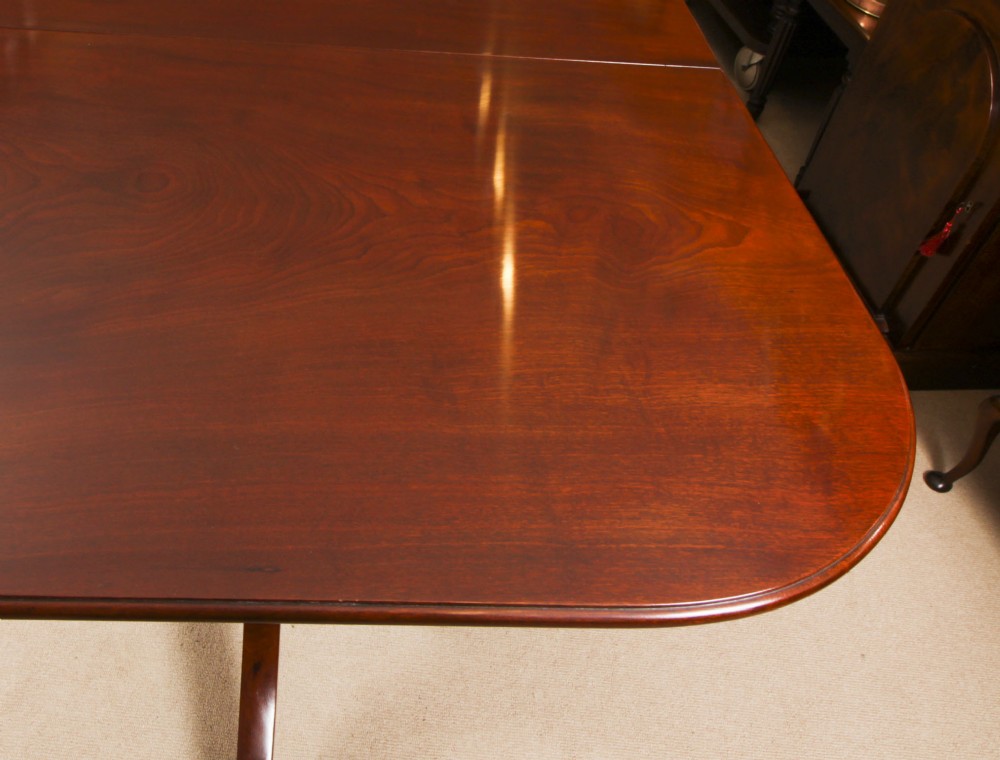
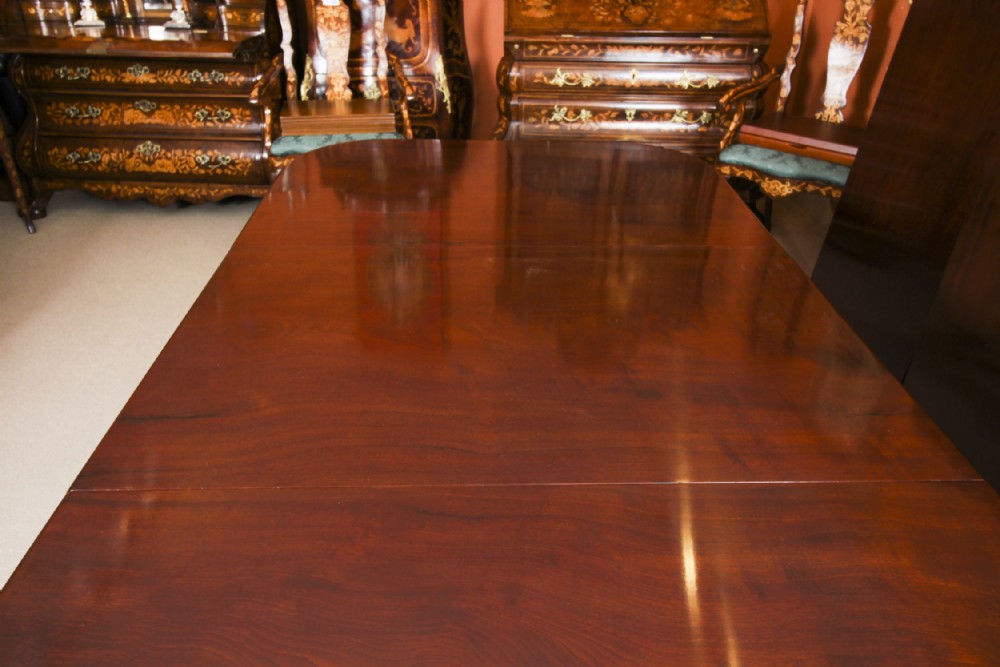
The table top is of beautiful Cuban flame mahogany and all the leaves are original.
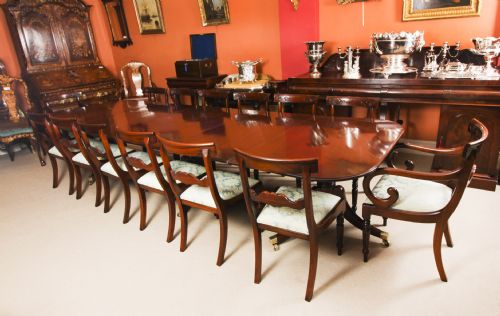
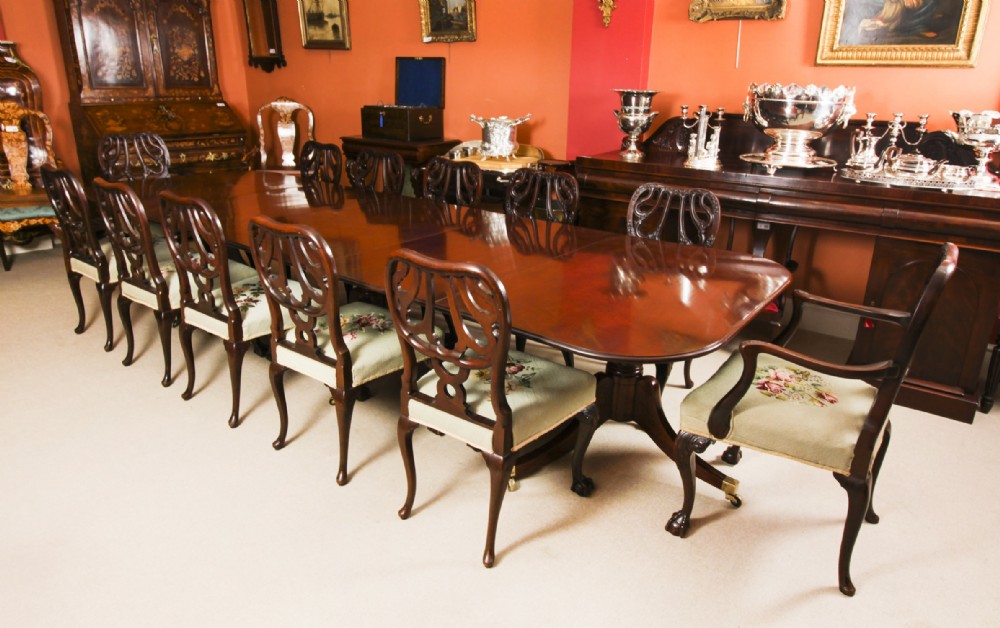
The chairs shown in the photographs are not included in the price, but are available if required.
Condition:
In really excellent condition having been beautifully cleaned, polished and waxed in our workshops, please see photos for confirmation.
Dimensions in cm:
Height 71 cm x Width 367 cm x Depth 123 cm
Height 71 cm x Width 241 cm x Depth 123 cm
Dimensions in inches:
Height 2 foot, 4 inches x Width 12 foot x Depth 4 foot
Height 2 foot, 4 inches x Width 7 foot, 11 inches x Depth 4 foot
Regency Furniture
During the Regency period it was fashionable to copy the classical furniture of the Roman and Greek times. Furniture had stopped evolving in design and had moved back to classical forms. The pioneer designers who represented this period were:
Thomas Hope (1770-1831), George Smith (1804-28), Henry Holland (1745 - 1806)
George IV had a major influence over the furniture makers of the time.
This period saw the introduction of brass to wood from the previous marquetry that had been originally used. The sofa table was also introduced.
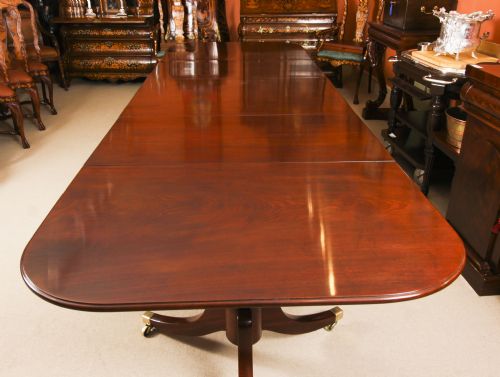
The main features of the Regency period furniture were their simplicity, with straight, unbroken surfaces and lines.
Cuban Mahogany
Swietenia mahagoni, the "Wood of Kings". Swietenia mahagoni is the wood that planked the ships of the Spanish Armada. Thomas Sheraton, Thomas Chippendale, and Duncan Phyfe chose Cuban Mahogany for their furniture. It has been among the most prized and valuable timbers since the late 16th century.. As its reputation grew, the supply of wood shrank.
As timber harvest methods became more sophisticated, the inaccessible trees became lumber. By the mid 1700's it was becoming scarce. By the mid 1800's good lumber was becoming rare. By the late 1800's the species had been logged into genetic impoverishment and commercial extinction.
Our reference: A4222
Regent Antiques has dated this piece to the 1750s.
We specialise in english and continental furniture, silver, porcelain and decorative items.
You can view the stock and full dealer information on the Regent Antiques Profile Page
Regent Antiques is a registered member of LAPADA CINOA
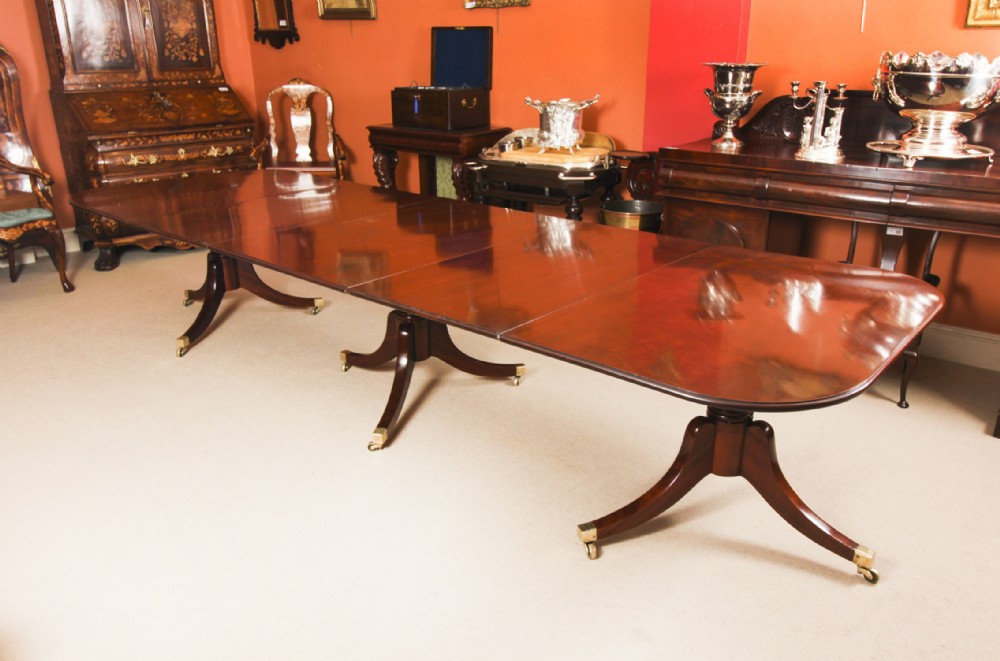
Antique 16ft Regency Mahogany Triple Pillar Dining Table C1780 18th C