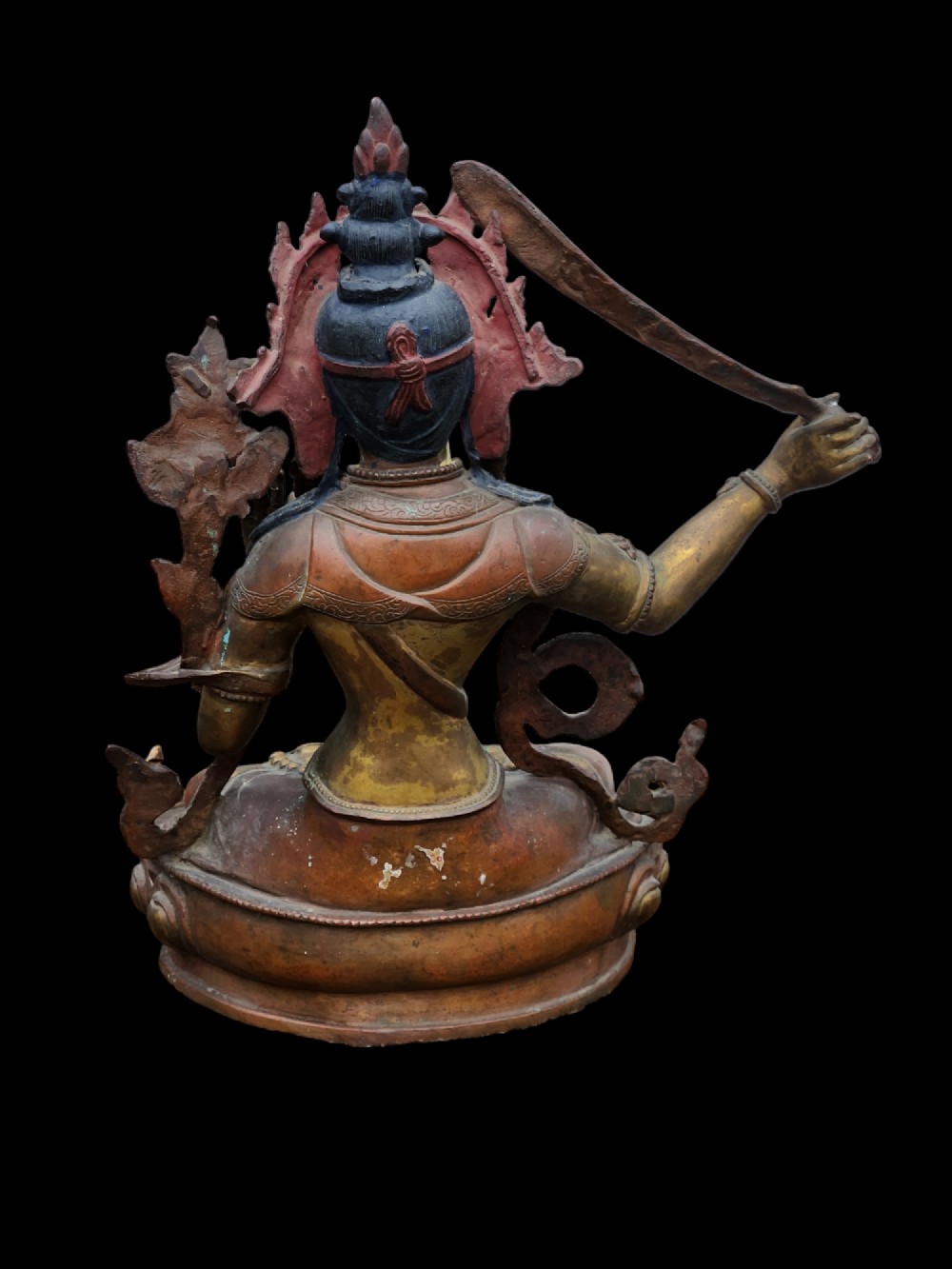
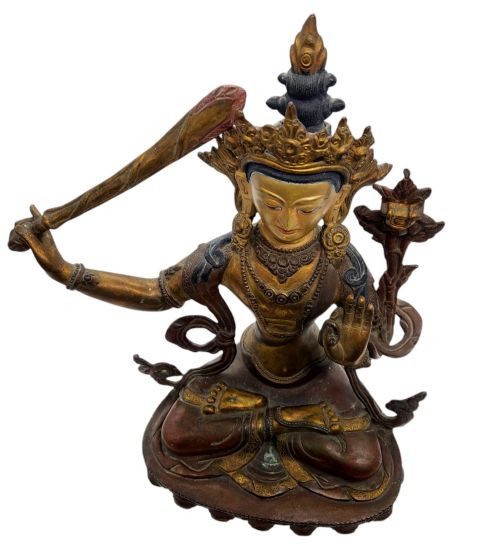
Sandbanks Antiques has dated this piece to the 19th Century.
Height 37cm (14.56 in.)
Heavy
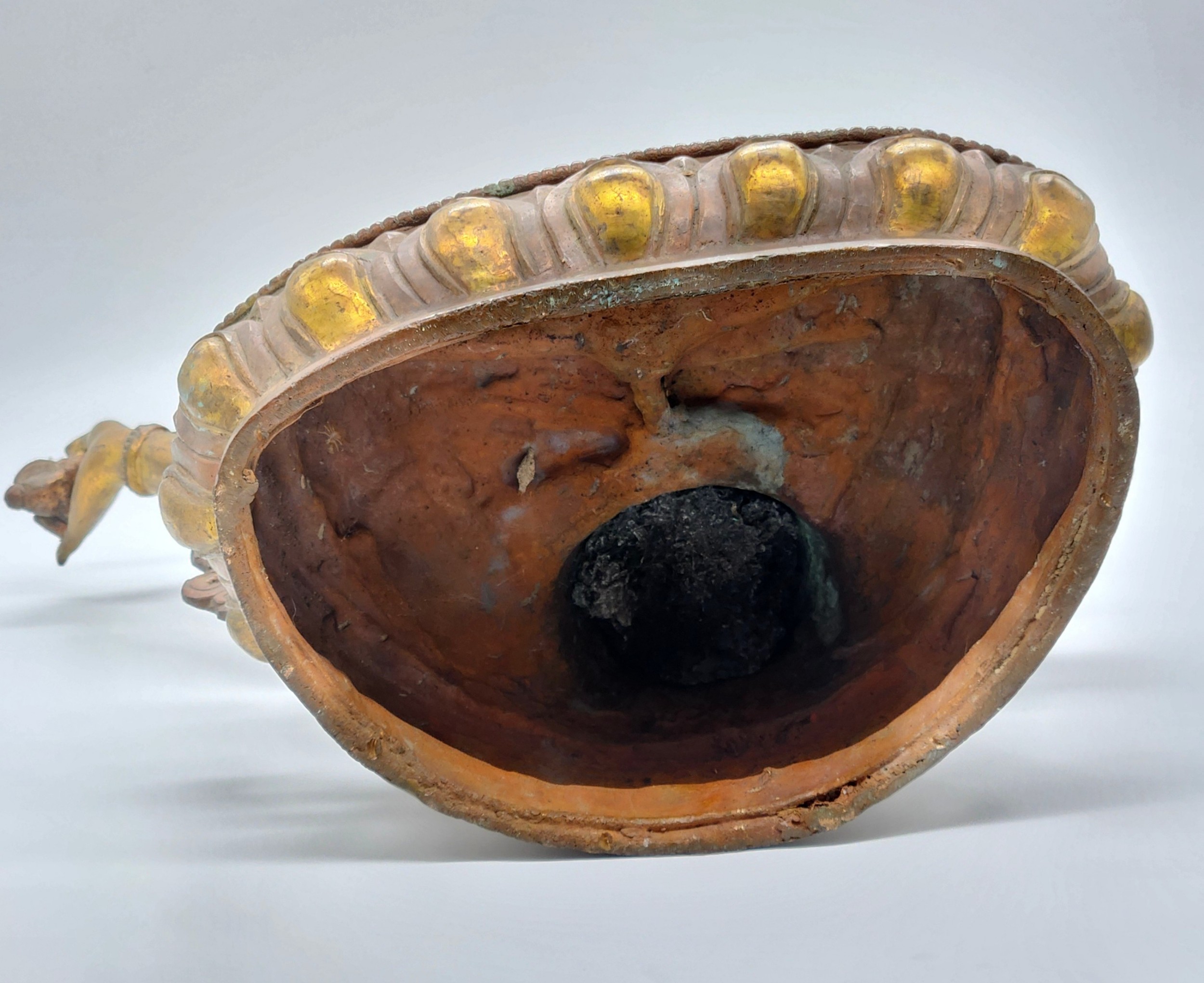
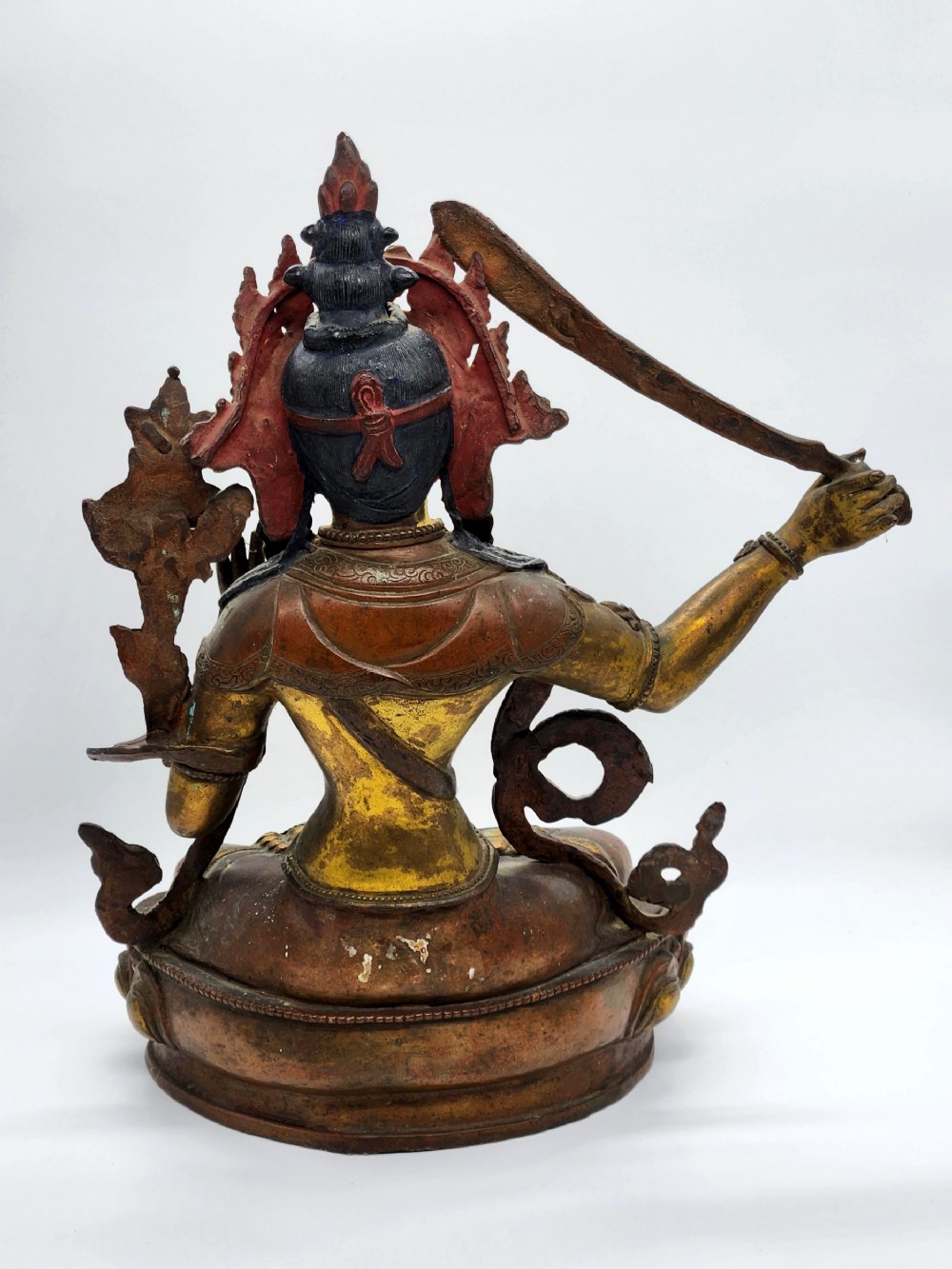
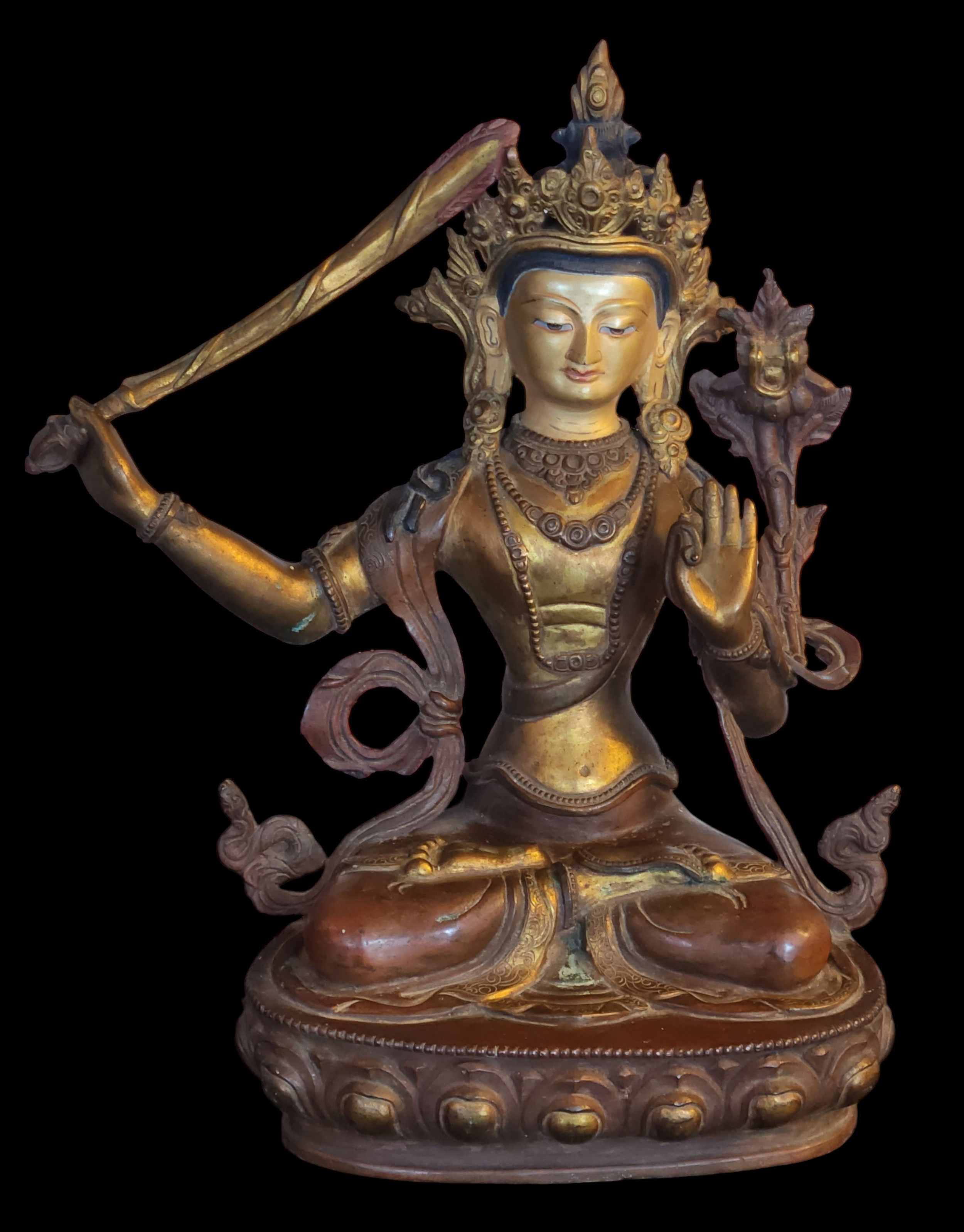
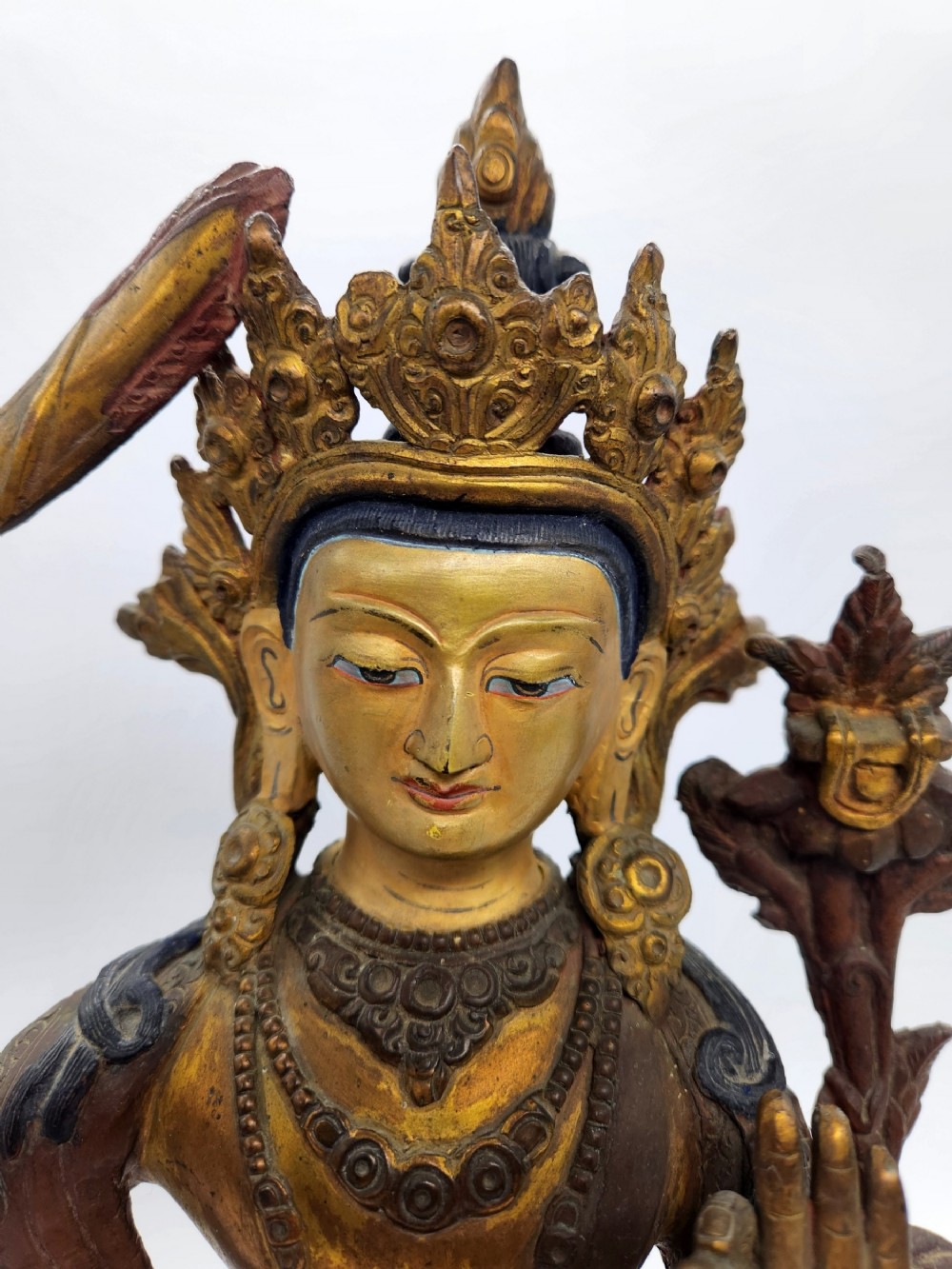
Beautifully cast having wonderful, rich original patina.
POSSIBLY QING DYNASTY, 18TH CENTURY
PROVENANCE UK PRIVATE COLLECTION 1950's
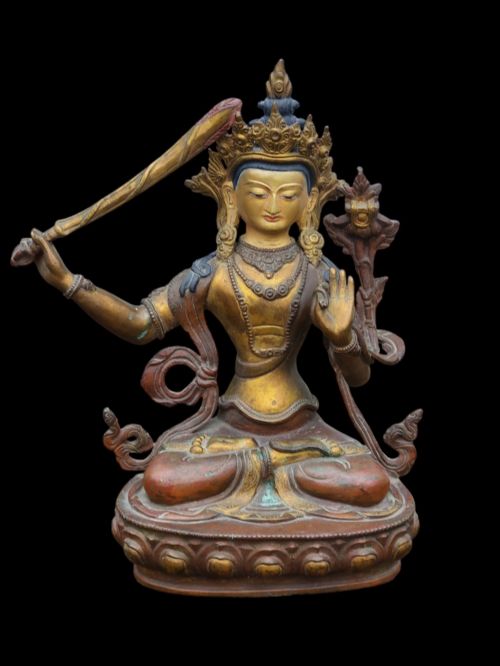
In his left hand, he pinches his forefinger and thumb in the gesture of teaching (vitarka mudra), stressing his own role as a dispenser of all Buddhist knowledge.
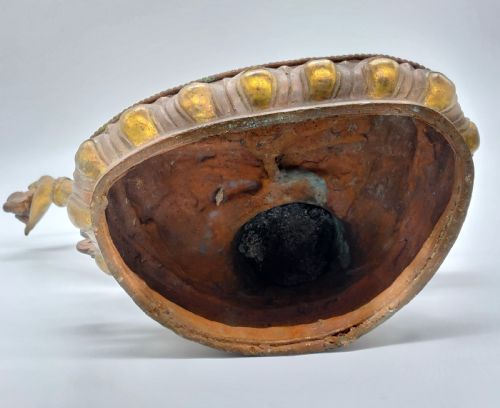
As demonstrated by this figure, the Manchu rulers of the Qing dynasty (1644-1911) presented themselves as the living avatars of Manjushri and thus, sought to emulate their Yuan and early Ming predecessors as the inherited rulers of China, Mongolia, and Tibet. This stimulated the creation of Buddhist images during the 17th and 18th centuries in China, where images like the present work were made for one of the many Buddhist temples. To compare with other Qing examples depicting the bodhisattva of wisdom, see one in the Brooklyn Museum of Art (34.799), as well as another published in von Schroeder, Indo-Tibetan Bronzes, 1981, p. 548, no. 156B.
Buddhist Sculptures in Tibet Volume Two, Visual Dharma Publications, Hong Kong, p. 1153 pl. 303C Potala Collection, Lima Lhakhang, inventory nº 59, Lhasa (Tibet).
Sandbanks Antiques has dated this piece to the 19th Century.
Specialising in antique silver, gold boxes, gold coins and objects de vertu. Rare fine-quality imperial chinese porcelain, jades, cloisonné
You can view the stock and full dealer information on the Sandbanks Antiques Profile Page
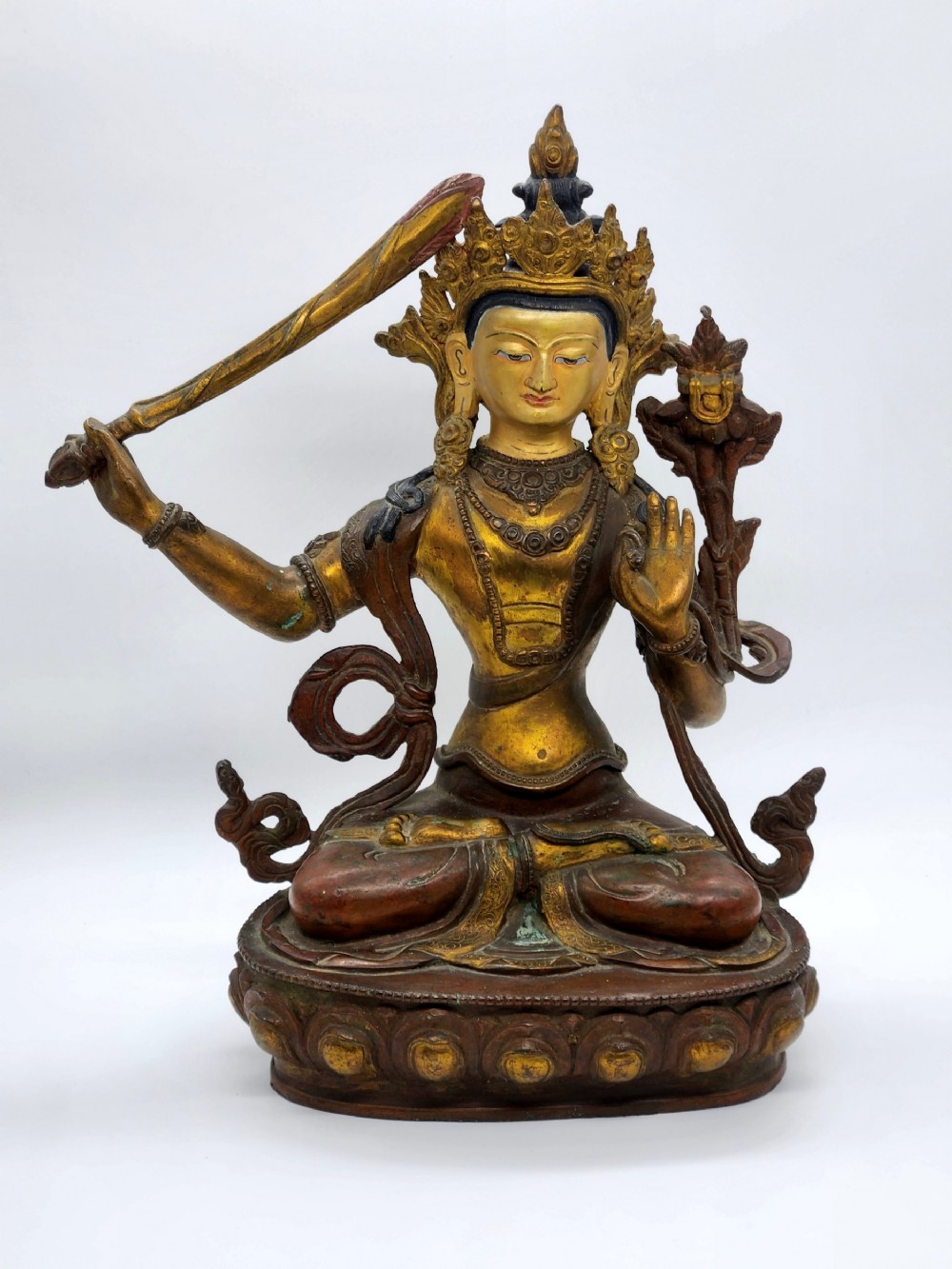
A Large Gilt Copper Alloy Figure of Manjushri, Sino-tibetan, 19th Century