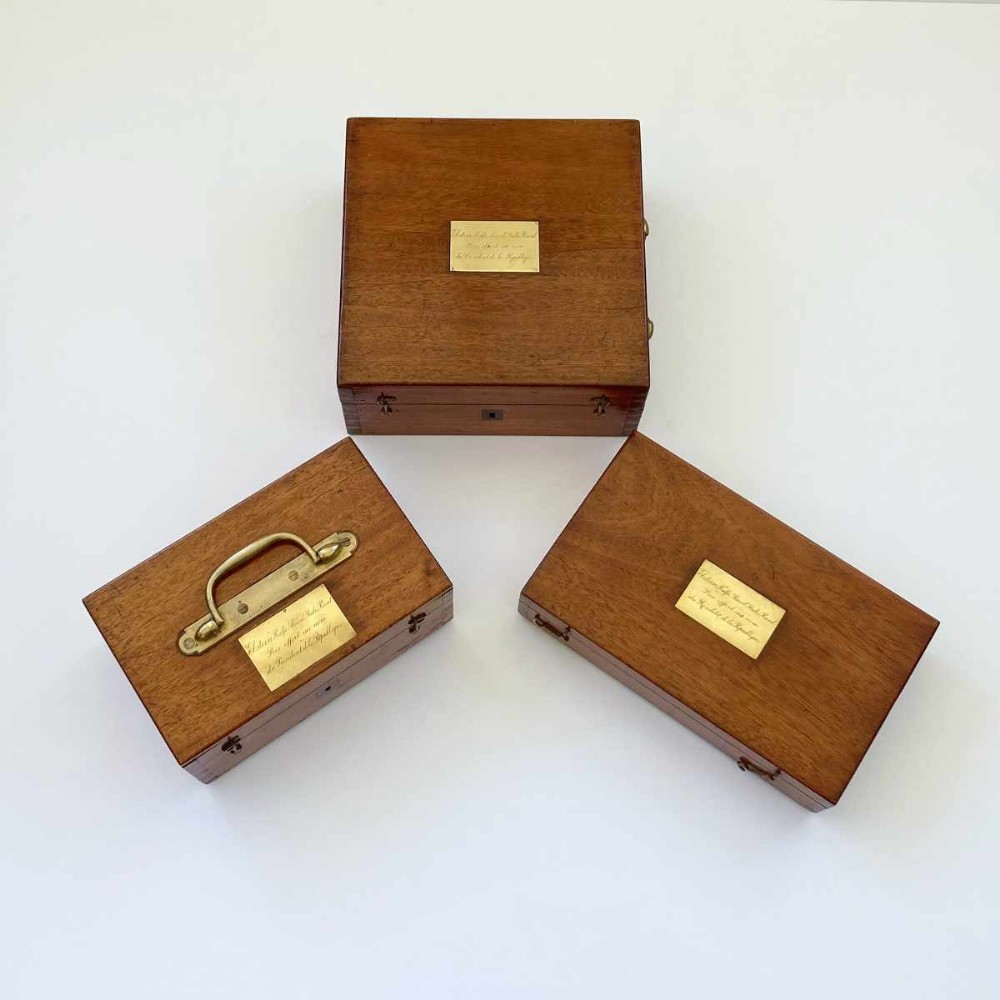
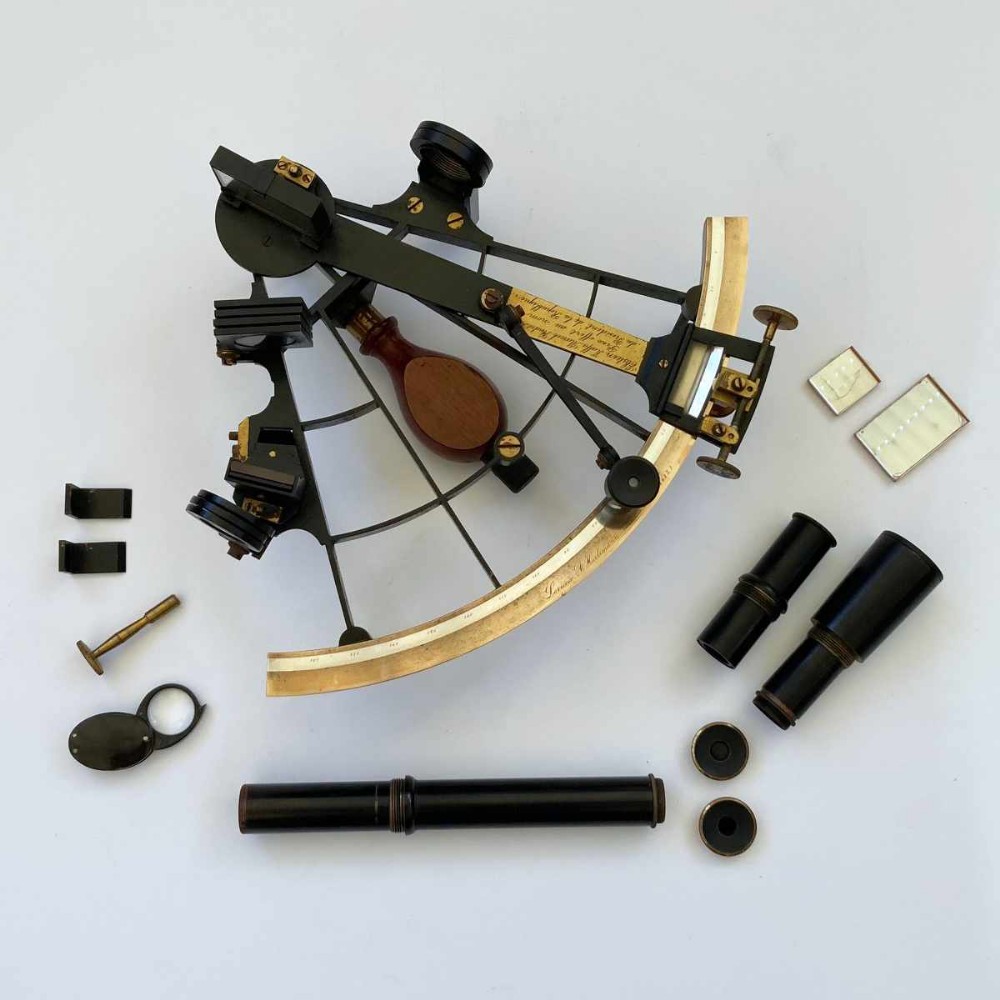
Jason Clarke Antiques has dated this Antique Marine Sextant Set to the 1920s.
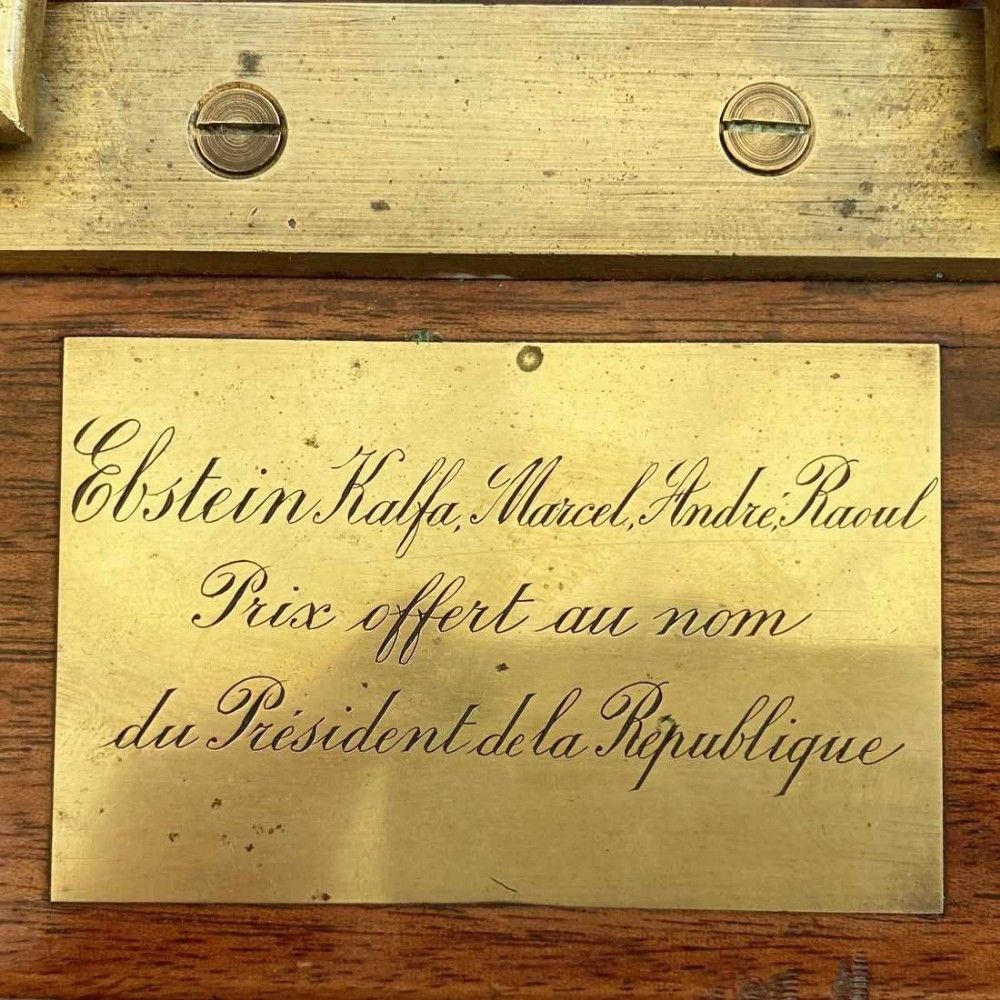
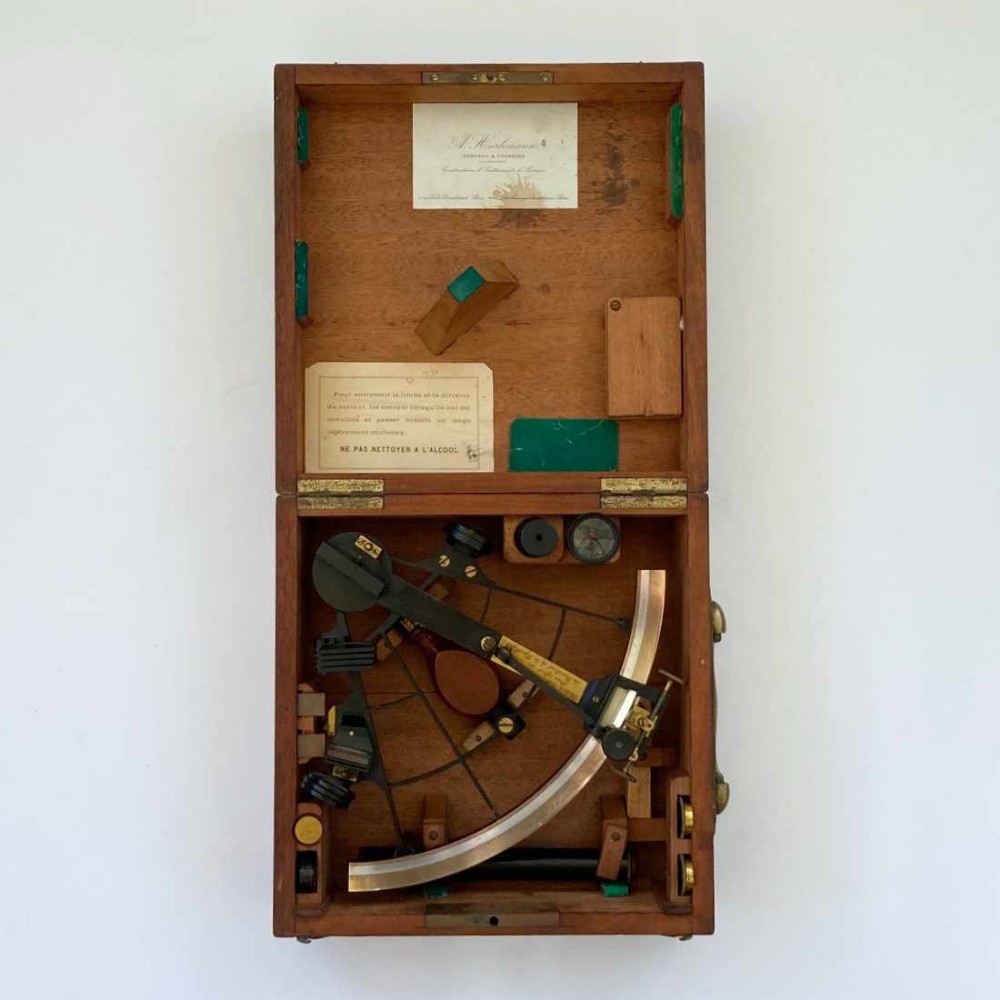
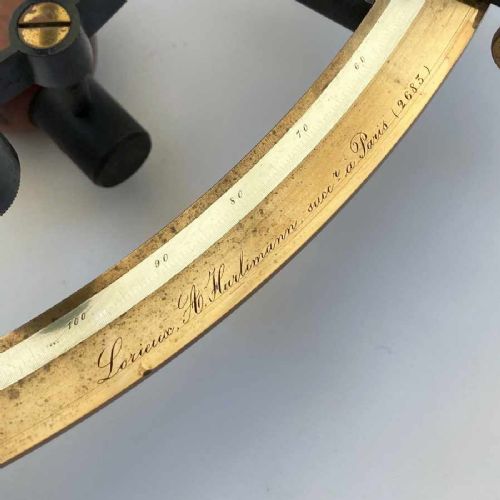
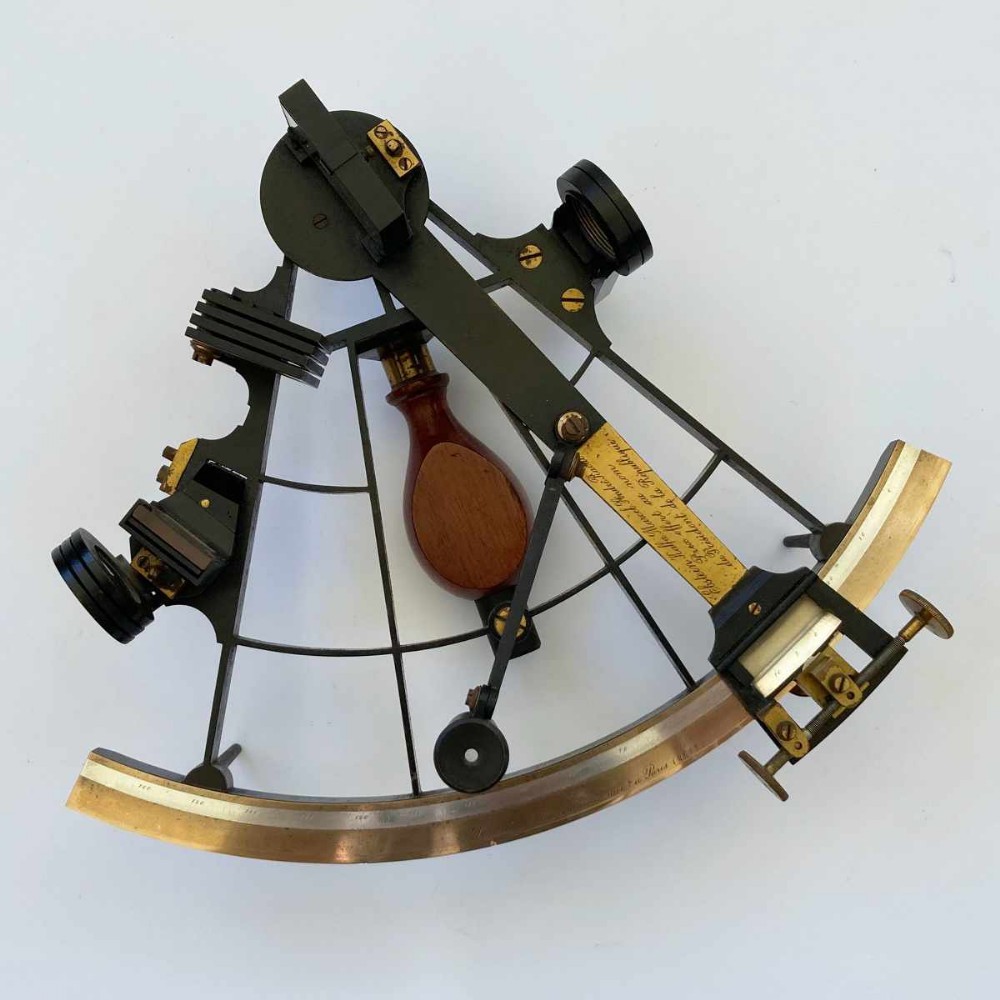
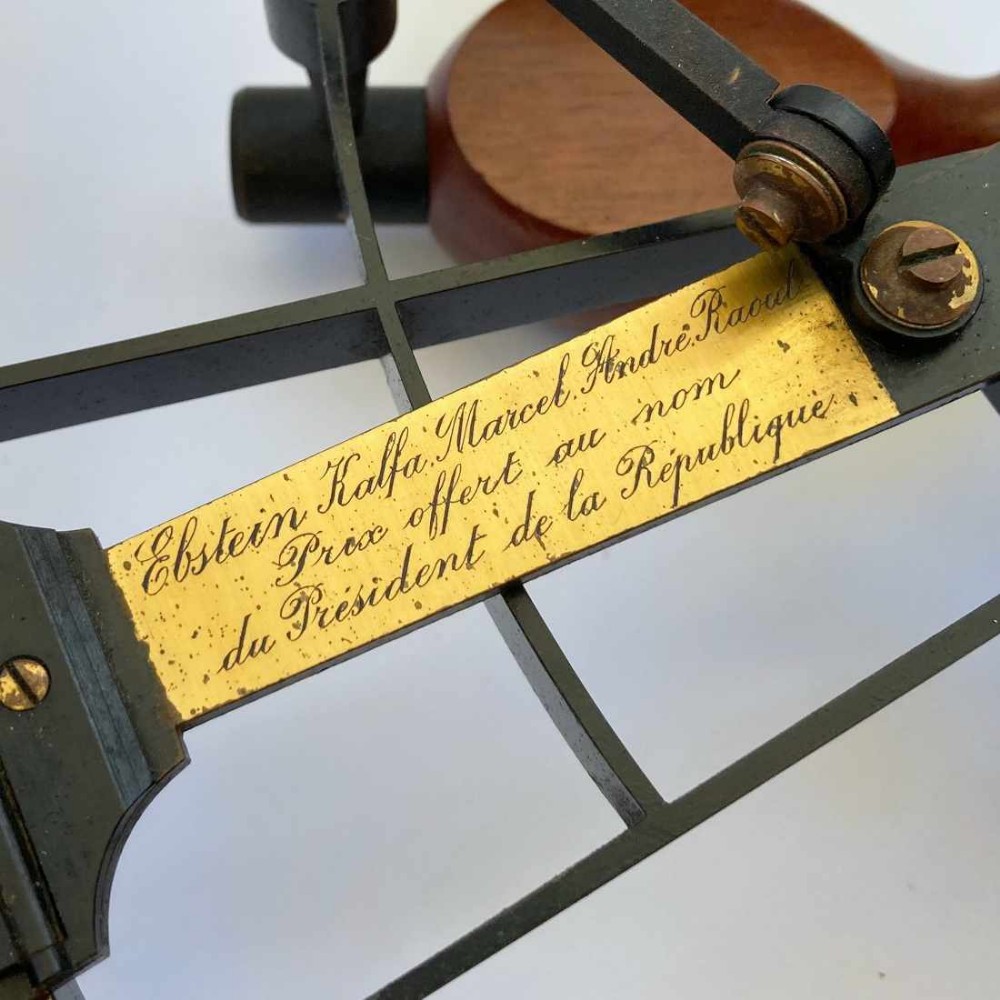
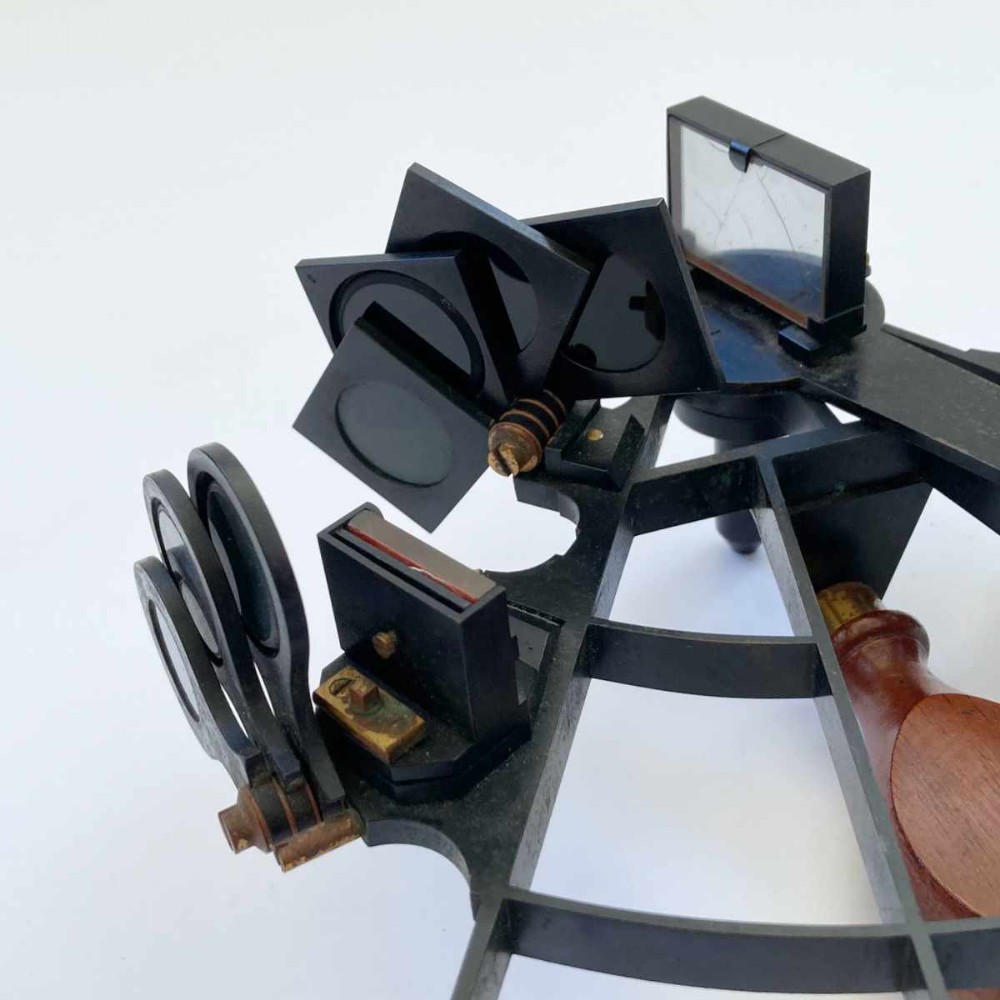
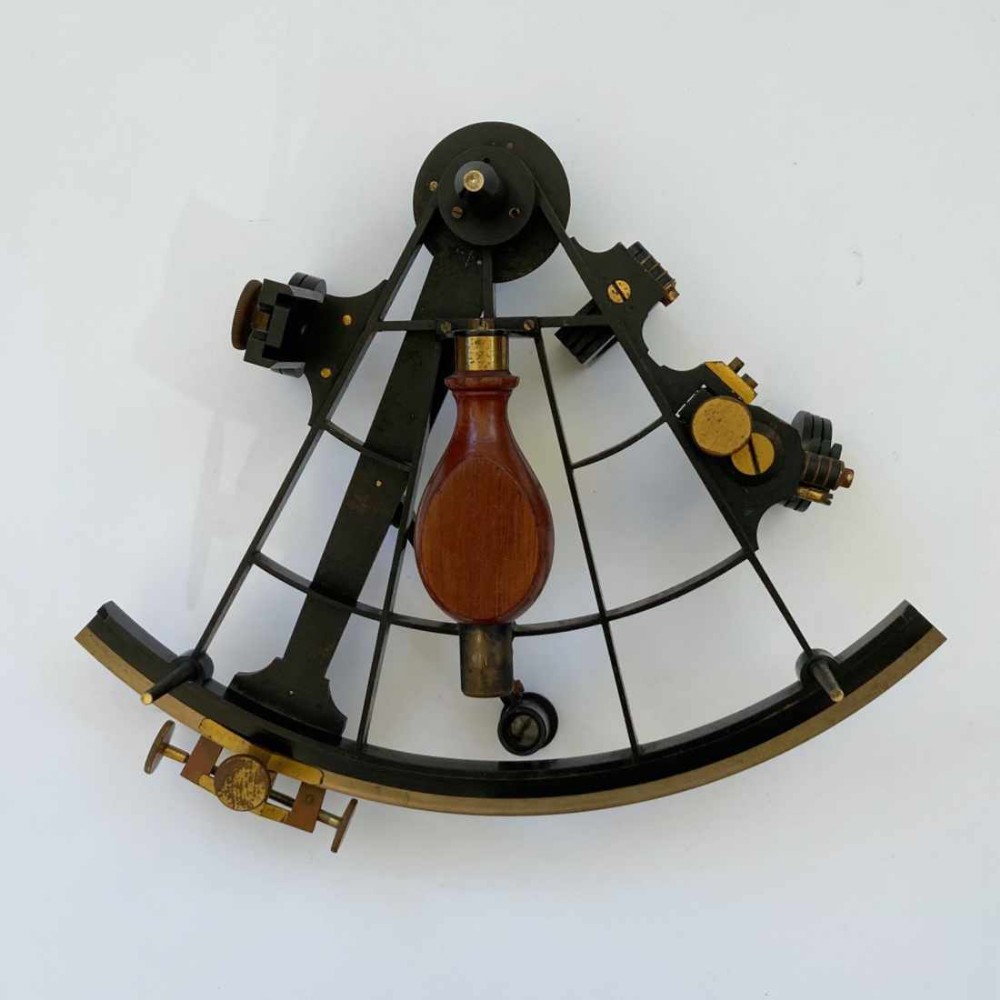
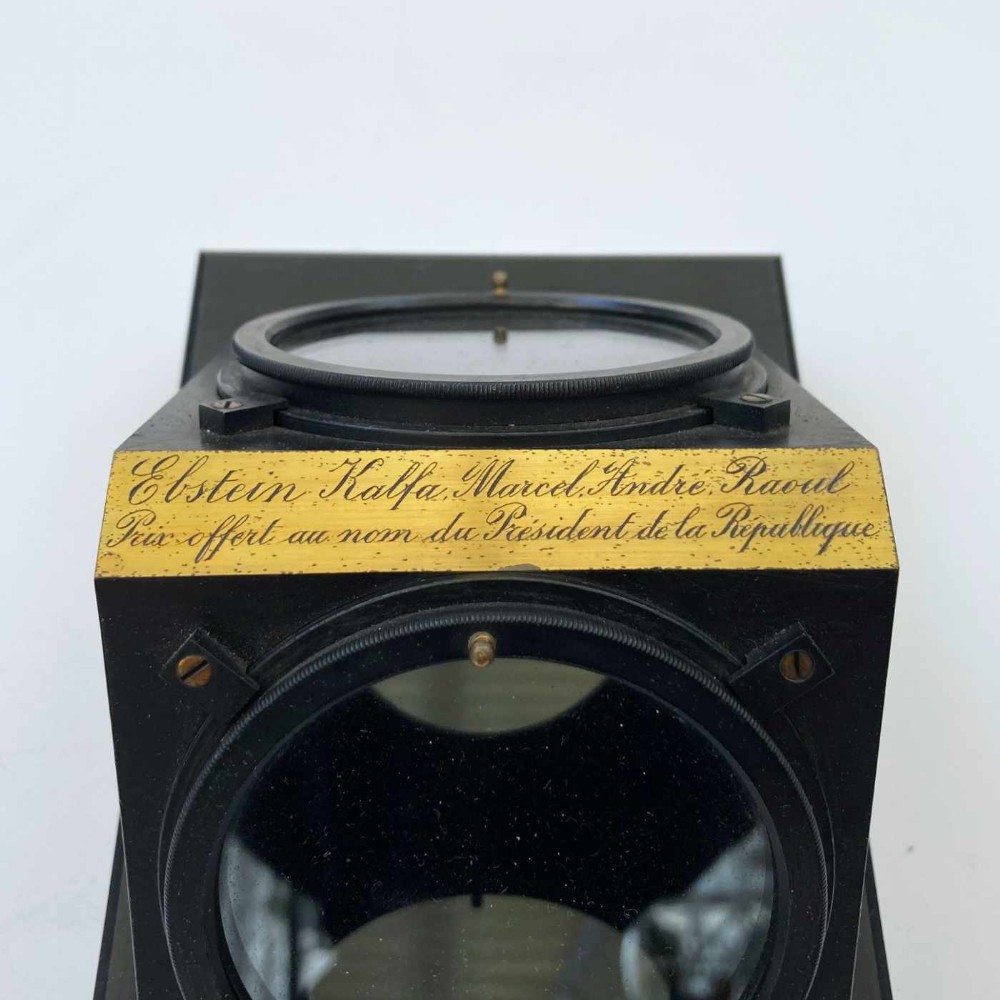
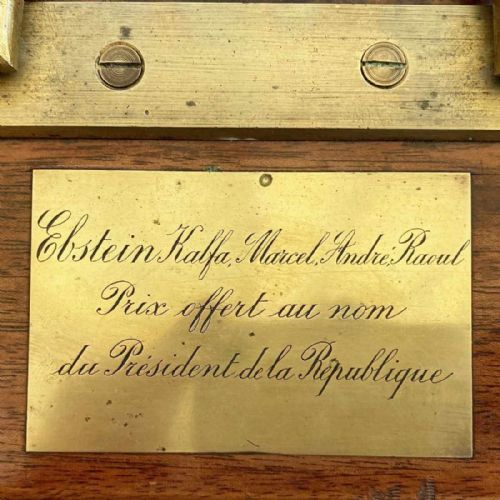
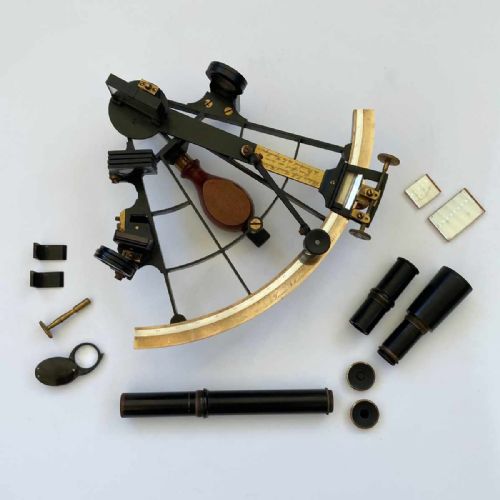
The skilfully proportioned ladder framed sextant is complete with index arm, adjustable vernier and double hinged magnifier, the index arm is also inlaid with a brass plaque stating the recipient’s name; “Ebstein, Kalfa Marcel Andre Raoul. Prix offert au nom du President de la Republique” (Kalfa Marcel Andre Raoul Ebstein. Prize given in the name of the President of the Republic of France). The divided arc is completed in silver and lacquered brass inscribed with the maker’s name of “Lorieux, A Hurlimann succ’r a Paris” and a serial number 2683. It has four index and three horizon shades, original glass mirrors, mahogany handle and a threaded loop into which three different telescope options can be fitted for use. The loop has a thumb screw to the side which allows for this to be loosened and removed when the associated binoculars are preferred.
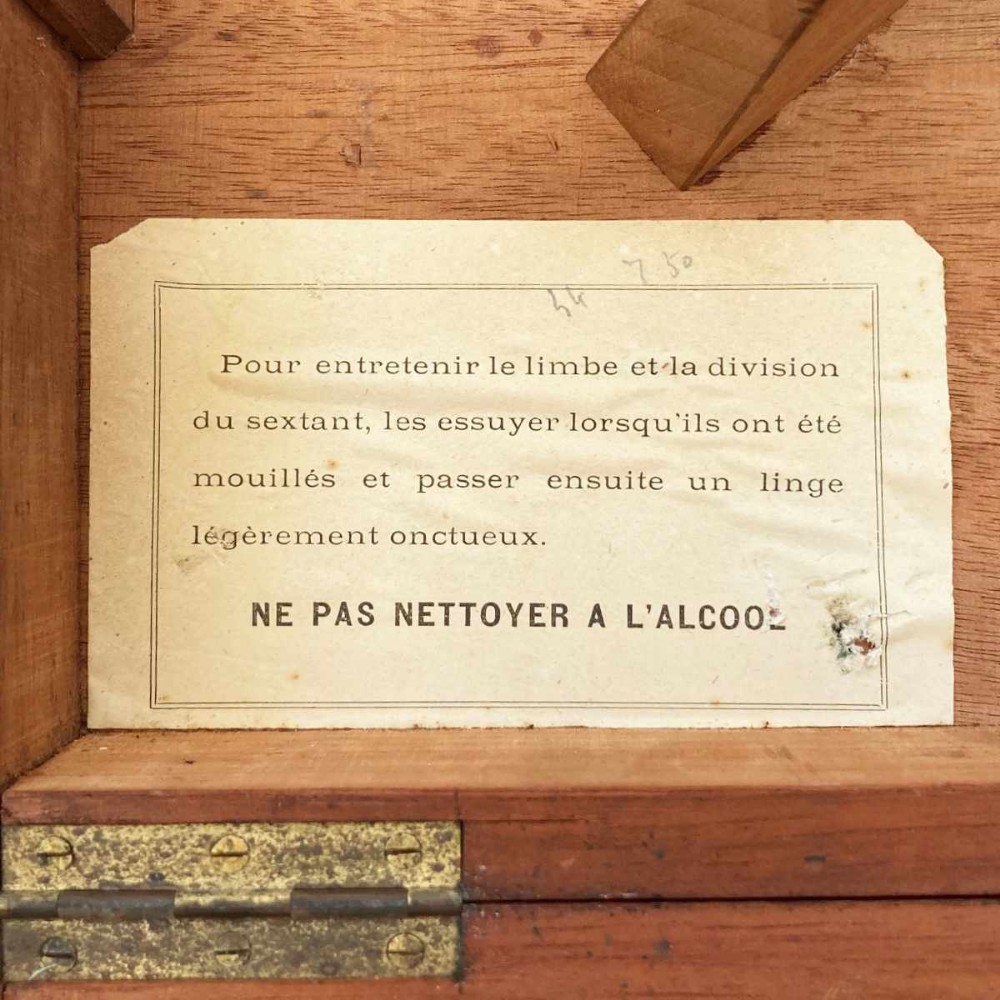
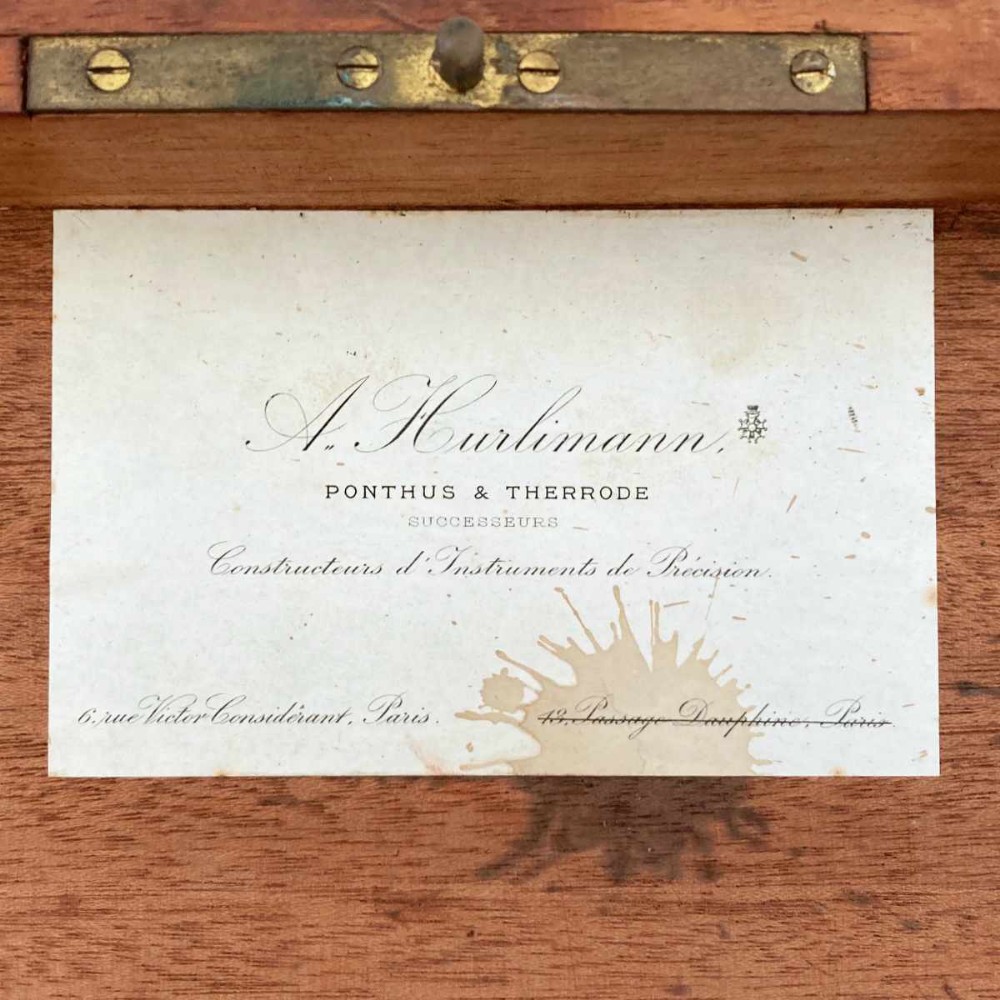
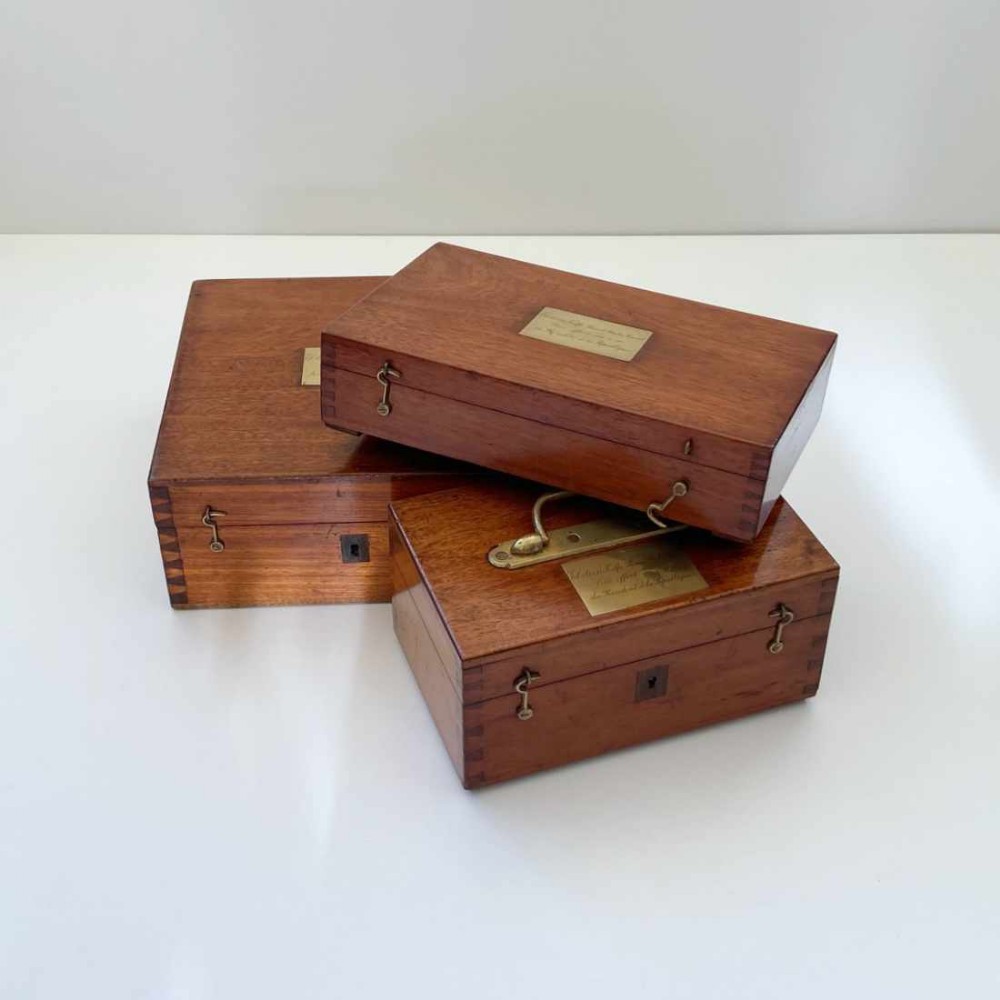
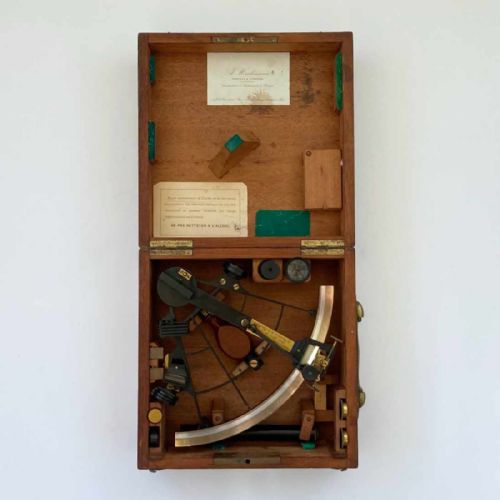
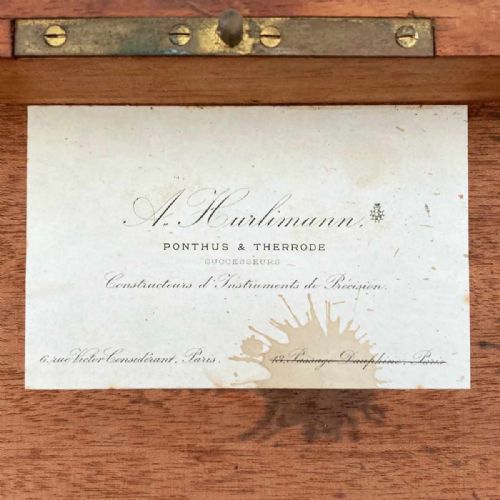
The interior of the walnut case is complete with its original fittings including the aforementioned telescope options, two sunshade eyepieces, a magnifying glass and a key for index arm adjustment. The lid of the case includes a compartment containing replacement mirrors and two pasted labels, the first stating the maker, A Thurlimann, Ponthus & Therrode Successeurs Constructeurs d’Instruments de Precision with an address of 6 Rue Victor Considerant, Paris and another old address of 18 Passage Dauphine, Paris crossed out.
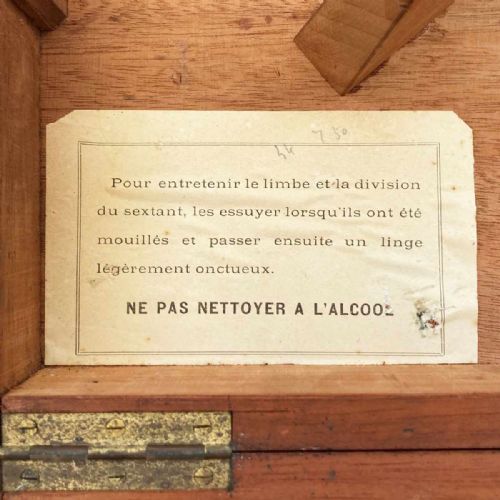
The second label is an instruction for use which translates as follows: “To maintain the limb and division of the sextant, wipe them when they have been wet and then wipe with a lightly oiled cloth. Do not clean with alcohol.”
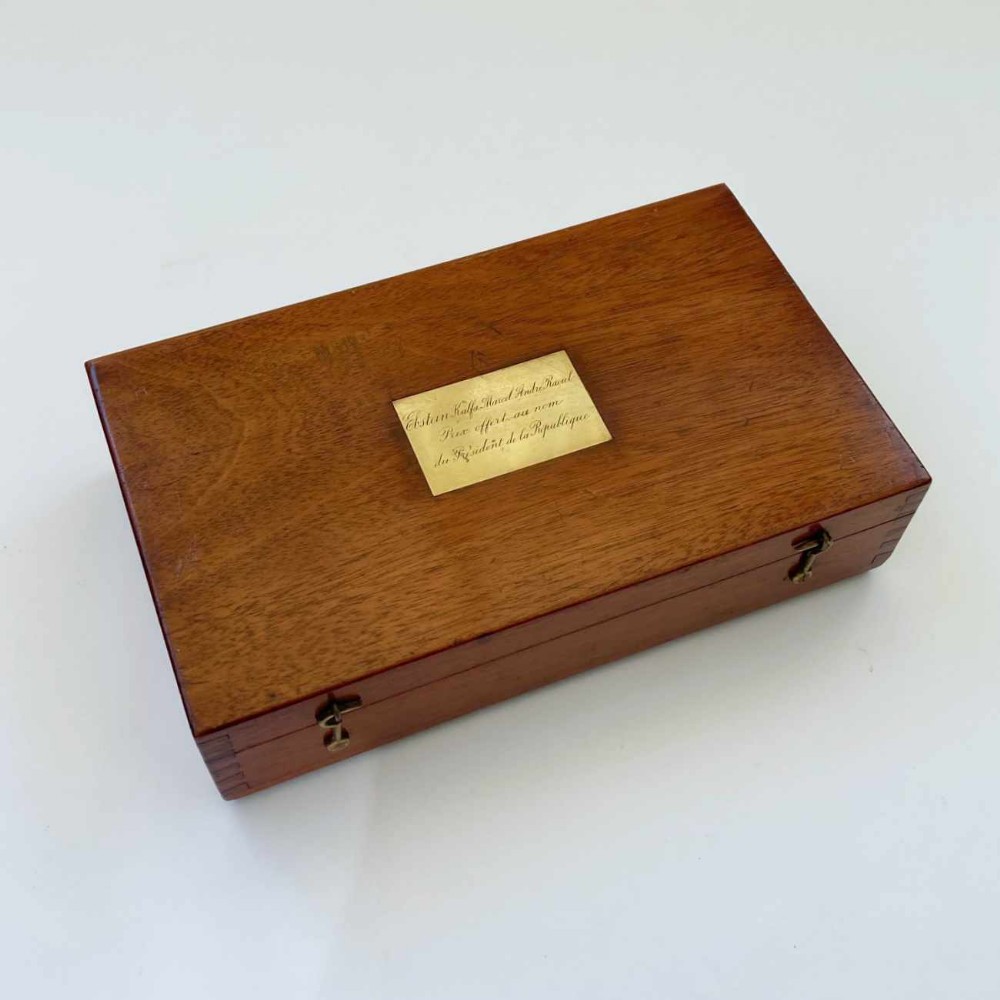
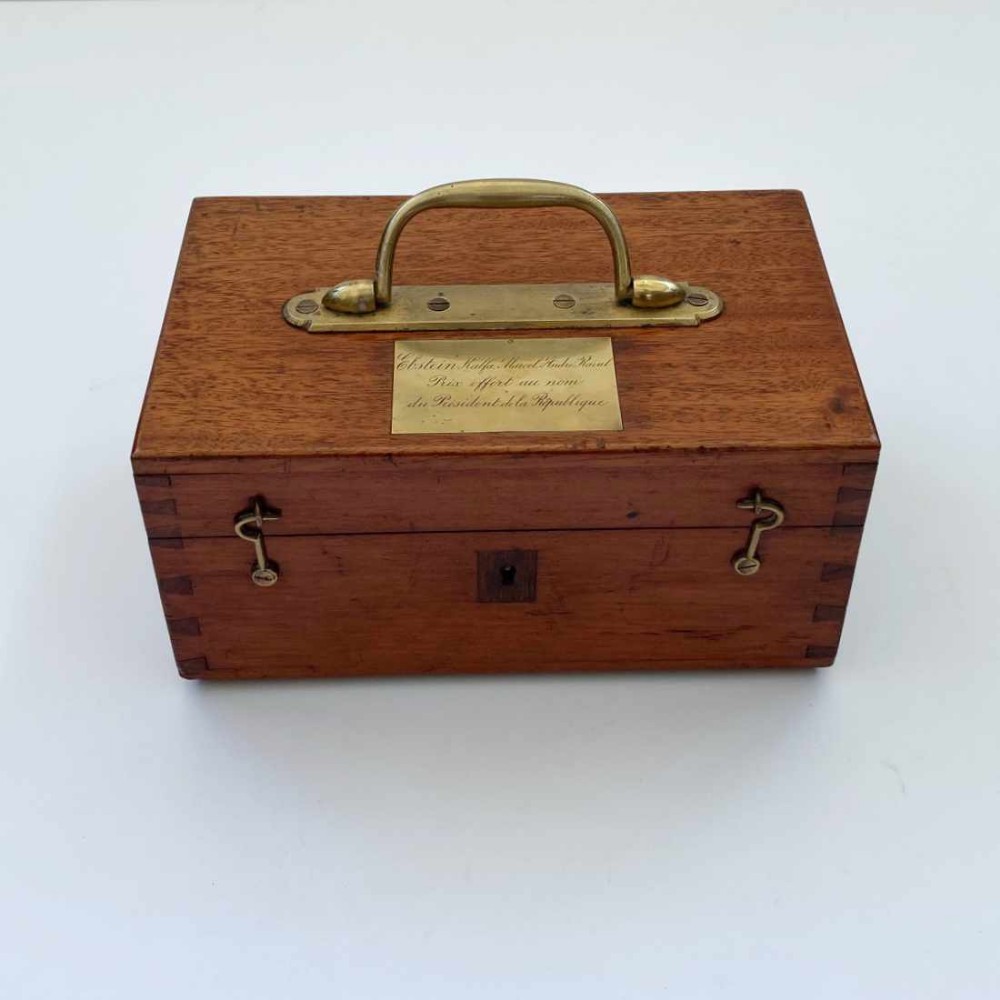
The outside of the case bears a large brass plaque engraved with the same inscription as is present on the index arm of the sextant (see above). It has a brass carry handle to the side and is closed with both hook and eye fastenings and a lock.
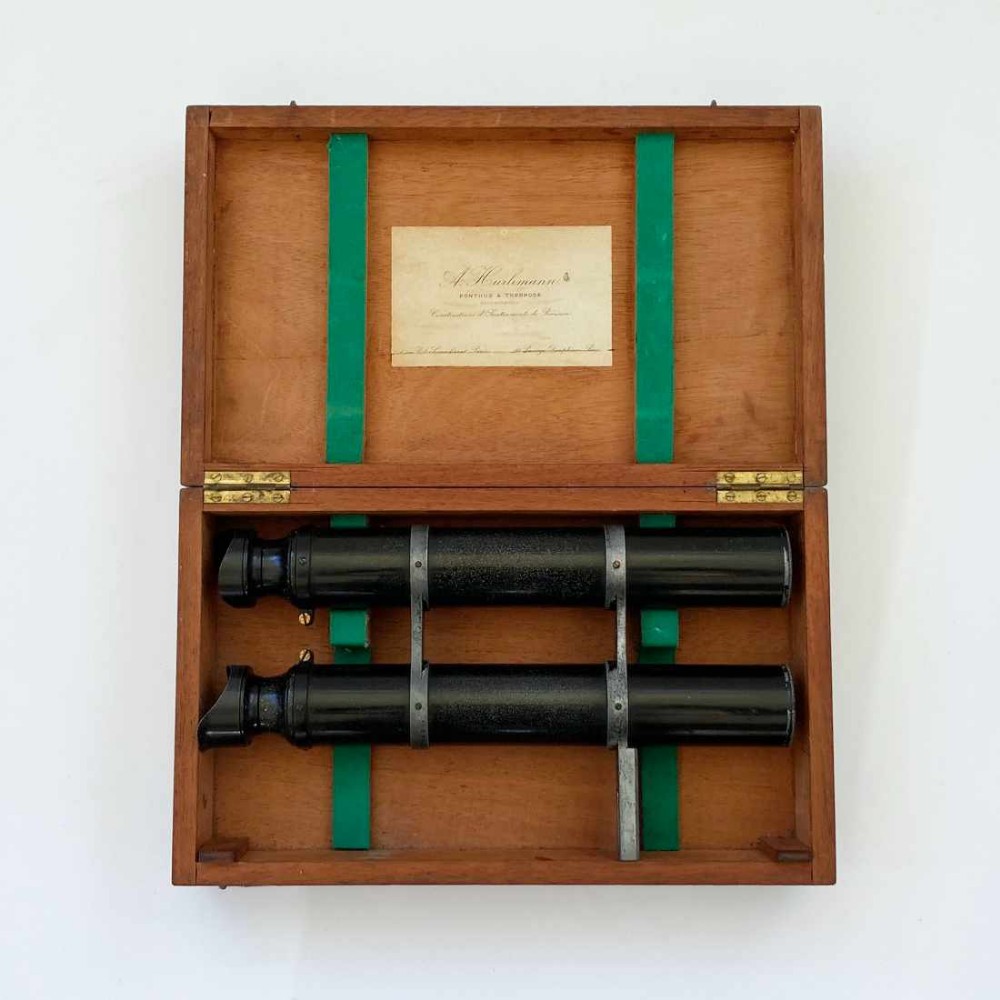
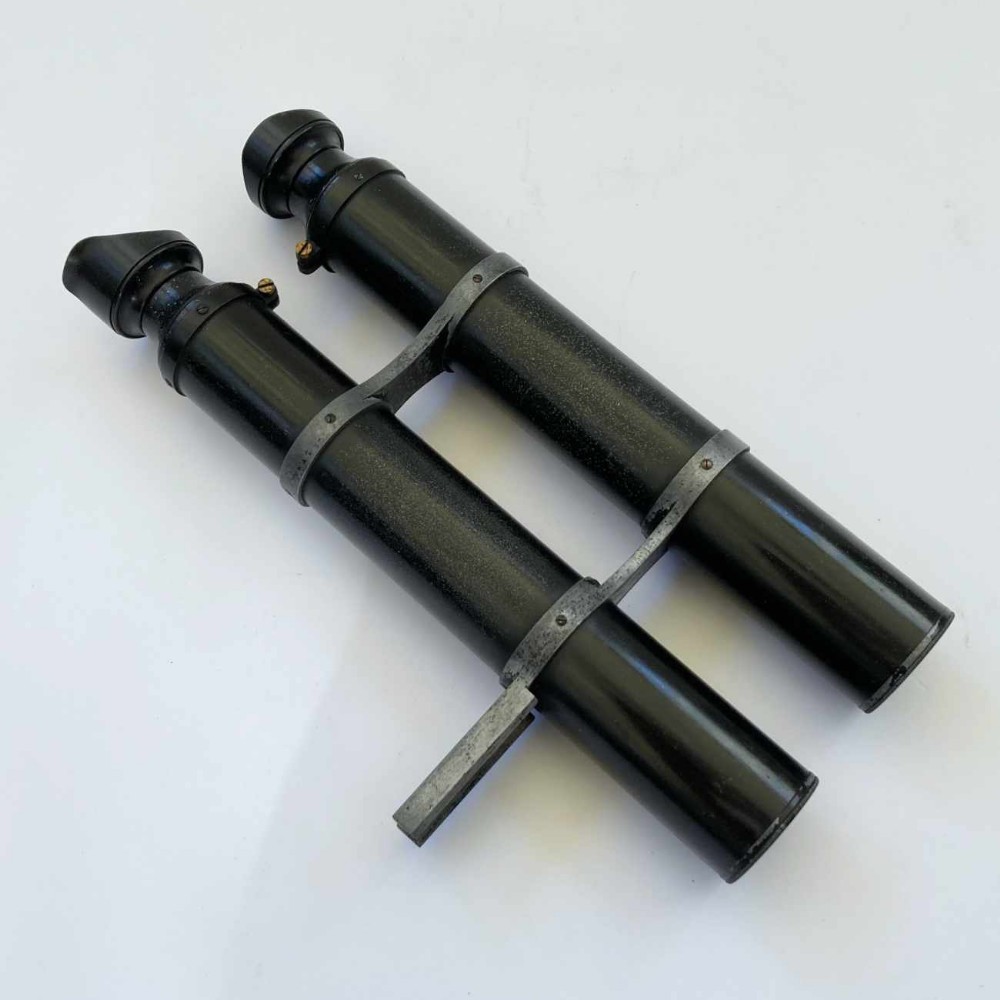
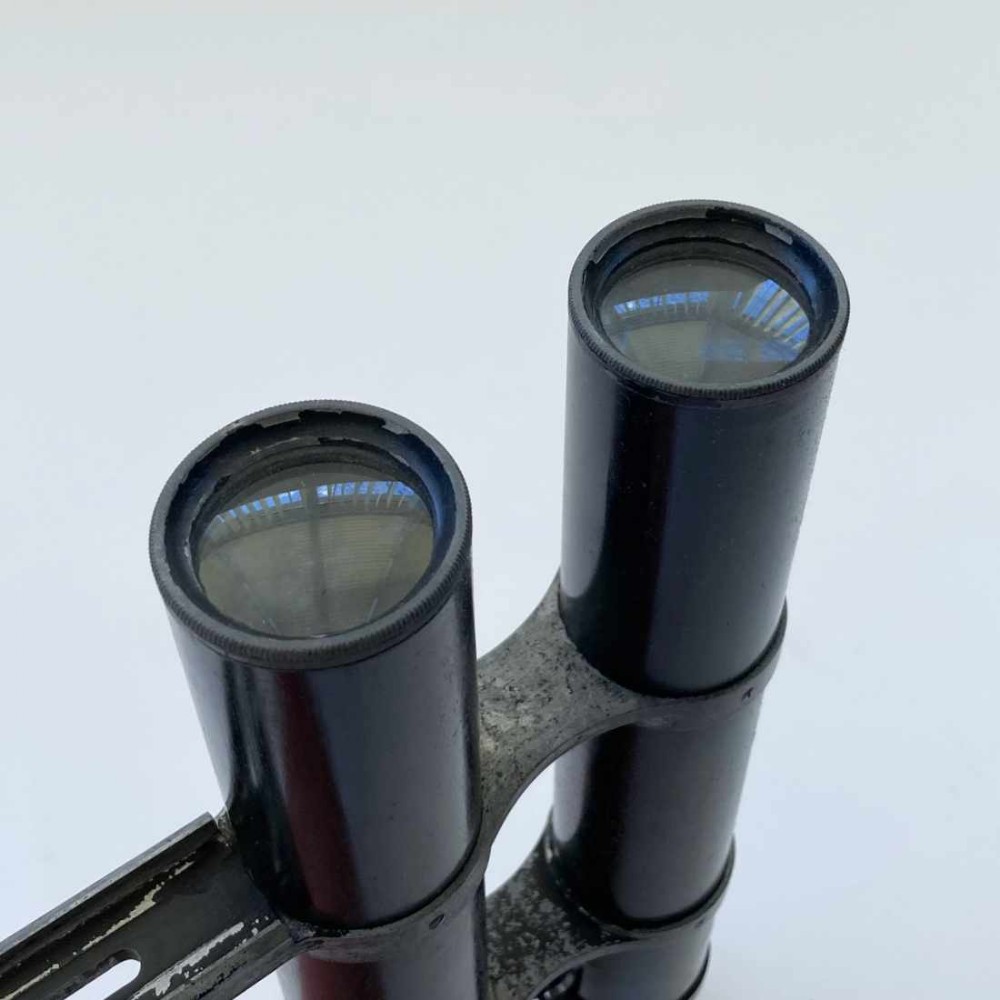
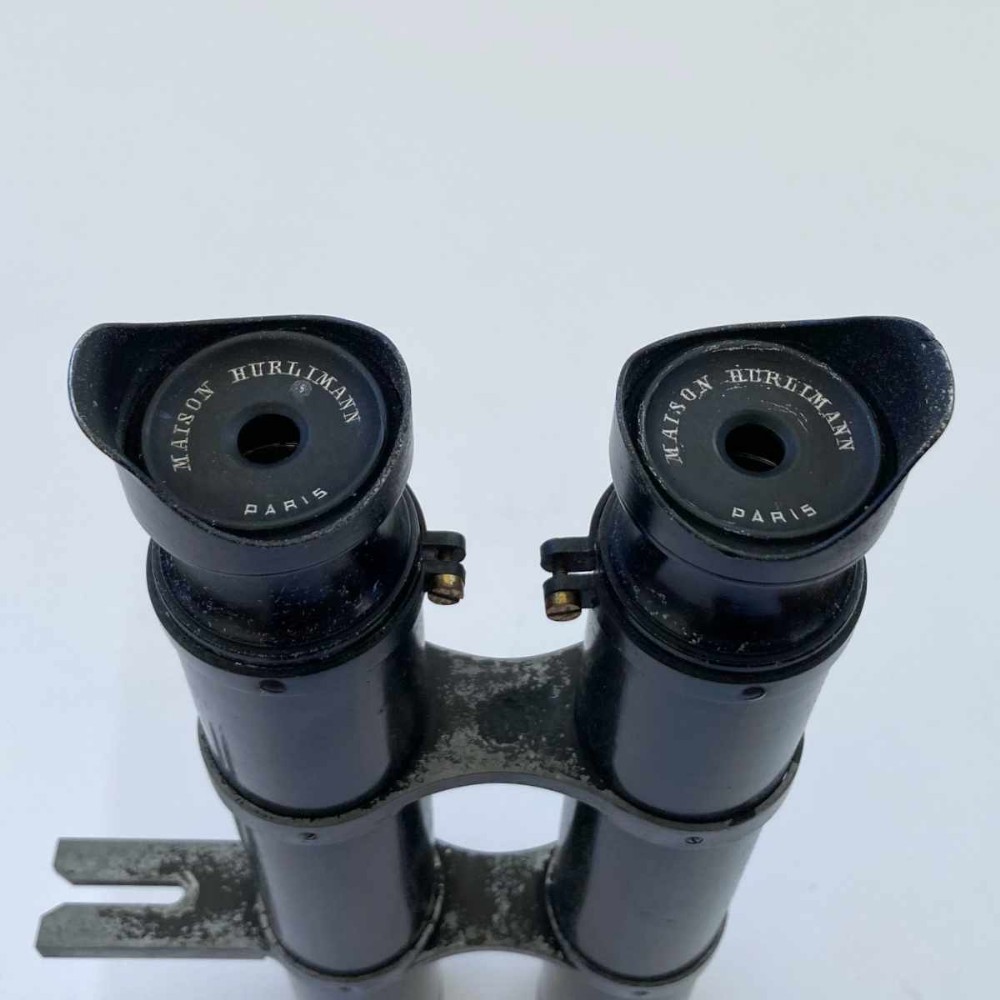
The binoculars which are associated with the sextant are similarly cased in walnut with the same engraved brass plaque to the lid and with hook and eye fasteners to the front and the same trade label present within the interior lid. The binoculars comprise of two 9” tubes, one and a half inch objectives and two adjustable metal eyeshades both engraved to, “Maison Hurlimann, Paris”. An arm is provided at the lower end of the binoculars in order to secure them to the sextant during use.
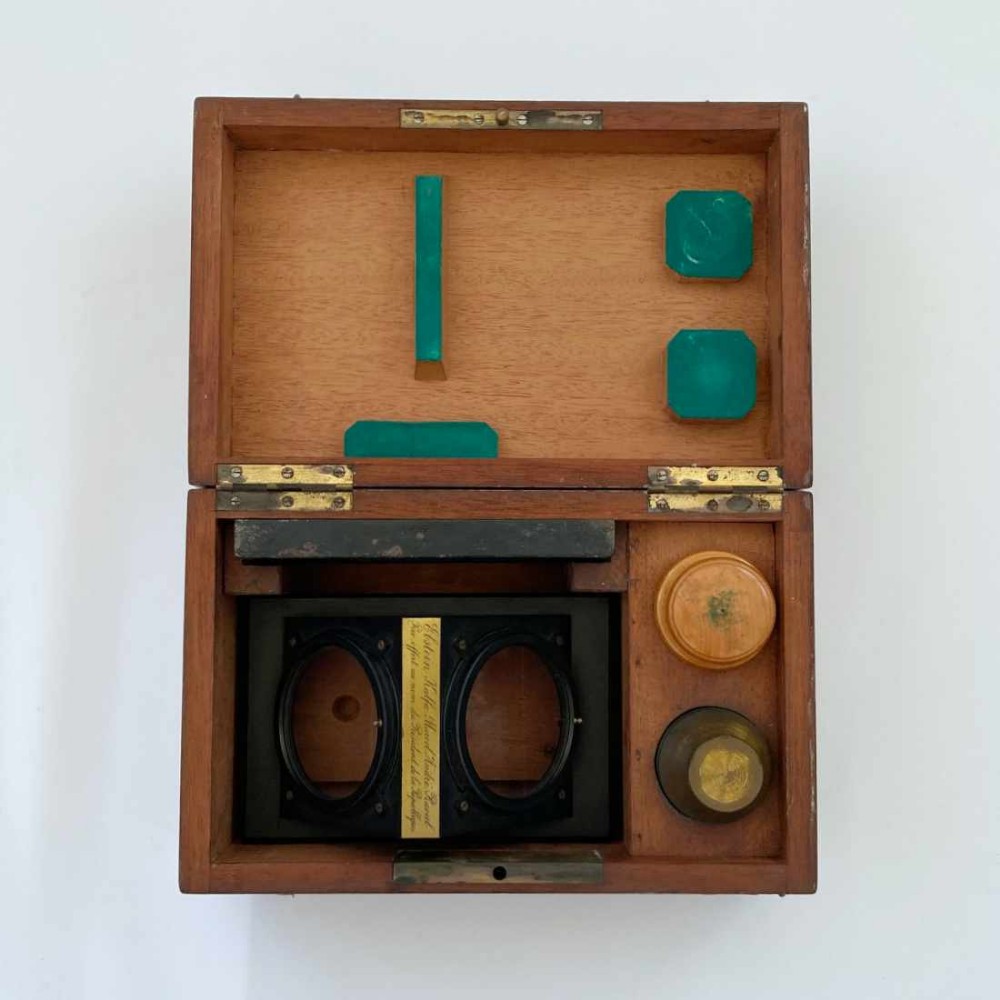
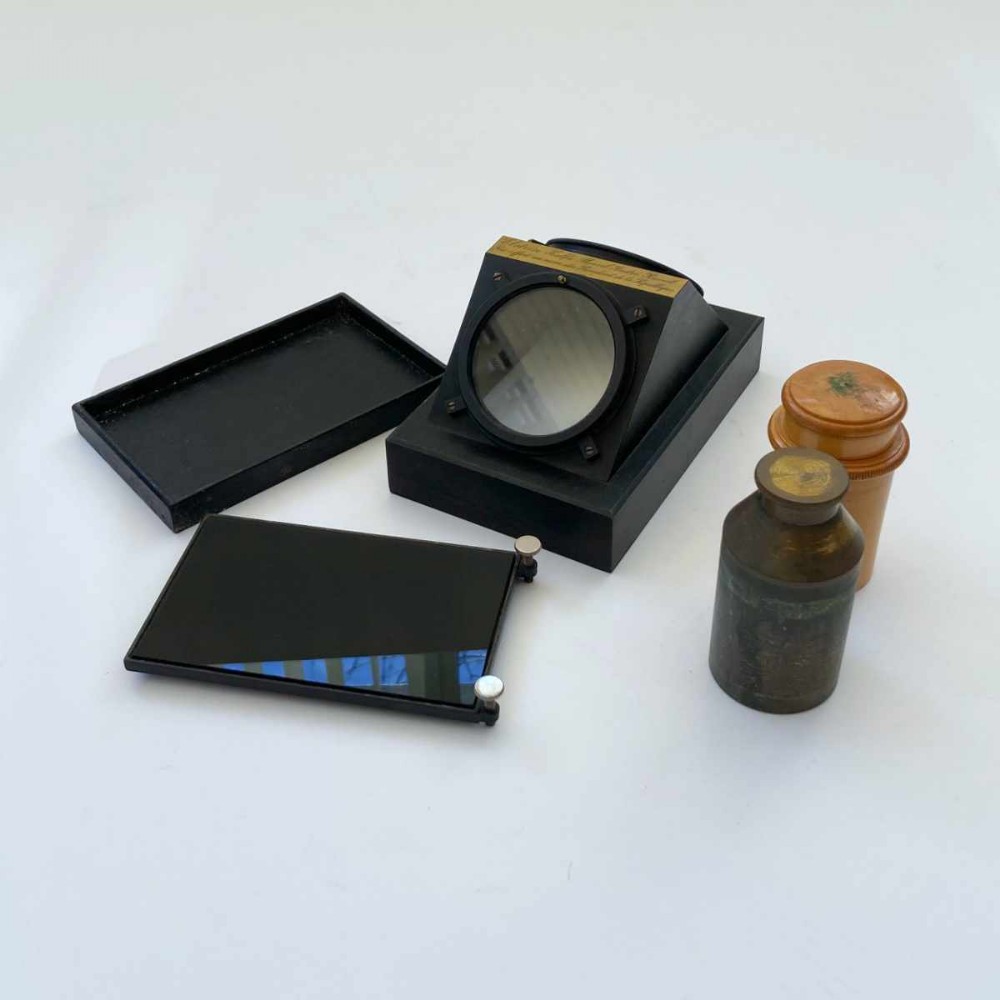
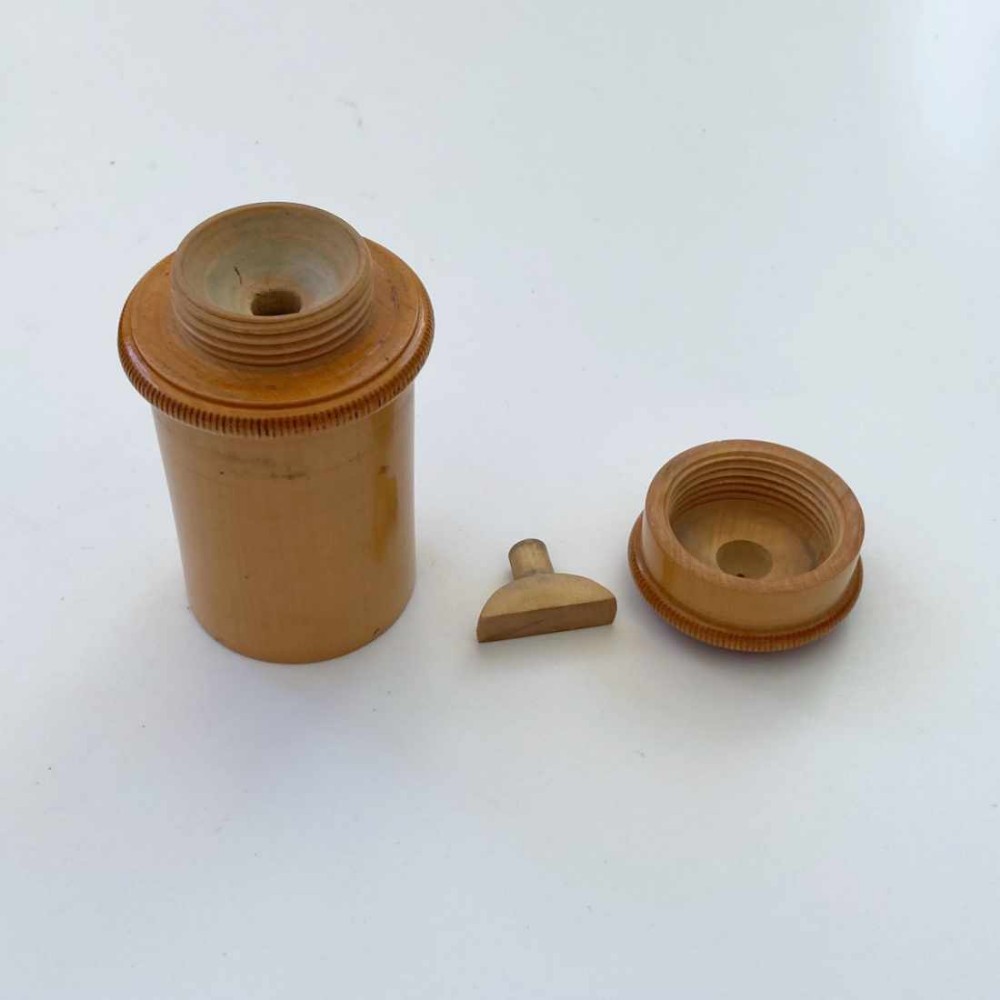
The artificial horizon is again provided with the same walnut case, brass engraved plaque and fittings. The interior reveals an interesting example of a horizon as it incorporates both the features of the mercury trough design with trough plate provided to the back of the fitted case and boxwood receptacle where quicksilver would have been stored (not present). The front of the case stores a black painted horizon roof expertly designed with two circular glass windows which allowed for the chamfering of the peak to include another brass plaque with the prize giving dedication engraved directly onto the instrument. Stored below is the black glass plate which would allow the operation of the instrument without the need for quicksilver therefore giving the operator two different options, a feature I have not seen previously. To the right of this section is contained a brass receptable which has a lid which I have been unable to remove, however it is most likely to be a lamp with a wick to the centre.
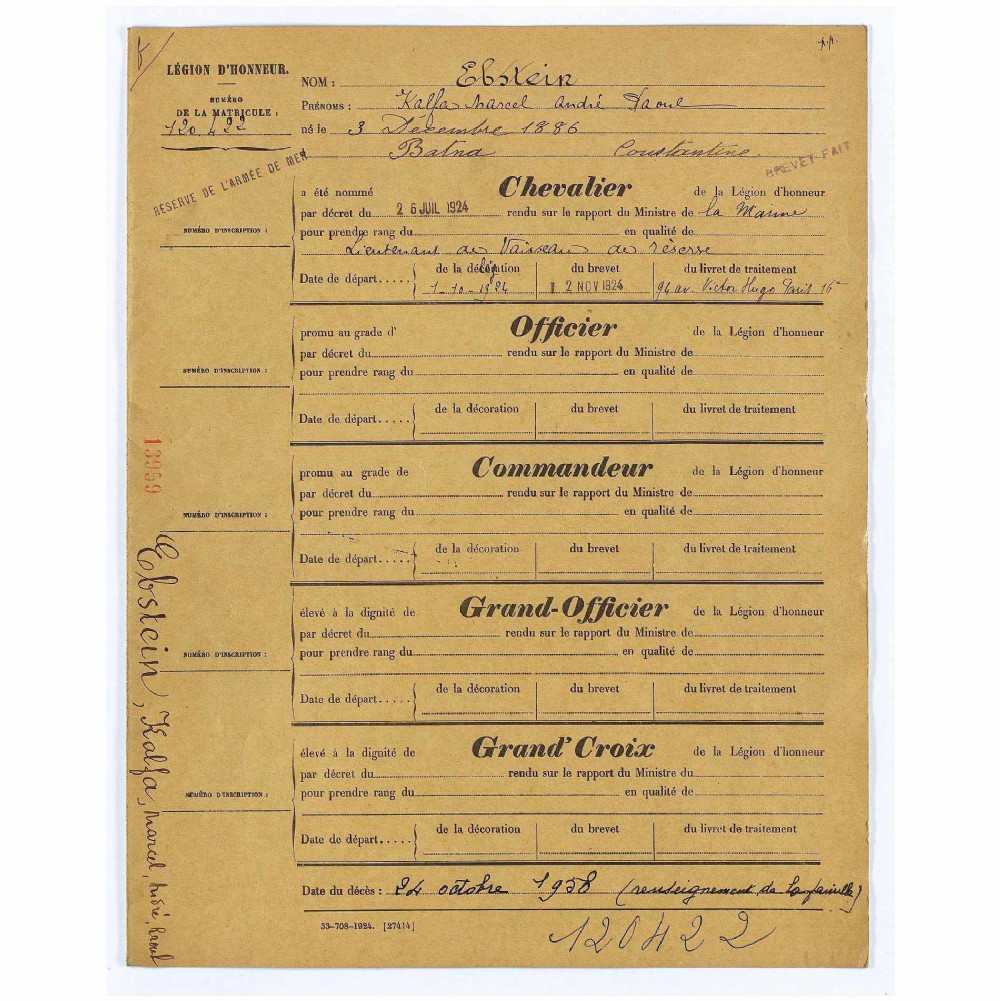
It is presumed that this very rare, unusual and complete set of early Twentieth Century navigational instruments was awarded to
Jason Clarke Antiques has dated this Antique Marine Sextant Set to the 1920s.

You can view the stock and full dealer information on the Jason Clarke Antiques Profile Page
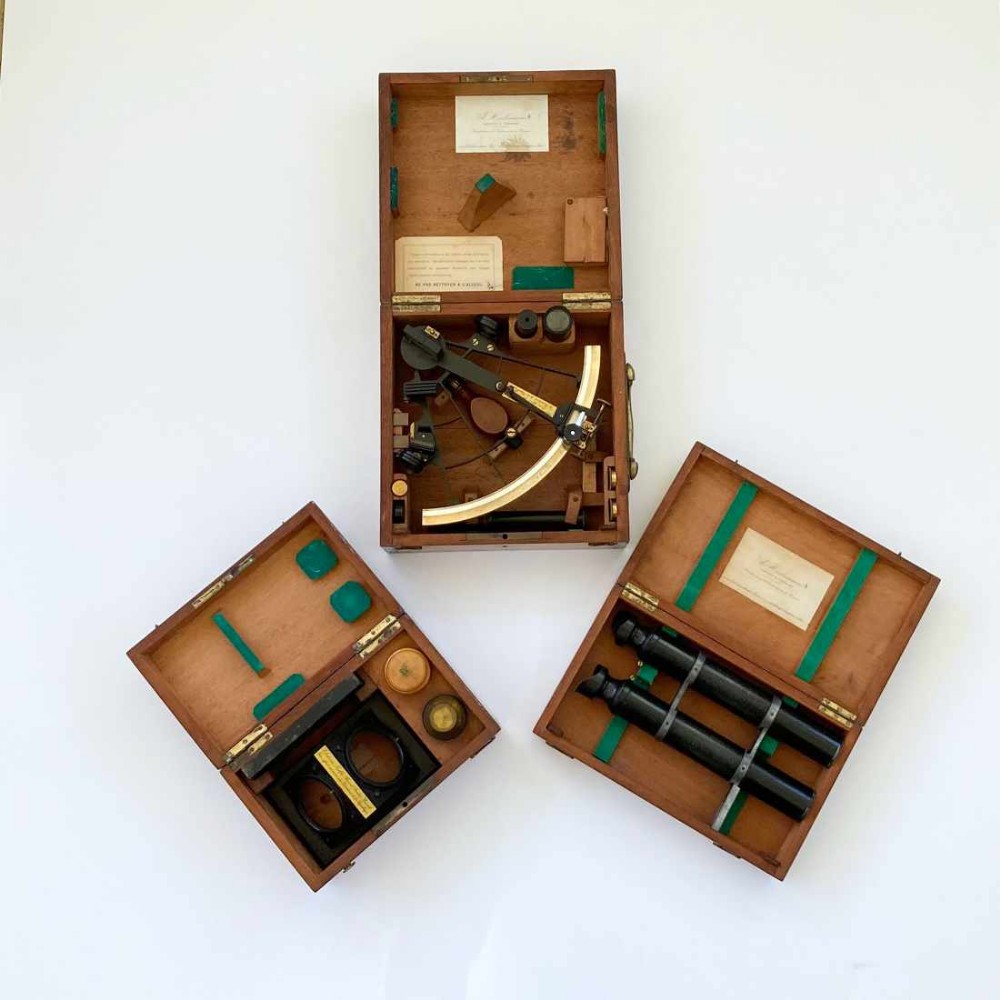
Legion D’honneur Presentation Marine Instruments by a Hurlimann Paris