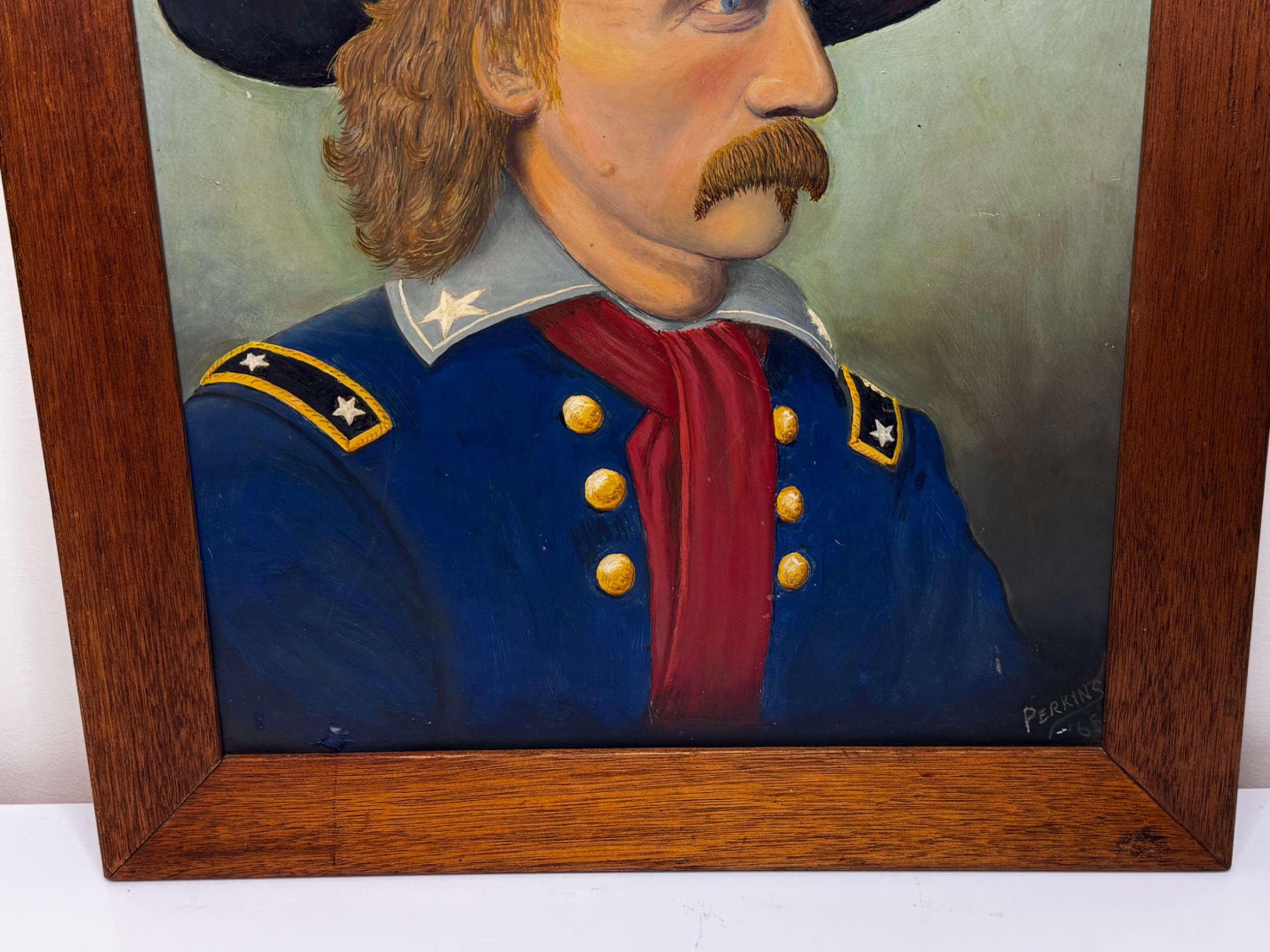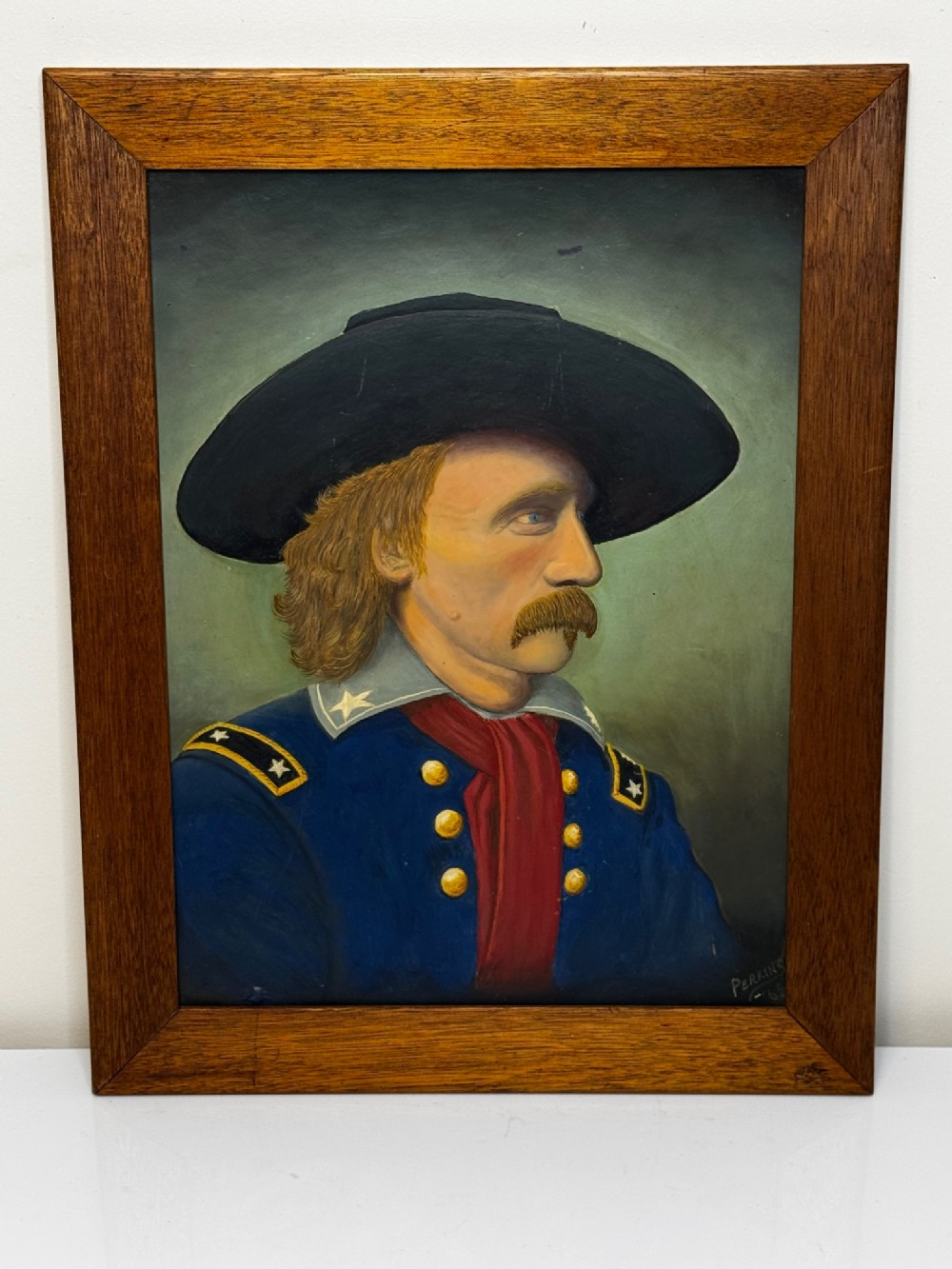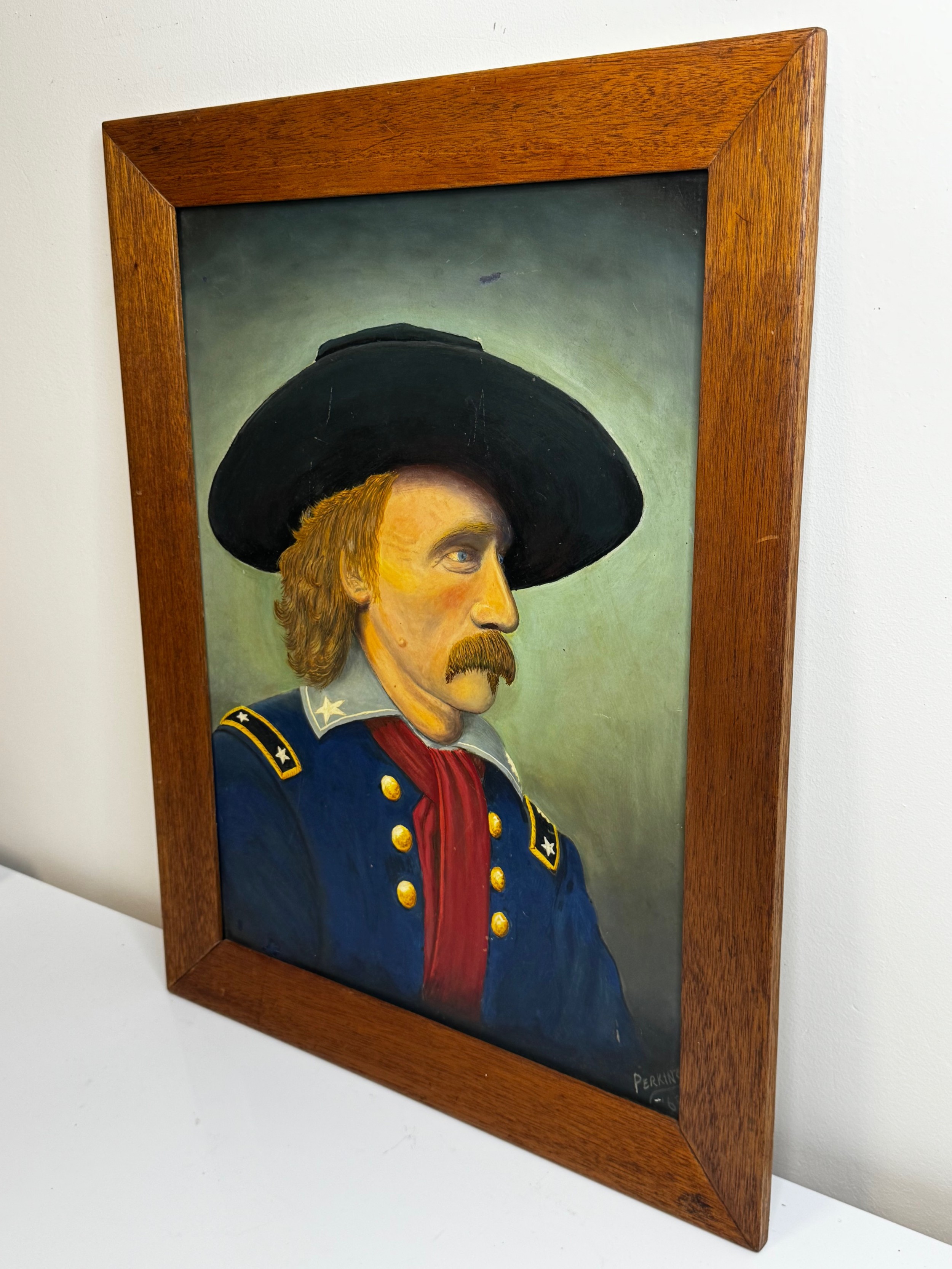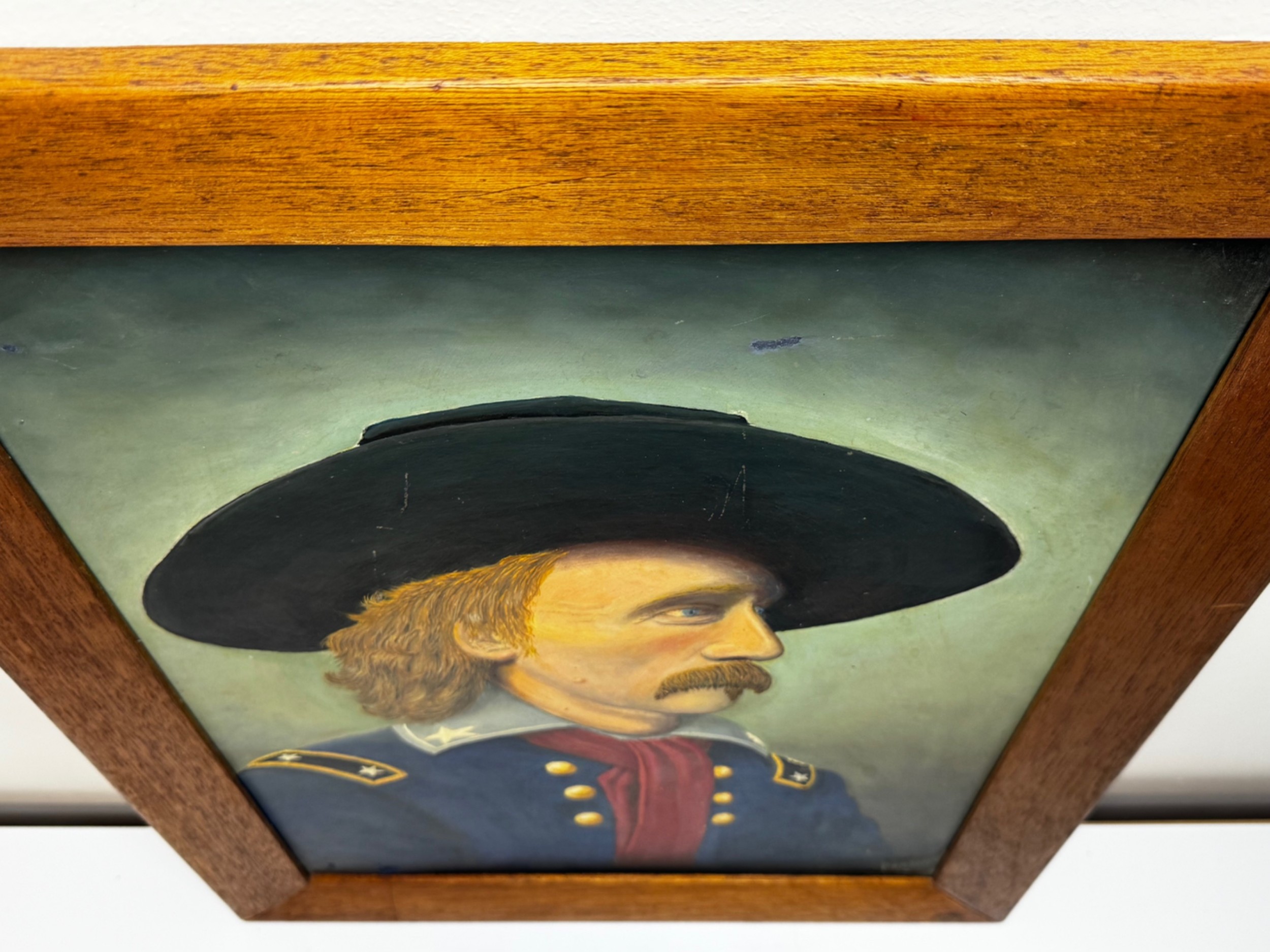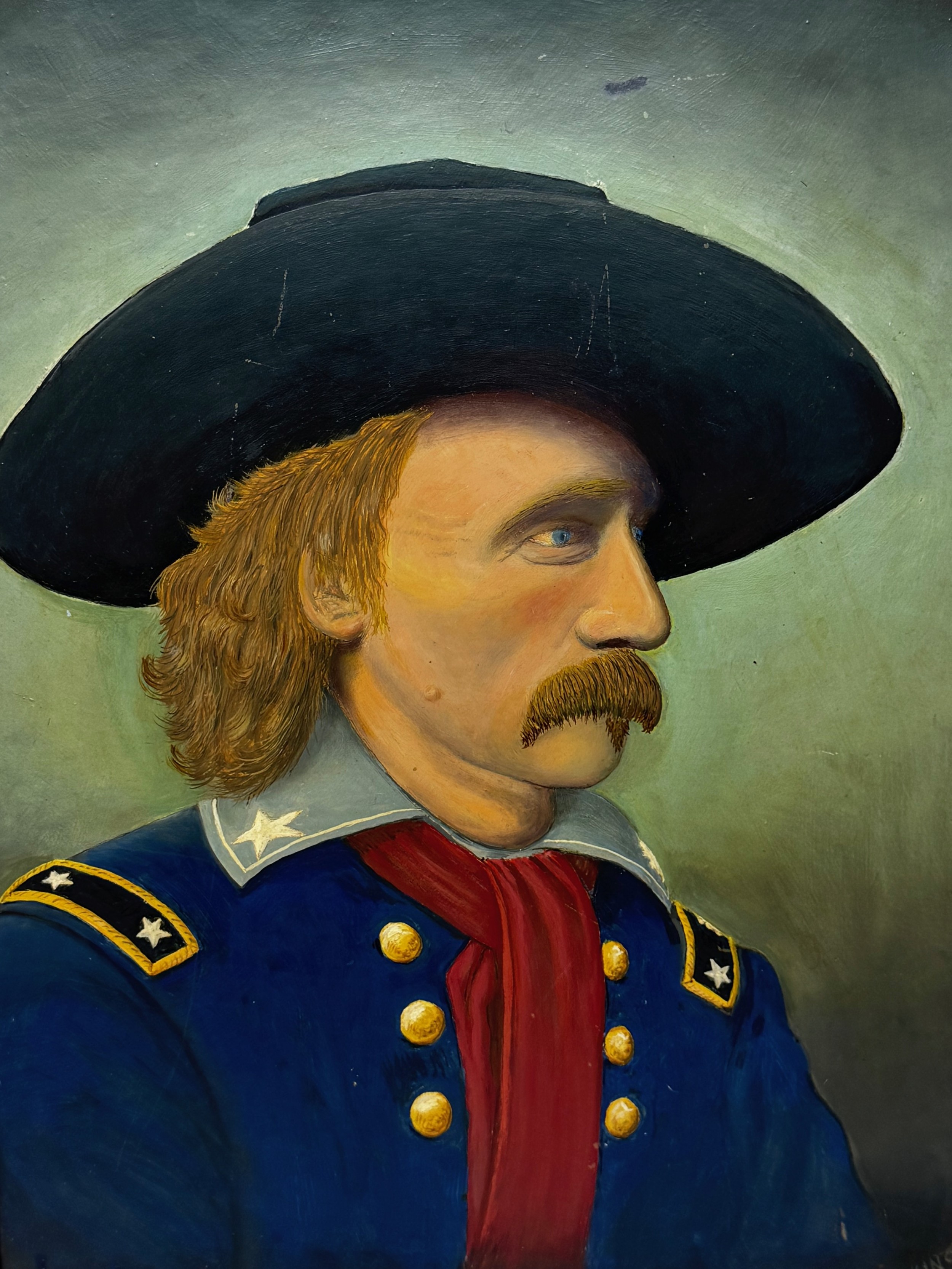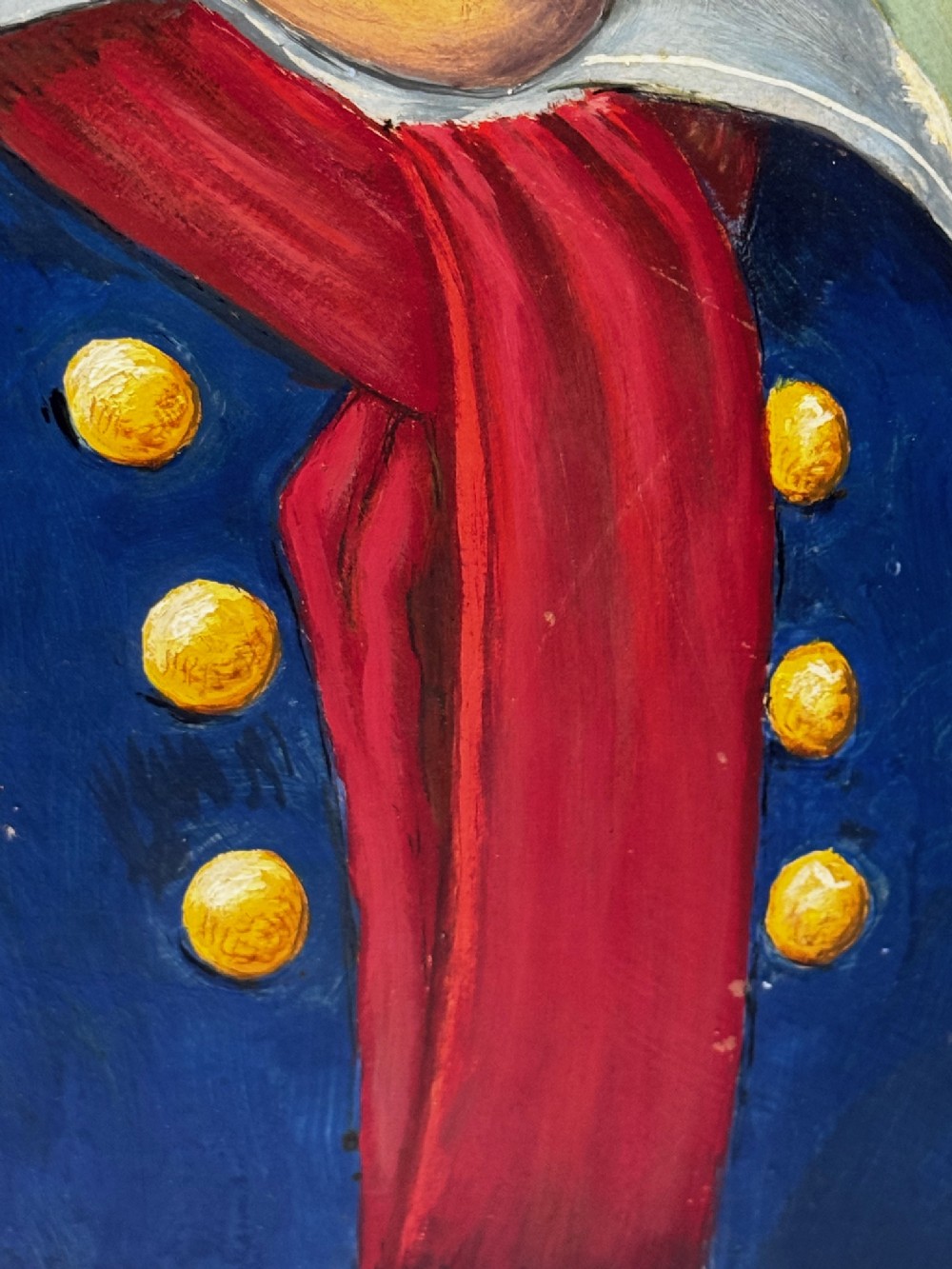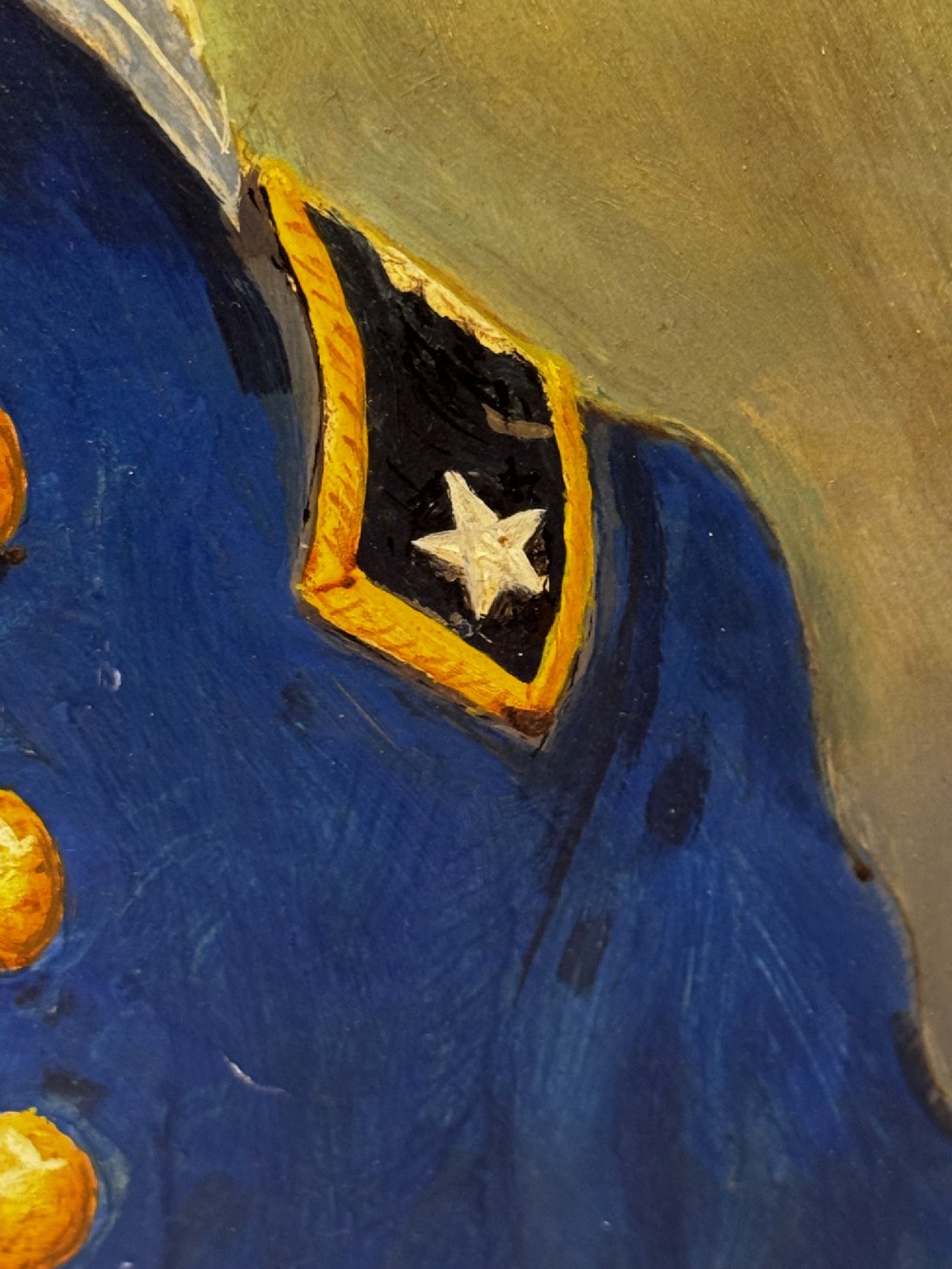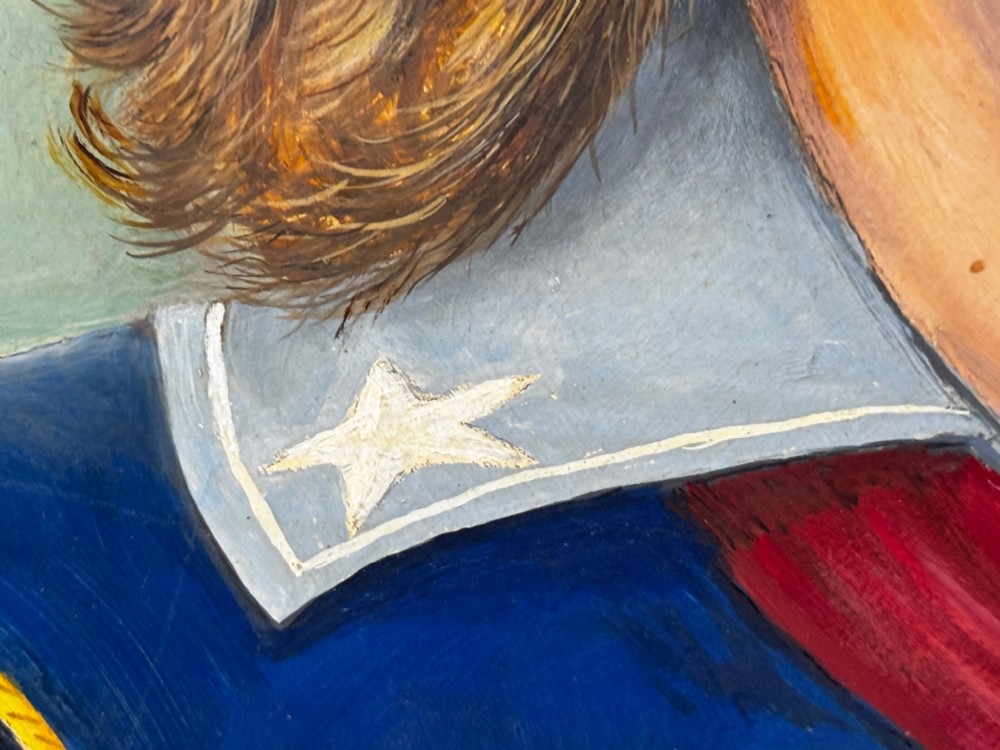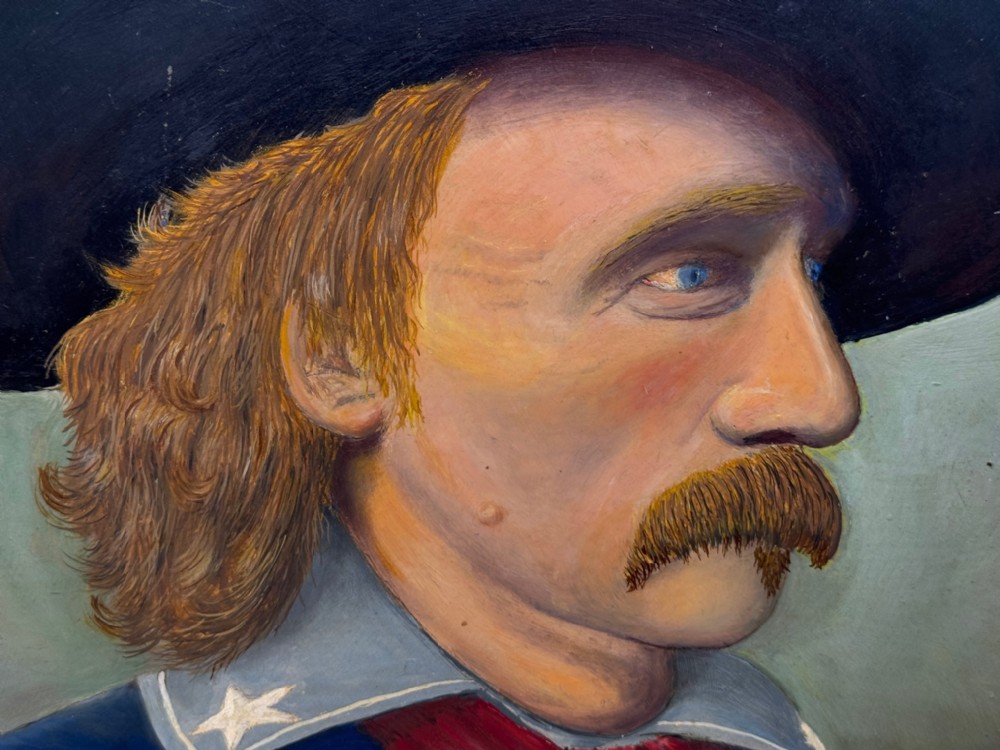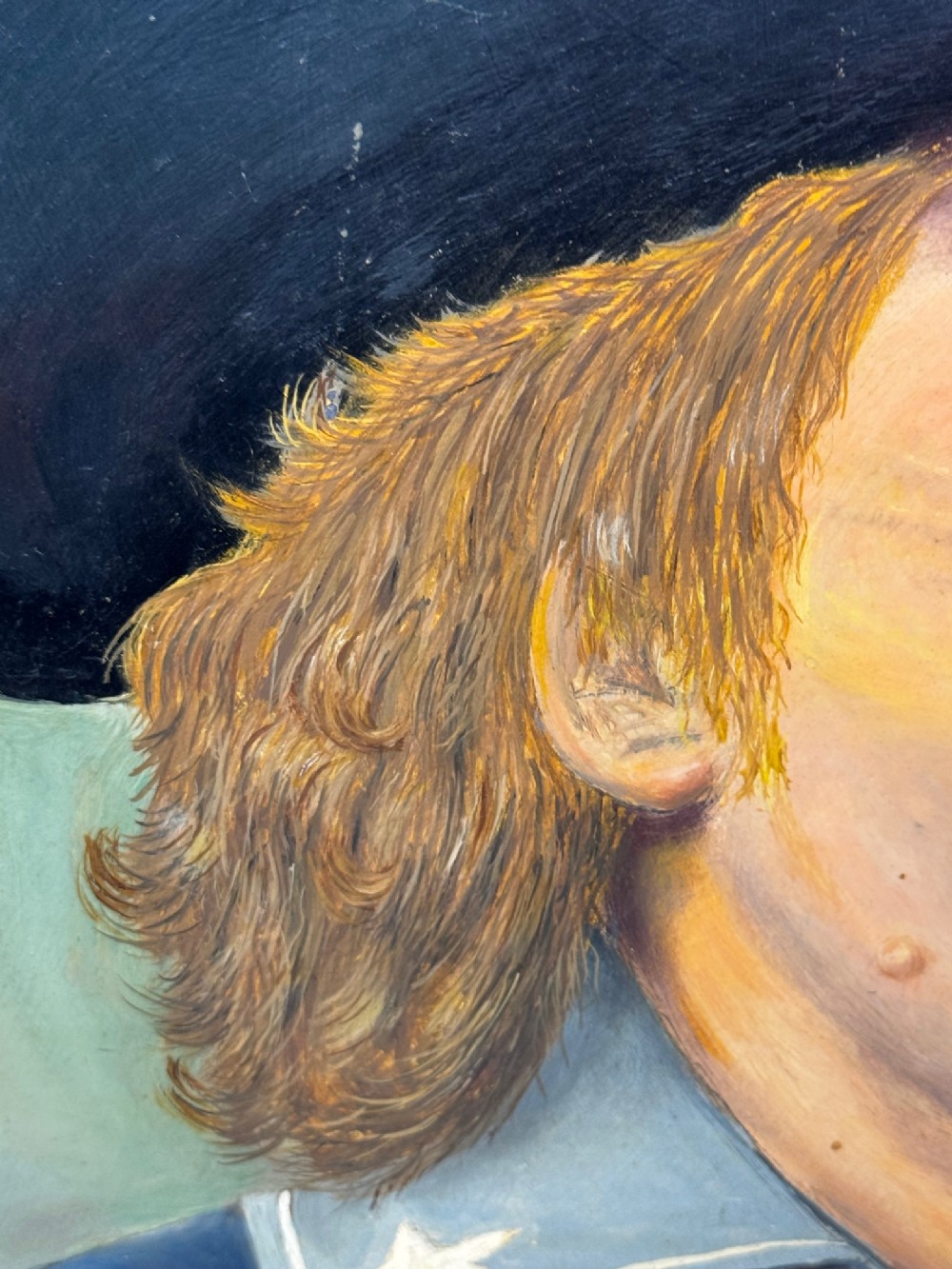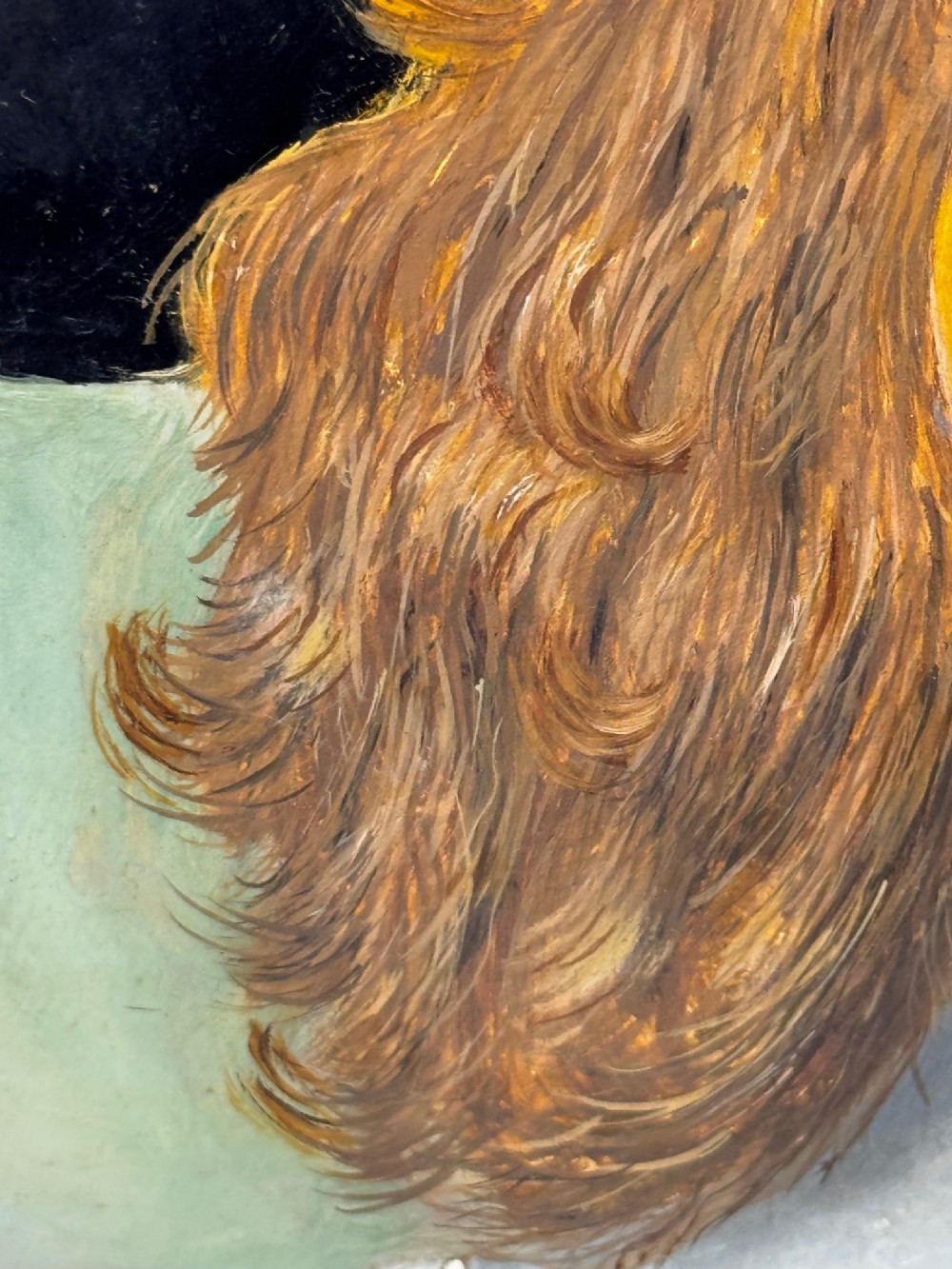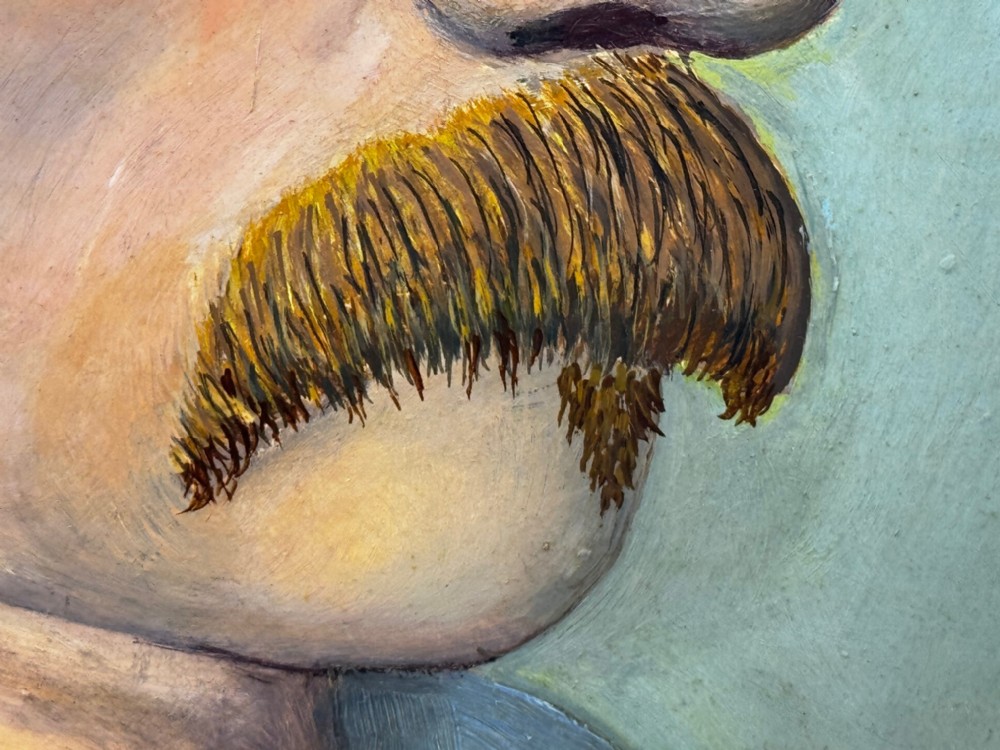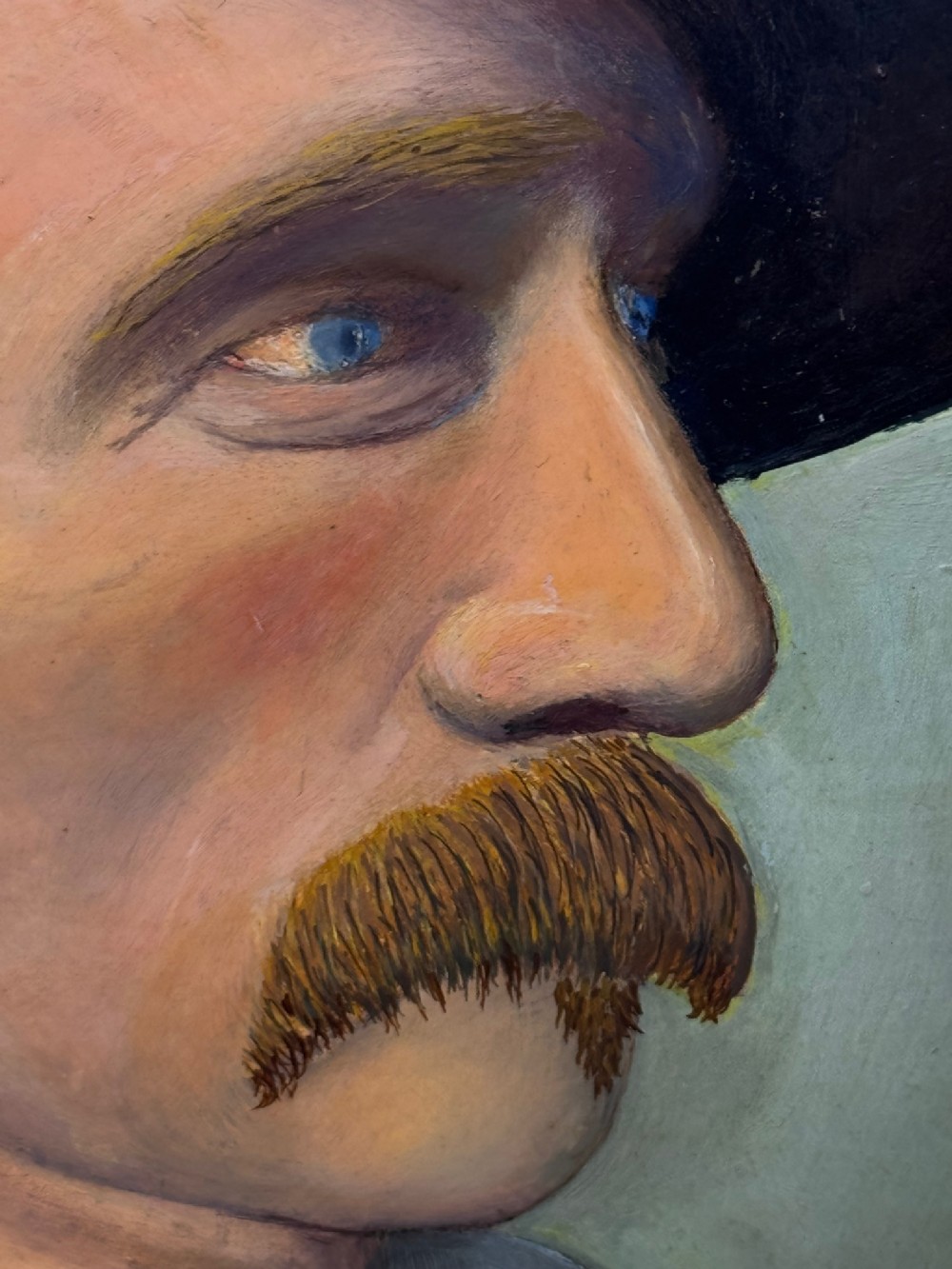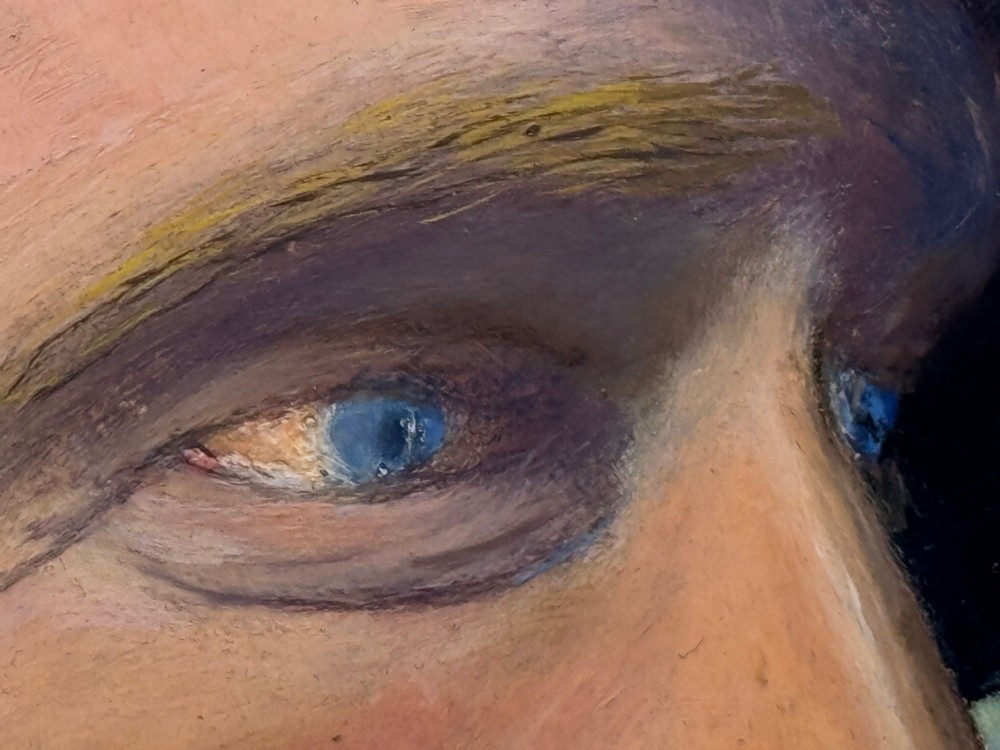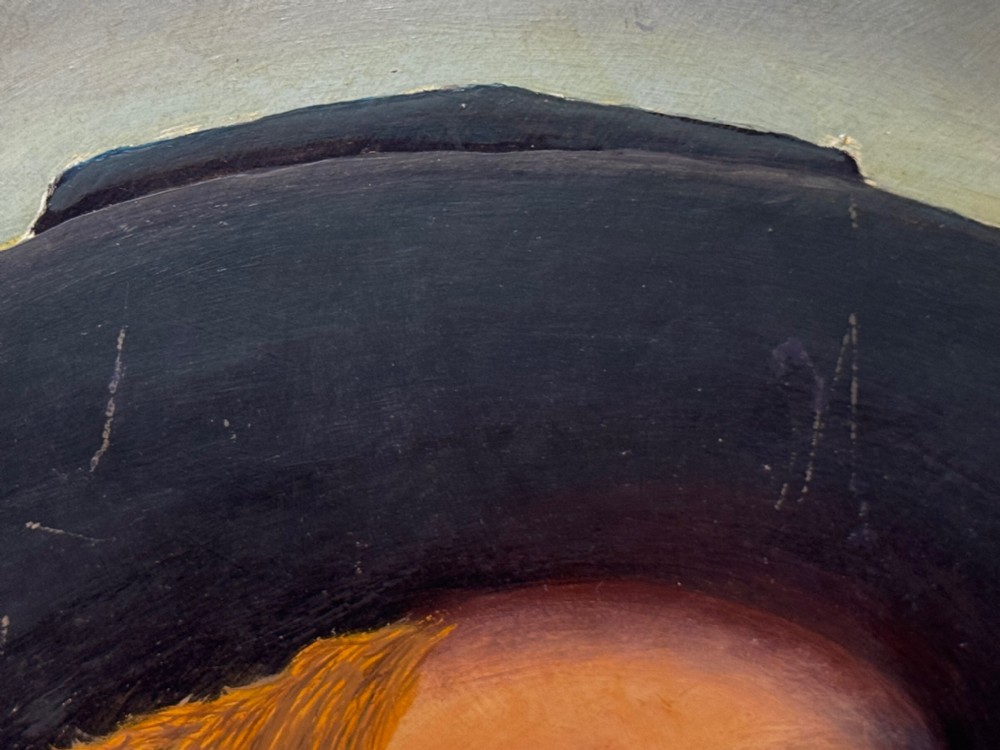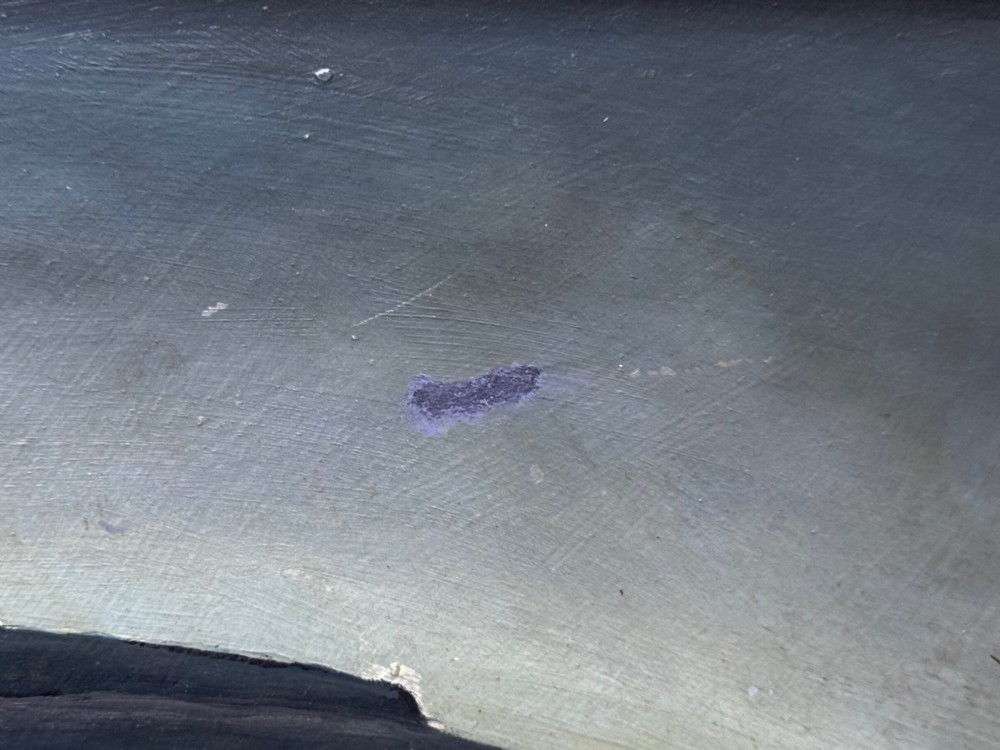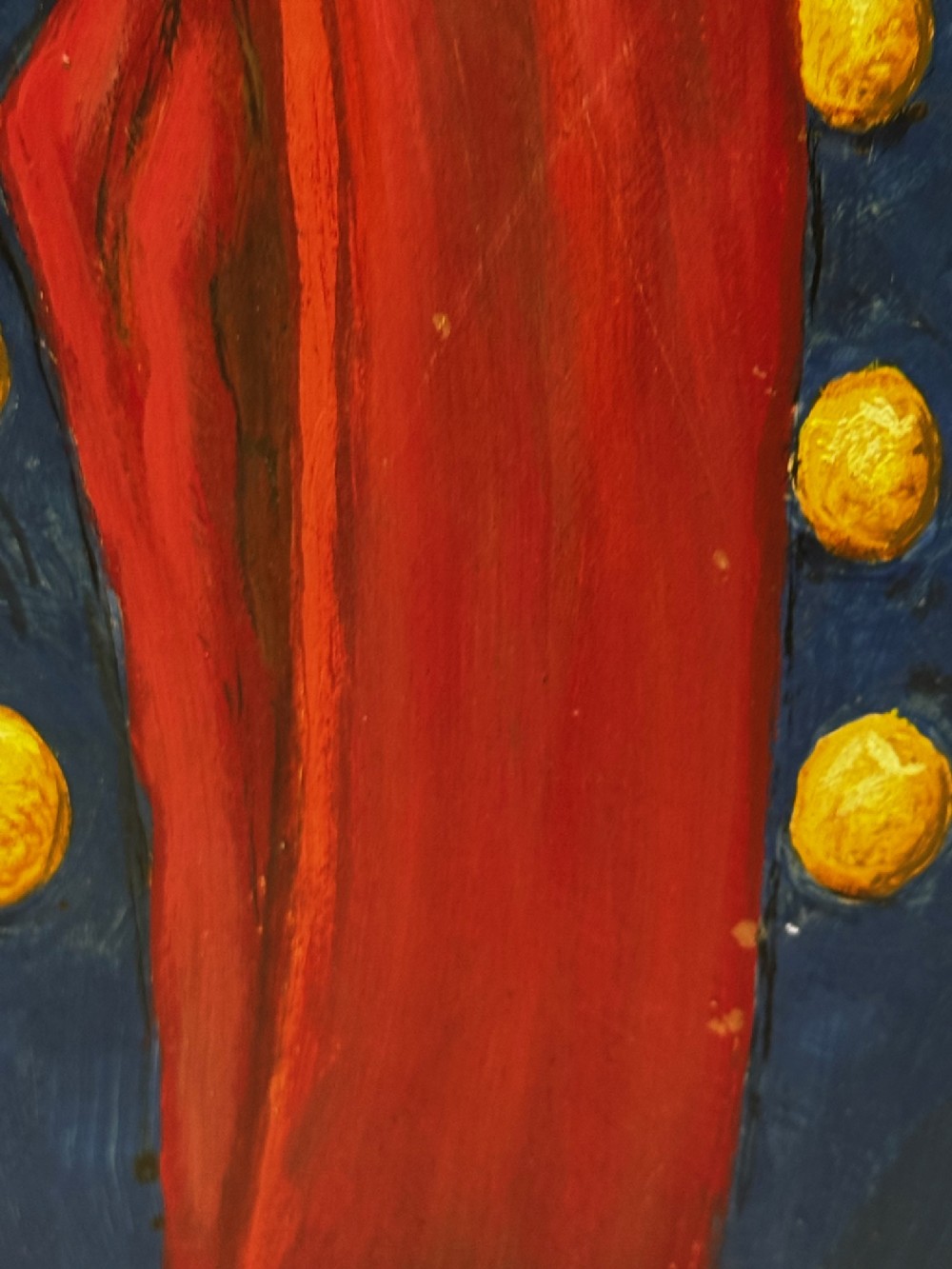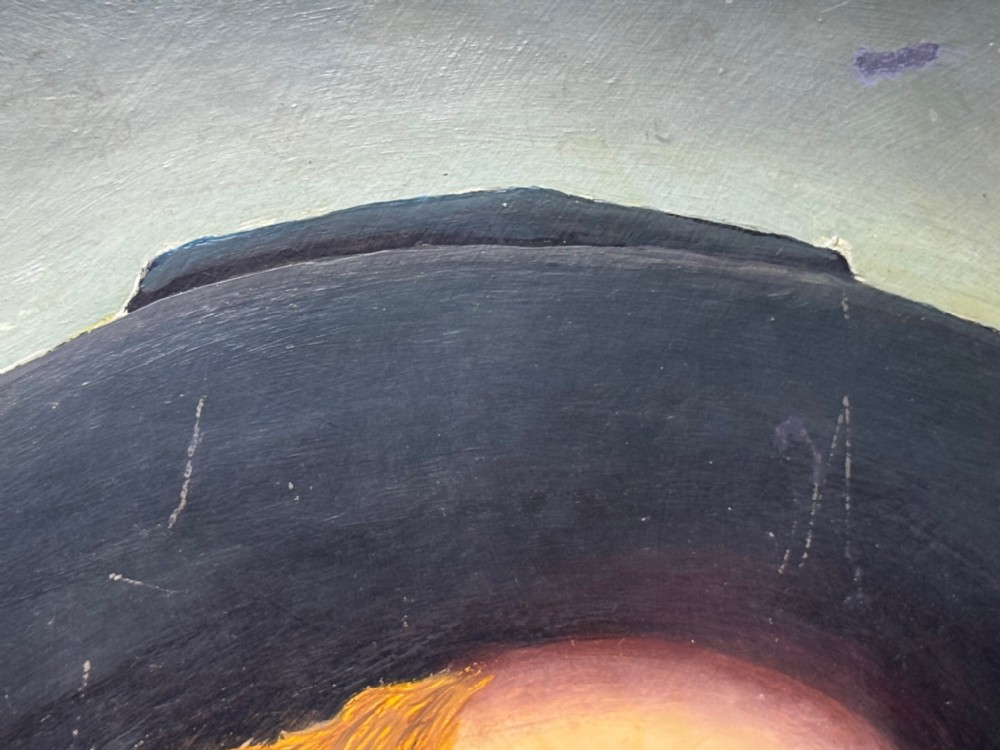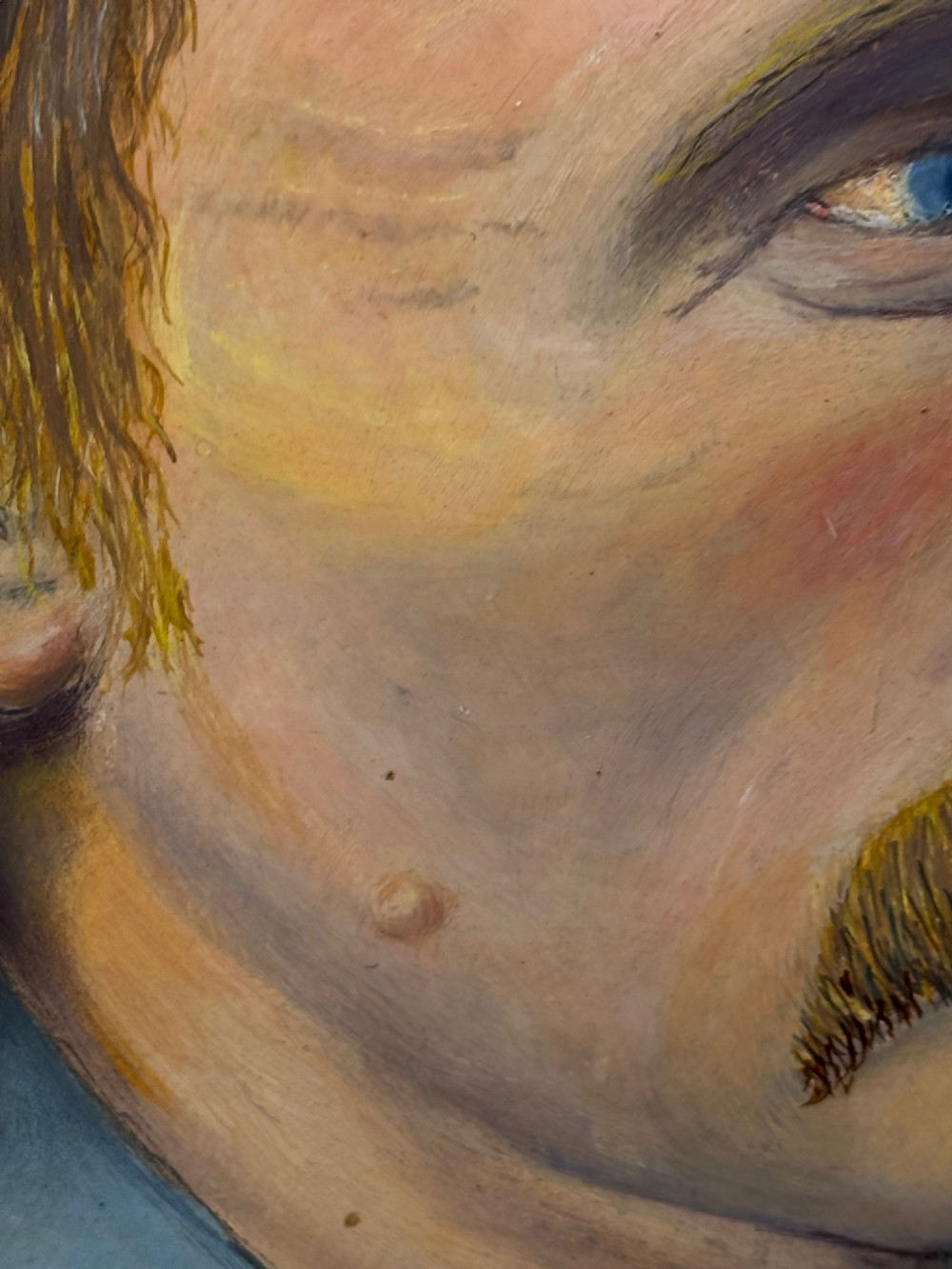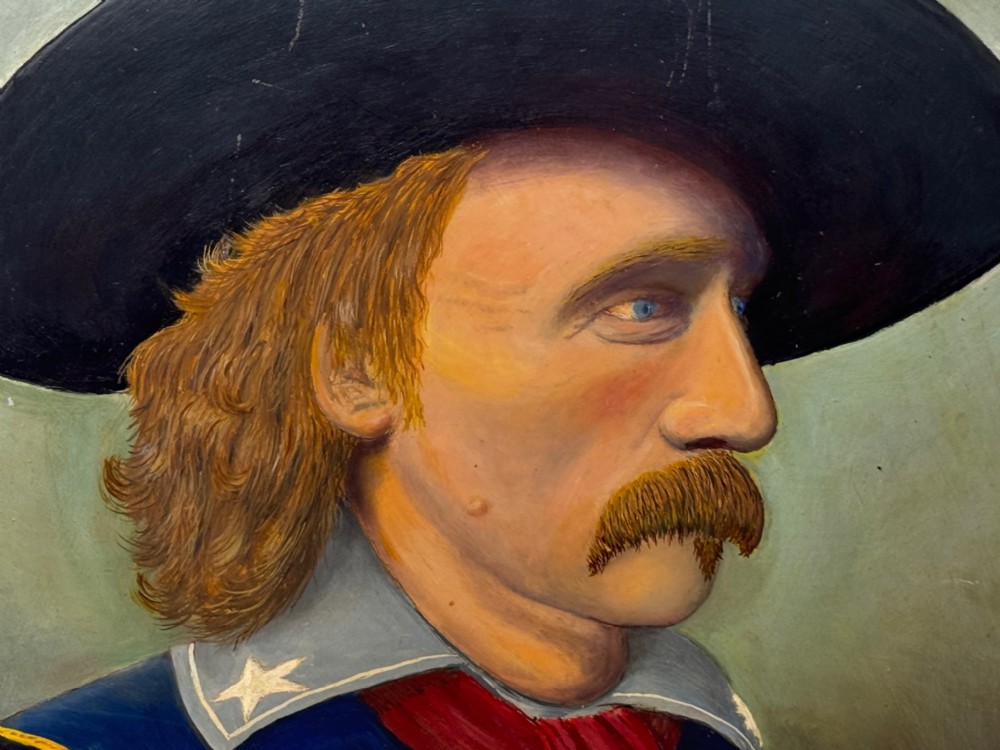
Cheshire Antiques Consultant Ltd has dated this General Custer Oil Portrait to the 1960s.
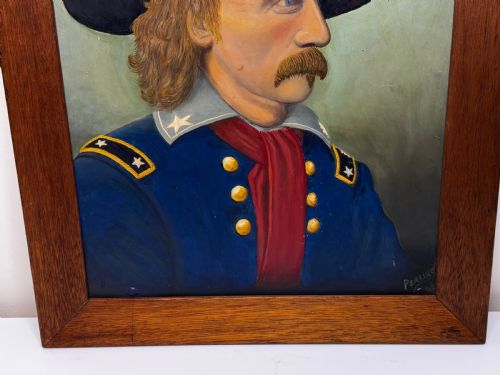
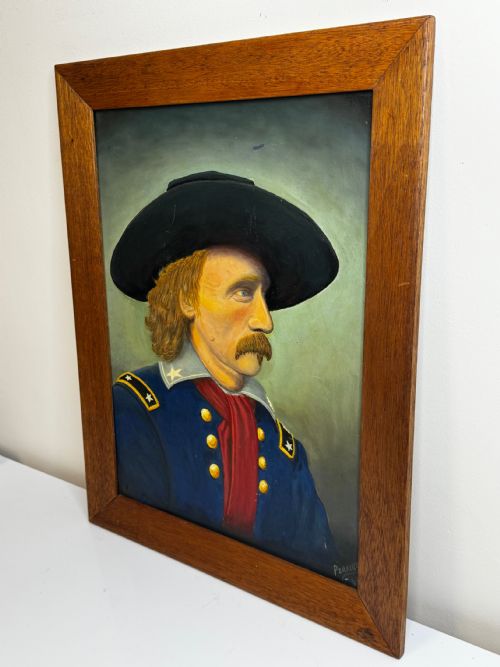
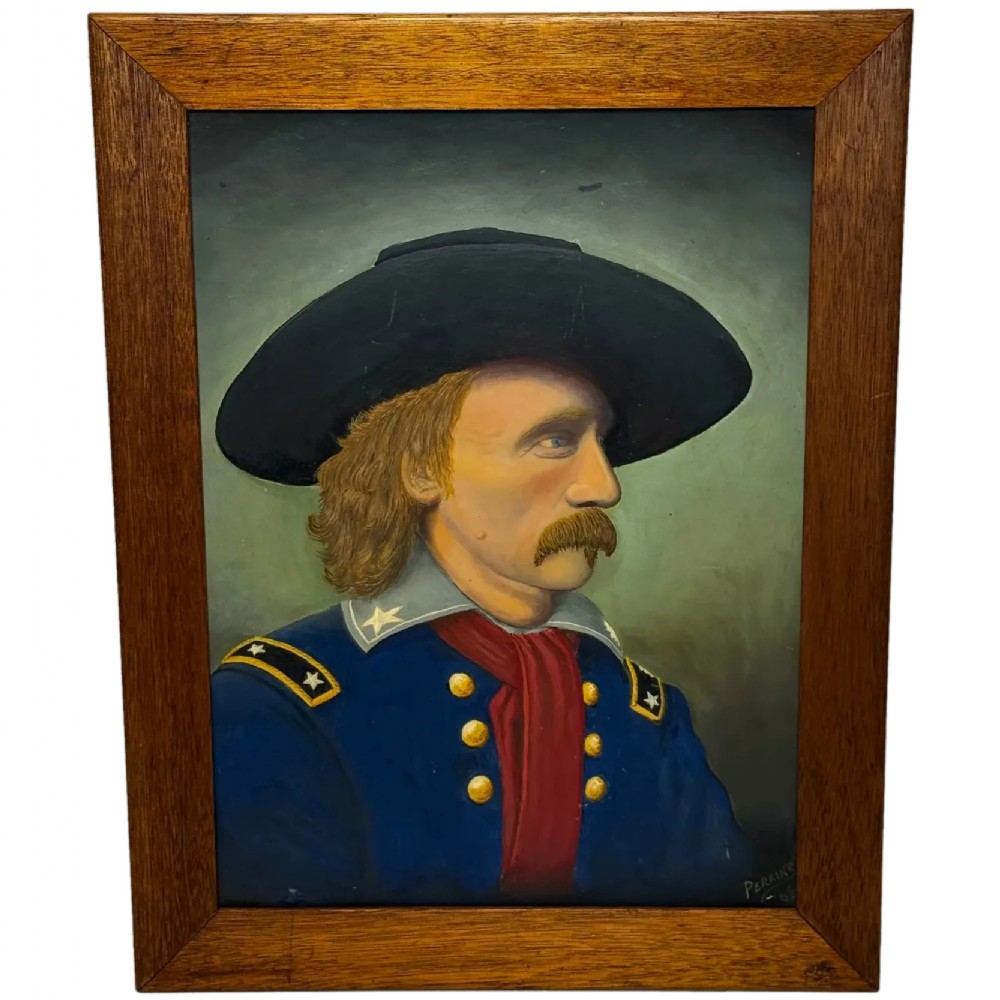
Title “Portrait General George Armstrong Custer 1863 After Matthew Benjamin Brady.
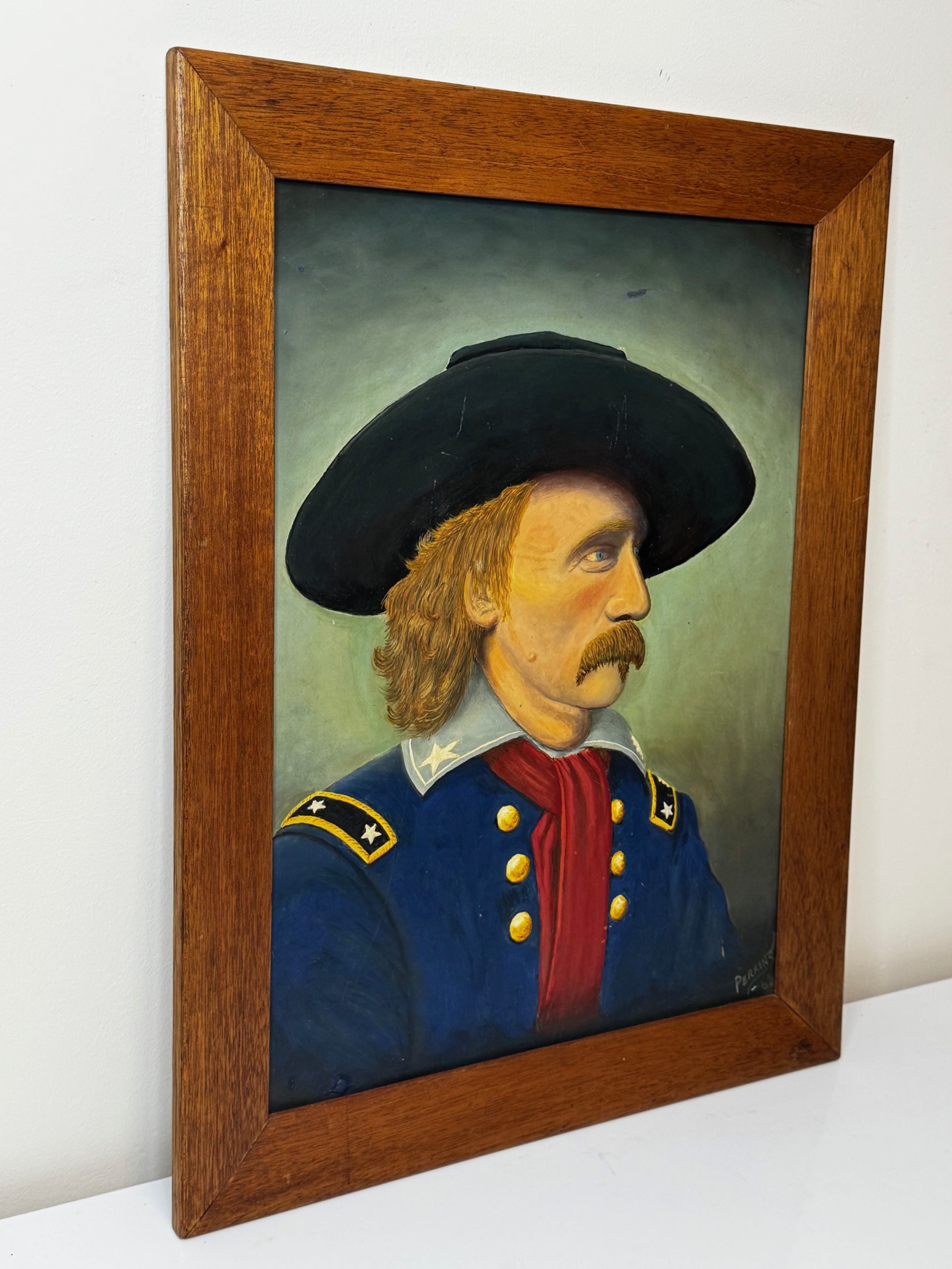
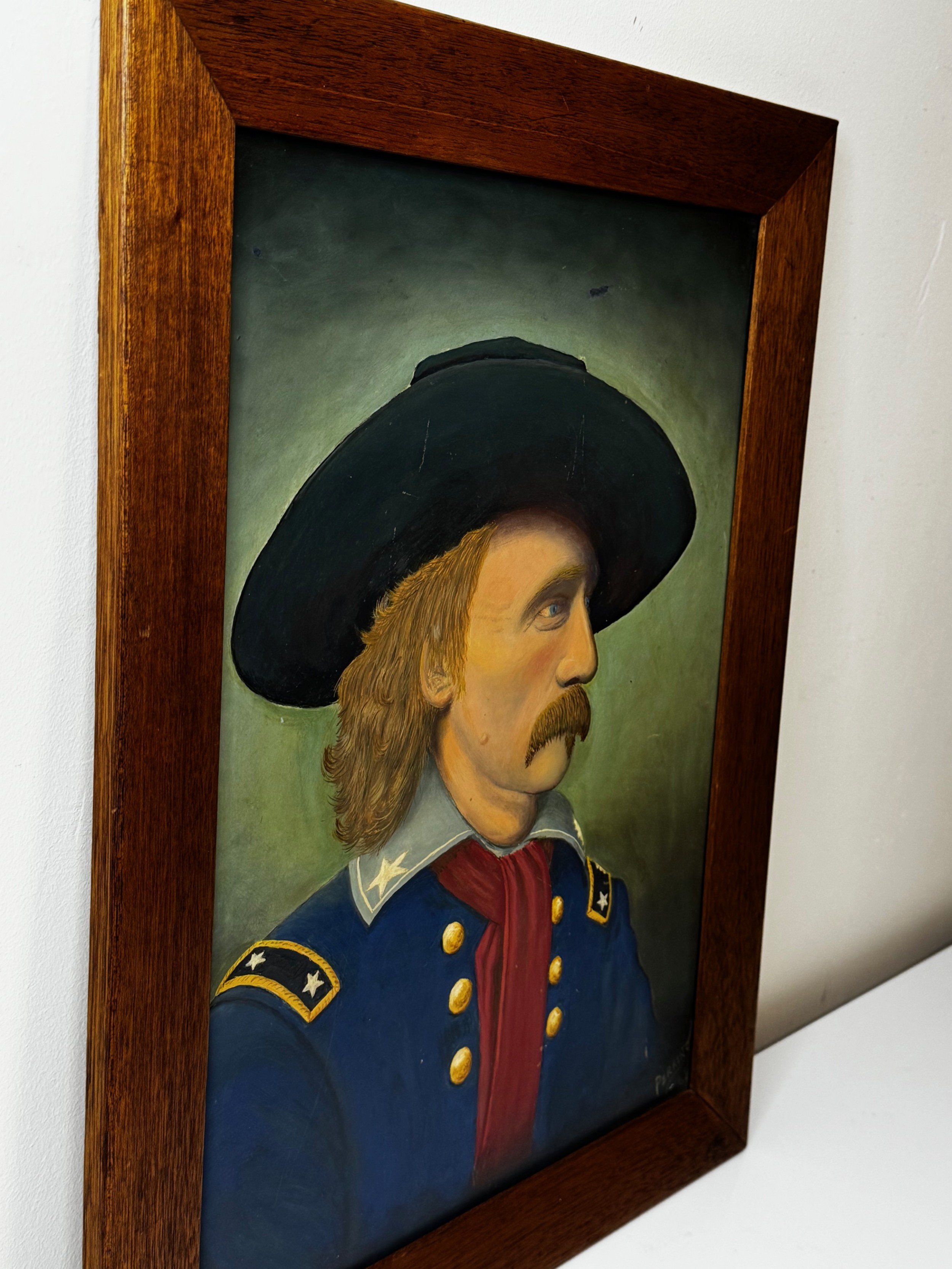
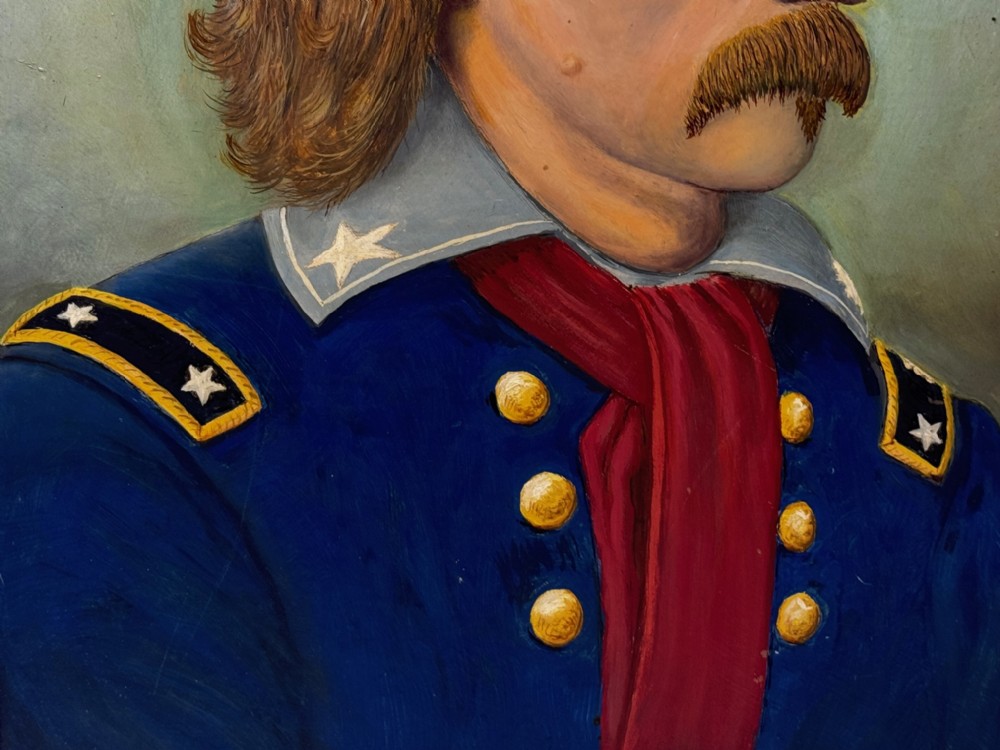
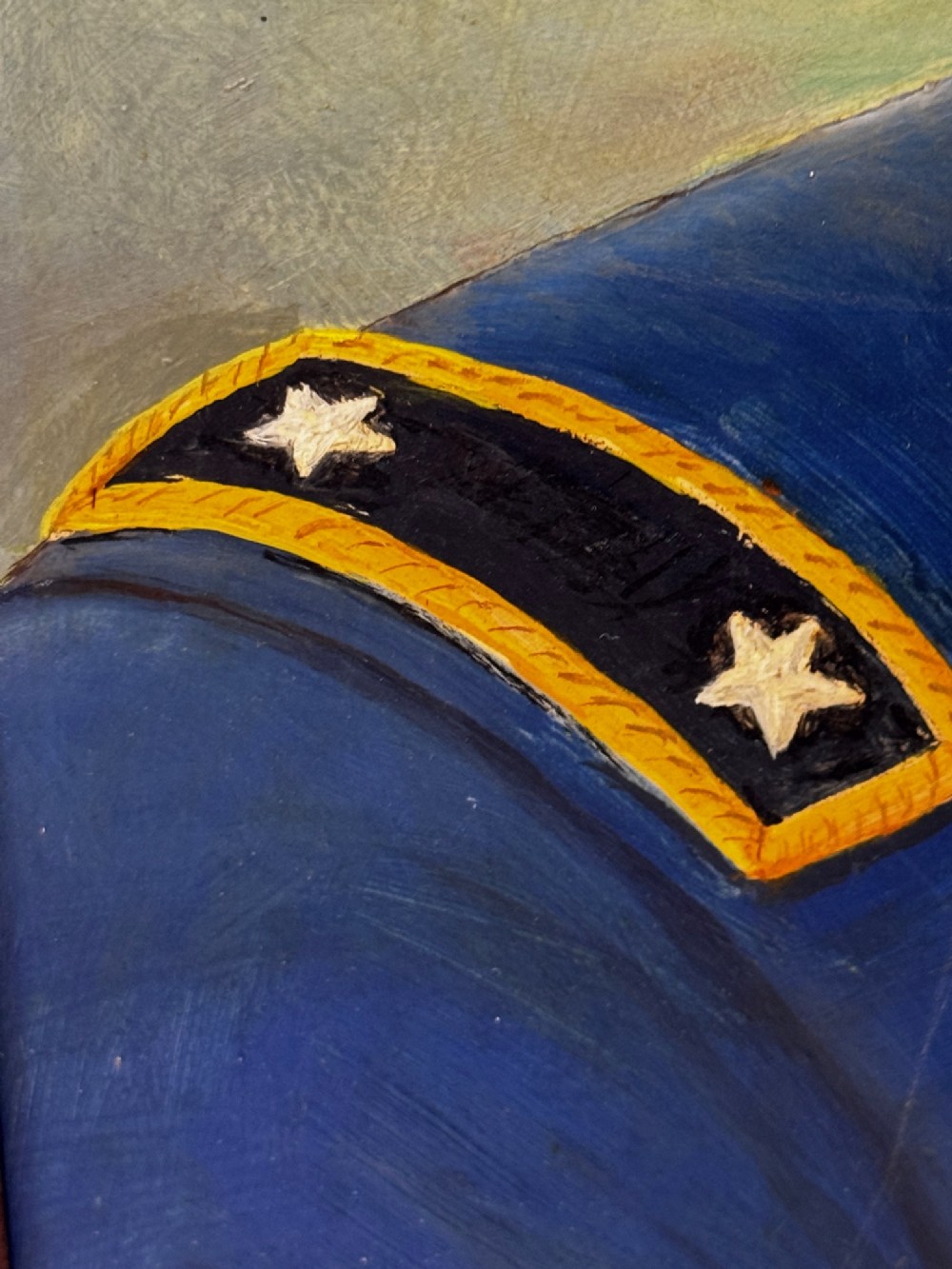
Subject portrait of the known American civil war General George Custer in side profile facing left, wearing his navy blue Union military uniform & wearing his cavalry hat. He has his large walrus moustache & thick hair.
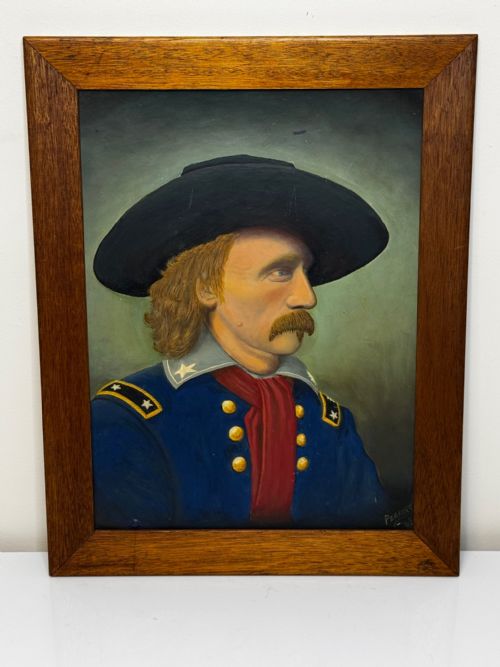
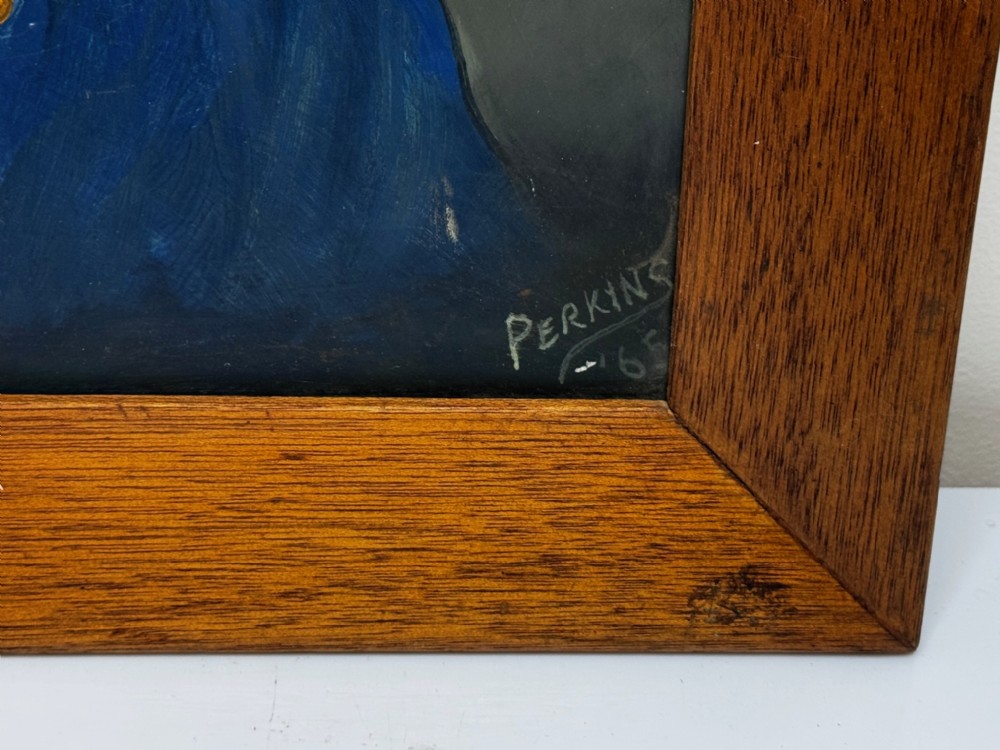
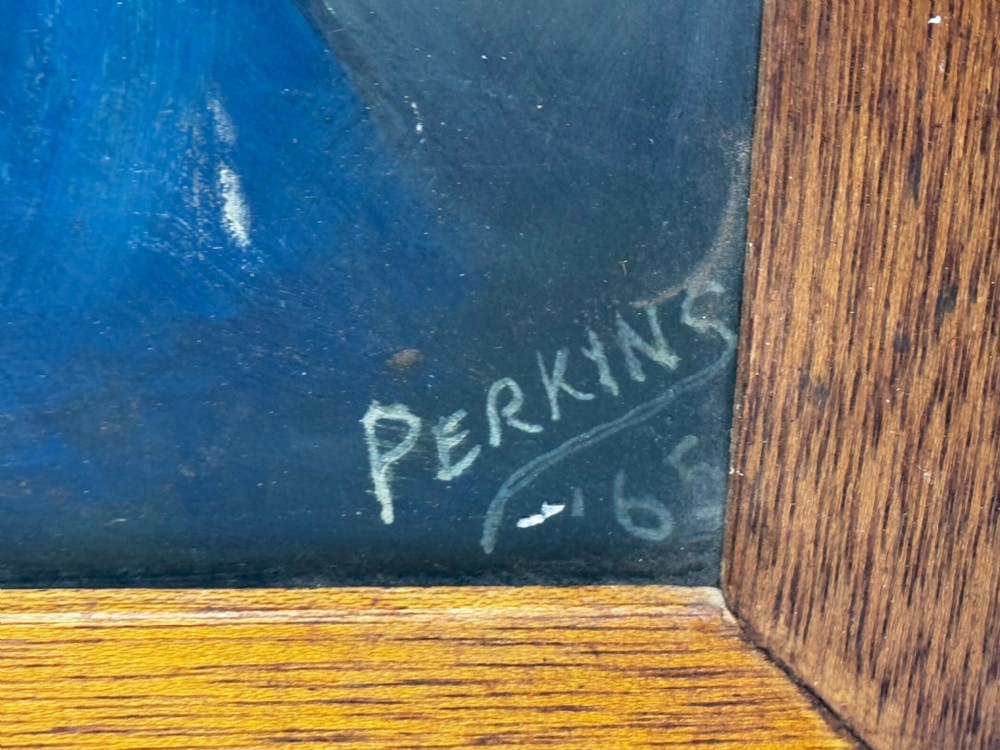
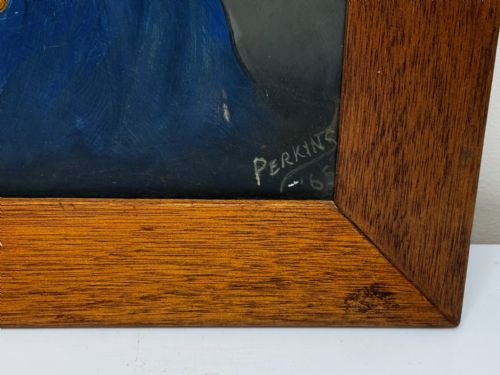
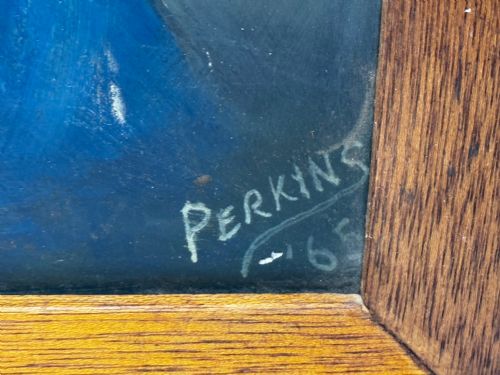
Signed by the US artist Perkins.
In the style of after Benjamin Brady.
In our opinion this is a rather exceptional portrait example of Custer.
Circa mid 20th century.
Medium oil on board.
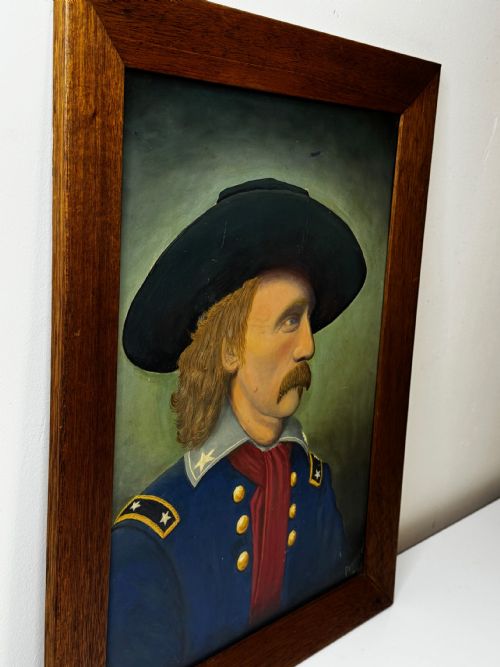
Set in the traditional masculine original tiger oak frame.
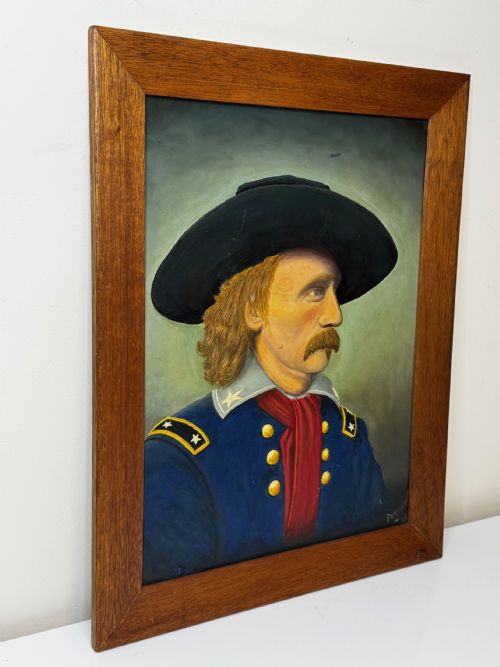
Frame is an impressive display size being 50 cm wide and 65 cm high.
George Armstrong Custer (December 5, 1839 – June 25, 1876) was a United States Army officer and cavalry commander in the American Civil War and the American Indian Wars. Custer graduated from the United States Military Academy at West Point, New York, last in his graduating class of 1861, although he finished 34th out of a starting class of 108 candidates. Nonetheless, Custer achieved a higher military rank than any other U.S. Army officer in his class.
Following graduation, he worked closely with future Union Army Generals George B. McClellan and Alfred Pleasonton, both of whom recognized his abilities as a cavalry leader. He was promoted in the early American Civil War (1861–1865), to brevet brigadier general of volunteers when only aged 23. Only a few days afterwards, he fought at the pivotal Battle of Gettysburg in Pennsylvania in early July 1863, where he commanded the Michigan Brigade. Despite being outnumbered, the new General Custer defeated Confederate States Army cavalry of General J. E. B. Stuart's attack at East Cavalry Field on the crucial third day of the Gettysburg clash.
In 1864, Custer served in the Overland Campaign and with Union cavalry commander General Philip Sheridan's army in the Shenandoah Valley campaigns later that summer, defeating Confederate General Jubal Early at Cedar Creek. In the last year of the war of 1865, he destroyed or captured the remainder of Early's forces at the Battle of Waynesboro in Western Virginia. Custer's division blocked the Southern Army of Northern Virginia's final retreat from their fallen capital city of Richmond in early April 1865 and received the first flag of truce from the exhausted Confederates. He was present at the Army of Northern Virginia commanding General Robert E. Lee's surrender ceremony at the McLean House to Union Army General-in-Chief Ulysses S. Grant at Appomattox Court House, Virginia.
After the war, Custer was commissioned as a lieutenant colonel in the standing Regular Army and sent west to fight in the ongoing Indian Wars, mainly against the Lakota / Sioux and other Great Plains native peoples. On June 25, 1876, while leading the Army's 7th Cavalry Regiment at the Battle of the Little Bighorn in the southeastern Montana Territory against a coalition of Western Native American tribes, he was killed along with every soldier of the five companies he led of his regiment. This event became known as "Custer's Last Stand".
Custer's dramatic end was as controversial as the rest of his life and career, and the reaction to his life remains divided, even 150 years later. His mythologized status in American history was partly established through the energetic lobbying of his adoring wife Elizabeth Bacon "Libbie" Custer (1842–1933), throughout her long widowhood which spanned six decades longer into the mid-20th century.
Mathew Benjamin Brady (c. 1822–1824 – January 15, 1896) was an American photographer. Known as one of the earliest and most famous photographers in American history, he is best known
Cheshire Antiques Consultant Ltd has dated this General Custer Oil Portrait to the 1960s.
Source the historic in 17th, 18th, 19th & 20th century fine arts, painting, sculptures & collectibles
You can view the stock and full dealer information on the Cheshire Antiques Consultant Ltd Profile Page
Oil Painting Civil War Portrait General George Custer