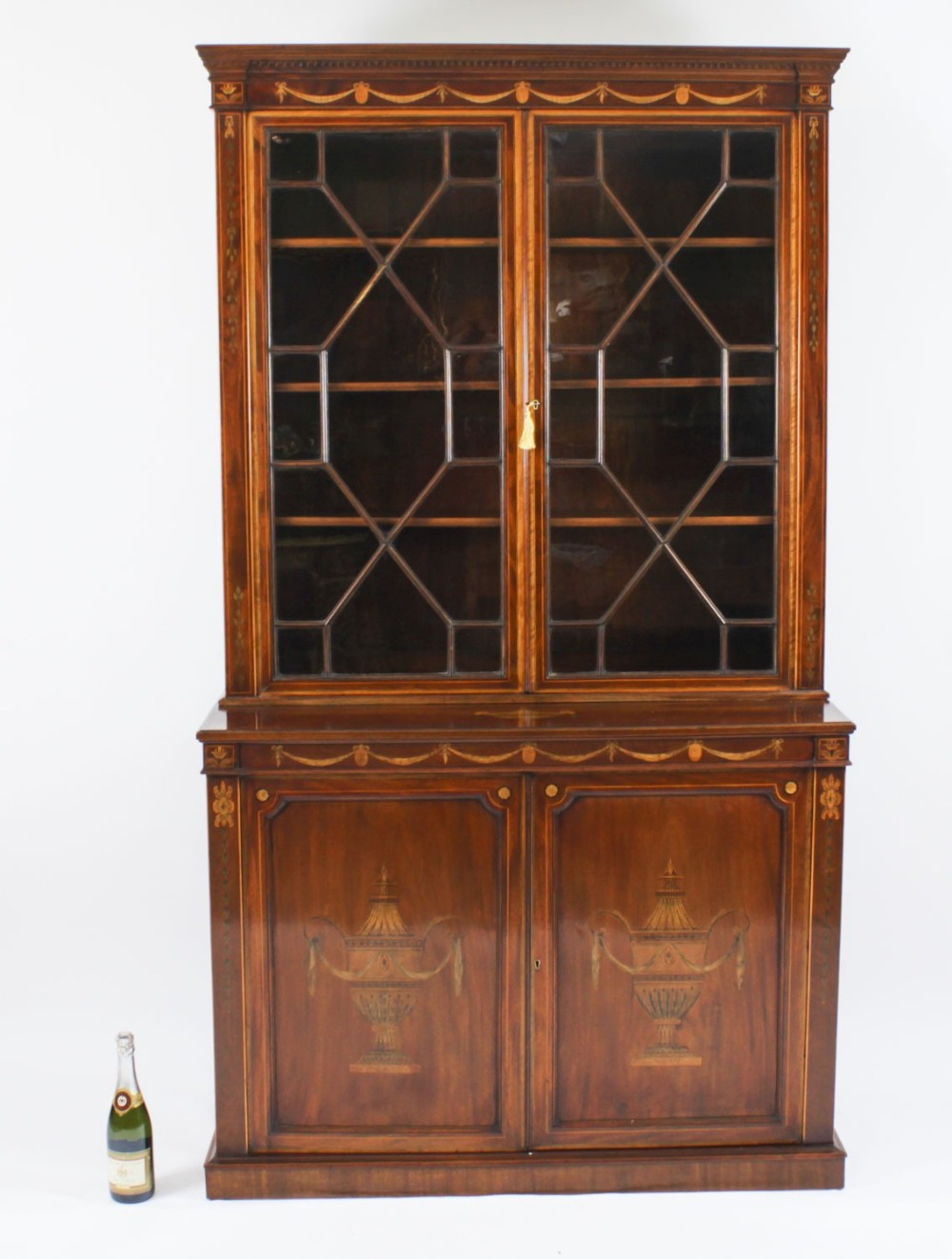
Regent Antiques has dated this piece to the 1890s.
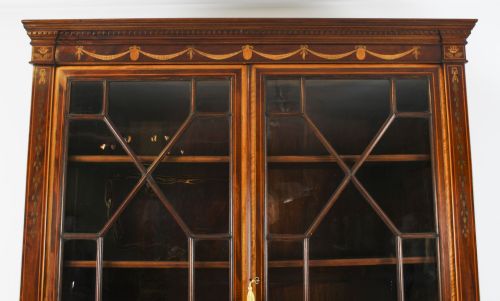
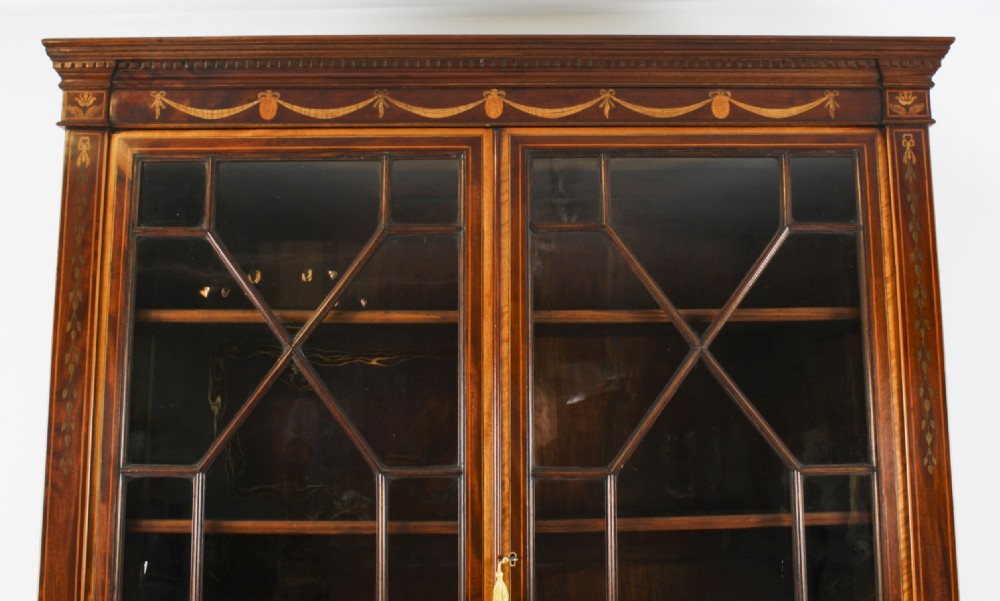
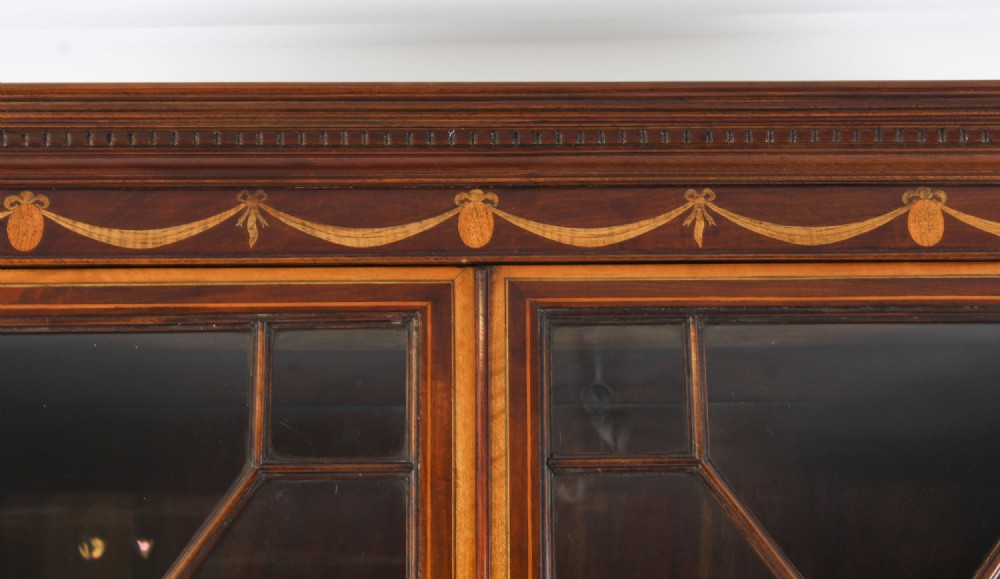
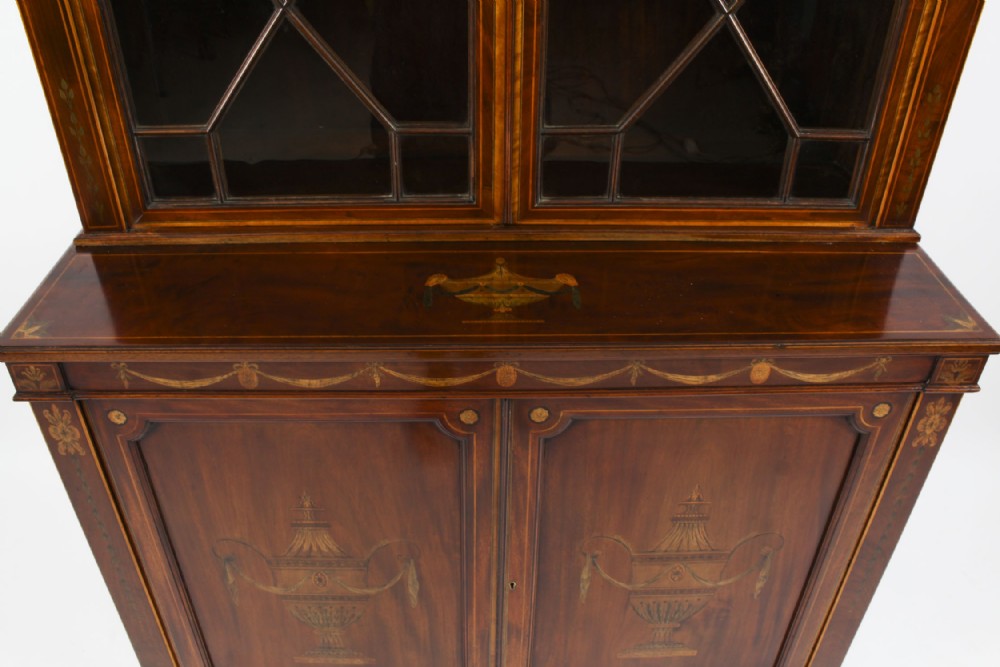
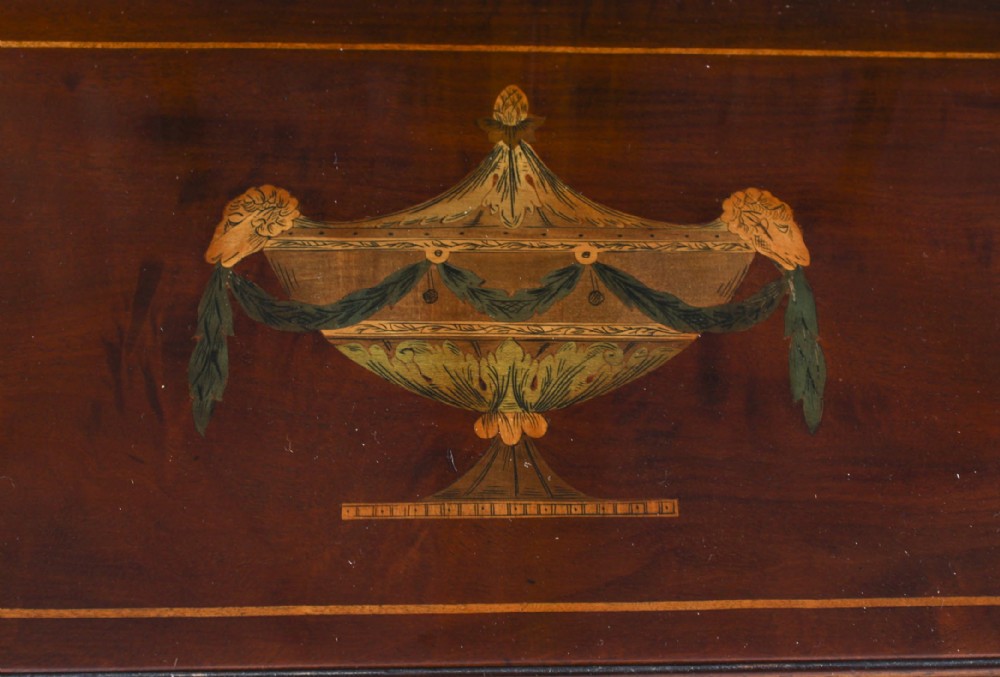
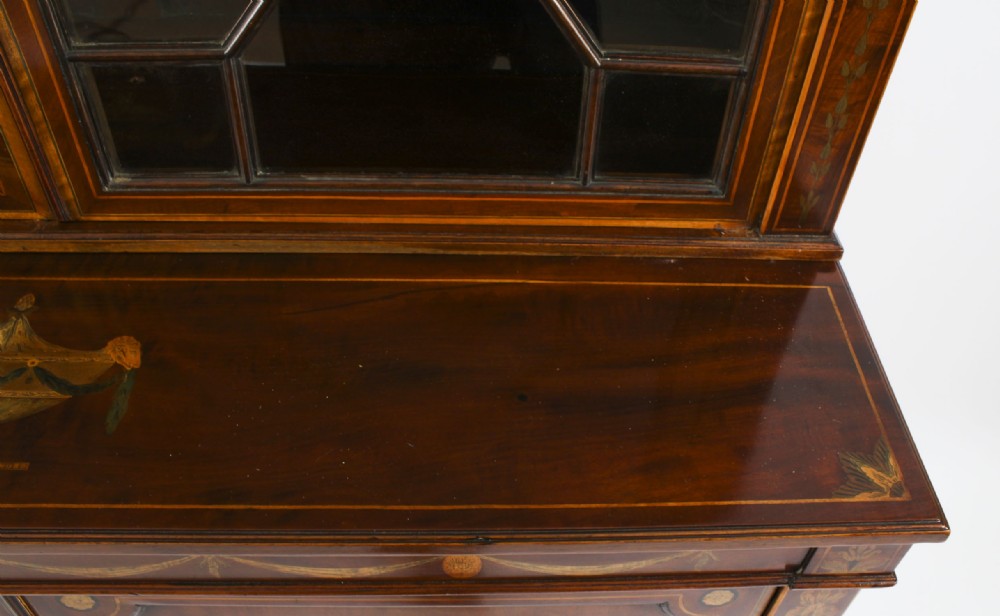
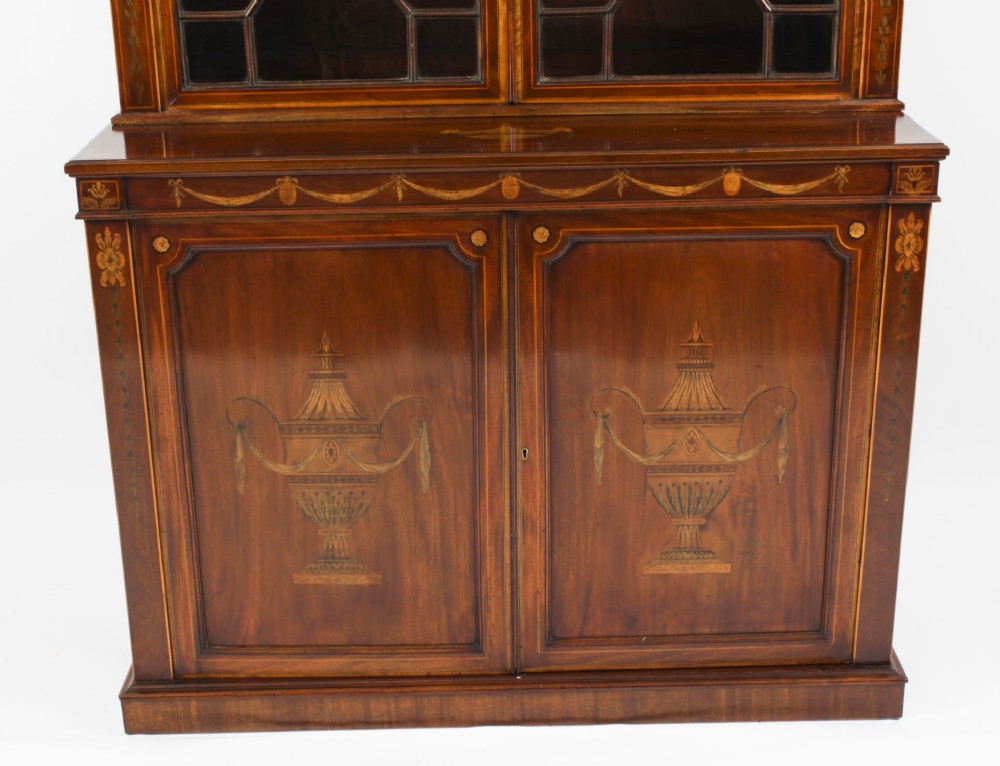
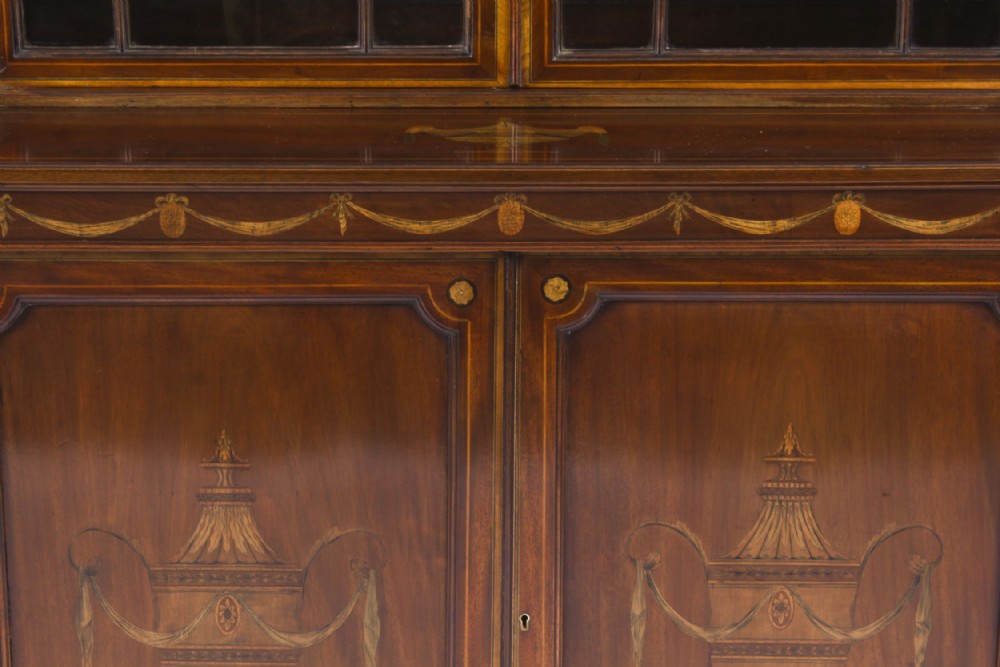
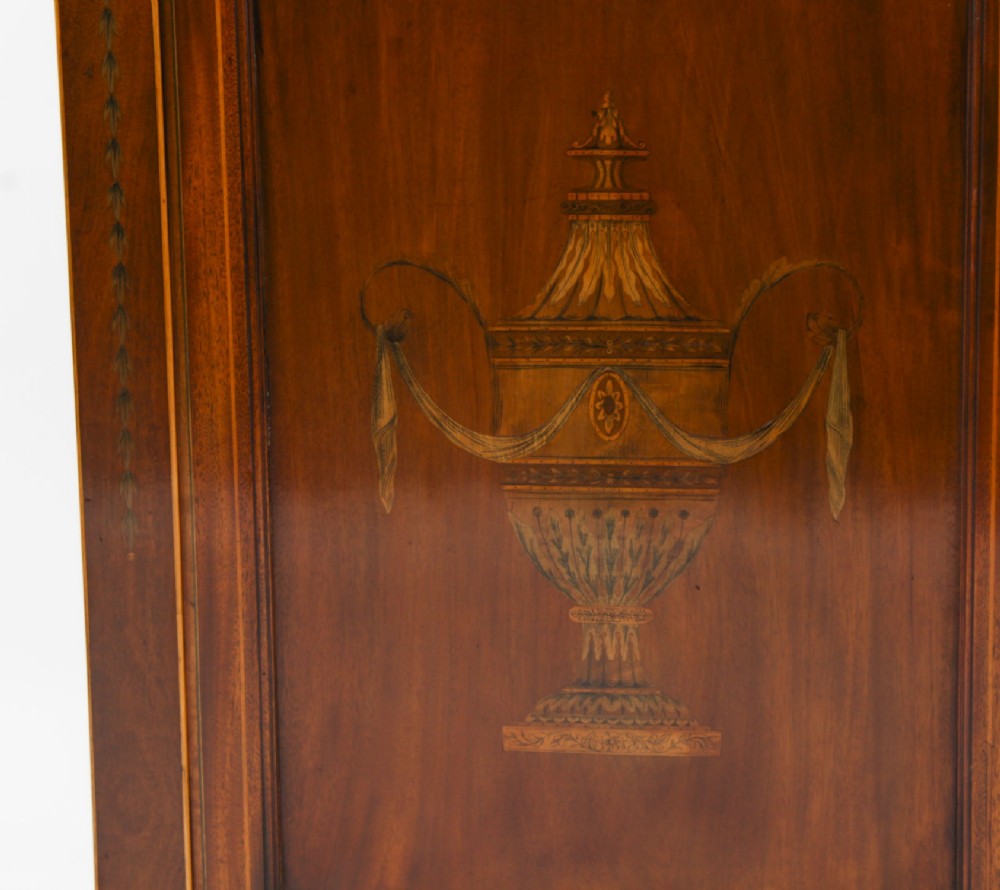
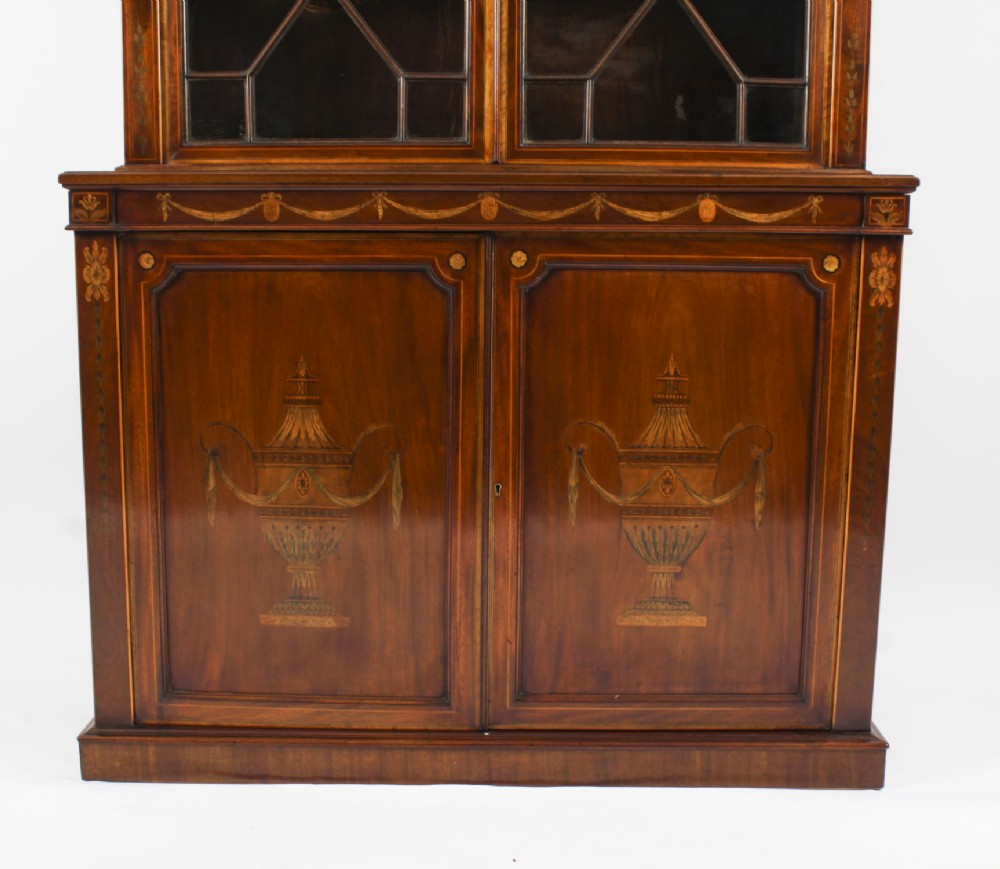
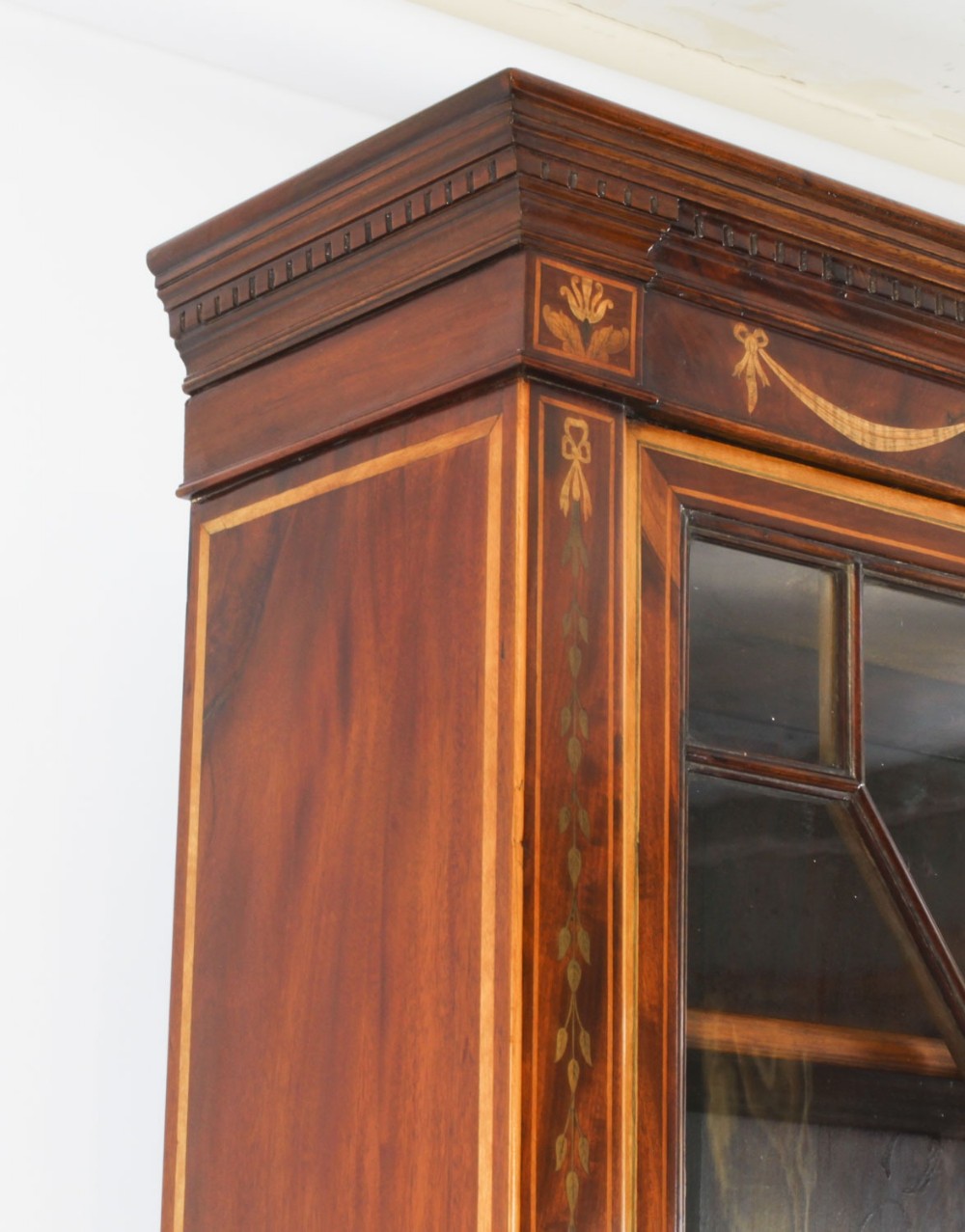
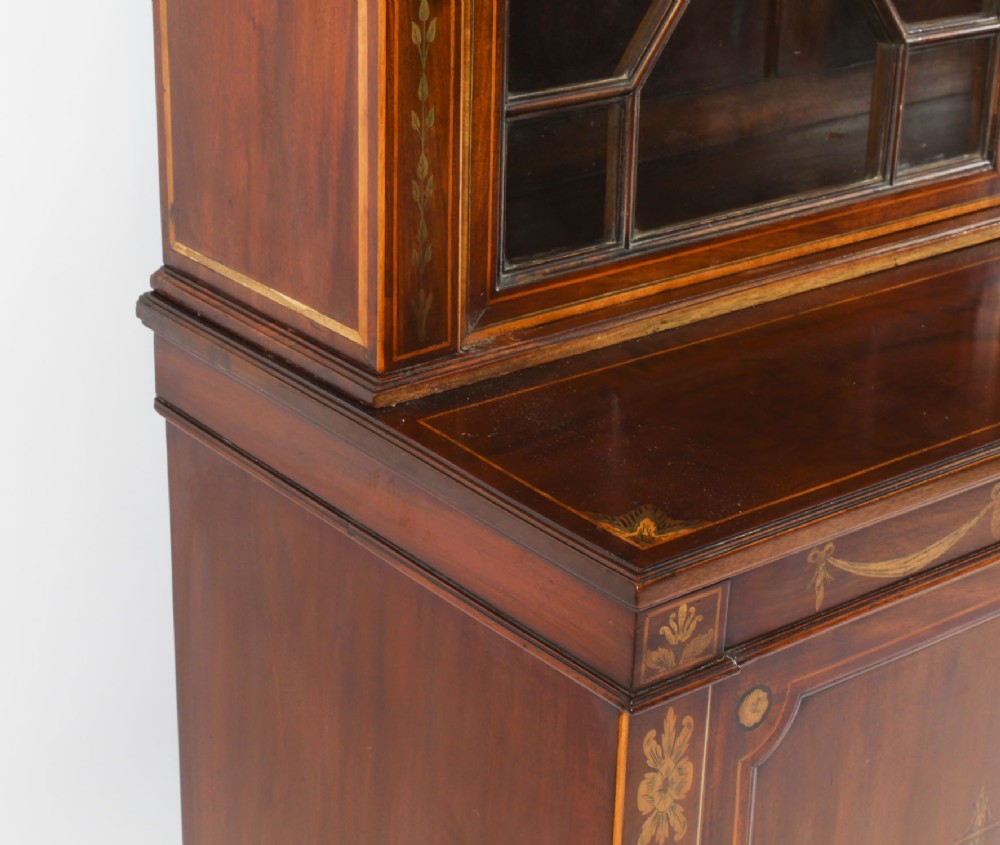
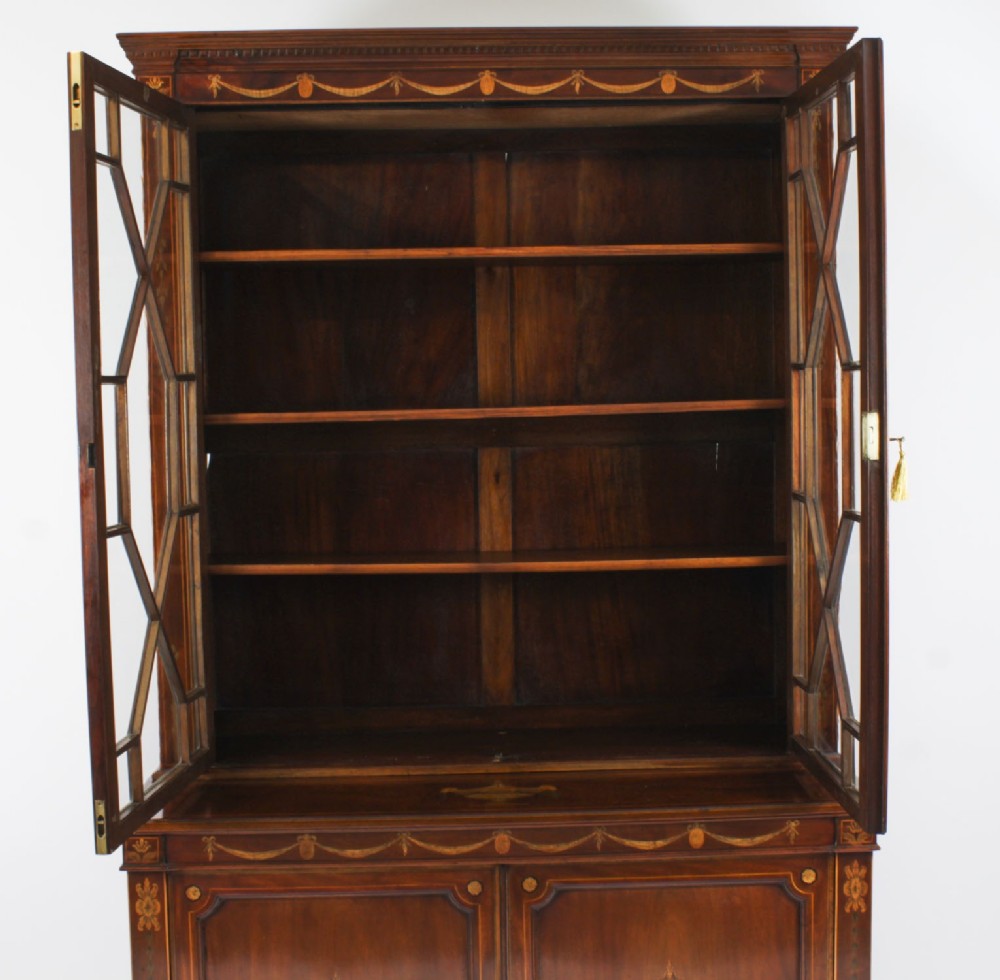
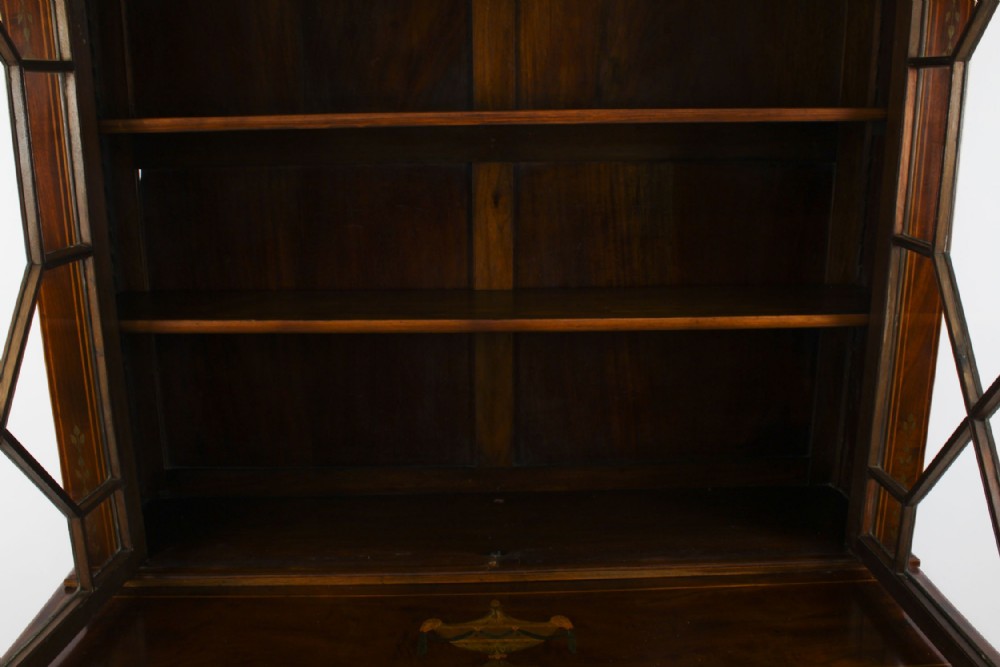
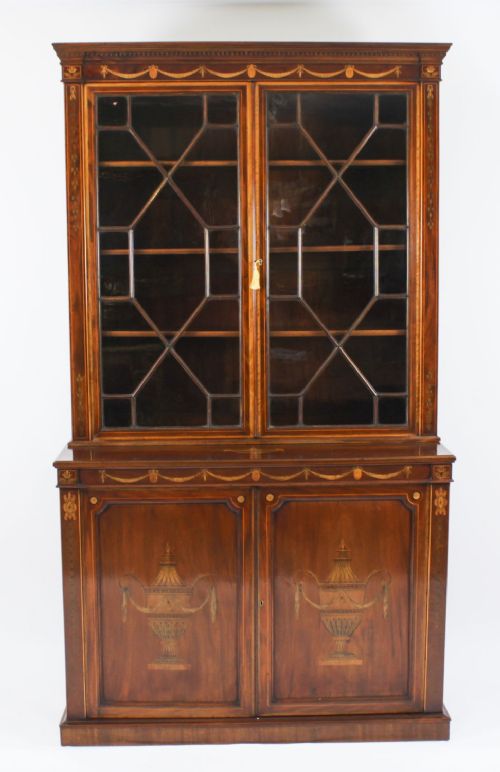
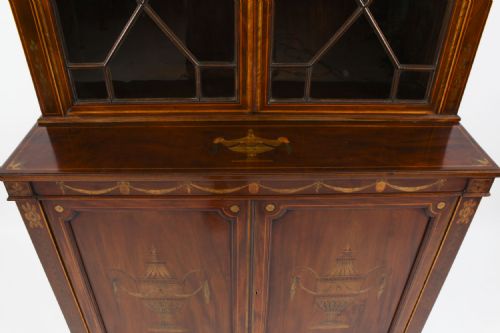
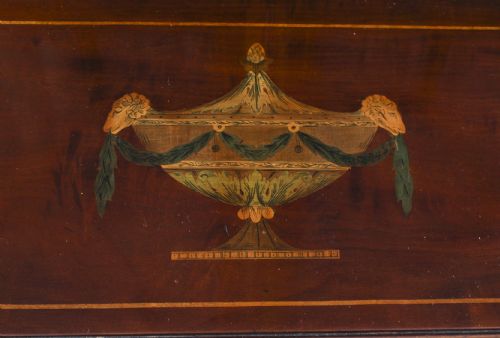
This magnificent bookcase features two astragal glazed doors in the upper section enclosing shelves which can all be adjusted according to the height of your books. The lower section has two panelled doors finely inlaid with urn trophies and they open to reveal a spacious cupboard with shelf.
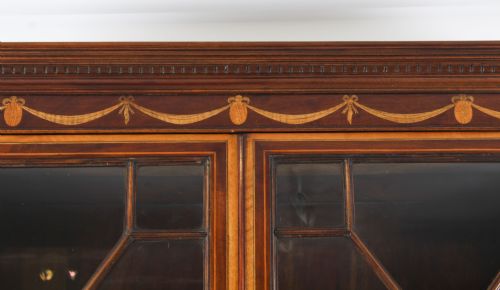
The shelves are all original and the bookcase back is also made from solid mahogany.
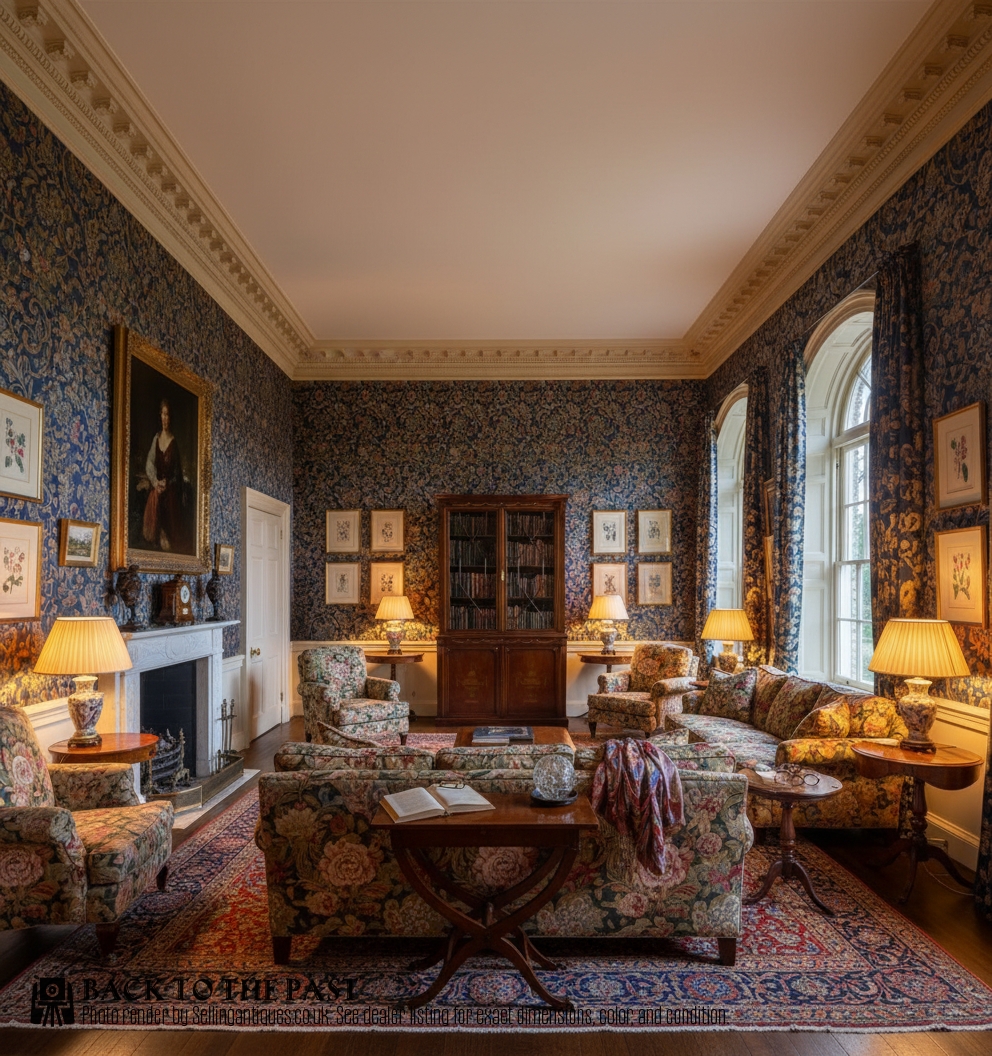
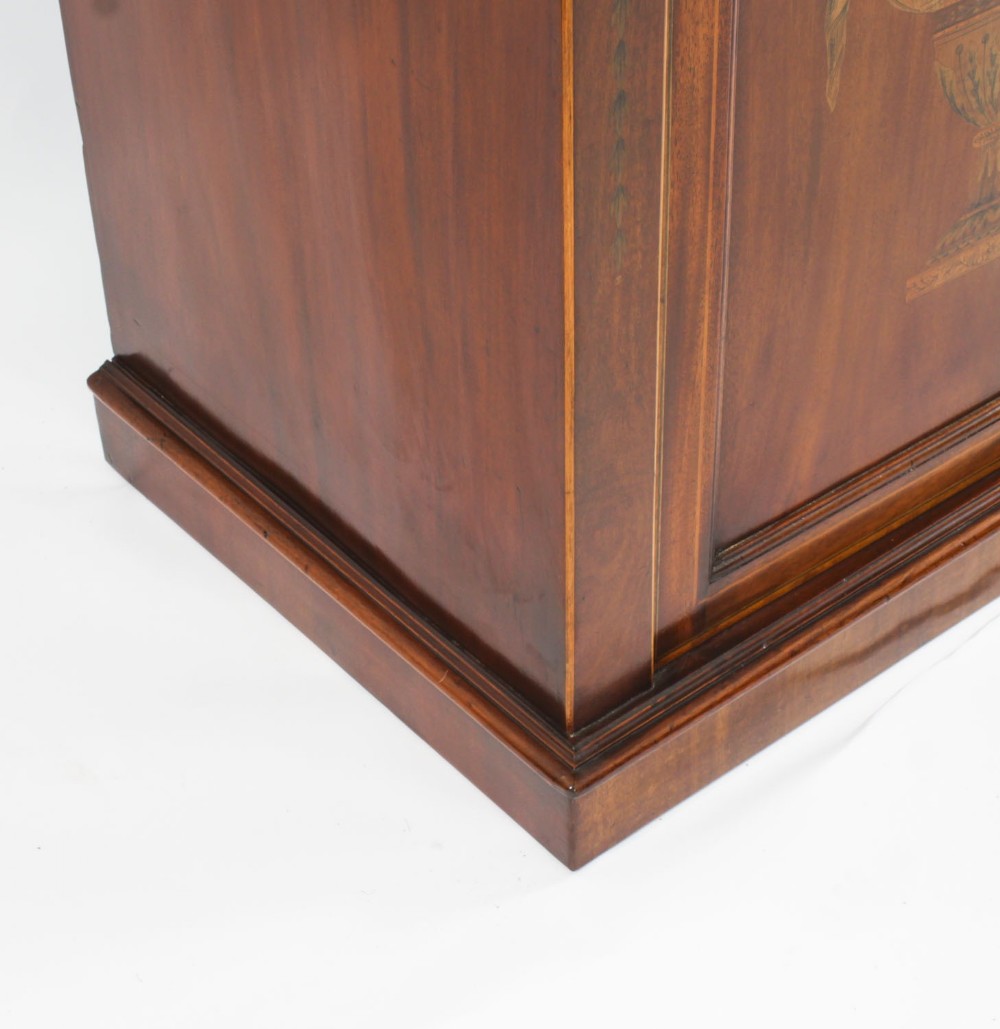
Raised on a skirted plinth there is no mistaking its superb quality and very grand design, which is certain to make it a talking point in your home and stand proud in whichever room you choose to display it.
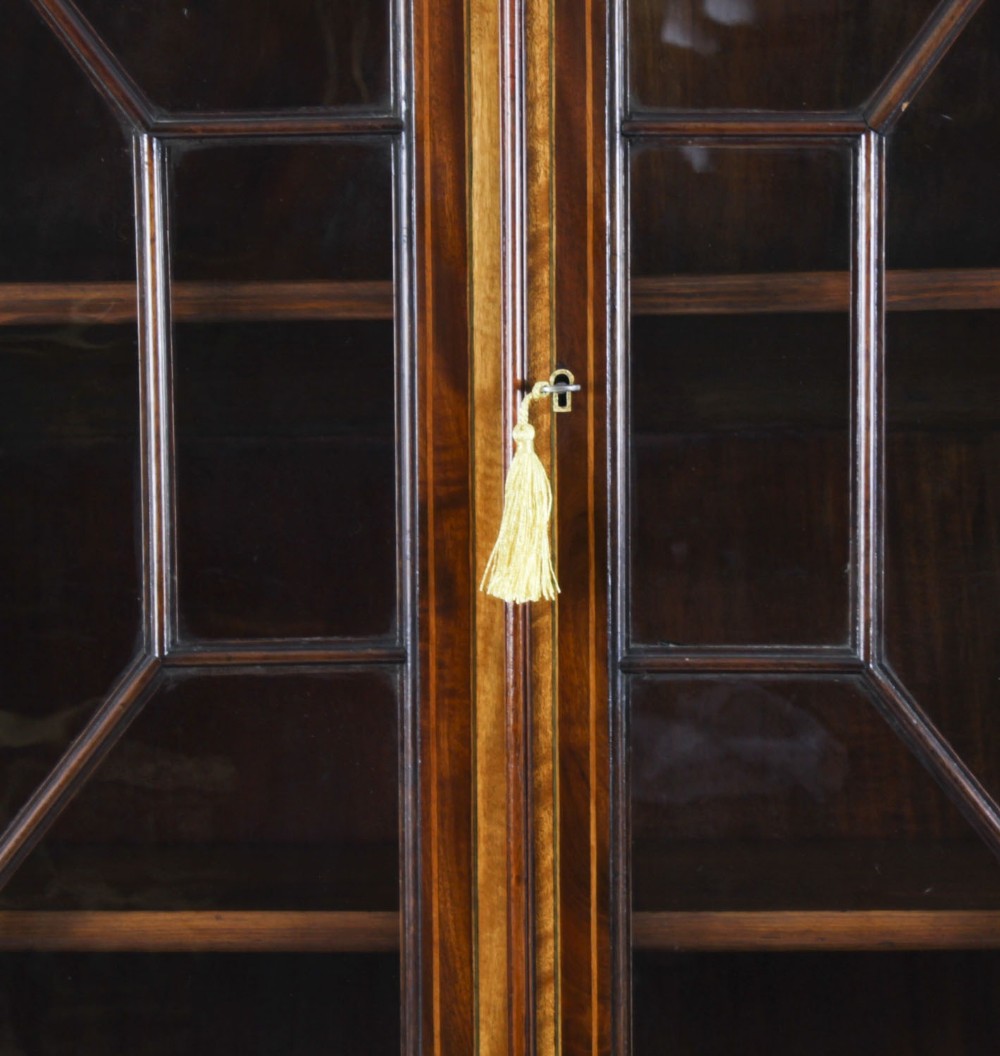
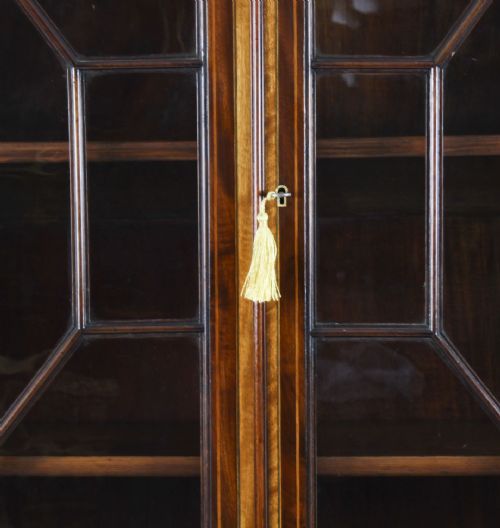
Complete with working locks and key.
Condition:
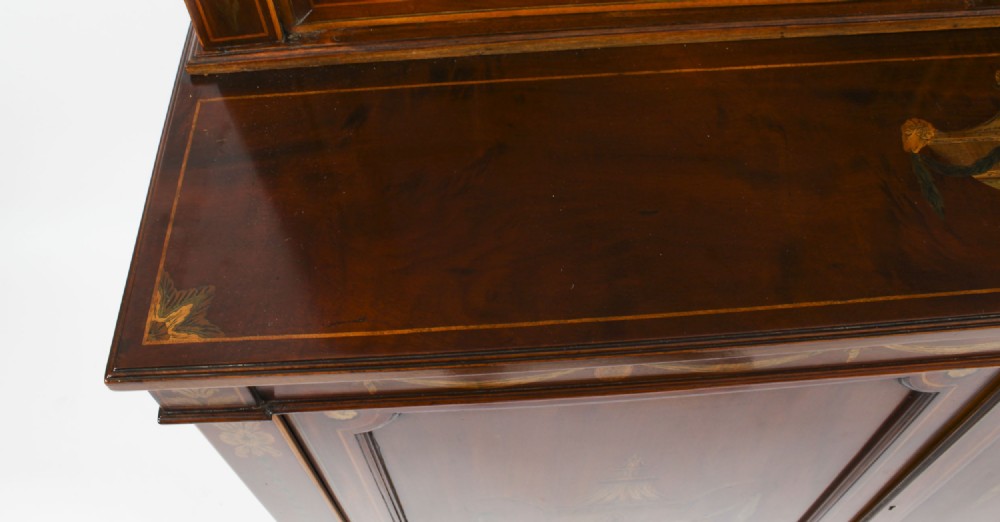
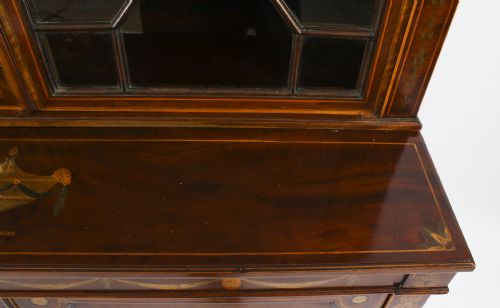
In excellent condition having been beautifully cleaned polished and waxed in our workshops, please see photos for confirmation.
Dimensions in cm:
Height 210 cm x Width 121 cm x Depth 48 cm
Dimensions in inches:
Height 6 foot, 11 inches x Width 4 feet x Depth 1 foot, 7 inches
Edwards & Roberts
The firm Edwards & Roberts was one of the best English antique furniture cabinet makers of the second half of the eighteenth century. The company was founded in 1845 and by 1854 was trading as ‘Edwards & Roberts’, 21 Wardour Street, Antique and Modern Cabinet Makers and Importers of Ancient Furniture’. By 1892 they occupied more than a dozen buildings in Wardour Street, where they continued to trade until the end of the century.
They became one of the leading London cabinet makers and retailers producing high quality furniture and working in a variety of styles, both modern and revivalist. Their business also involved retailing, adapting and restoring the finest antique furniture and there are many examples of their earlier furniture with later embellishments bearing their stamp. The quality of timber used was always the best quality with fine burr walnuts, finely figured mahogany and lighter toned satinwood as they specialised in marquetry, inlay and ormolu.
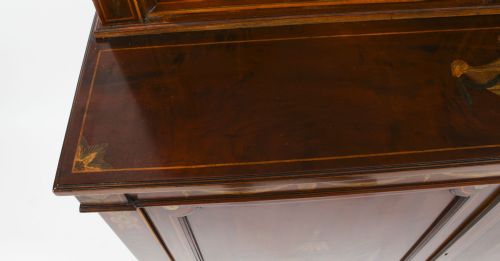
Flame Mahogany
Thomas Sheraton - 18th century furniture designer, once characterized mahogany as "best suited to furniture where strength is demanded as well as a wood that works up easily, has a beautiful figure and polishes so well that it is an ornament to any room in which it may be placed." Matching his words to his work, Sheraton designed much mahogany furniture. The qualities that impressed Sheraton are particularly evident in a distinctive pattern of wood called "flame mahogany."
The flame figure in the wood is revealed by slicing through the face of the branch at the point where it joins another element of the tree.
Marquetry
is decorative artistry where pieces of material of different colours are inserted into surface wood veneer to form intricate patterns such as scrolls or flowers.
The technique of veneered marquetry had its inspiration in 16th century Florence. Marquetry elaborated upon Florentine techniques of inlaying solid marble slabs with designs formed of fitted marbles, jaspers and semi-precious stones. This work, called opere di commessi, has medieval parallels in Central Italian "Cosmati"-work of inlaid marble floors, altars and columns. The technique is known in English as pietra dura, for the "hardstones" used: onyx, jasper, cornelian, lapis lazuli and colored marbles. In Florence, the Chapel of the Medici at San Lorenzo is completely covered in a colored marble facing using this demanding jig-sawn technique.
Techniques of wood marquetry were developed in Antwerp and o
Regent Antiques has dated this piece to the 1890s.
We specialise in english and continental furniture, silver, porcelain and decorative items.
You can view the stock and full dealer information on the Regent Antiques Profile Page
Regent Antiques is a registered member of LAPADA CINOA
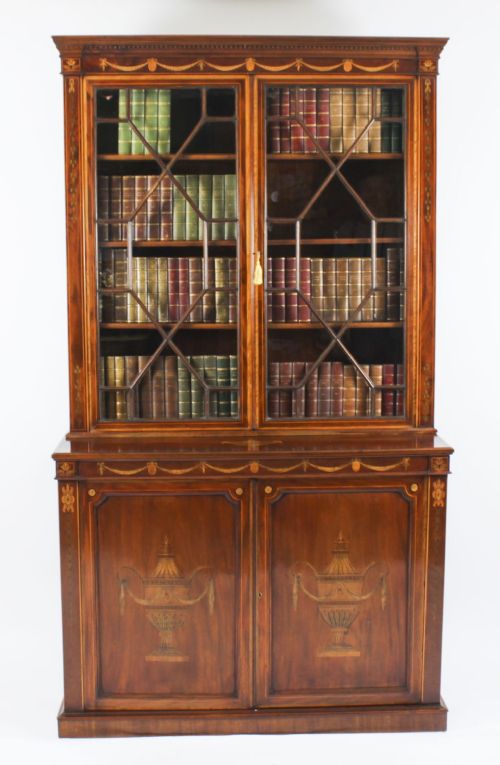
Antique Marquetry Inlaid Bookcase 19th C