Robert More 17th Century
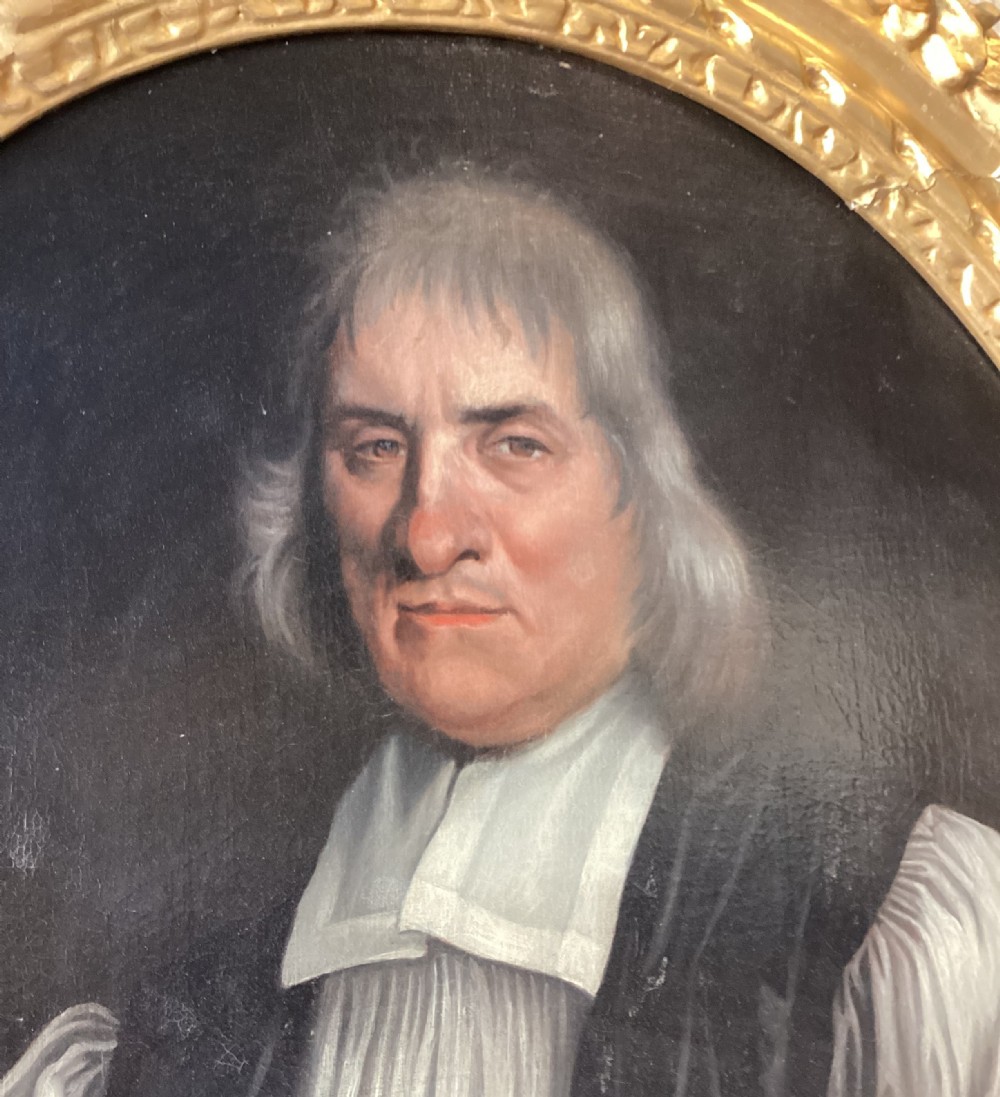
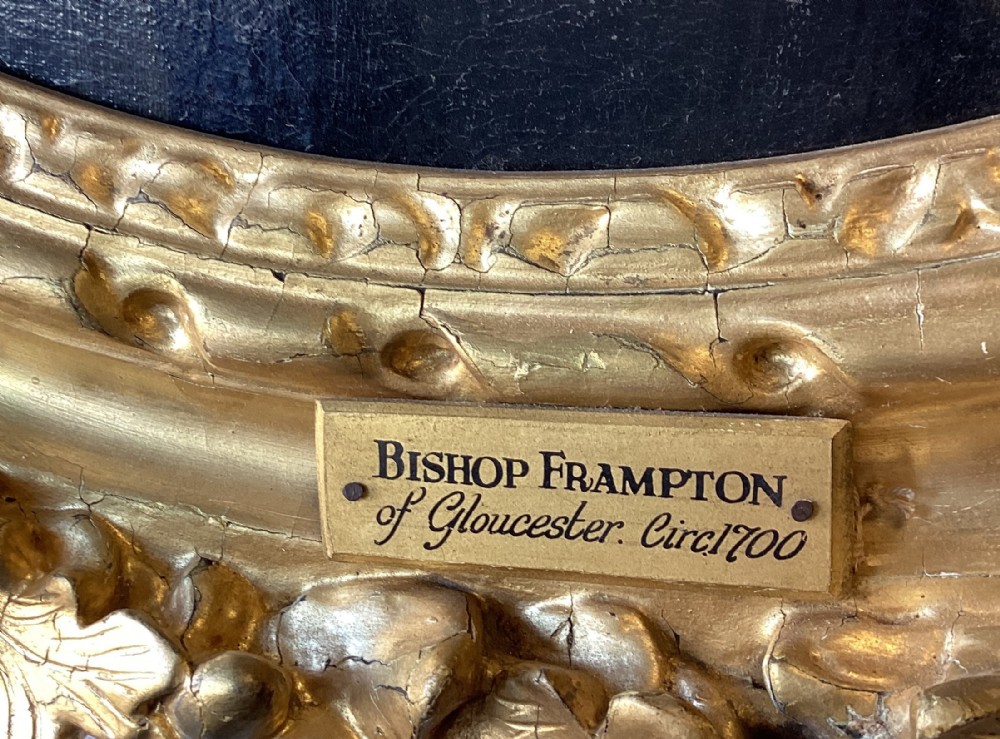
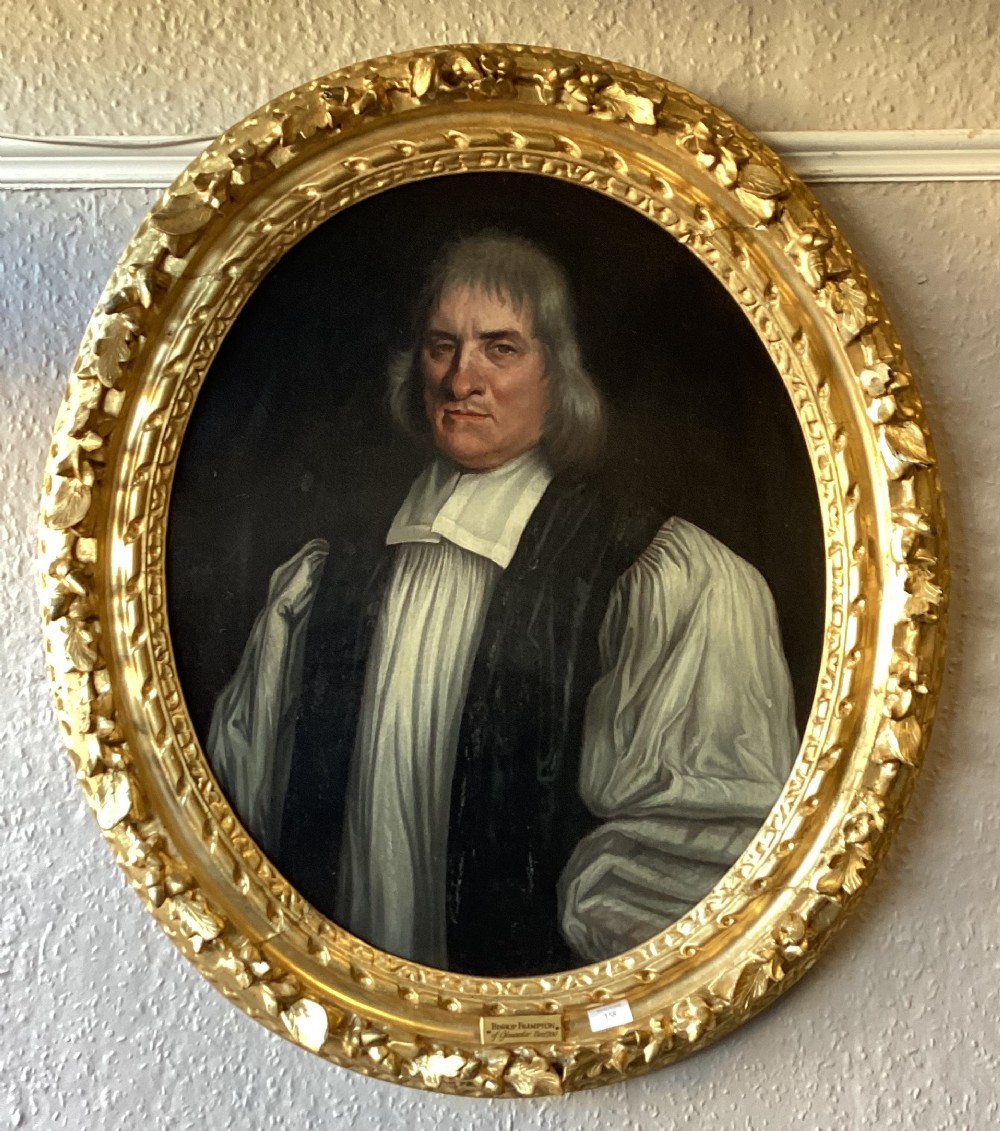
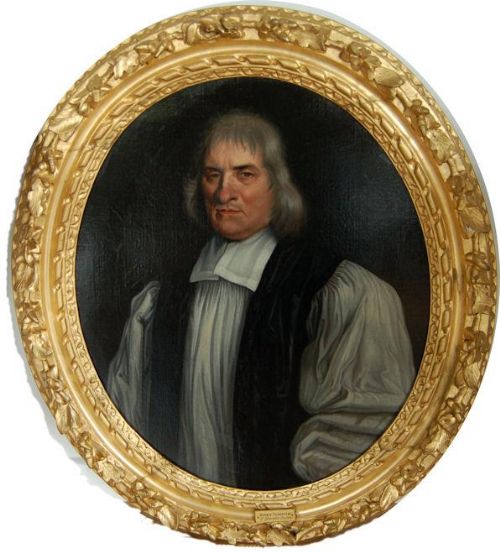
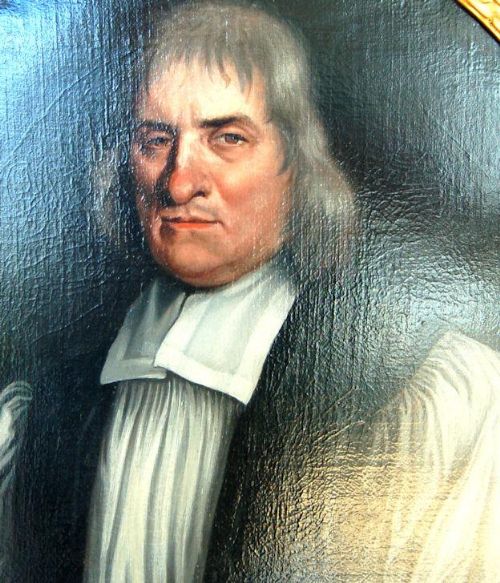
Portrait of Robert Frampton, DD Bishop of Gloucester 1622 - 1708
Thu, 03/ 05/1691 - 12:00
indistinctly signed …. Pinxit and inscribed and dated Aetat. Suae 68, 1691
oil on canvas
76.20 x 63.50 cm. (30 x 25 in.)
Provenance
Sir Lance V h Crawley-Boevey Bart. The contents of Flaxley Abbey March 29th-5th April 1960, lot 1301, Bt by Baden Watkins
in this family that the deprived Bishop was offered a home and shelter at Flaxley Abbey: and his portrait, a counterpart of which hangs in the Bishop''s palace at Gloucester is preserved with great interest by the Family .''
Literature
Engraved : Henry Adlard for Crawley-Boevy (Arthur W) the peverse Widow'' being passages from the life of Catherina wife of William Boevy Esq of Flaxley Abbey 1898 Ingamemells, J, Episcopal Portraits 1558-1835 a catalogie, Guildford 1981, P190 Gloucesterhsire Notes and Queries (p85) '' There is strong tradition in this family that the deprived Bishop was of
...fered a home and shelter at Flaxley Abbey: and his portrait, a counterpart of which hangs in the Bishop''s palace at Gloucester is preserved with great interest by the Family .''
Notes
Frampton, Robert (bap. 1622, d. 1708), bishop of Gloucester and nonjuror, was baptized on 26 February 1622 at Pimperne, near Blandford, Dorset, the youngest of eight children of Robert Frampton, a farmer, and his wife, Elizabeth Selby. Frampton was educated at the free school at Blandford before matriculating at Oxford in 1637 the age of fifteen. He studied at Corpus Christi College before moving to Christ Church, graduating BA on 25 June 1641. The English civil war began before he could proceed MA and his refusal to sign the covenant prevented him from continuing his studies. Though the civil war interrupted his education Oxford University honoured him with the degree of DD on 8 July 1673.
After leaving Oxford in 1641 Frampton served as tutor to the children of a widow at Farnham, Dorset, where he also set up a private school.
He joined the Clubmen of Dorset, a neutralist movement that sought an end to the war between the king and parliament, and participated in a battle with the New Model Army on 5 August 1645 at Hambledon Hill, near Blandford Forum in Dorset. Later he became the master of the free school at Gillingham, Dorset, teaching approximately one hundred boys. While teaching at Gillingham he was encouraged by the local pastor, Dr Davenant, to take holy orders, and Robert Skinner, bishop of Oxford, privately ordained him at Gillingham. Frampton then succeeded Davenant as pastor at Gillingham, where he boldly continued to use the proscribed liturgy of the Church of England. When this led to trouble he became the chaplain to the earl of Elgin, who allowed him to use the liturgy in the family chapel at Ampthill, Bedfordshire.
Frampton gained note as a preacher, preaching often in London during this period, but his royalist sympathies and commitment to the church''s liturgy gained him ‘both admiration and disgust’ among his contemporaries (Evans, 19–20). He escaped further trouble by accepting an offer to become chaplain for the Levant Company at Aleppo, Syria. The company knew of Frampton''s royalist views and believed that he would keep the factory ‘steady to the crown and church’ (ibid., 20). After informing the earl of Elgin of his decision he left England in 1655, aboard the Antelope, preaching every Sunday and reading the liturgy when asked. A storm broke the main mast and forced them back to Falmouth, where they stayed until leaving five months later. While serving as chaplain at Aleppo he learned Arabic and studied the archaeological remains in the region.
His linguistic ability, which included knowledge of Italian, German, and Arabic, gave him access to the local leaders, including the mufti of Aleppo, a relationship that allowed Frampton to
Antique ID Number (AIDN): SA1111296
Dateline of this antique is 17th Century
Height is 76cm (29.9inches)Width is 64cm (25.2inches)Depth is 2cm (0.8inches)




Thank you.
Your comment has been sent to Sellingantiques.