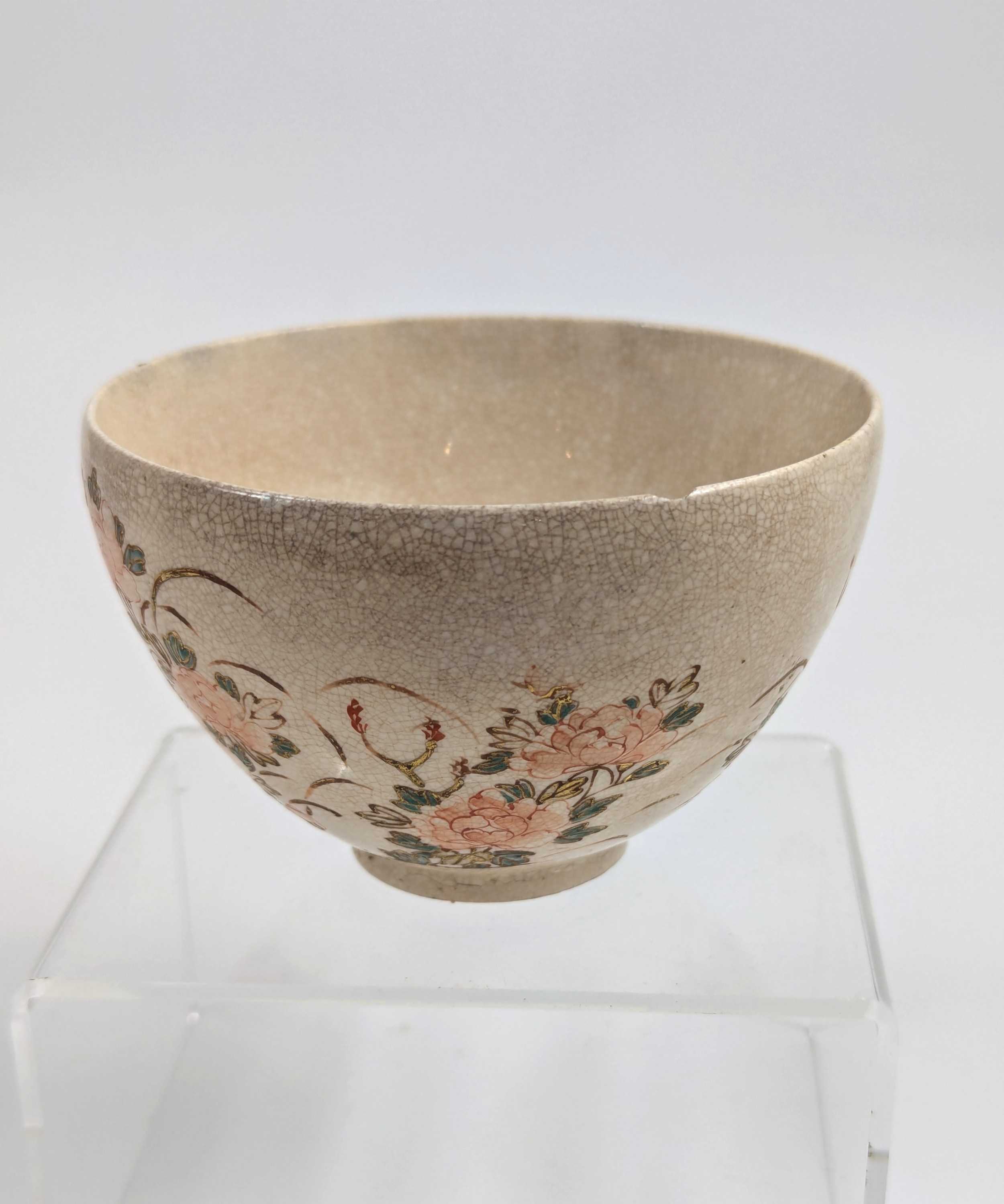
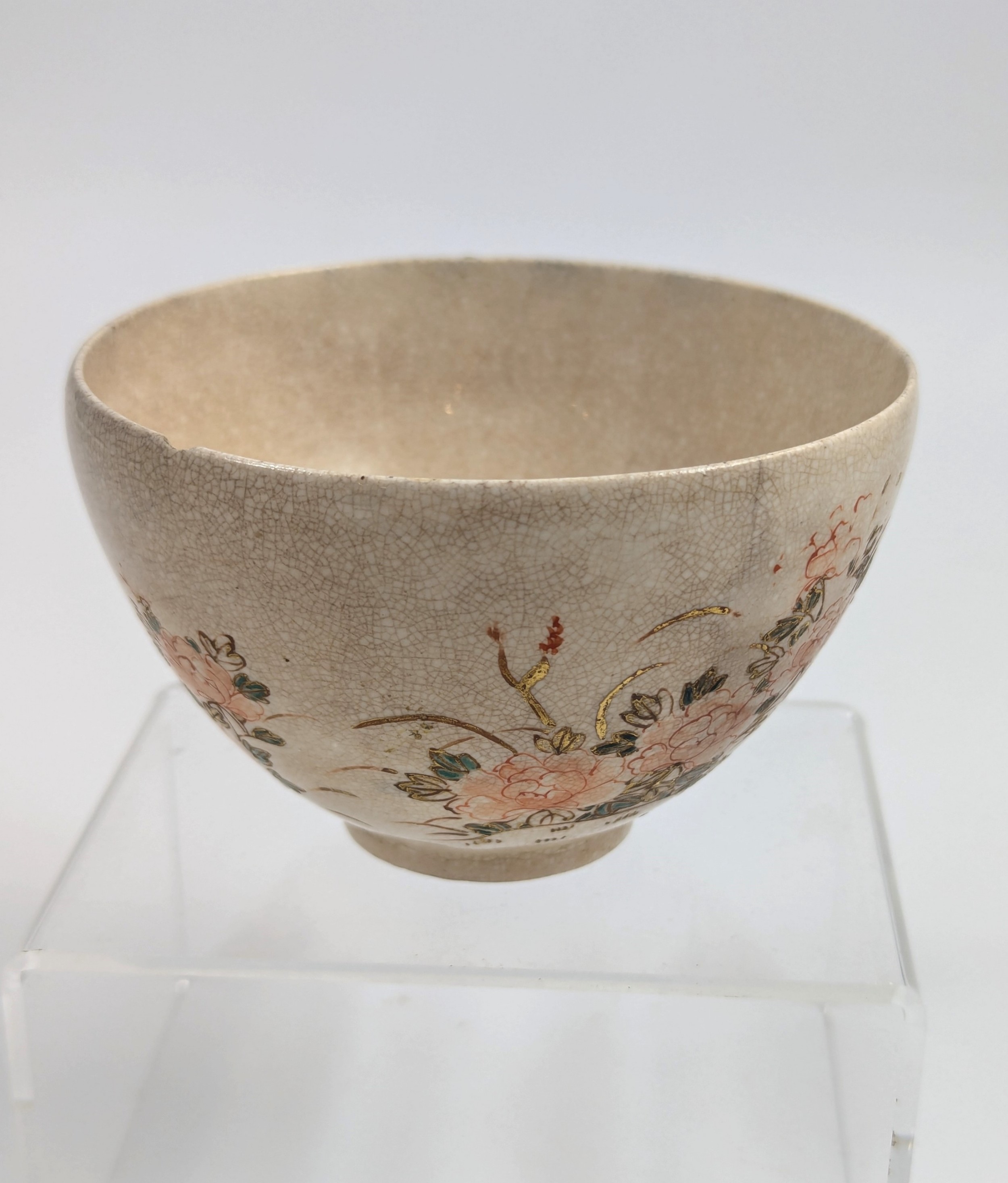
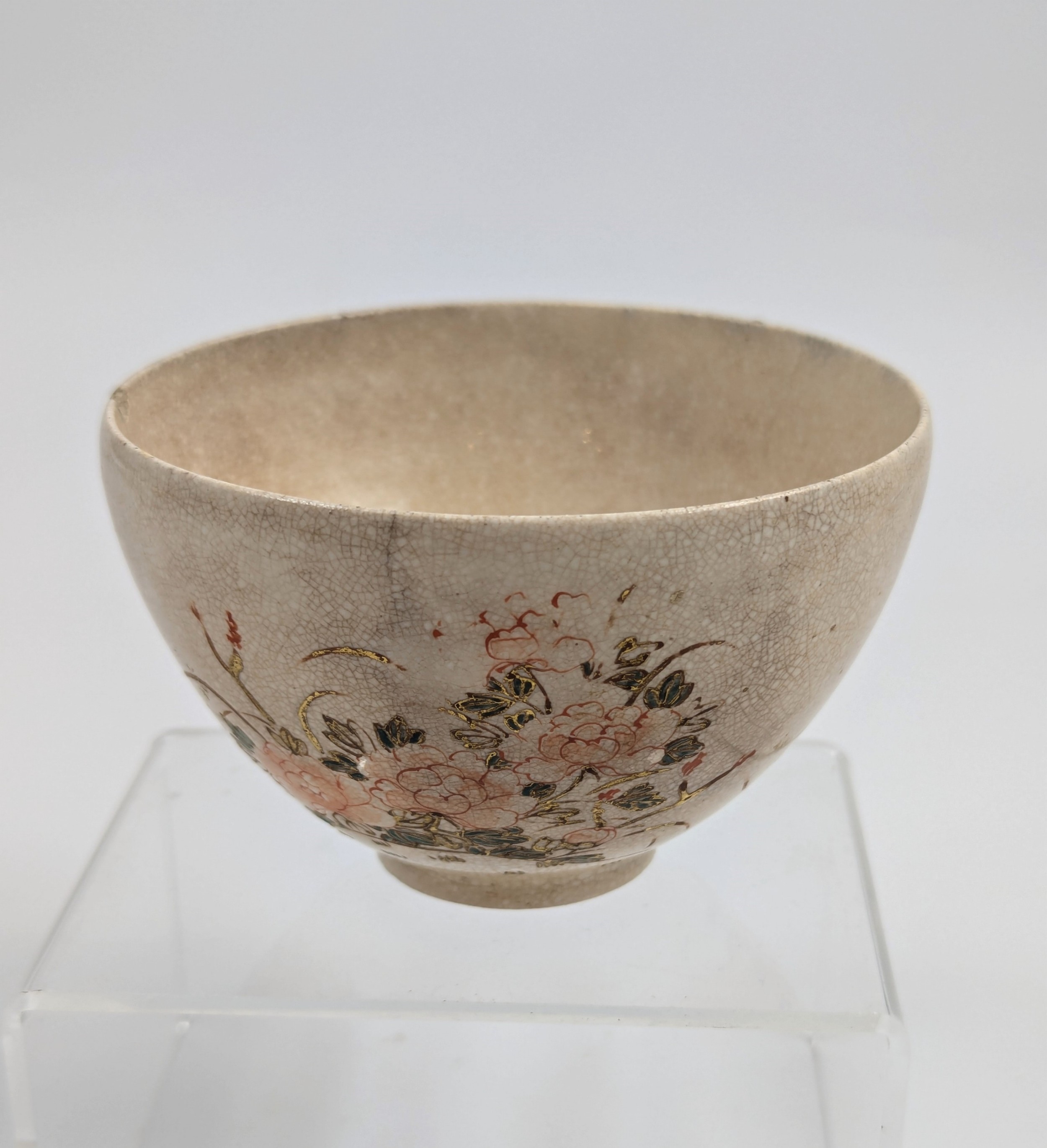
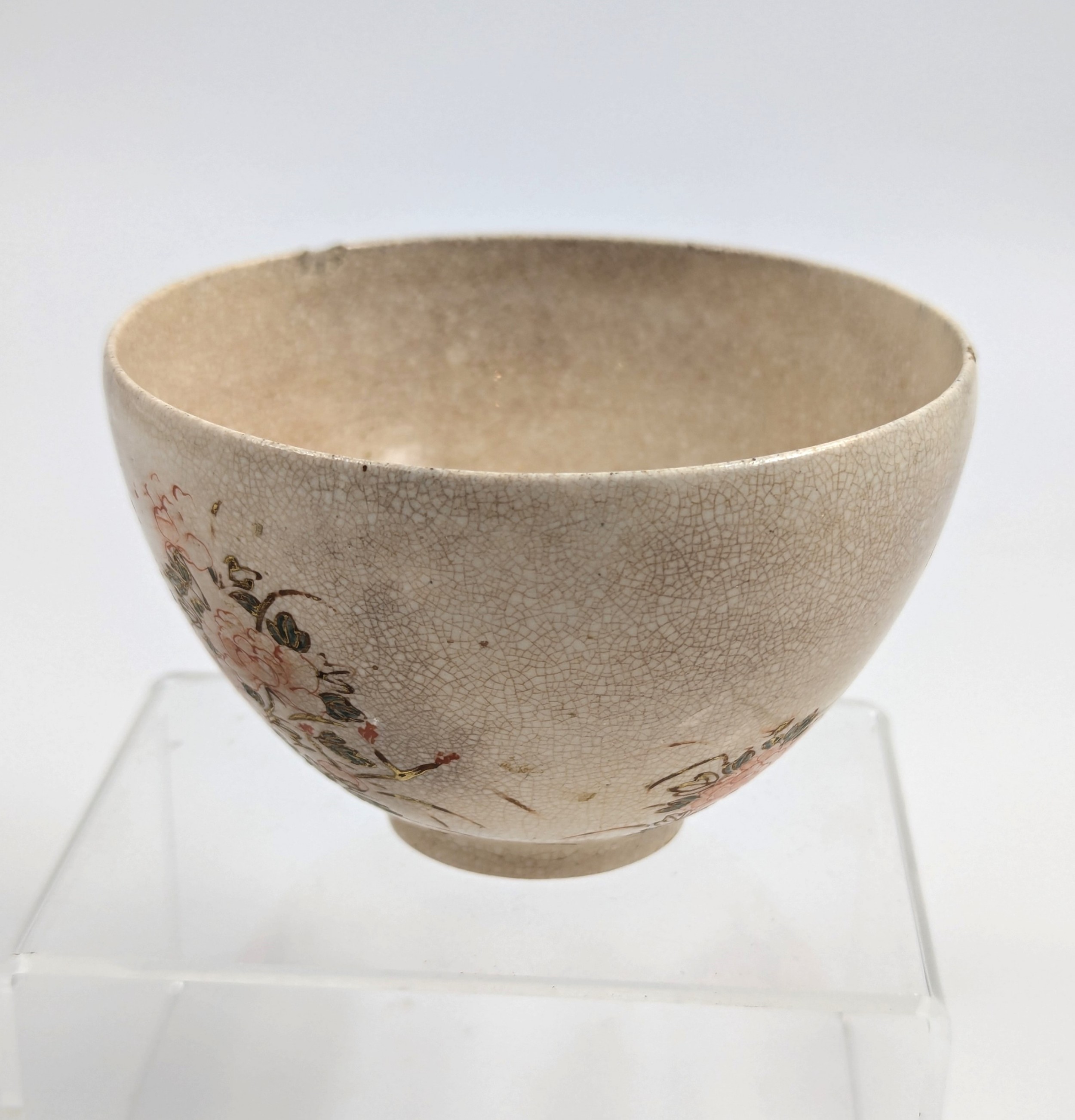
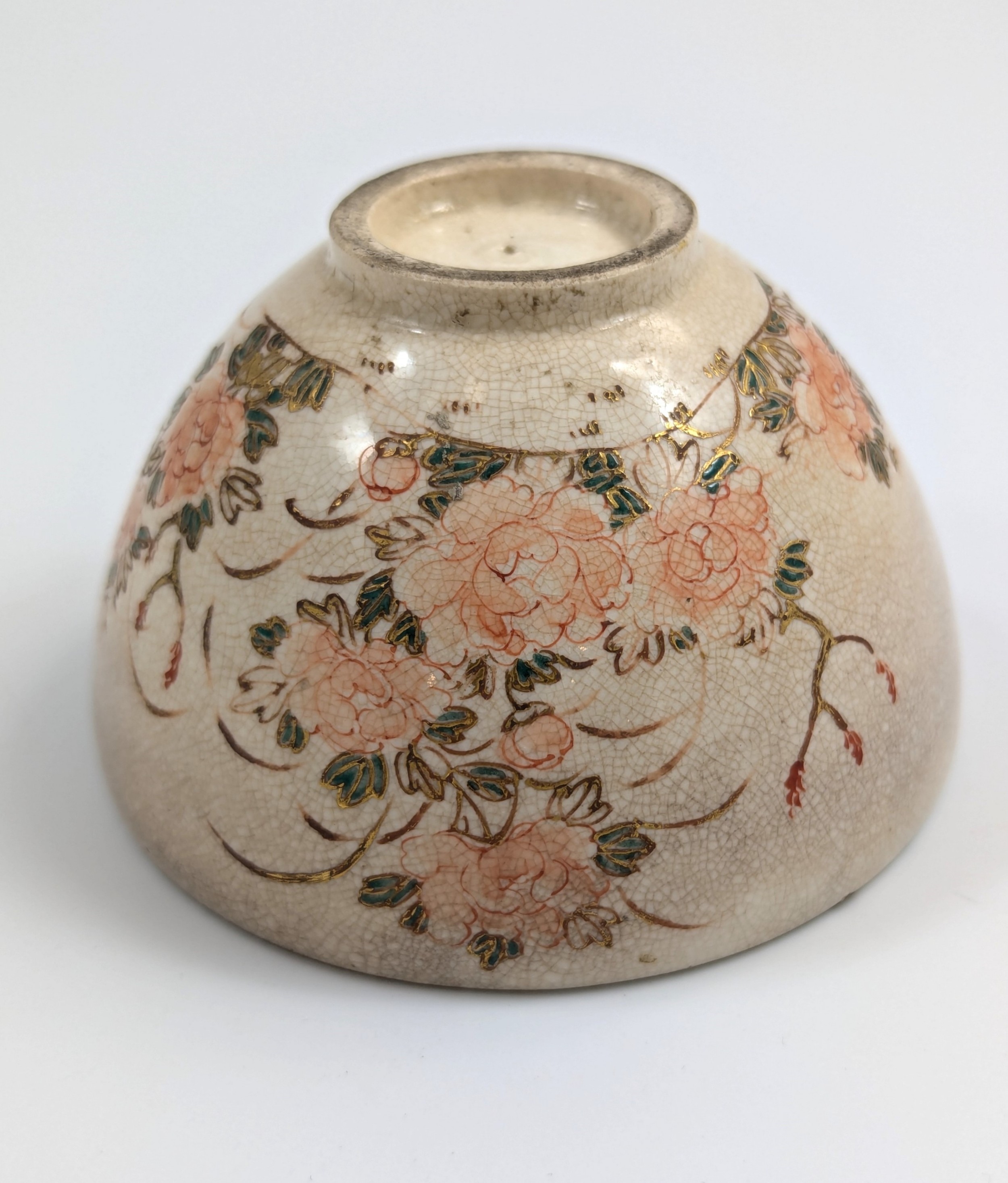
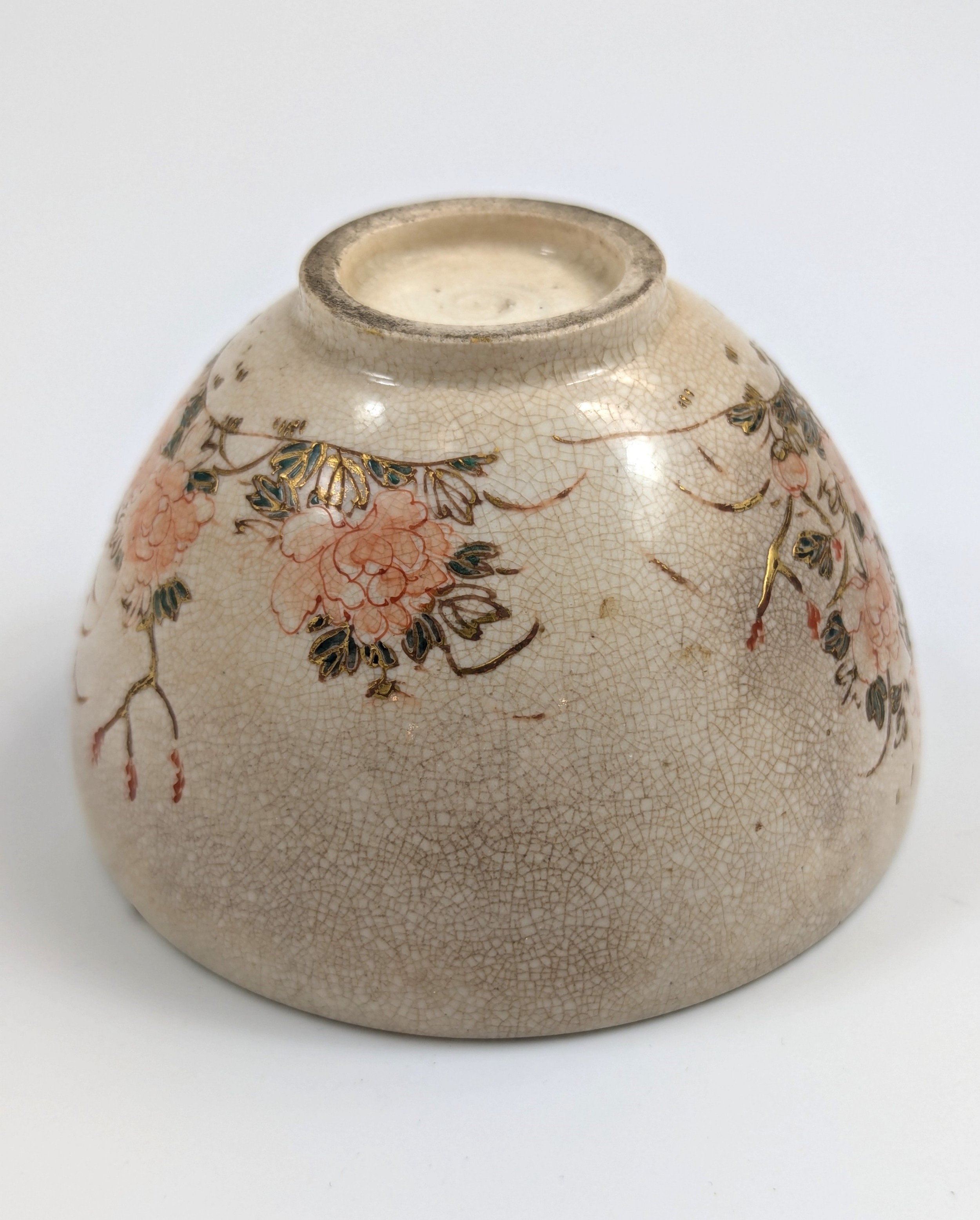
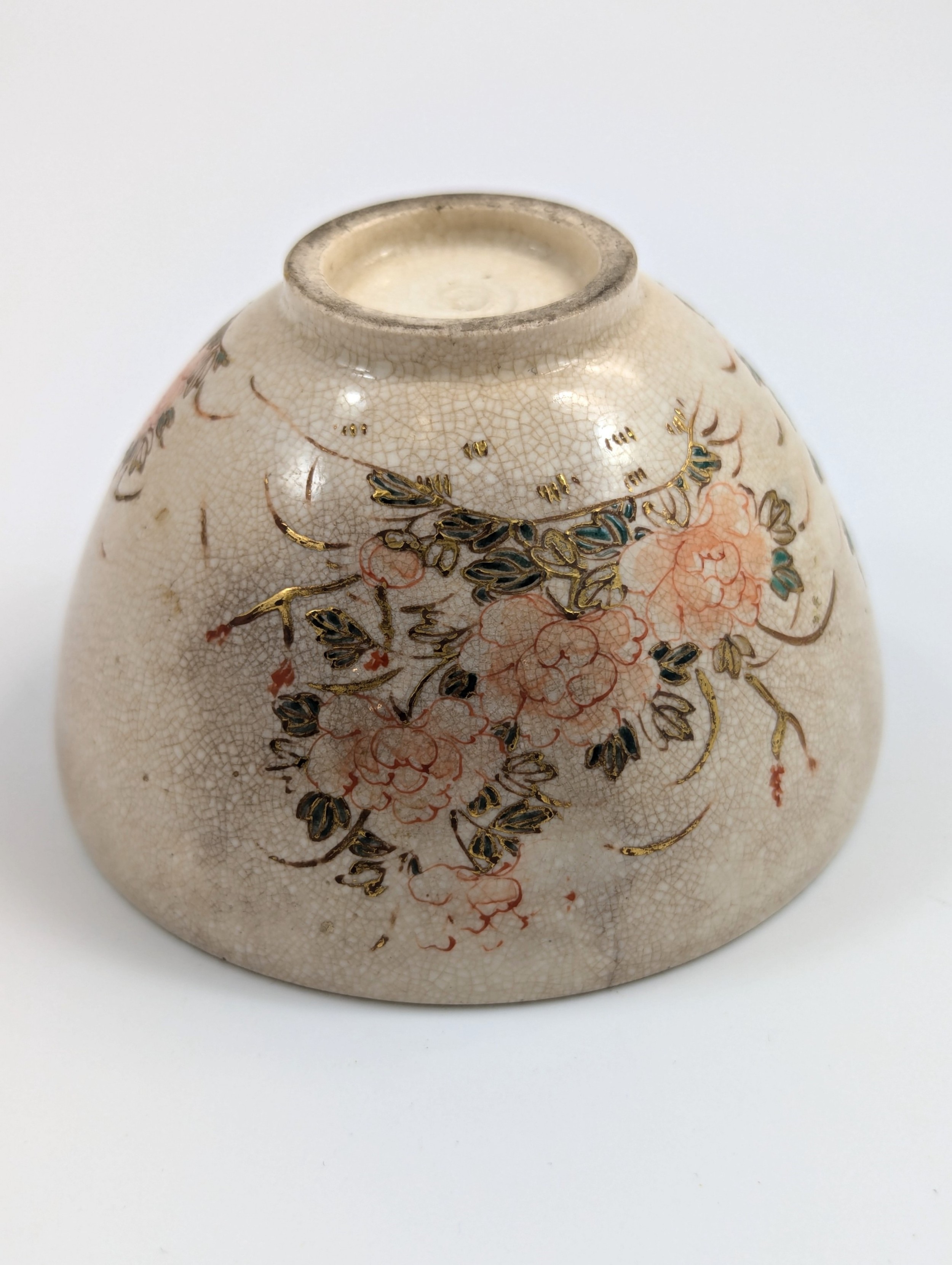
Gillers Antiques Ltd has dated this piece to the 19th Century.
Over time, as the Japanese tea ceremony developed into a distinct cultural form, locally made Japanese pottery and porcelain grew in prestige. By the Edo period, bowls were often produced in Japan and came in a variety of shapes and sizes.
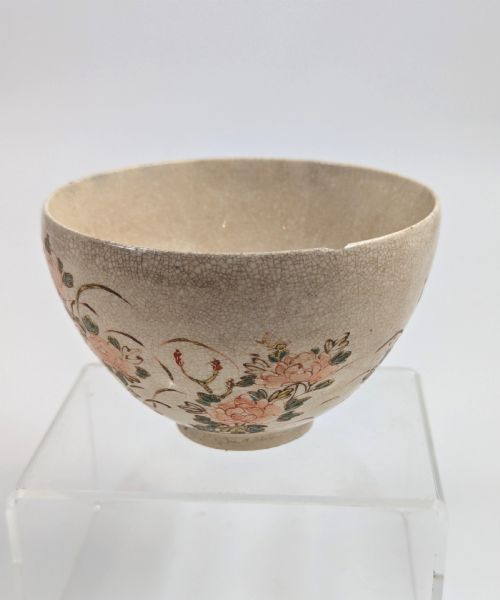
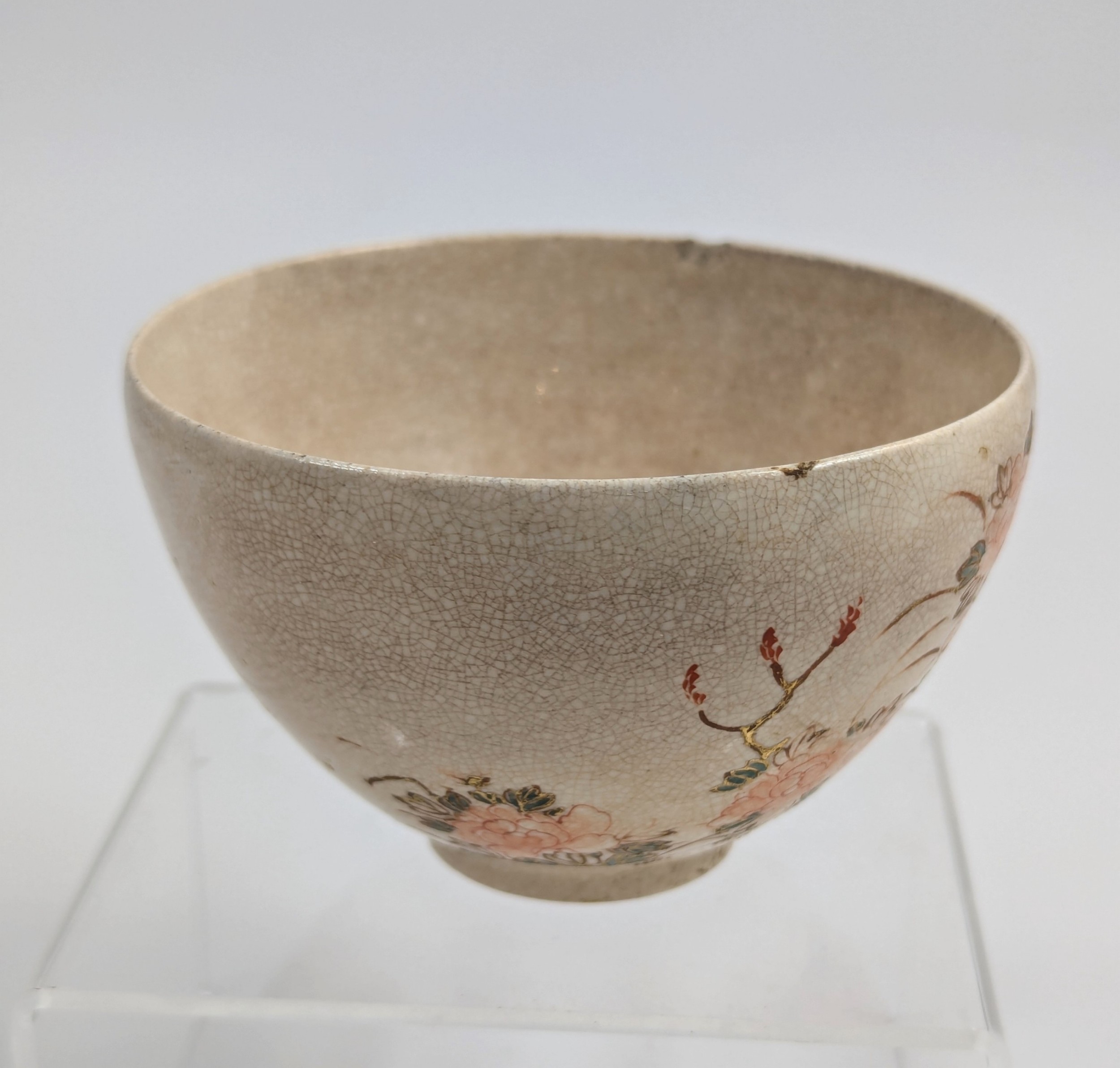
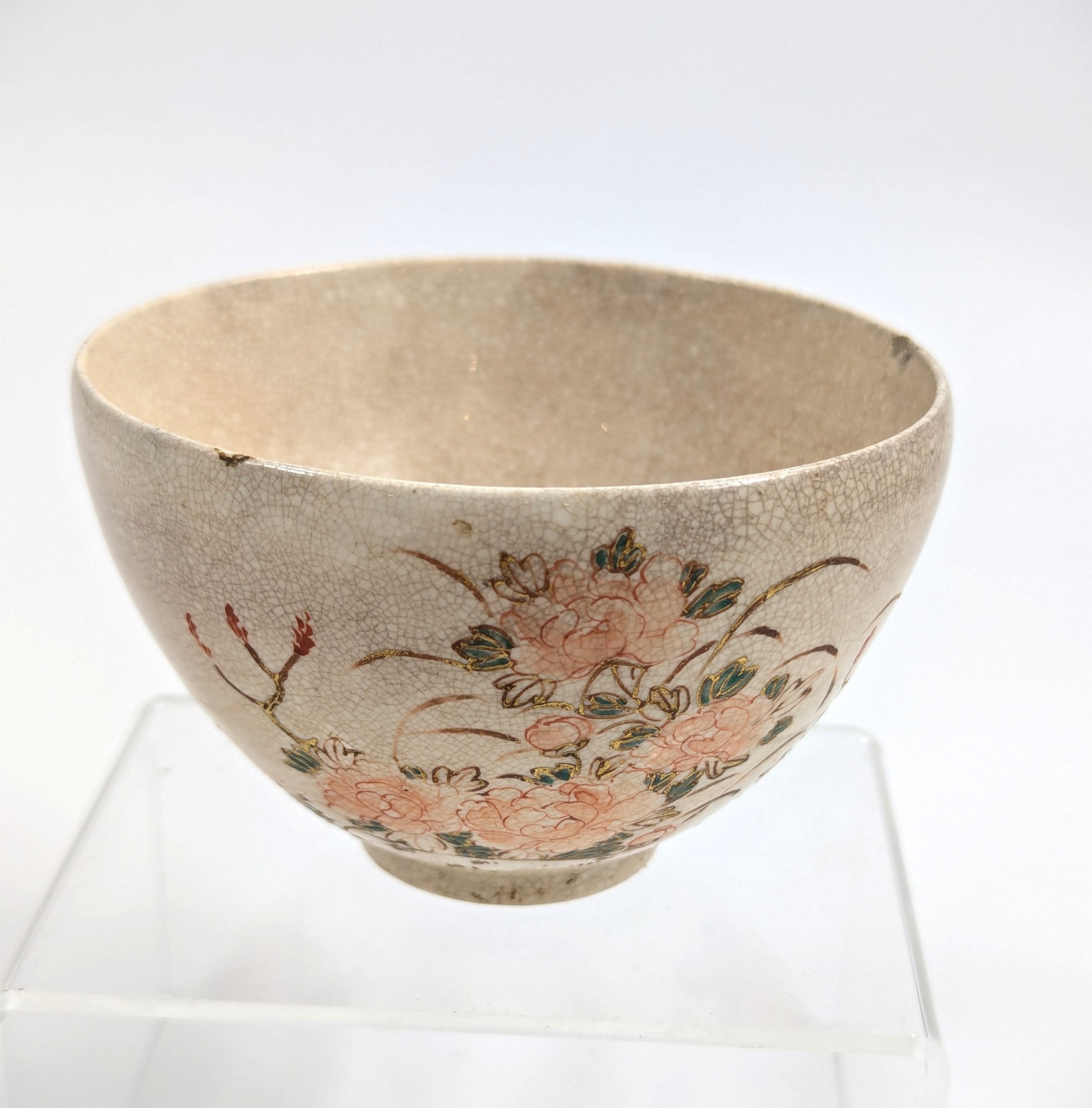
This piece is associated with Kyo-ware, a style pioneered by Nonomura Ninsei (1648–1690), who worked in Kyoto. His work marks a turning point in the history of Kyoto ware. In 1647, Ninsei built a kiln near the Ninnaji Temple in Omuro, northwest Kyoto. He achieved great success in creating tea ware. Unlike painted styles that used iron pigments under a transparent glaze, his overglaze decoration involved applying enamel over the glaze, which allowed for more colorful and detailed designs. Ninsei is credited with developing this style, which became known as the Ninsei Kyo-ware style. His bowls are celebrated for their elegant and often vibrant designs, featuring intricate depictions of nature, such as flowers, landscapes, and birds.
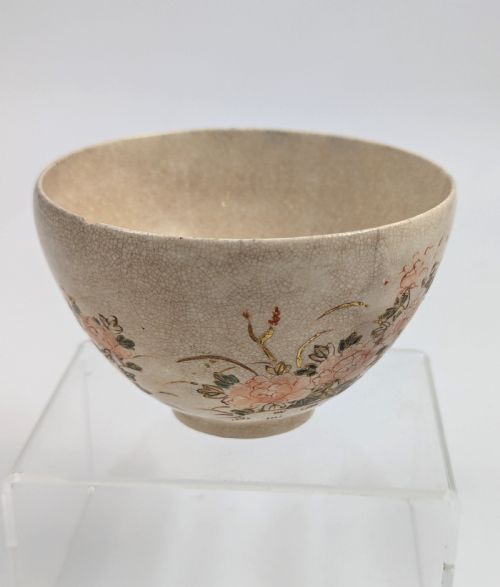
The influence of Ninsei’s Kyo-ware is still evident in modern Kyoto ceramics, where artisans continue to use colorful glazes and detailed patterns inspired by his legacy. Kyoto remains one of Japan’s primary centers for high-quality pottery and porcelain. Authentic Ninsei Kyo-ware bowls are considered highly collectible due to their historical significance, beauty, and craftsmanship, often appearing in museum collections and commanding high prices at auction.
Dimensions:
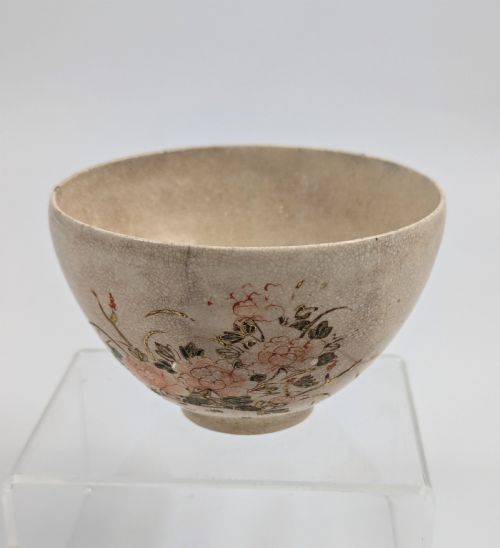
Height: 7 cm
Top diameter: 10.3 cm
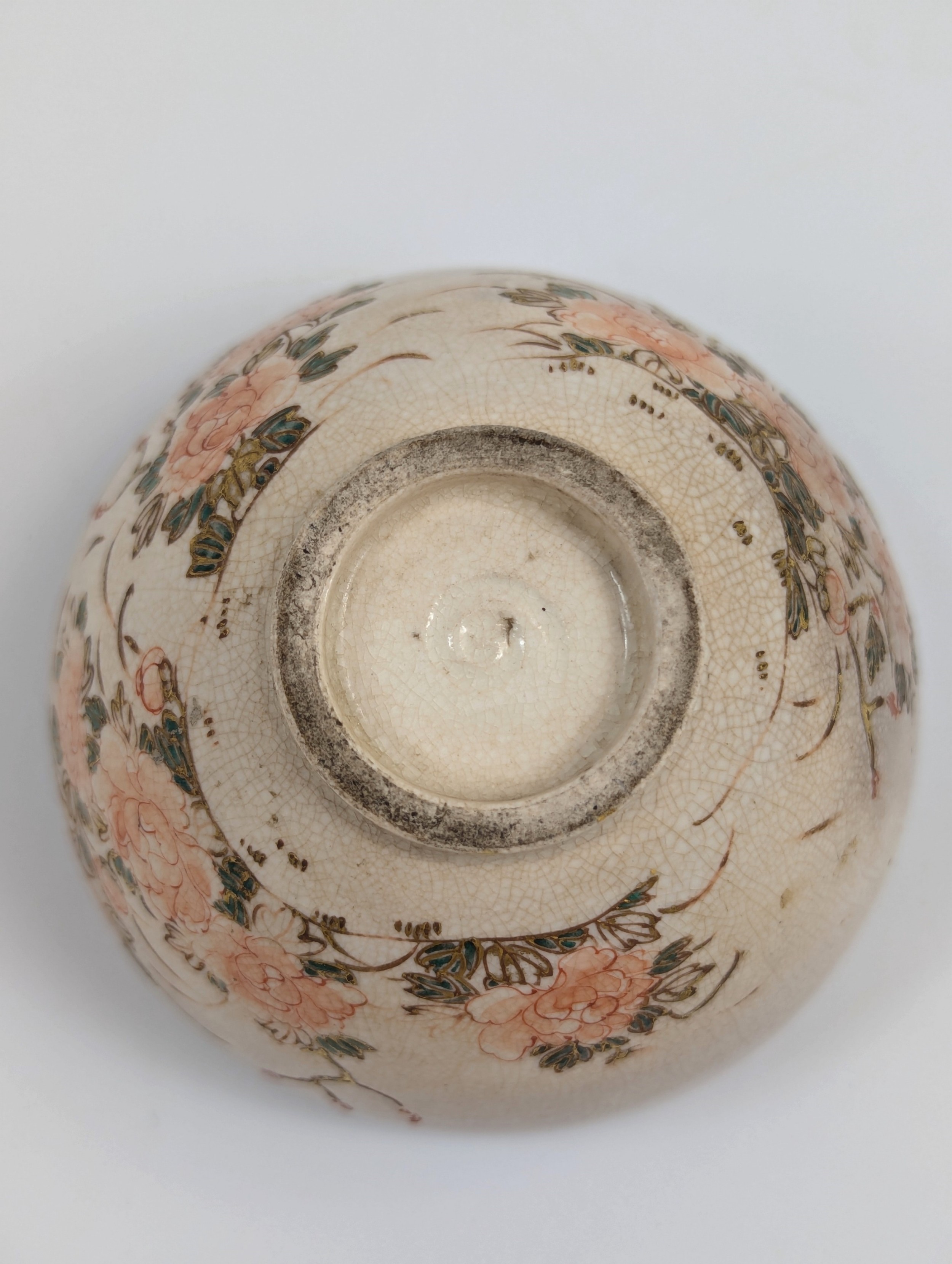
Base diameter: 4 cm
Weight: 185 grams
Condition:
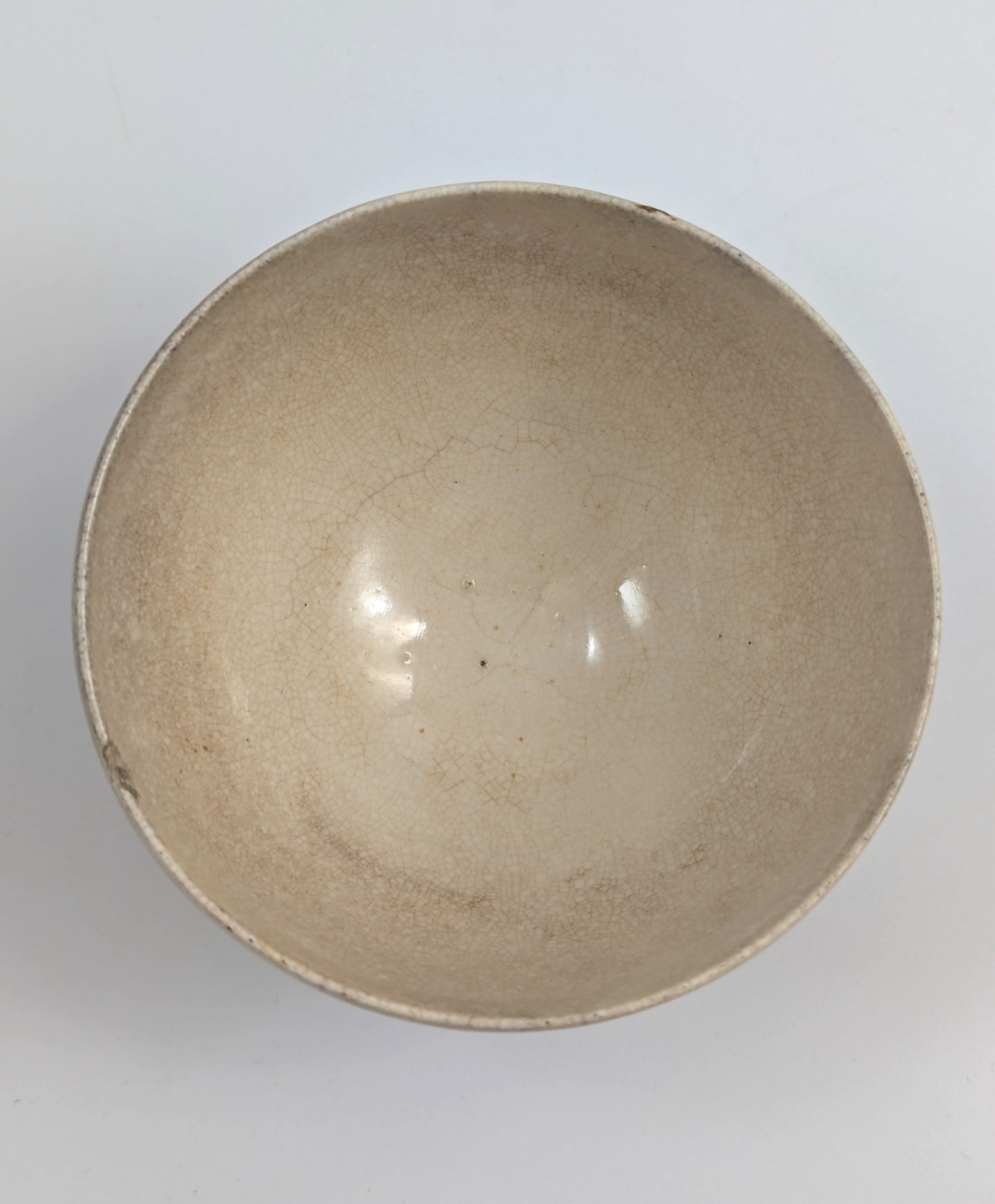
Two chips on the upper rim, barely visible from the outside
Small hairline crack on the rim
Cracking of the enamel ("mesh") is characteristic of this type of ceramic
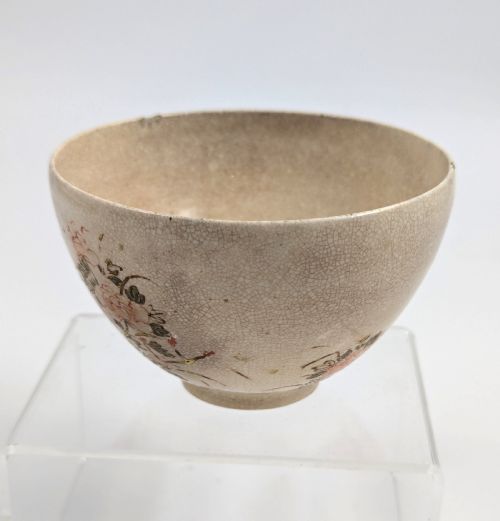
Small losses of paint and gilding, consistent with age
Please carefully examine the accompanying photographs, as they form an integral part of this description. The item will be shipped with full tracking and insurance. Note that shipping costs include labor, packaging, and postage.
Gillers Antiques Ltd has dated this piece to the 19th Century.
You can view the stock and full dealer information on the Gillers Antiques Ltd Profile Page
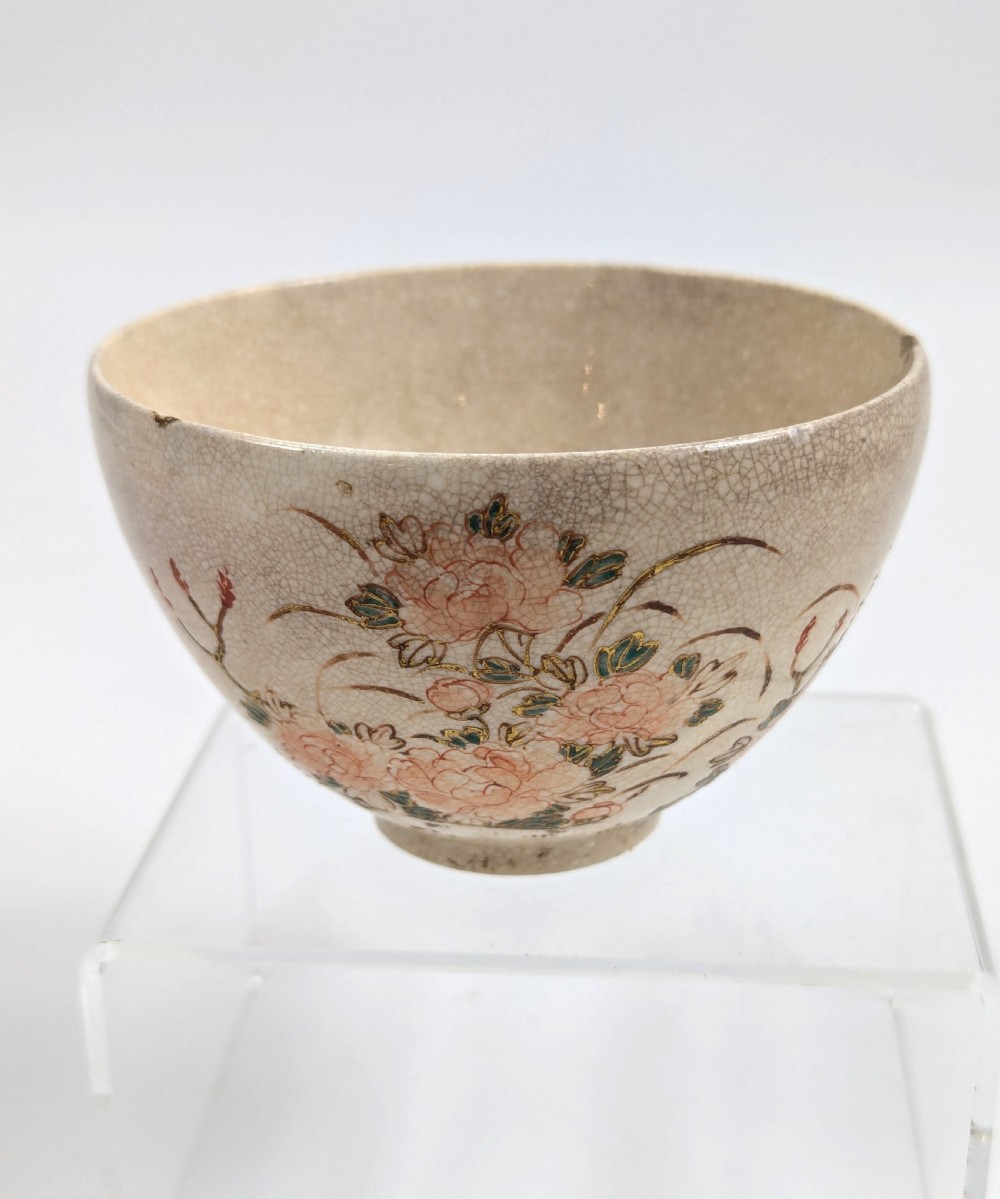
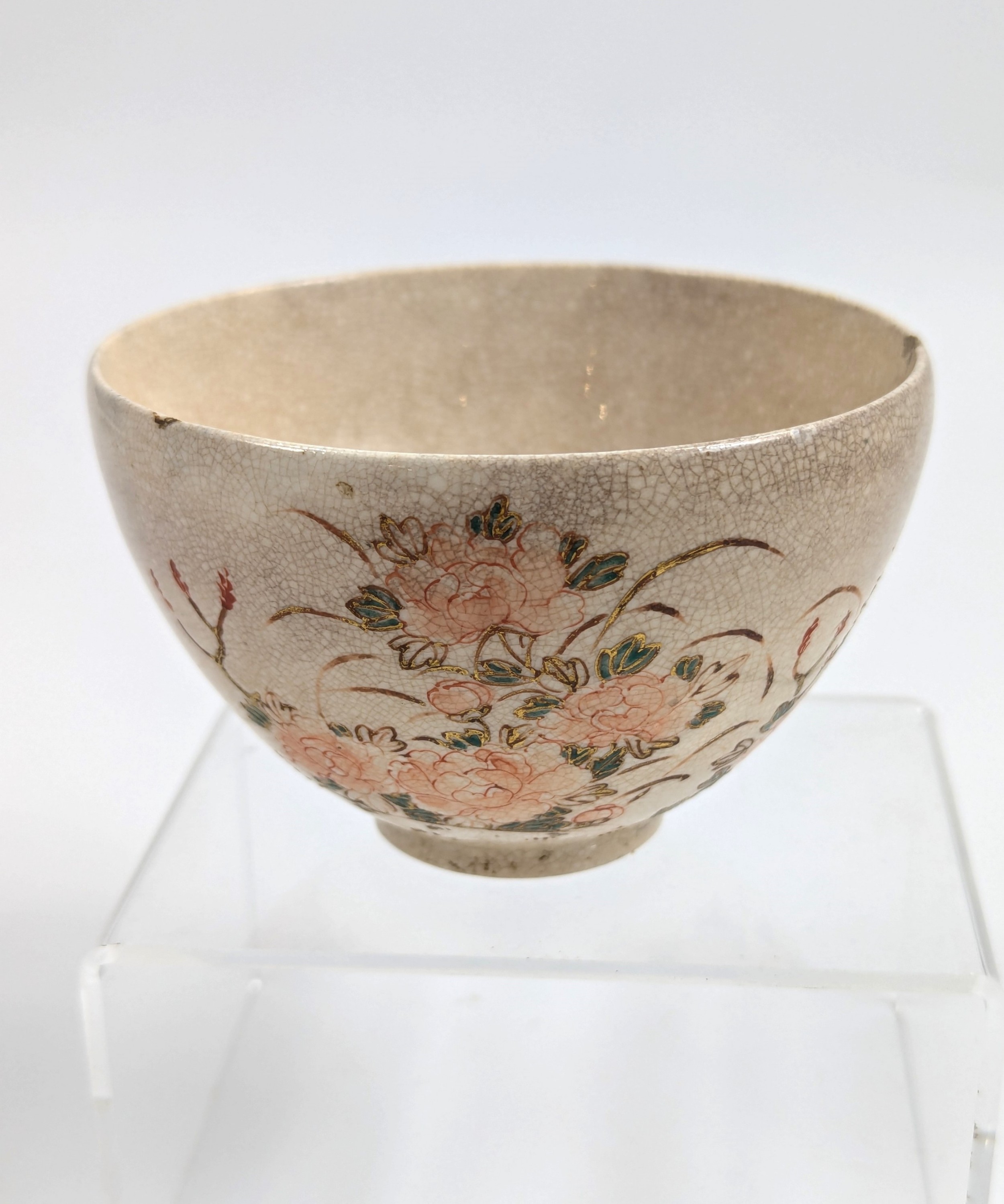
Japanese Tea Bowl (Chawan), Ninsei Kyo-ware Style, Late Edo Period (1800–1849)