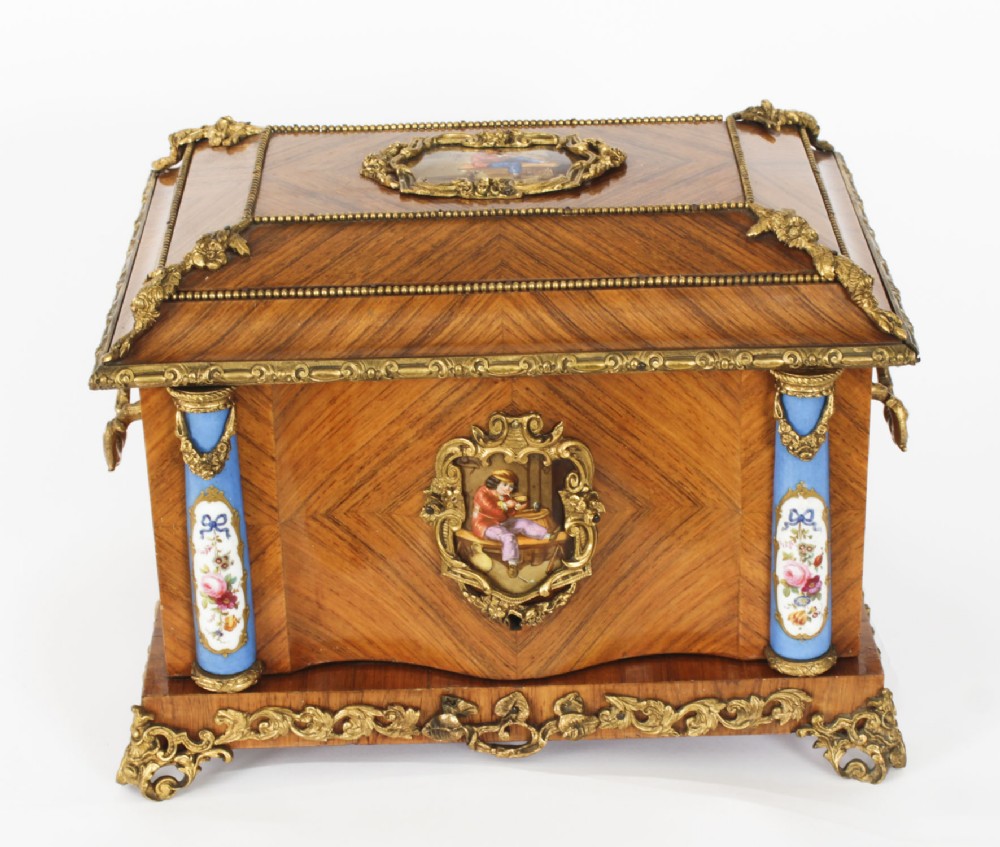
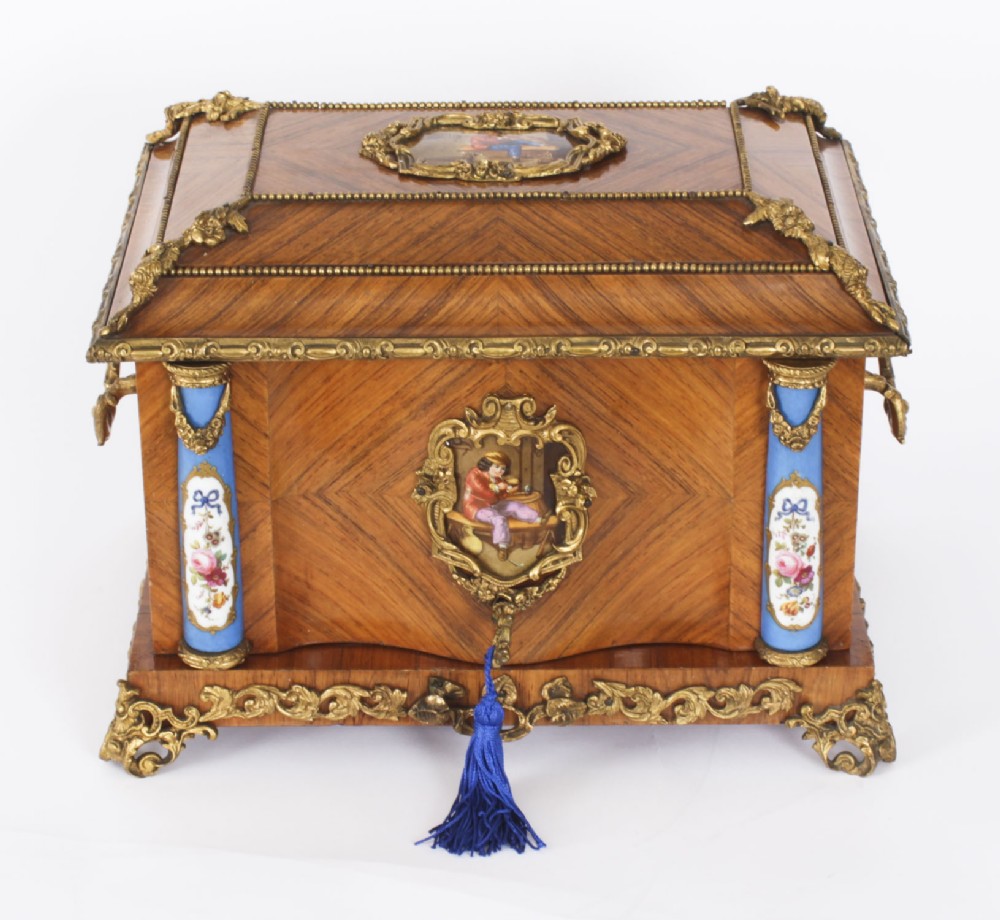
Regent Antiques has dated this piece to the 1870s.
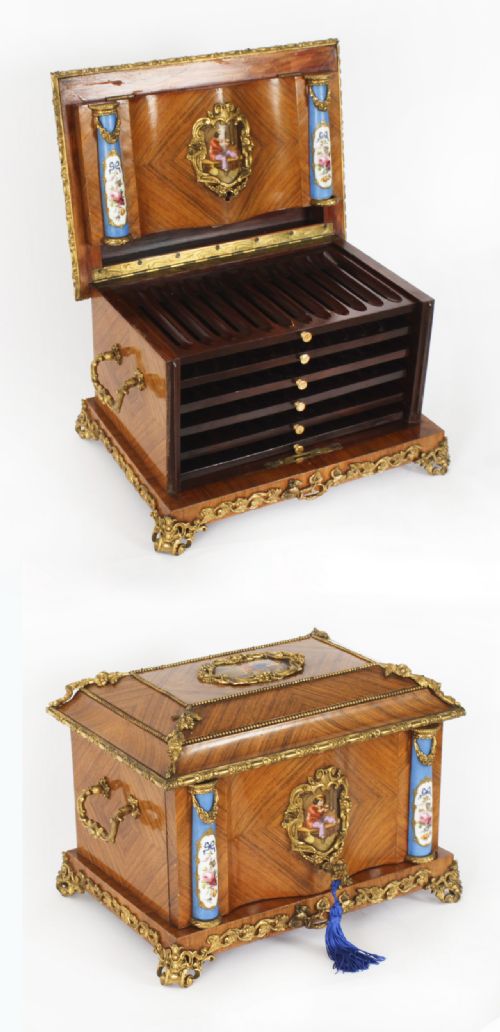
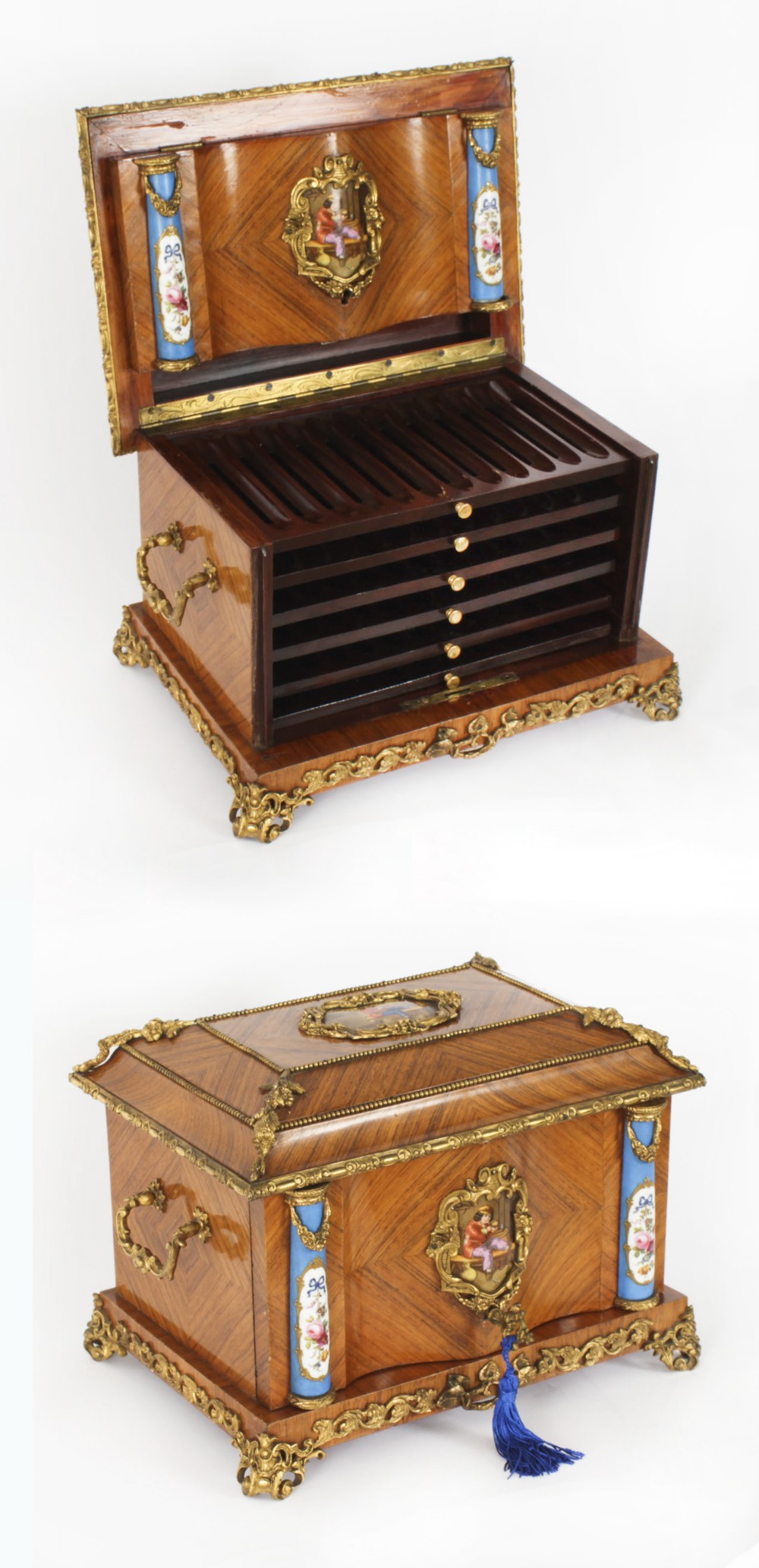
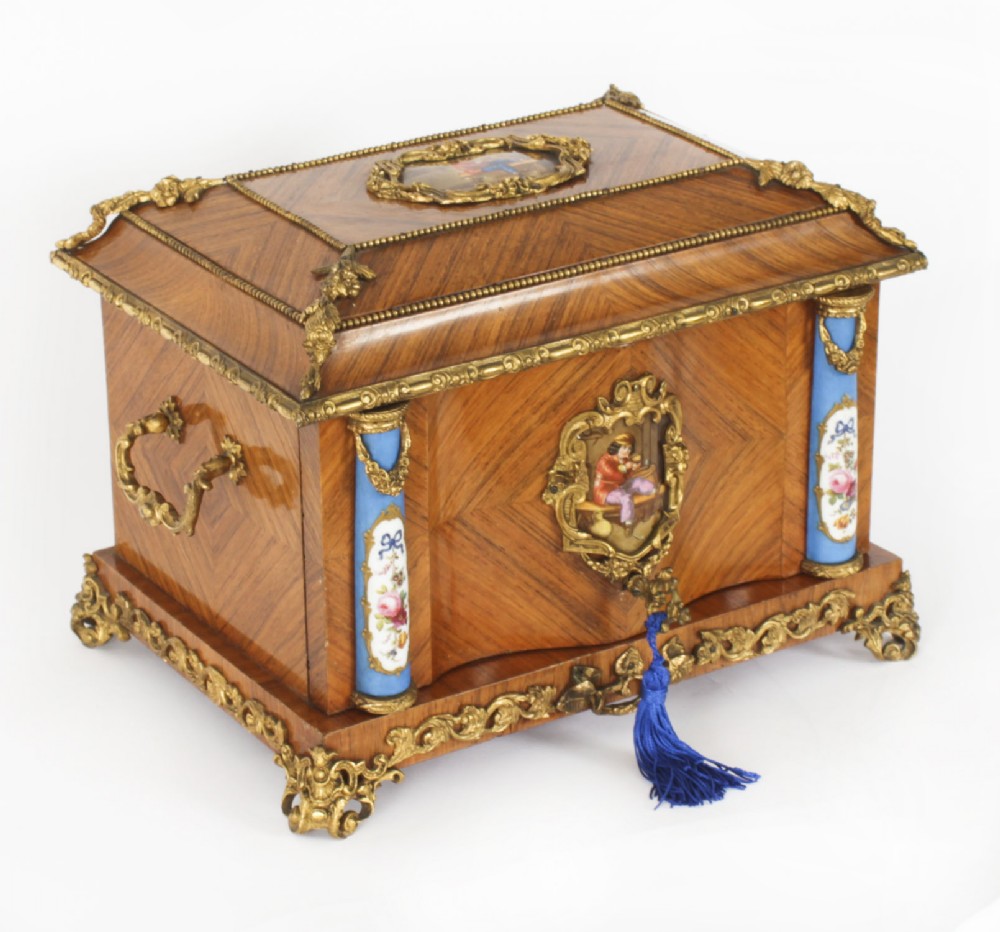
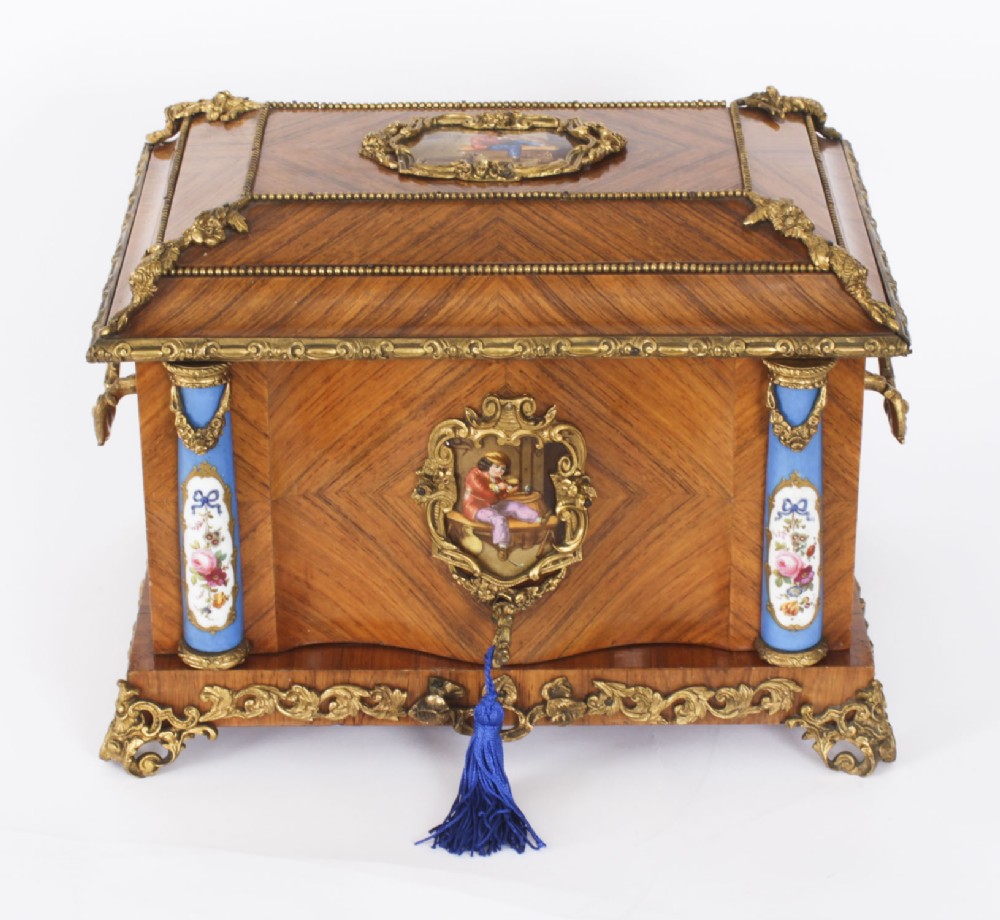
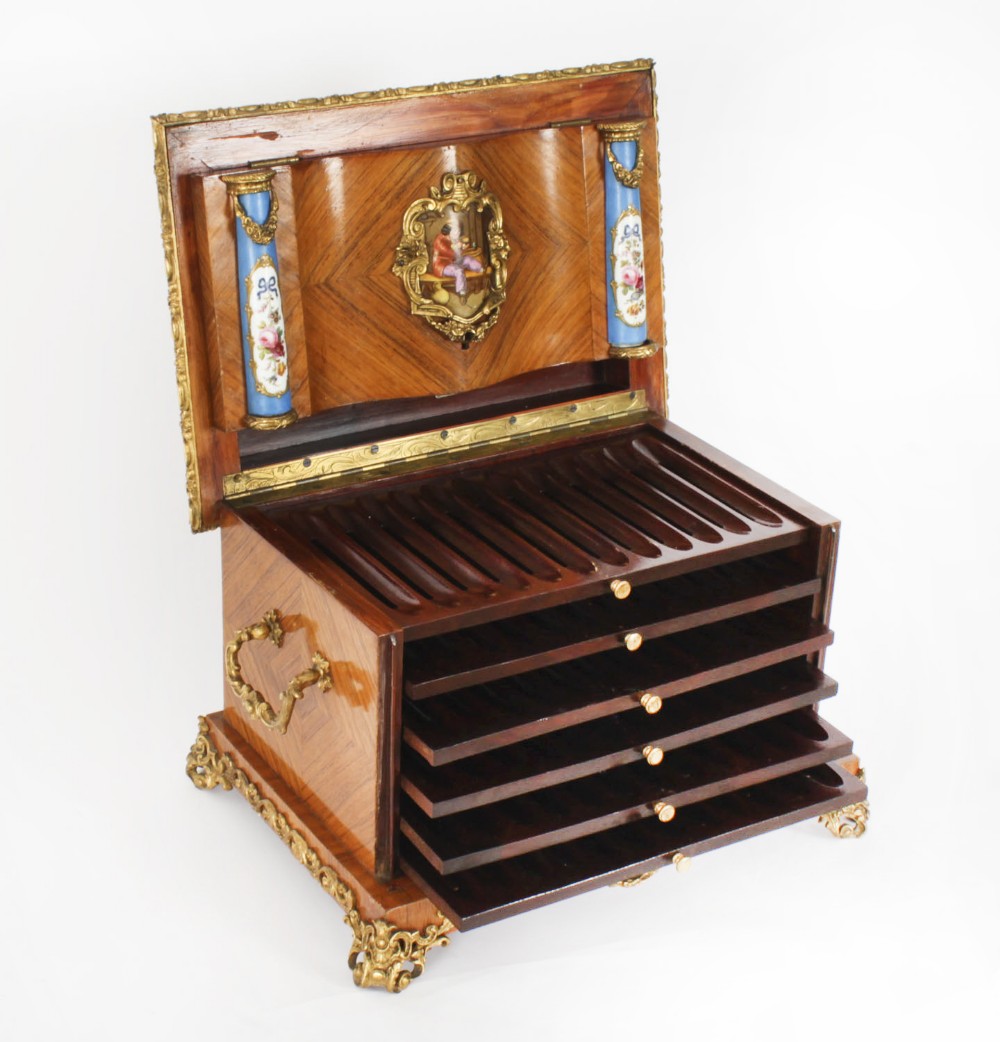
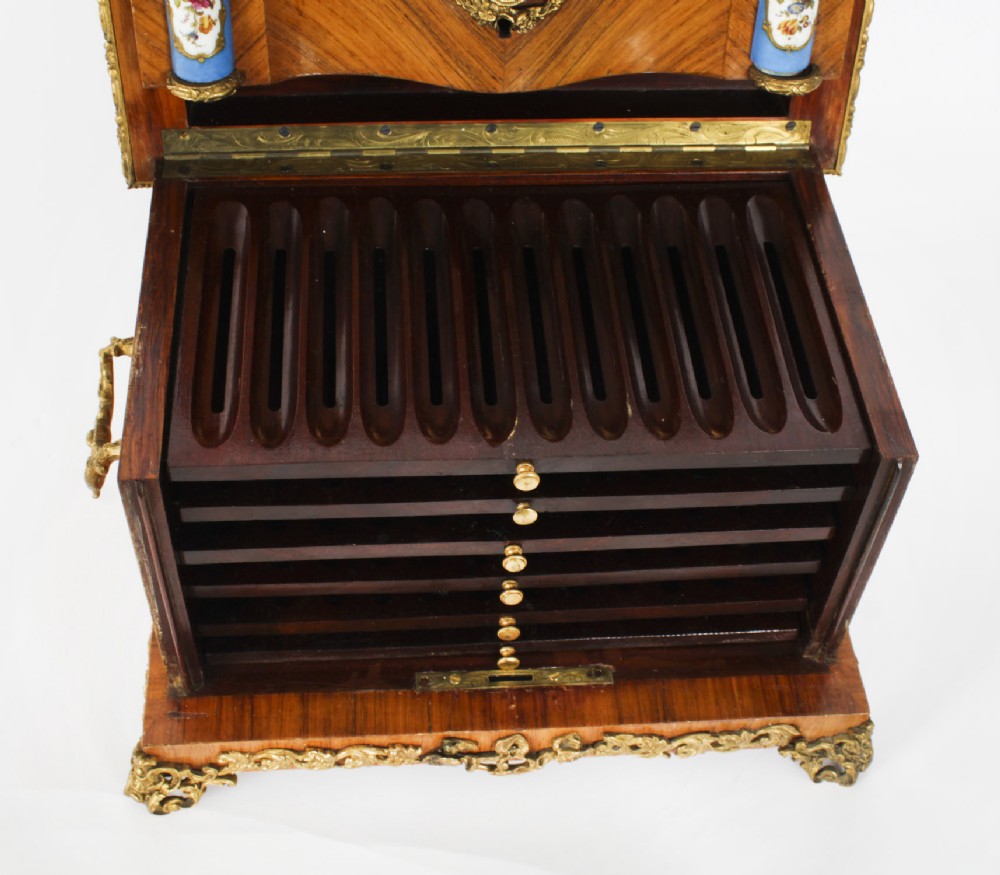
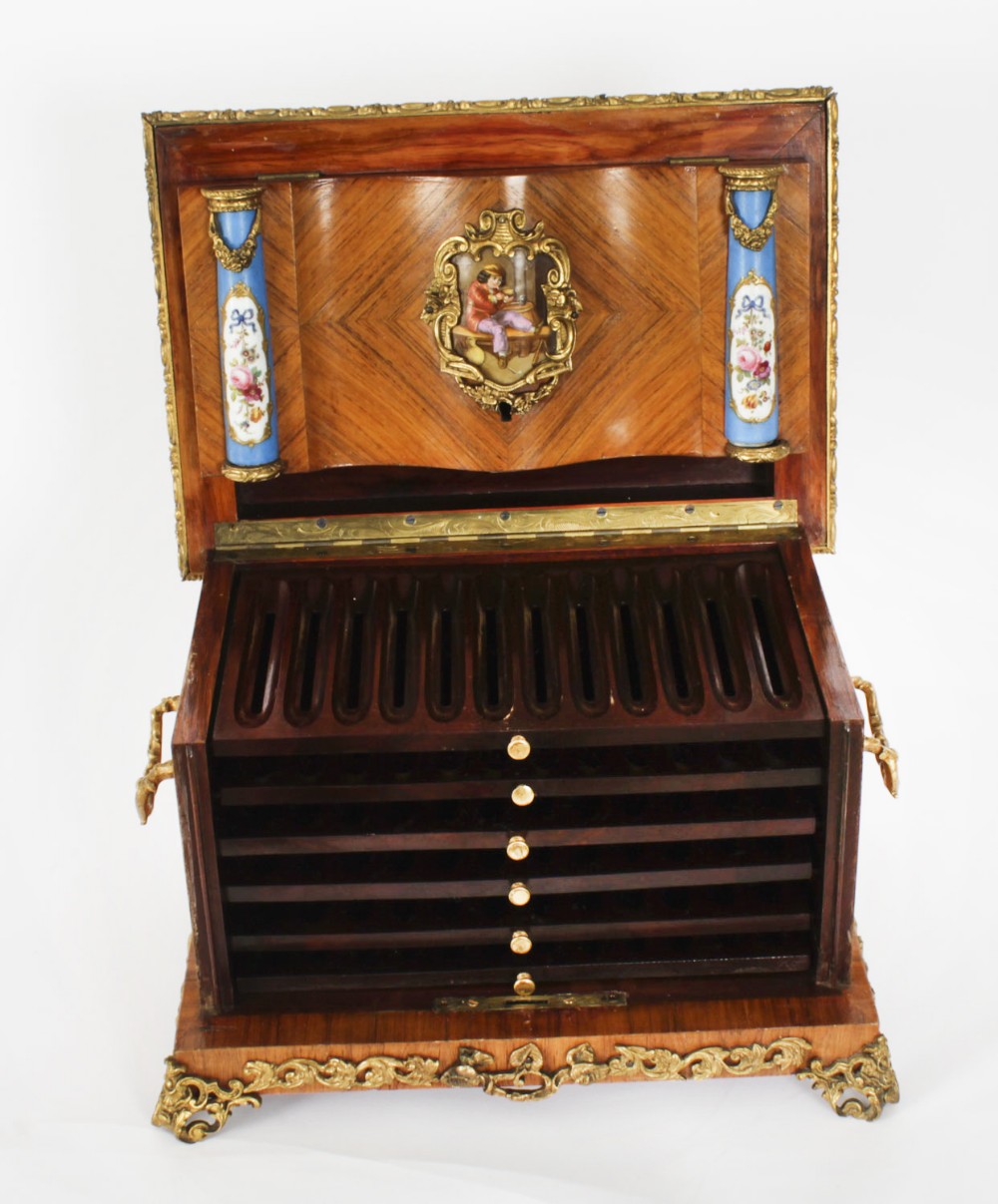
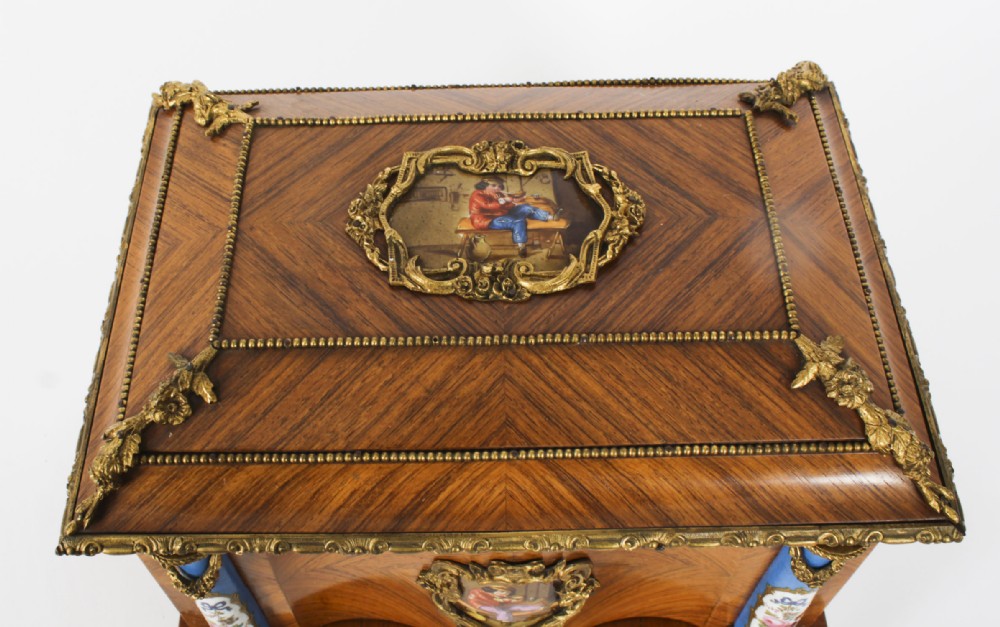
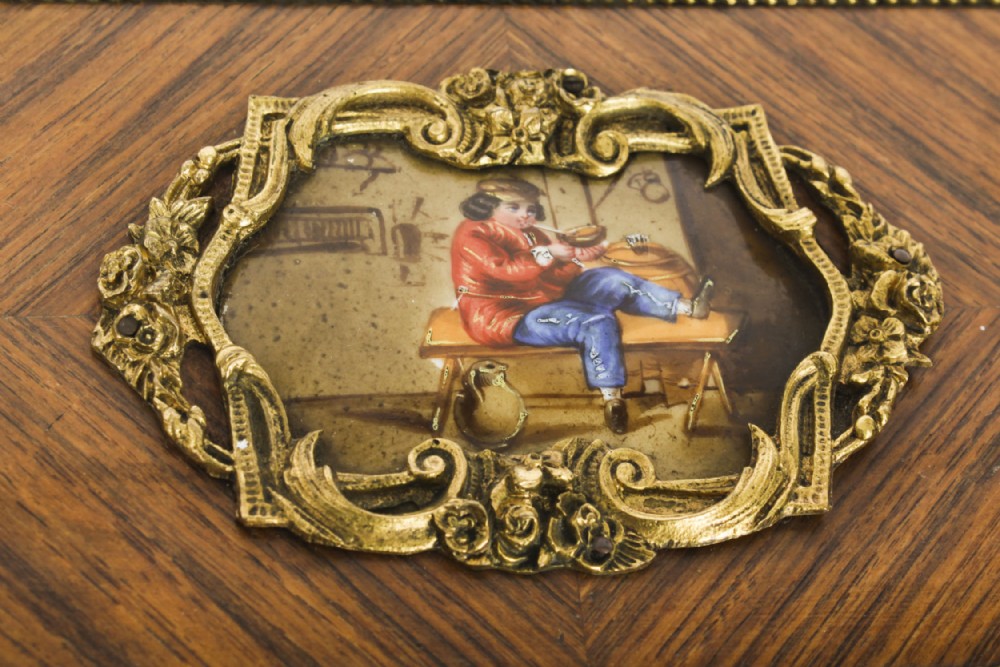
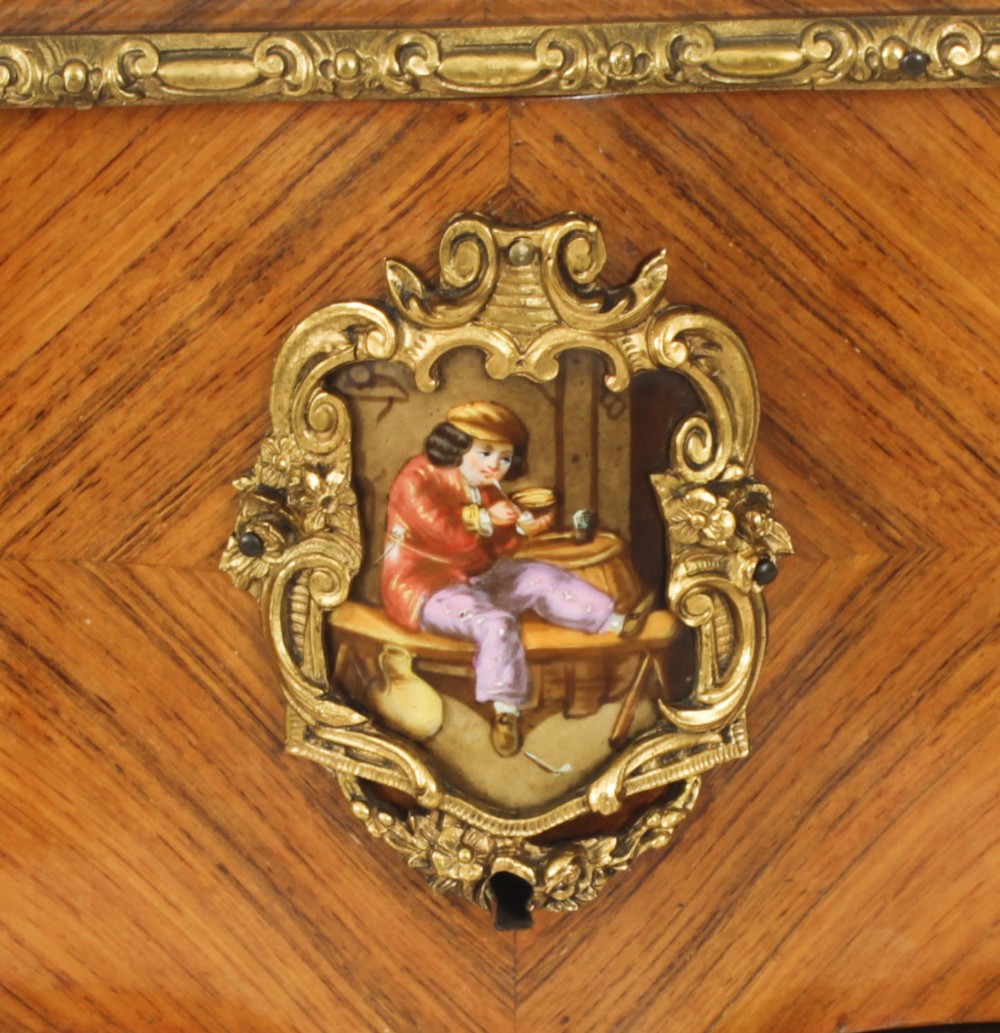
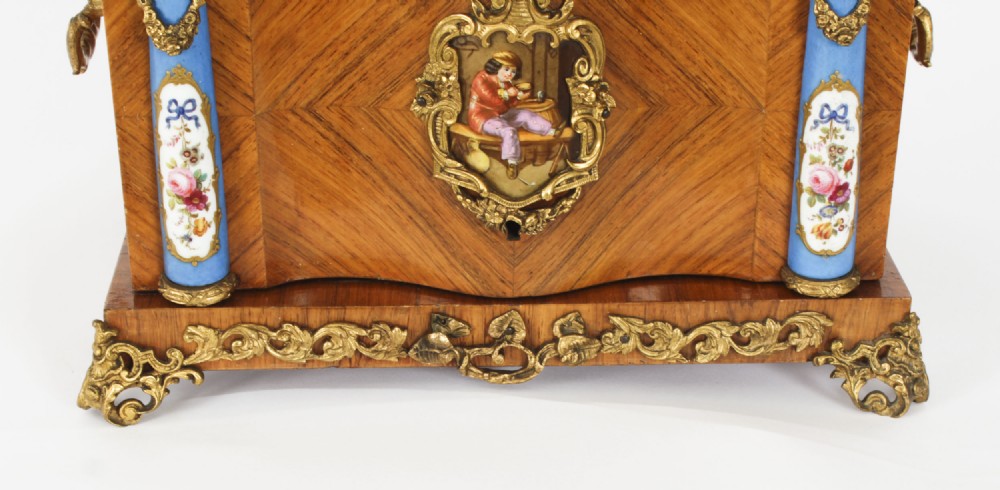
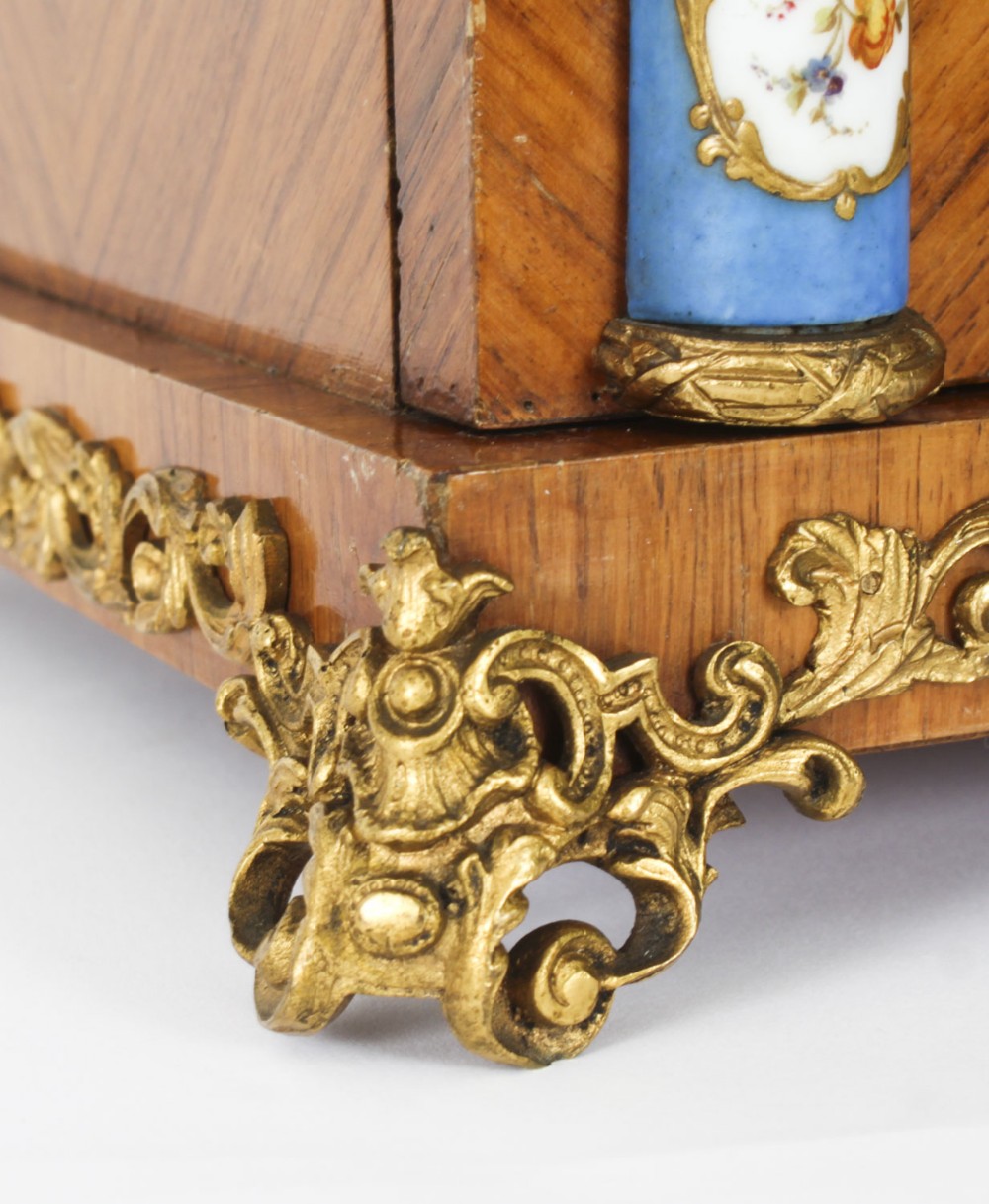
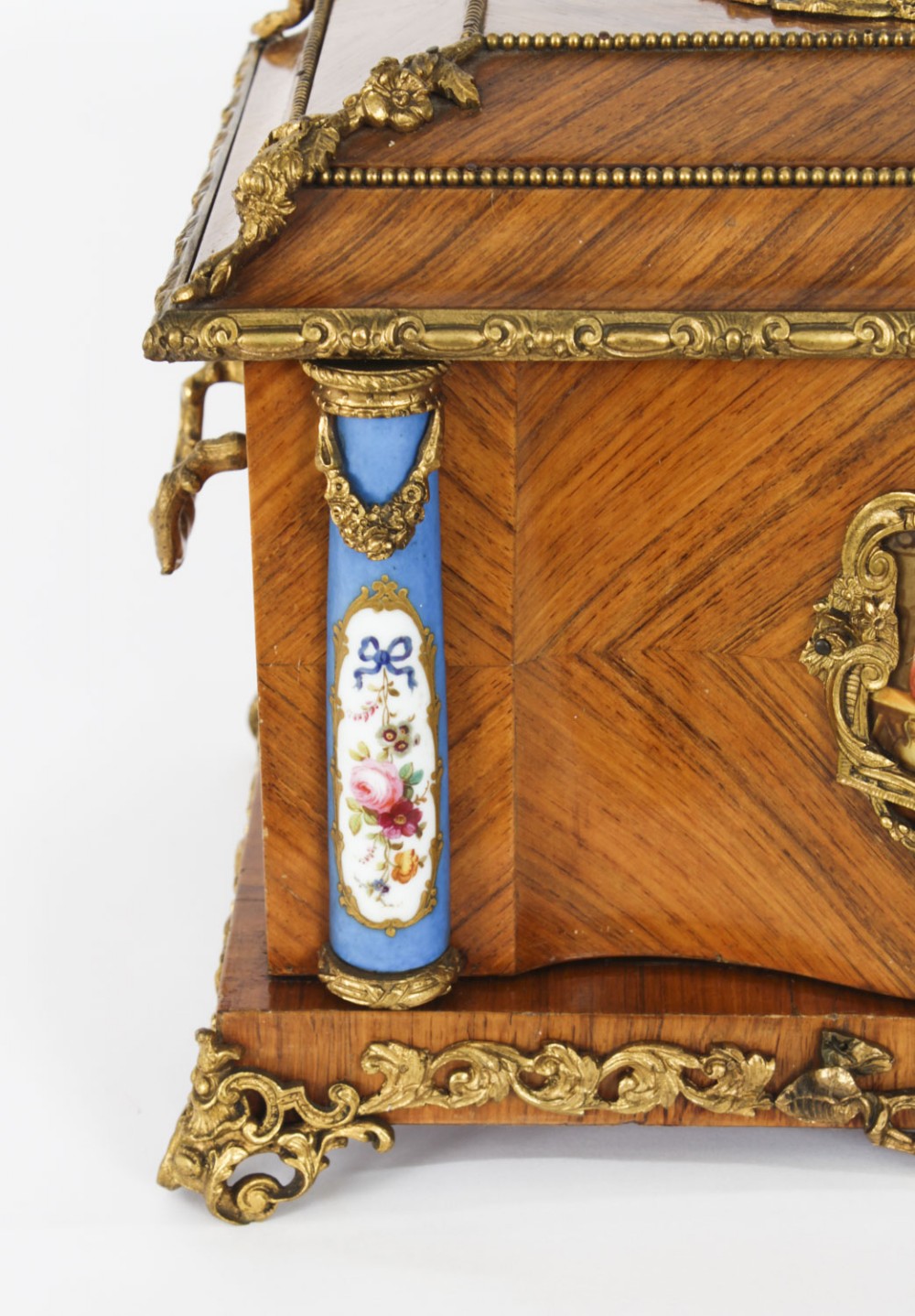
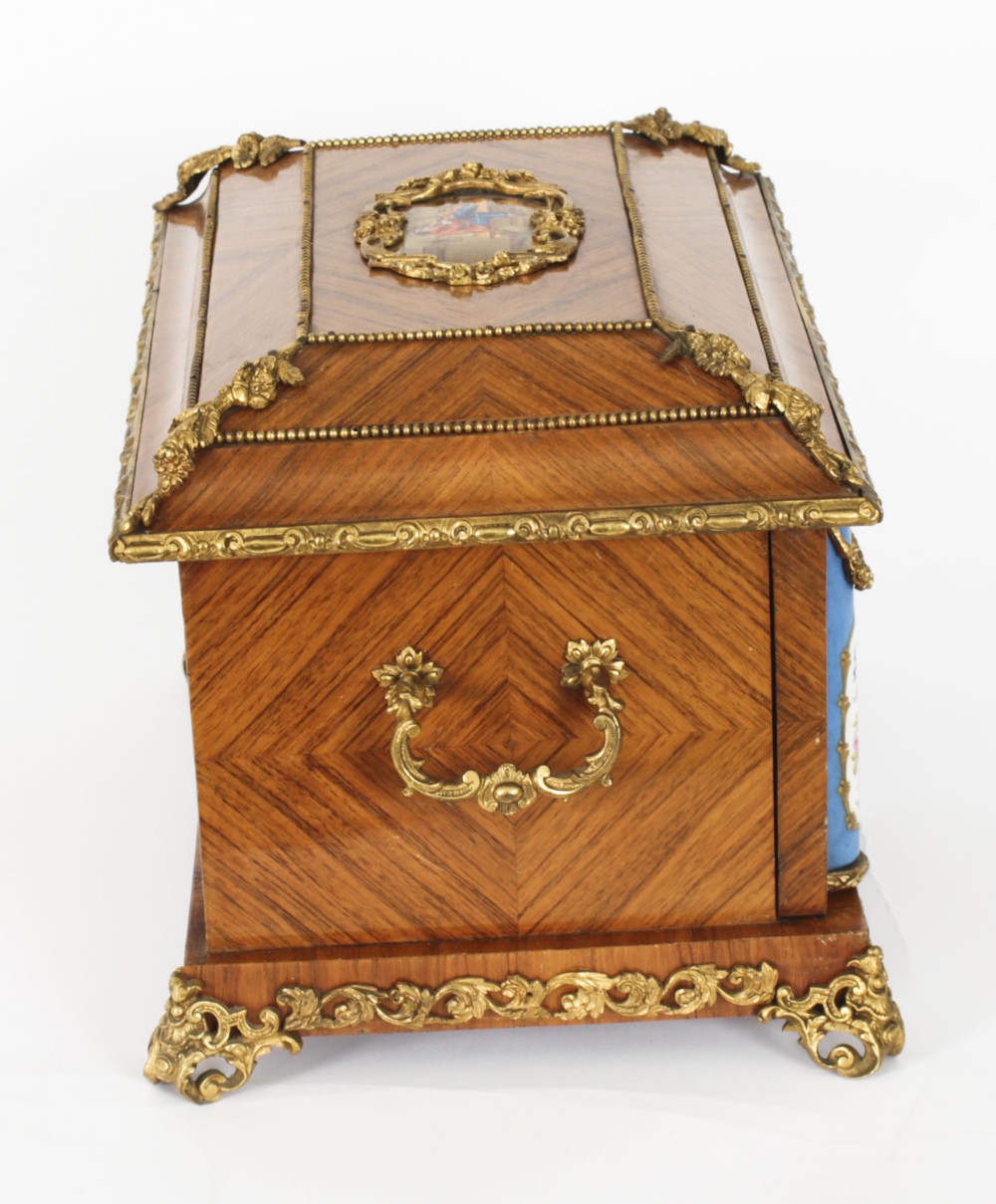
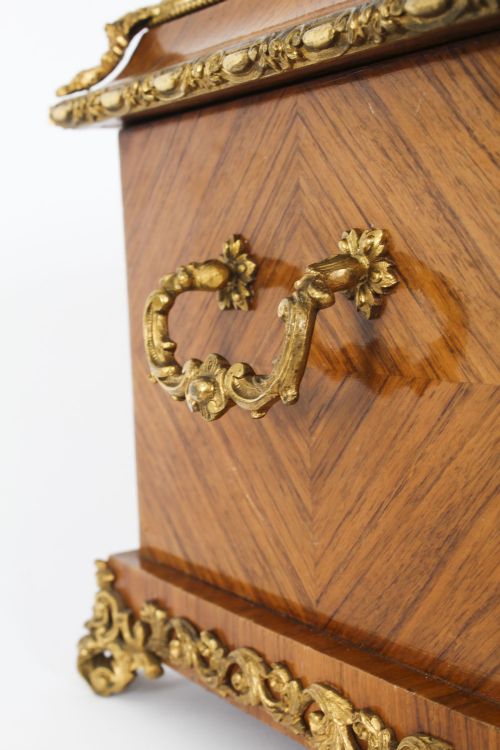
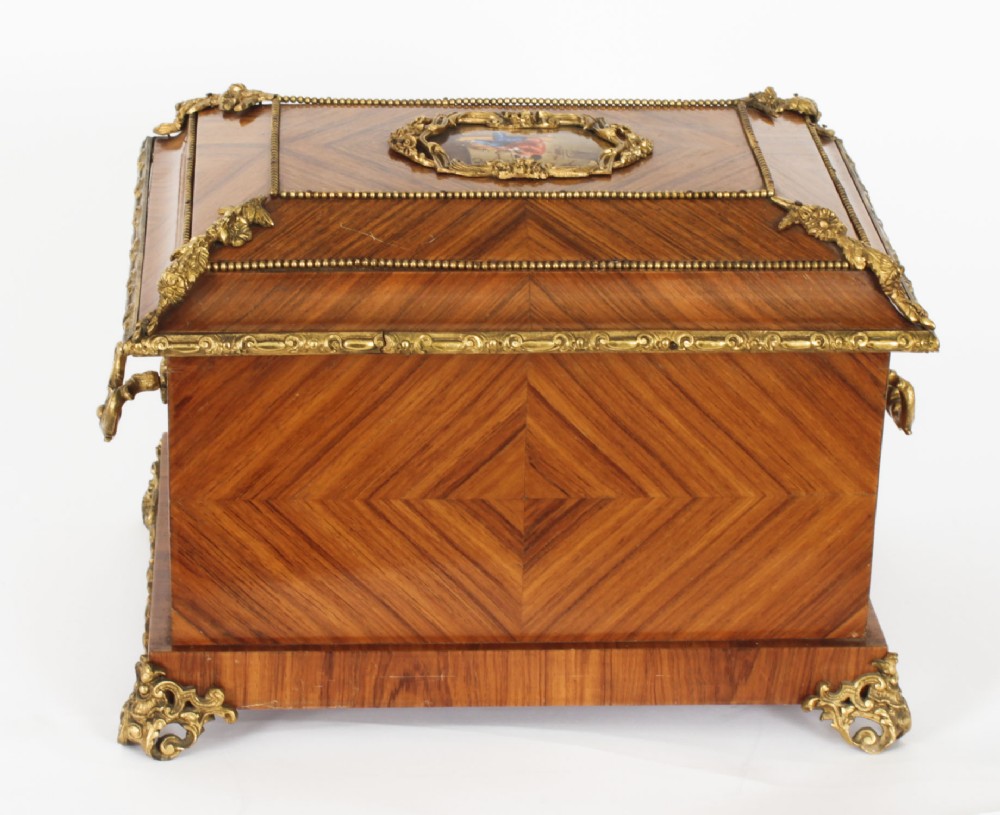
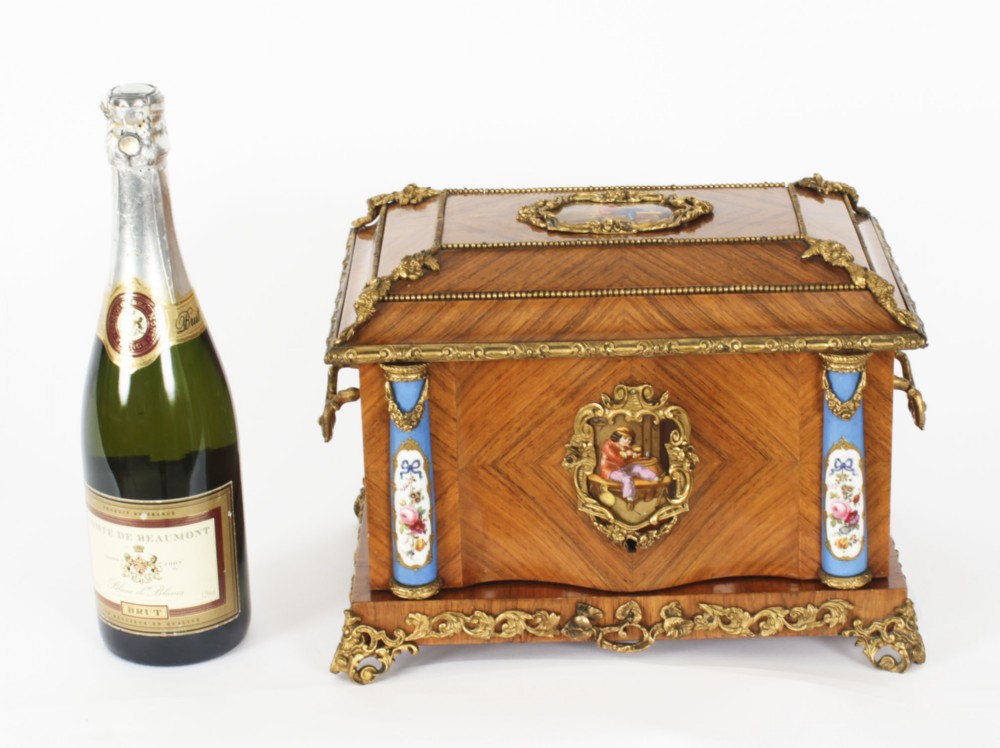
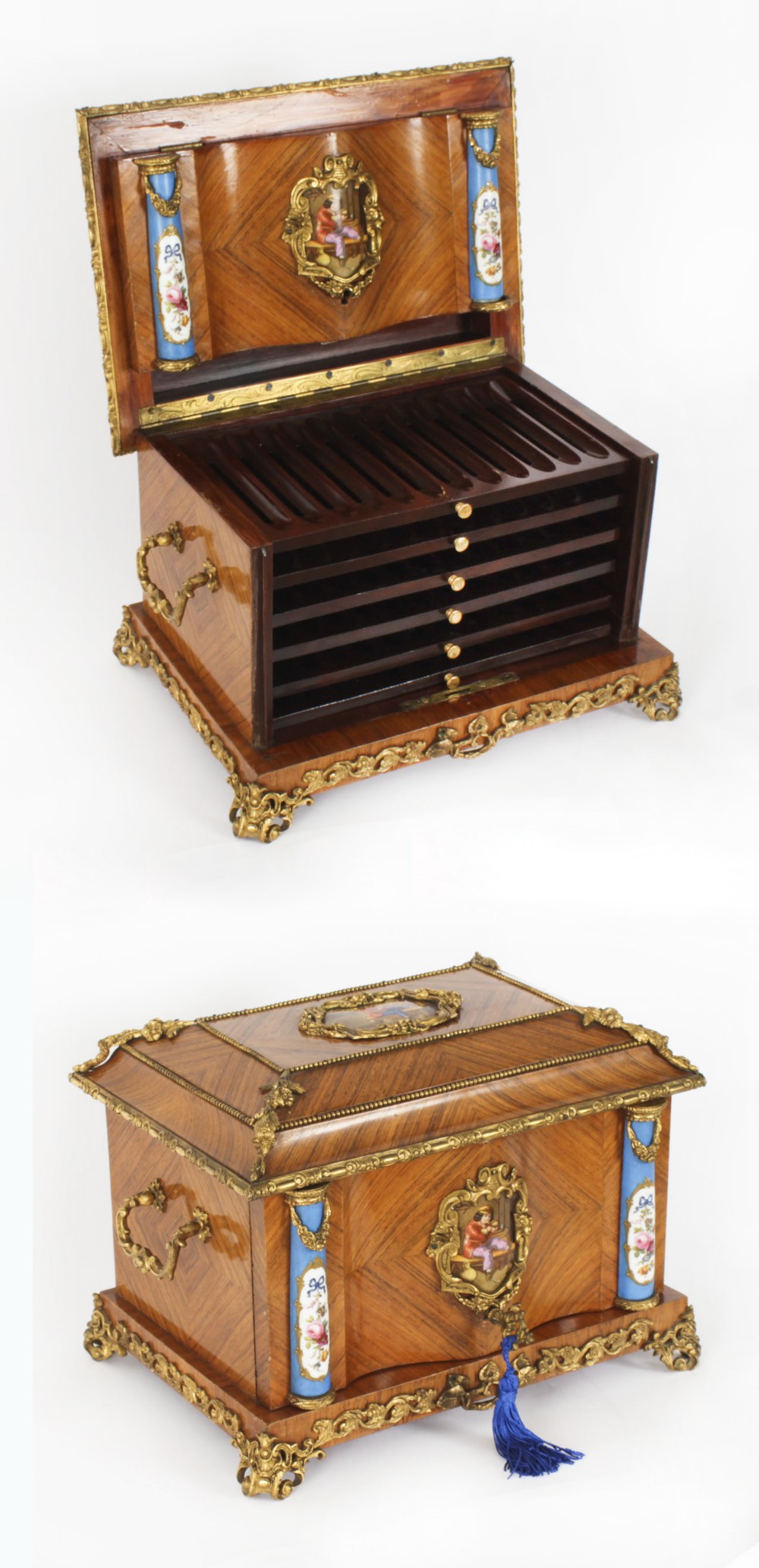
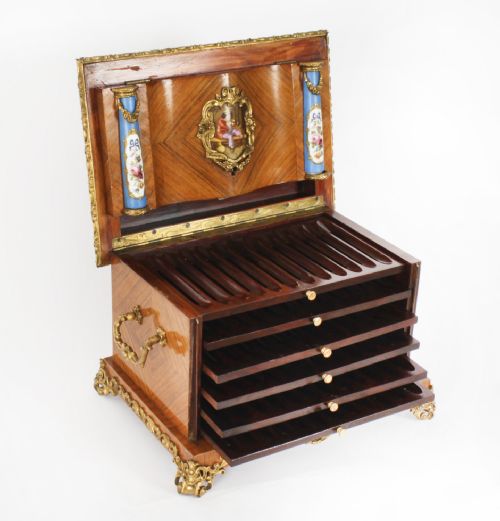
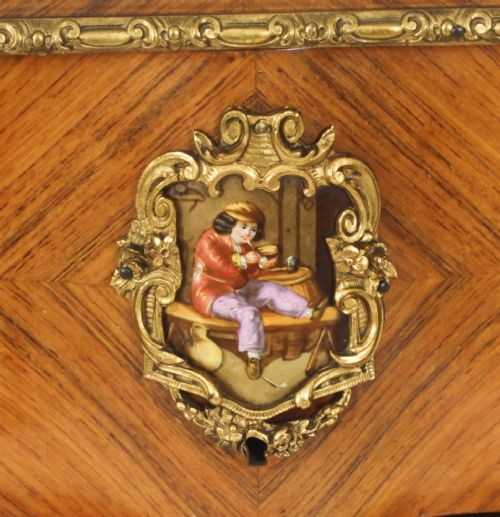
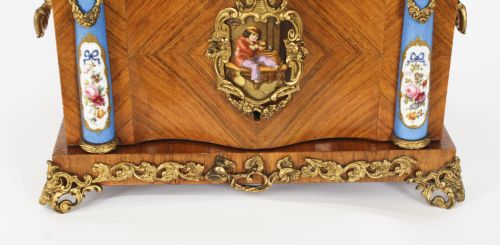
The top has an inset ormolu mounted hand painted Sevres porcelain cartouche depicting a boy smoking a pipe. The front with a similar cartouche above the escutcheon and key, flanked by tapering Sevres porcelain columns hand painted with ribbon tied floral bouquets. The lid opens to reveal a fitted interior with six drawers, each fitted for storing twelve cigars, the sides with foliate ormolu carrying handles and the whole on a plinth base raised on scrolling feet.
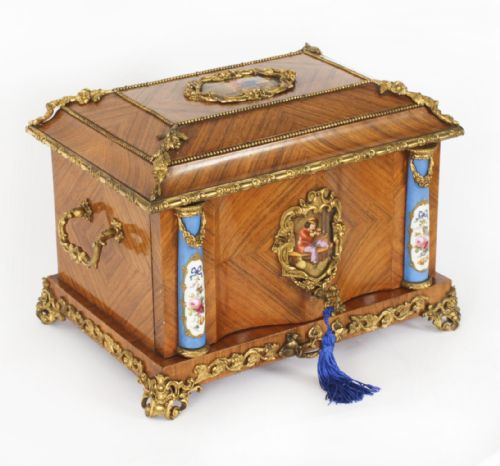
Complete with the original working lock and key.
This humidor has a very stylish and timeless design which will please any connoisseur of cigars.
Condition:
In excellent condition, having been cleaned and waxed in our workshops, please see photos for confirmation of condition.
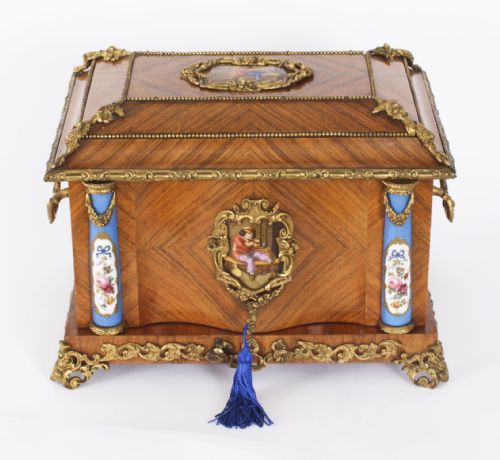
Dimensions in cm:
Height 24 cm x Width 32 cm x Depth 23 cm
Dimensions in inches:
Height 9 inches x Width 1 foot, 1 inch x Depth 9 inches
Humidor is any kind of box or room with constant humidity that is used to store cigars, cigarettes, orpipe tobacco. For private use, small wooden or acrylic glass humidor boxes for a few dozen cigars are used, while cigar shops may have walk-in humidors.
Humidors can be used to store other goods for which a certain level of humidity is desirable; the Colorado Rockies Major League Baseball team stores game balls in a large humidor at their home stadium, Coors Field, to counteract the effects of Denver's high altitude and generally low humidity. Humidors of all sizes use hygrometers to keep track of the humidity levels.
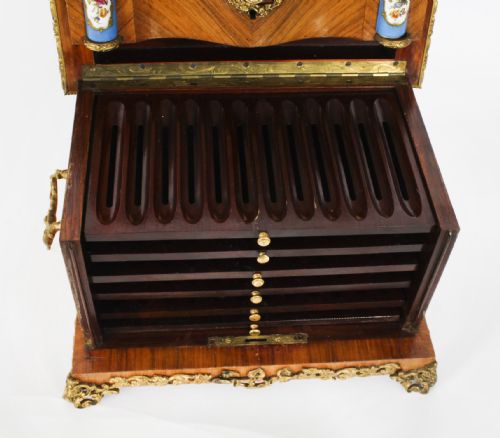
Table humidor - often quite heavy, though portable in theory, it's usually kept in one location. Capacity ranges from three hundred to a few thousand cigars. It usually comes with a polished wood exterior, marble, leather or combination of exotic elements, and glass top.
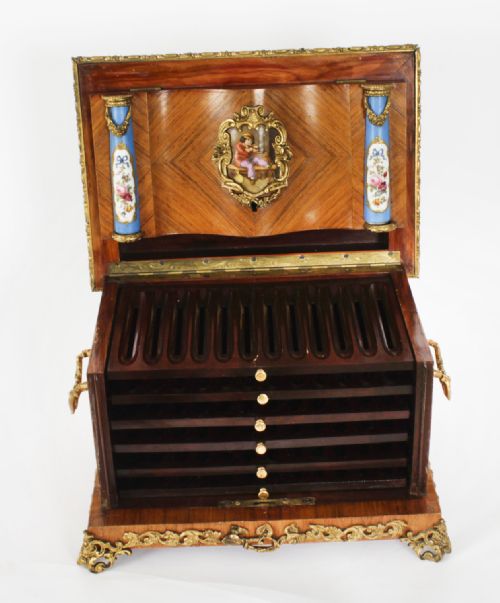
The wood is very dense and hard and can be brought to a spectacular finish. it turns well but due to its density and hardness can be difficult to work with hand tools. It also has a tendency to blunt the tools due to its abrasive properties.
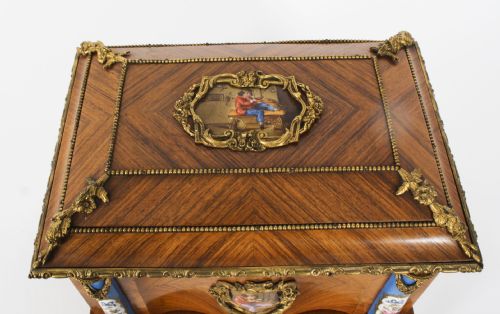
Ormolu - Gilt Bronze (from French 'or moulu', signifying ground or pounded gold) is an 18th-century English term for applying finely ground, high-carat gold in a mercury amalgam to an object of bronze.The mercury is driven off in a kiln leaving behind a gold-coloured veneer known as 'gilt bronze'.
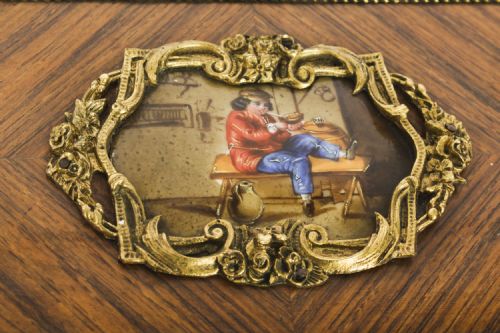
The manufacture of true ormolu employs a process known as mercury-gilding or fire-gilding, in which a solution of nitrate of mercury is applied to a piece of copper, brass, or bronze, followed by the application of an amalgam of gold and mercury. The item was then exposed to extreme heat until the mercury burned off and the gold remained, adhered to the metal object.
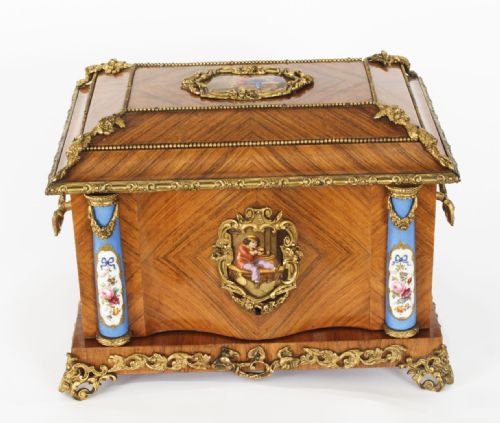
Sevres Porcelain
traces its roots in France to early craftsmen who had small manufacturing operations in such places as Lille, Rouen. St. Cloud, and most notably Chantilly. It is from Chantilly that a cadre of workers migrated to the Chateau de Vincennes near Paris to form a larger porcelain manufactory in 1738.
French King Louis XV, perhaps inspired by his rumoured relationship with mistress Madame de Pompadour, took an intense interest in porcelain and moved the operation in 1756 to even larger quarters in the Paris suburb of Sevres. Sevres was also conveniently near the home of Madame de Pompadour and the King's own Palace at Versailles.
From the outset the king's clear aim was to produce Sevres Porcelain that surpassed the established Saxony works of Meissen and Dresden. Though the French lacked an ample supply of kaolin, a required ingredient for hard-
Regent Antiques has dated this piece to the 1870s.
We specialise in english and continental furniture, silver, porcelain and decorative items.
You can view the stock and full dealer information on the Regent Antiques Profile Page
Regent Antiques is a registered member of LAPADA CINOA

Antique French Wood Sevres and Ormolu Mounted Cigar Humidor C.1870 19th C