William Robert Dickinson 1815 - 1887
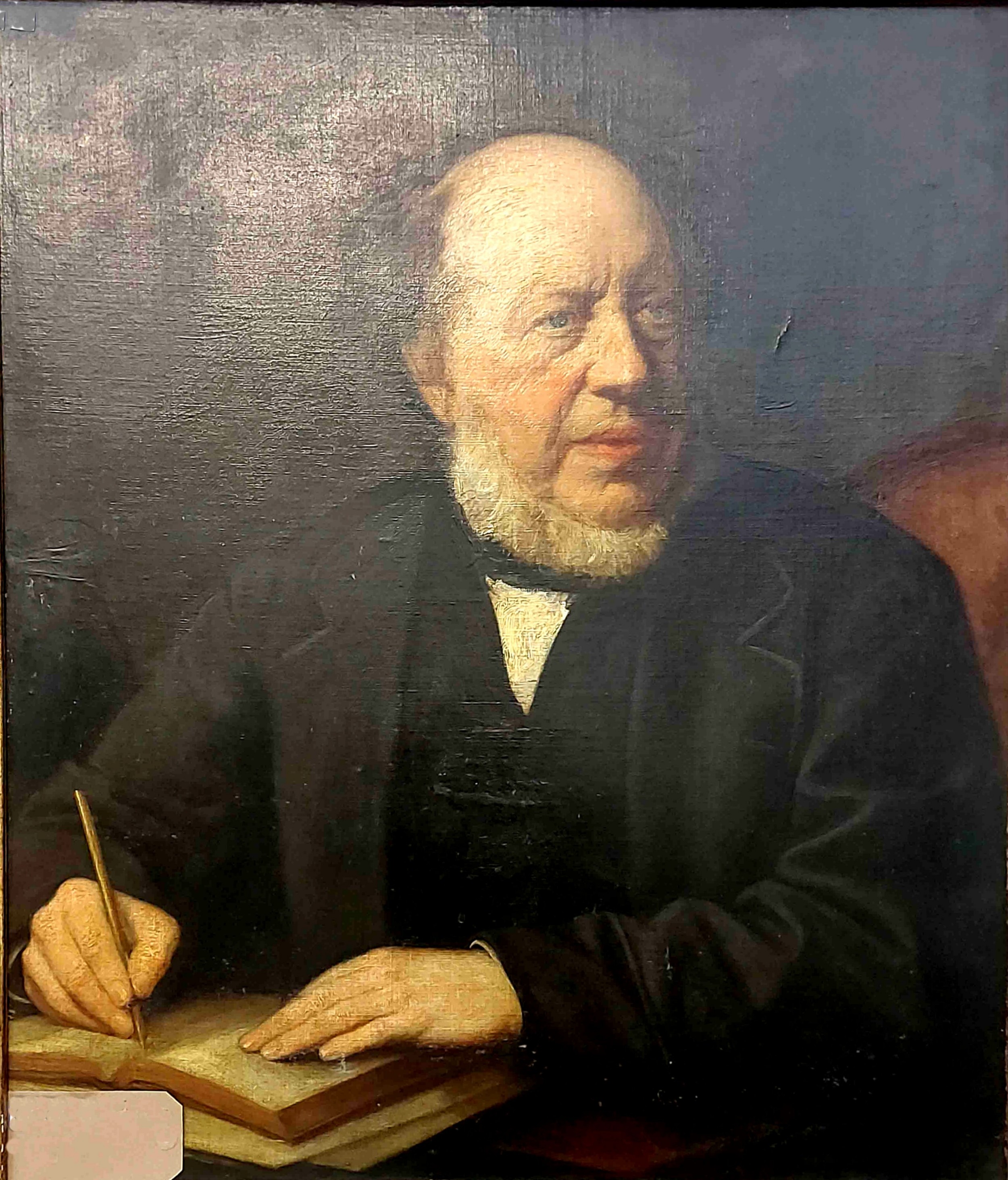
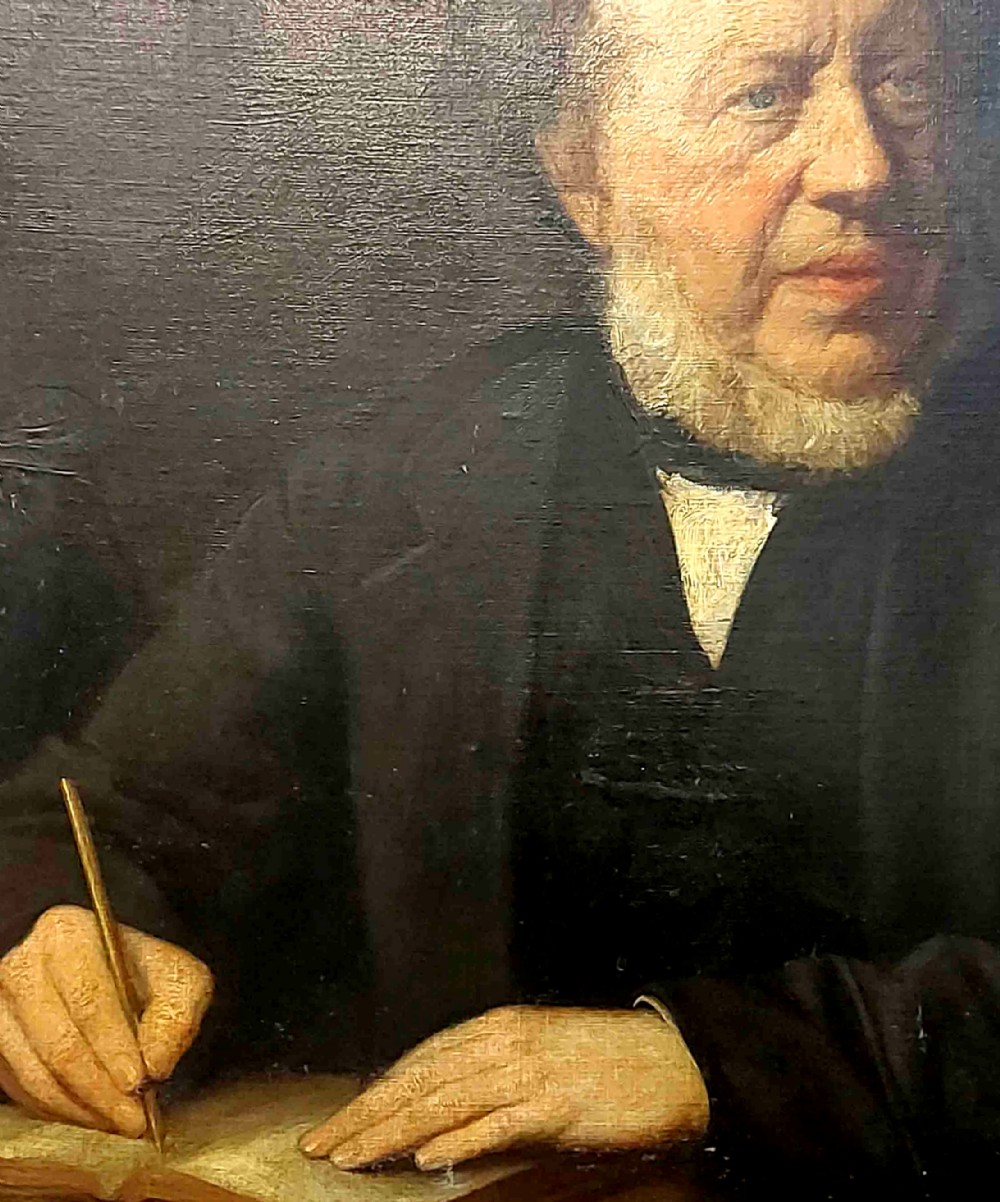
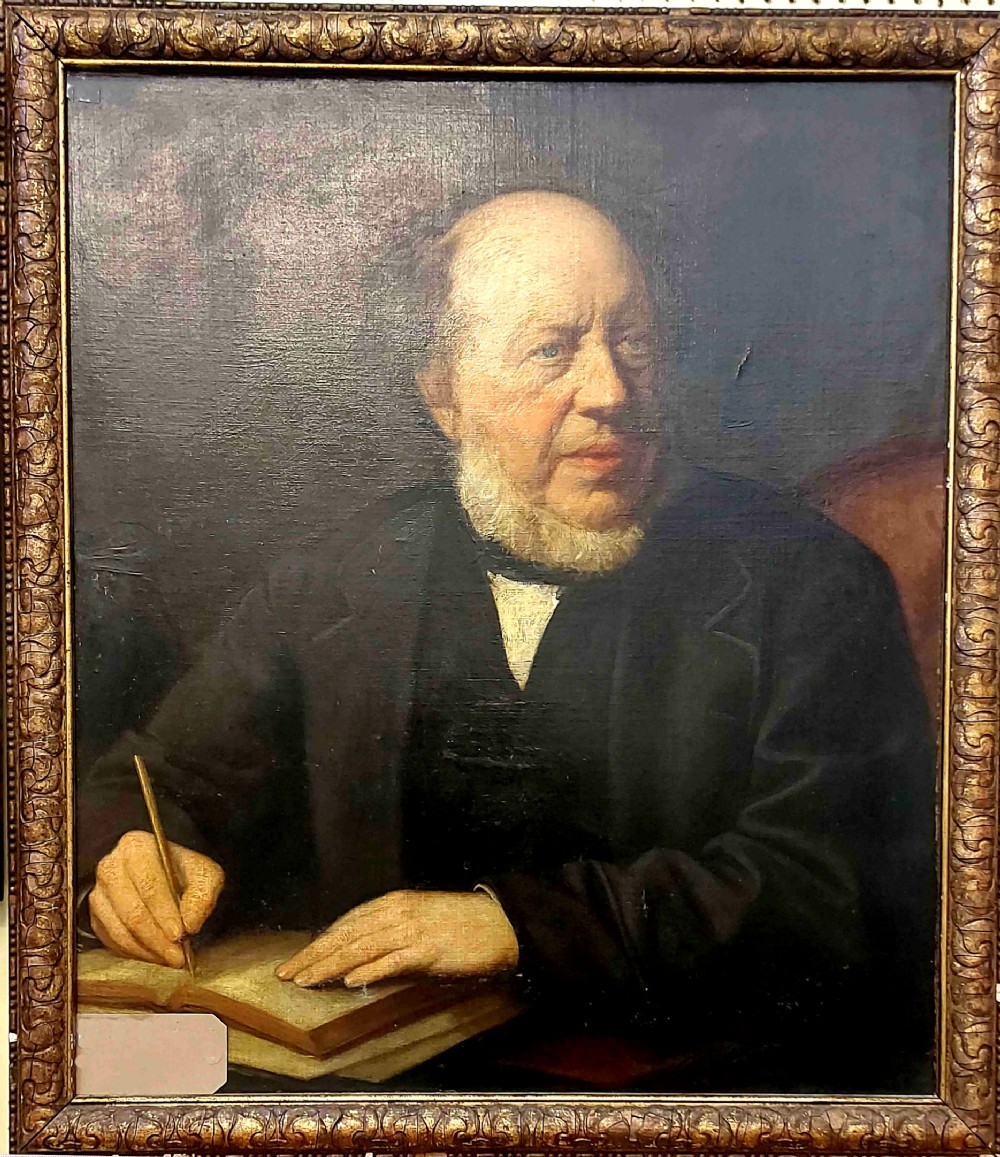
Portrait of Thomas Sopwith MA, CE, FRS, 1803 – 1879 Geologist & Mining Engineer
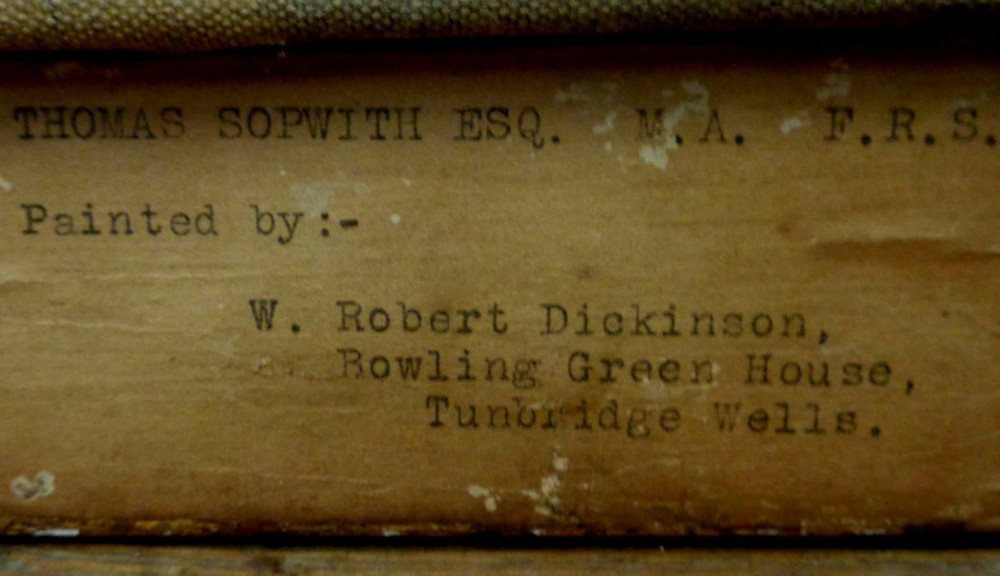
label on the reverse '' THOMAS SOPWITH M.A. F.R.S / painted by :- W Robert Dickinson Bowling Green House Tunbridge Wells''
oil on canvas
30 x 25 in.
Thomas Sopwith.
Thomas Sopwith FRS (3 January 1803 – 16 January 1879) was an English mining engineer, teacher of geology and local historian.
The son of Jacob Sopwith (1770–1829), by his wife Isabella, daughter of Matthew Lowes, Thomas was born at Newcastle-upon-Tyne. His father was a builder and cabinet-maker; Sopwith maintained links with the family furniture and joinery business throughout his life. Initially an illustrator of antiquities, he then took up land and mineral surveying, and subsequently described himself as a civil engineer. He invented, and the family firm manufactured, an ingenious type of desk with all its drawers secured by a single lock, the ''monocleid'', which won a prize at the 18
...51 Exhibition; an improved levelling stave; and wooden geological teaching models.
Mining engineer
Title page illustration, Chesterholme from Sopwith''s 1838 book on isometric drawing
In 1824 Sopwith completed an apprenticeship with his father, and took employment as a surveyor. He worked closely with Richard Grainger in the redevelopment of Newcastle Upon Tyne. He worked with Joseph Dickinson of Alston, Cumbria, on a survey of the lead mines in the area owned by Greenwich Hospital.[2] He later built up contacts in London, especially in the area of geology, where he became a fellow of the Geological Society (and its more exclusive Geological Club) in 1835, sponsored by John Phillips.
Sopwith advocated the collection of mine surveys; he was associated in a Northumbrian survey with William Smith, and he was instrumental, after the meeting of the British Association in 1838, in inducing the government to found the Mining Record Office. In the same year he made a mining survey in County Clare in Ireland.
From 1845, Sopwith was based in Allenheads, Northumberland, where he was agent for W.B. Lead Mines (the Blackett-Beaumont Company). He kept the position until his retirement in 1871.
Railway engineer
Richard Grainger''s 1836 plan of Newcastle created for his proposal for a central Newcastle railway station by Thomas Sopwith
Sopwith became a railway surveyor, working on commissions. This included being commissioned to work on a central Newcastle station project with Richard Grainger (see plan right). He became involved with George Stephenson and Sir William Cubitt creating the French railway network.
In 1843 he was employed on the development of railways in Belgium. For the Sambre-Meuse line he did preliminary surveys, and then accompanied George Stephenson, by then retired, on an inspection visit. The result was that the Belgian de Grandvoir constructed the line, supervised by Robert Stephenson. Sopwith had called attention to the scientific importance of recording the geological features exposed in the cuttings of railways; and the British Association, at his initiative, made a grant in 1840 for the purpose.
Teaching models
Sopwith was an early user of 3-dimensional models both for practical illustration of regional geology (Forest of Dean; Ebbw Vale; Nentsberry) and for teaching, for which he produced sets (as recommended by Charles Lyell in his 1841 Elements of Geology). He also took advice from William Buckland about what structures would be useful. Different coloured woods represented the different types of rock.
Sopwith married three times: first, Mary Dickenson in 1828, who died in 1829; secondly, Jane Scott in 1831, who died in 1855; and thirdly, Anne Potter in 1858.
Among his eight children were:
Jacob Sopwith, who died at the age of 19 after travelling to India with the Army under a false name.
Ursula Sopwith, who
Internal Reference: 5104
Antique ID Number (AIDN): SA1095650
Dateline of this antique is 19th Century
Height is 76cm (29.9inches)Width is 64cm (25.2inches)Depth is 2cm (0.8inches)





Thank you.
Your comment has been sent to Sellingantiques.