7,063  PAGES BROWSED TODAY PAGES TODAY 0  ANTIQUES UPLOADED TODAY NEW ARRIVALS
ID #SA1094216
SOLD
Email
Save
Antique Hand Painted Satsuma Koro, Kintozan Style , C. Meiji Period
Gillers Antiques Ltd
sold SA1094216
Sorry, but this item has been sold.
Gillers Antiques Ltd

Gillers Antiques Ltd

Sellingantiques Verified Since Mar 2023
View Dealers Stock Page
Id #SA1094216
PDF SHARE
SAVE

Antique Hand Painted Satsuma Koro, Kintozan Style , C. Meiji Period

19th century
Description

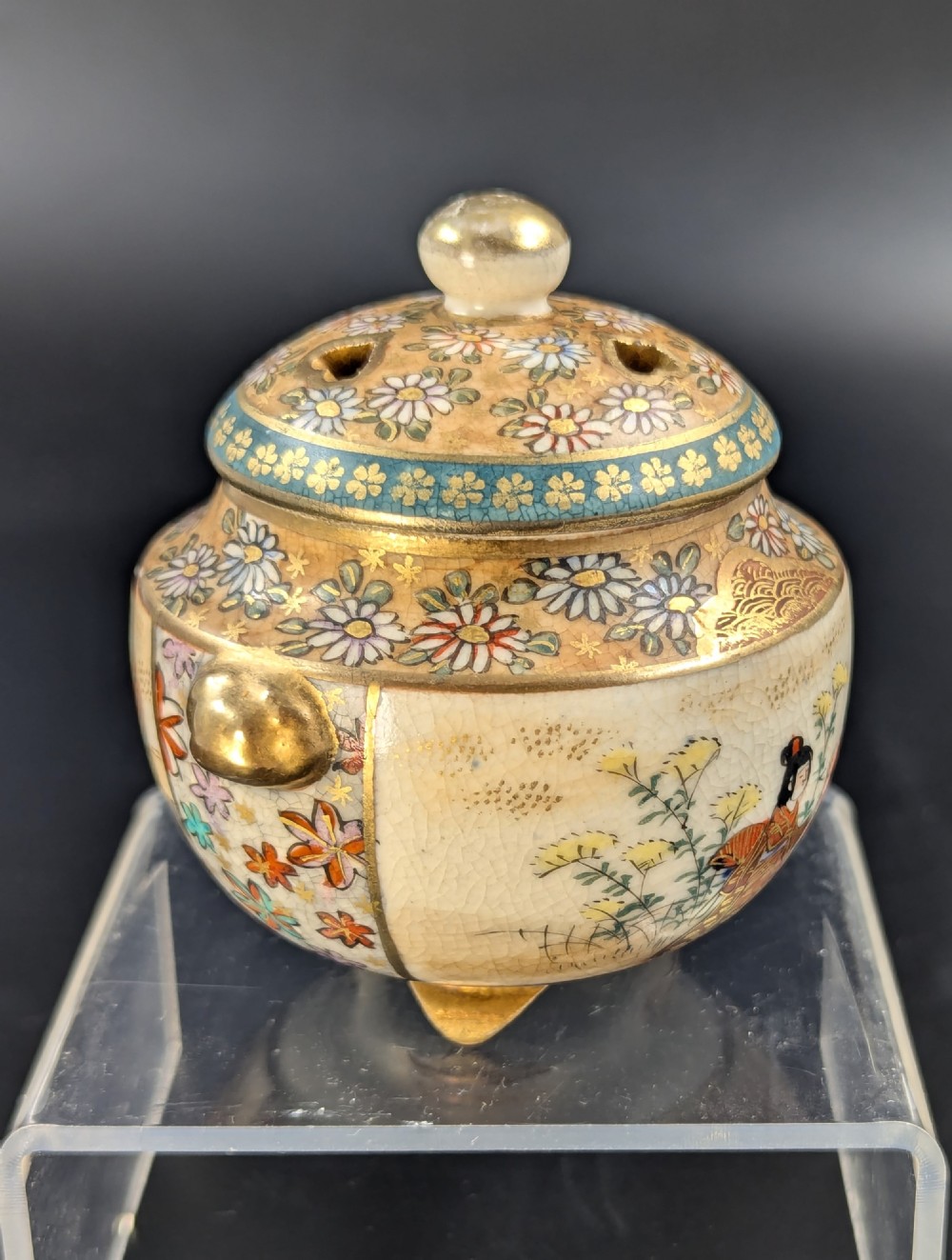
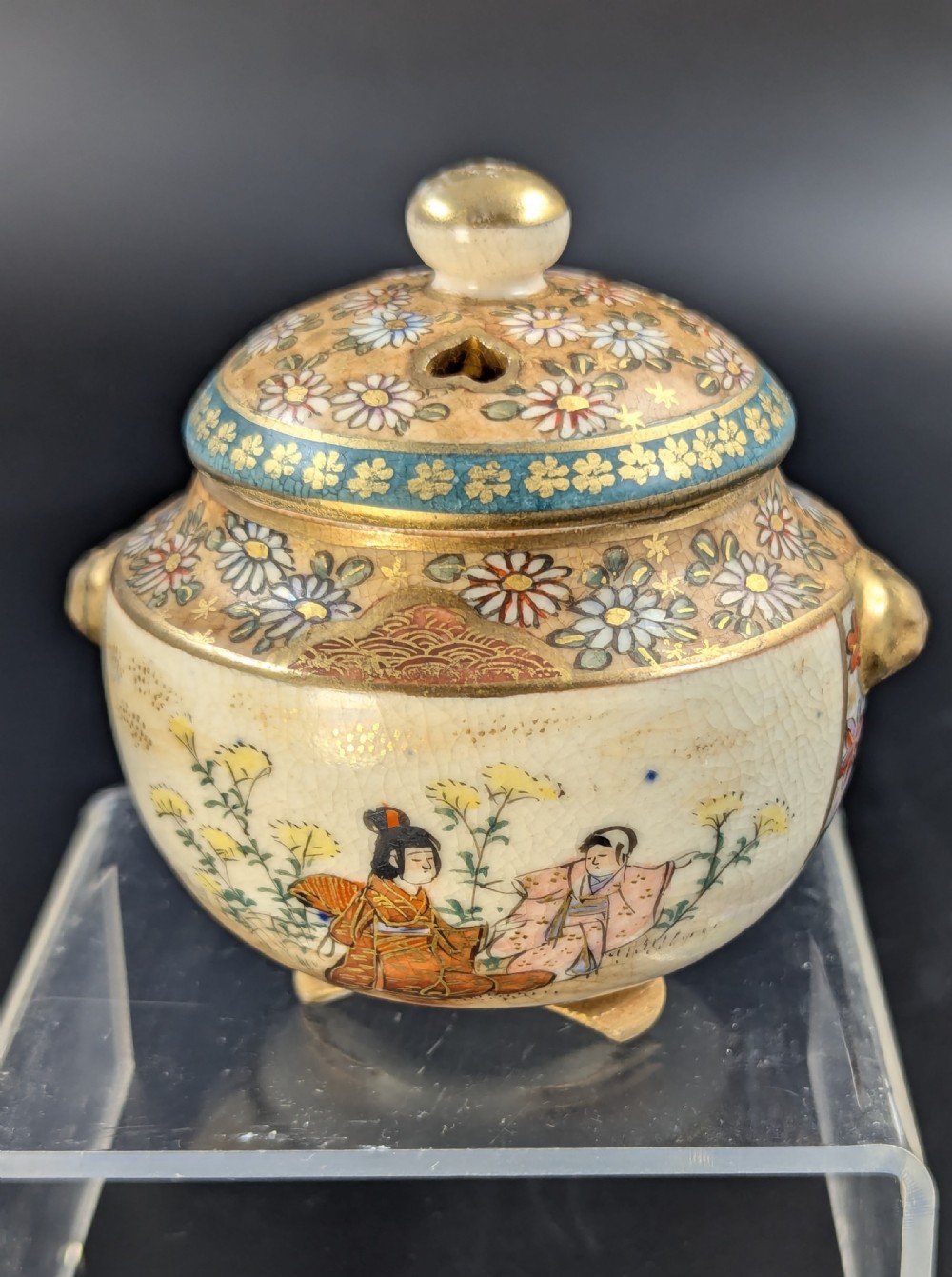
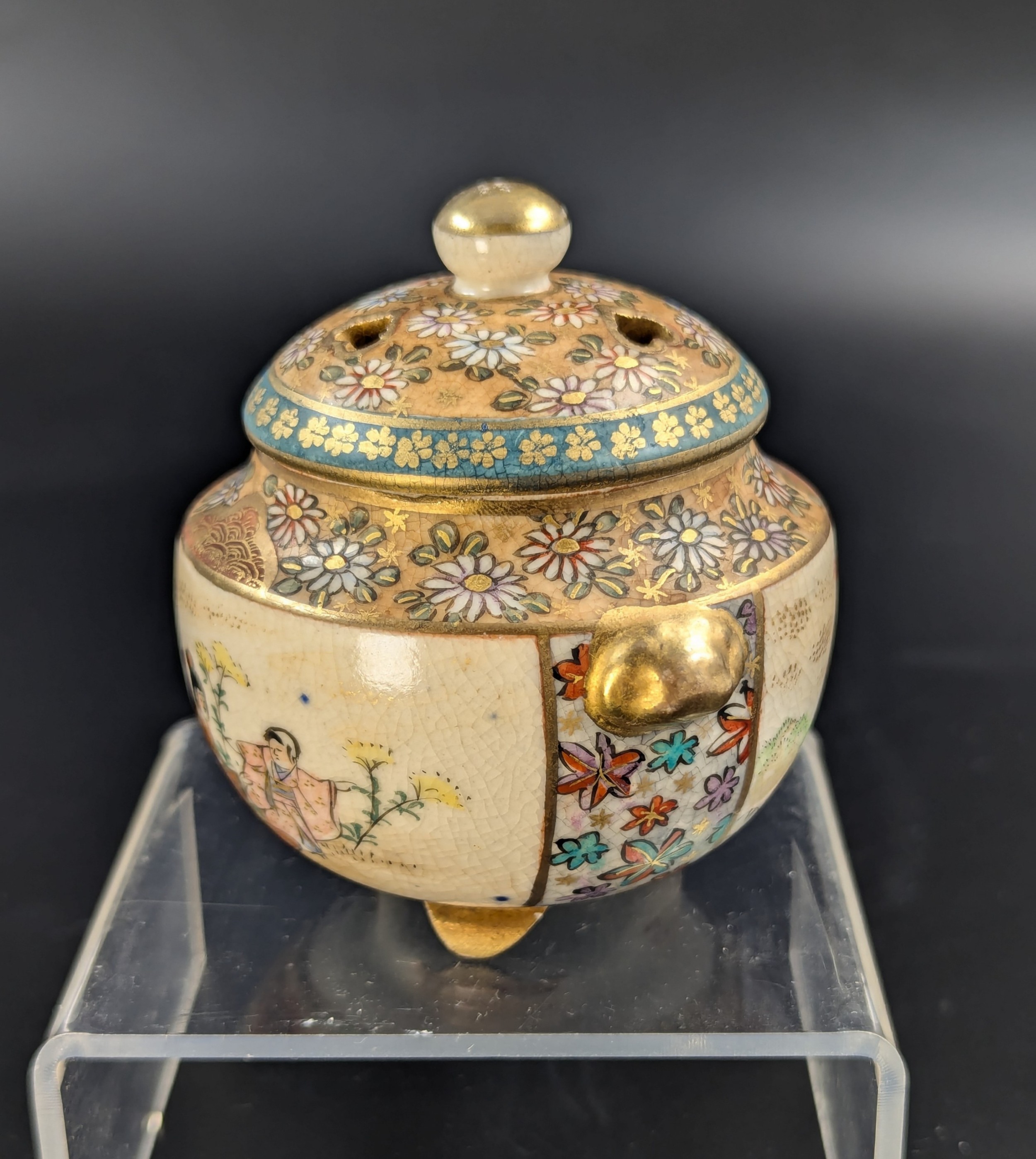
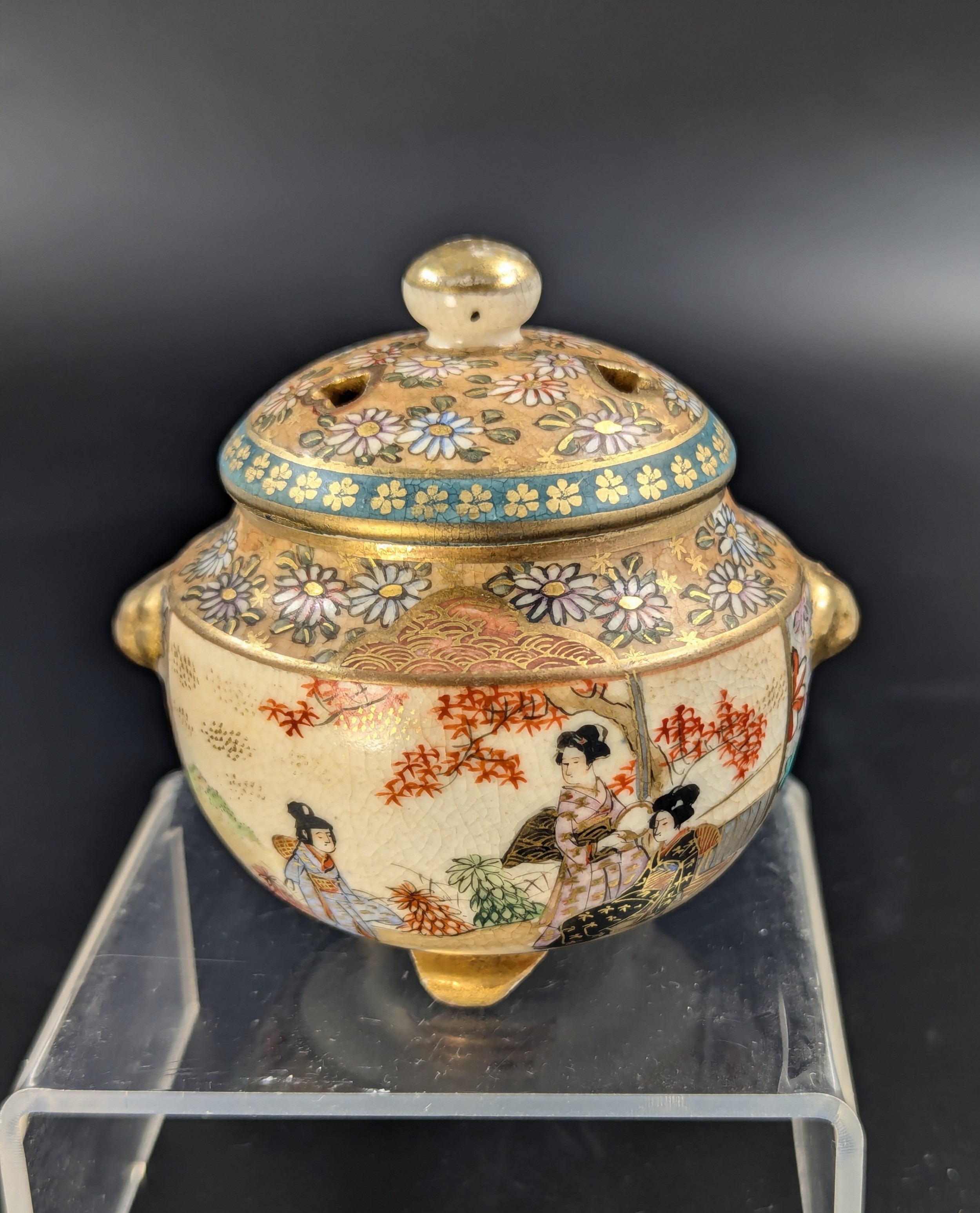
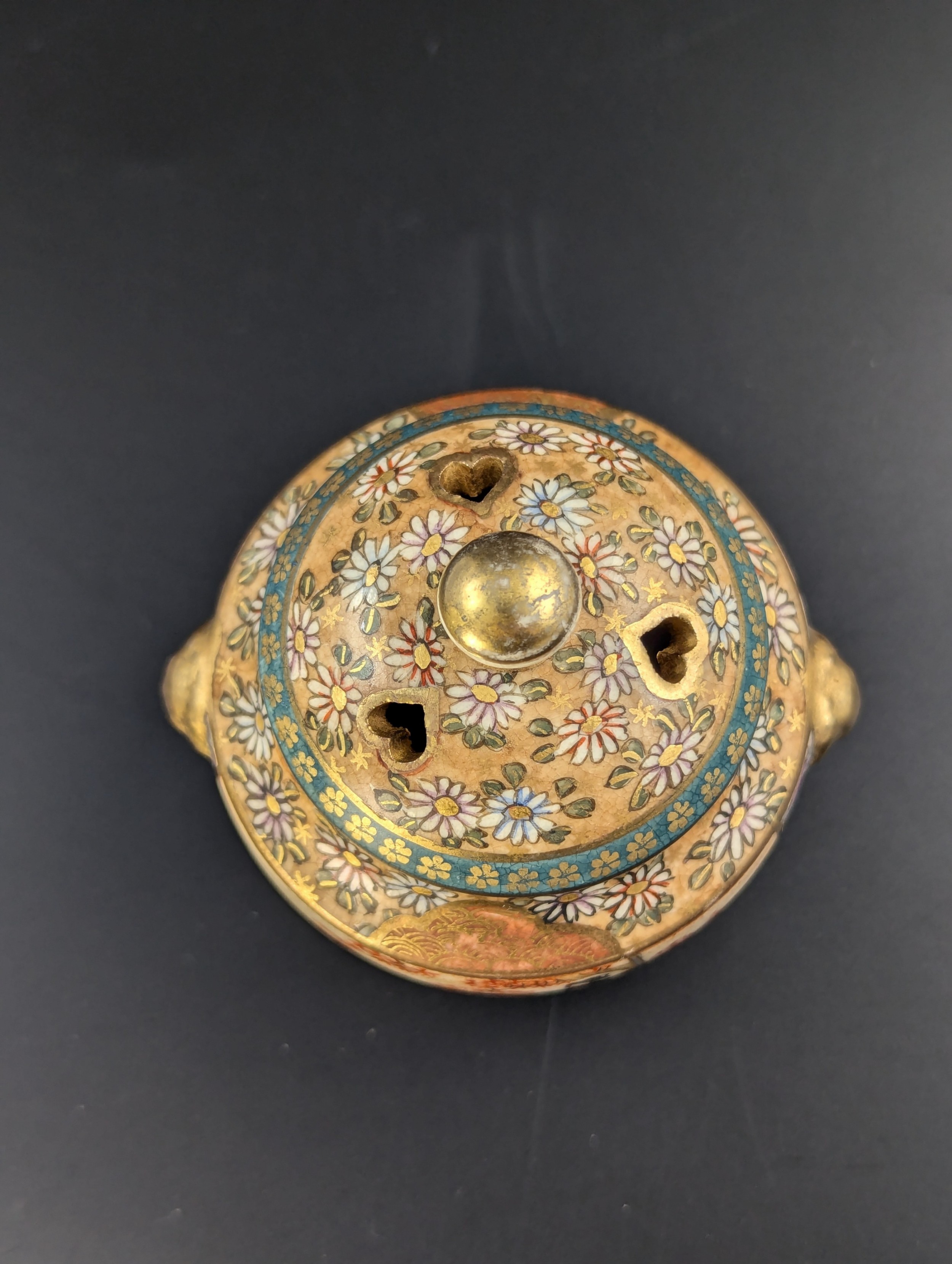
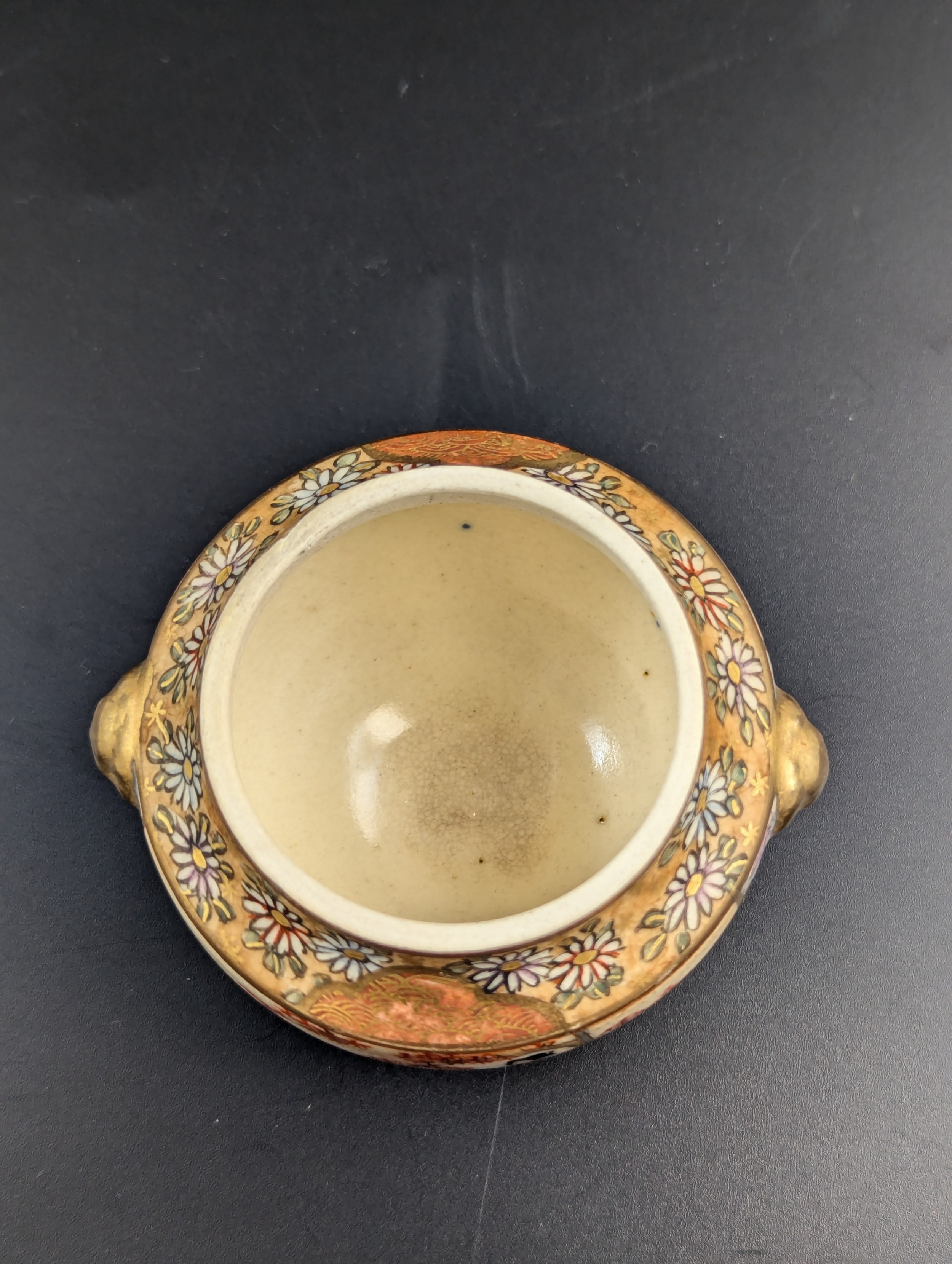
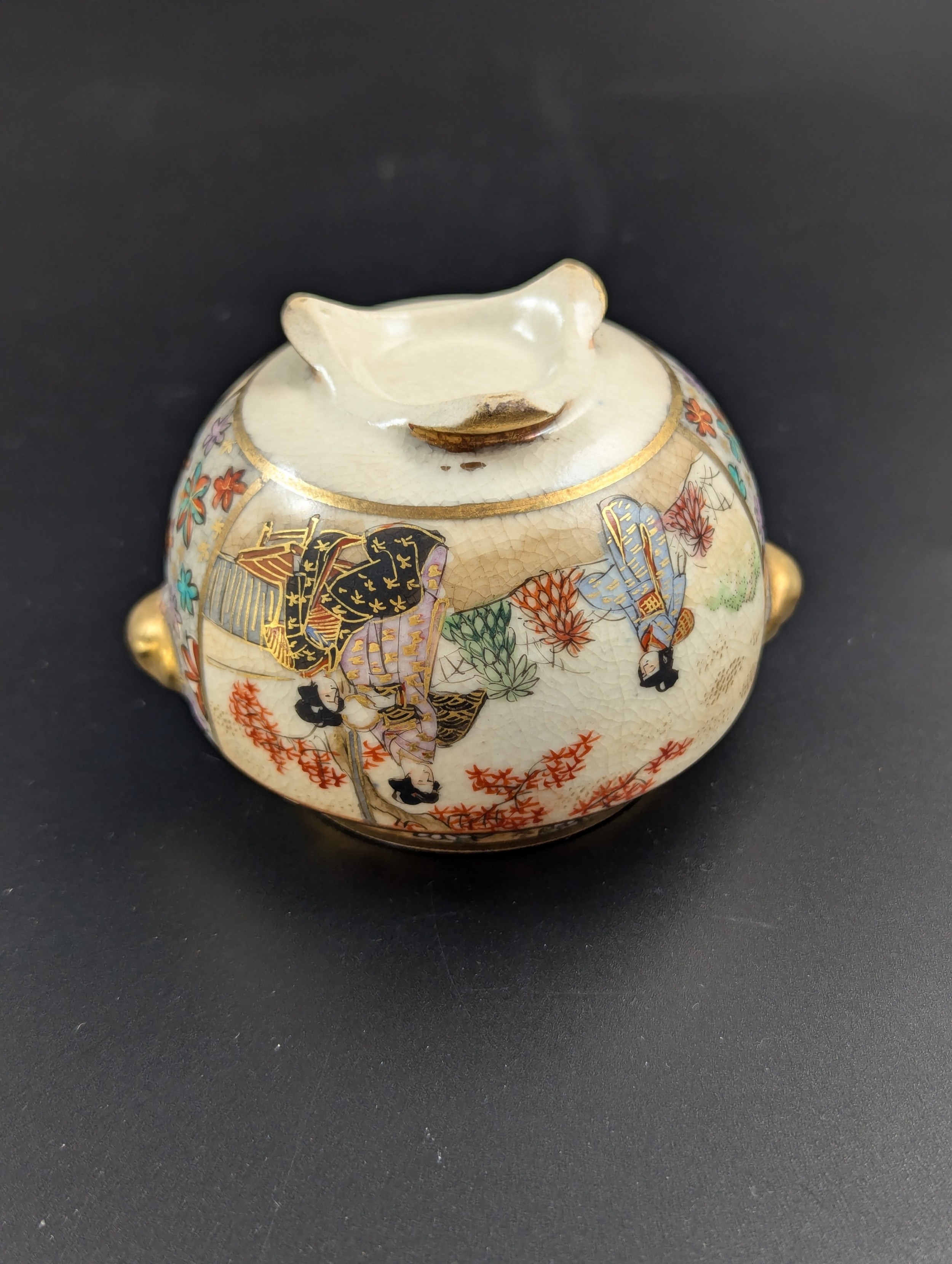
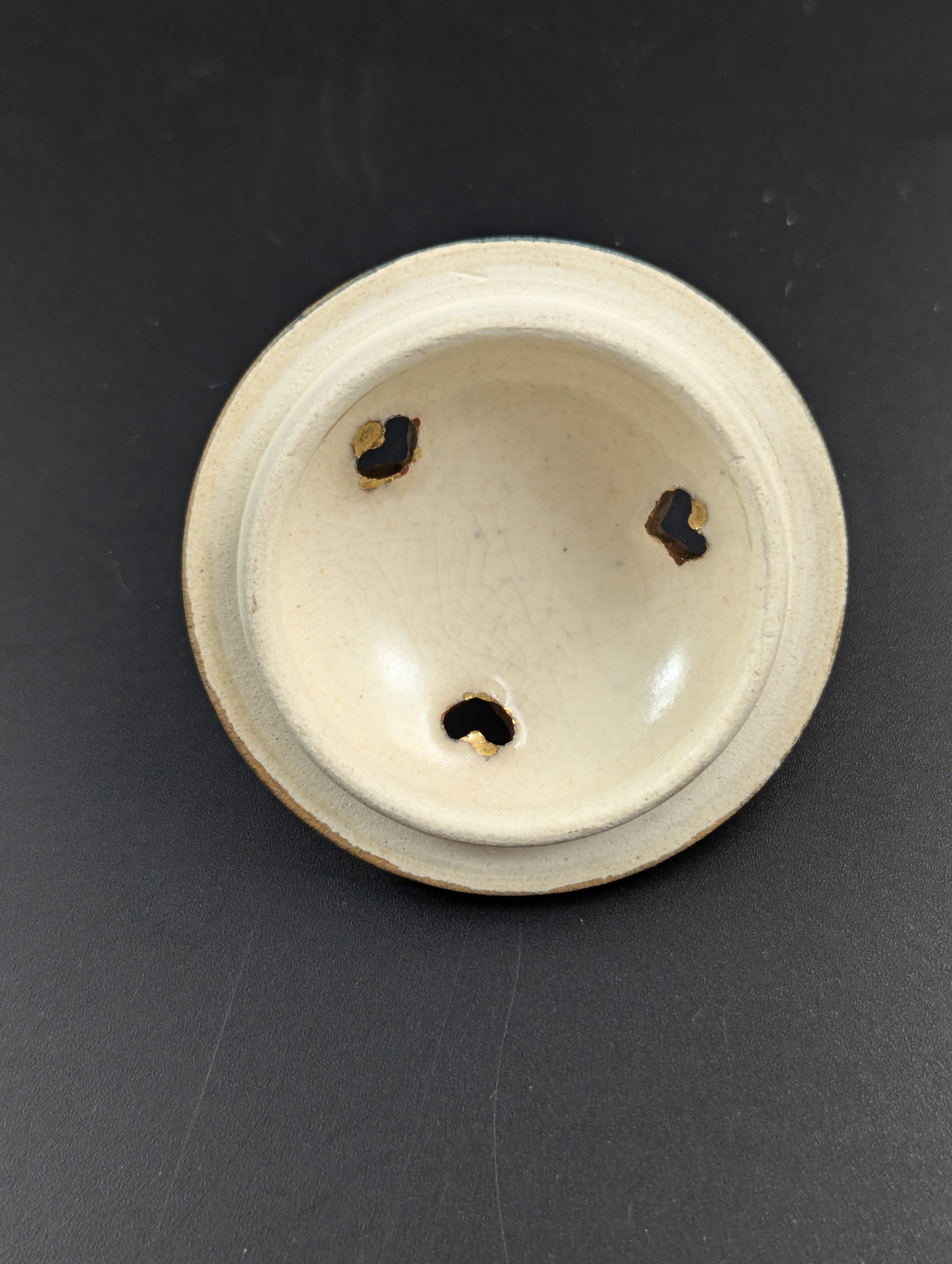
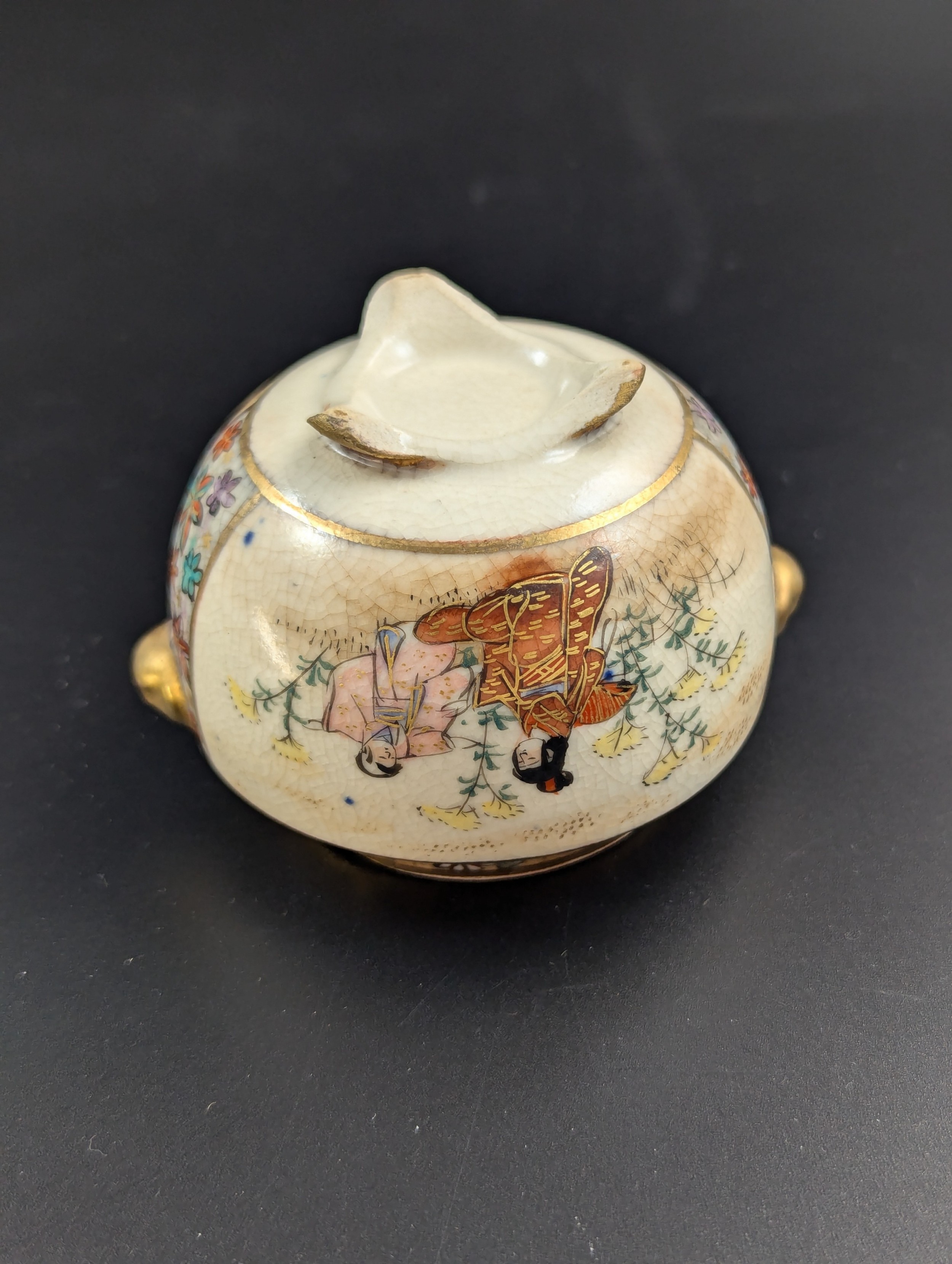
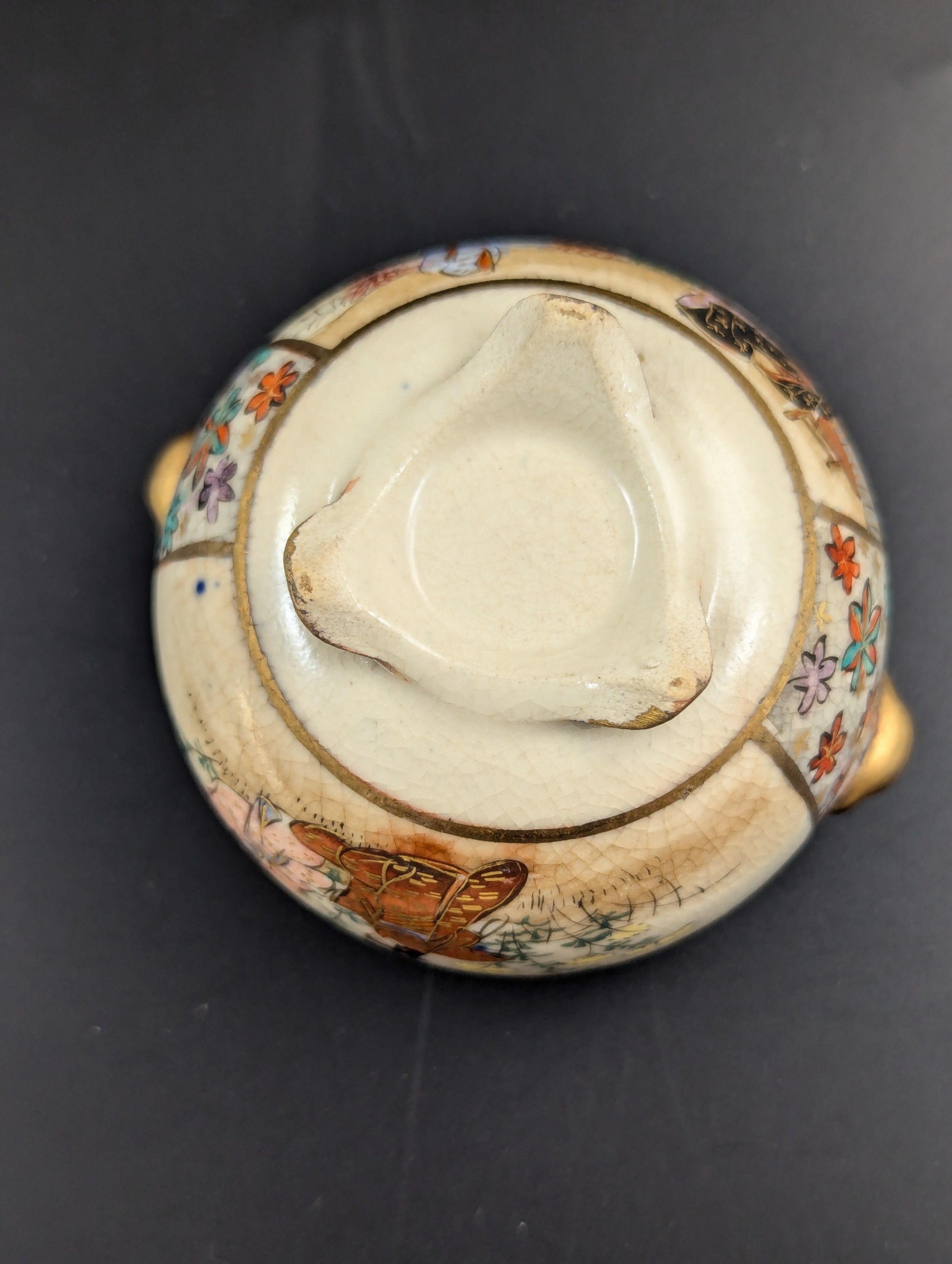
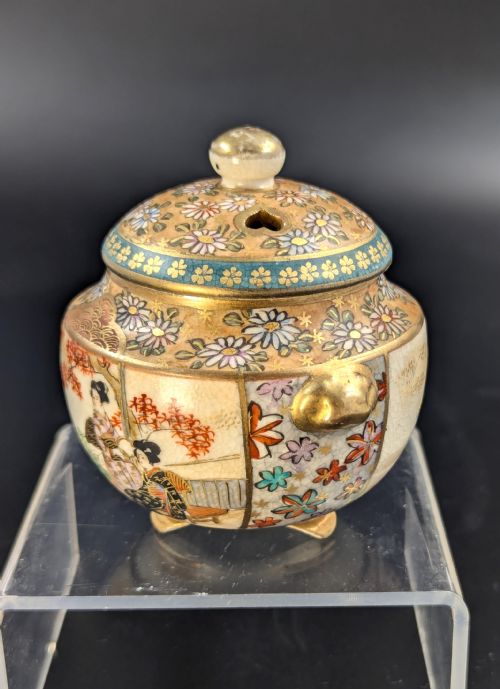
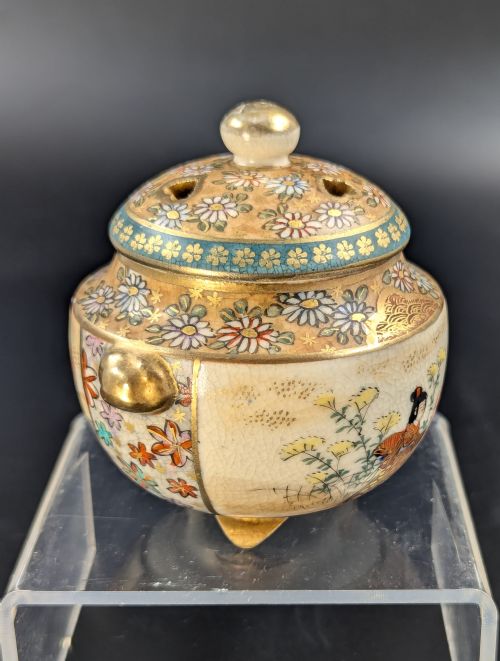
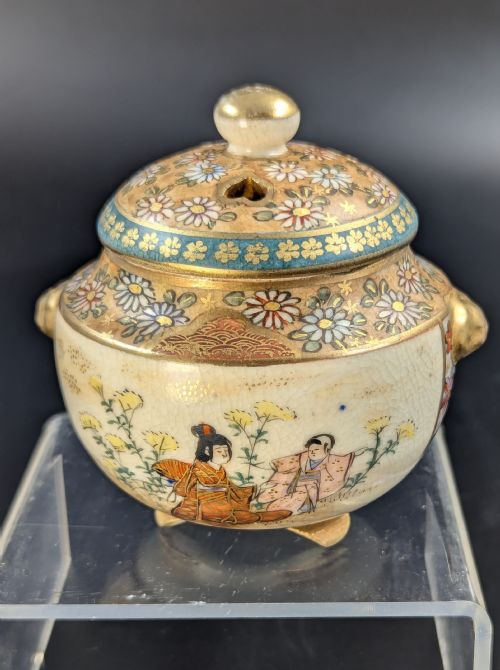
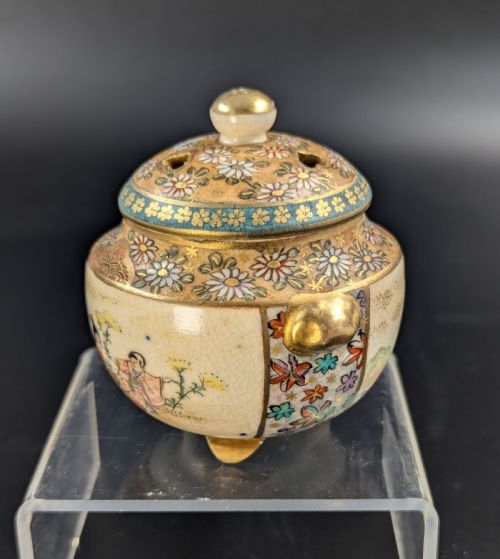
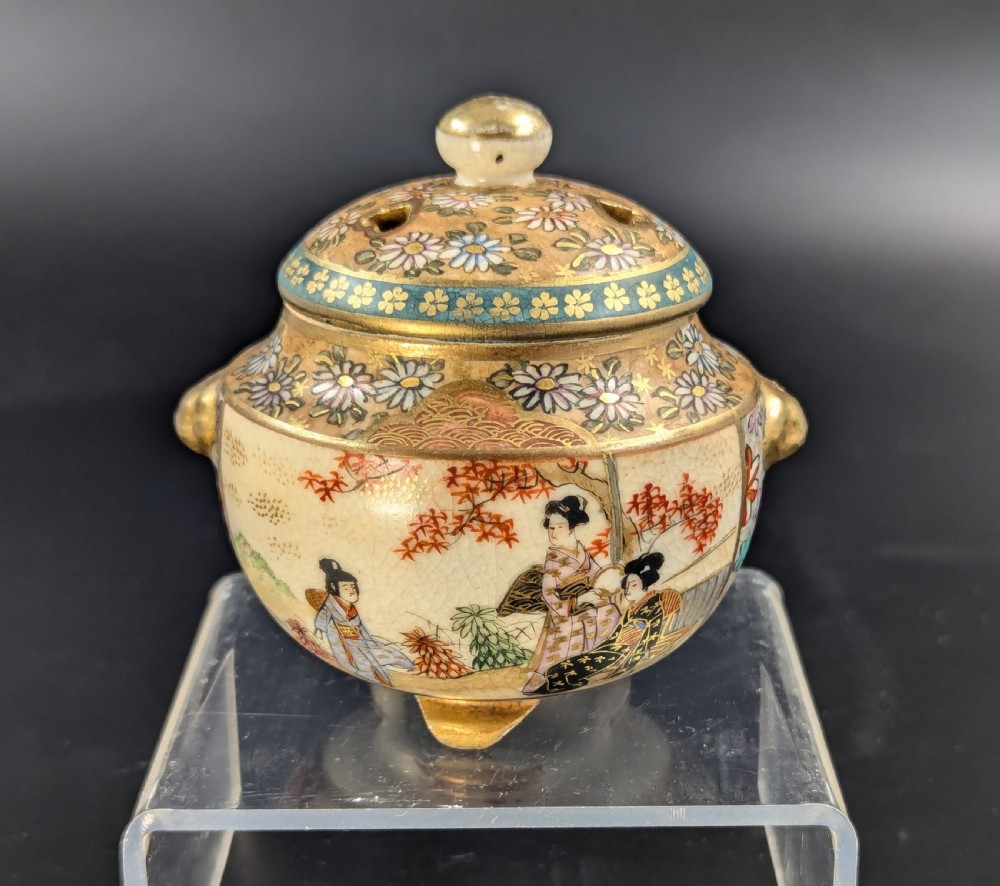
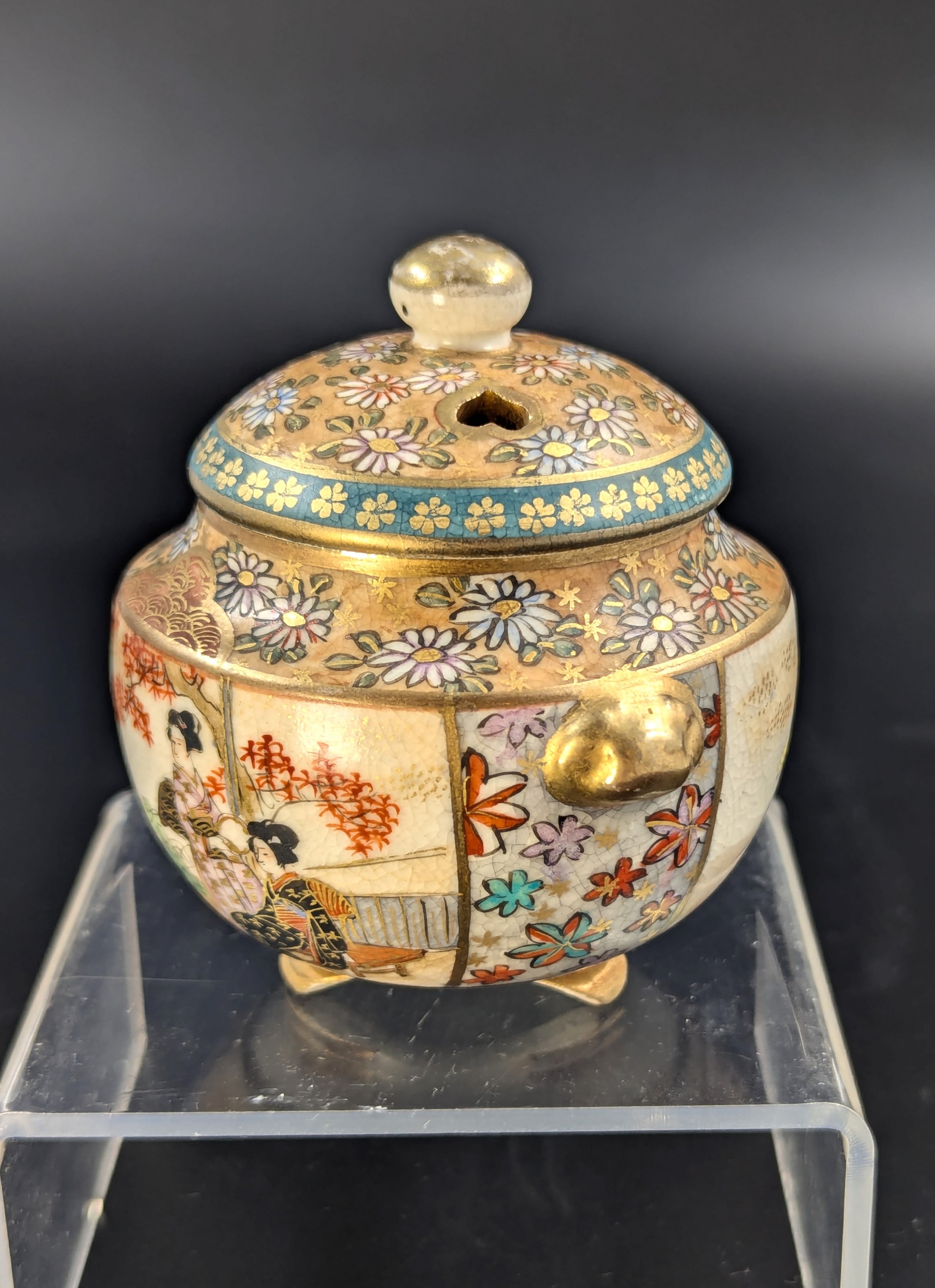
Antique earthenware hand painted Satsuma Lidded Koro with decorations made in Kinkozan style end of 19th century. This incense burner raised on three pointed feet, with domed cover with spherical gilded finial, above a globular body, decorated with frieze of woman’s figures in scenes of daily life. The piece, artfully decorated by floral patterns in muted colors with gilded handles and feet. The bottom, top edges and the lid are gilded all round. It is typical of intricately decorated Satsuma ware made at kilns in Kyoto during the Meiji period (1868-1912). Although the shape and function of the piece are suited to the Japanese tea ceremony, the use of bright colors and gold made Satsuma ware very popular in the European and American markets. The painting technique employed is called Kyo-Satsuma style and although it's not signed on the bottom, the style is very similar to Kintozan's work. Therefore, we believe that it was made at the Kinkozan factory.
The painting technique used in Kyoto’s Satsuma-style ware was developed by Kinkozan family.Sobei IV Kinkozan Sobei lV Kyoto’s Satsuma-style (1824–1884), was the sixth generation of a family of Kyoto Awataguchi potters with the name Koboyashi. In the 18th century the third Koboyashi was granted by the Shogun to bear the name Kinkozan. Sobei IV was appointed as the official potter for the Tokugawa shogunate and his kiln flourished in those years. But as a result of the Meiji restoration, he lost important clients such as the shogun, daimyo and other nobles who lost their former position or moved to the new capital Edo. To find new customers, he established trade relationships with foreign exporters who lived in Kobe and invested in refining the painting method for pottery and decoration, which ultimately resulted in "Kyo-Satsuma" ware, characterized by delicate, sometimes breathtaking detailed brushwork in multicolored glazes and gold on a crackled ivory white earthenware body.
After the death of Kinkozan Sobei IV, the studio was passed on to his son Kinkozan Sobei V (1868-1927), who further developed the Kyo Satsuma techniques and succeeded in becoming the largest producer of Satsuma ware of that time but also a producer of some of the best quality Satsuma items.
At the 1893 Colombian exhibition in Chicago, Kinkozan Sobei V, was impressed by the new techniques and stylish innovations on Western ceramics. He decided to invest in research and experiments, hired Western scientists to set up new techniques and experiments with materials and employed some of the best artists for new designs and decorations, influenced by the Art Nouveau and later Art Deco movement.
He experimented with monochromes and other new types of decoration on both porcelain and earthenware, and tried out all possible styles, from large palace vases suitable for the old Victorian houses, to miniature items, real gems of only 6 cm high. Some of his best objects were made in the late Meiji and Taisho period. A very high quality object can sometimes take months to realize, and for most of the kilns, studio’s or factories this was no longer a realistic option in a market that was subject to the changing taste of customers and strong competition from hundreds of smaller and larger factories and studios.. The Kinkozan studio closed in 1932 (after the death of Kinkozan VII in 1927).

Dimensions: height 8cm, width 8cm, depth 7 cm.

Condition: minimal loss of enamel on the bases of the legs, where it was in contact with the surface a

Declaration

Gillers Antiques Ltd has dated this piece to the 19th Century.

Reference Numbers
Sellingantiques Reference
SA1094216
Description
Antique earthenware hand painted Satsuma Lidded Koro with decorations made in Kinkozan style end of 19th century.
This incense burner raised on three pointed feet, with domed cover with spherical gilded finial, above a globular body, decorated with frieze of woman’s figures in scenes of daily life.
Gillers Antiques Ltd

The piece, artfully decorated by floral patterns in muted colors with gilded handles and feet. The bottom, top edges and the lid are gilded all round. It is typical of intricately decorated Satsuma ware made at kilns in Kyoto during the Meiji period (1868-1912). Although the shape and function of the piece are suited to the Japanese tea ceremony, the use of bright colors and gold made Satsuma ware very popular in the European and American markets. The painting technique employed is called Kyo-Satsuma style and although it's not signed on the bottom, the style is very similar to Kintozan's work. Therefore, we believe that it was made at the Kinkozan factory.

fig 1. Antique Hand Painted Satsuma Koro, Kintozan Style , c. Meiji Period
fig 1. Antique Hand Painted Satsuma Koro, Kintozan Style , C. Meiji Period

The painting technique used in Kyoto’s Satsuma-style ware was developed by Kinkozan family.Sobei IV Kinkozan Sobei lV Kyoto’s Satsuma-style (1824–1884), was the sixth generation of a family of Kyoto Awataguchi potters with the name Koboyashi. In the 18th century the third Koboyashi was granted by the Shogun to bear the name Kinkozan. Sobei IV was appointed as the official potter for the Tokugawa shogunate and his kiln flourished in those years. But as a result of the Meiji restoration, he lost important clients such as the shogun, daimyo and other nobles who lost their former position or moved to the new capital Edo. To find new customers, he established trade relationships with foreign exporters who lived in Kobe and invested in refining the painting method for pottery and decoration, which ultimately resulted in "Kyo-Satsuma" ware, characterized by delicate, sometimes breathtaking detailed brushwork in multicolored glazes and gold on a crackled ivory white earthenware body.

fig 2. Antique Hand Painted Satsuma Koro, Kintozan Style , c. Meiji Period
fig 2. Antique Hand Painted Satsuma Koro, Kintozan Style , C. Meiji Period

After the death of Kinkozan Sobei IV, the studio was passed on to his son Kinkozan Sobei V (1868-1927), who further developed the Kyo Satsuma techniques and succeeded in becoming the largest producer of Satsuma ware of that time but also a producer of some of the best quality Satsuma items.

fig 3. Antique Hand Painted Satsuma Koro, Kintozan Style , c. Meiji Period
fig 3. Antique Hand Painted Satsuma Koro, Kintozan Style , C. Meiji Period

At the 1893 Colombian exhibition in Chicago, Kinkozan Sobei V, was impressed by the new techniques and stylish innovations on Western ceramics. He decided to invest in research and experiments, hired Western scientists to set up new techniques and experiments with materials and employed some of the best artists for new designs and decorations, influenced by the Art Nouveau and later Art Deco movement.

fig 4. Antique Hand Painted Satsuma Koro, Kintozan Style , c. Meiji Period
fig 4. Antique Hand Painted Satsuma Koro, Kintozan Style , C. Meiji Period

He experimented with monochromes and other new types of decoration on both porcelain and earthenware, and tried out all possible styles, from large palace vases suitable for the old Victorian houses, to miniature items, real gems of only 6 cm high. Some of his best objects were made in the late Meiji and Taisho period. A very high quality object can sometimes take months to realize, and for most of the kilns, studio’s or factories this was no longer a realistic option in a market that was subject to the changing taste of customers and strong competition from hundreds of smaller and larger factories and studios.. The Kinkozan studio closed in 1932 (after the death of Kinkozan VII in 1927).

Dimensions: height 8cm, width 8cm, depth 7 cm.

Condition: minimal loss of enamel on the bases of the legs, where it was in contact with the surface a

Date of Manufacture

Gillers Antiques Ltd has dated this piece to the 19th Century.

Reference Numbers
Sellingantiques Ref
SA1094216
Gillers Antiques Ltd
Sellingantiques verified Since Mar 2023
Dealer Profile

You can view the stock and full dealer information on the Gillers Antiques Ltd Profile Page
PDF SHARE
SAVE
Antique Hand Painted Satsuma Koro, Kintozan Style , c. Meiji Period
1 / 12
Archive I Antique Hand Painted Satsuma Koro, Kintozan Style , c. Meiji Period

Antique Hand Painted Satsuma Koro, Kintozan Style , C. Meiji Period
Archive II Antique Hand Painted Satsuma Koro, Kintozan Style , c. Meiji Period  View II
Archive III Antique Hand Painted Satsuma Koro, Kintozan Style , c. Meiji Period  View III
Archive IV Antique Hand Painted Satsuma Koro, Kintozan Style , c. Meiji Period  View IV
Archive V Antique Hand Painted Satsuma Koro, Kintozan Style , c. Meiji Period  View V
Archive VI Antique Hand Painted Satsuma Koro, Kintozan Style , c. Meiji Period  View VI
Archive VII Antique Hand Painted Satsuma Koro, Kintozan Style , c. Meiji Period  View VII
Archive VIII Antique Hand Painted Satsuma Koro, Kintozan Style , c. Meiji Period  View VIII
Archive IX Antique Hand Painted Satsuma Koro, Kintozan Style , c. Meiji Period  View IX
Archive X Antique Hand Painted Satsuma Koro, Kintozan Style , c. Meiji Period  View X
Archive XI Antique Hand Painted Satsuma Koro, Kintozan Style , c. Meiji Period  View XI
Archive XII Antique Hand Painted Satsuma Koro, Kintozan Style , c. Meiji Period  View XII
Enlarged Archival View
Telephone 07738 009924
Location
Buckland House
Buntingford
Hertfordshire
SG9 0PY
United Kingdom
Verified Since Mar 2023
Items For Sale 401
Items Sold 564
Gillers Antiques Ltd
Verified Since Mar 2023
View Dealer Info
Location: Buckland House, Buntingford, Hertfordshire, SG9 0PY, United Kingdom
Verified
Mar 2023
For Sale
401
Sold
564
Antique Hand Painted Satsuma Koro, Kintozan Style , c. Meiji Period
Ref: SA1094216
Antique Hand Painted Satsuma Koro, Kintozan Style , c. Meiji Period
Detail View 1
Detail View 2
Detail View 3
Detail View 4
Detail View 5
Detail View 6
Detail View 7
Detail View 8
Detail View 9
Detail View 10
Detail View 11
Archival Detail
Every single antique dealer on our platform is individually approved by our internal team. We verify their professional trade history, ethical standards, and photographic quality to ensure a secure, high-standard buying environment. Upon joining, every dealer agrees to a strict 9-point code of conduct. While issues can occasionally arise, our dealers typically resolve them swiftly and directly with the buyer. In fact, since our founding in 2002, Sellingantiques has only had to step in to help resolve an issue on roughly five occasions—a true testament to the quality of our dealers and their dedication to your happiness.
Our dealers are highly experienced in packing and shipping fragile, high-value antiques. Because you are in direct contact with the dealer, you will be able to easily go through all available shipping and insurance options together to ensure your item arrives safely.
Antiques are the ultimate green purchase. By choosing historical pieces over newly manufactured goods, you completely eliminate the carbon footprint of modern mass production while preserving exceptional, timeless craftsmanship.
items
Add keywords to the filter
Price
£100
£250000
Era
Movements
Material
Origin
Stock Location
Freshness
Online Payments
Categories