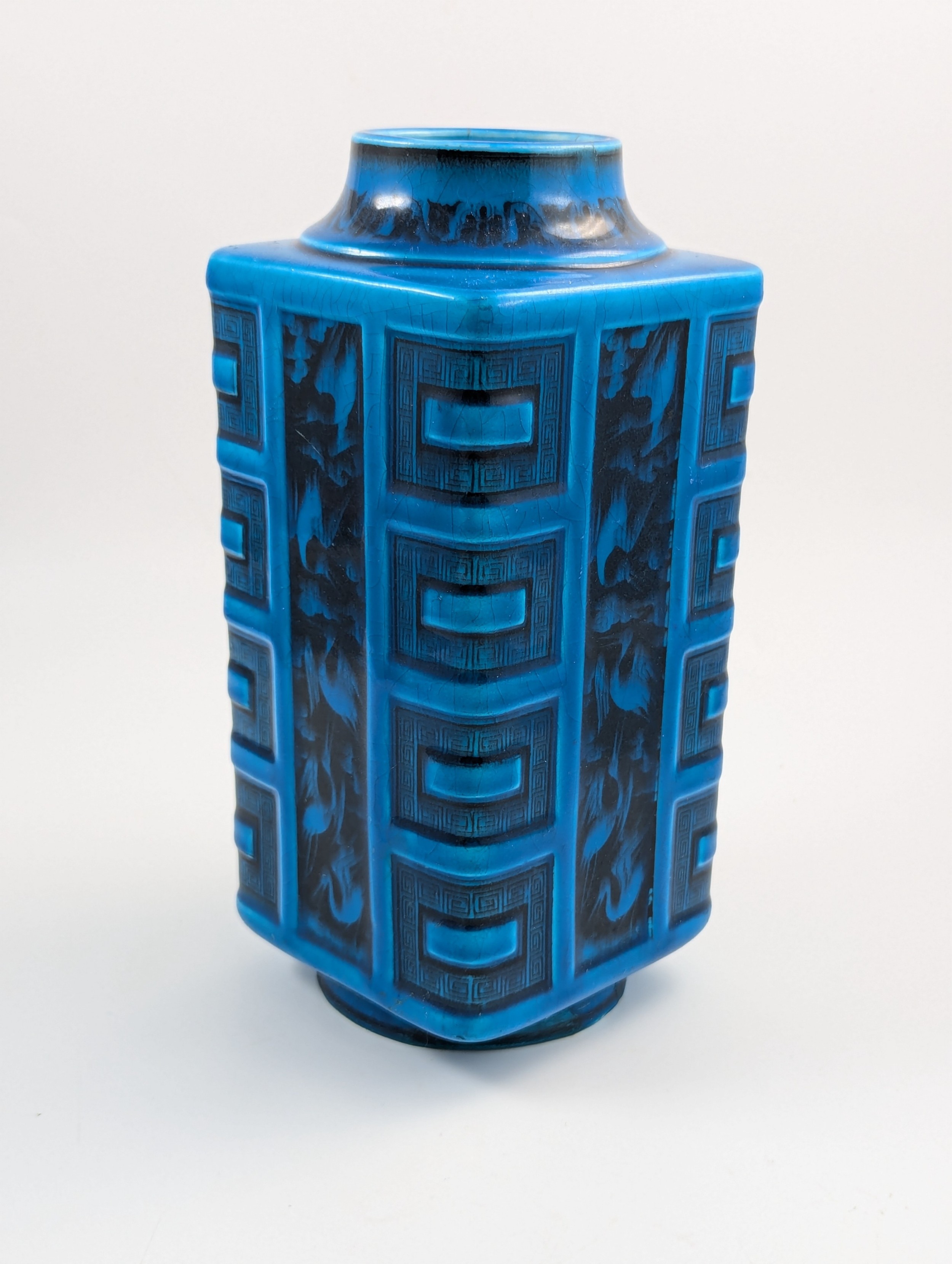
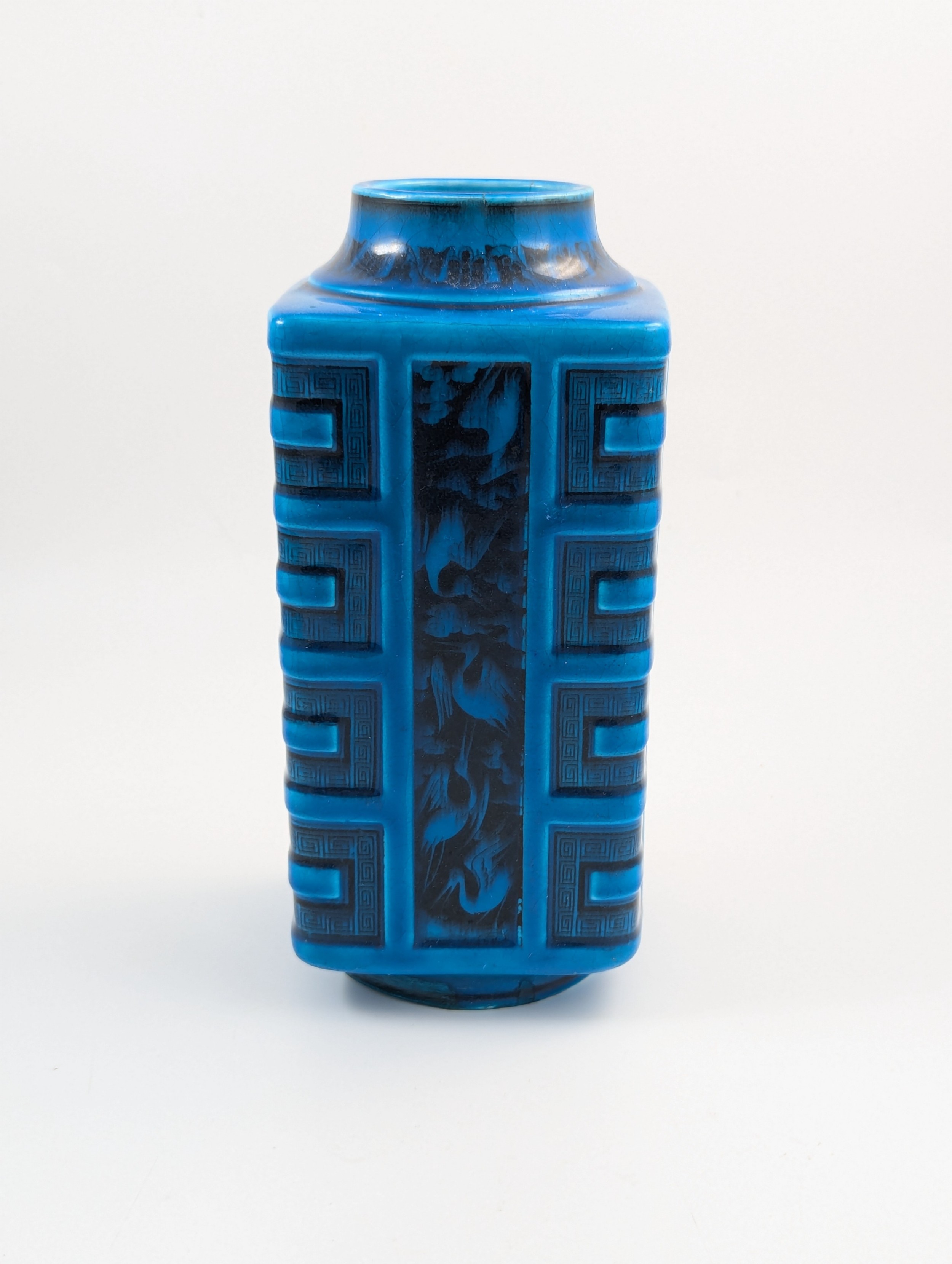
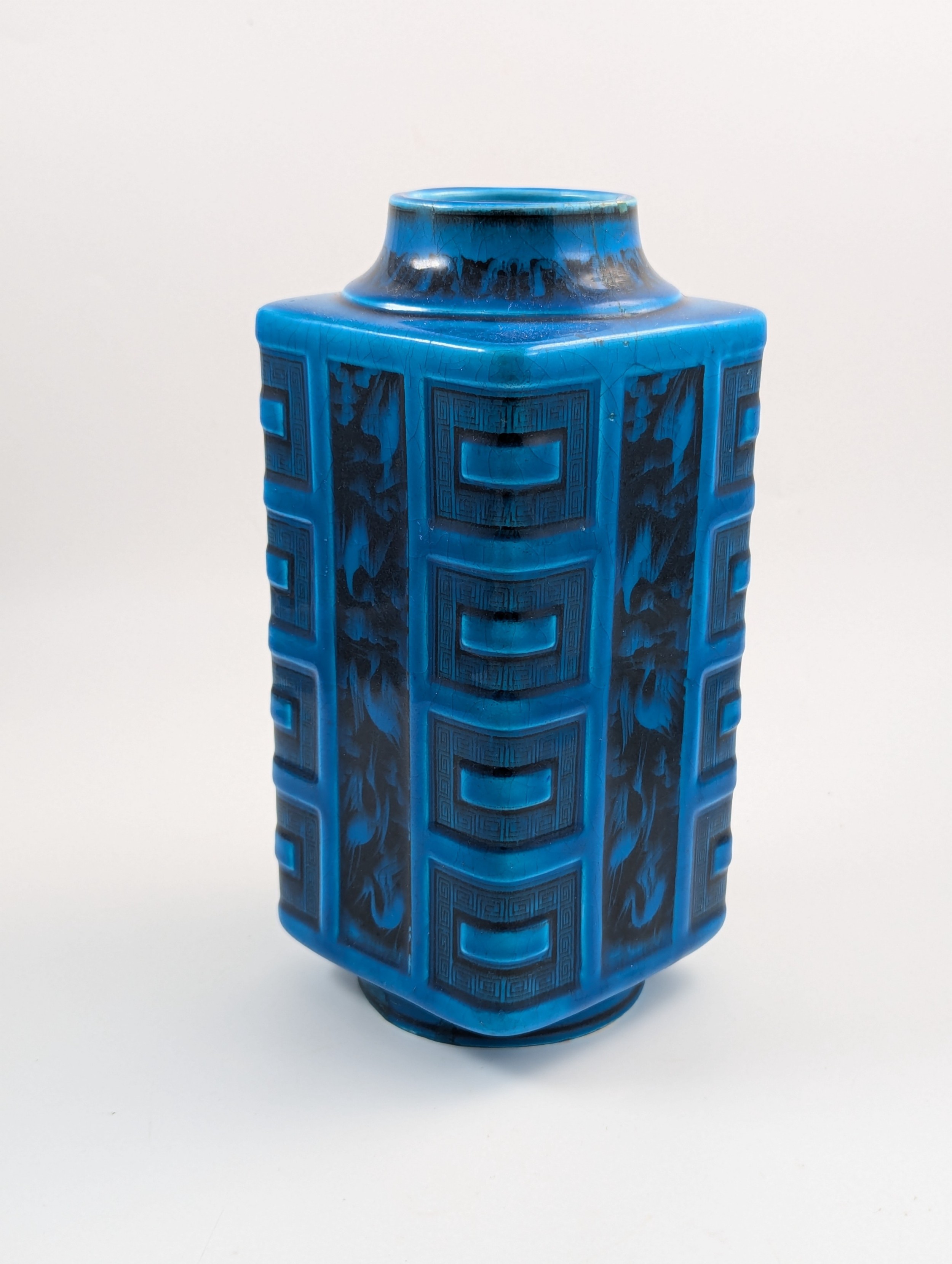
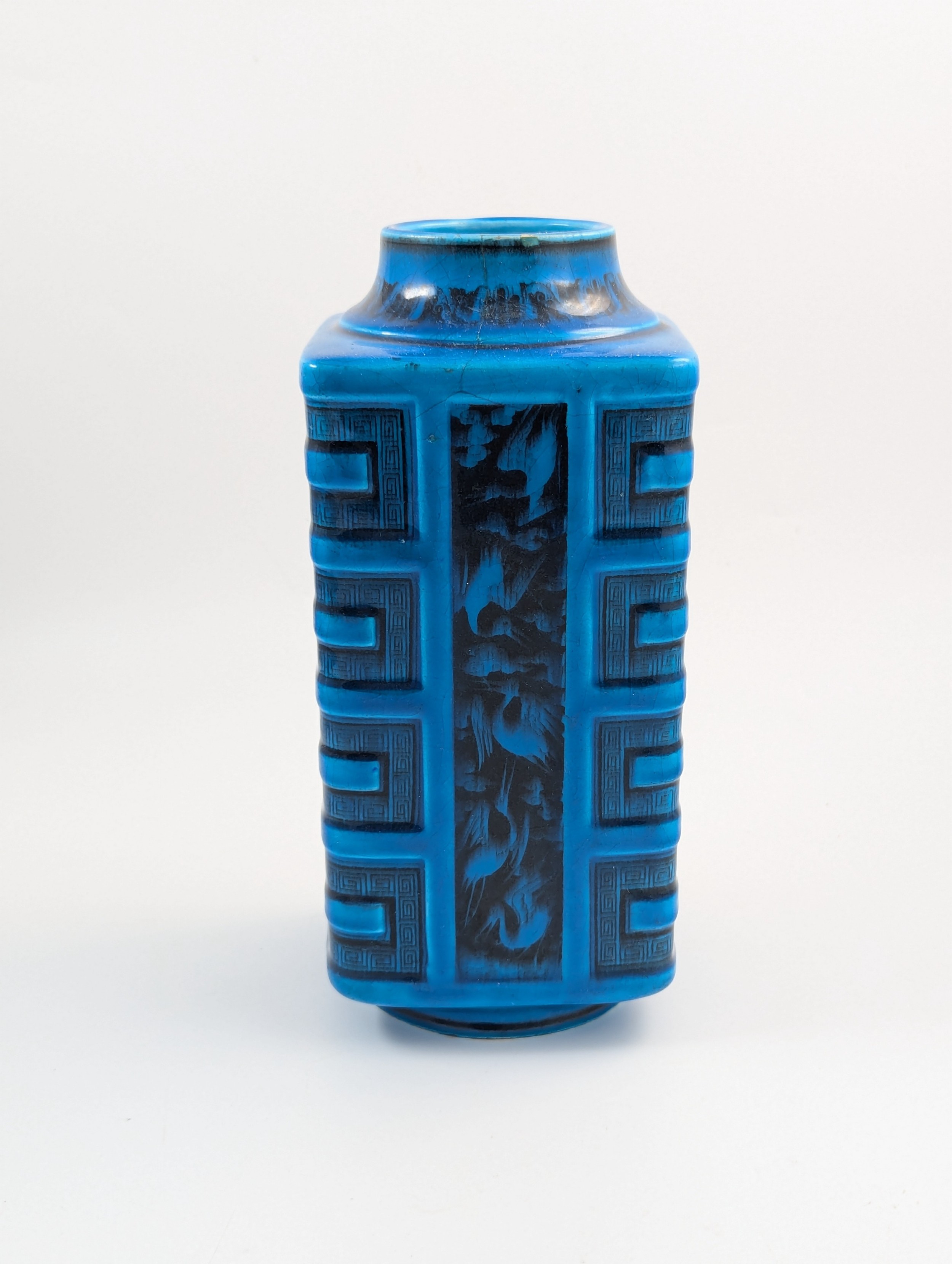
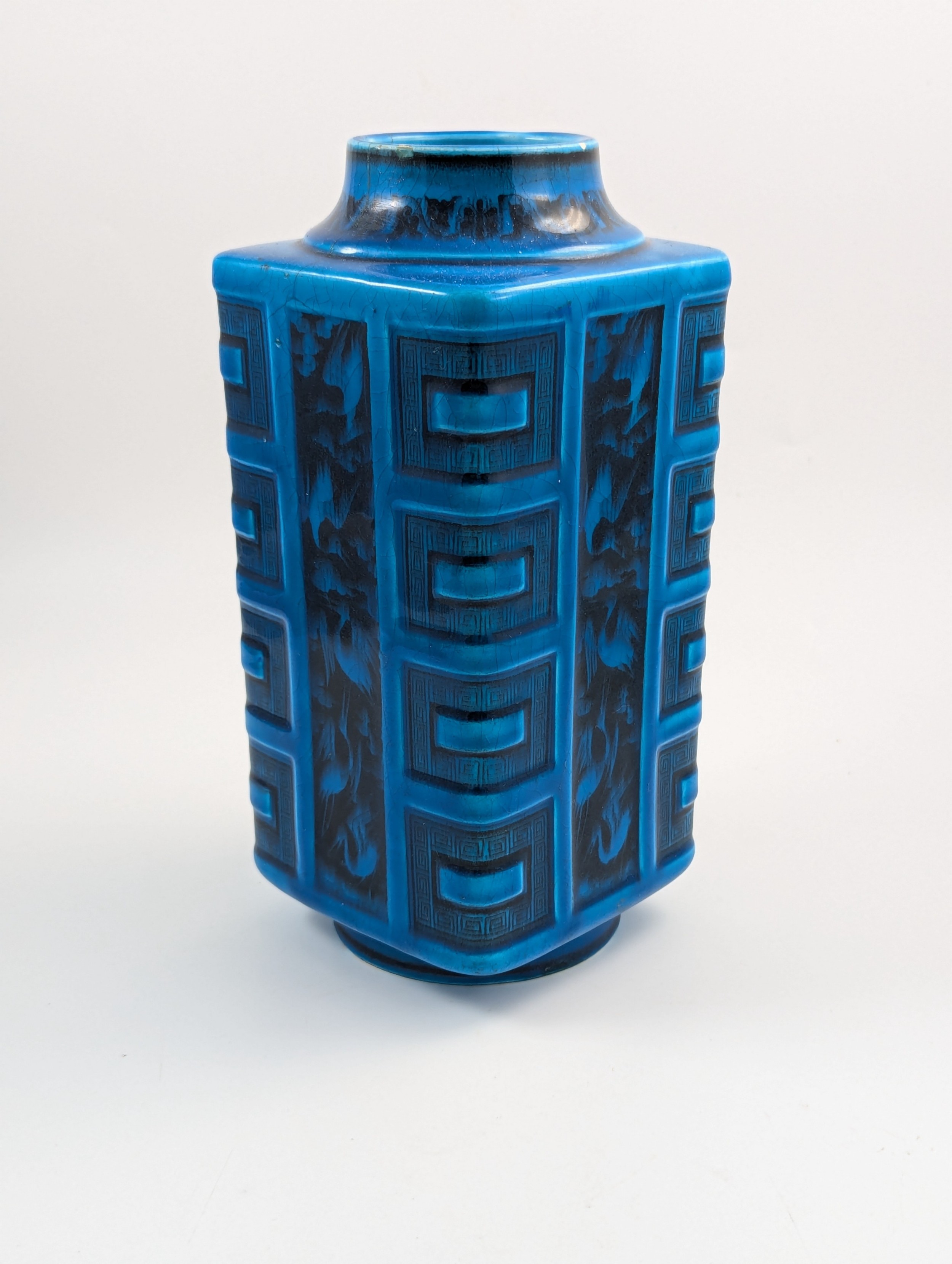
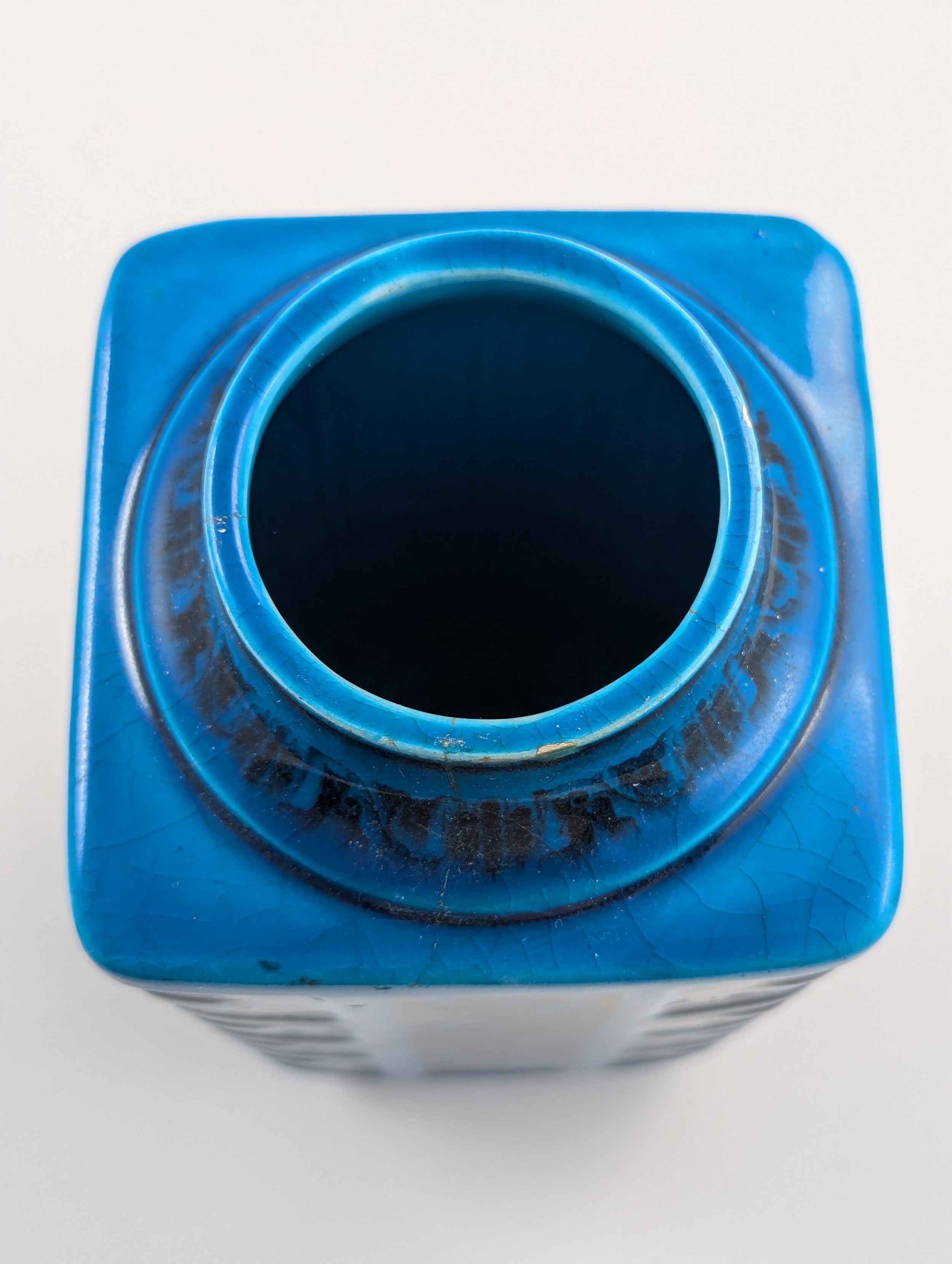
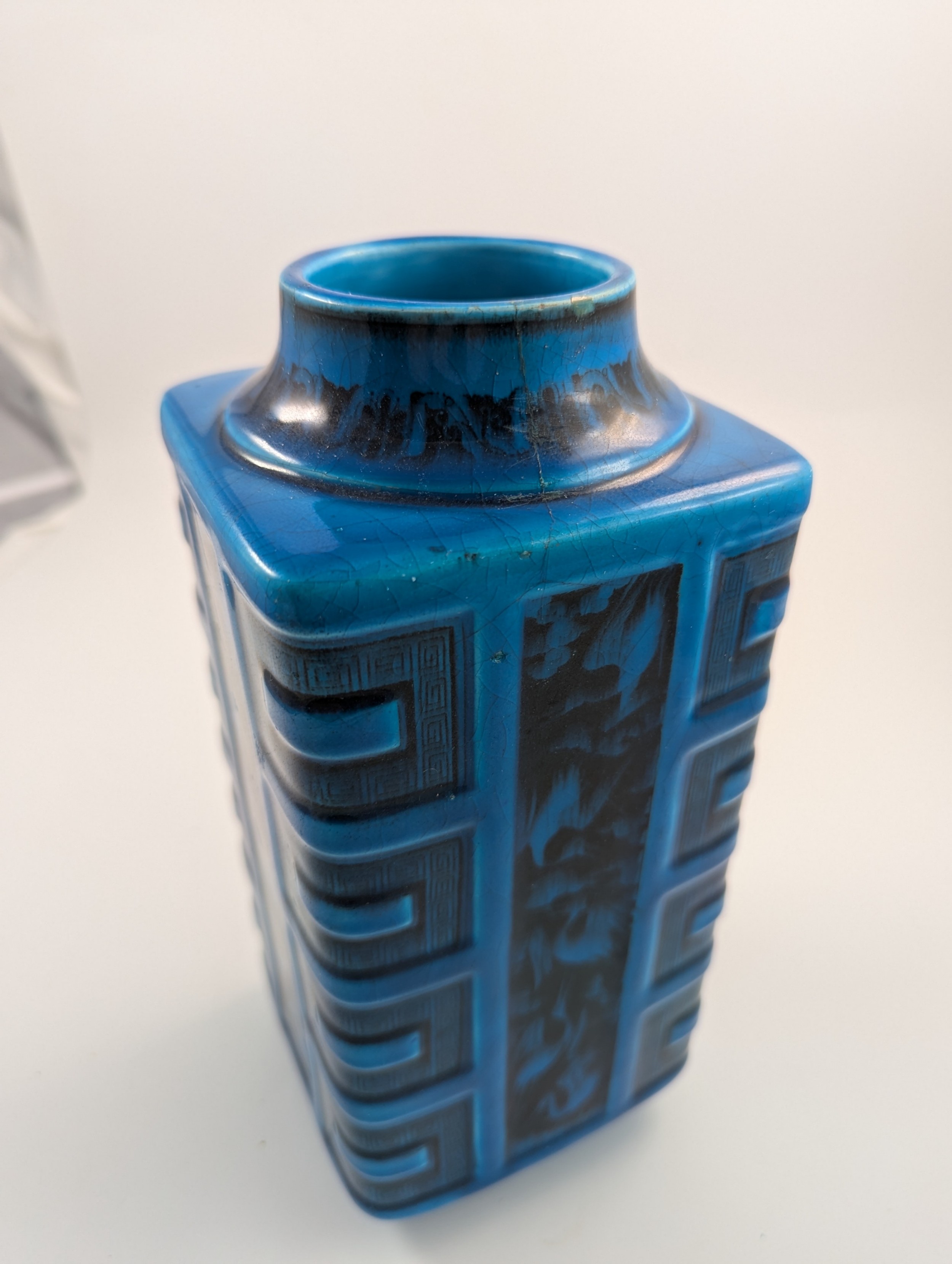
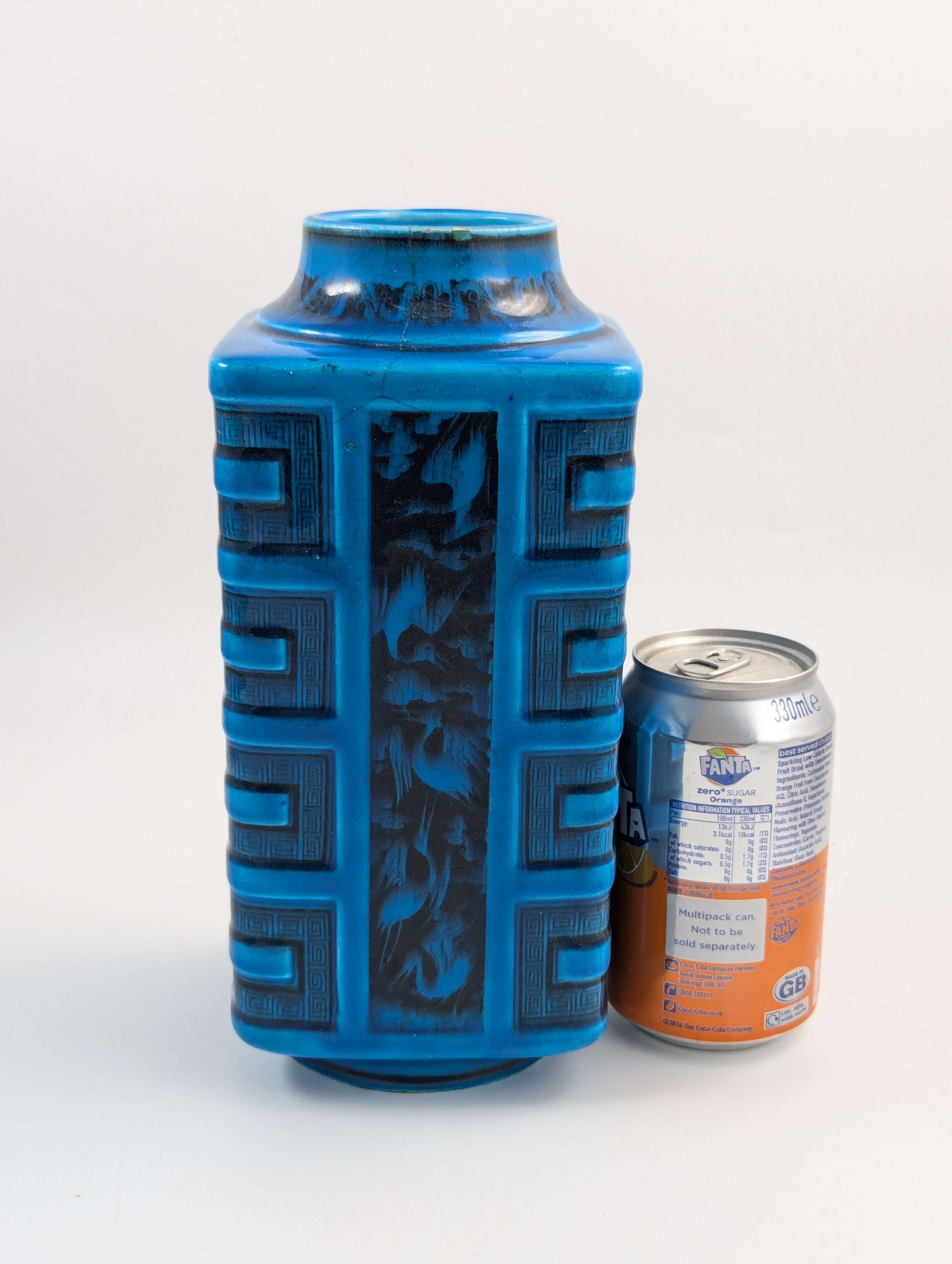
Gillers Antiques Ltd has dated this piece to the 19th Century.
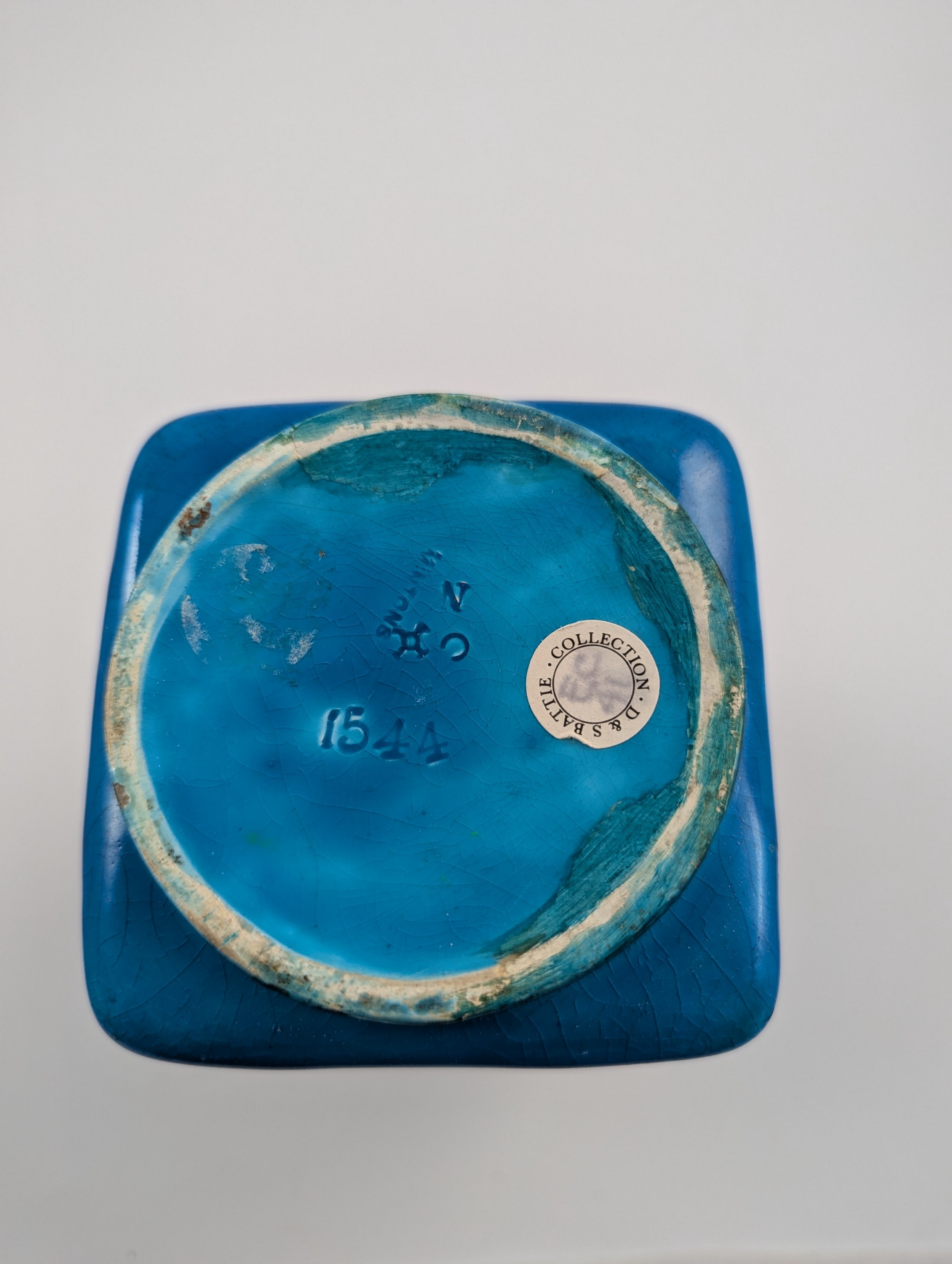
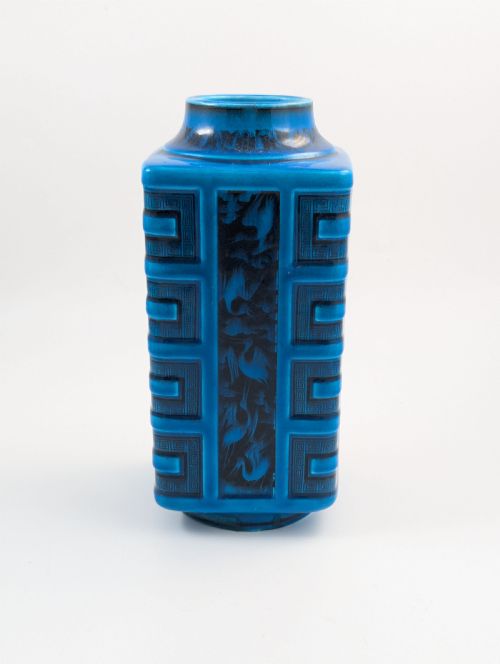
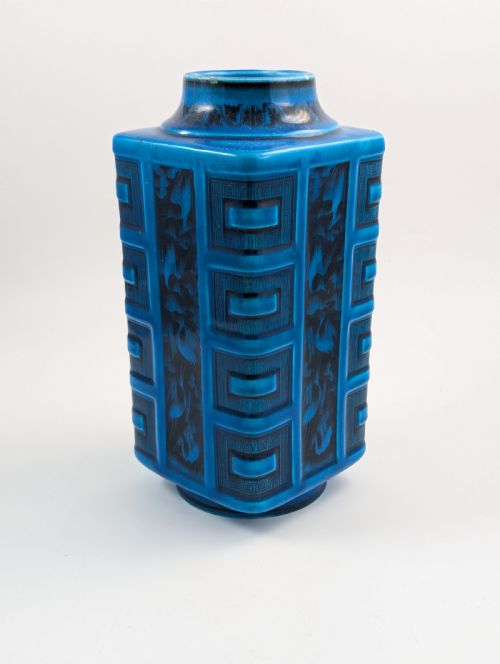
The bottom is impressed with the maker's mark: "Mintons/1544." This piece comes from the esteemed David and Sarah Battie collection. The vase was designed by Christopher Dresser (born in Glasgow, 1834; died in Mulhouse, France, 1904). Dresser was a pioneering designer who drew inspiration from a wide range of historic and foreign sources, including Gothic, Japanese, Chinese, and Egyptian styles. He combined these influences to produce something truly original and distinctive.
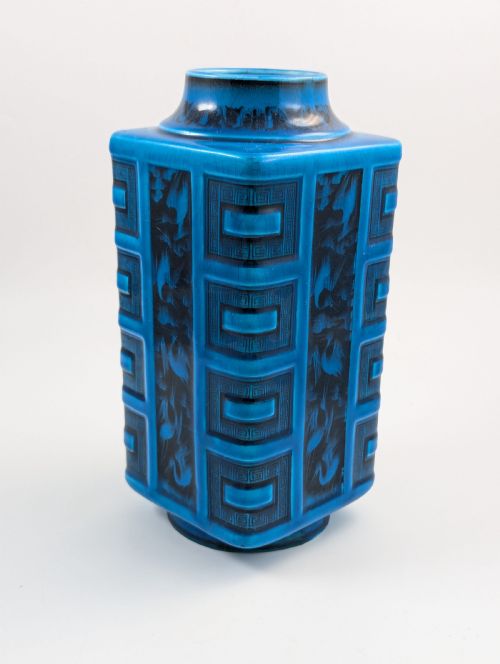
Minton, the leading ceramic manufacturer of the Victorian era, earned the highest accolades at major International Exhibitions by employing the most talented artists, sculptors, and designers of the age. One of these was Christopher Dresser, who became one of the most radical and influential designers of the century.
Dresser began his professional career as a botanist and was well established by 1862, holding six different professorships in botany and art botany. During this period, he shifted his focus to design, integrating his scientific knowledge into his artistic endeavors. 'The Studio' magazine described Dresser as "the most meaningful industrial designer, who turned his imagination and gift of discovery to the daily production of British industry...." His highly original yet practical designs for ceramics, glass, metalwork, furniture, textiles, and carpets were in great demand by major manufacturers across the country.
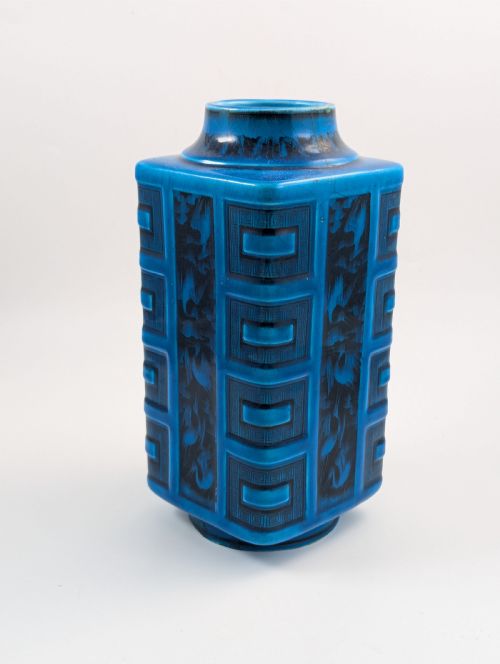
Dresser's first designs for Minton were exhibited at the Paris Exhibition of 1867. He developed several unusual ornamental shapes for Minton, inspired by geometric forms such as circles and cylinders. His lively imagination and unique approach to shape and decoration set his work apart. Combining his knowledge of modern industrial materials with the skills of a draughtsman and the eye of an artist, Dresser became one of the most important designers of his time.
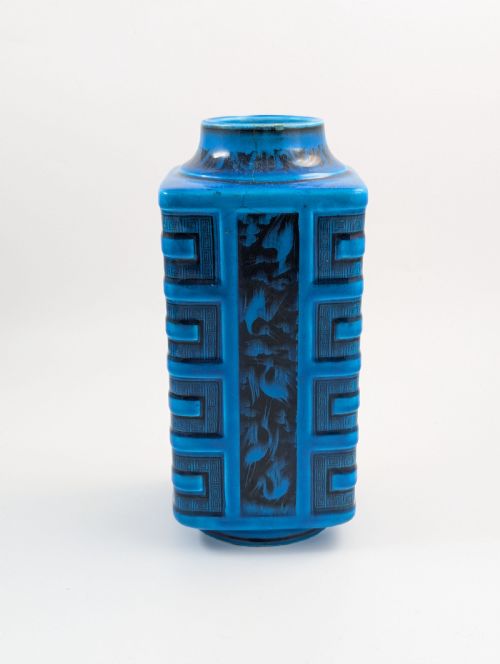
Christopher Dresser's association with Minton was long and productive, although not all his designs were executed by the factory. As a designer, he was considered ahead of his time, and many of his works still have a striking visual impact today. His designs for Minton have been featured in major exhibitions worldwide, cementing his reputation as one of the first industrial designers of the 20th century. His work is highly valued and of great significance, with pieces held in prestigious collections such as the Metropolitan Museum of Art and the Victoria and Albert Museum.
This vase comes from the extensive collection of David Batty and his wife, Sarah, whom he met while working at Sotheby's in the early 1970s. David's remarkable career in antiques spans over six decades, marked by his roles as an auction house pioneer, passionate collector, lecturer, and broadcaster. He initially trained as a graphic designer and spent three years at Reader's Digest before joining Sotheby's in 1965 as a humble book carrier. Rising quickly through the ranks, he was appointed a company director and led innovative sales of ceramics and applied arts at Sotheby's Belgravia, eventually retiring in 1999.
A specialist and a favorite on the long-running BBC "Antiques Roadshow" programme, which regularly attracts over six million viewers, David appeared on the very first episode in 1977. He has written or edited numerous books and articles on antiques, including "The Price Guide to 19th and 20th Century British Porcela
Gillers Antiques Ltd has dated this piece to the 19th Century.
You can view the stock and full dealer information on the Gillers Antiques Ltd Profile Page
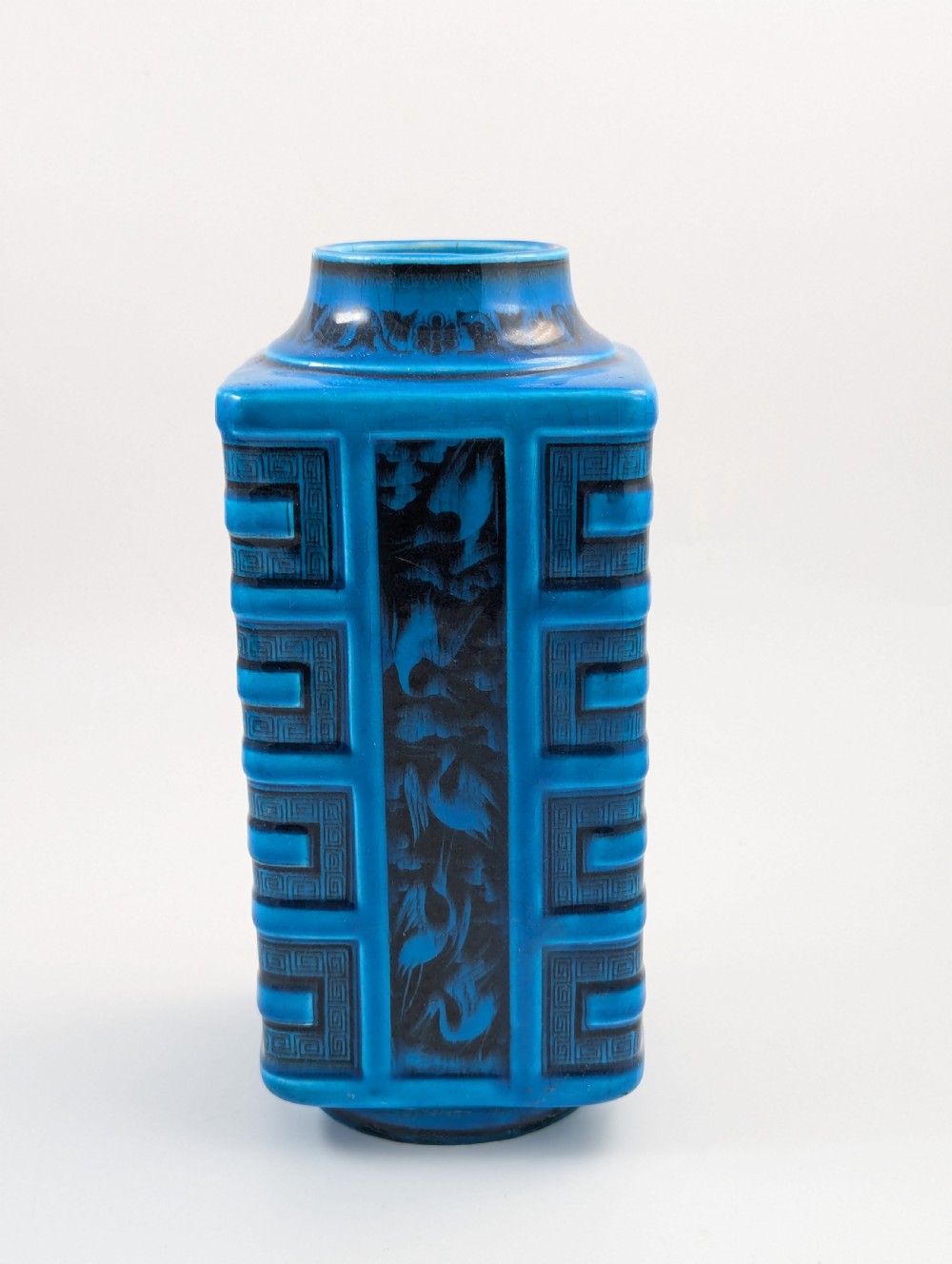
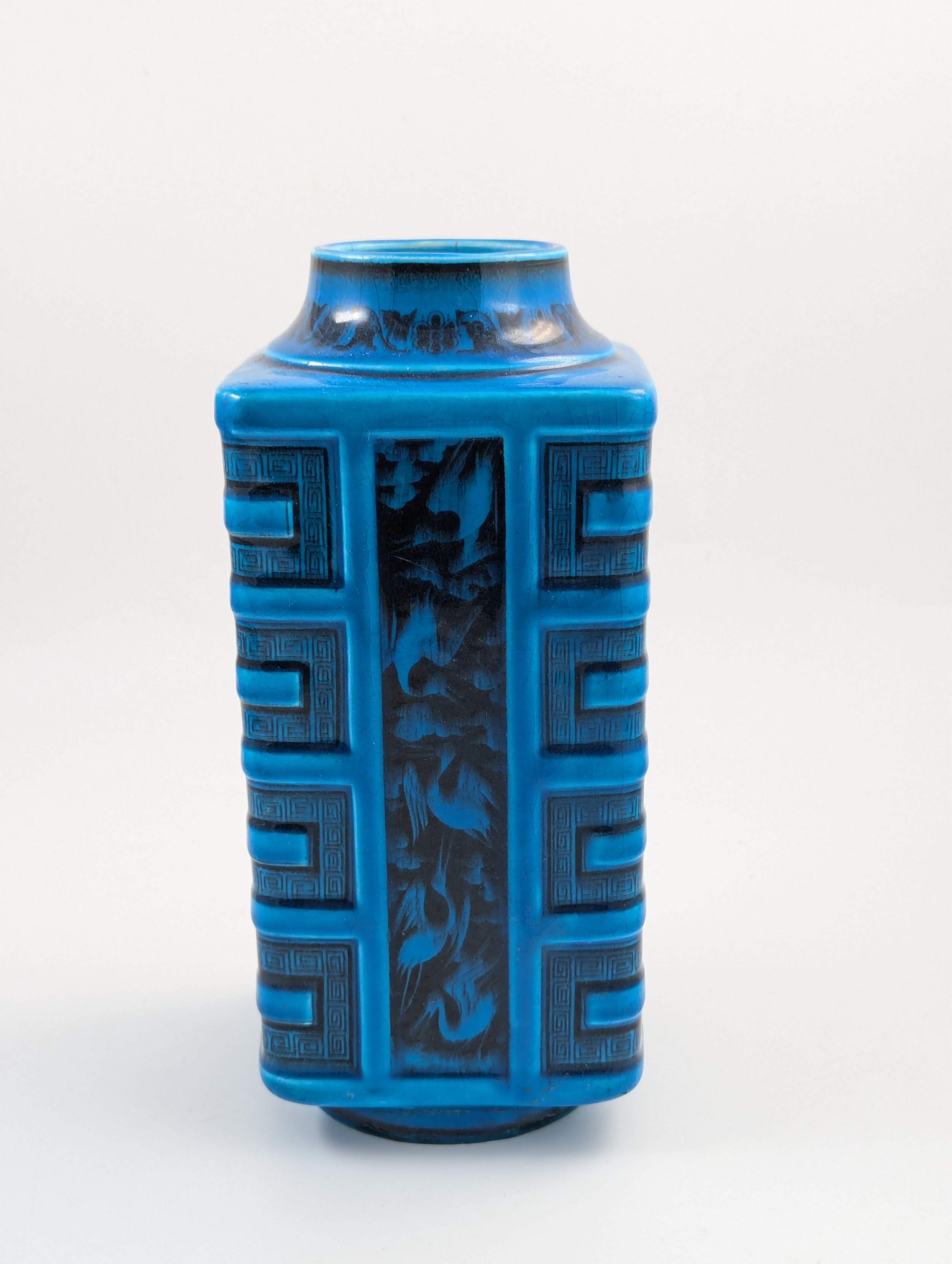
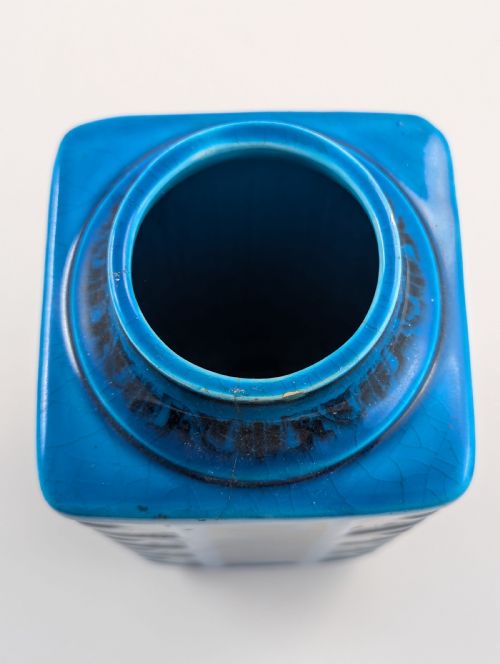
Christopher Dresser for Minton Turquoise-glazed Square Vase, C. 1880