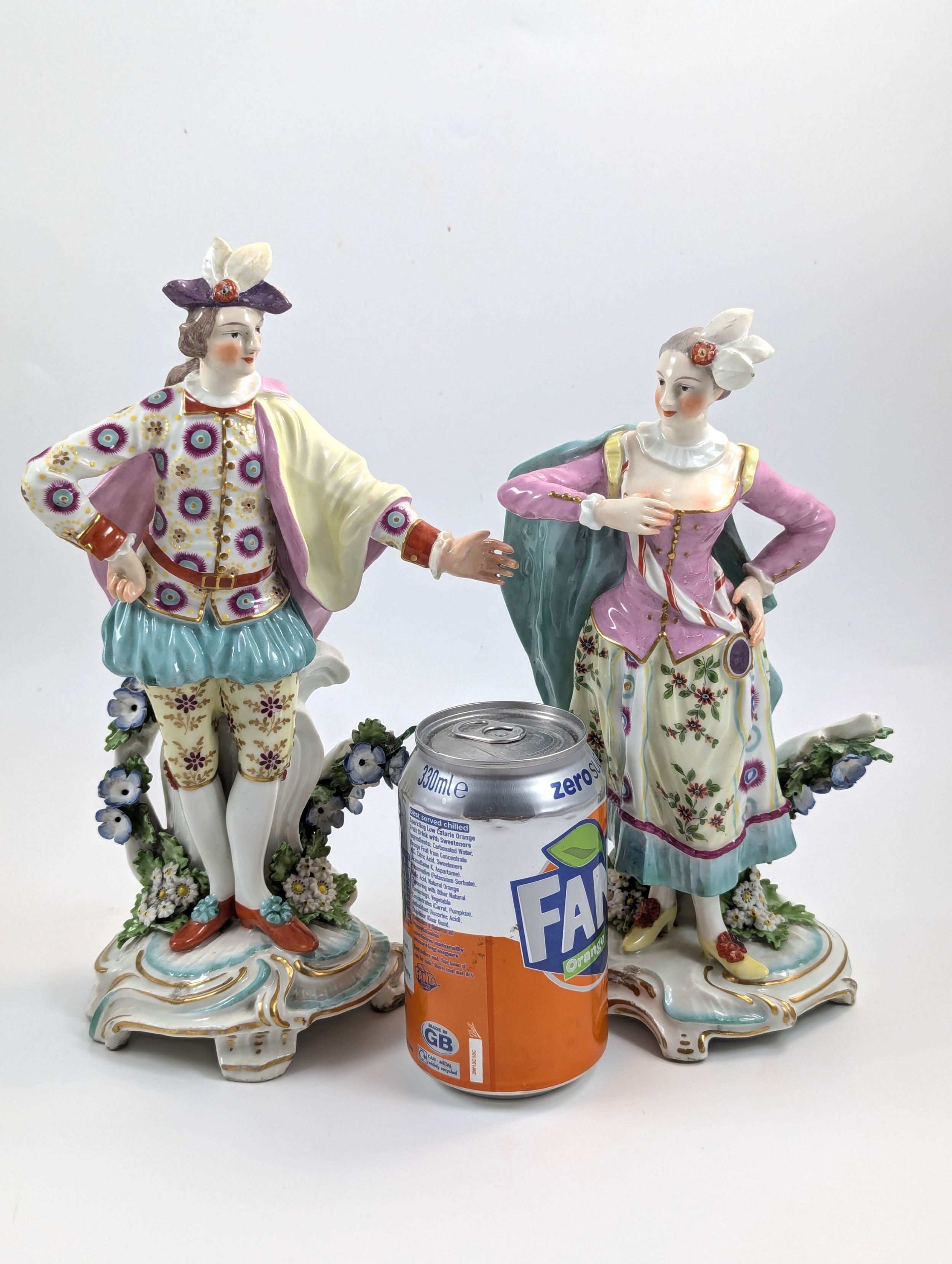
Gillers Antiques Ltd has dated this piece to the 18th Century.
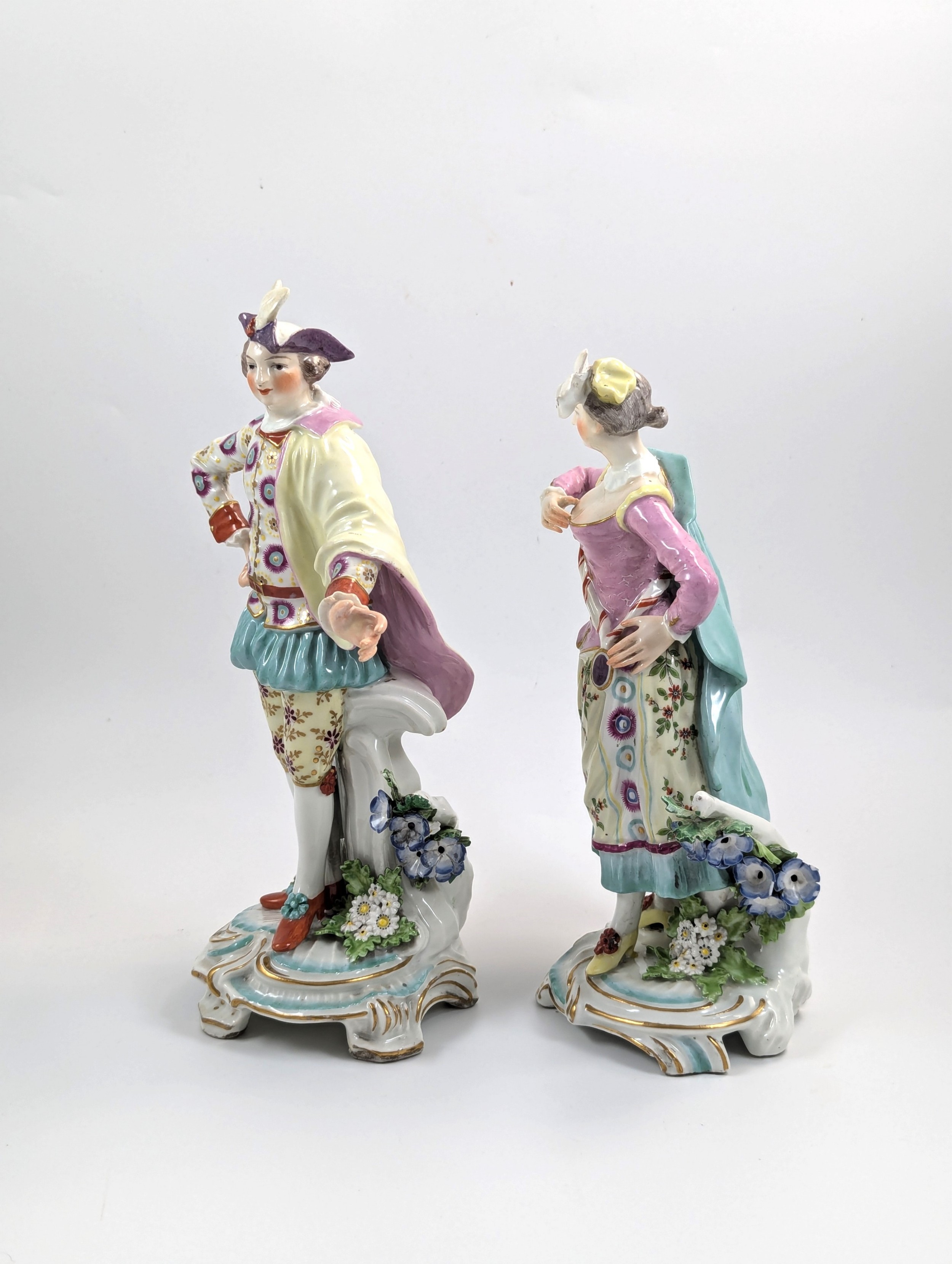
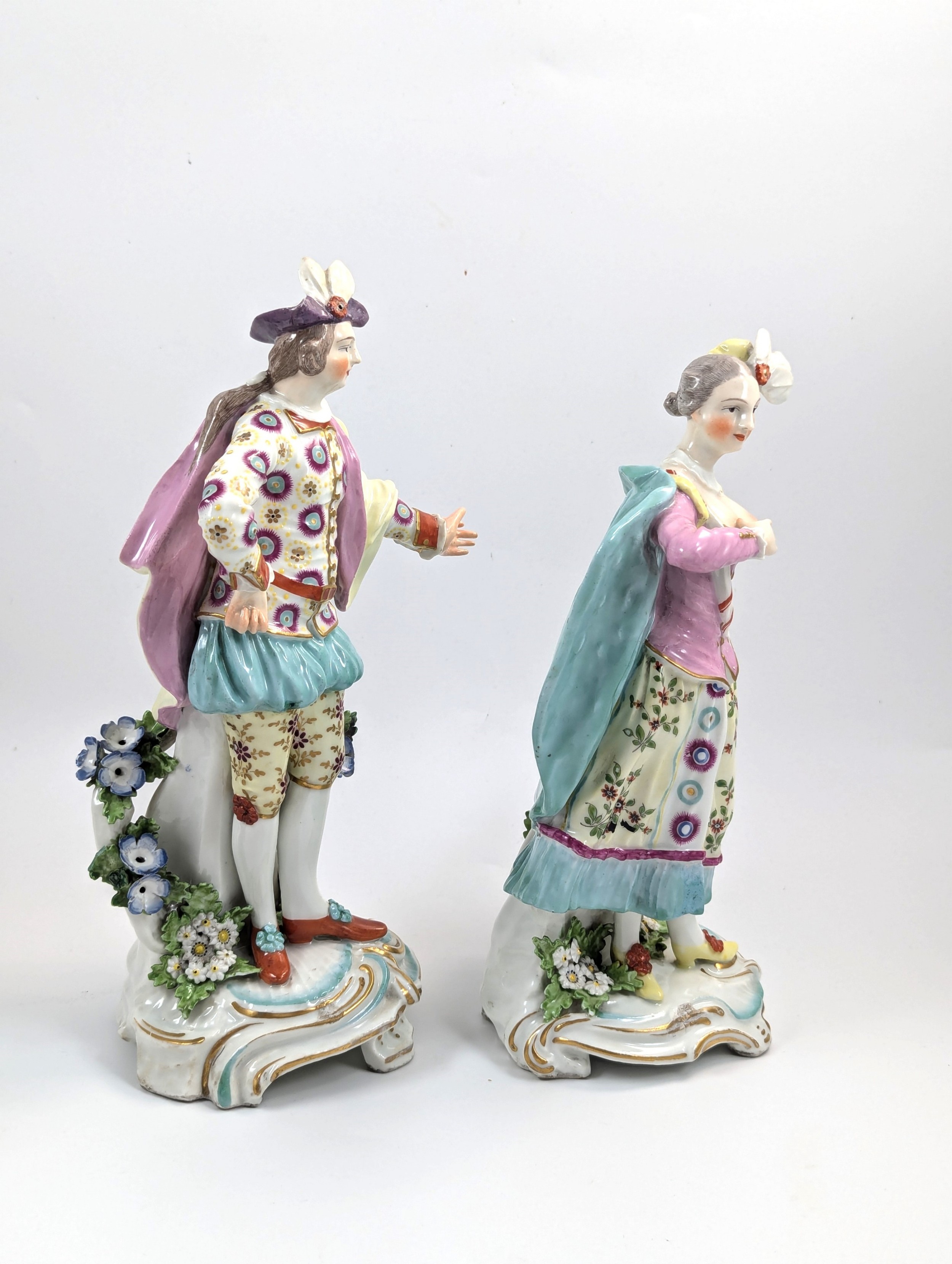
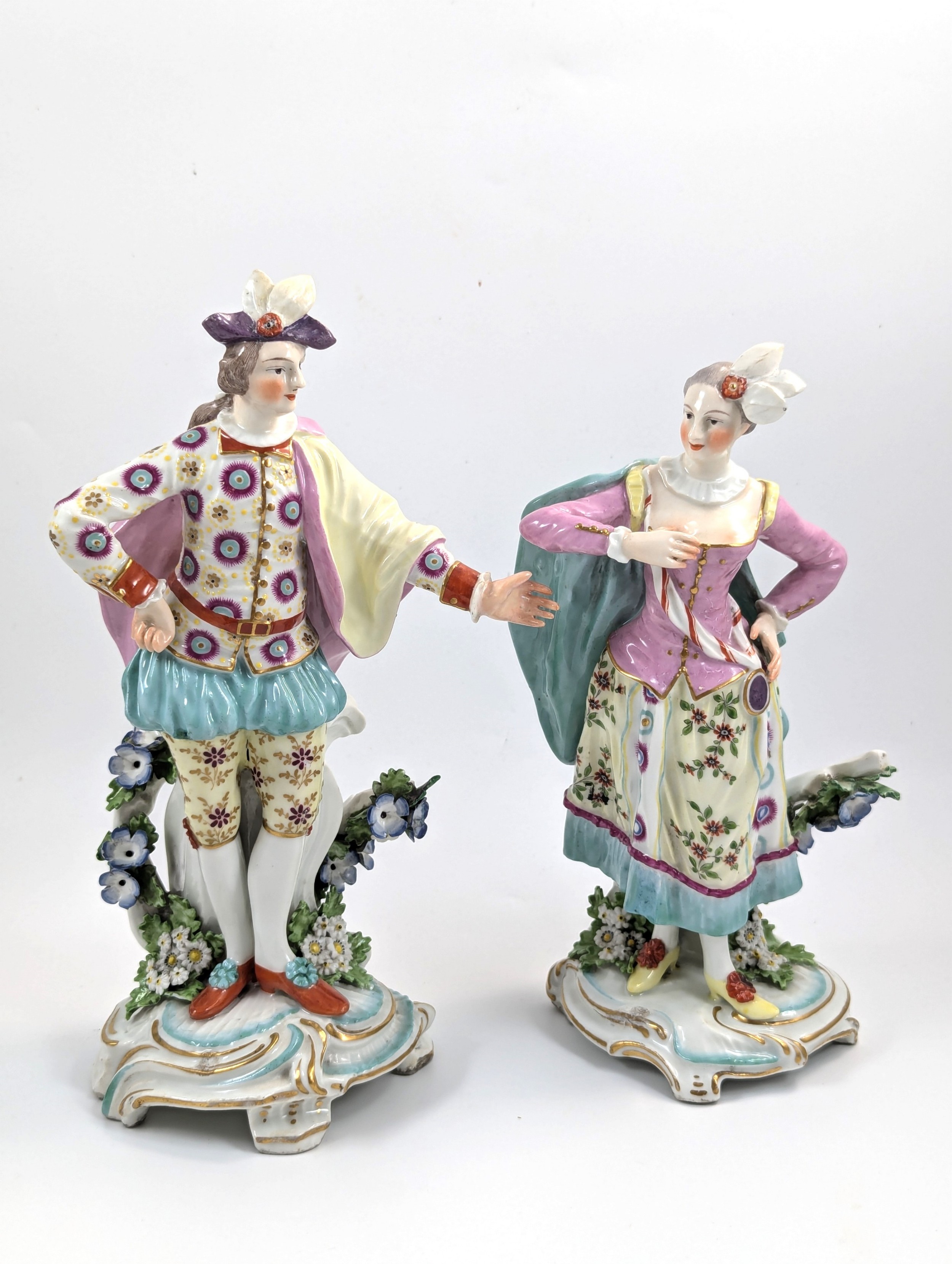
On May 24, 1759, a masked ball was held in Ranelagh Gardens, Vauxhall, to celebrate the birthday of Frederick George, Prince of Wales. The colorful and sometimes bizarre costumes worn by the guests inspired a number of engravings, paintings, and figurines. While the Chelsea factory produced quite a number of figures representing guests at the ball, Derby produced just this pair, which was not reproduced in later years. The "Ranelagh Dancers" were a popular pair of figures inspired by this famous masked ball.
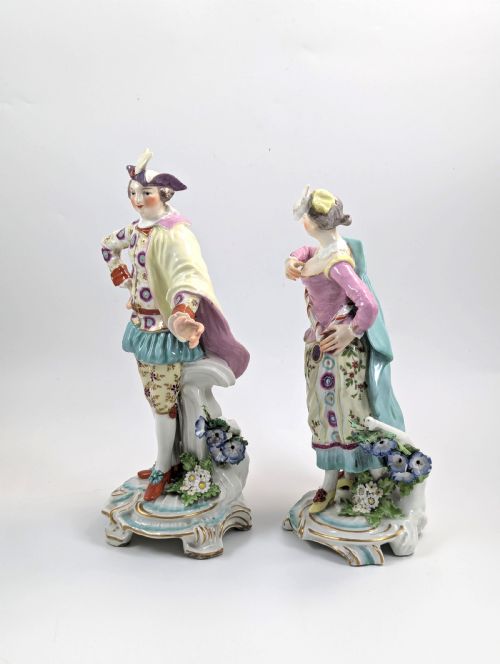
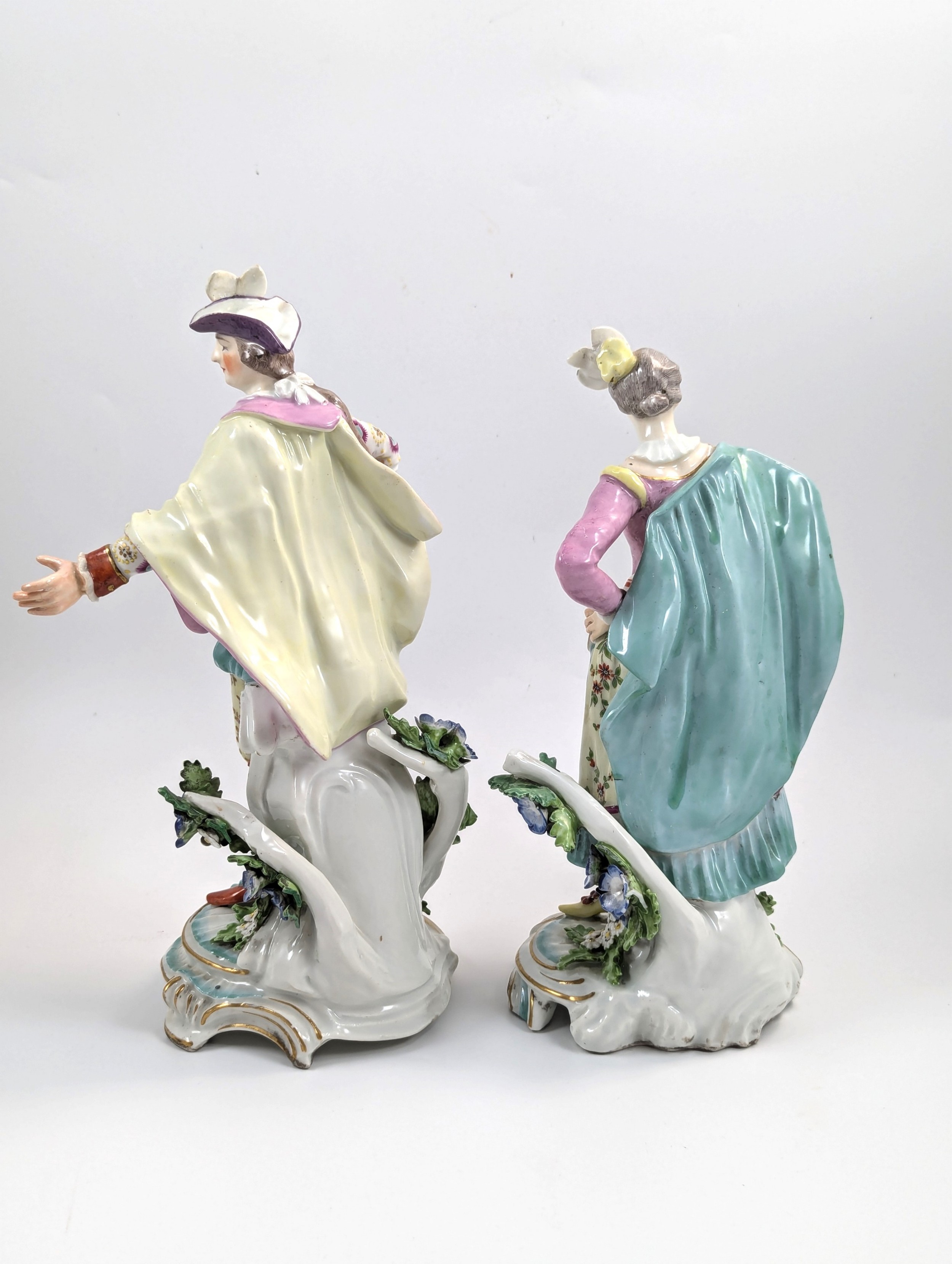
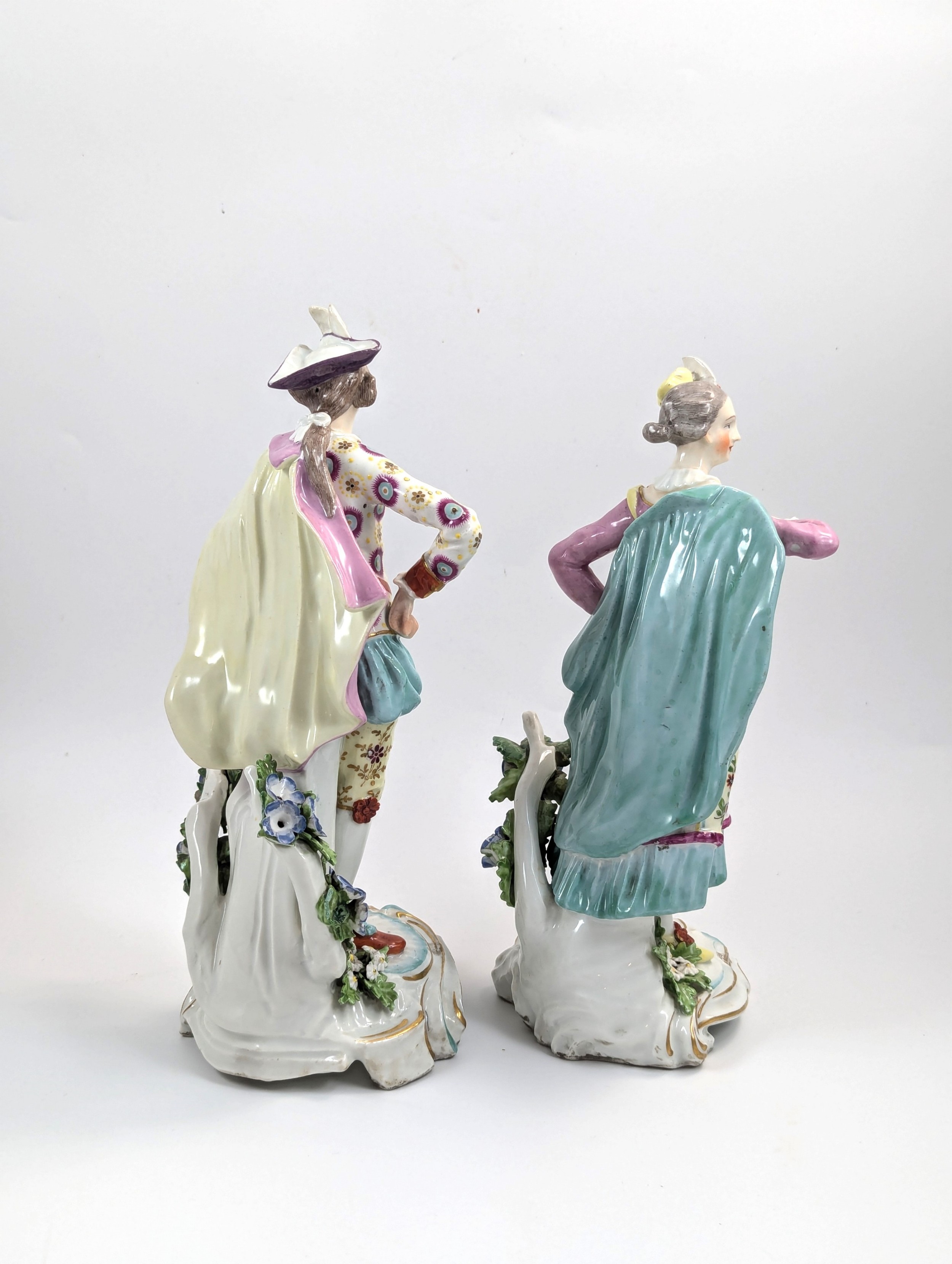
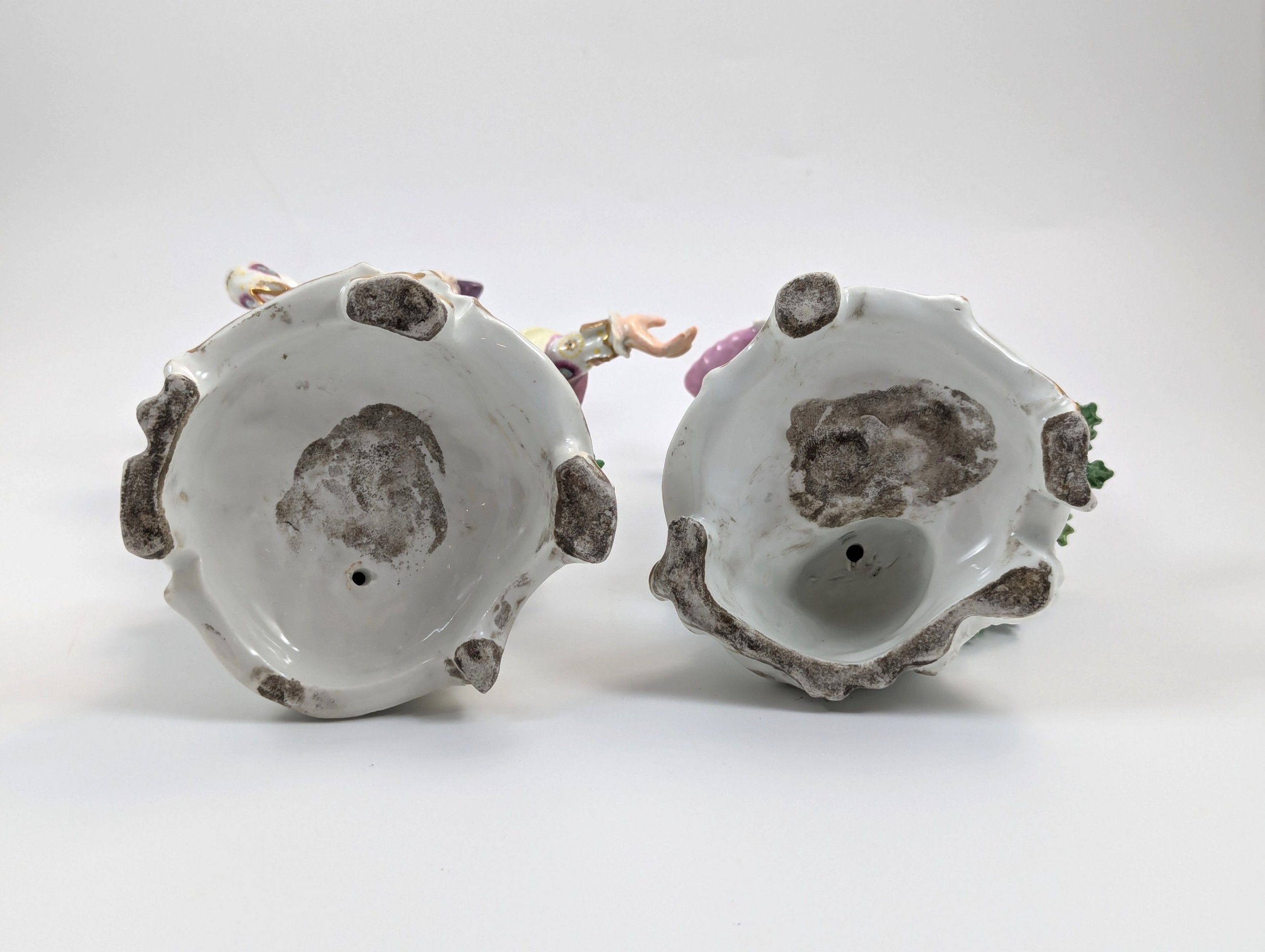
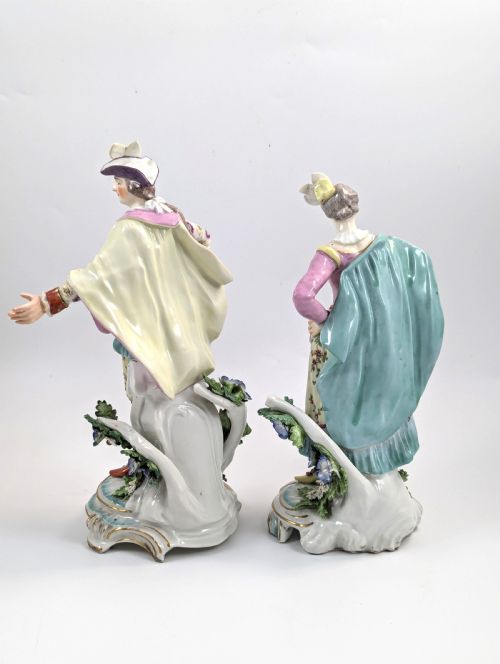
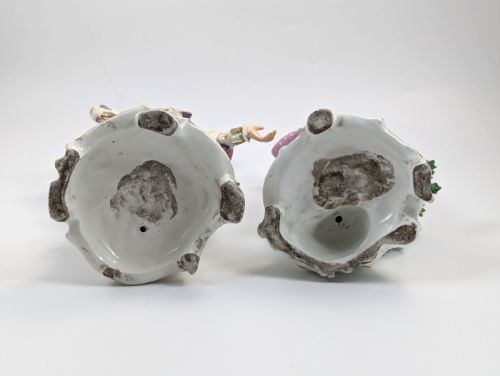
These dancers were made with exceptional care; their physical postures, noble expressions, and beautiful clothes all demonstrate the highest level of craftsmanship. Figurines like these were used to adorn the dinner table when dessert was served, with groups of figures expressing something about the host and the guests. The figures are unmarked, as is usual for pieces from this particular era. Only 'patch marks' are present on the bases. These figurines form part of what is called the "patchmarked" era. An image with a description can be found in Peter Bradshaw's book 'Derby Porcelain Figures 1750-1848.'
The Derby Porcelain factory traces its roots to the late 1740s, when Andrew Planché, a Walloon Huguenot refugee, started making simple porcelain toys shaped like animals in his backyard. In 1756, Staffordshire enameller William Duesbury and banker John Heath joined Planché to start a new porcelain factory. This factory grew to become the largest of its time, acquiring the bankrupted Chelsea and Bow factories, as well as the stock of several other workshops, including that of James Giles. The combination of various traditions, porcelain-making skills, and sophisticated clients enabled Duesbury to create one of the finest porcelain factories of the 18th and 19th centuries, which, after many ups and downs, is still operational today.
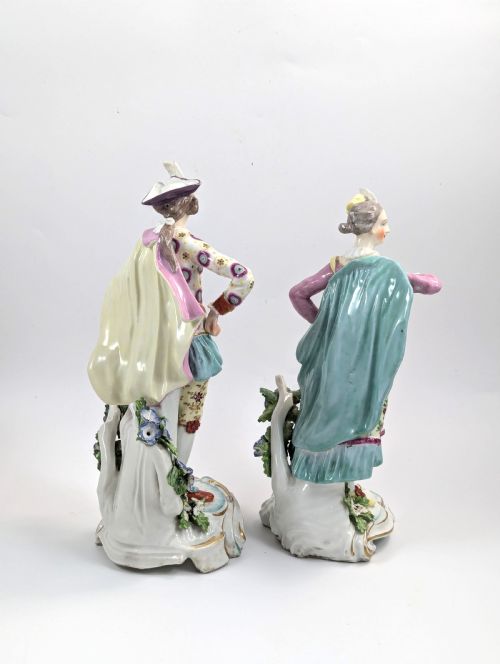
Dimensions:
Female: Height 24.5 cm, Width 14 cm, Depth 11 cm. Weight: 775 grams.
Male: Height 26.5 cm, Width 15 cm, Depth 11 cm. Weight: 918 grams.
Condition: These figures are of great interest to collectors of Derby porcelain. The 'Ranelagh Dancers' figurines are a dream for any collector of early Derby porcelain. Finding high-quality figures that are 250 years old is very difficult. The quality of this pair is all the more surprising.
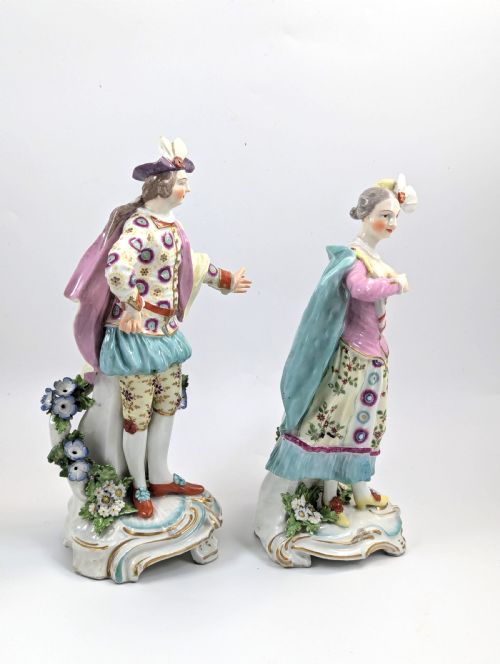
I will list the small and nearly unnoticeable imperfections that I managed to find with a magnifying glass:
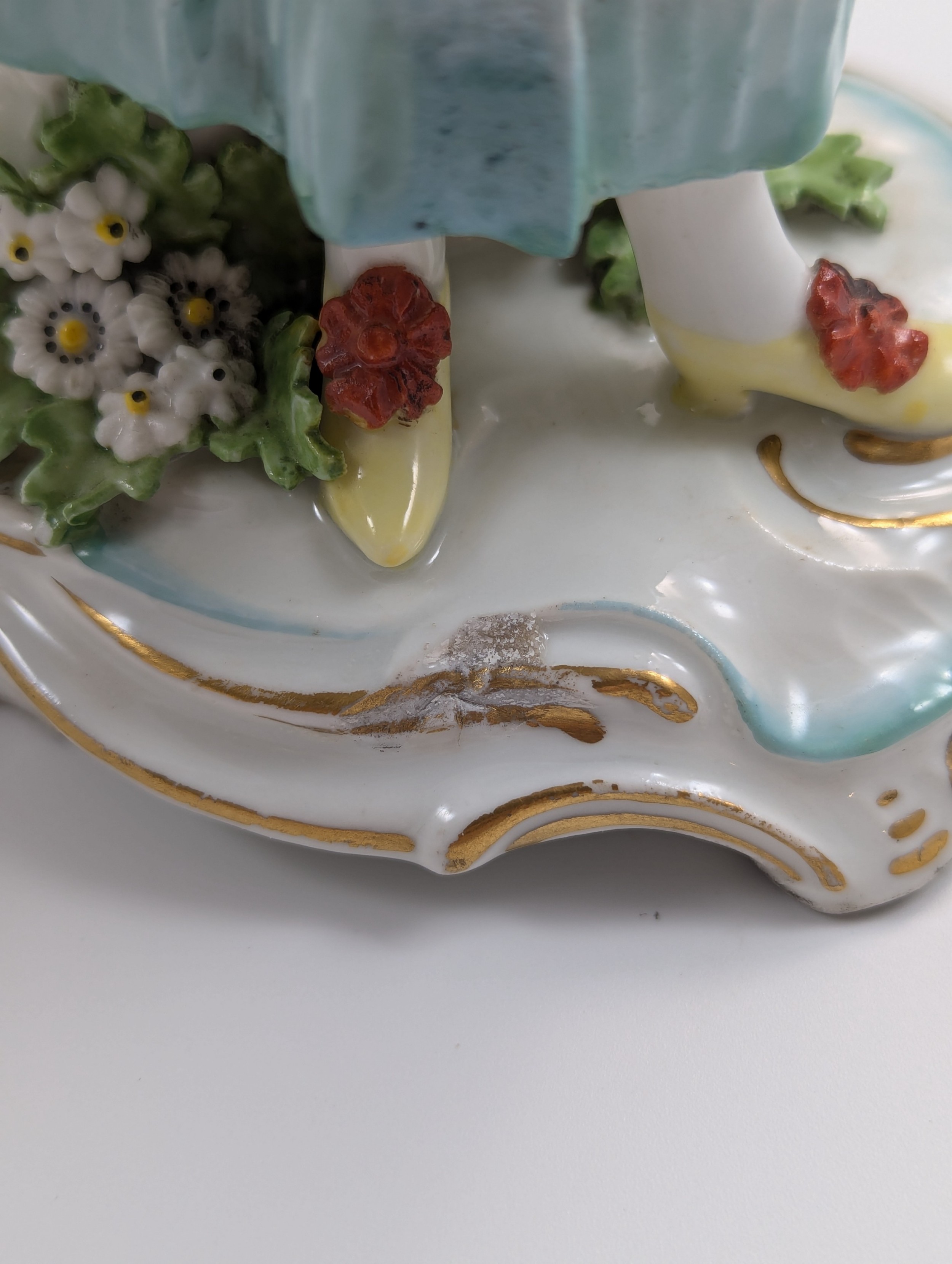
Small chips on a few leaves.
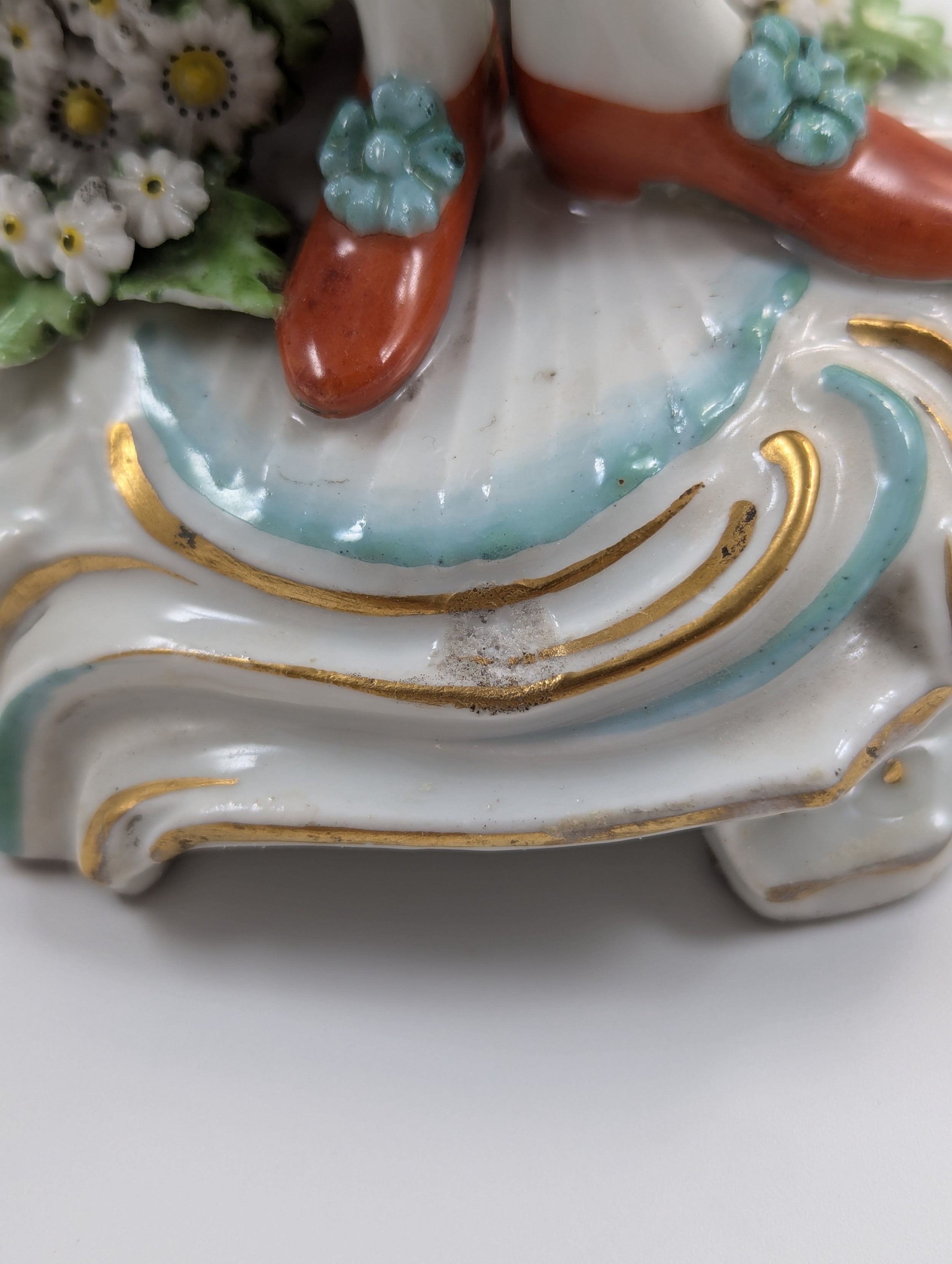
Minor losses of gilding on the base.
A couple of very small firing cracks, which are common and generally inevitable in the production of porcelain in the 18th century.
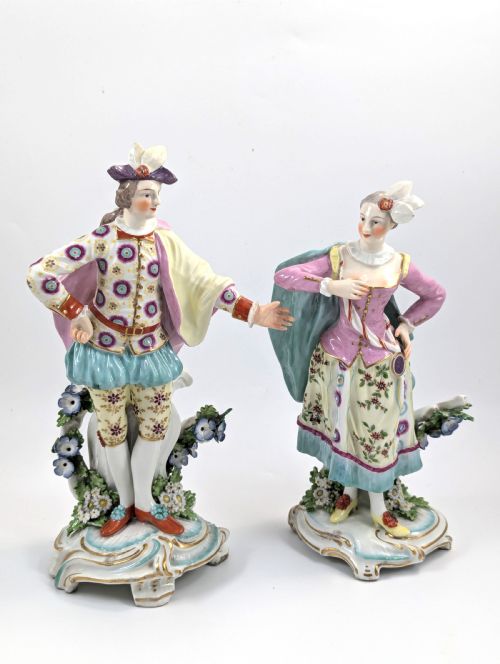
On the base, opposite the left foot of both the male and female figures, there is a small area that appears to have been treated by fire. I don't know what it is, and this is the first time I have seen it. This "burn" is almost imperceptible and has no effect on the integrity of the sculptures.
Otherwise, the figurines are in excellent antique condition. Ignoring the flaws mentioned above, these figurines can be considered flawless.
Please study the accompanying photographs carefully as they form an integral part of this description. The item will be shipped with full tracking and insurance. It is important to note that shipping costs include labour, packaging, and postage.
Gillers Antiques Ltd has dated this piece to the 18th Century.
You can view the stock and full dealer information on the Gillers Antiques Ltd Profile Page
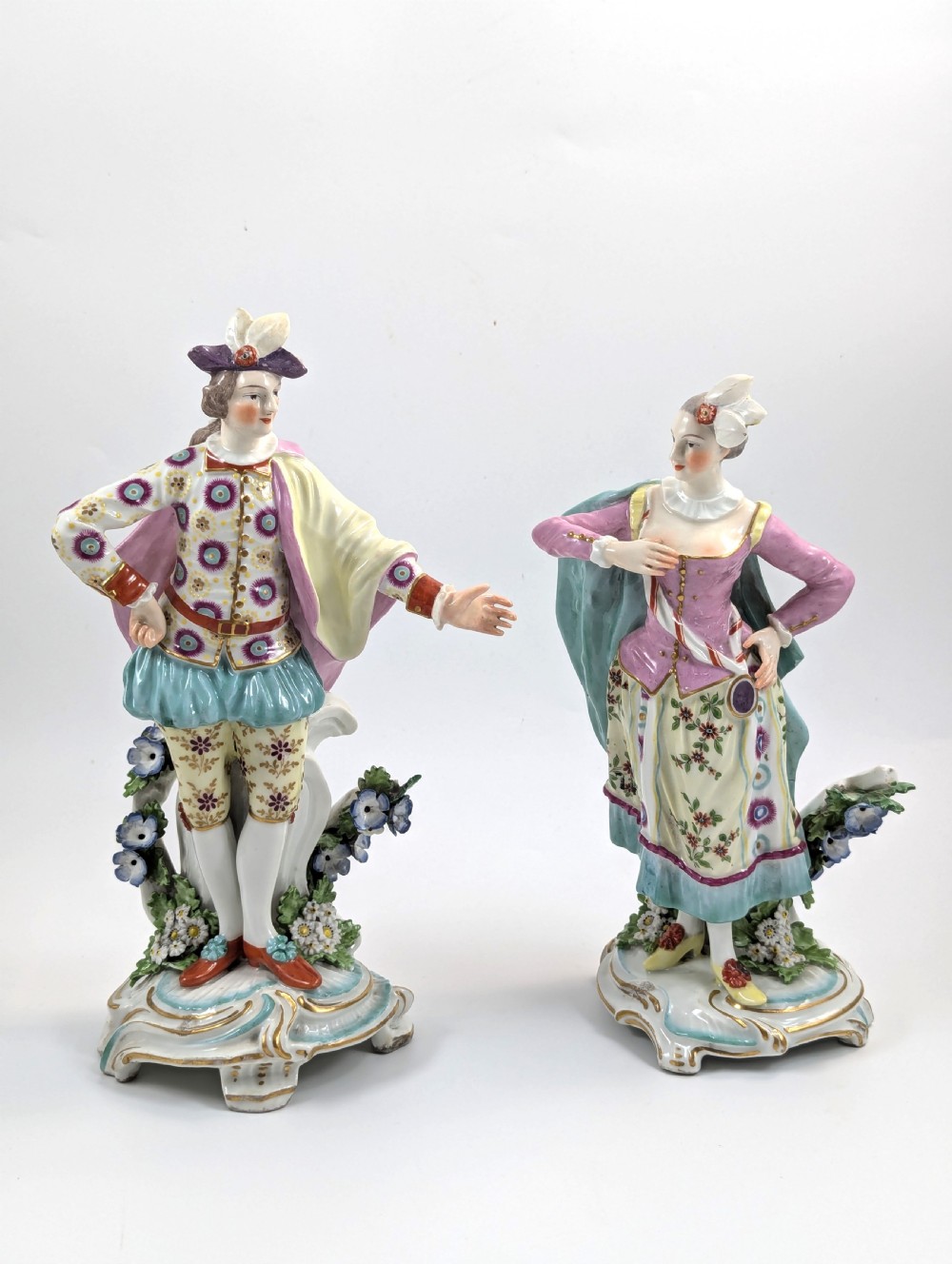
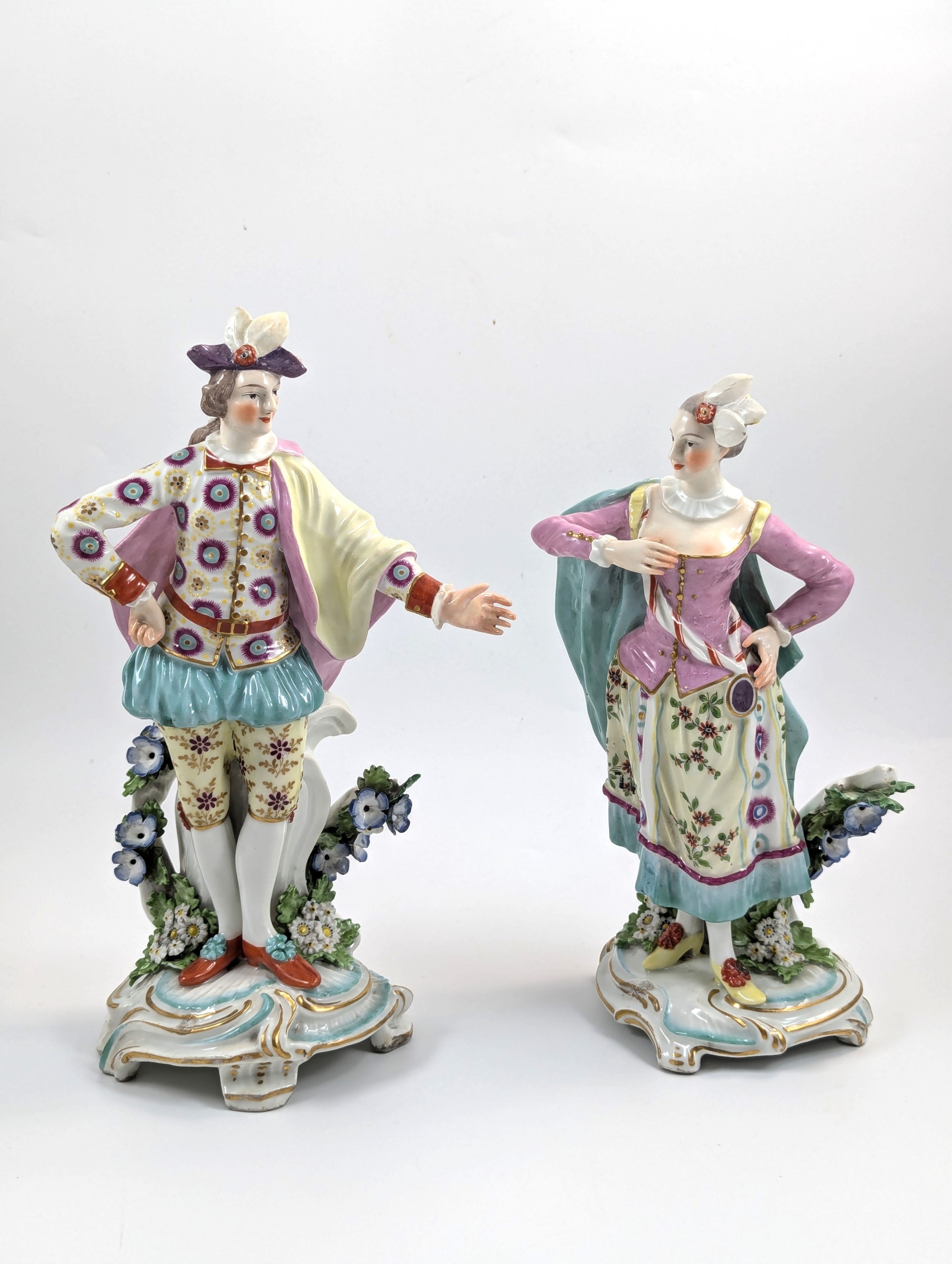
A Pair of Derby Porcelain Figurines of 'Ranelagh Dancers,’ C. 1760-65. Extremely Rare.