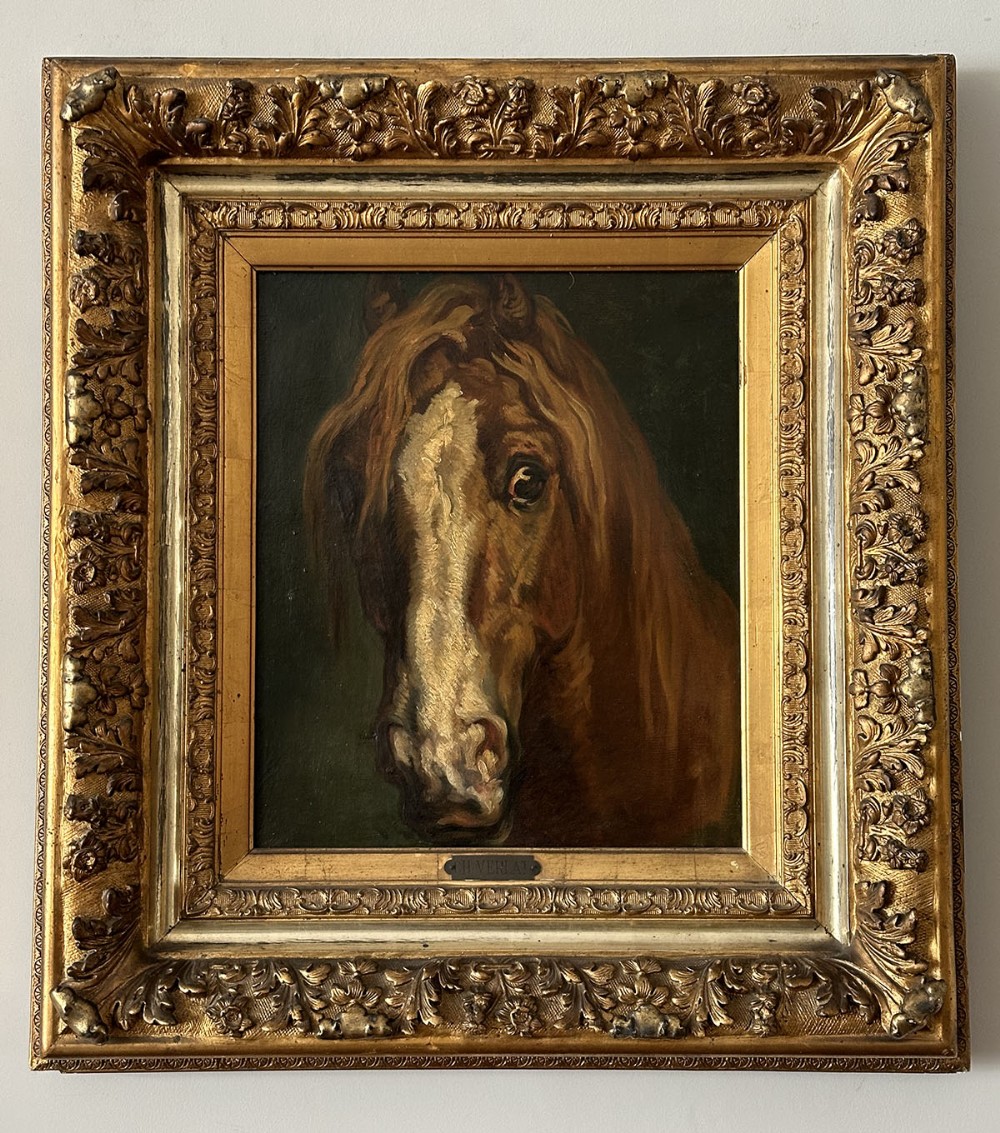
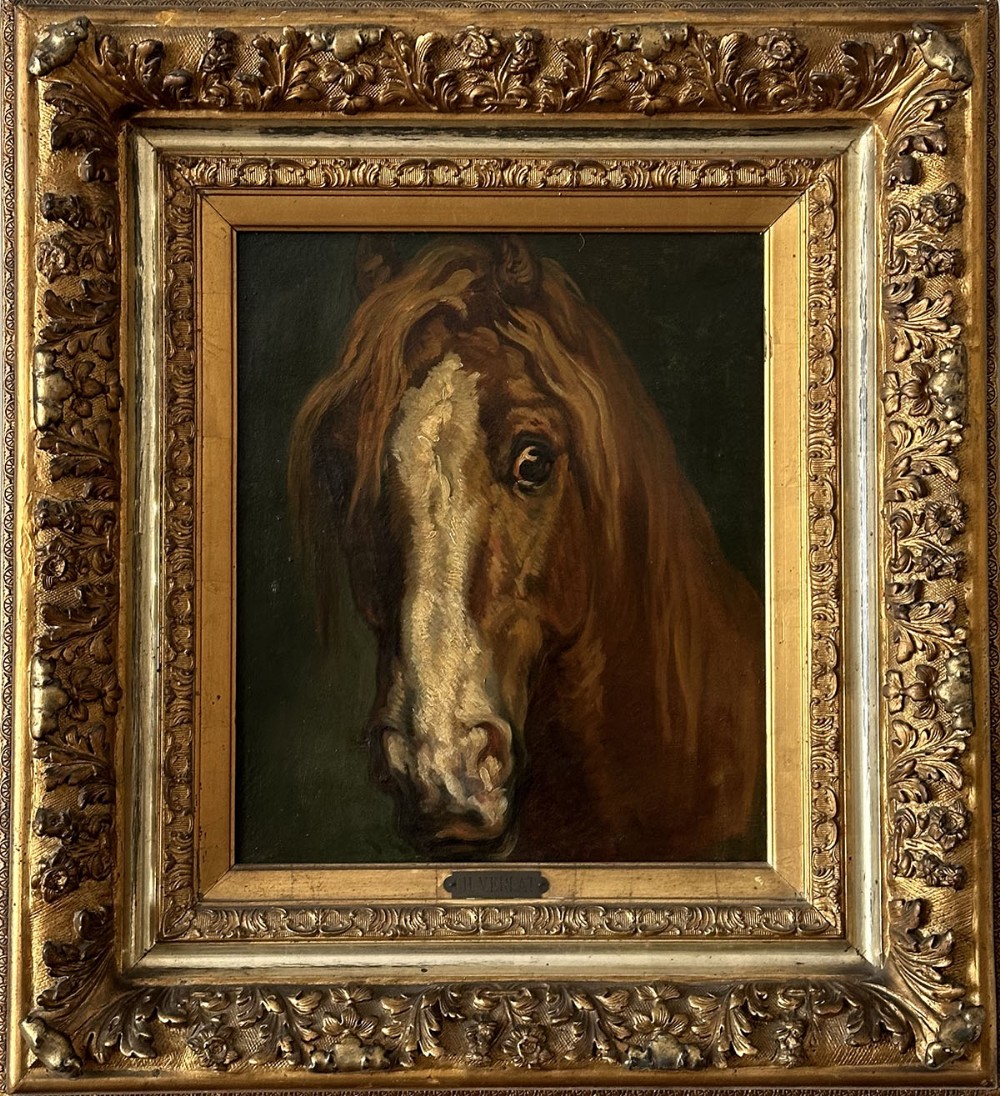
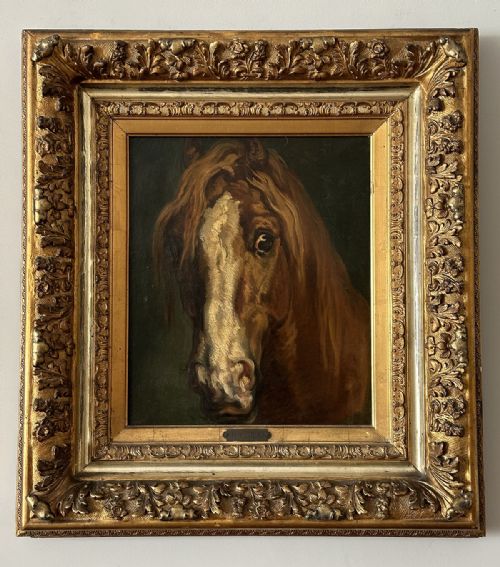
Rue des Fontenelles has dated this piece to the 19th Century.
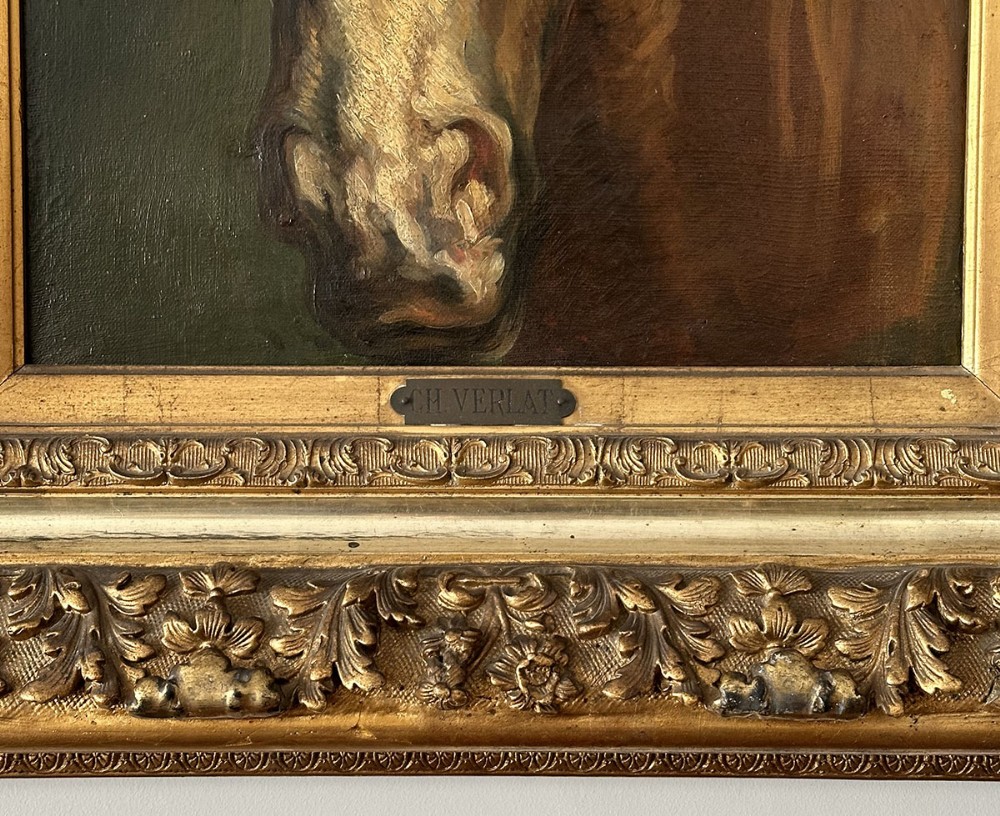
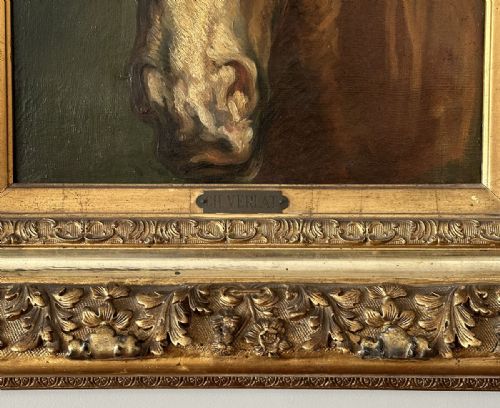
Verlat (25 November 1824 – 23 October 1890) was a Belgian painter, watercolorist, engraver (printmaker), art educator and director of the Antwerp Academy. He painted many subjects and was particularly known as an animalier and portrait painter. He also created Orientalist works, genre scenes, including a number of singeries, religious compositions and still lifes. He was educated at the Academy in Antwerp under the direction of G. Wappers and N. De Keyser. He was a professor of drawing and director of the Antwerp Academy when Vincent van Gogh spent a brief period as a student at the Academy in 1886. The two men got into arguments about van Gogh's unconventional style of drawing. He was also a student of E. Hamman and J. Lies.
Verlat stayed in Paris from 1850 to 1868 and took lessons there under the guidance of A. Scheffer, H. Flandrin and Th. Couture and came into contact with G. Courbet. He was teacher and director at the Kunstschule in Weimar from 1869 to 1874. He traveled to Egypt, Syria and Palestine between 1875 and 1877 and exhibited the works created during this trip in 1877 in a specially built hall in Antwerp. After his return from the Near East, he played an eminent role in Antwerp's art scene. He has realized historical compositions, genre scenes, portraits and animals. As a follower of realism à la Courbet, he developed into a proponent of naturalism in art. The genre painting was raised to monumental dimensions. In this regard, one should look at his grandiose panoramas such as The Battle of Waterloo (1881) and the Panorama of Moscow.
As a satirist he painted, watercolors and etched, including, depictions of animals behaving like people. He initially took a progressive stance and gradually evolved towards a traditionalist view, which was highly resented by the newcomers. In 1877 he became an honorary member of the Société Royale Belge des Aquarellistes, in 1877 a teacher and in 1885 director of the Academy in Antwerp. His class included R. Baseleer, L. Brunin, E. Chappel, L. and P. Van Engelen, E. Larock, H. Luyten, Ch. Mertens, J. Rosier, H. Van De Velde, Ch. Tree. He is mentioned in the Biography Nationale of the Royal Academy of Belgium, volume XXXII. He is also mentioned in BAS I and Two Centuries of Signatures of Belgian Artists. (piron)
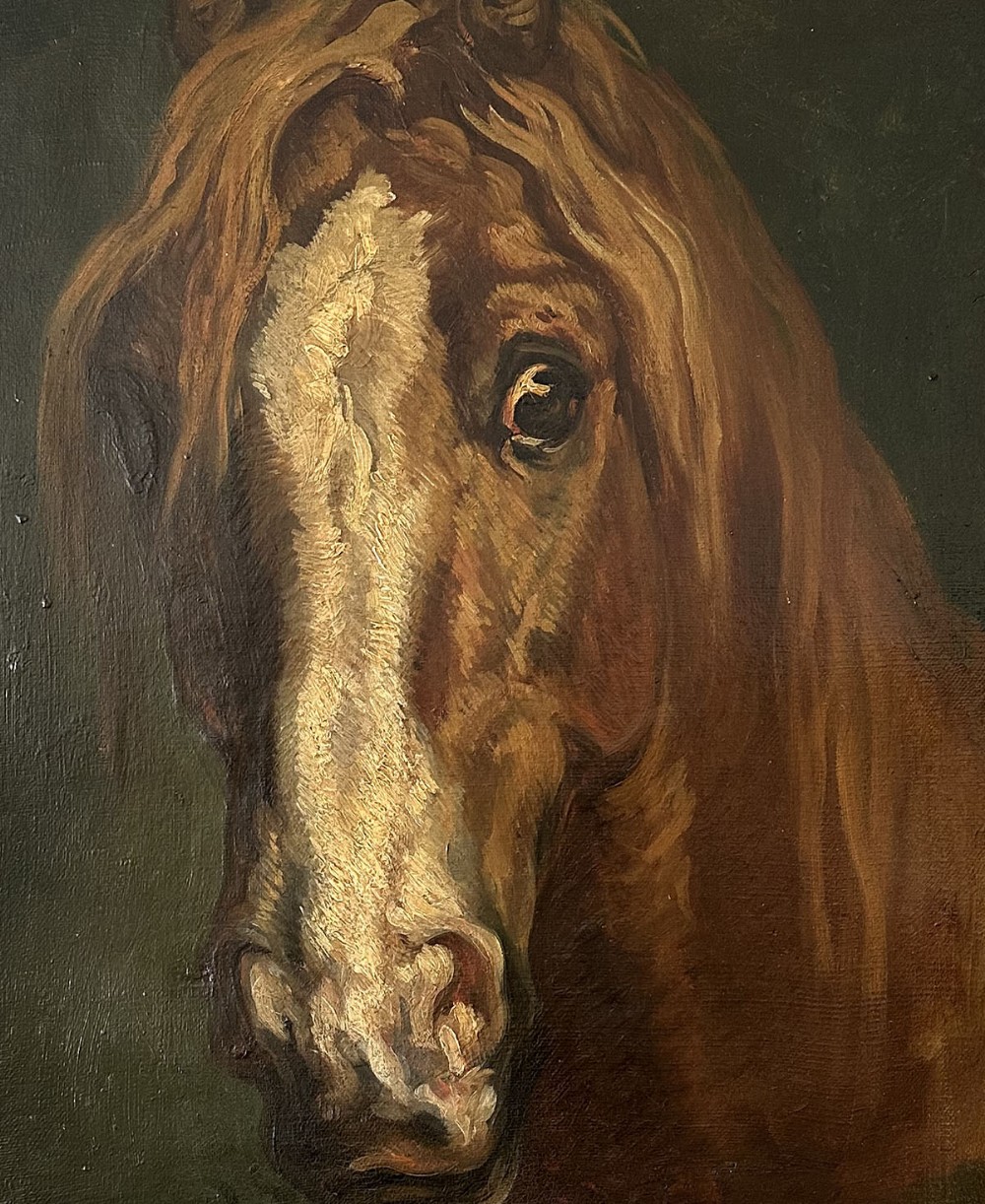
During his lifetime he was recognised as an important animal painter. He was able to paint animals in a lively and realist manner. One of his early animal works was acquired by the English animal painter Edwin Landseer. One of the best known examples of his art in this area is 'The defense of the Herd' (1878, Royal Museum of Fine Arts Antwerp). Painted during his Palestine residence it has the muted palette that he adopted during this period. It shows the kind of dynamic representation of animals only interactions that can be seen in the animal paintings of earlier Flemish animaliers such as Frans Snyders. Verlat painted many works in the genre of the singeries, i.e. humoristic renderings of monkeys engaging in human activities.
He also painted religious subjects and his Pietà of 1866 was so successful that it earned him the distinction of being appointed a knight in the French Legion of Honour. There are several of his works in Museums.
Dimensions - 76 x 69 x 9 cm
Rue des Fontenelles has dated this piece to the 19th Century.
Specialists in french antiiques, decorative objects and french and european paintings.
You can view the stock and full dealer information on the Rue des Fontenelles Profile Page
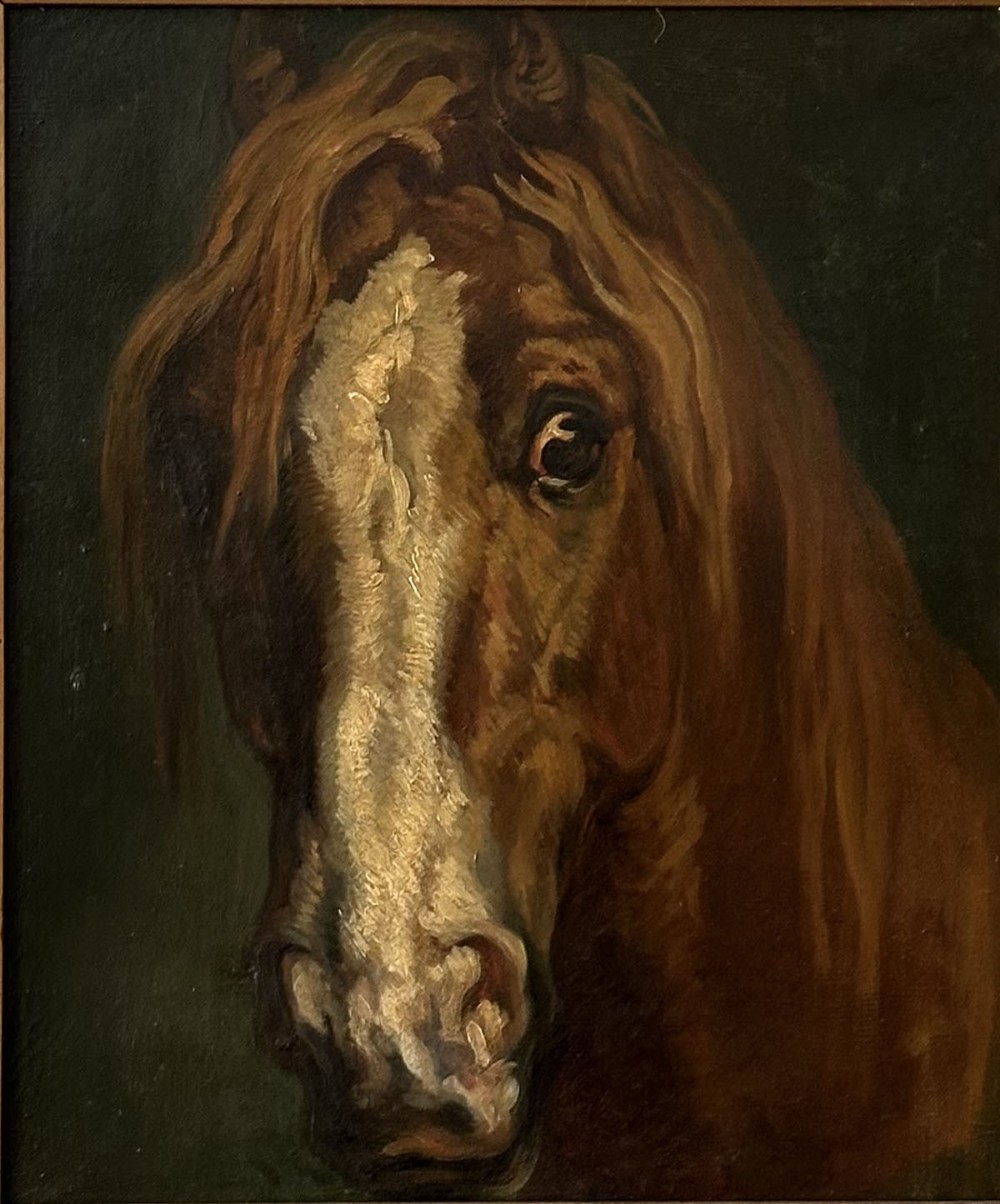
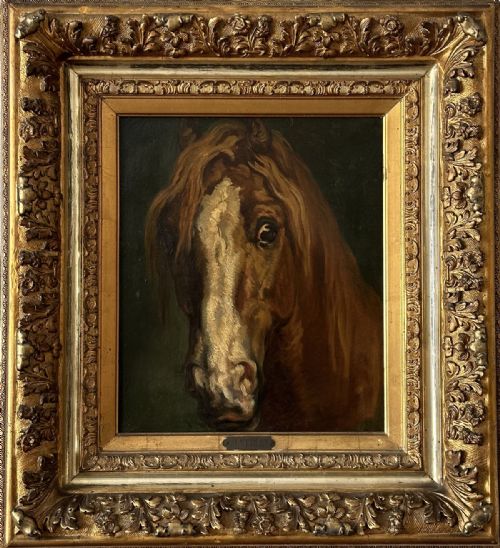
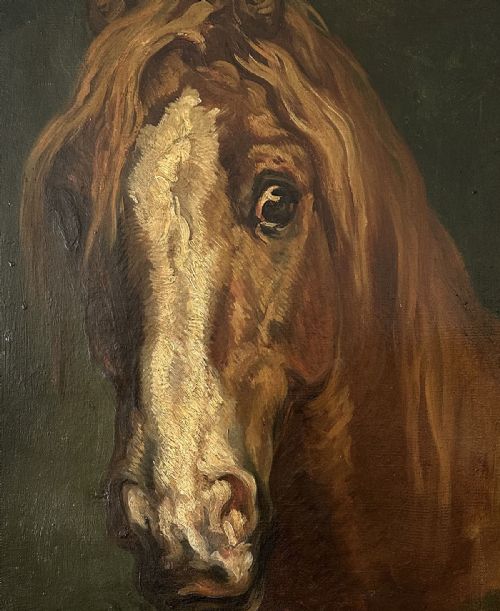
Chestnut Horse - Antique Oil Painting