12,013  PAGES BROWSED TODAY PAGES TODAY 23  ANTIQUES UPLOADED TODAY NEW ARRIVALS
ID #SA1082564
SOLD
Email
Save
Antique Japanese Kutani Vase, Japan, Meiji Era (1868-1912).
Gillers Antiques Ltd
sold SA1082564
Sorry, but this item has been sold.
Gillers Antiques Ltd

Gillers Antiques Ltd

Sellingantiques Verified Since Mar 2023
View Dealers Stock Page
Id #SA1082564
PDF SHARE
SAVE

Antique Japanese Kutani Vase, Japan, Meiji Era (1868-1912).

19th century
Description

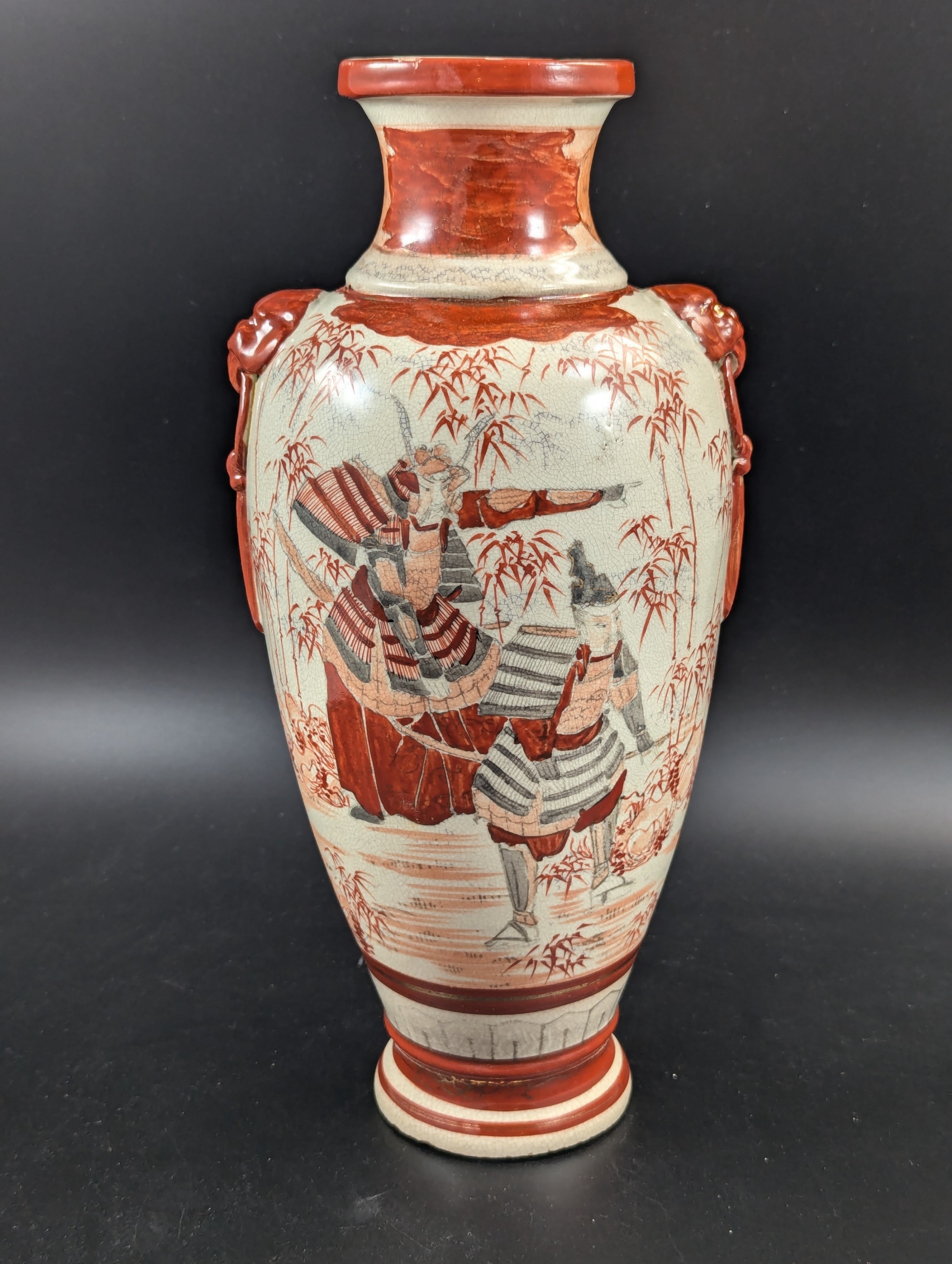
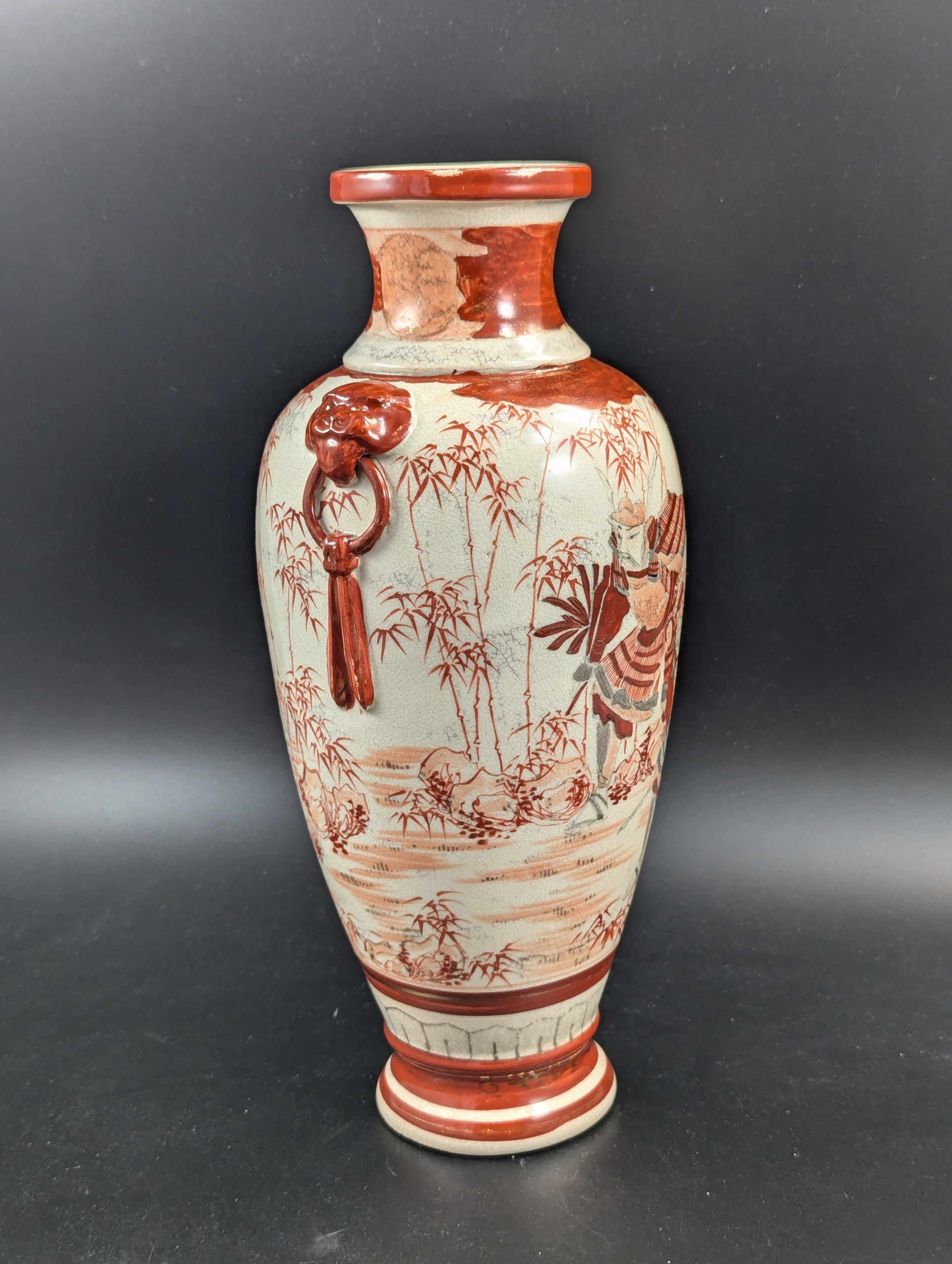
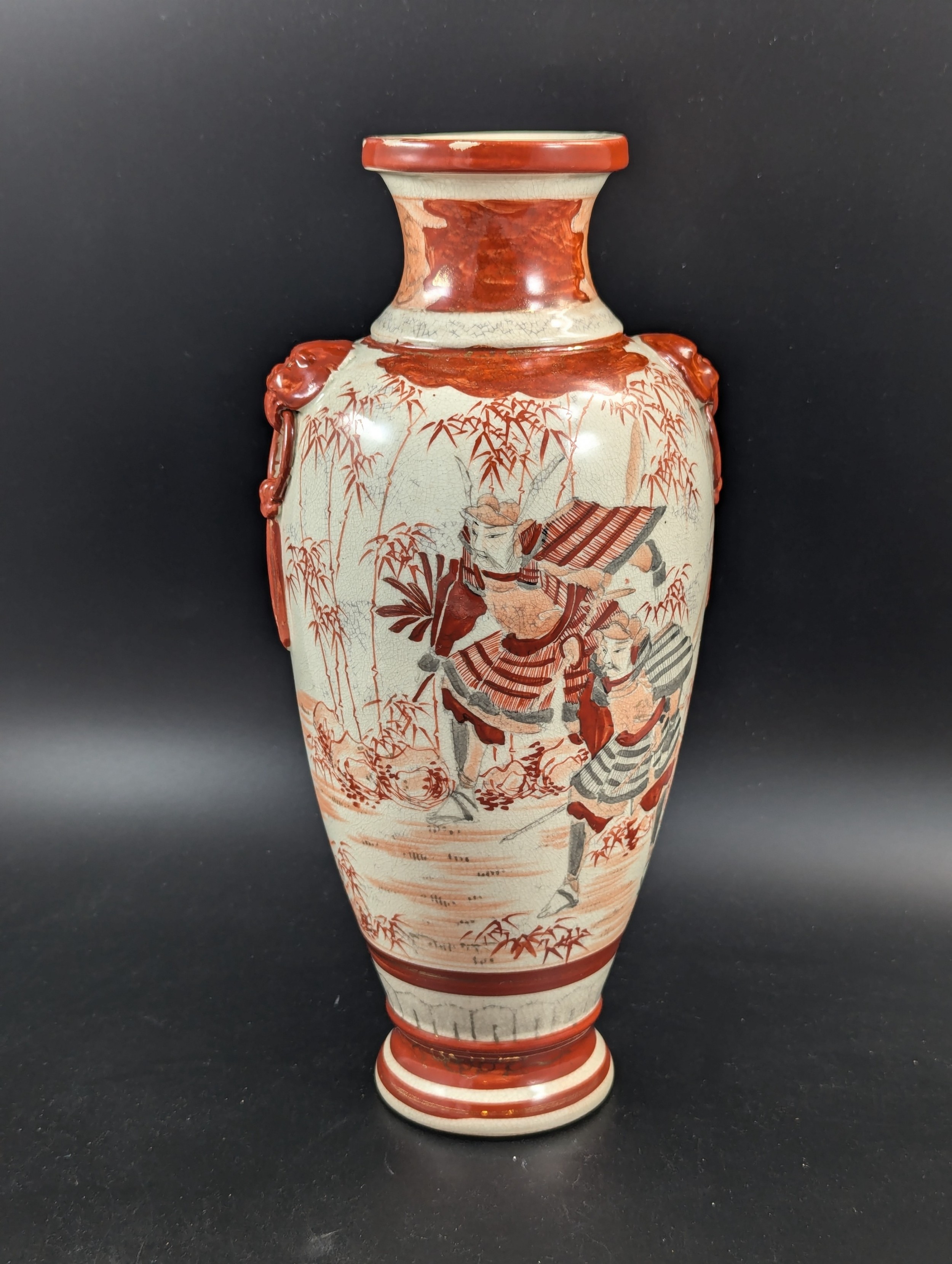
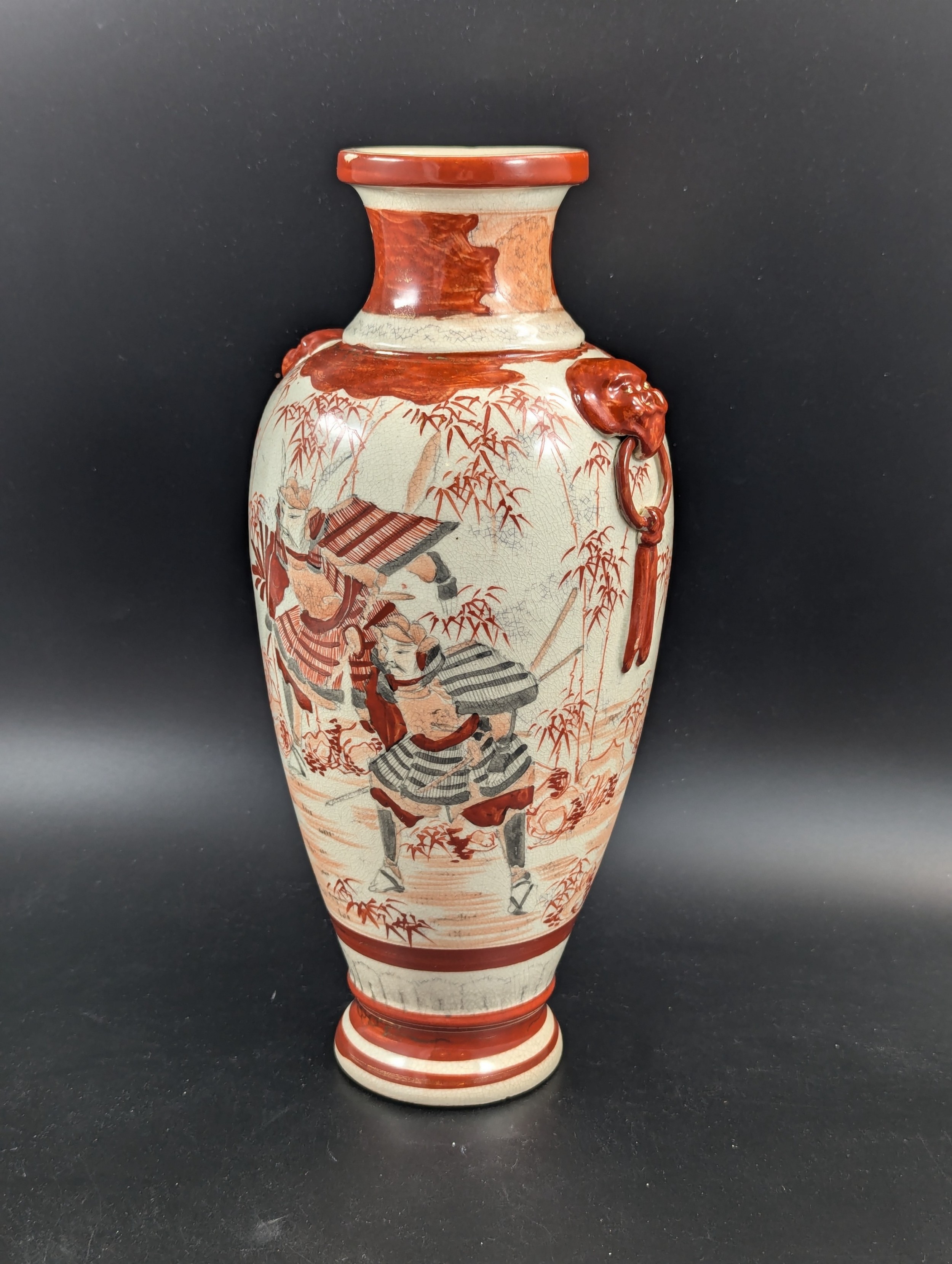
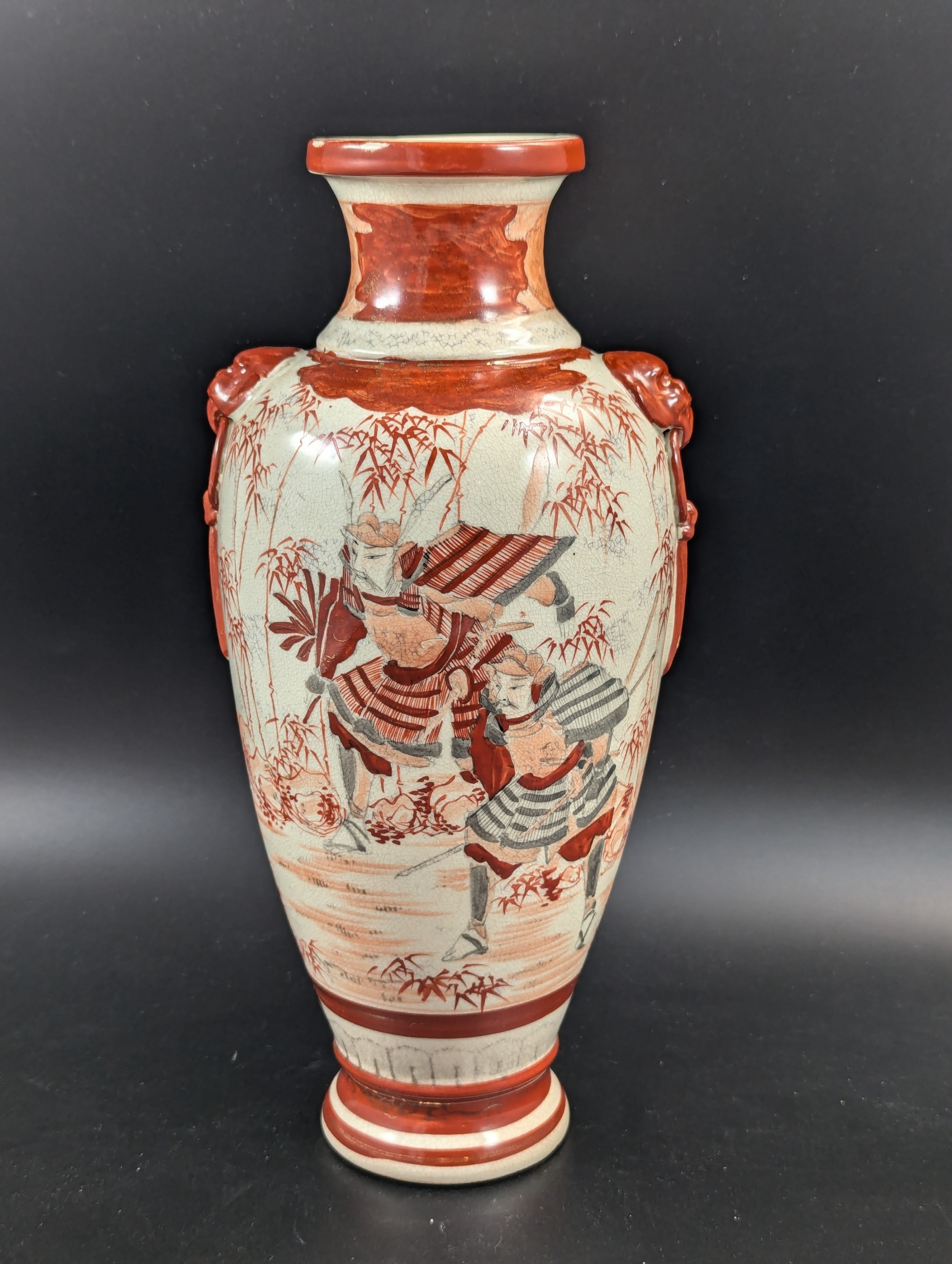
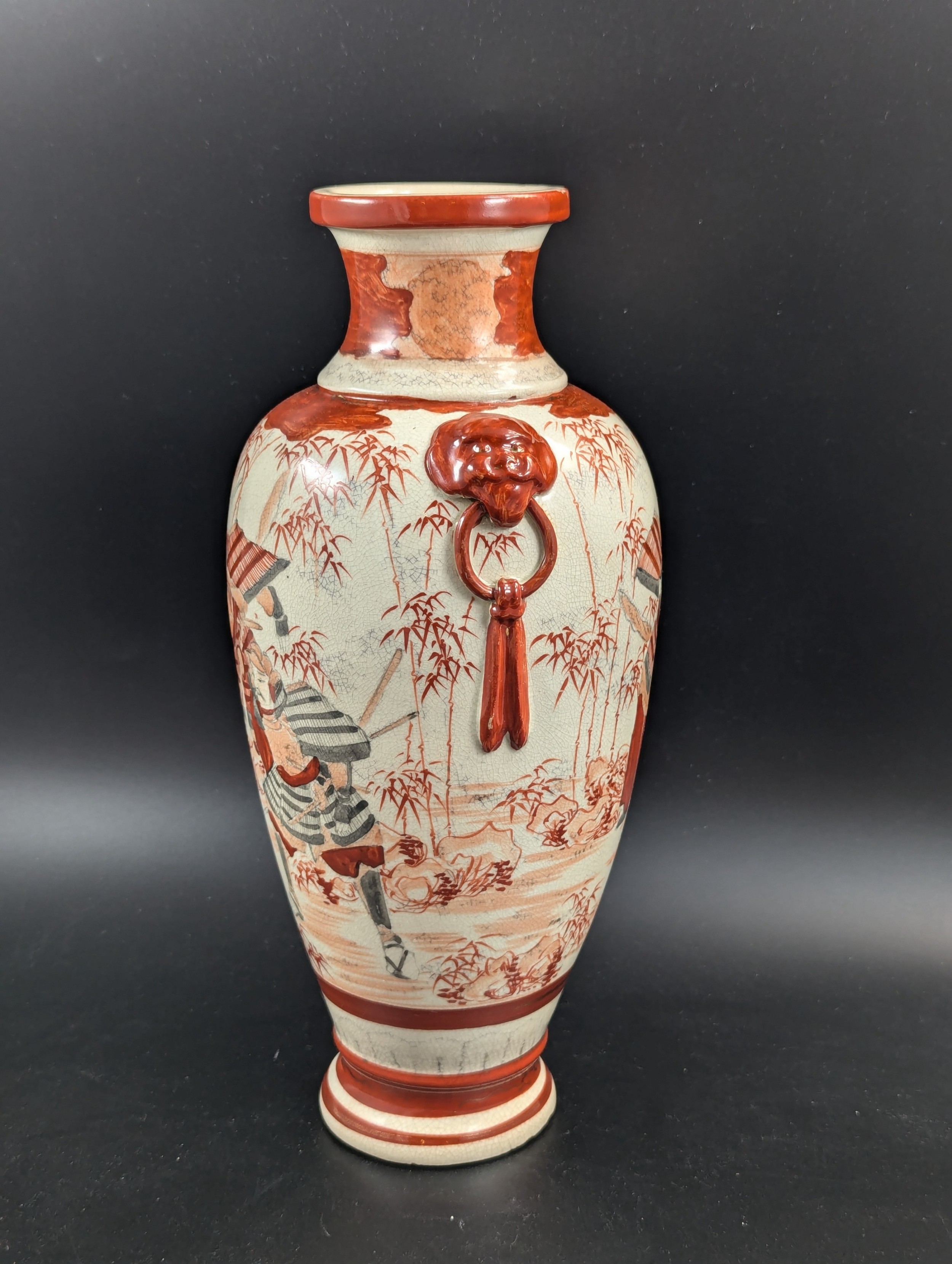
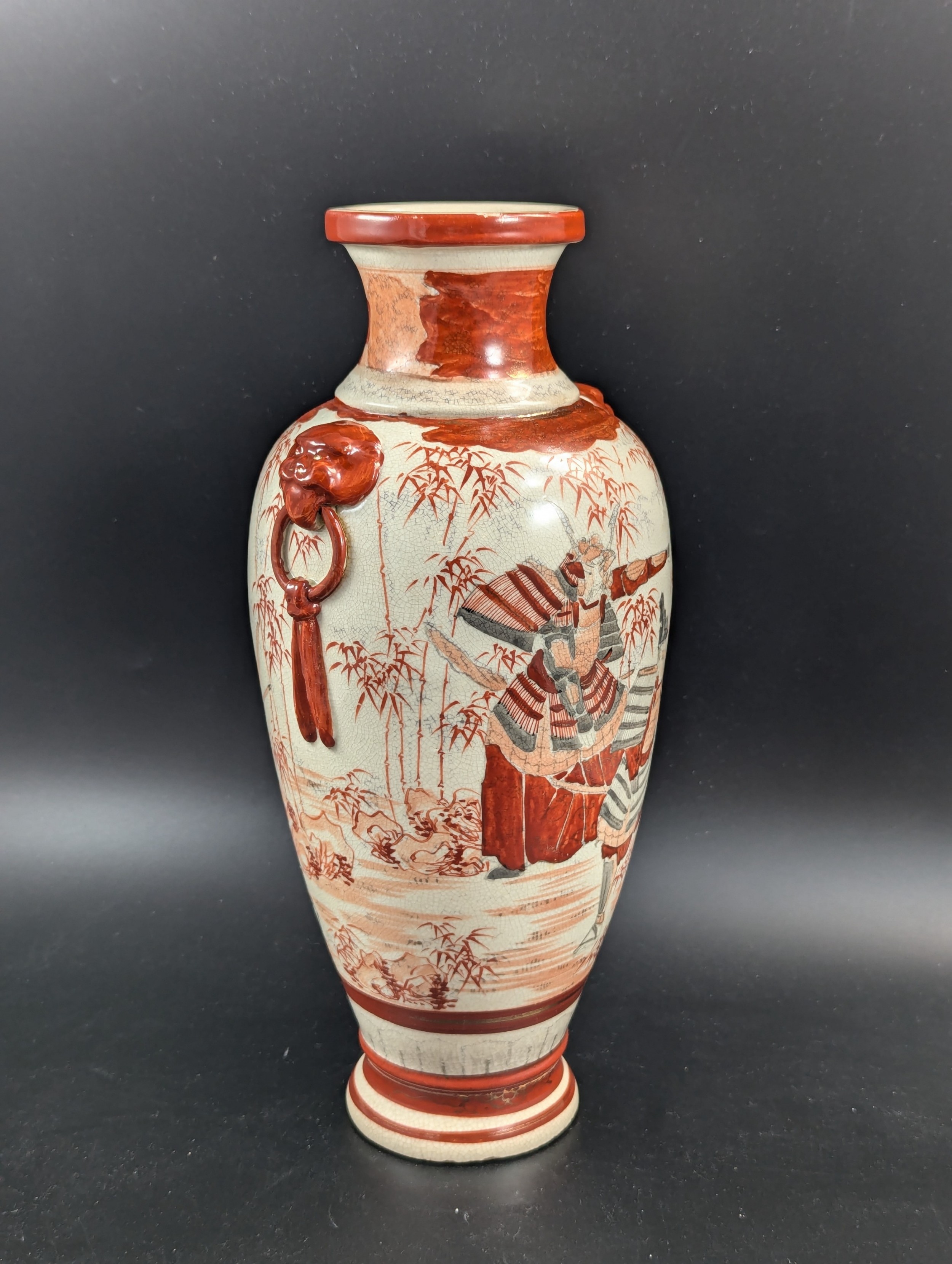
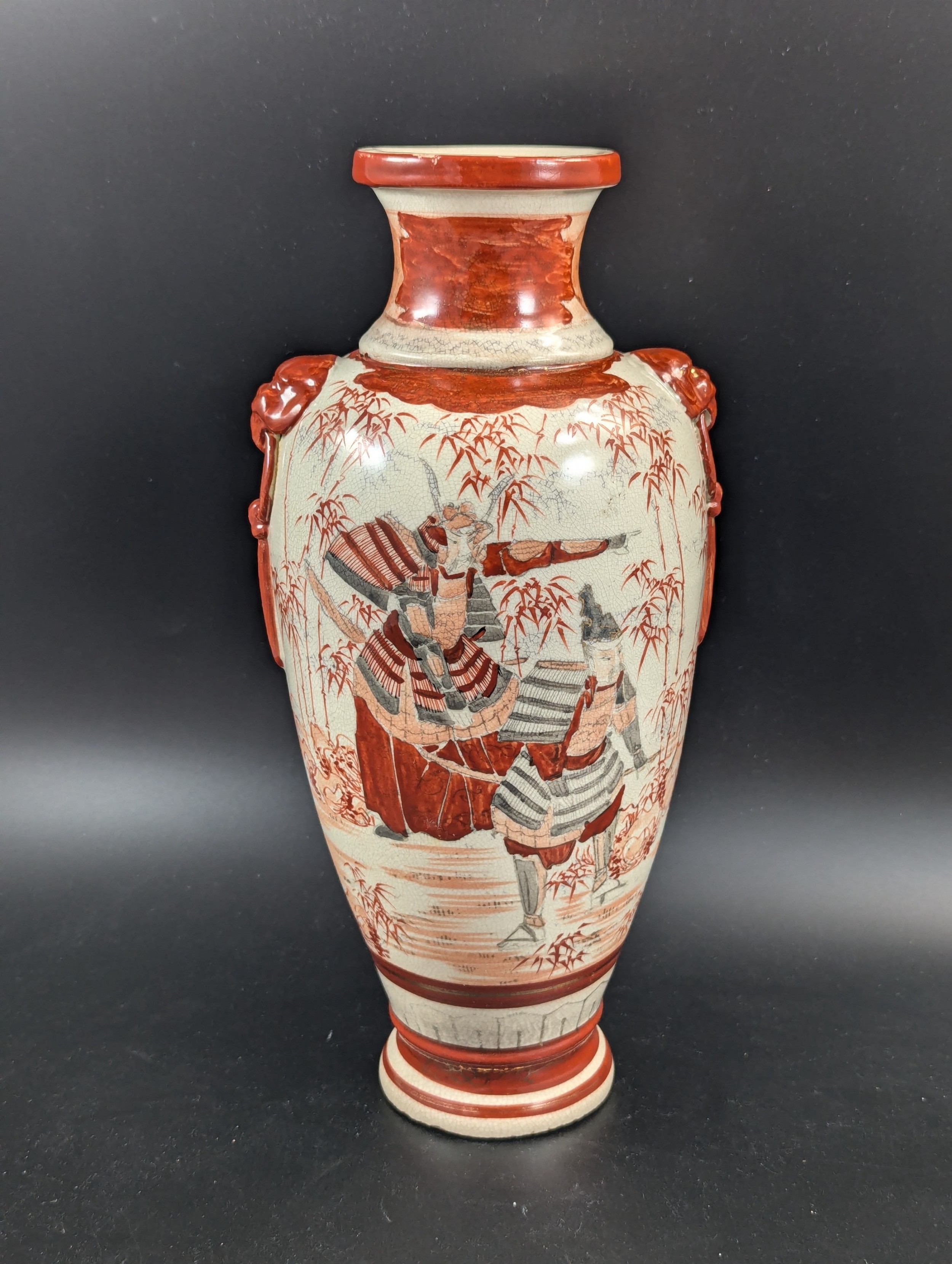
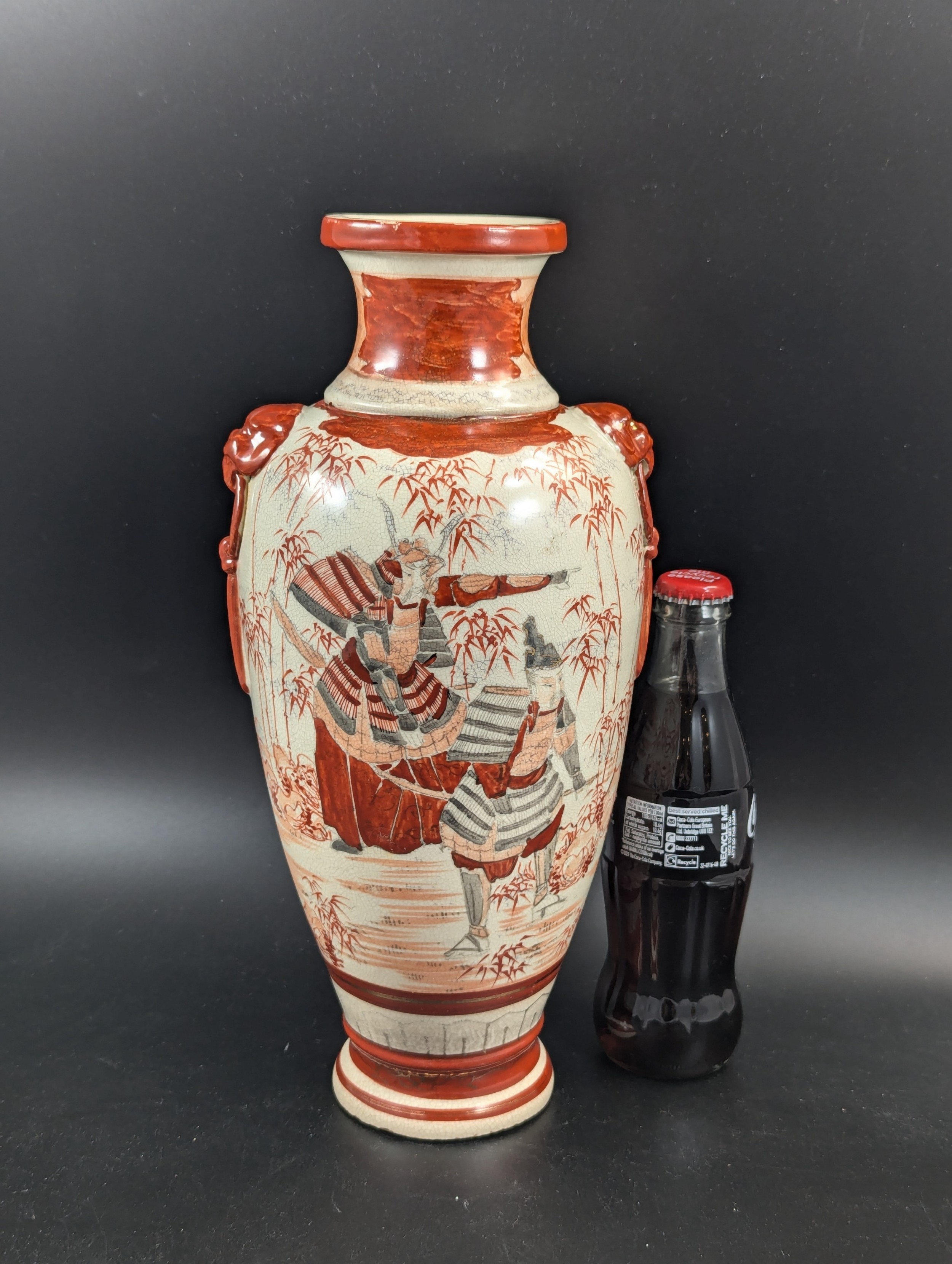
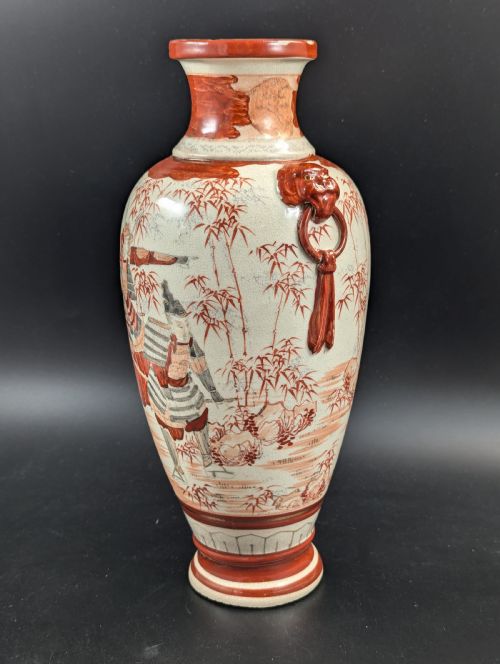
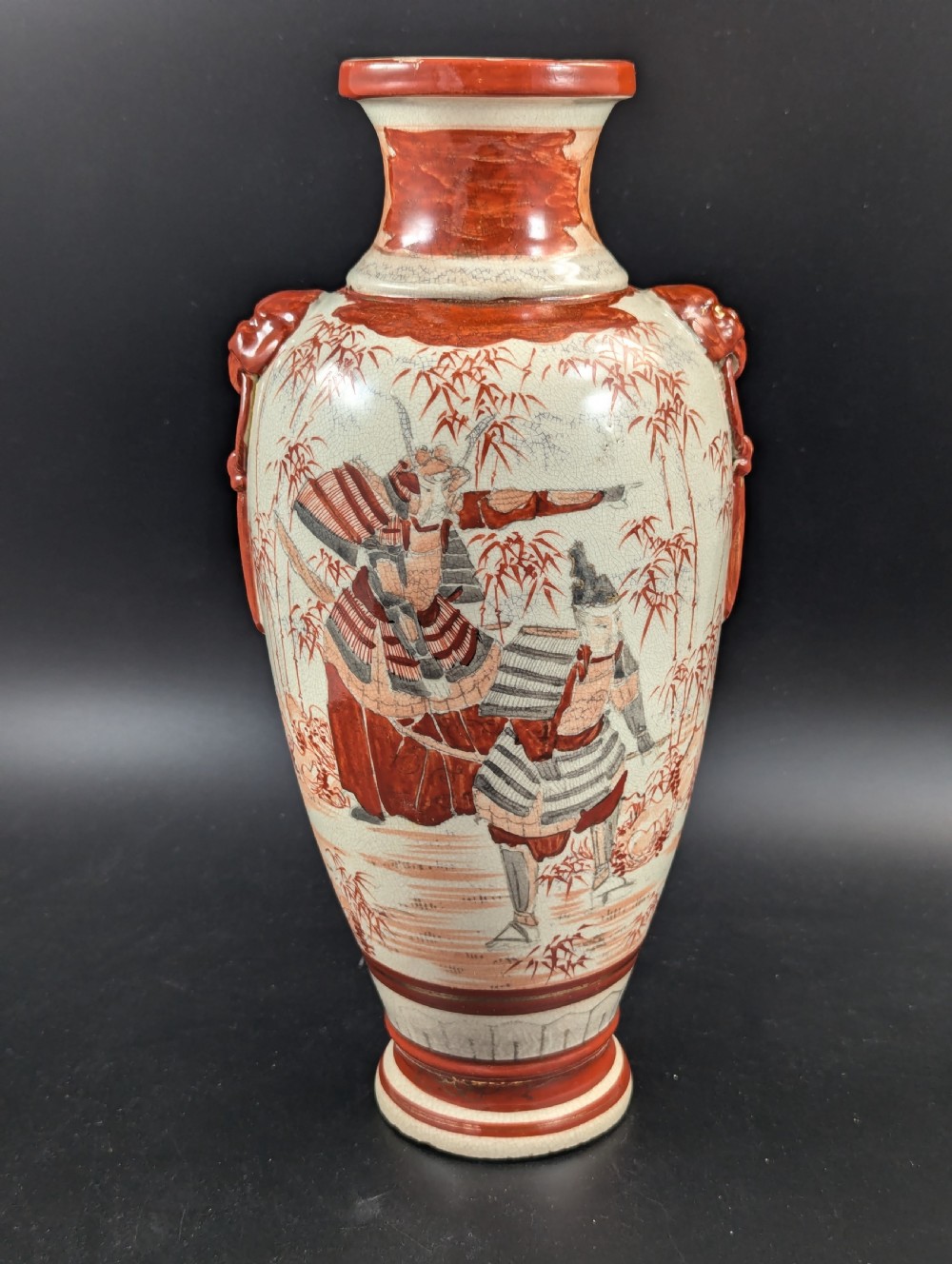
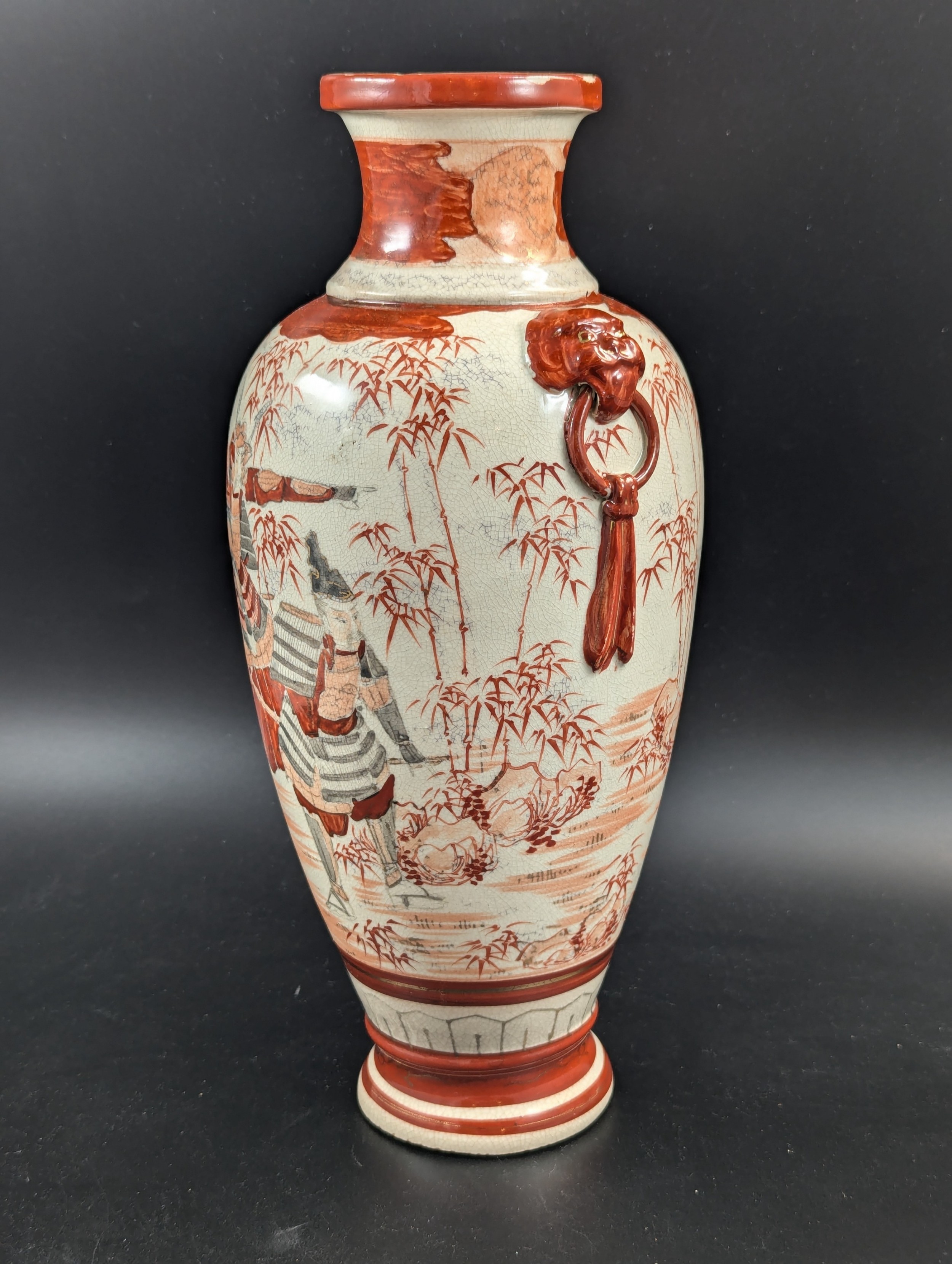
Impressive Japanese Kutani hand-painted earthenware vase of baluster form with stylized handles on the vase shoulder in the form of mythological creatures that protect against evil spirits. The body is decorated with figures of 4 samurai warriors dressed in military armour and preparing for battle against a backdrop of a continuous bamboo landscape.

To know that the vase was painted by a real master, just look at the perfectly painted faces of the samurai.

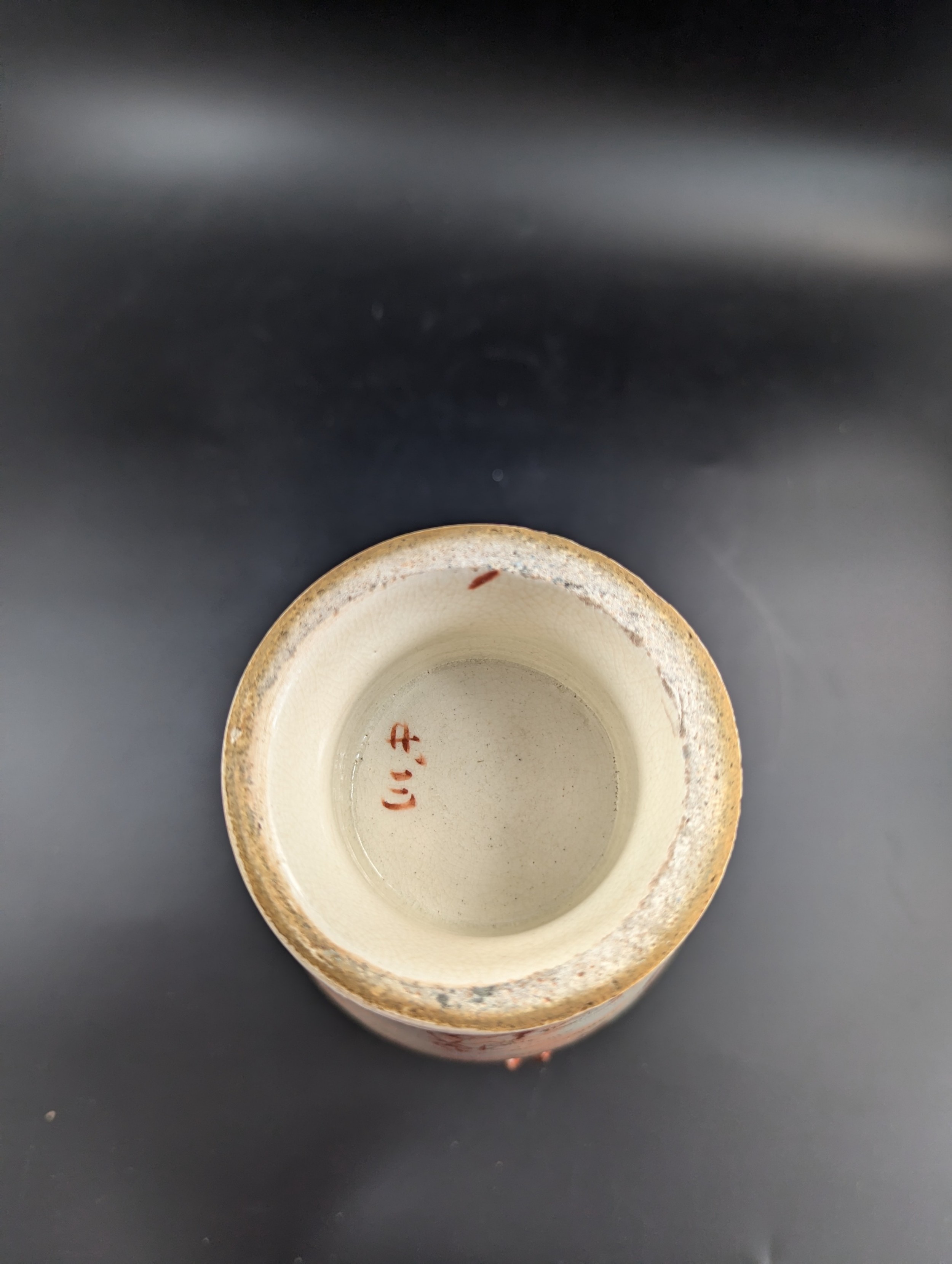
Decorations on Kutani earthenware were often based on folk history and culture, a typical pattern being the "three friends," namely plum, bamboo, and pine; in our case, it is bamboo. One of the main Kutani typical colors is brownish red. The base is signed in iron-red.

Kutani ware is a type of Japanese pottery that is usually decorated with overglaze painting. Like Imari ware, it is made from clay that is dried before firing. A special type of glaze is used to create the rich pictorial ornamentation and vivid lines that characterize this style. The history of Kutani dates back to 1655, when the first pottery kiln was opened in Kaga, Ishikawa. Production of Kutani ware ceased towards the end of the 17th century, and it was not until the 19th century that production was revived. This was during the Meiji period, when Japan was finally able to open its borders and begin to make contact with the rest of the world. Kutani ware was one of the first pottery styles to be exported outside Japan.

Kutani pottery is classified according to its age. The early period, called the Ko-Kutani era, is extremely rare. However, the later Saiko-Kutani period, which began in the 19th century, was a period of revival of this art.

Height: 31.7 cm, width: 14 cm, depth: 13 cm. Weight: 1083 grams

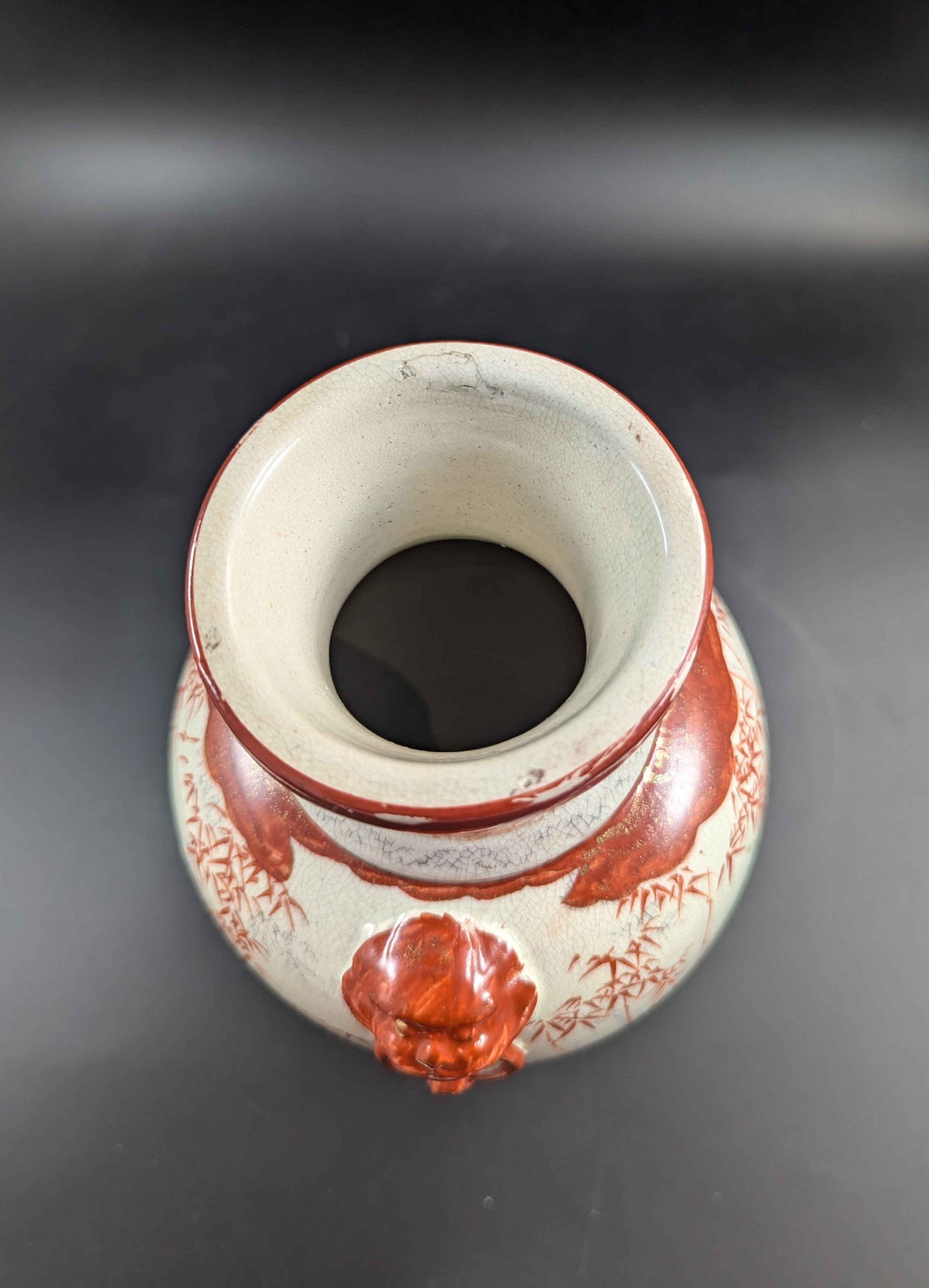
Condition: Slight loss of paint on the rim, minimal loss of gilding consistent with age. Small fleabite on the bottom, small traces of firing at the top of the neck. Overall, the vase is in excellent antique condition.

Please study the accompanying photographs carefully as they form an integral part of this description. The item will be shipped with full tracking and insurance. It is important to note that shipping costs include labour, packaging, and postage.

Declaration

Gillers Antiques Ltd has dated this piece to the 19th Century.
Reference Numbers
Sellingantiques Reference
SA1082564
Description
Impressive Japanese Kutani hand-painted earthenware vase of baluster form with stylized handles on the vase shoulder in the form of mythological creatures that protect against evil spirits.
The body is decorated with figures of 4 samurai warriors dressed in military armour and preparing for battle against a backdrop of a continuous bamboo landscape.
Gillers Antiques Ltd
fig 1. Antique Japanese Kutani Vase, Japan, Meiji era (1868-1912).
fig 1. Antique Japanese Kutani Vase, Japan, Meiji Era (1868-1912).

To know that the vase was painted by a real master, just look at the perfectly painted faces of the samurai.

Decorations on Kutani earthenware were often based on folk history and culture, a typical pattern being the "three friends," namely plum, bamboo, and pine; in our case, it is bamboo. One of the main Kutani typical colors is brownish red. The base is signed in iron-red.
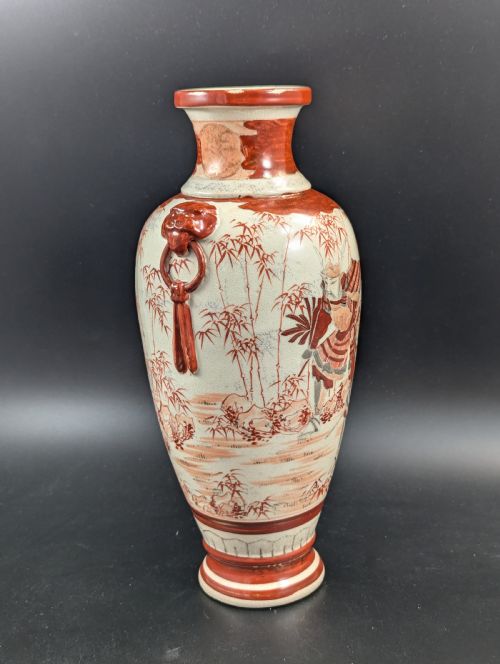
fig 2. Antique Japanese Kutani Vase, Japan, Meiji era (1868-1912).
fig 2. Antique Japanese Kutani Vase, Japan, Meiji Era (1868-1912).

Kutani ware is a type of Japanese pottery that is usually decorated with overglaze painting. Like Imari ware, it is made from clay that is dried before firing. A special type of glaze is used to create the rich pictorial ornamentation and vivid lines that characterize this style. The history of Kutani dates back to 1655, when the first pottery kiln was opened in Kaga, Ishikawa. Production of Kutani ware ceased towards the end of the 17th century, and it was not until the 19th century that production was revived. This was during the Meiji period, when Japan was finally able to open its borders and begin to make contact with the rest of the world. Kutani ware was one of the first pottery styles to be exported outside Japan.
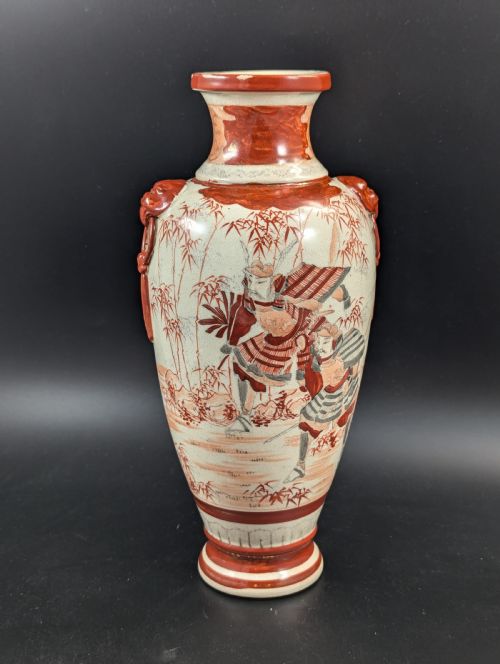
fig 3. Antique Japanese Kutani Vase, Japan, Meiji era (1868-1912).
fig 3. Antique Japanese Kutani Vase, Japan, Meiji Era (1868-1912).

Kutani pottery is classified according to its age. The early period, called the Ko-Kutani era, is extremely rare. However, the later Saiko-Kutani period, which began in the 19th century, was a period of revival of this art.
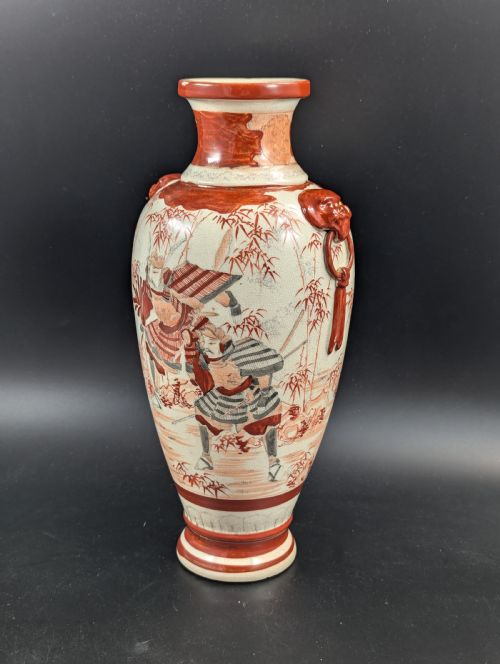
fig 4. Antique Japanese Kutani Vase, Japan, Meiji era (1868-1912).
fig 4. Antique Japanese Kutani Vase, Japan, Meiji Era (1868-1912).

Height: 31.7 cm, width: 14 cm, depth: 13 cm. Weight: 1083 grams

Condition: Slight loss of paint on the rim, minimal loss of gilding consistent with age. Small fleabite on the bottom, small traces of firing at the top of the neck. Overall, the vase is in excellent antique condition.
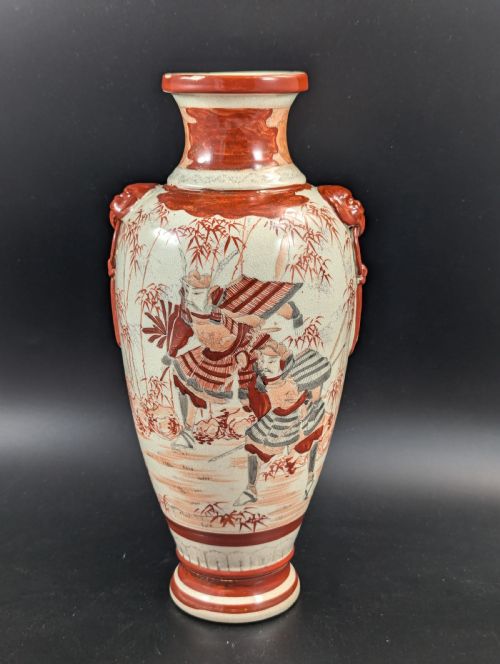
fig 5. Antique Japanese Kutani Vase, Japan, Meiji era (1868-1912).
fig 5. Antique Japanese Kutani Vase, Japan, Meiji Era (1868-1912).

Please study the accompanying photographs carefully as they form an integral part of this description. The item will be shipped with full tracking and insurance. It is important to note that shipping costs include labour, packaging, and postage.

Date of Manufacture

Gillers Antiques Ltd has dated this piece to the 19th Century.

Reference Numbers
Sellingantiques Ref
SA1082564
Gillers Antiques Ltd
Sellingantiques verified Since Mar 2023
Dealer Profile

You can view the stock and full dealer information on the Gillers Antiques Ltd Profile Page
PDF SHARE
SAVE
Antique Japanese Kutani Vase, Japan, Meiji era (1868-1912).
1 / 12
Archive I Antique Japanese Kutani Vase, Japan, Meiji era (1868-1912).

Antique Japanese Kutani Vase, Japan, Meiji Era (1868-1912).
Archive II Antique Japanese Kutani Vase, Japan, Meiji era (1868-1912). View II
Archive III Antique Japanese Kutani Vase, Japan, Meiji era (1868-1912). View III
Archive IV Antique Japanese Kutani Vase, Japan, Meiji era (1868-1912). View IV
Archive V Antique Japanese Kutani Vase, Japan, Meiji era (1868-1912). View V
Archive VI Antique Japanese Kutani Vase, Japan, Meiji era (1868-1912). View VI
Archive VII Antique Japanese Kutani Vase, Japan, Meiji era (1868-1912). View VII
Archive VIII Antique Japanese Kutani Vase, Japan, Meiji era (1868-1912). View VIII
Archive IX Antique Japanese Kutani Vase, Japan, Meiji era (1868-1912). View IX
Archive X Antique Japanese Kutani Vase, Japan, Meiji era (1868-1912). View X
Archive XI Antique Japanese Kutani Vase, Japan, Meiji era (1868-1912). View XI
Archive XII Antique Japanese Kutani Vase, Japan, Meiji era (1868-1912). View XII
Enlarged Archival View
Telephone 07738 009924
Location
Buckland House
Buntingford
Hertfordshire
SG9 0PY
United Kingdom
Verified Since Mar 2023
Items For Sale 401
Items Sold 564
Gillers Antiques Ltd
Verified Since Mar 2023
View Dealer Info
Location: Buckland House, Buntingford, Hertfordshire, SG9 0PY, United Kingdom
Verified
Mar 2023
For Sale
401
Sold
564
Antique Japanese Kutani Vase, Japan, Meiji era (1868-1912).
Ref: SA1082564
Antique Japanese Kutani Vase, Japan, Meiji era (1868-1912).
Detail View 1
Detail View 2
Detail View 3
Detail View 4
Detail View 5
Detail View 6
Detail View 7
Detail View 8
Detail View 9
Detail View 10
Detail View 11
Archival Detail
Every single antique dealer on our platform is individually approved by our internal team. We verify their professional trade history, ethical standards, and photographic quality to ensure a secure, high-standard buying environment. Upon joining, every dealer agrees to a strict 9-point code of conduct. While issues can occasionally arise, our dealers typically resolve them swiftly and directly with the buyer. In fact, since our founding in 2002, Sellingantiques has only had to step in to help resolve an issue on roughly five occasions—a true testament to the quality of our dealers and their dedication to your happiness.
Our dealers are highly experienced in packing and shipping fragile, high-value antiques. Because you are in direct contact with the dealer, you will be able to easily go through all available shipping and insurance options together to ensure your item arrives safely.
Antiques are the ultimate green purchase. By choosing historical pieces over newly manufactured goods, you completely eliminate the carbon footprint of modern mass production while preserving exceptional, timeless craftsmanship.
items
Add keywords to the filter
Price
£100
£250000
Era
Movements
Material
Origin
Stock Location
Freshness
Online Payments
Categories