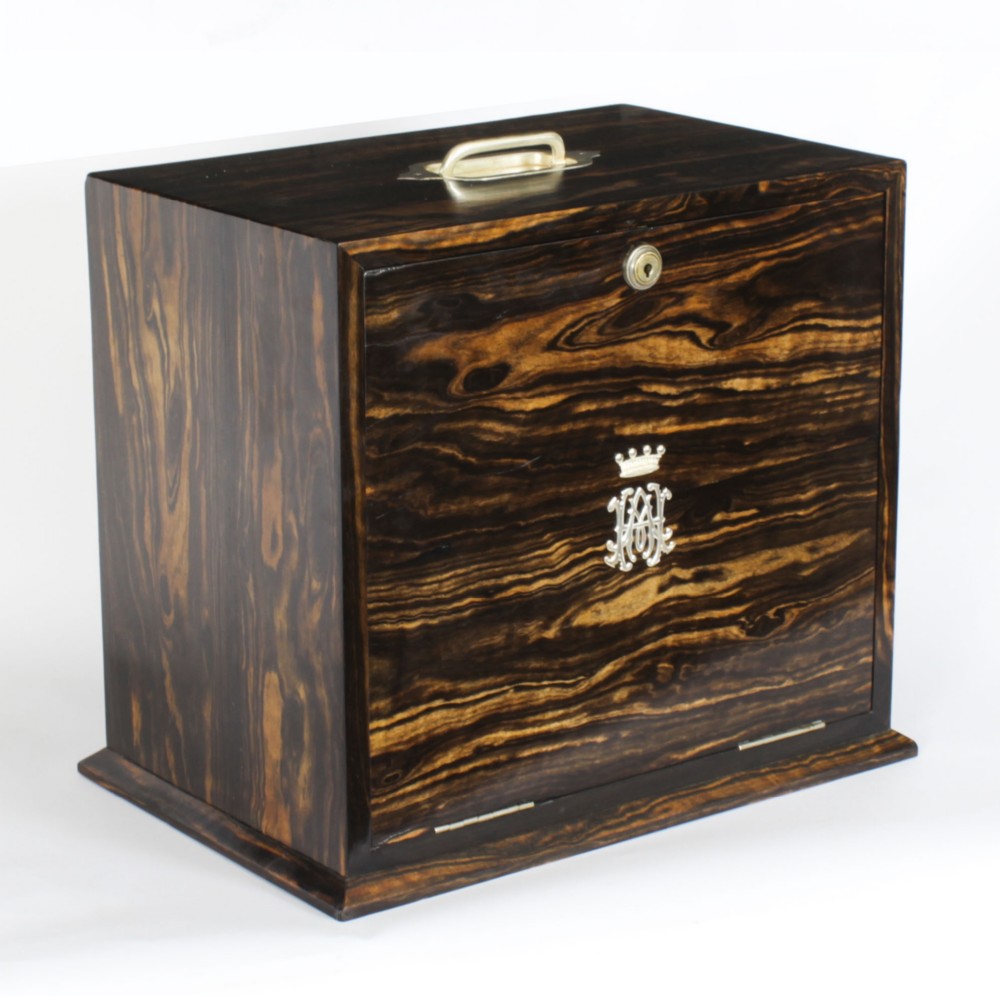
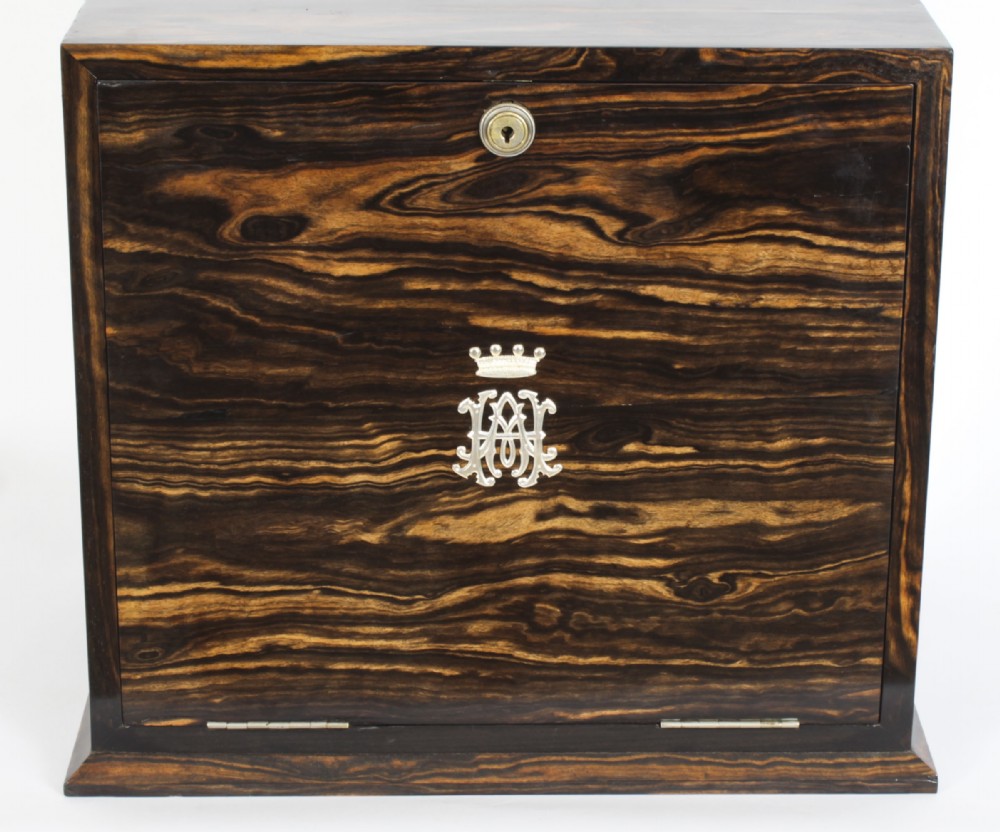
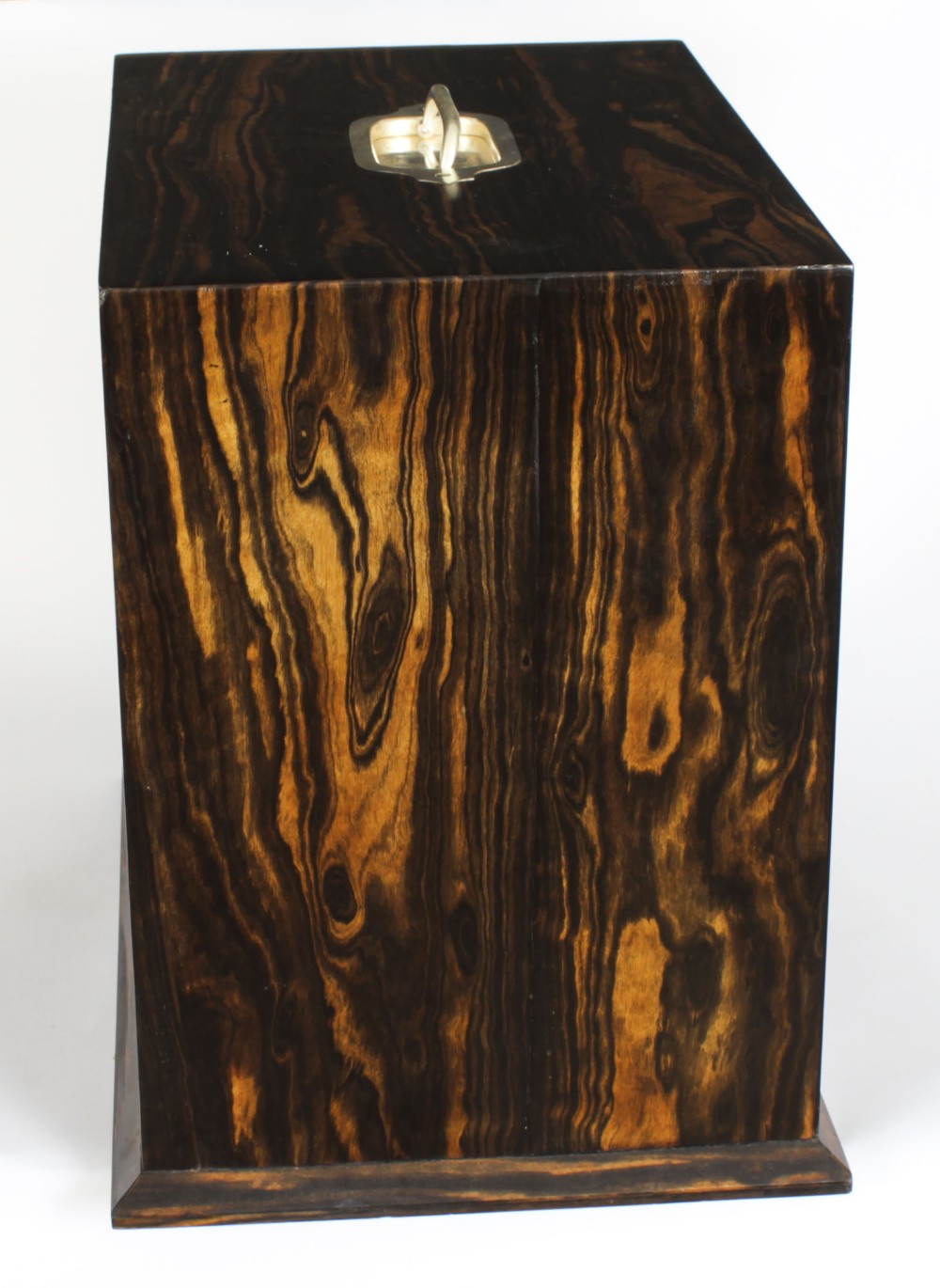
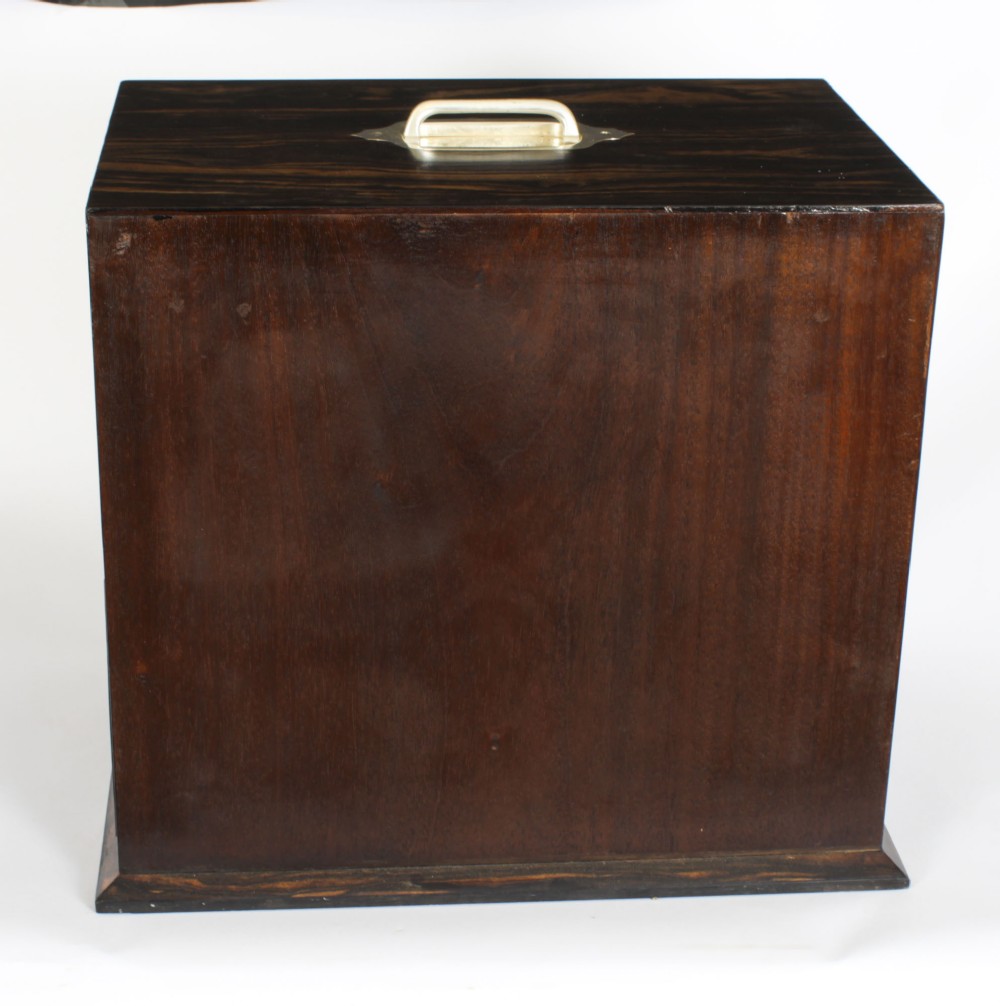
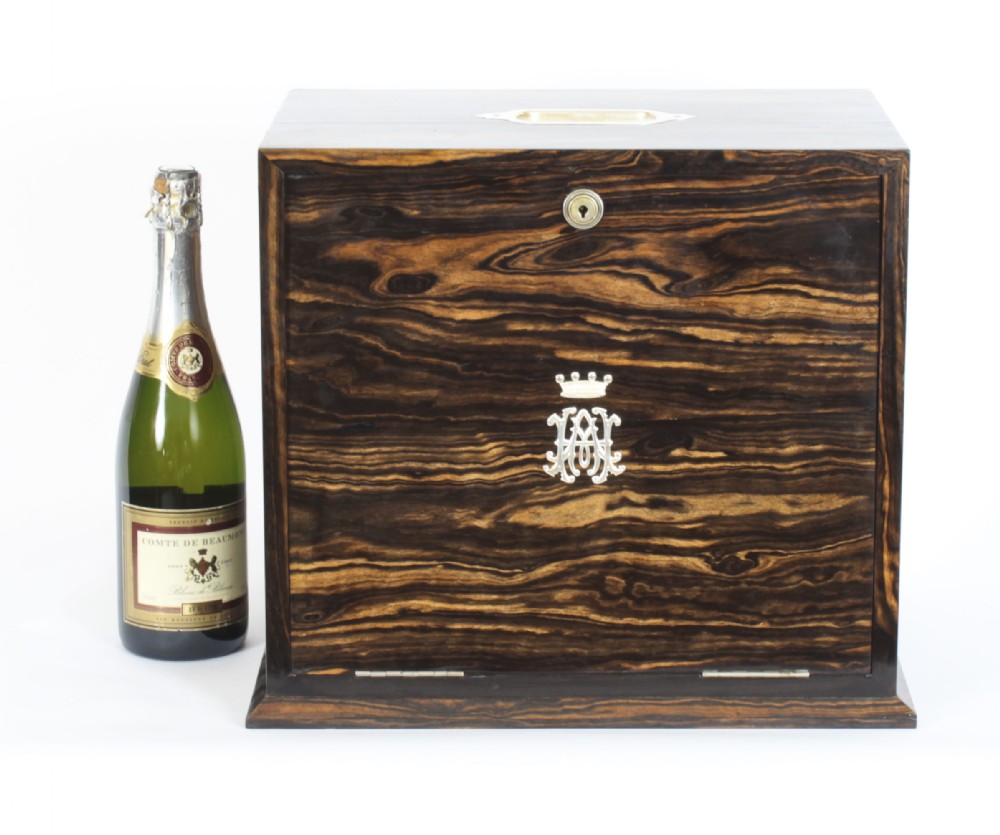
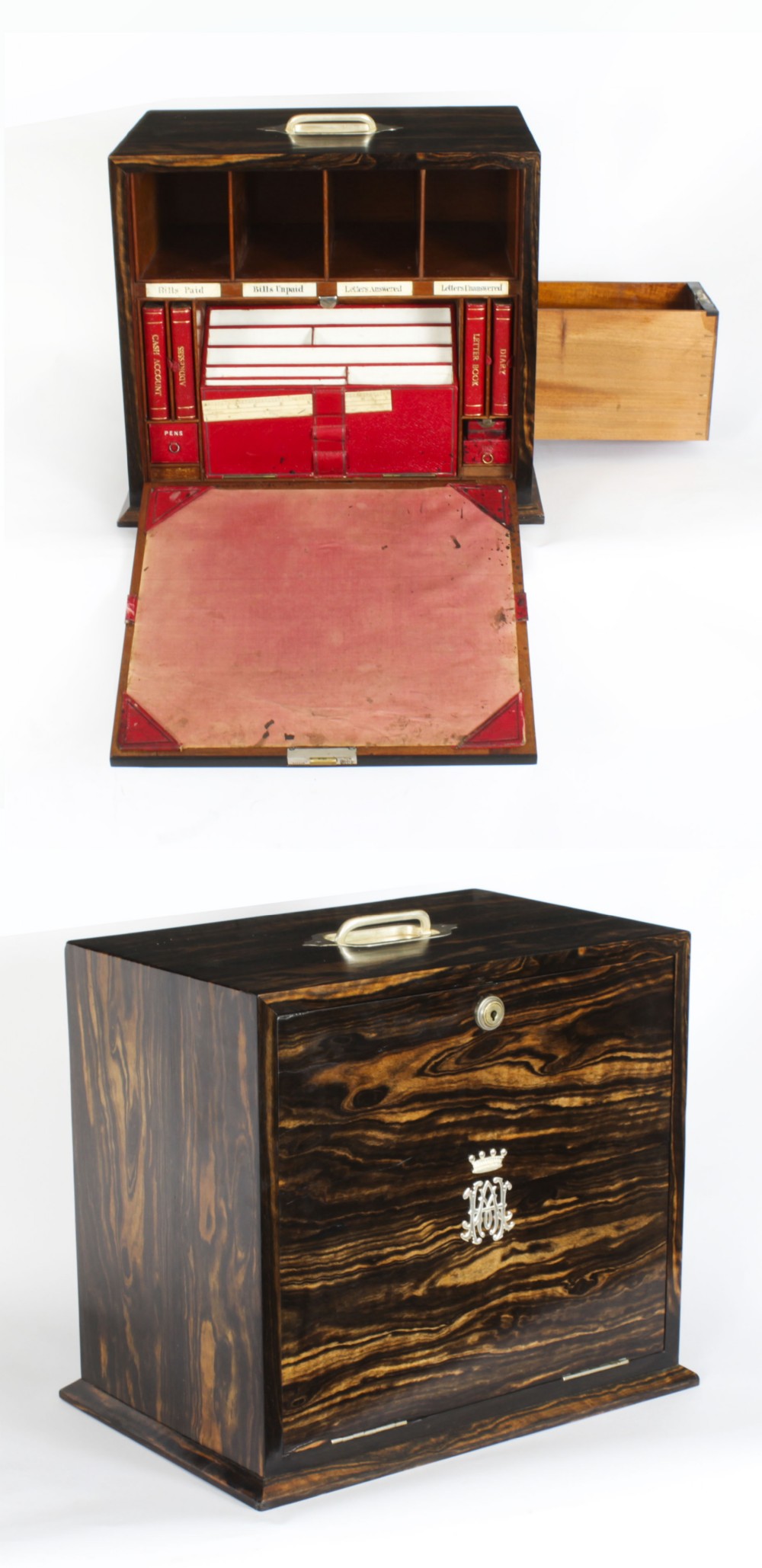
A very fine antique Victorian Coromandel writing or stationary cabinet made by the world famous London box makers and retailers Houghton and Gunn, dated December 1878.
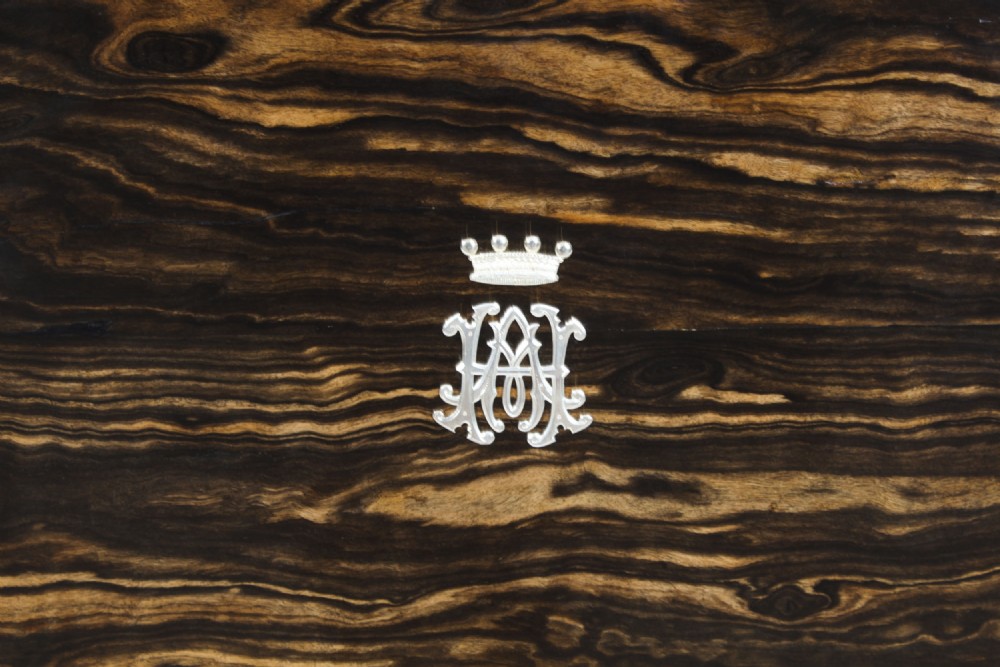
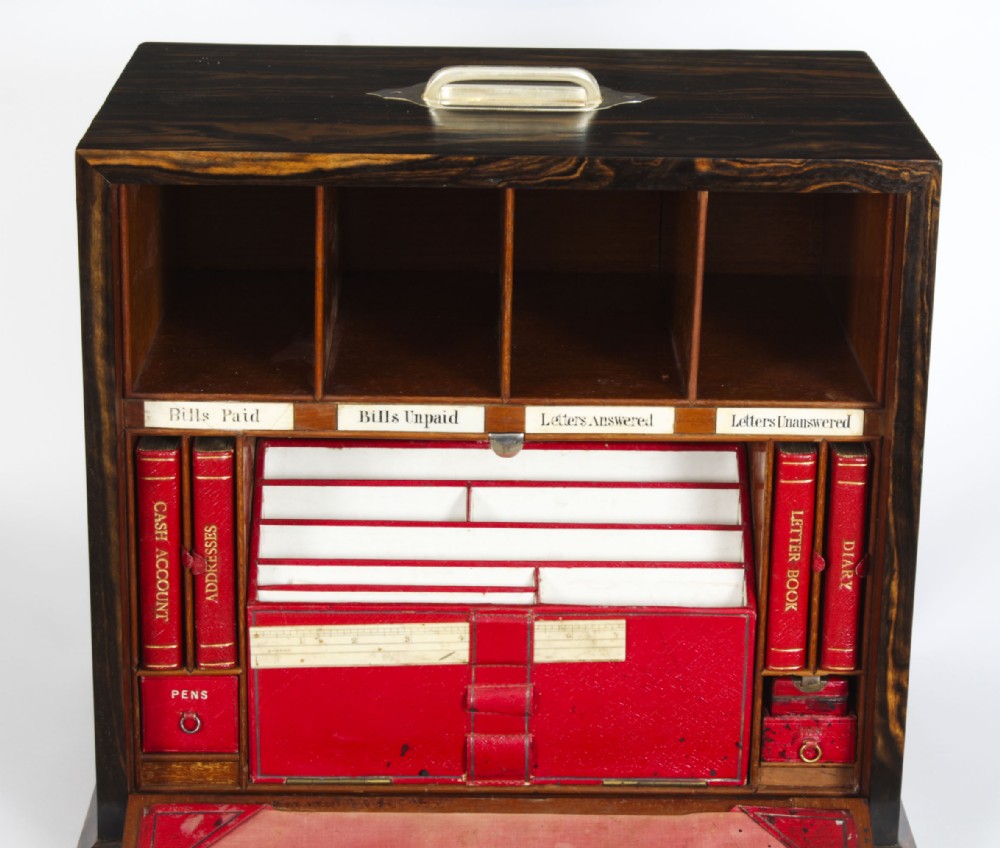
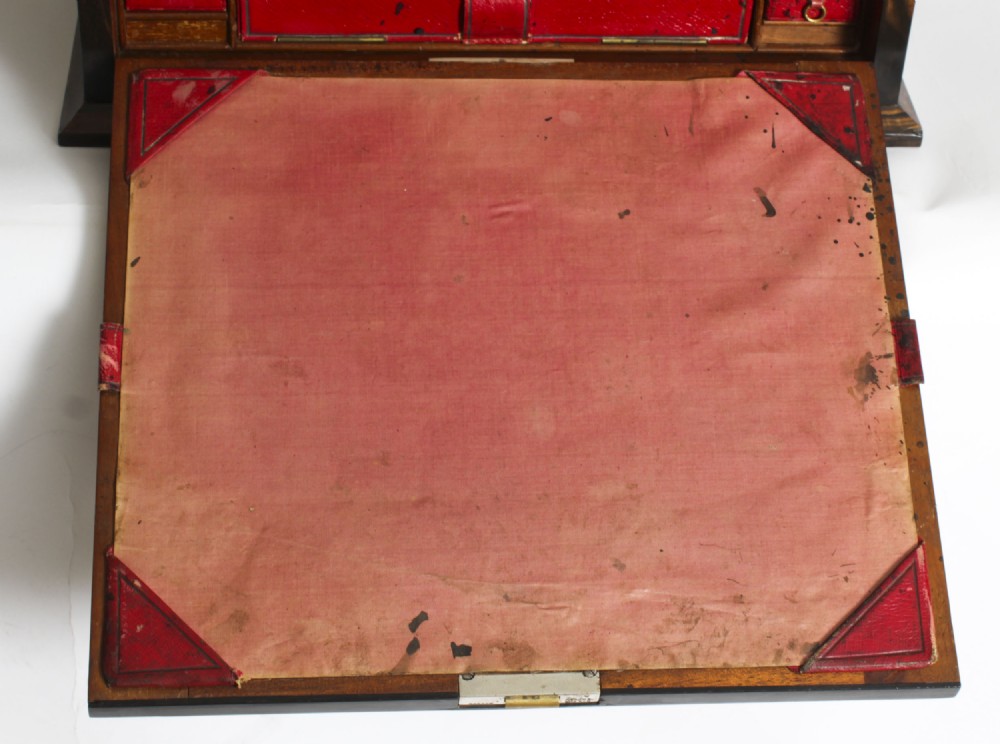
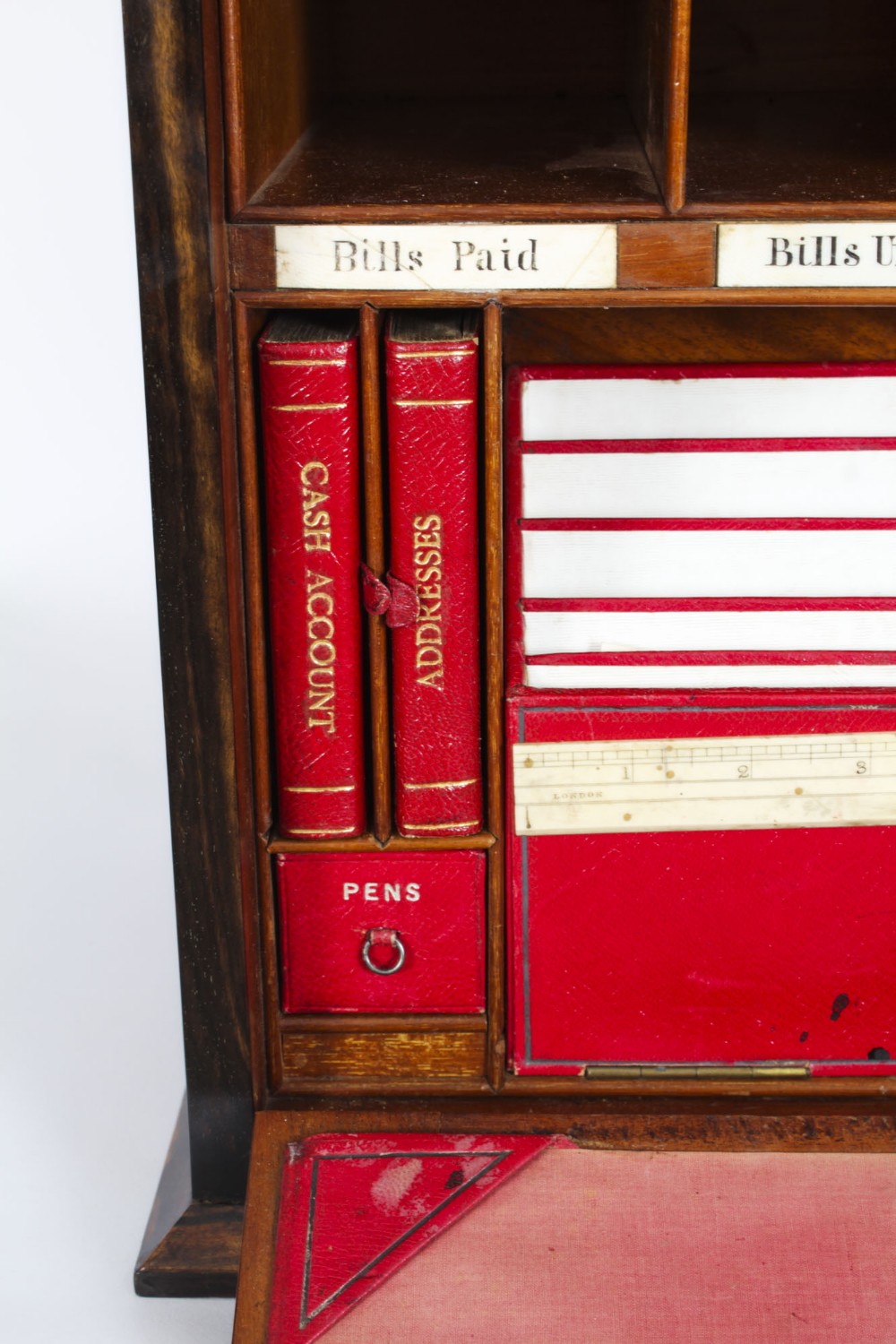
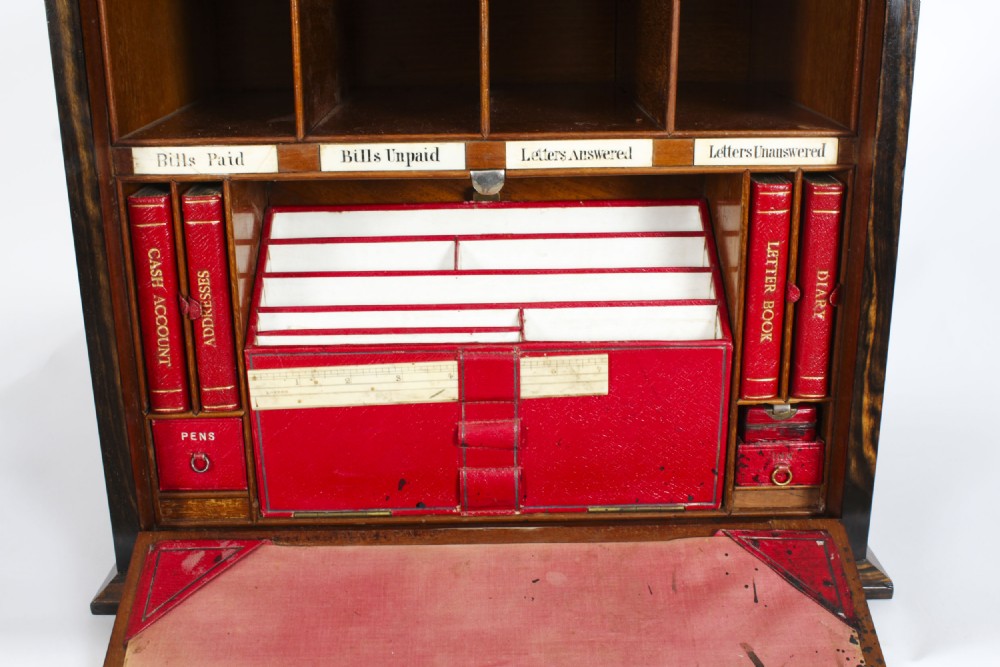
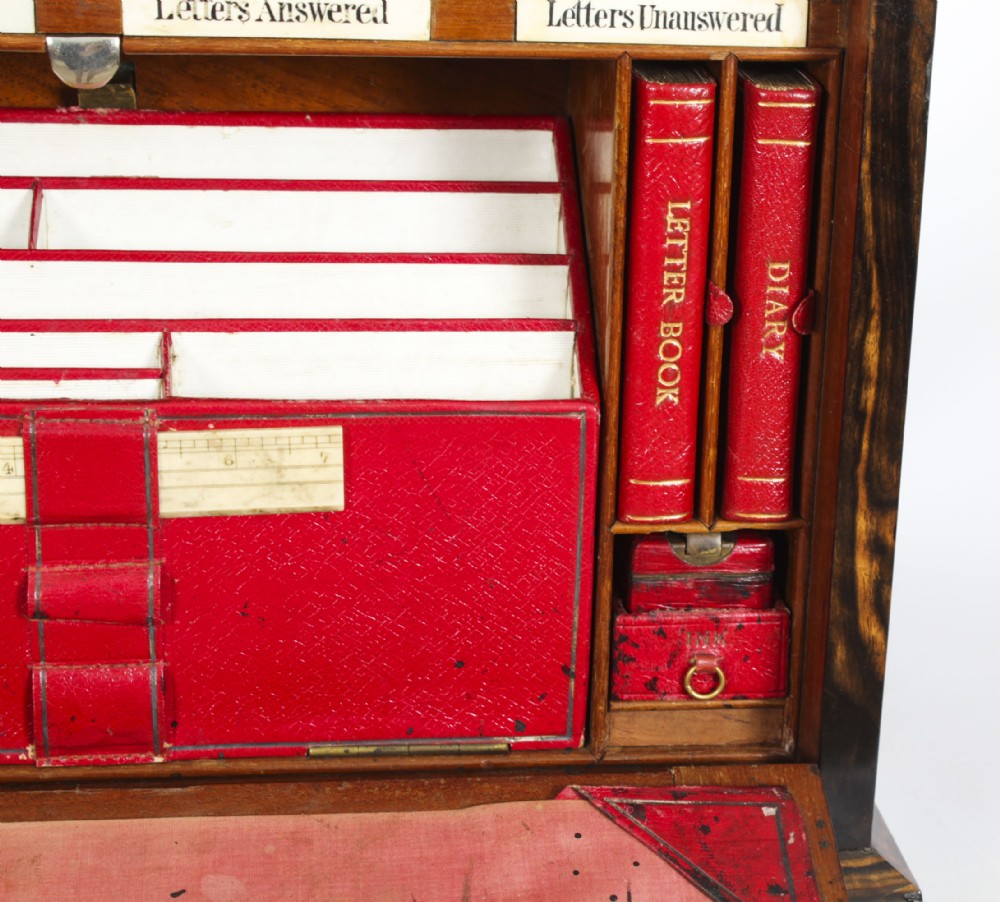
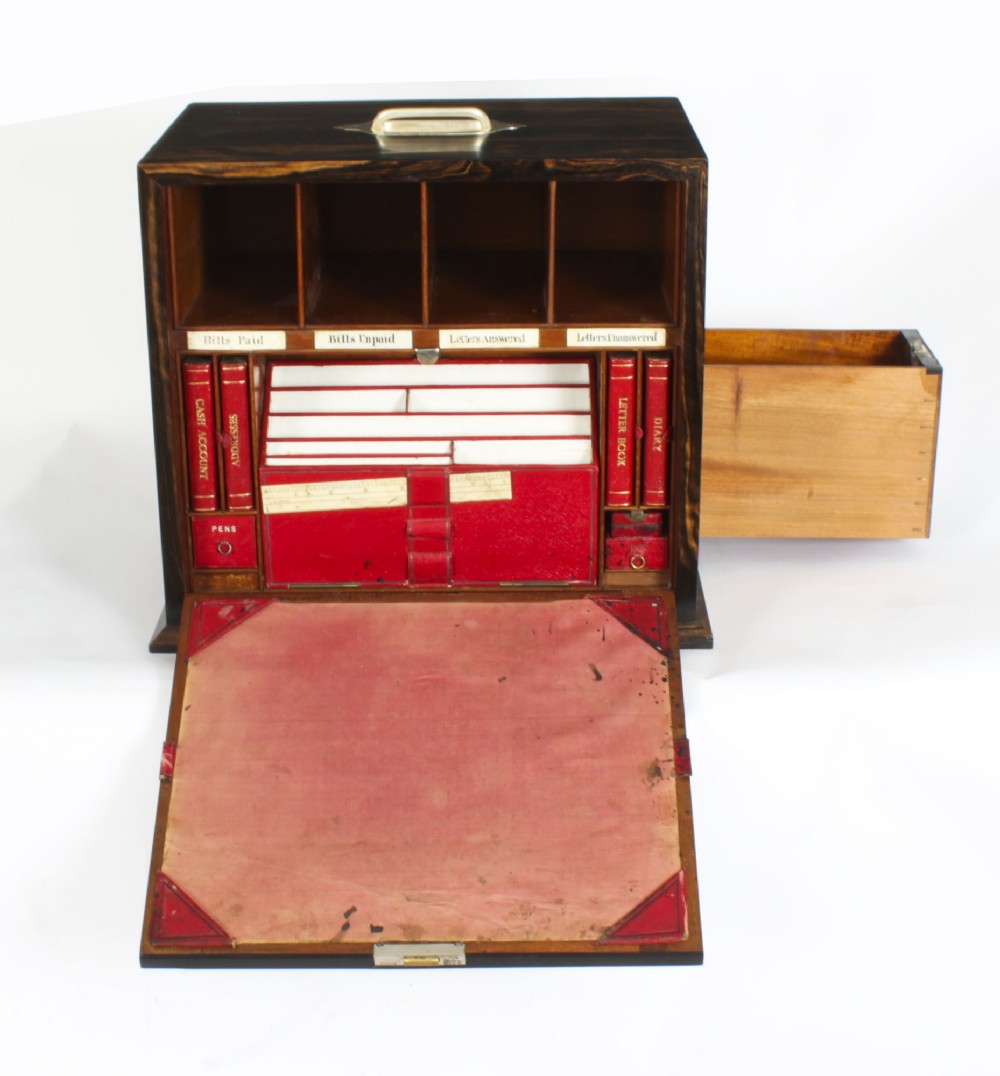
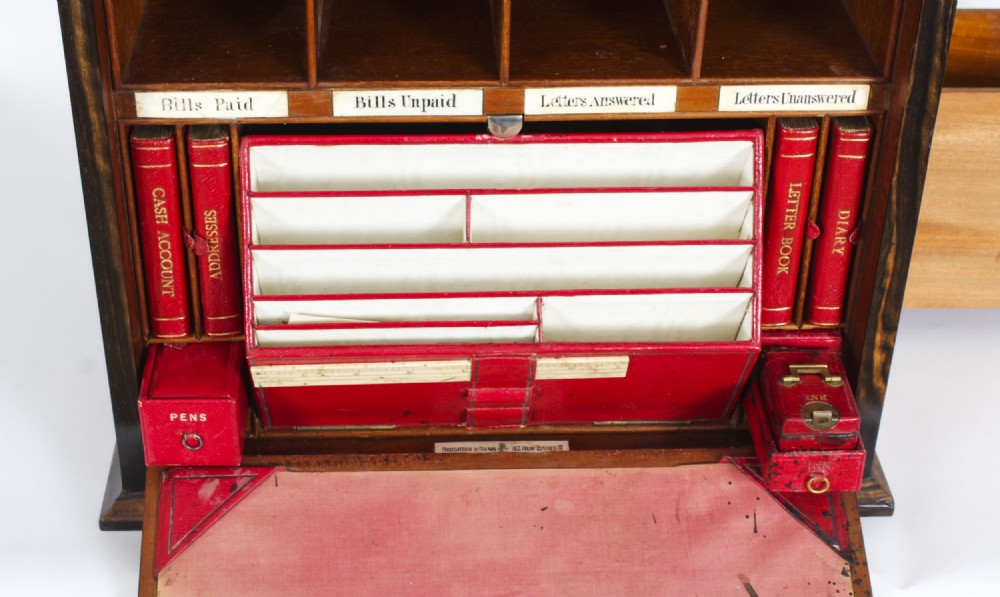
The wonderful antique fall front is centred by a silvered AH monogram beneath a coronet and opening to reveal an arrangement of labelled pigeon holes, a fold out letter rack, small books, and pull out ink and pen compartments.
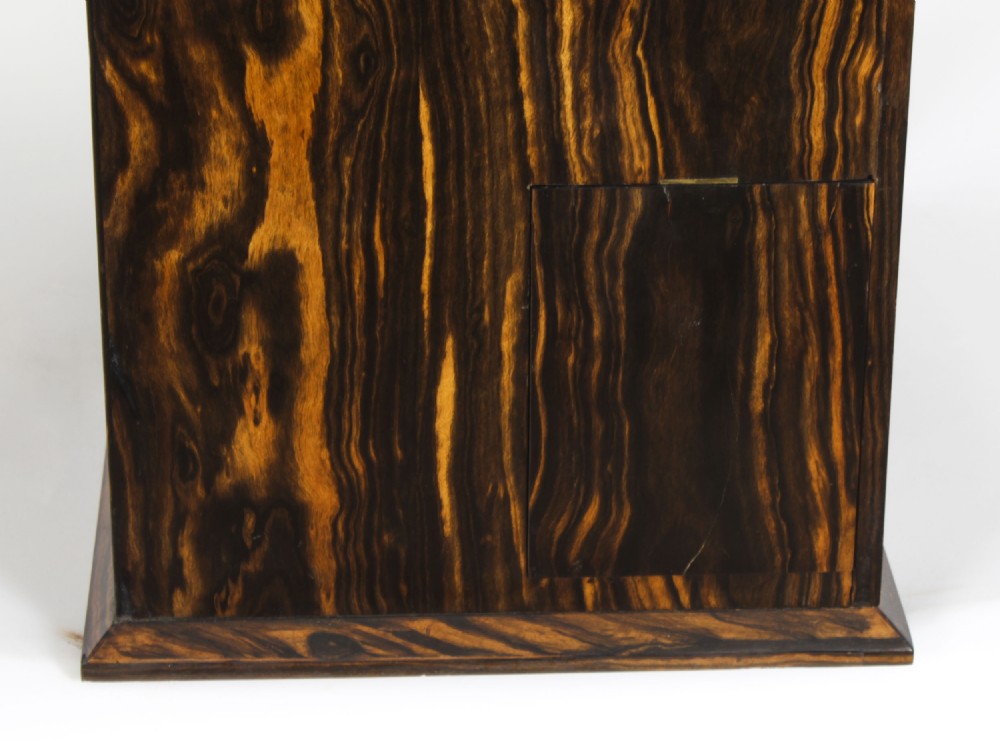
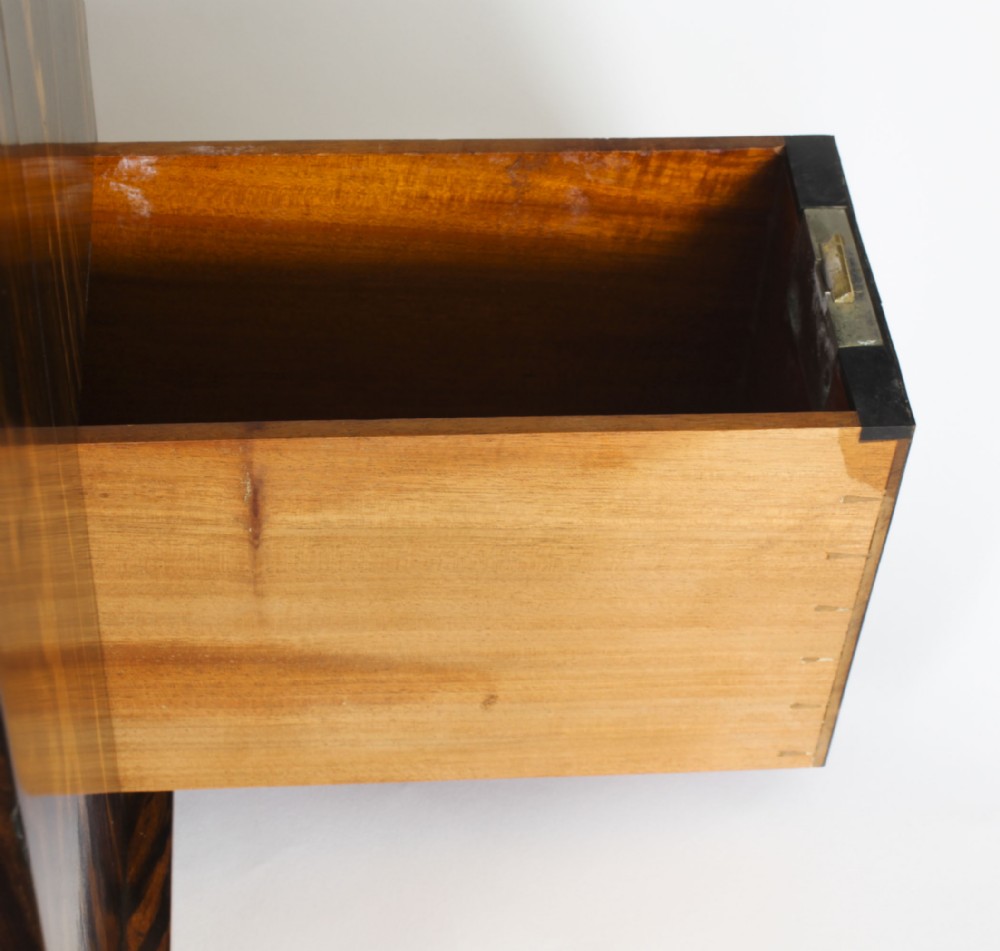
If features a secret compartment on the right side which can be opened by pulling the right hand side divider, ideal for playing cards and dice.
There is no mistaking its unique quality and design, which is sure to make it a treasured piece by any discerning collector.
Coromandel, also known as Calamander wood, is a higly prized and valuable exotic wood from India and Sri Lanka and was only used in top quality pieces.
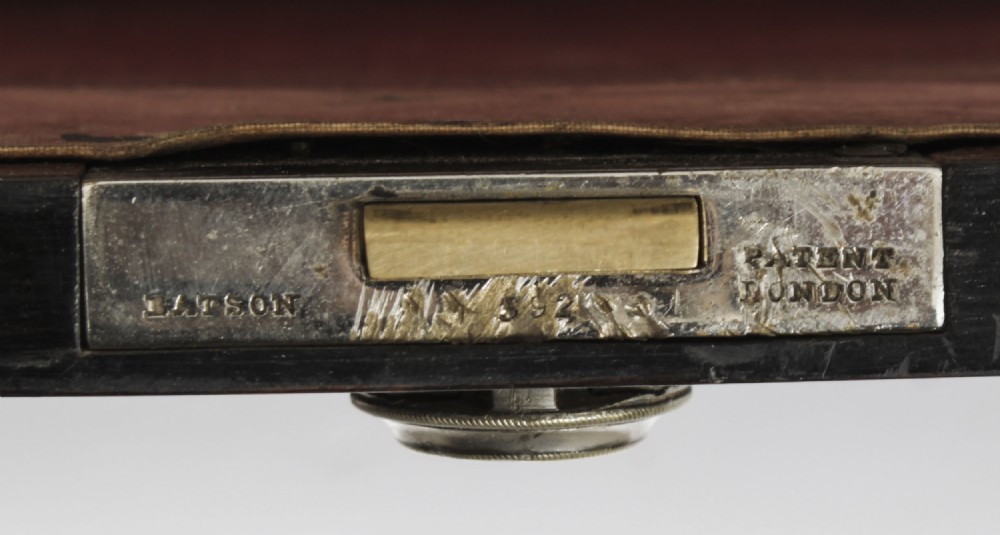
Complete with working Bramah lock, the lock is stamped Batson for Henry John & Albert Edward Batson.
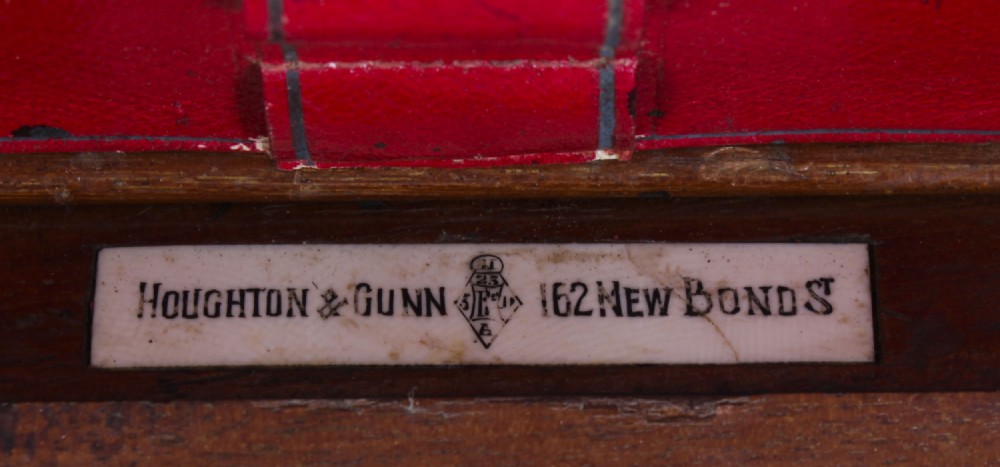
It bears both the maker''s and
... the retailer''s plaque:
''HOUGHTON & GUN, 162 NEW BOND STREET''
This is centred by a Victorian date ''lozenge'' for December 1878
Condition:
In excellent condition having been beautifully cleaned and waxed in our workshops, please see photos for confirmation.
Dimensions in cm:
Height 36 cm x Width 41 cm x Depth 18 cm
Dimensions in inches:
Height 1 foot, 2 inches x Width 1 foot, 4 inches x Depth 7 inches
Houghton & Gunn
William Houghton originally established his business in 1822. By 1841, he was based at 162 Bond Street, London. It wasn’t until 1868 that he went into partnership with Charles Henry Gunn. Known as Houghton & Gunn, the business remained at the same Bond Street address until it was bought out by Asprey (its next door neighbour) in 1906.
Coromandel wood or Calamander wood
is a valuable wood from India, Sri Lanka and South East Asia. It is of a hazel-brown color, with black stripes (or the other way about), very heavy and hard. It is also known as Macassar Ebony or variegated ebony and is closely related to genuine ebony, but is obtained from different species in the same genus; one of these is Diospyros quaesita Thwaites, from Sri Lanka. The name Calamander comes from the local sinhalese name, ''kalu-medhiriya'', which means dark chamber; referring to the characteristic ebony black wood.
Coromandel wood has been logged to extinction over the last 2 to 3 hundred years and is no longer available for new work in any quantity. Furniture in coromandel is so expensive and so well looked after that even recycling it is an unlikely source. A substitute, Macassar Ebony, has similar characteristics and to the untrained eye is nearly the same but it lacks the depth of colour seen in genuine Coromandel.
Our reference: A3866
Internal Reference: A3866
Antique ID Number (AIDN): SA1082337
Dateline of this antique is 1870
Height is 36cm (14.2inches)Width is 41cm (16.1inches)Depth is 18cm (7.1inches)




Thank you.
Your comment has been sent to Sellingantiques.