Loveday Antiques has dated this piece to the 18th Century.
Italian Circa 1750
Provenance
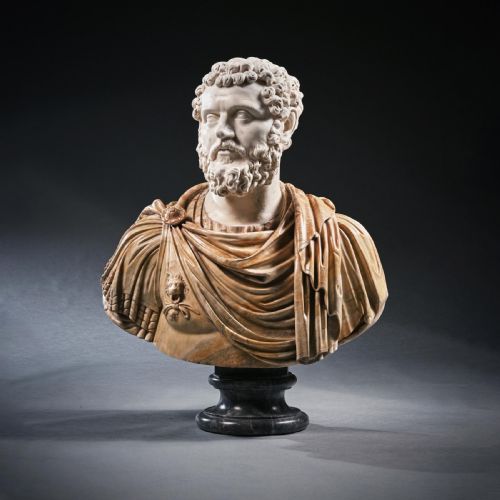
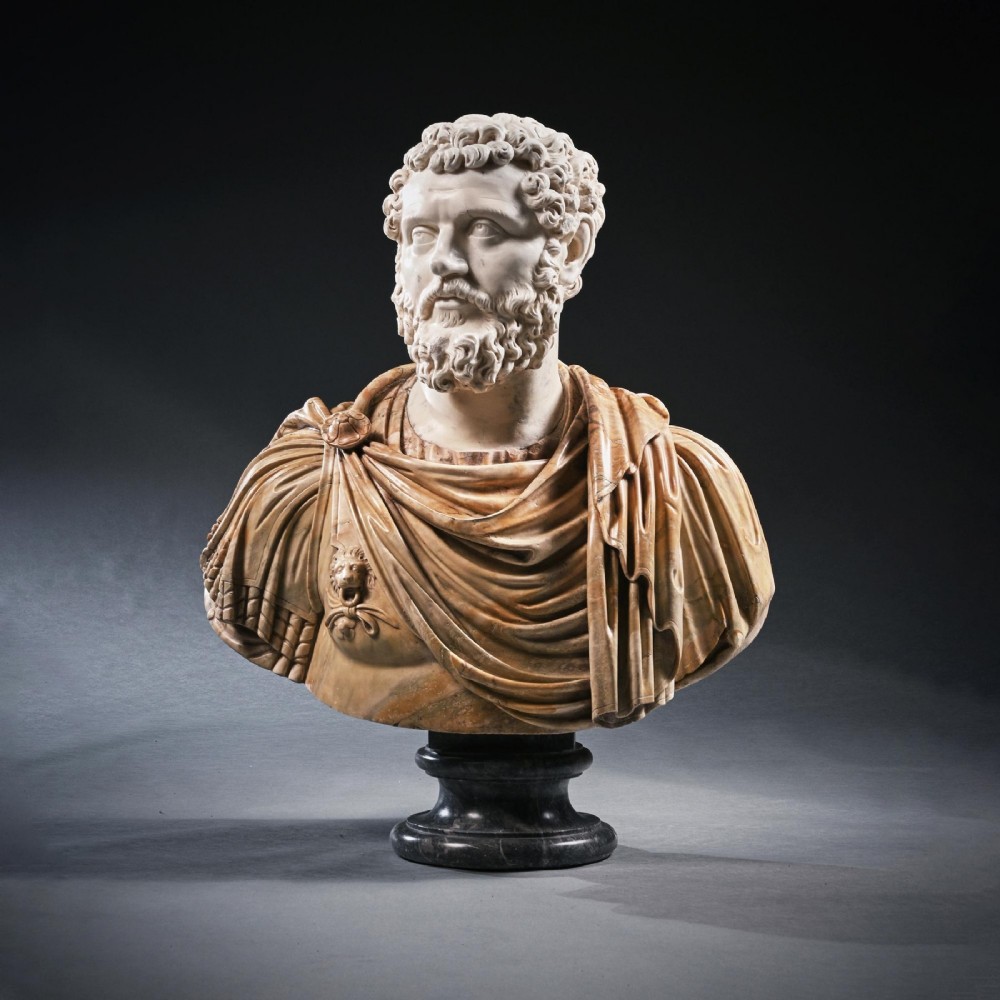
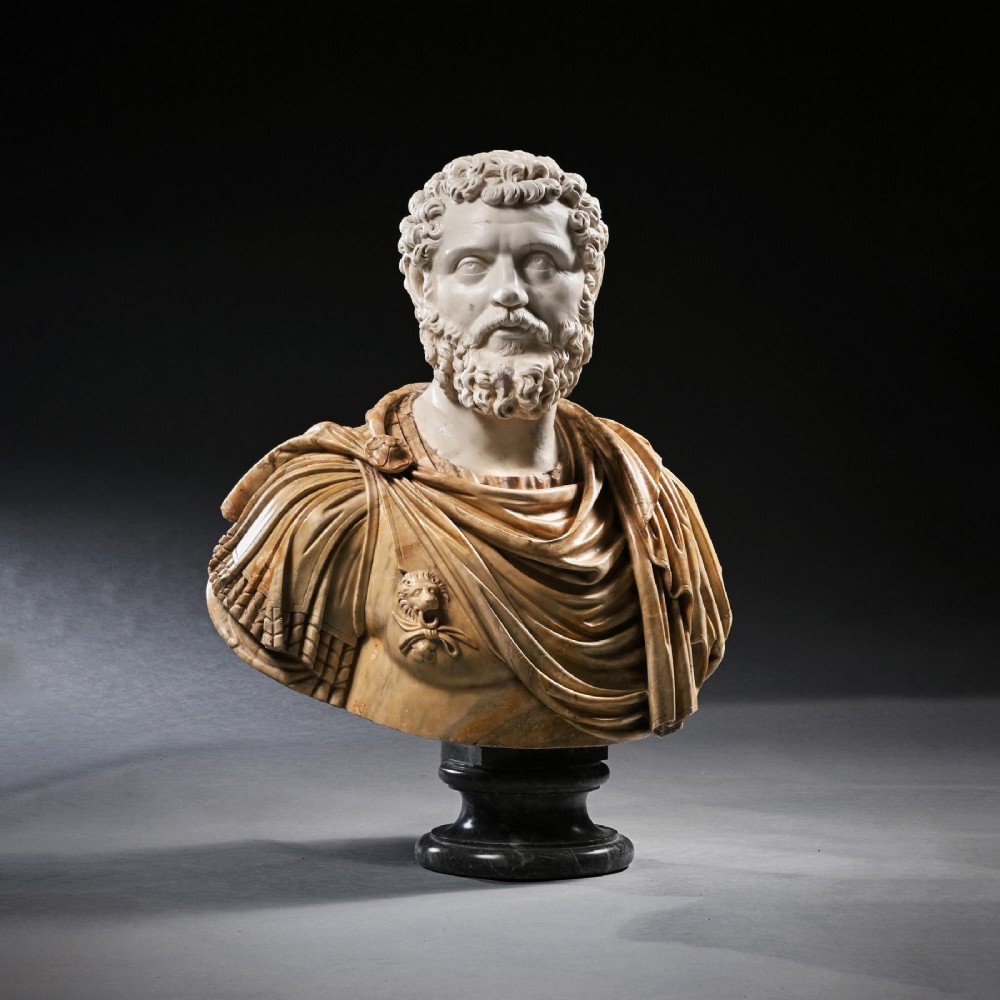
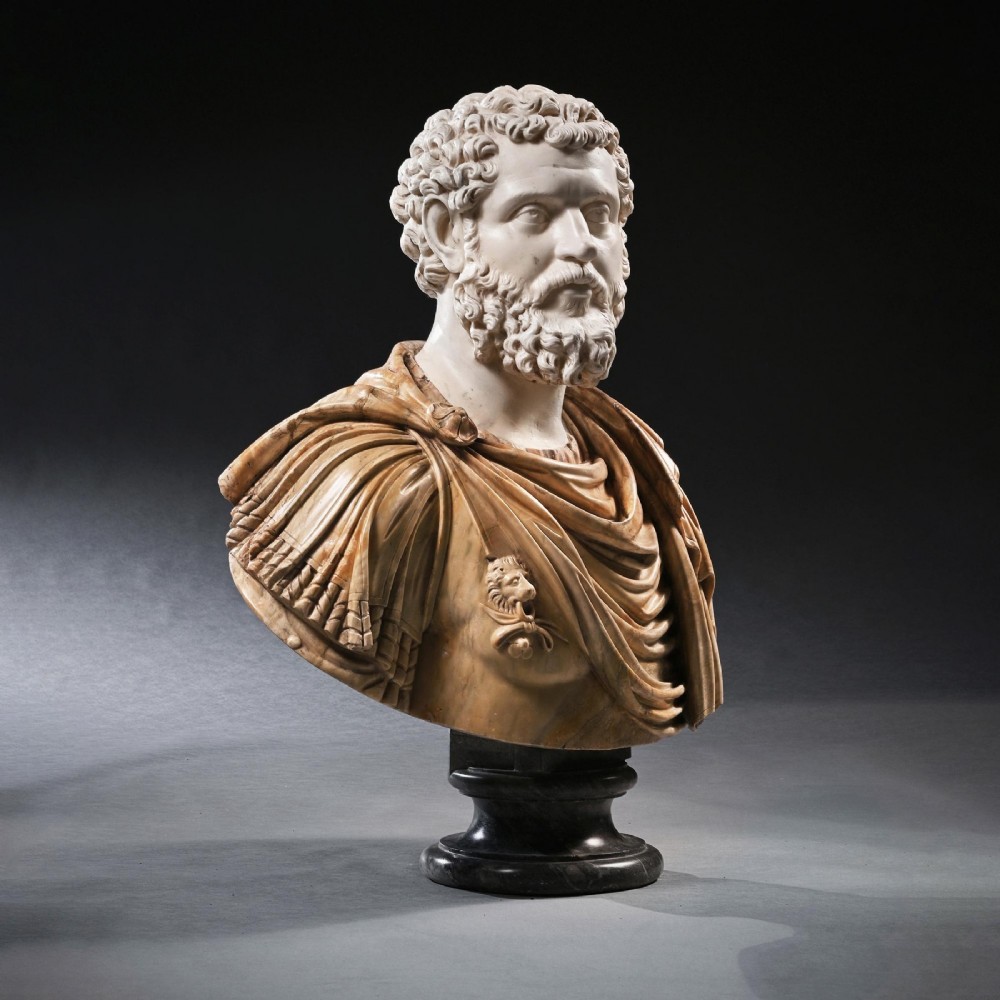
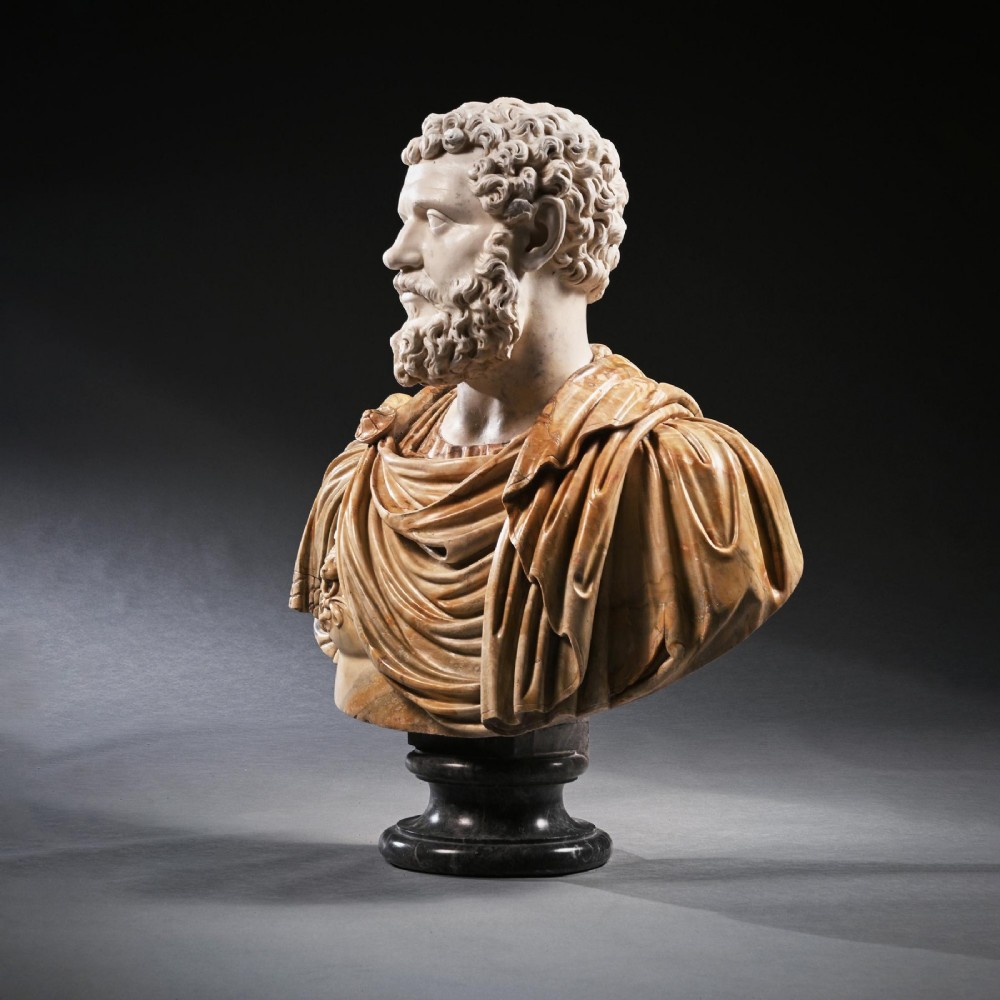
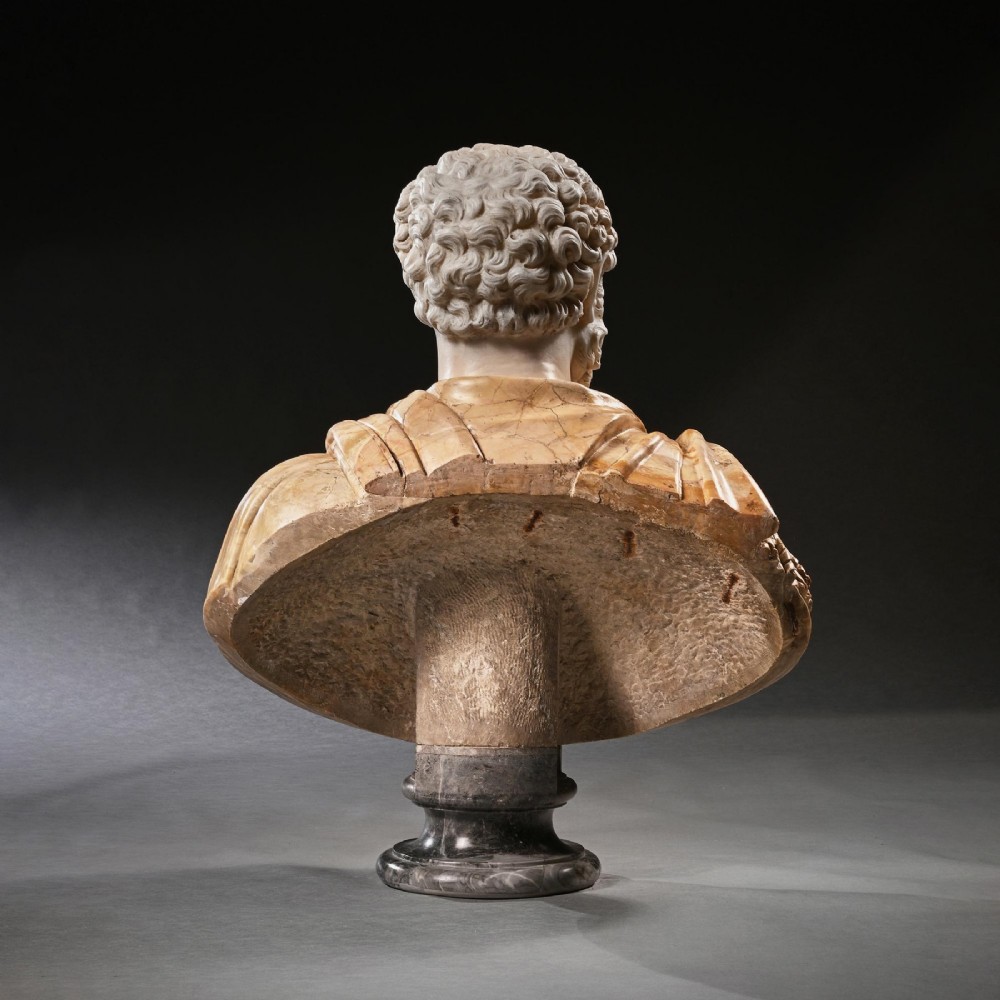
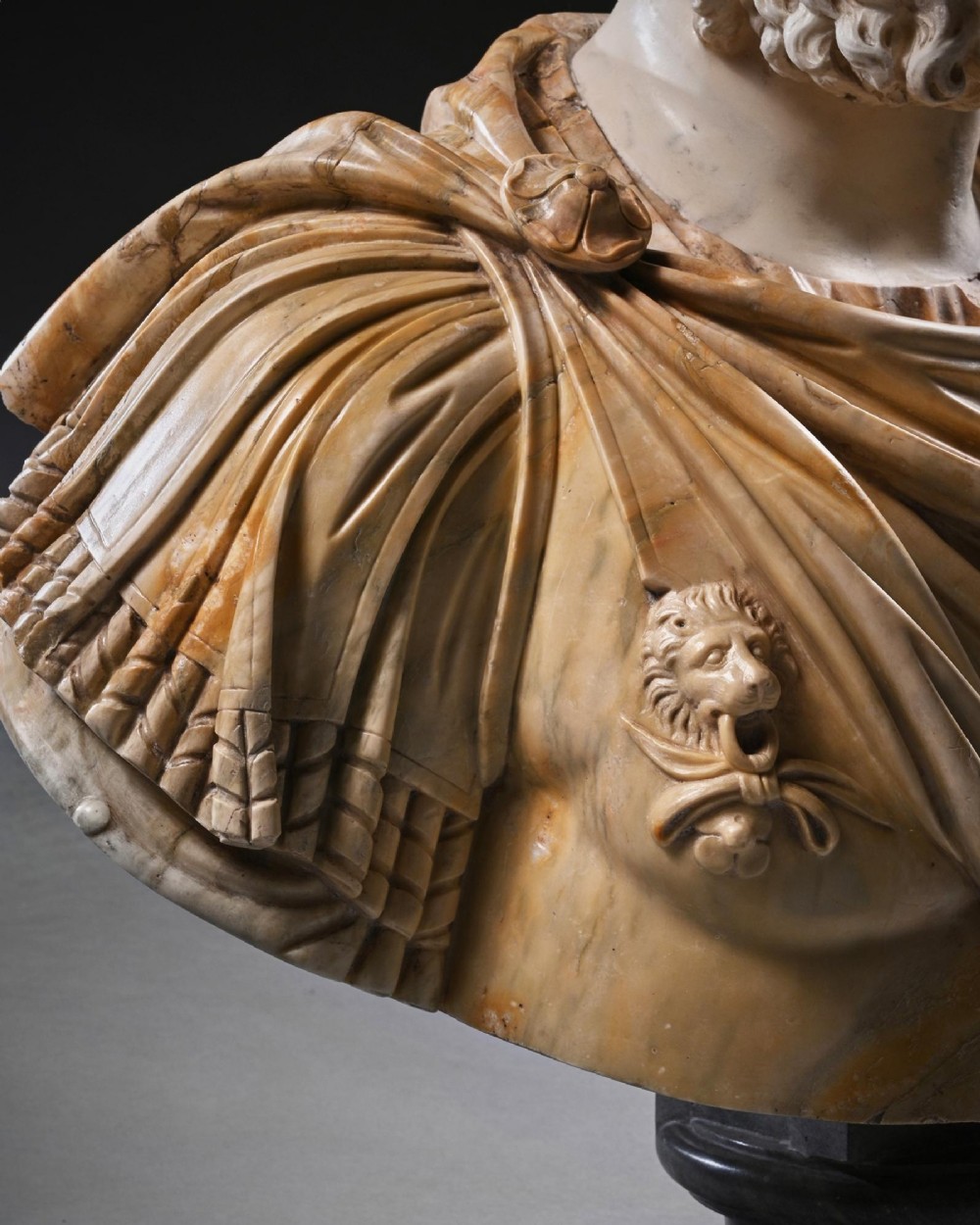
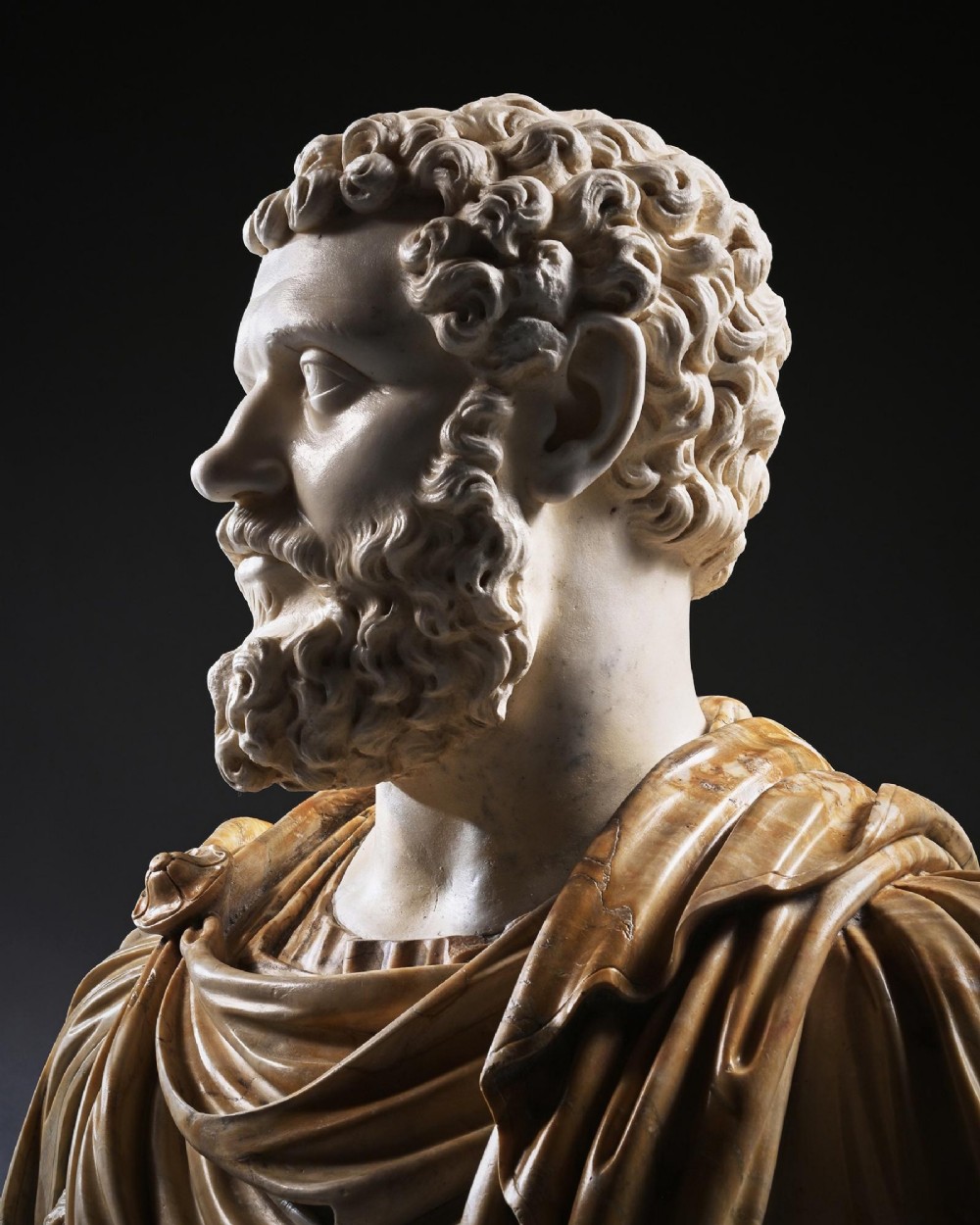
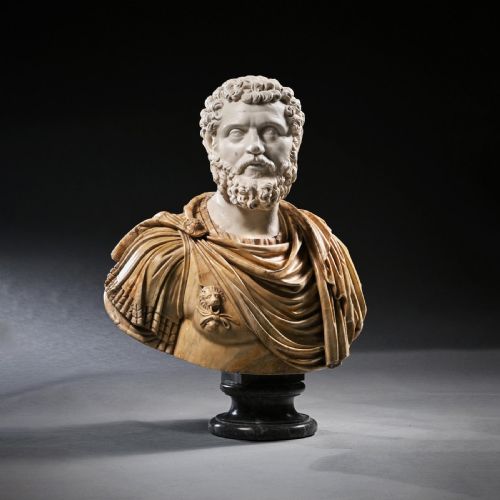
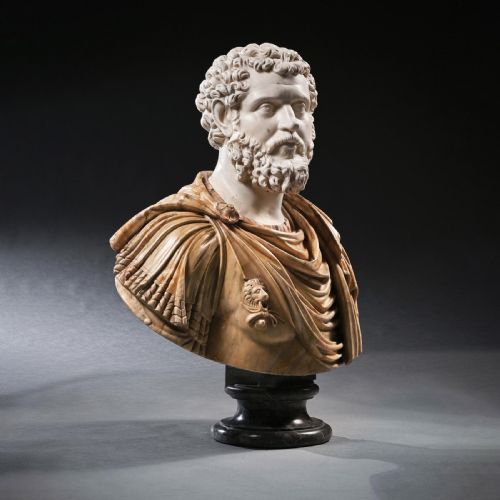
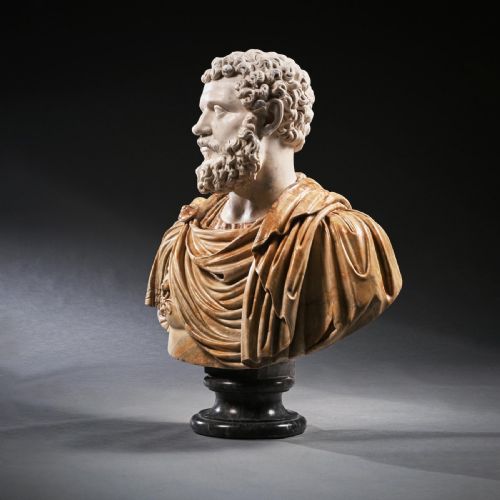
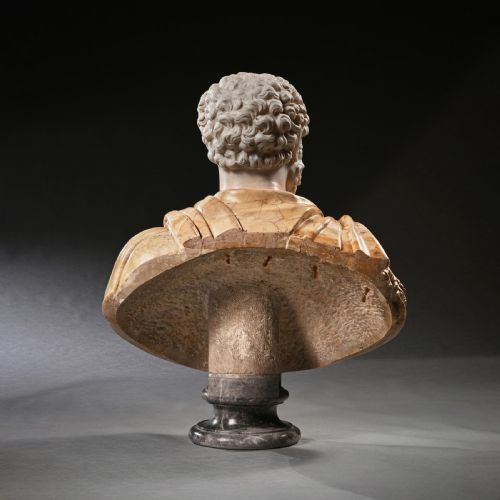
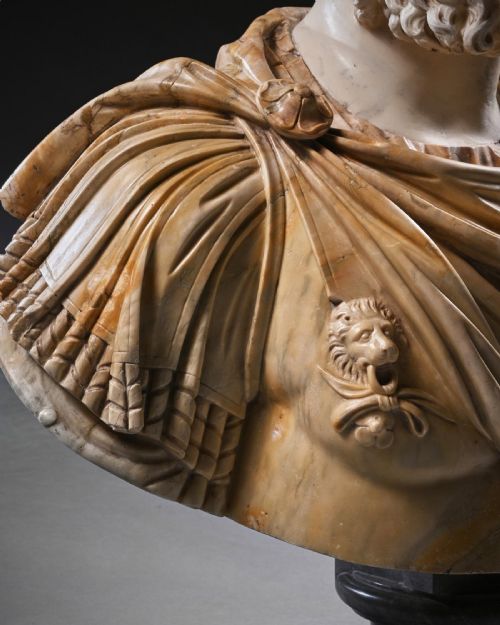
This fine portrait bust was executed in combination of white statuary marble for the bust itself, Siena or Verona marble for the drapery and a grey marble socle. The piece shows the emperor Septimius Severus, renowned as a great military leader and also the first African to serve as emperor, having been born in Laptis Magna (known today as Libya). The emperor is depicted wearing a toga over a tunic of some kind, the folds of the drapery particularly beautifully realised. The toga is clasped over one shoulder with a round cloak clasp with foliate detailing and then a decoration in the form of a lion's mask suspending a bow from a ring hangs over the emperor's chest. As virtuosic as these carved details are, it is the face of the emperor which draws the eye due to the remarkably lifelike carving. The hair and beard is rendered with remarkable skill and the character of the sitter seems to shine through in the rendering of his facial features.
Busts of this sort were in high demand with British Grand Tourists in the 18th and early 19th centuries with many remarkable sculpture collections being formed in the great British country houses during this period. Probably the most famous example is the exceptional collection at Wilton House in Wiltshire formed by the Earls of Pembroke and for comparative examples and a fine overview of these sorts of collections we refer you to Professor Peter Stewart et al, A Catalogue of the Sculpture at Wilton House.
Italian sculptors of this period were invariably restorers as well, often creating new works of art out of a combination of pieces of classical Roman sculpture with 18th century additions. G. B. Piranesi was famously involved in a lot of this work but he was far from unique with many confections being created to fool the rich patrons of the period. Our piece, however, is entirely 18th century and is not a remodelled earlier piece. In wonderful condition having had a professional repair to the neck line with the whole being wax finished.
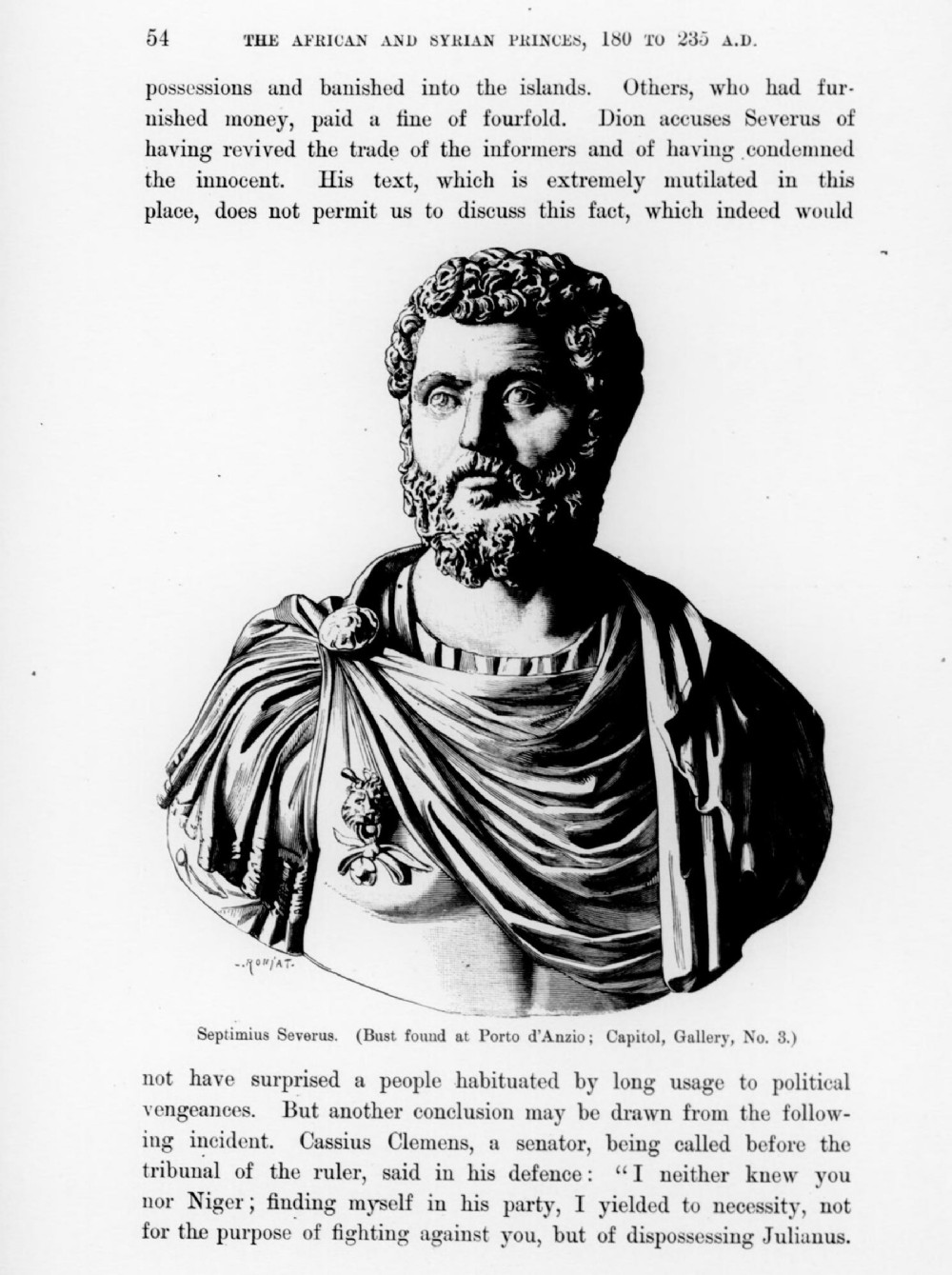
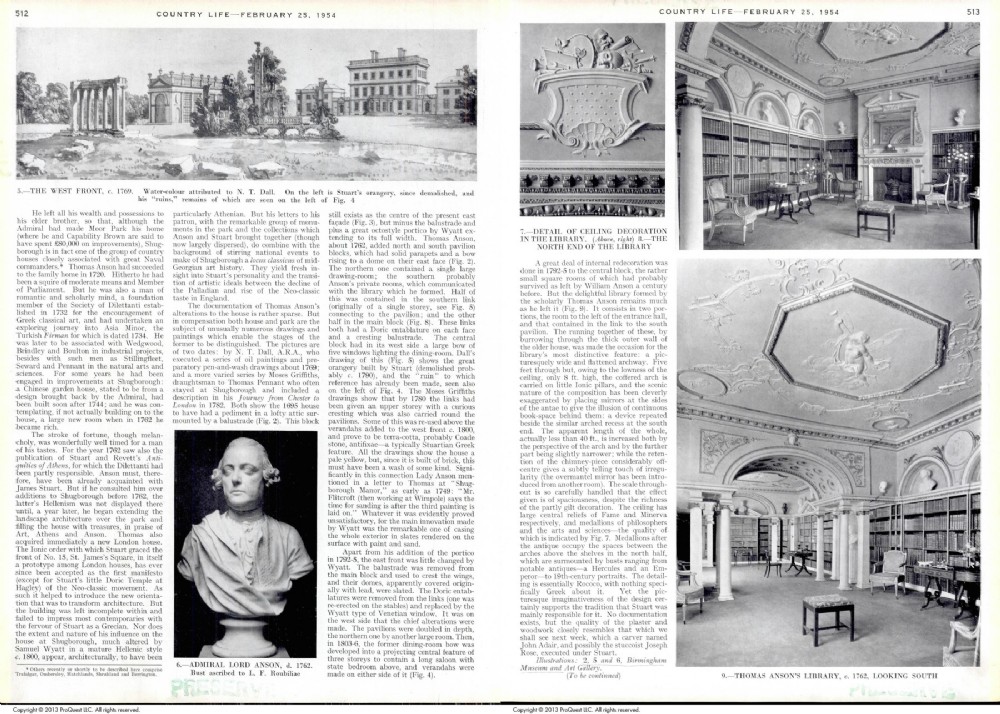
The source for our bust would appear to be a Roman original excavated at Porto d'Anzio and captioned as in the Capitol gallery by Victor Duruy in his History of Rome, published in 1884 (please see image), it was then in the Albani collection (inv. 463) and subsequently in the Museo Capitolino at Rome.
This reference refers to the bust as that of Septimius Severus, Julianus Didius successor as emperor, academics are divided to this day as to this attribution wether it be of Septimus or Julianus Didius. A very long and interesting article by Anne McCann, "The Portraits of Septimius Severus (A.D. 193-211)," in Memoirs of the American Academy in Rome, vol. 30, 1968 supports the Septimius attribution but a more recent article by K. Fittschen and P. Zanker, Katalog der rmischen Portrts in den Capitolinischen Museen und den anderen kommunalen Summlungen der Stadt Rom, Band I, Mainz am Rhein has called all of this previous research in to question and suggested a convincing argument for this bust and the others like it to be seen as images of Julianus. Another bust of similar form with the cloak clasp but not the lion's head chest decoration, is in the Eskenazi Museum of Art in the USA as Septimus.
https://commons.wikimedia.org/wiki/File:Roman_marble_bust_of_Septimius_Severus,_Eskenazi_Museum_of_Art.jpg
and a Roman classical original, remarkably similar in form to our piece, was sold at Christie's in 2019 for $4.8 million dollars.
Named as Julianus Didius but caveat the
Loveday Antiques has dated this piece to the 18th Century.
Specialist furniture dealers 18th-20th century
You can view the stock and full dealer information on the Loveday Antiques Profile Page
Loveday Antiques is a registered member of LAPADA BADA CINOA

A Huge and Important 18th Century Italian Carved Marble Bust of Roman Emperor Septimius Severus, Attributed to the Cavaceppi Workshop