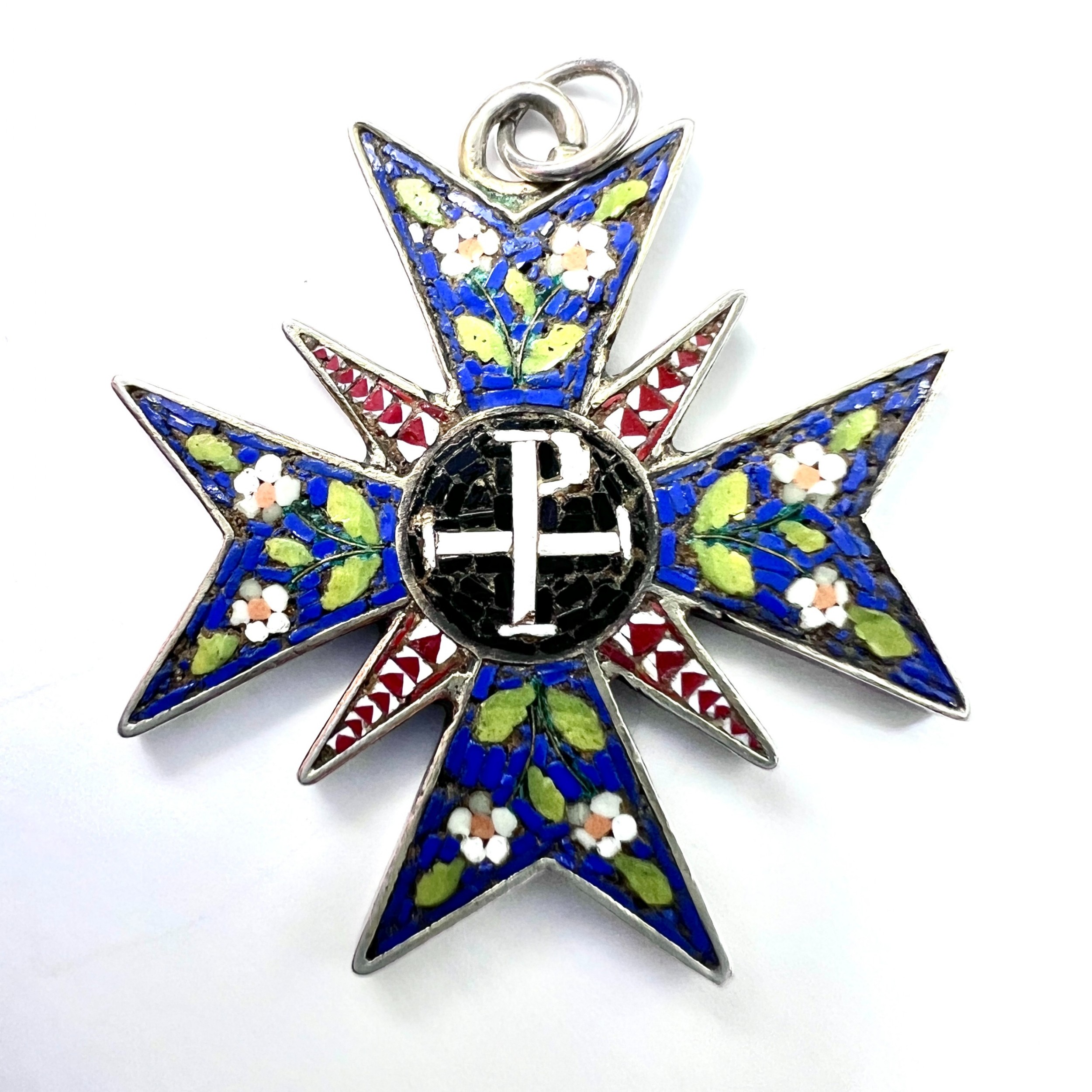
Corvidae Antique has dated this piece to the 19th Century.
Micromosaic jewellery became popular in Victorian times, during the early to mid-19th century, when it became the thing to do for wealthy people to conduct The Grand Tour - a cultural trip around Europe, collecting souvenirs along the way.
Italian workshops became adept at producing micromosaic artworks and jewellery for aristocratic tourists.
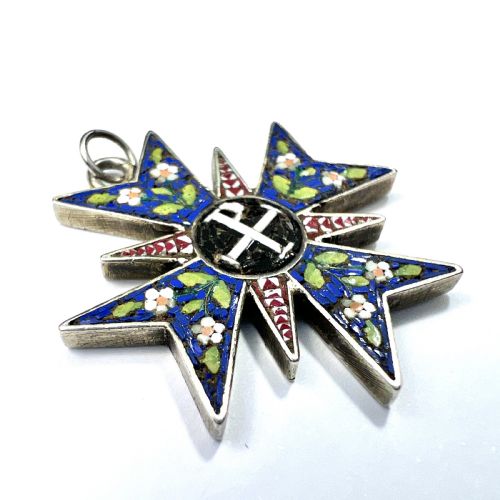
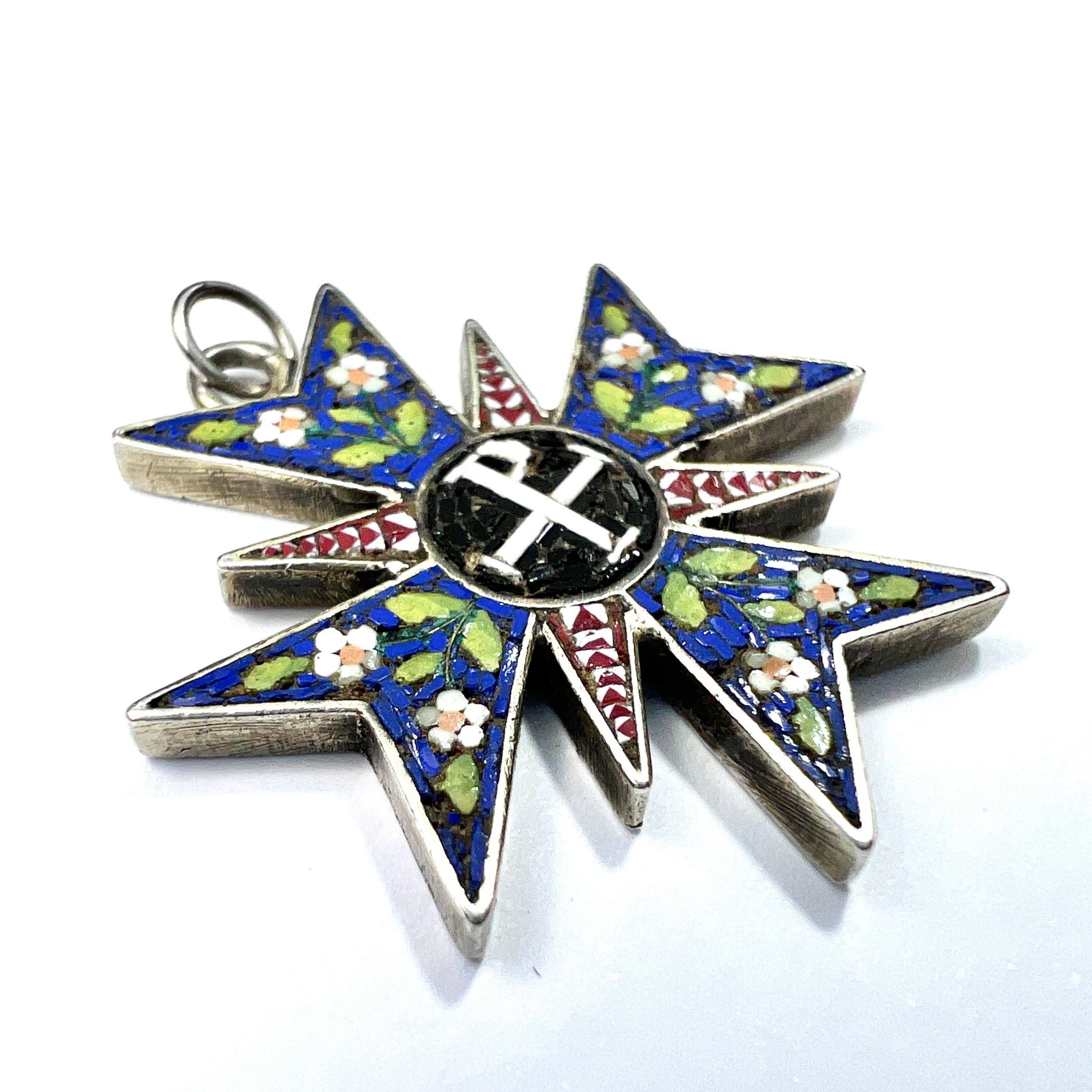
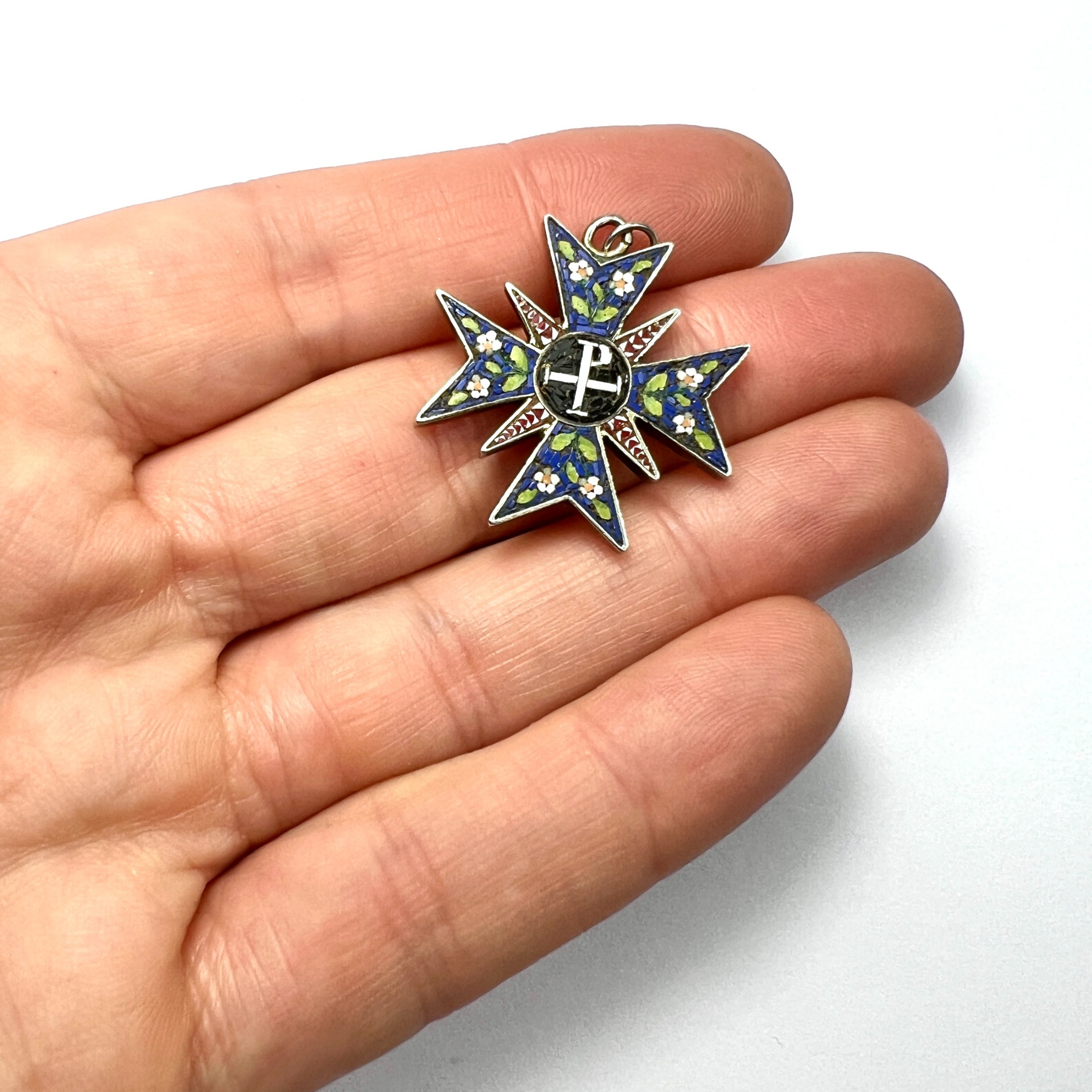
The mosaic depicts tiny white flowers around a staurogram - a cross formed of P and a T (although it looks more like an I here). Also known as Tau-rho or a monogrammatic cross, the staurogram is an ancient symbol which went on to be used as a an abbreviation for the name Jesus Christ.
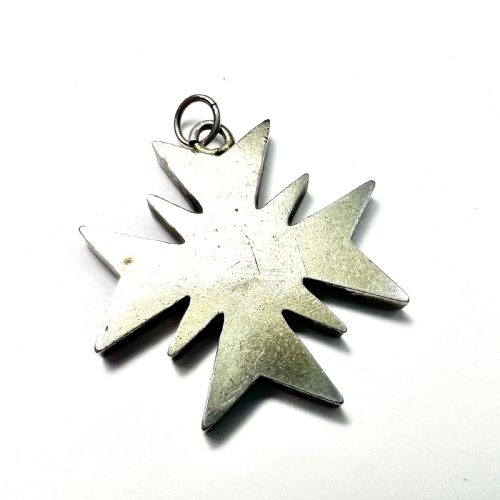
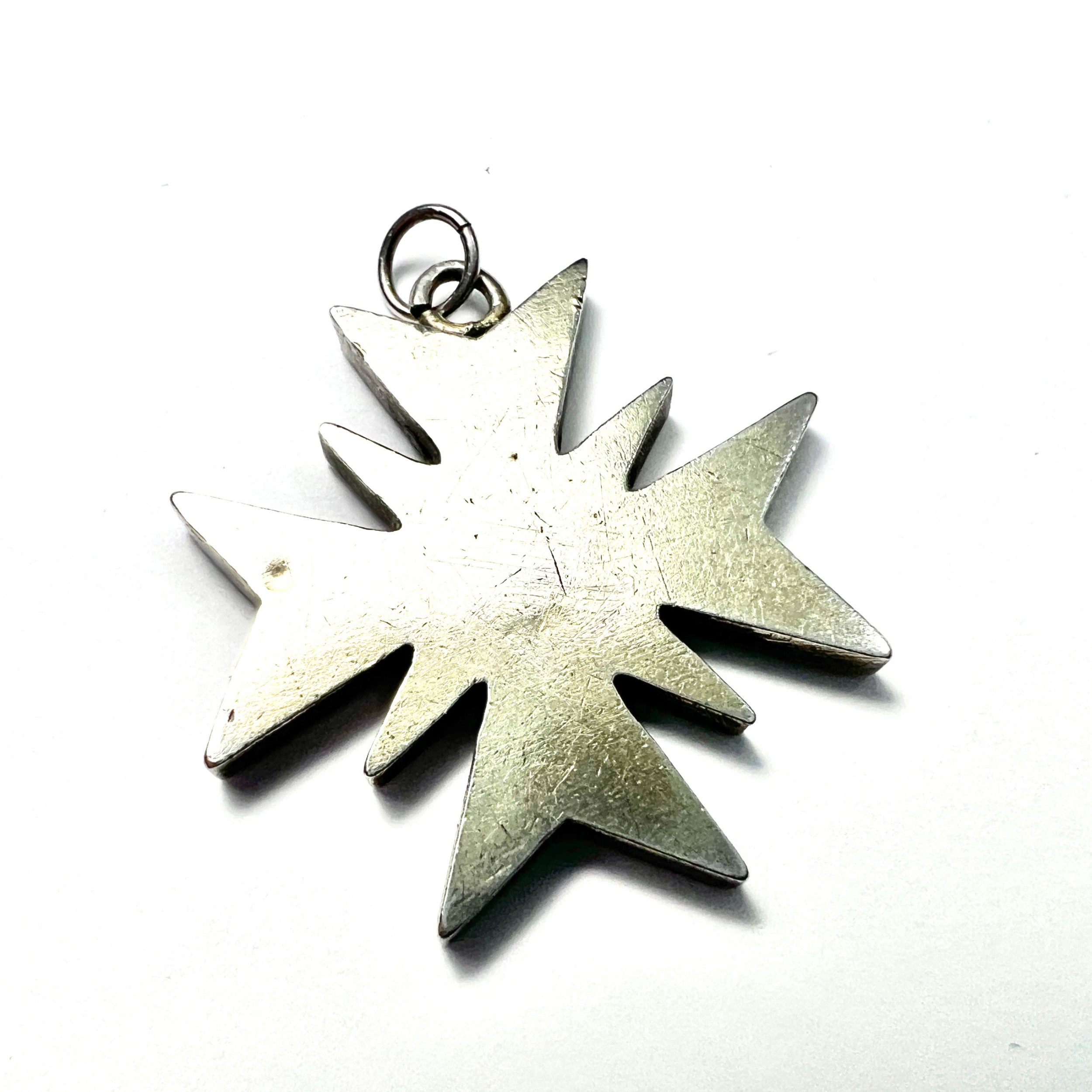
The mosaic is in good solid condition with no major losses, please see photos. There are one or two tiny indents in the silver on the reverse and a slight golden sheen where the cross would originally have been gilded.
There are no hallmarks, as is commonly the case with these pieces, but it has been tested to confirm it is solid silver.
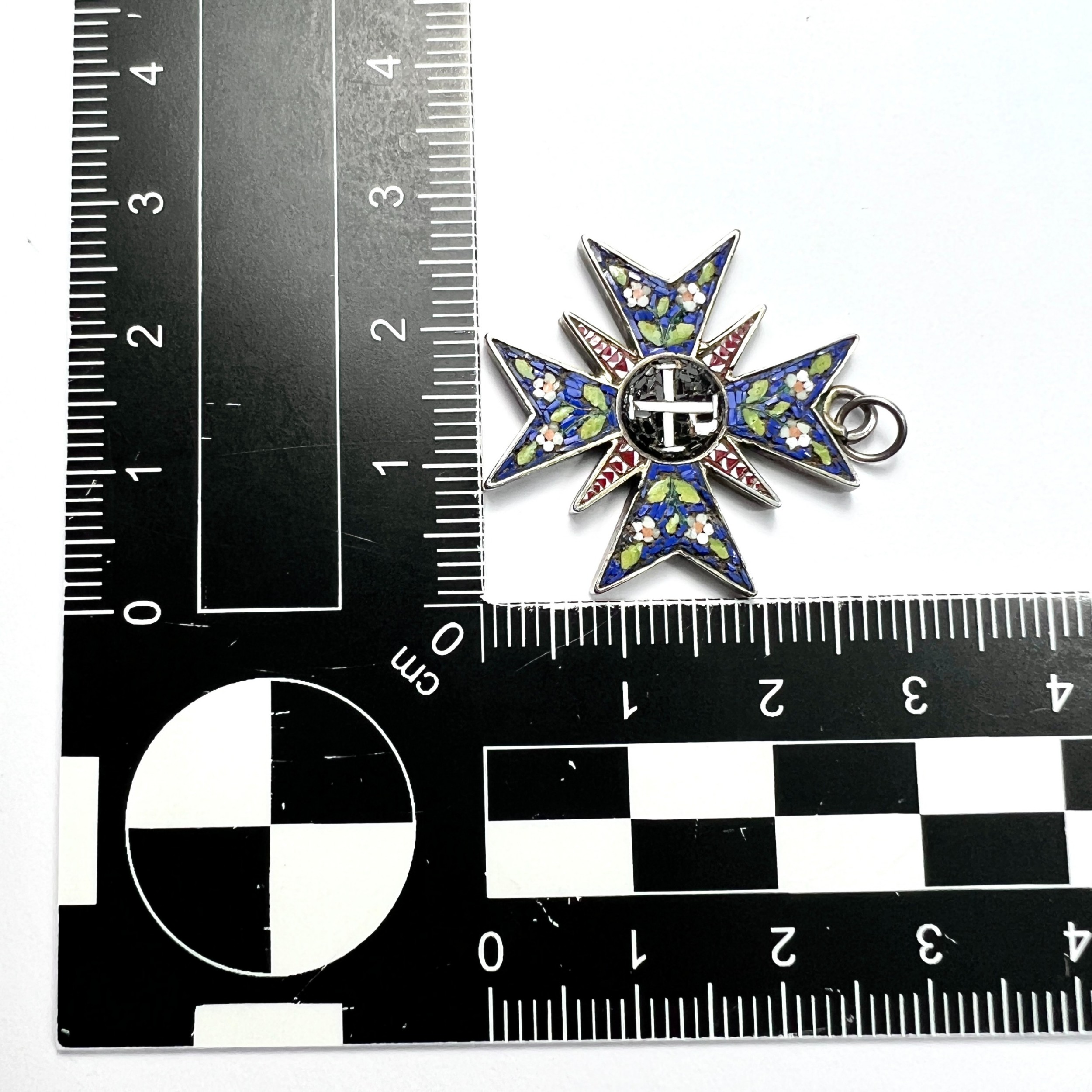
Size: Approximately 2.7 x 2.7cm.
Weight: 3.7g.
FREE INTERNATIONAL SHIPPING!
Corvidae Antique has dated this piece to the 19th Century.
Hand picked jewellery from a friendly family business
You can view the stock and full dealer information on the Corvidae Antique Profile Page
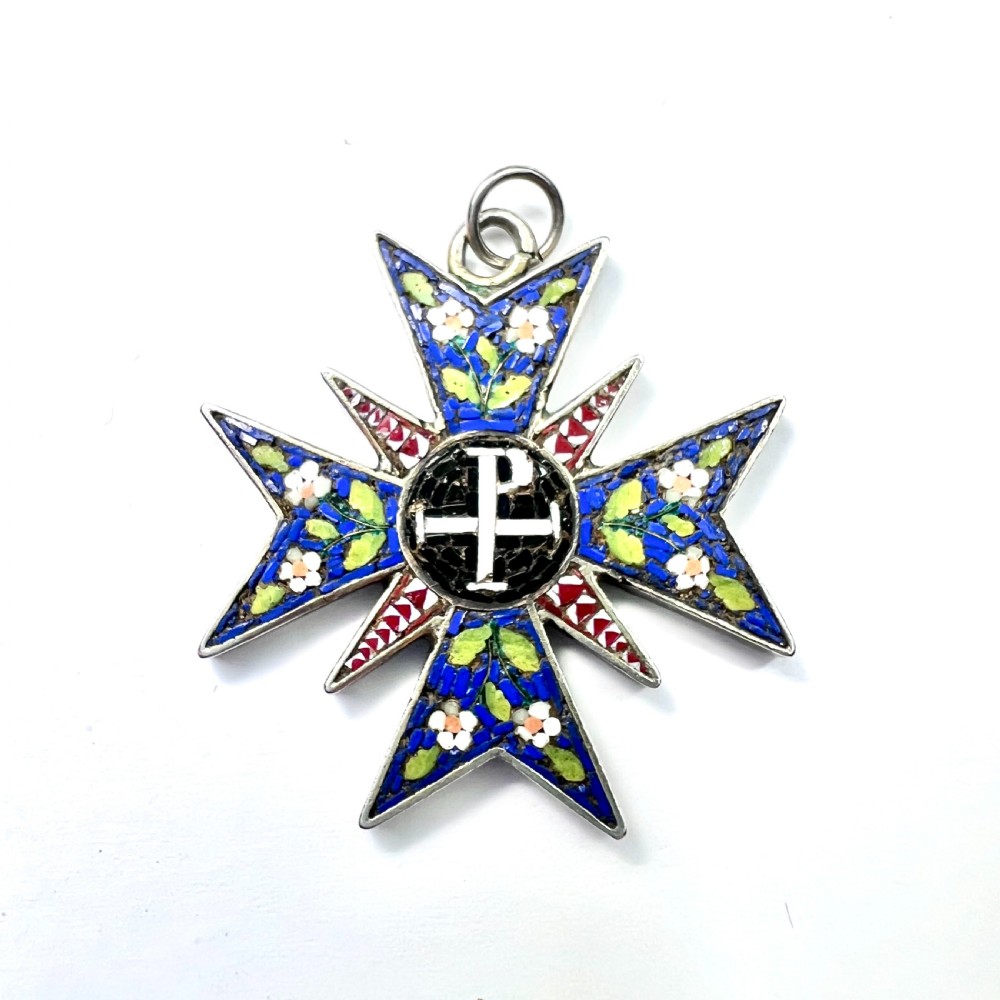
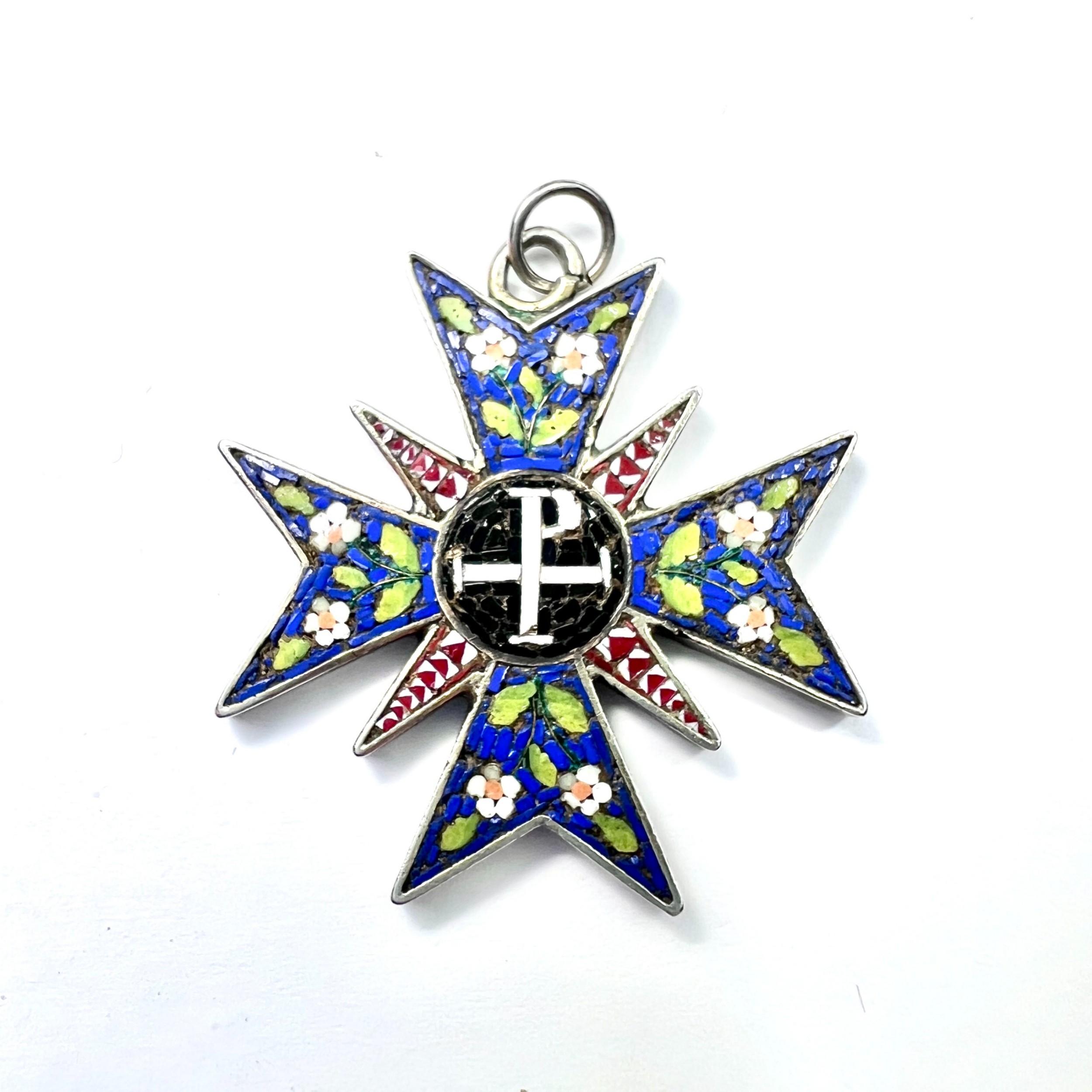
Antique Maltese Cross Silver Micro Mosaic Pendant