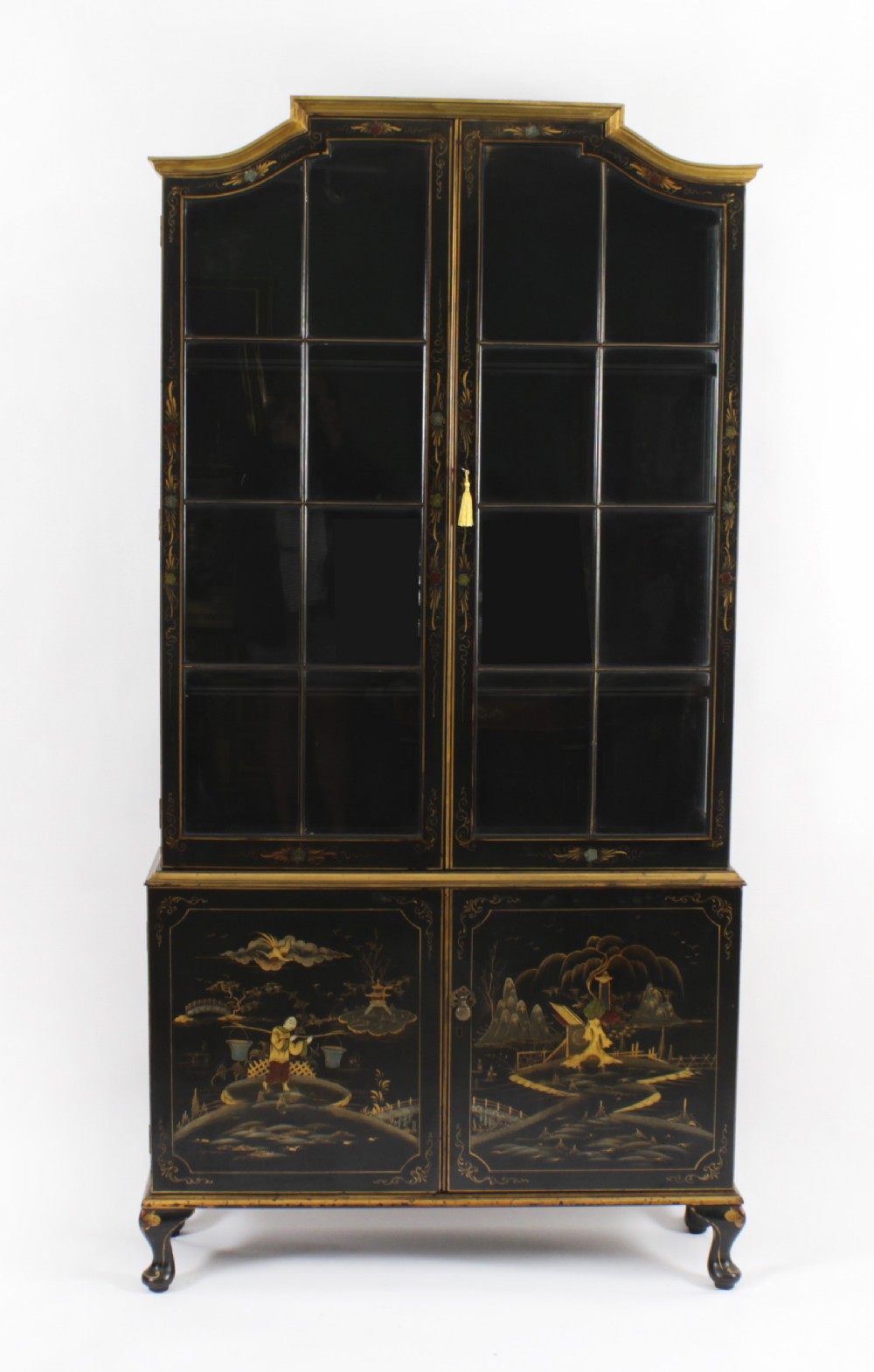
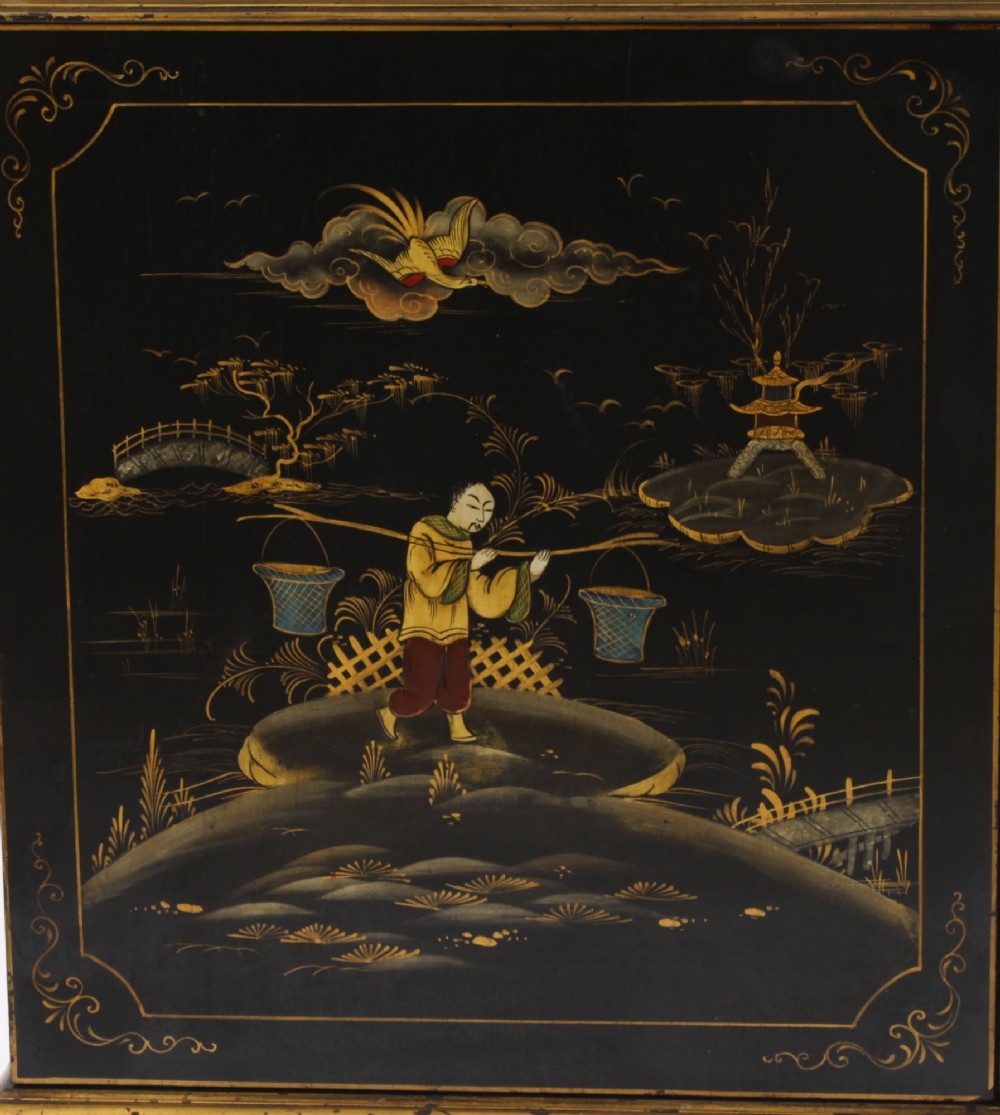
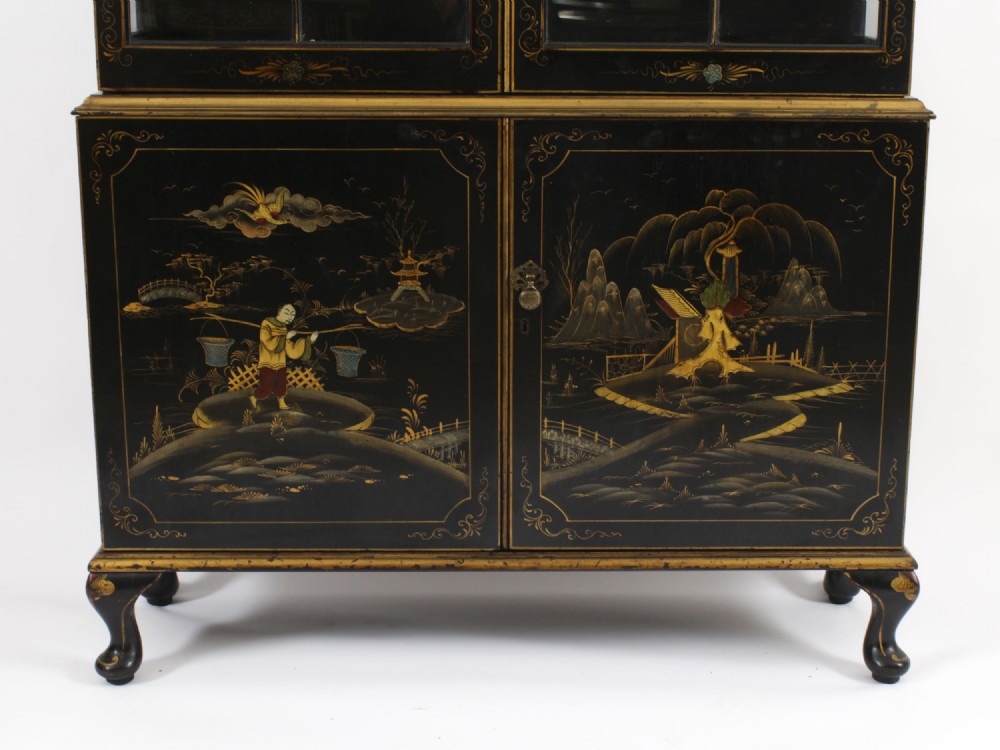
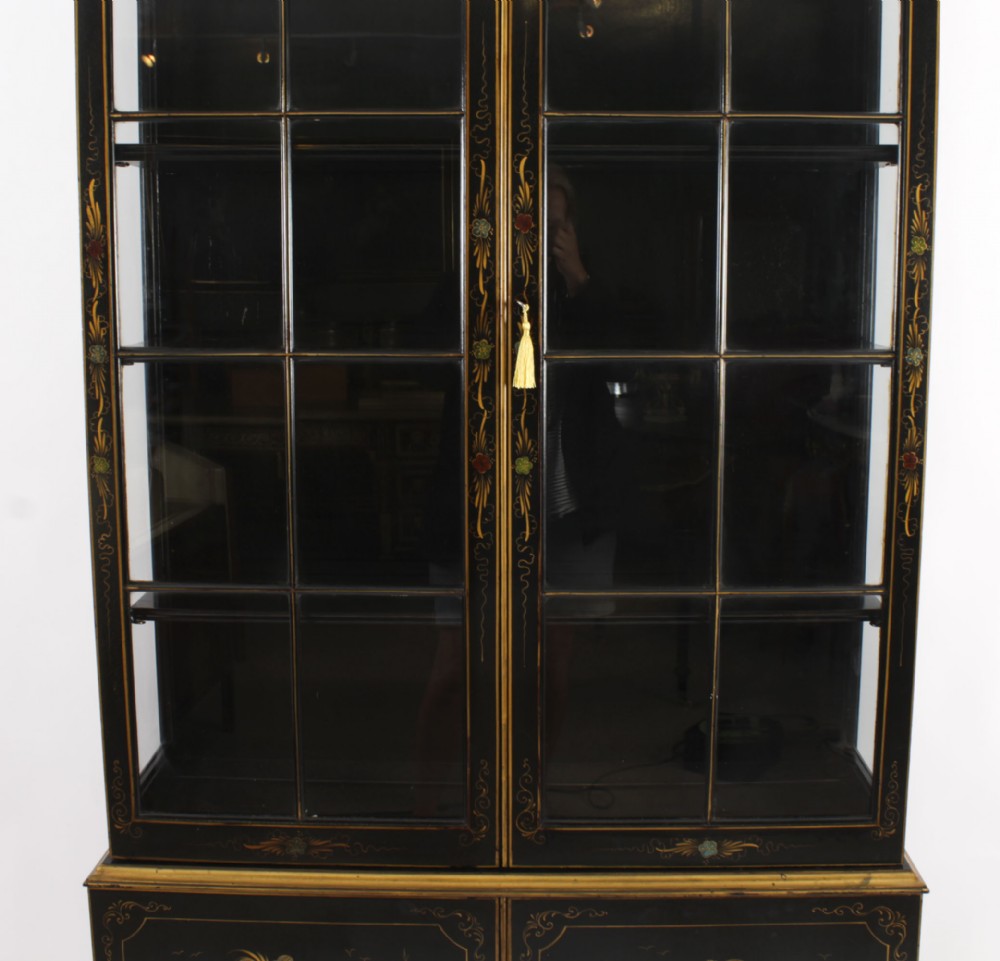
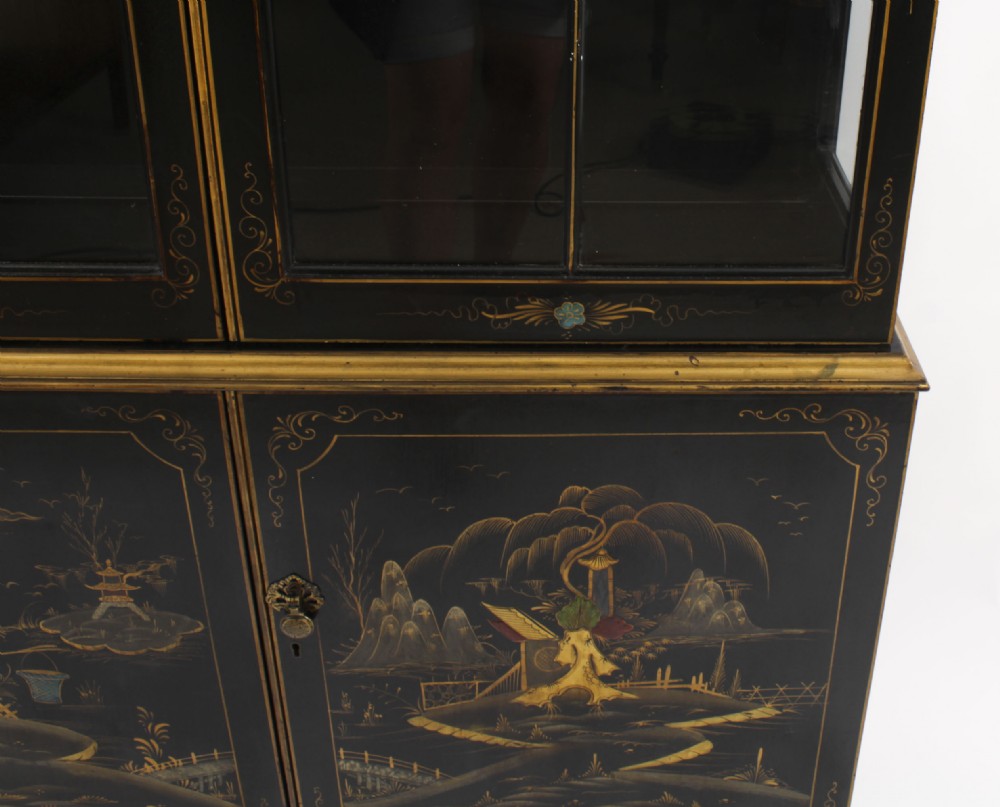
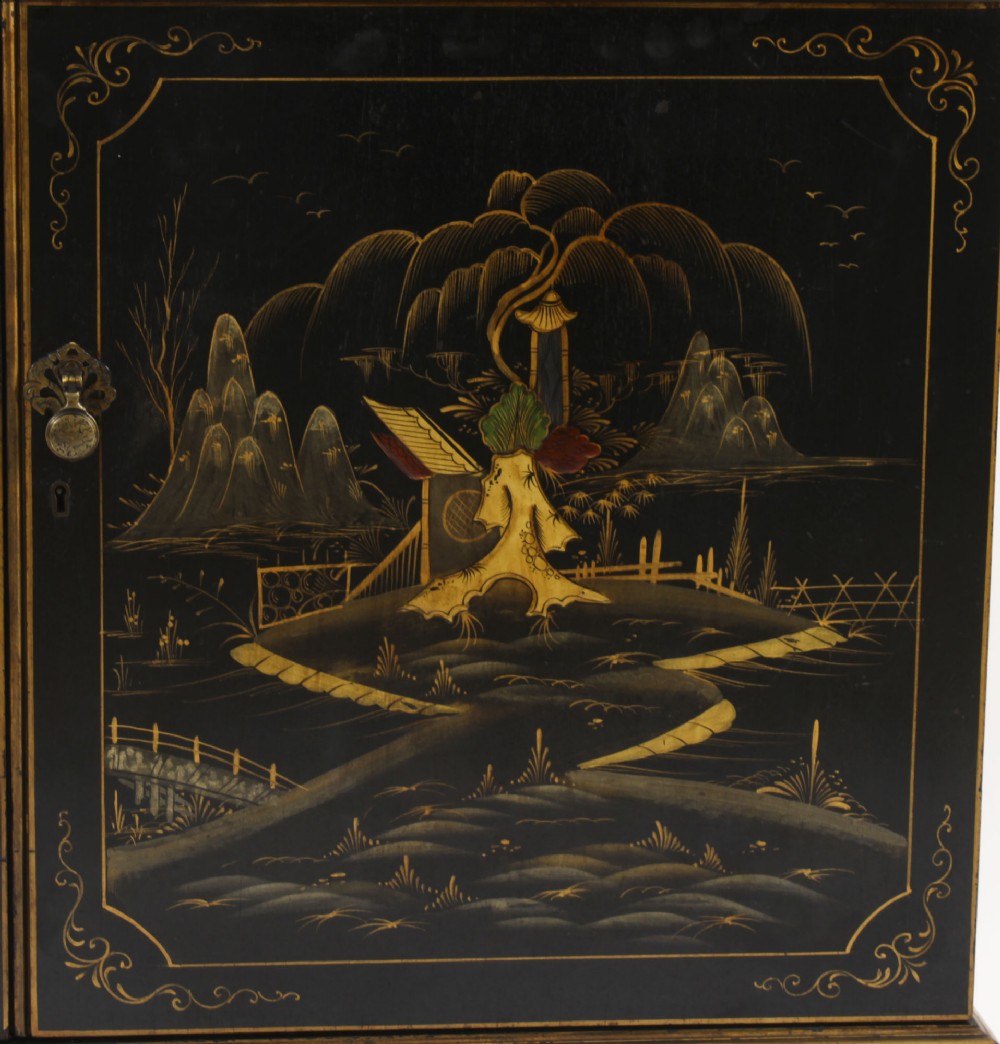
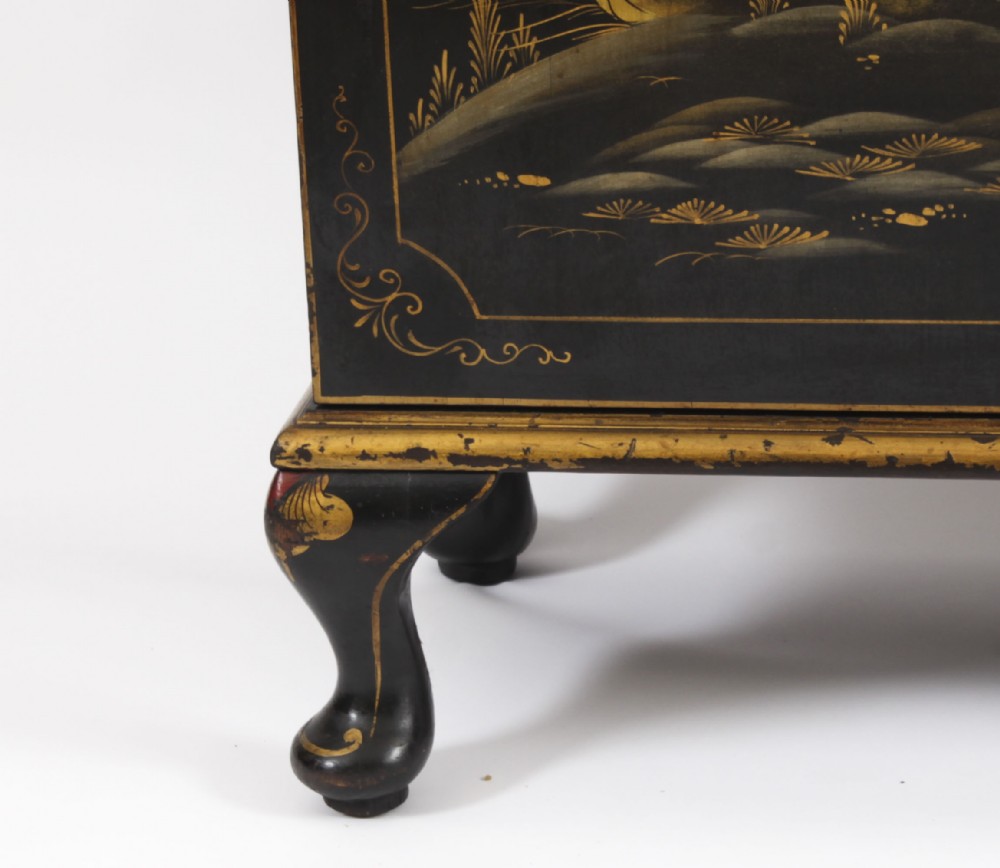
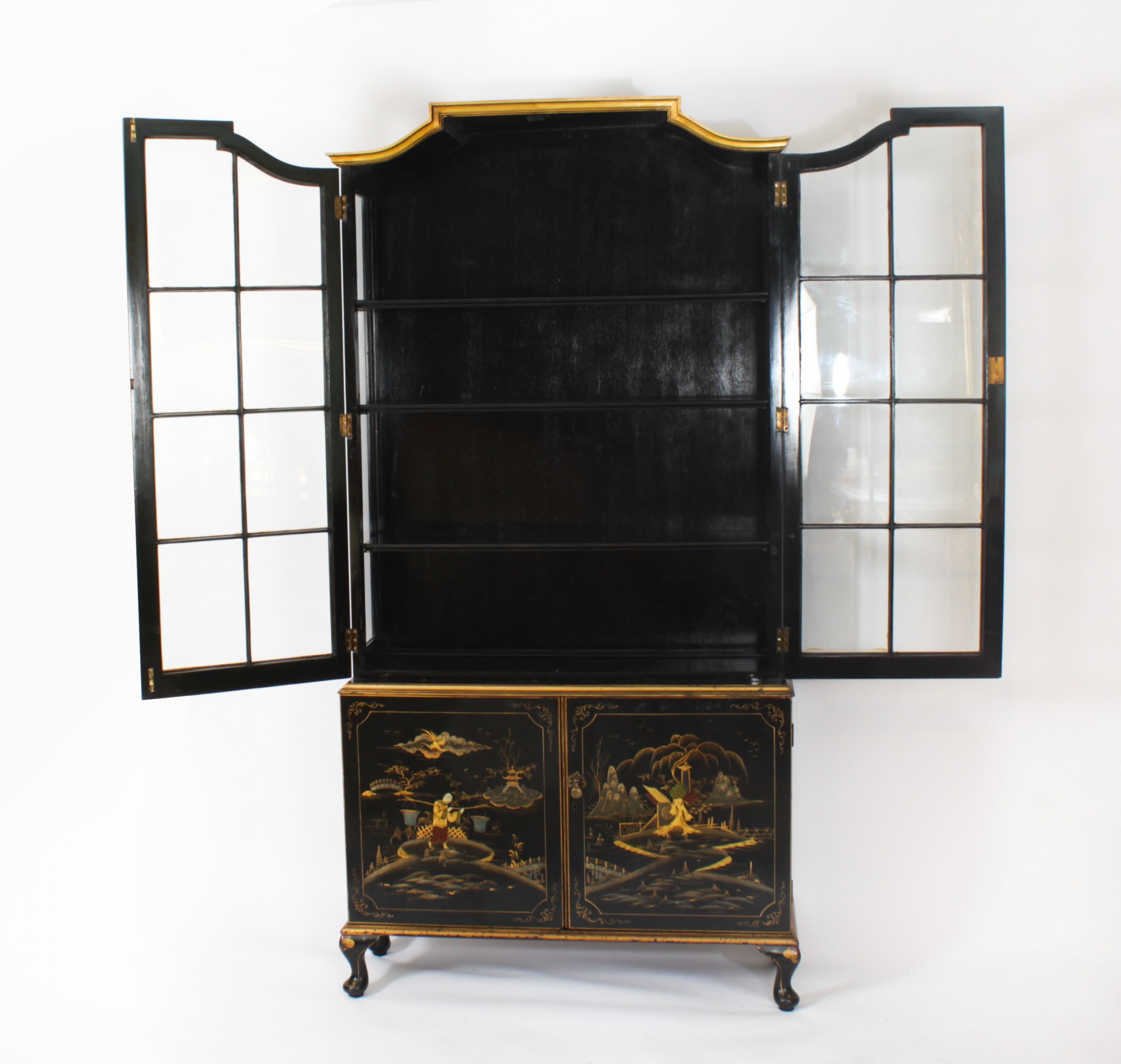
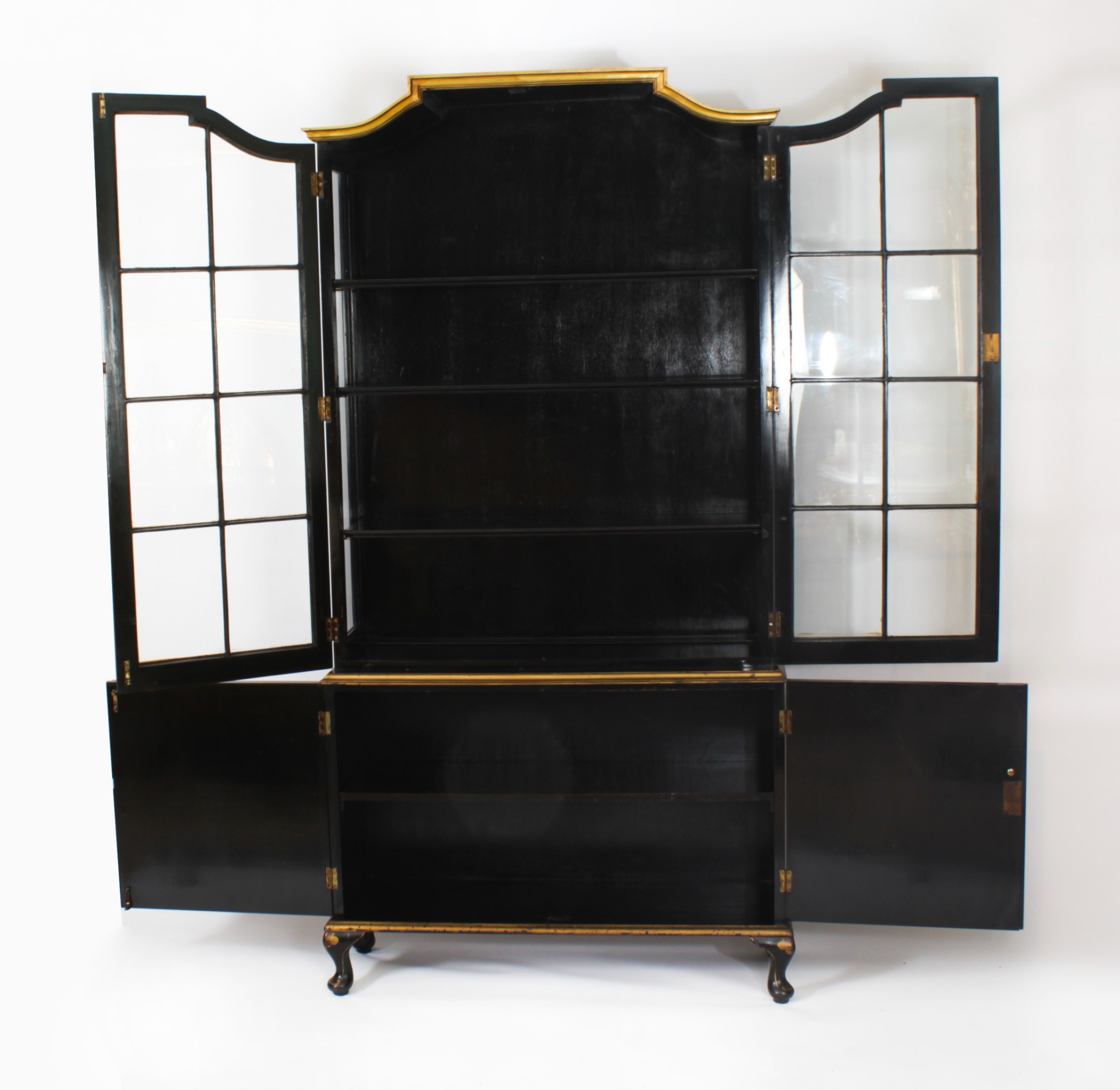
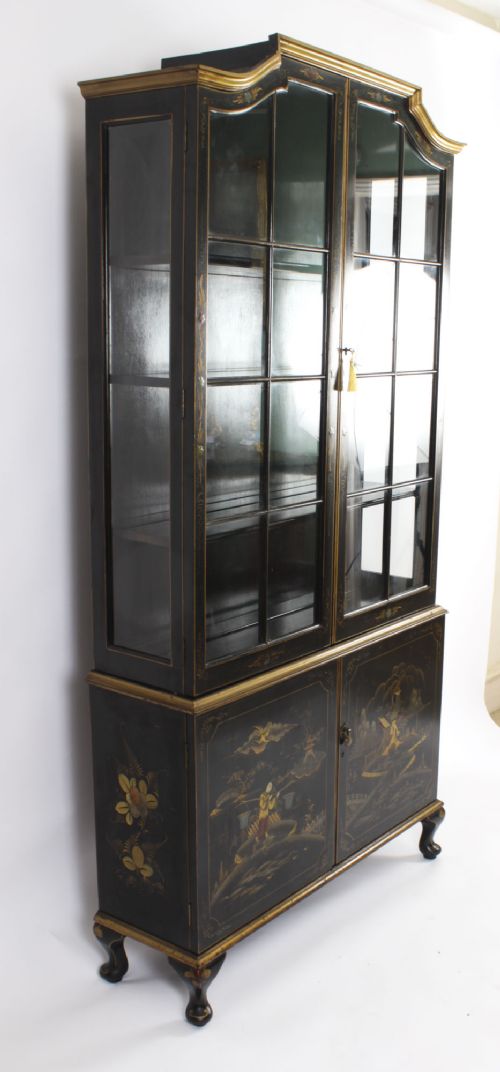
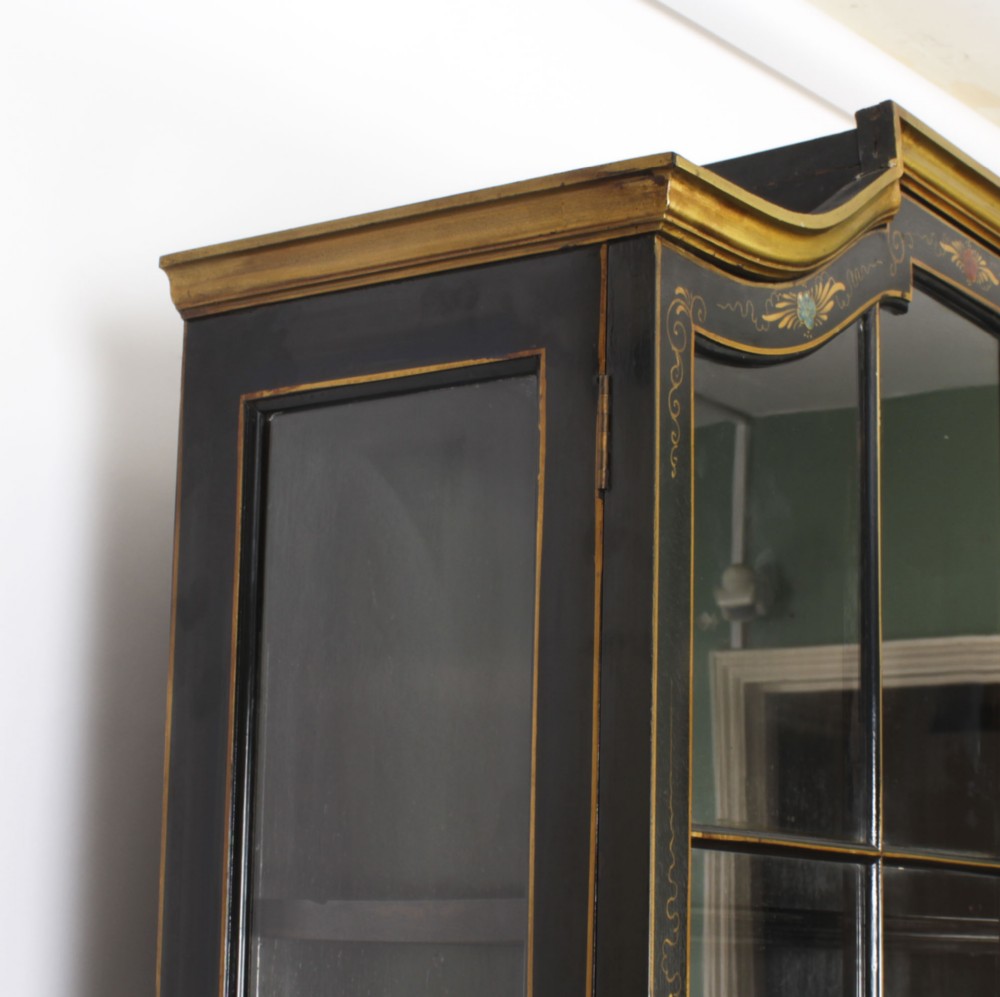
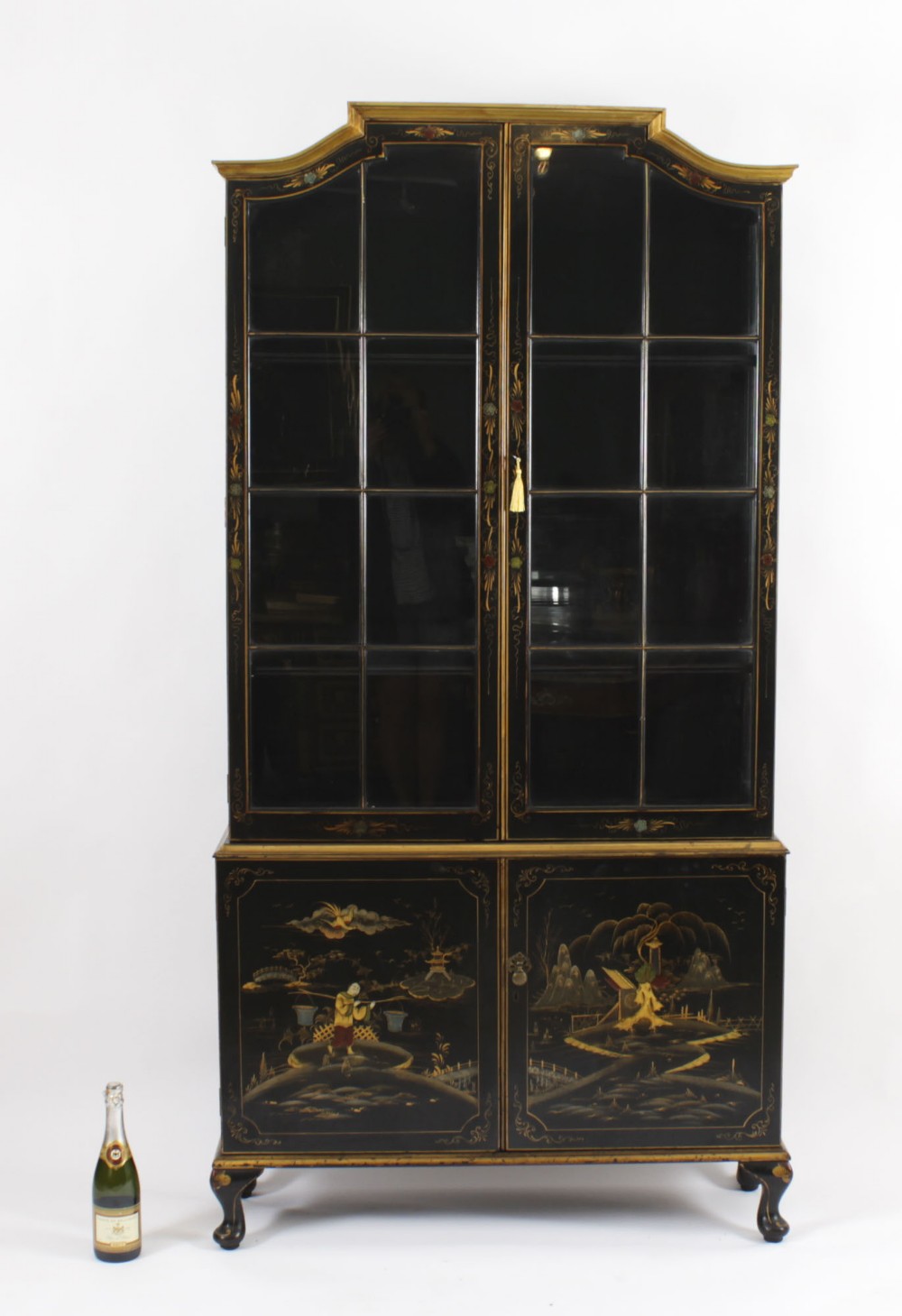
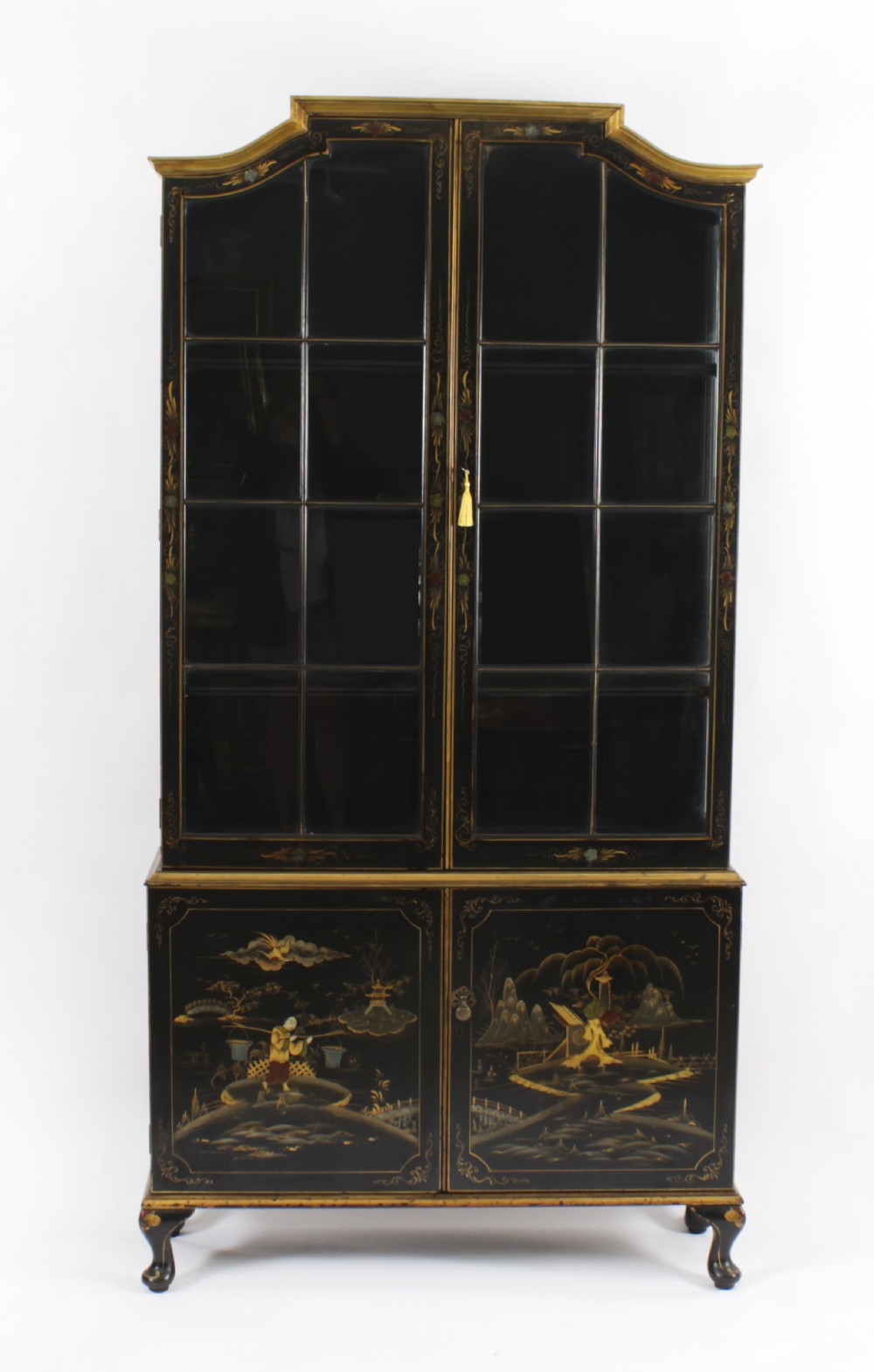
Regent Antiques has dated this piece to the 1900s.
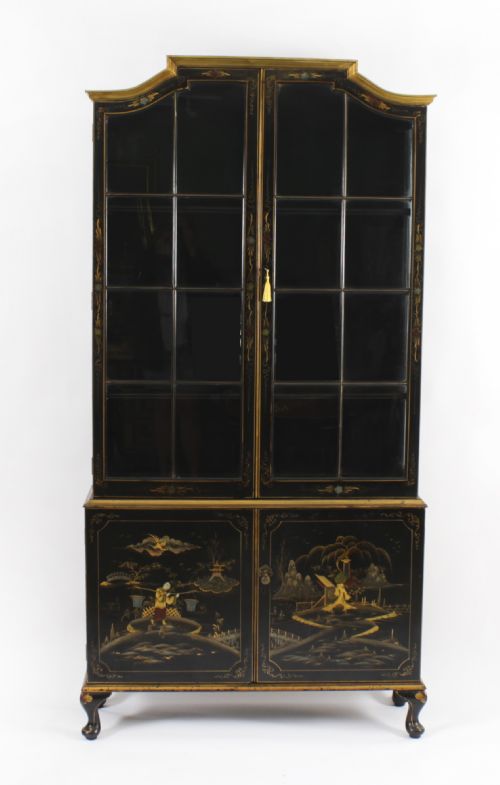
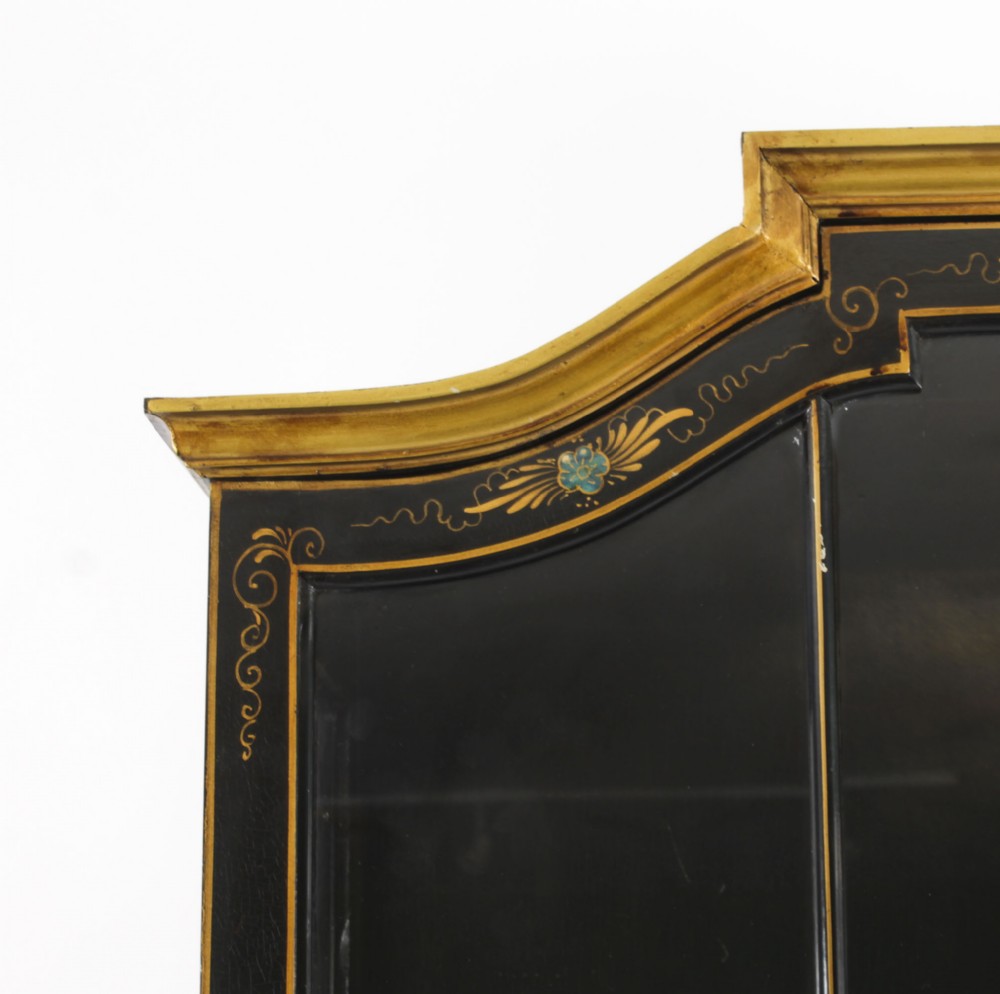
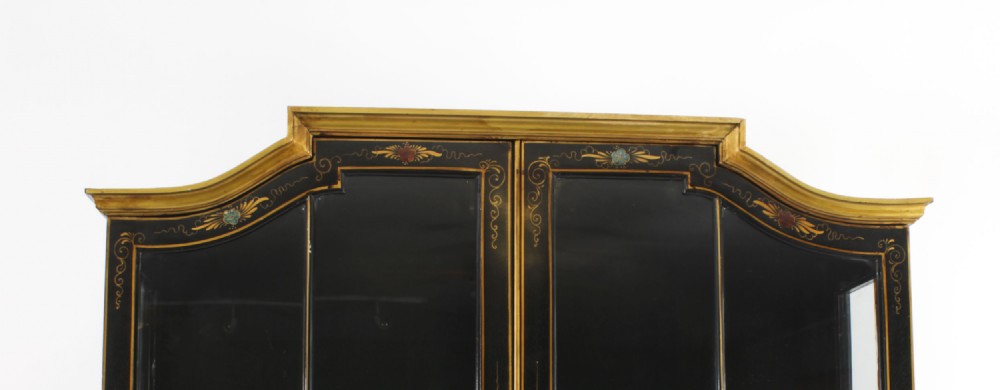
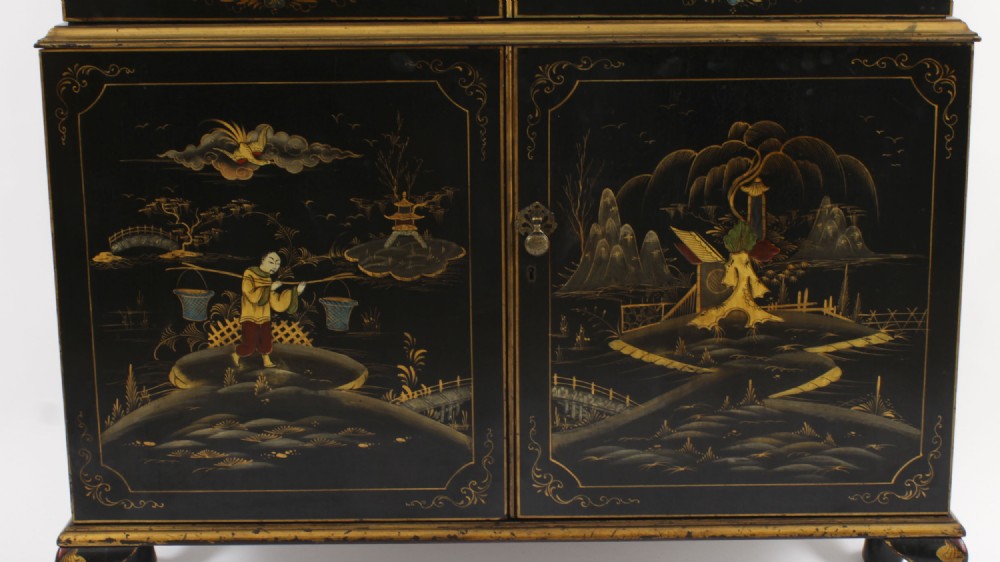
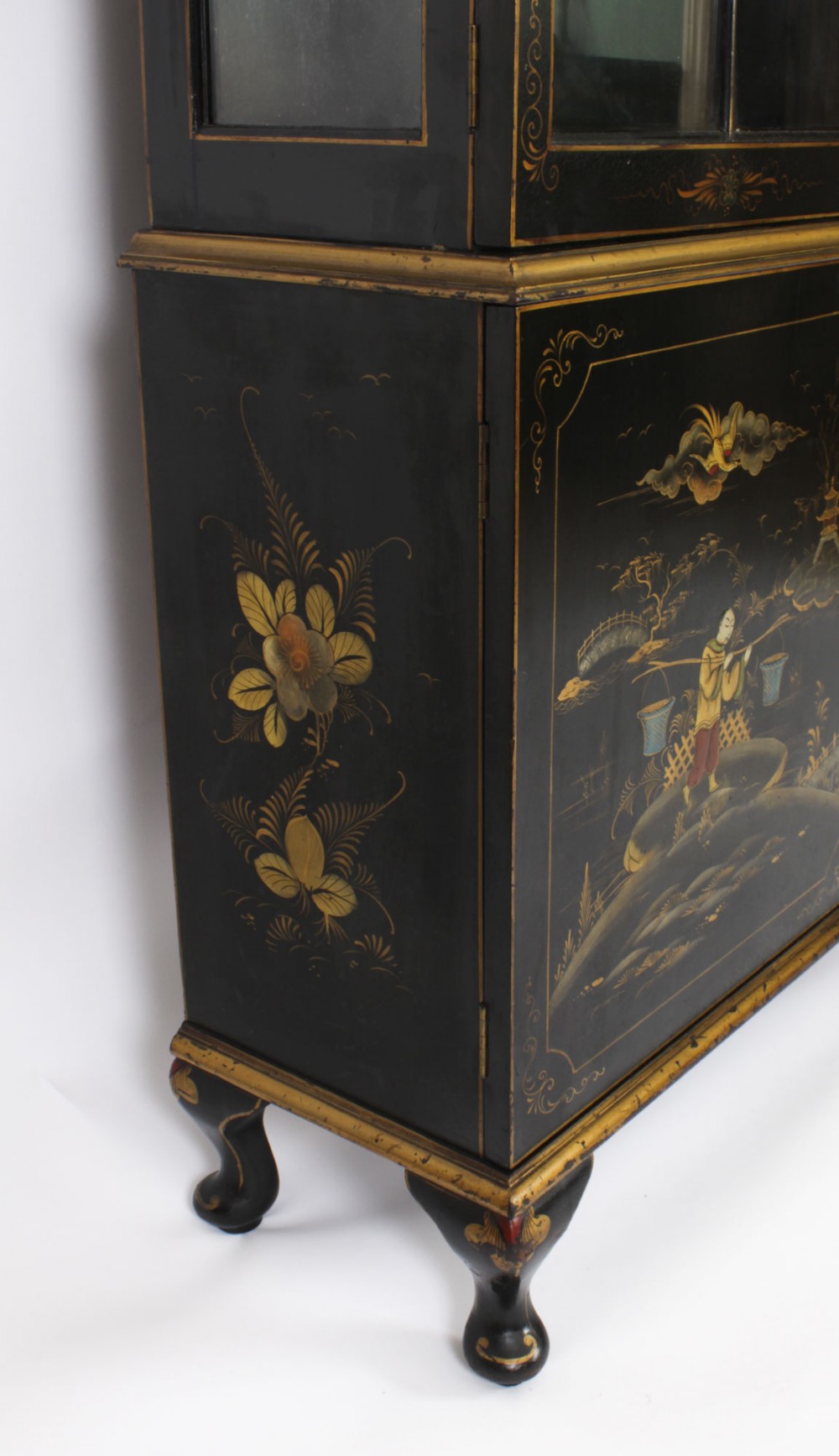
Its attention to detail and lavish decoration are certain to draw the eye wherever you choose to place them.
Condition
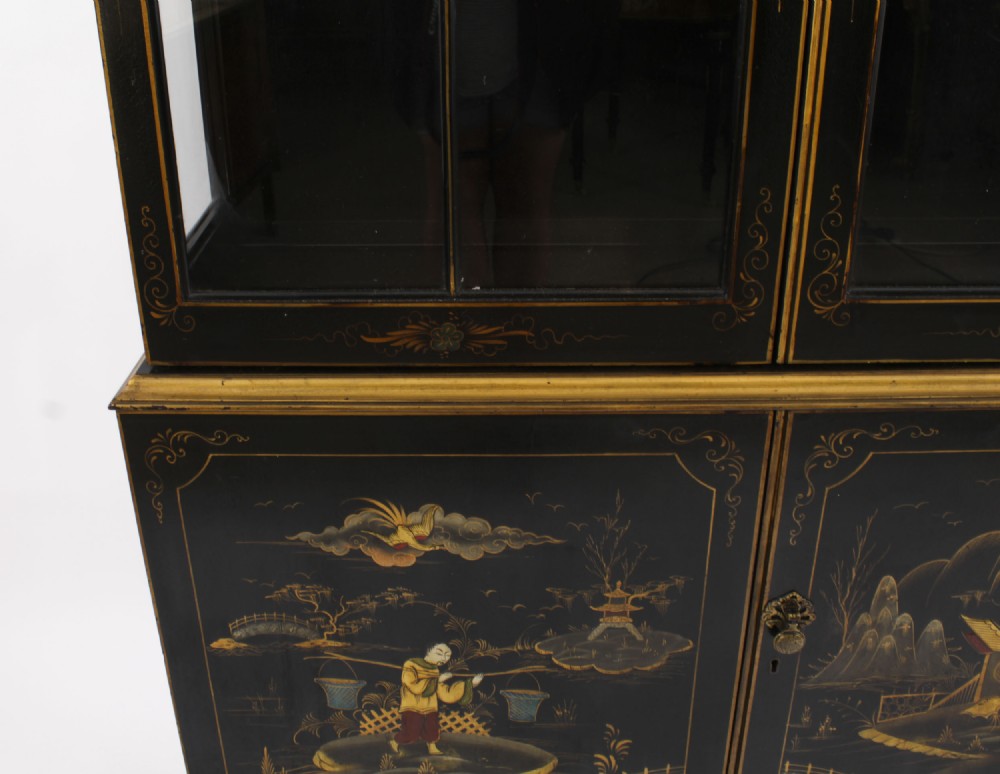
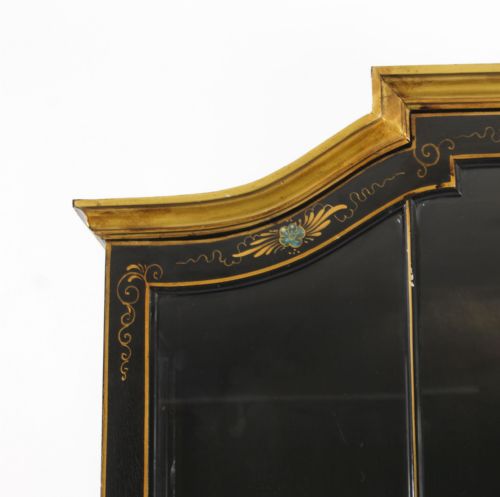
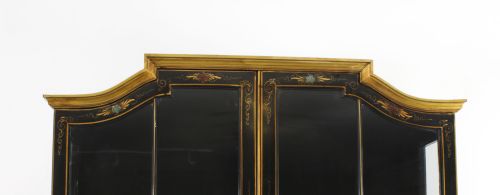
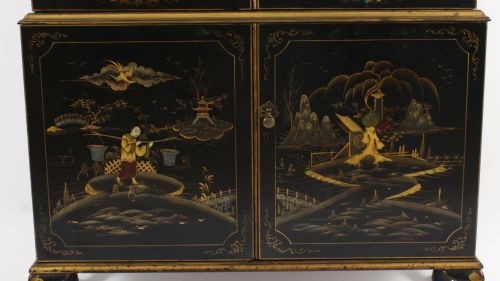
This unique cabinet is in excellent condition and has been well cared for. Please see photographs to confirm condition.
Dimensions in cm:
Height 200 cm x Width 103 cm x Depth 32 cm
Dimensions in inches:
Height 6 foot, 7 inches x Width 3 foot, 5 inches x Depth 1 foot, 1 inch
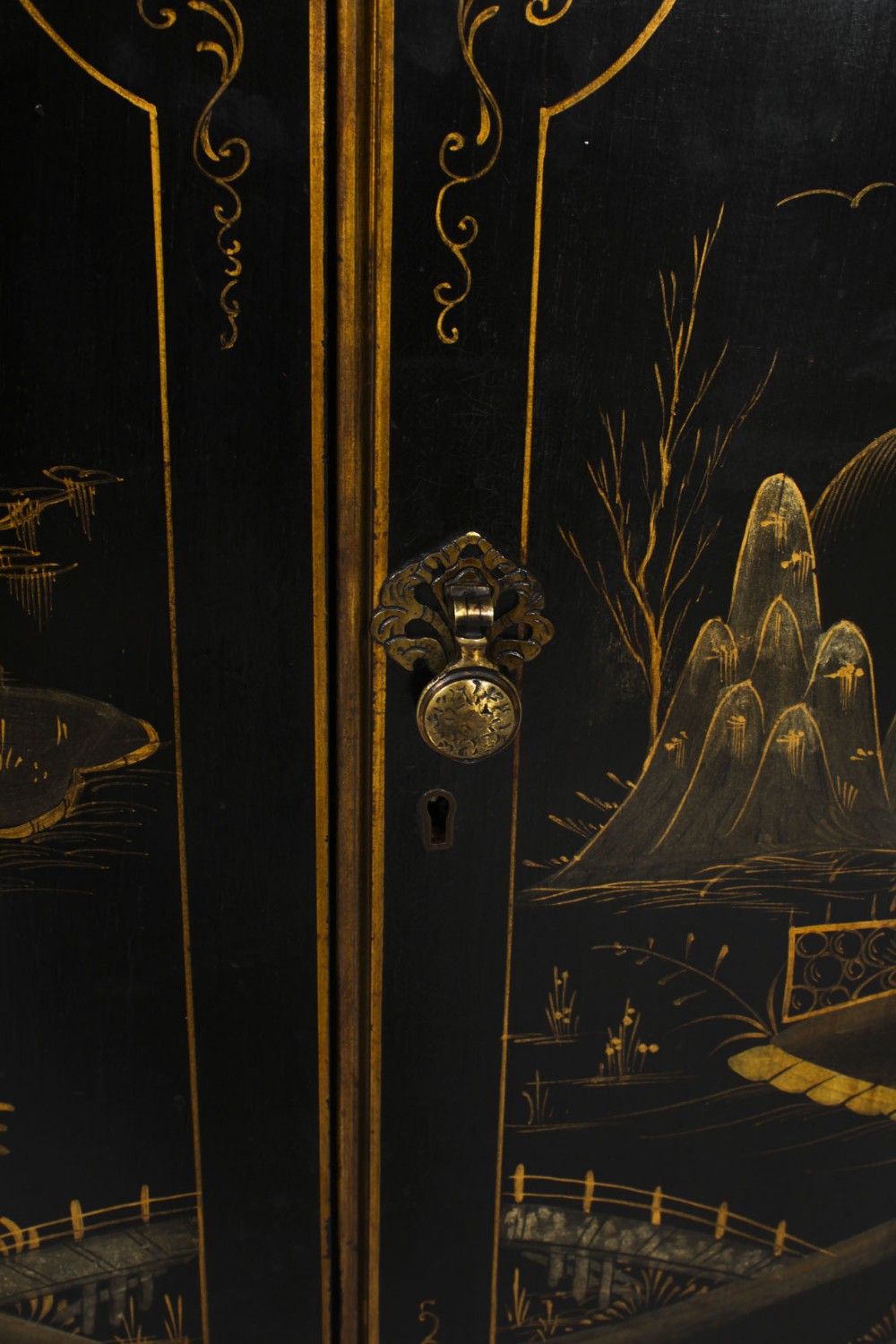
Japanning
is the term given to the European practice of applying East Asian style lacquer work decoration to large items of furniture and household goods. The term originates from the late 17th century as the opening of trade routes in the East triggered an interest in Chinese and Japanese fashions in Britain, France, Italy and the Netherlands.
European japanning differs from traditional East Asian lacquerwork which uses sap from the ‘Toxicodendron vernicifluum’ tree, also known as the Chinese lacquer tree, which is not indigenous to the West. Instead, japanned furniture in Europe and North America uses resin-based varnishes, similar to Shellac.
The seminal work on the subject was ‘A Treatise of Japaning and Varnishing: Being a Compleat Discovery of Those Arts’, by John Stalker and George Parker, first published in 1688. The book not only offers recipes for creating lacquers and guides to their application, but even includes a series of illustrated designs for readers to copy.
Our reference: A3830
Regent Antiques has dated this piece to the 1900s.
We specialise in english and continental furniture, silver, porcelain and decorative items.
You can view the stock and full dealer information on the Regent Antiques Profile Page
Regent Antiques is a registered member of LAPADA CINOA
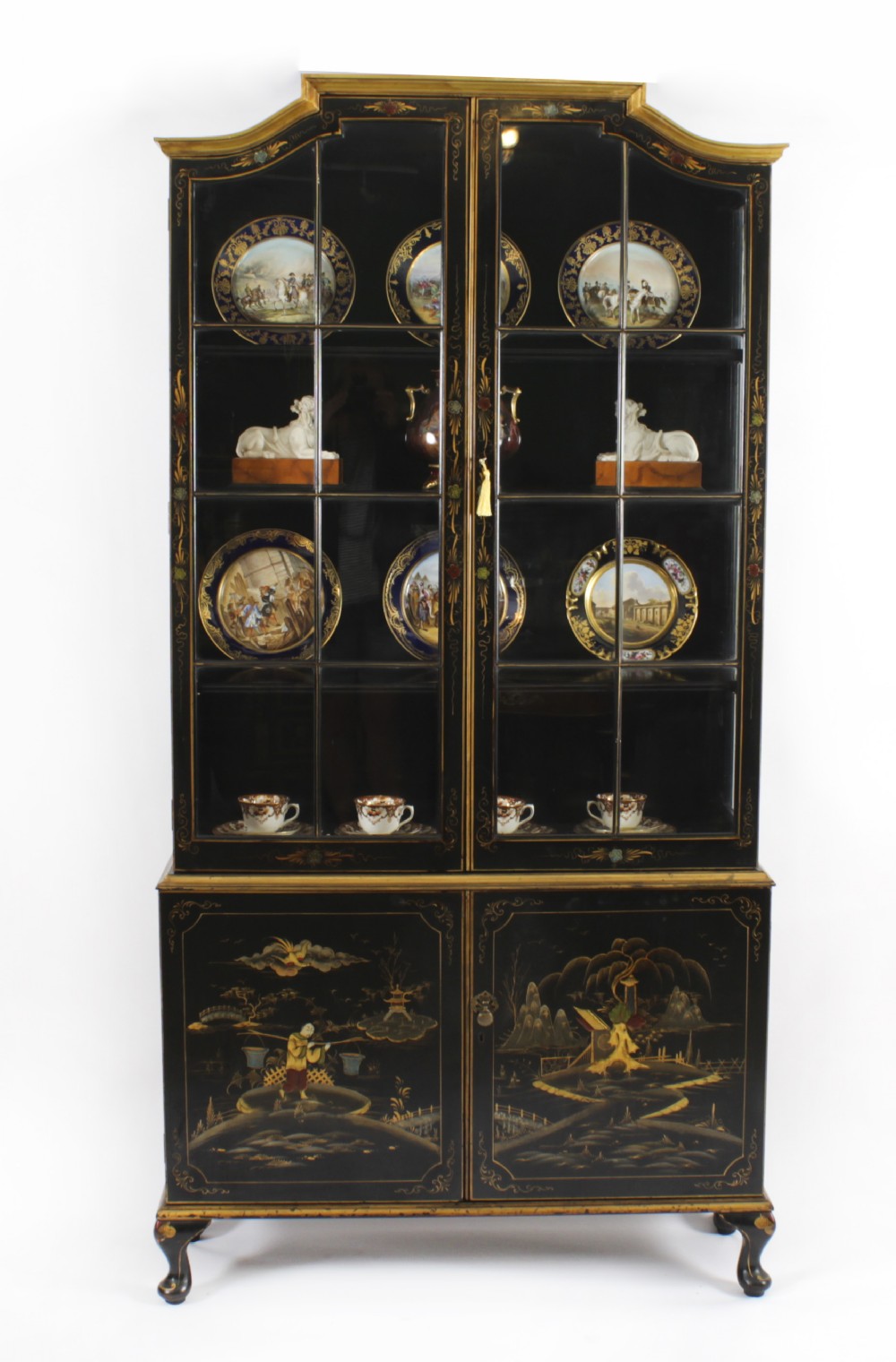
Antique Japanese Revival Black Lacquered Display Cabinet Circa1900