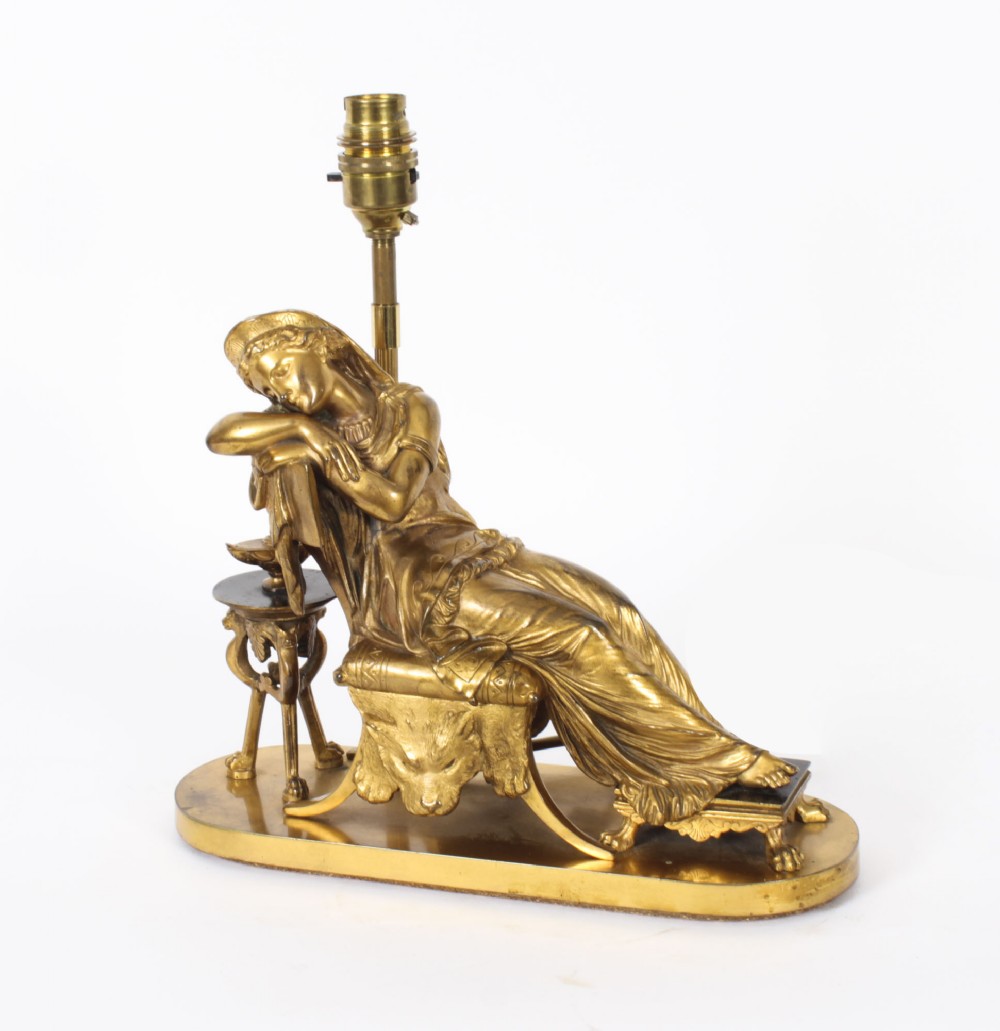
Regent Antiques has dated this piece to the 1890s.
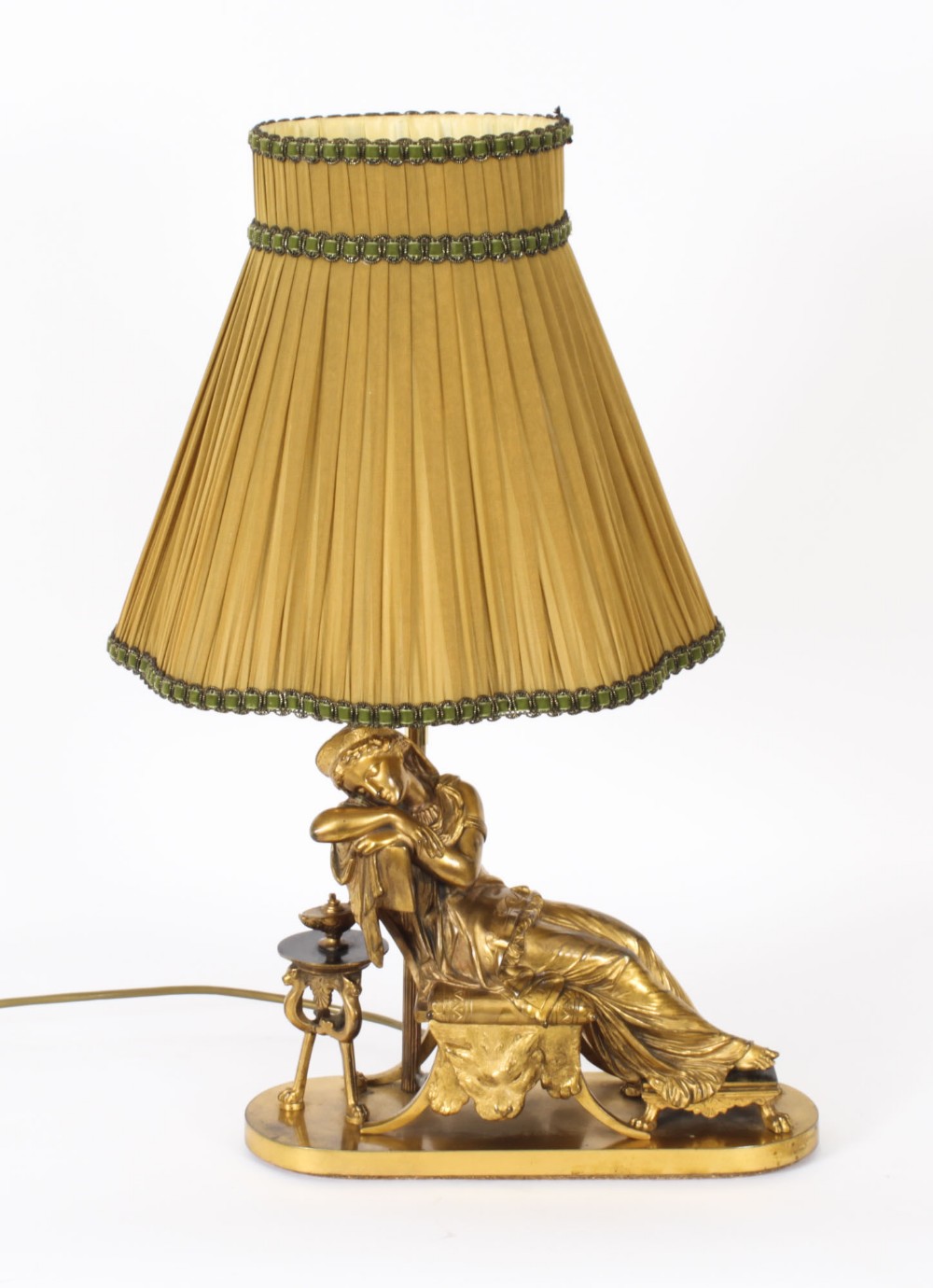
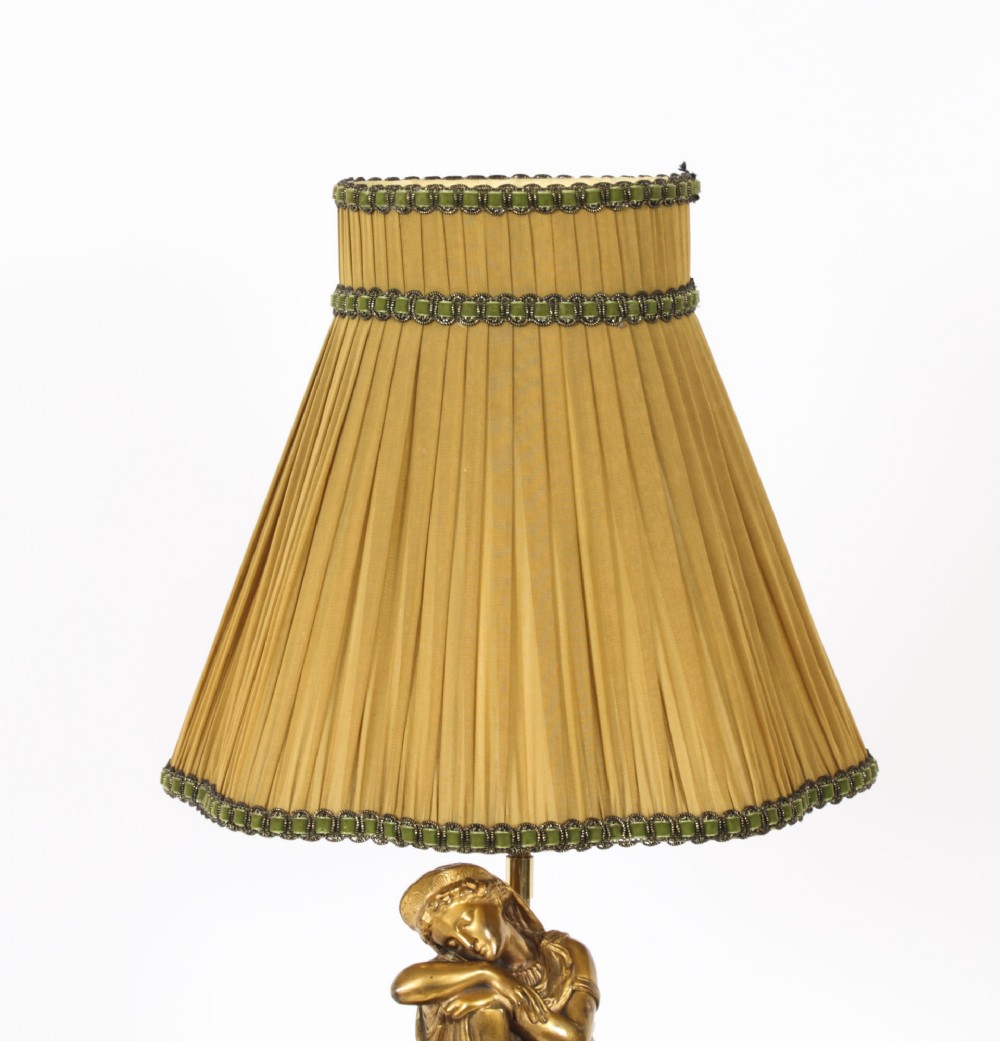
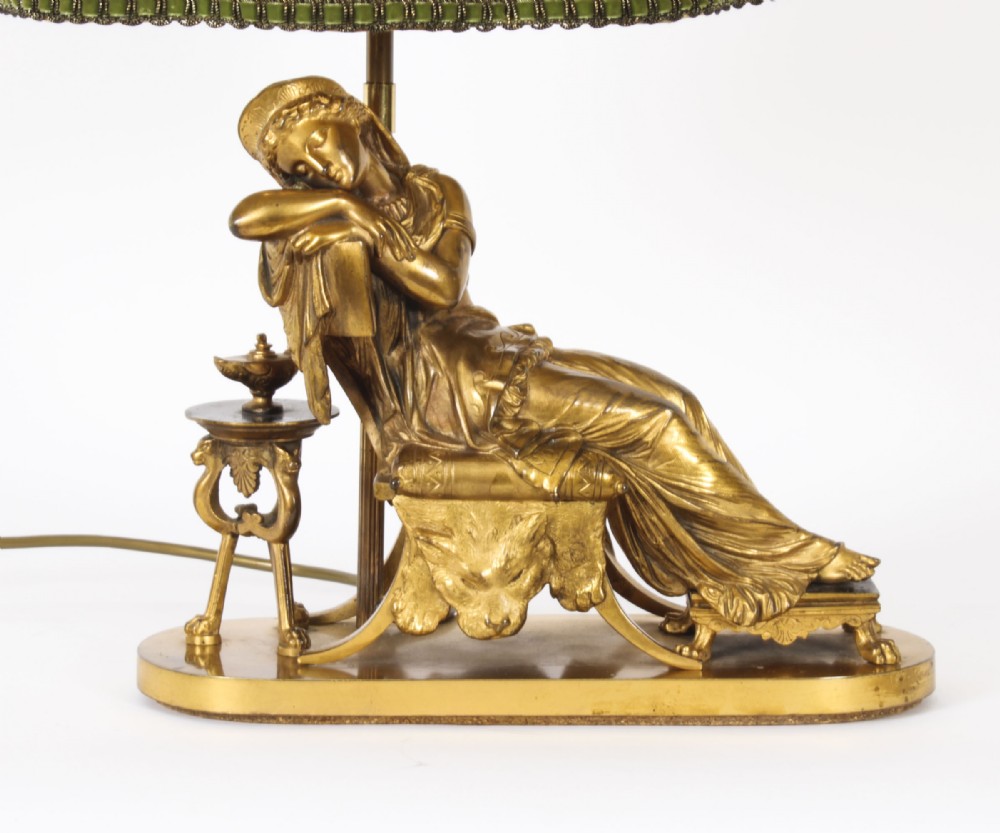
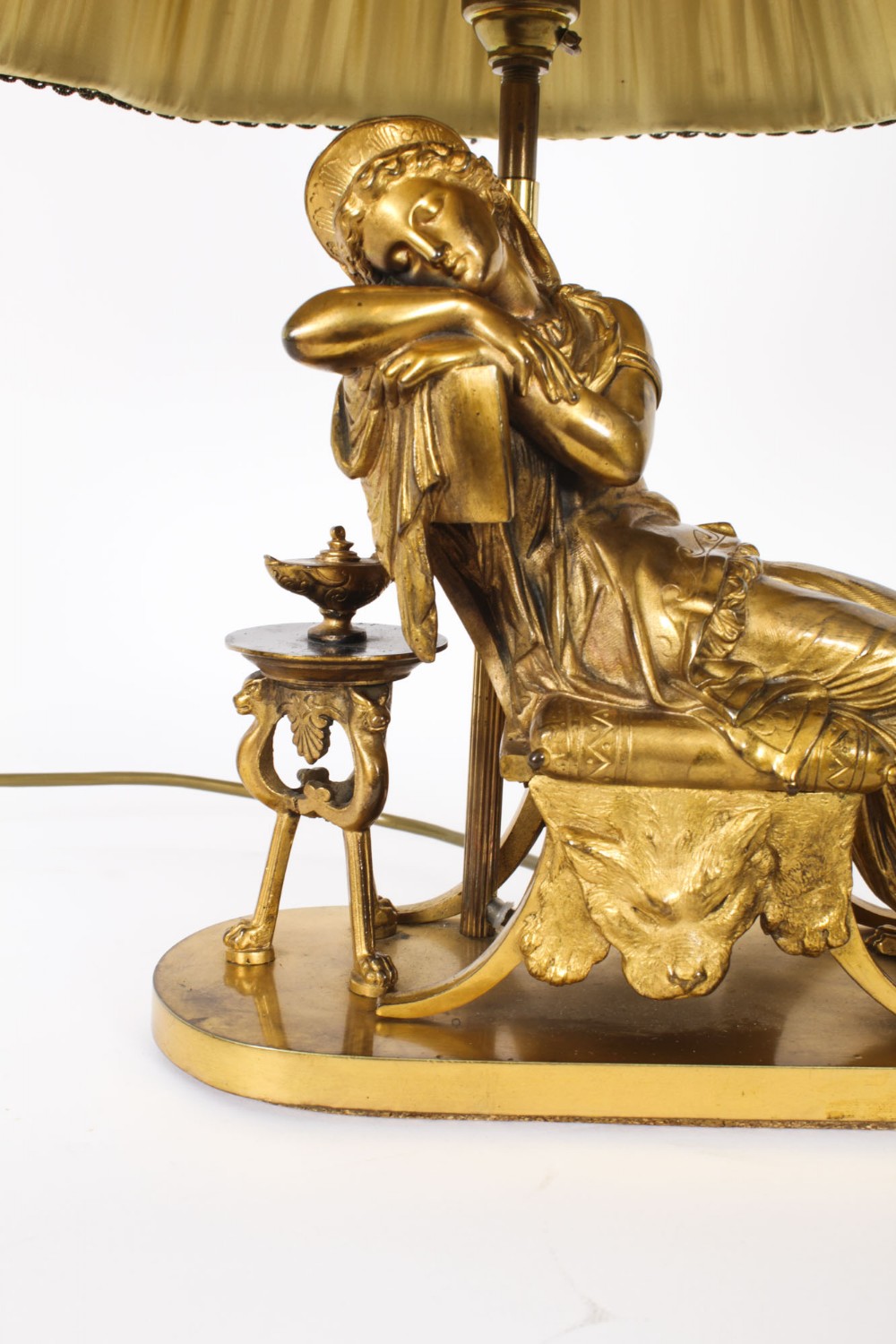
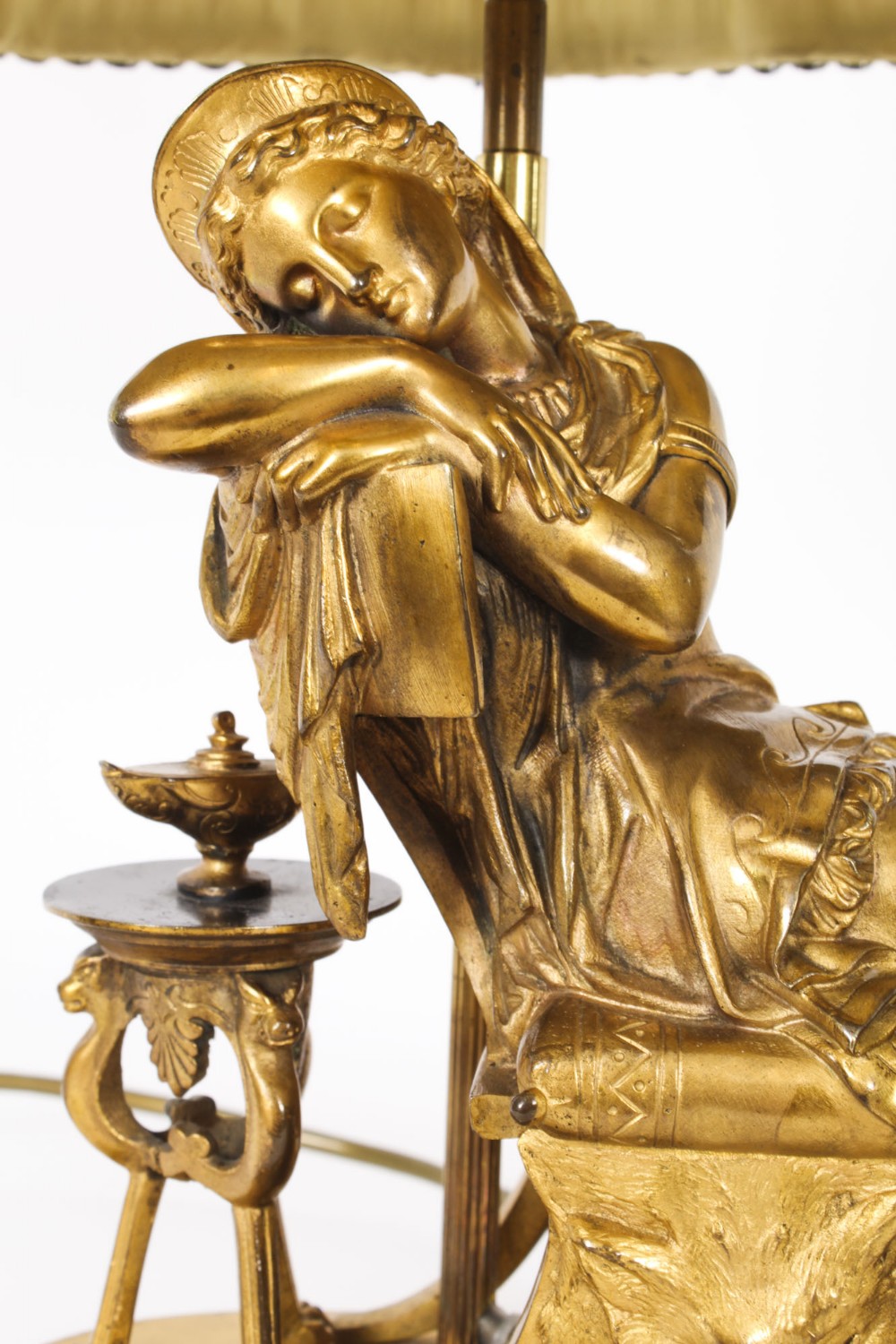
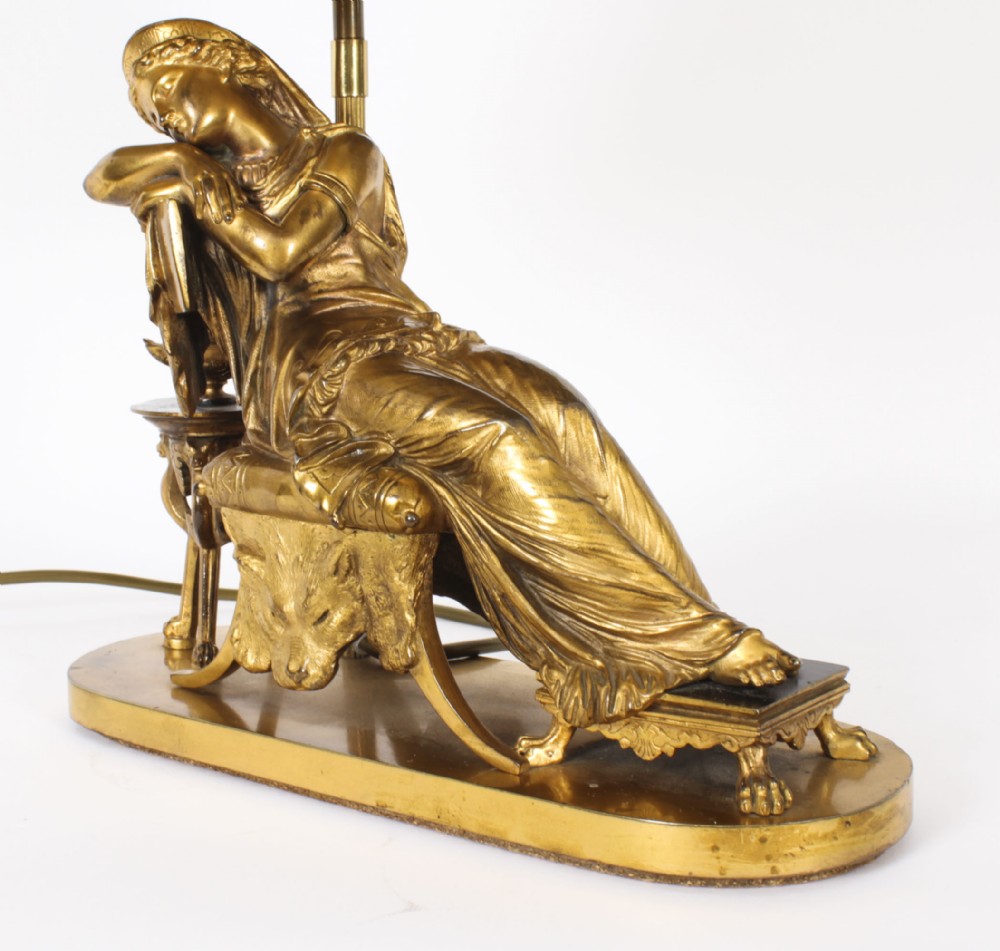
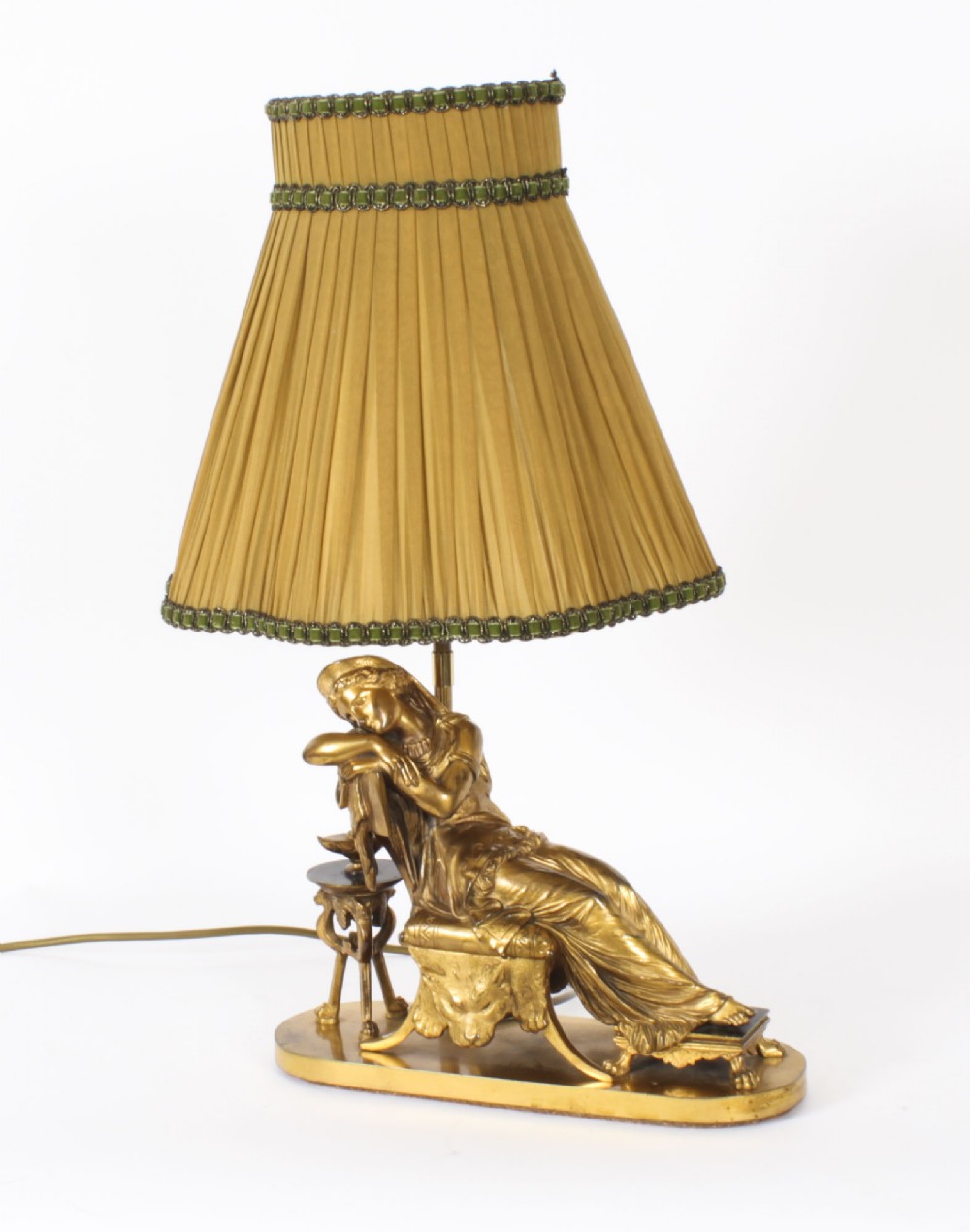
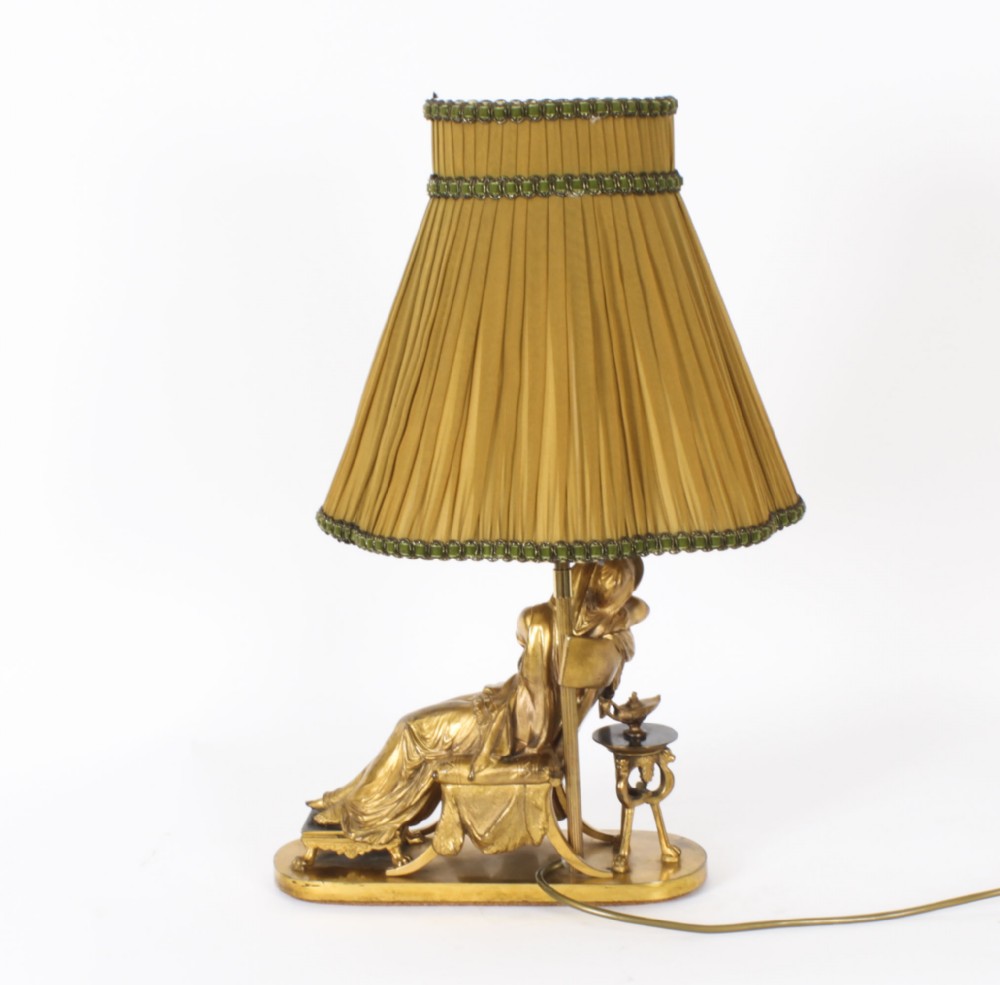
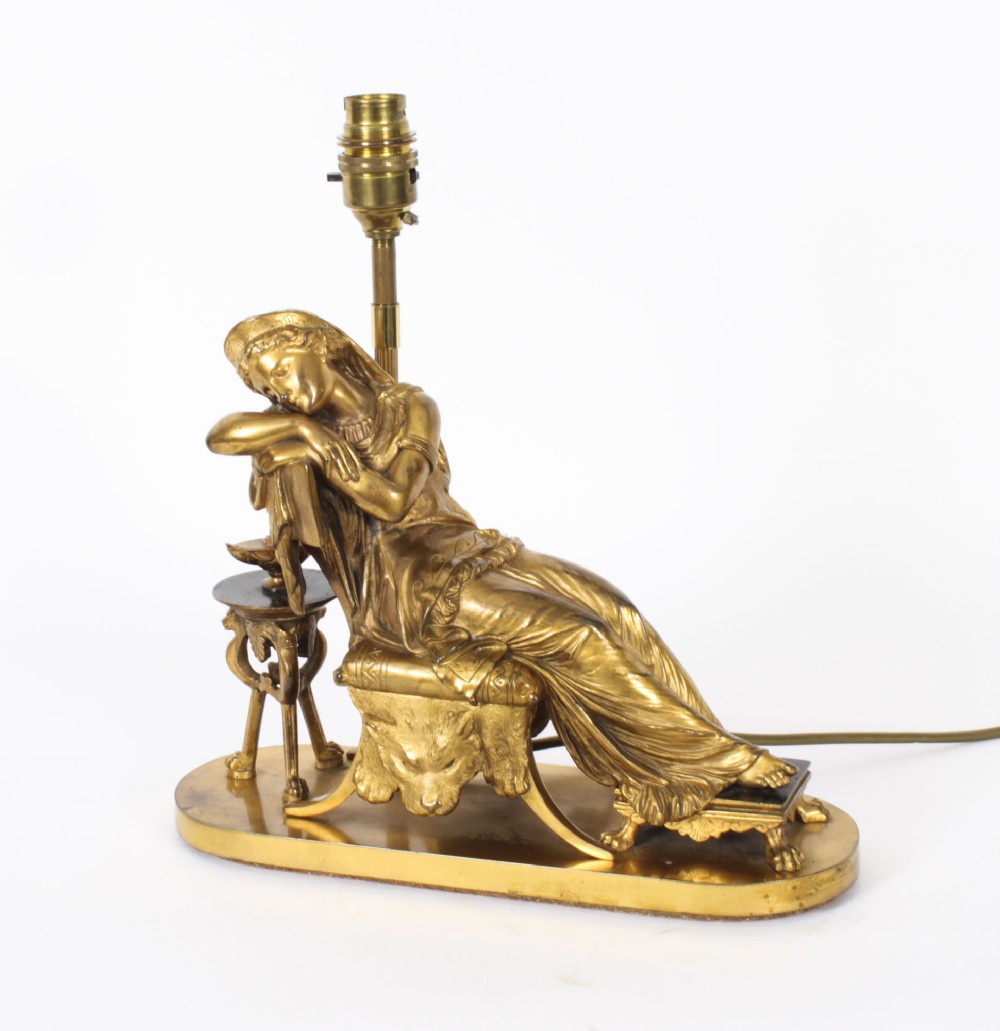
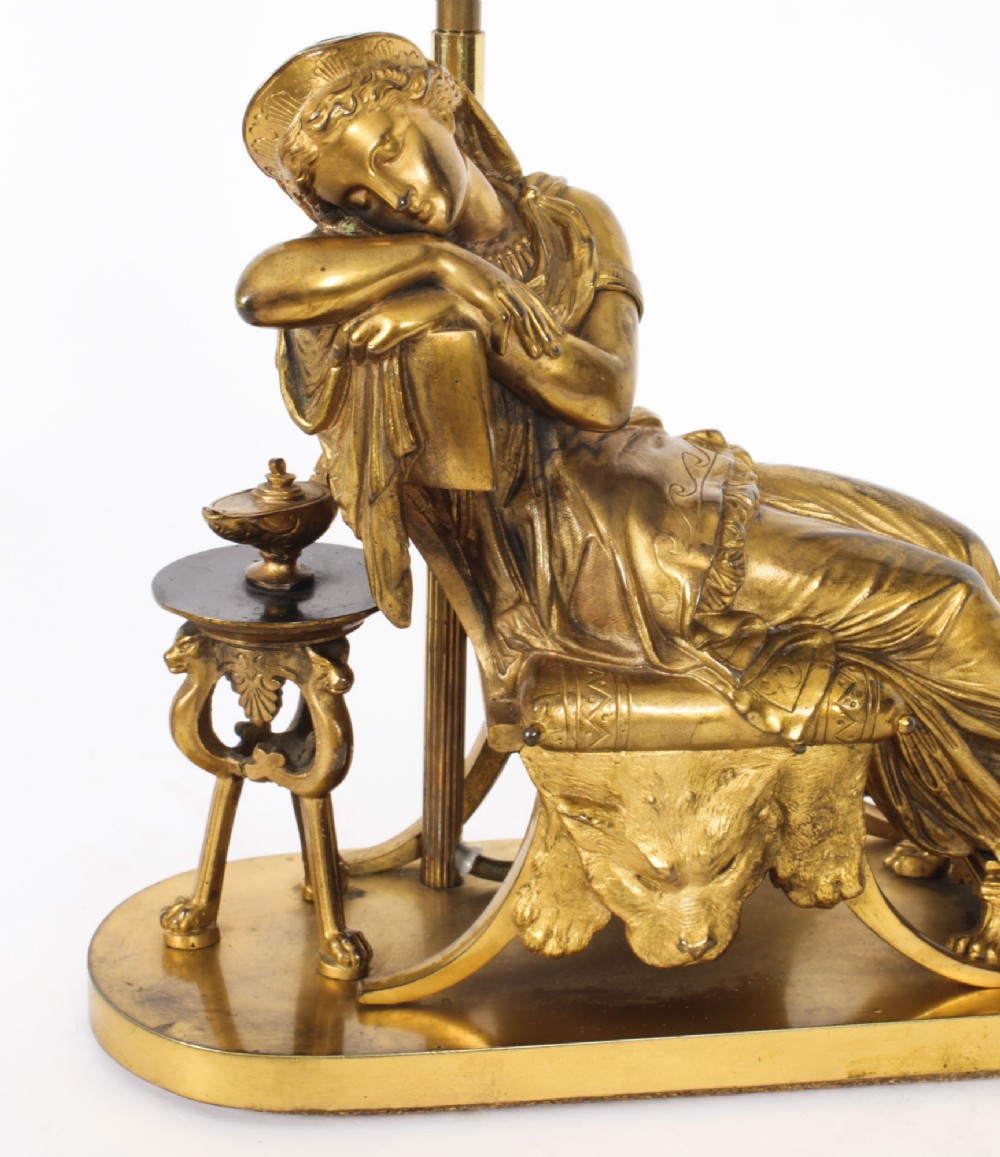
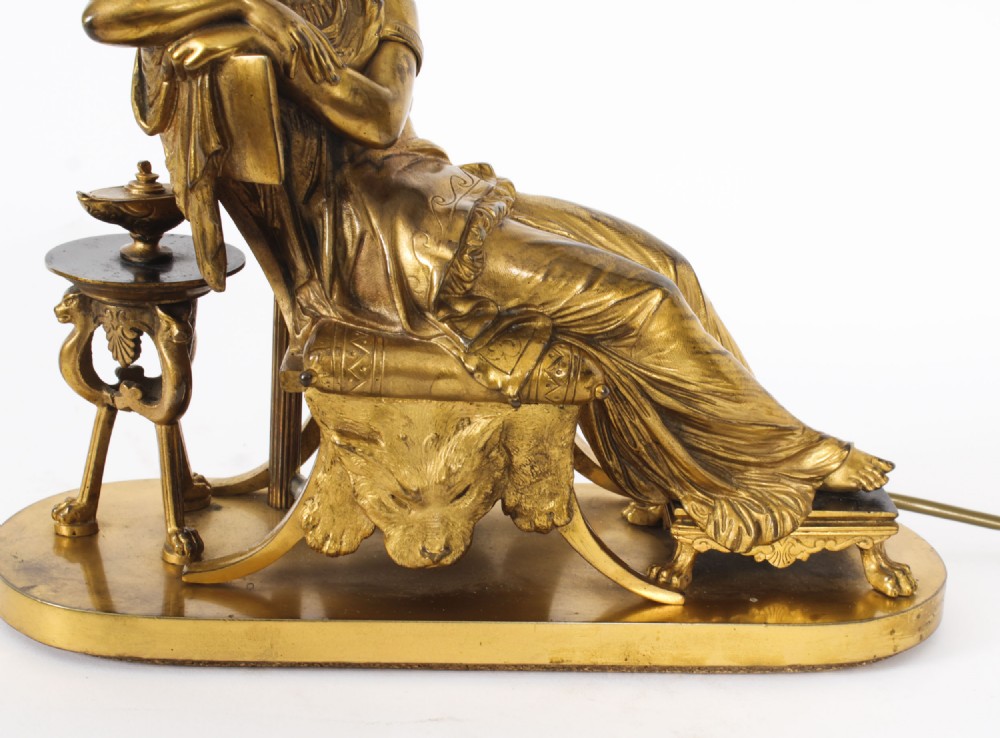
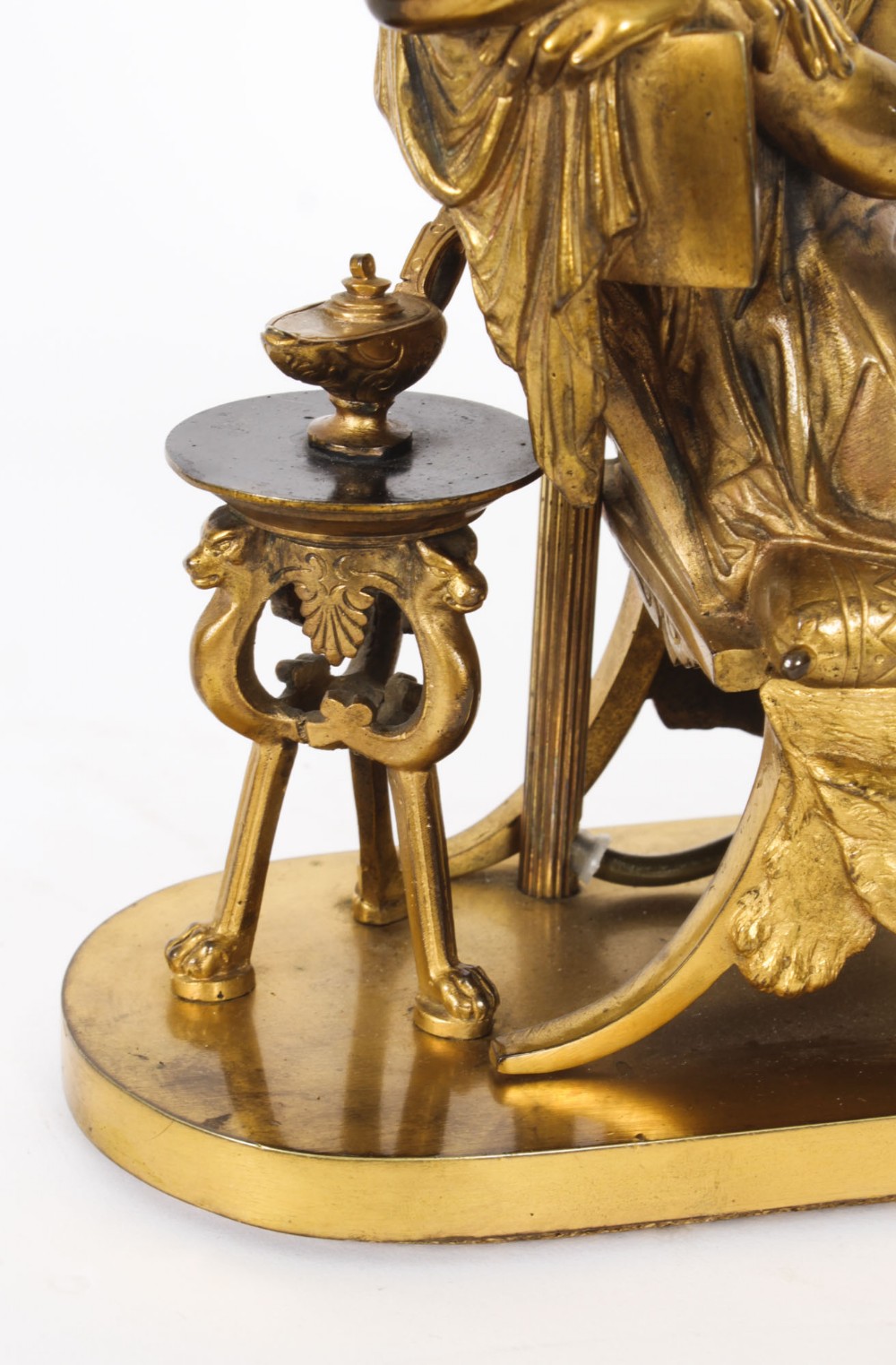
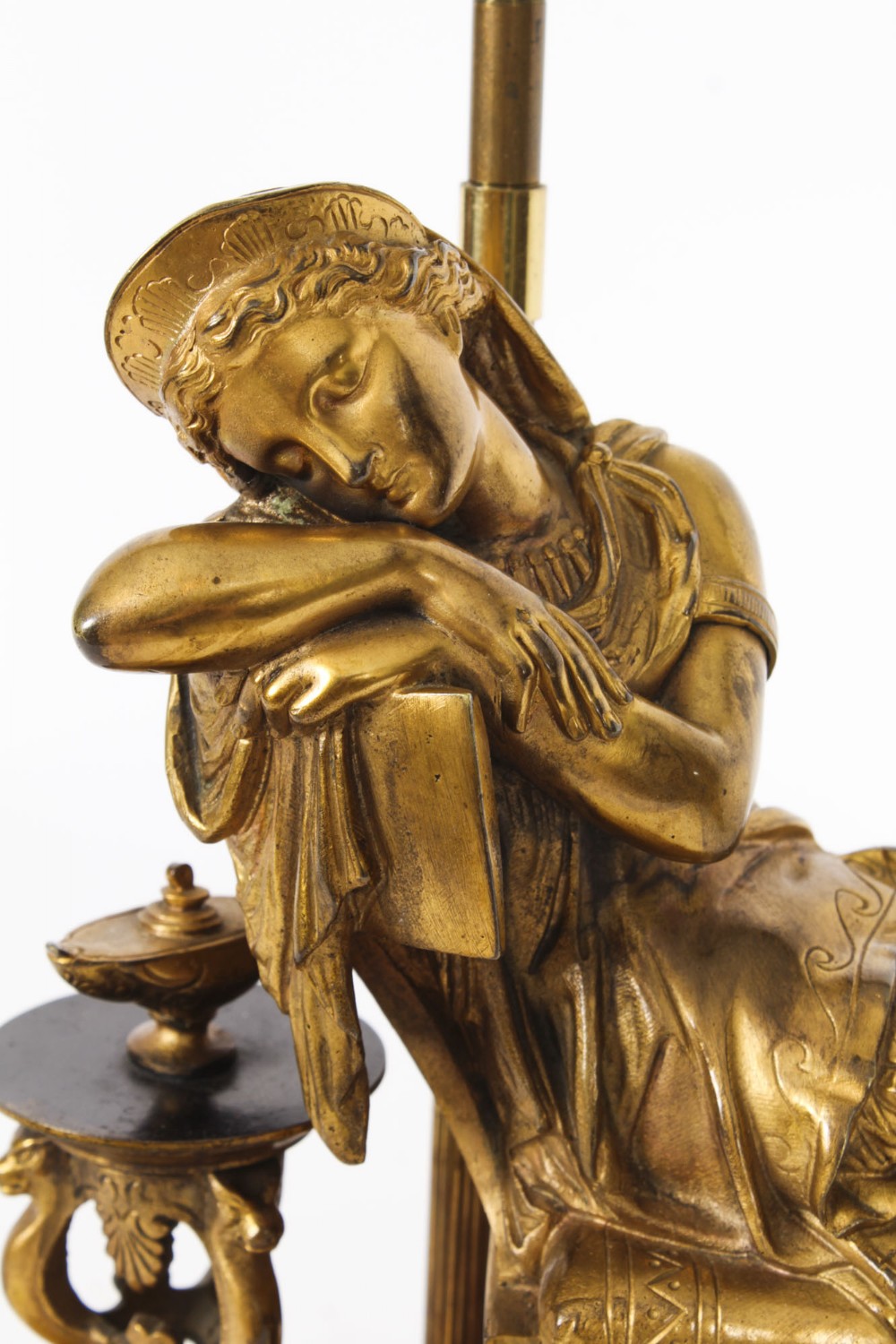
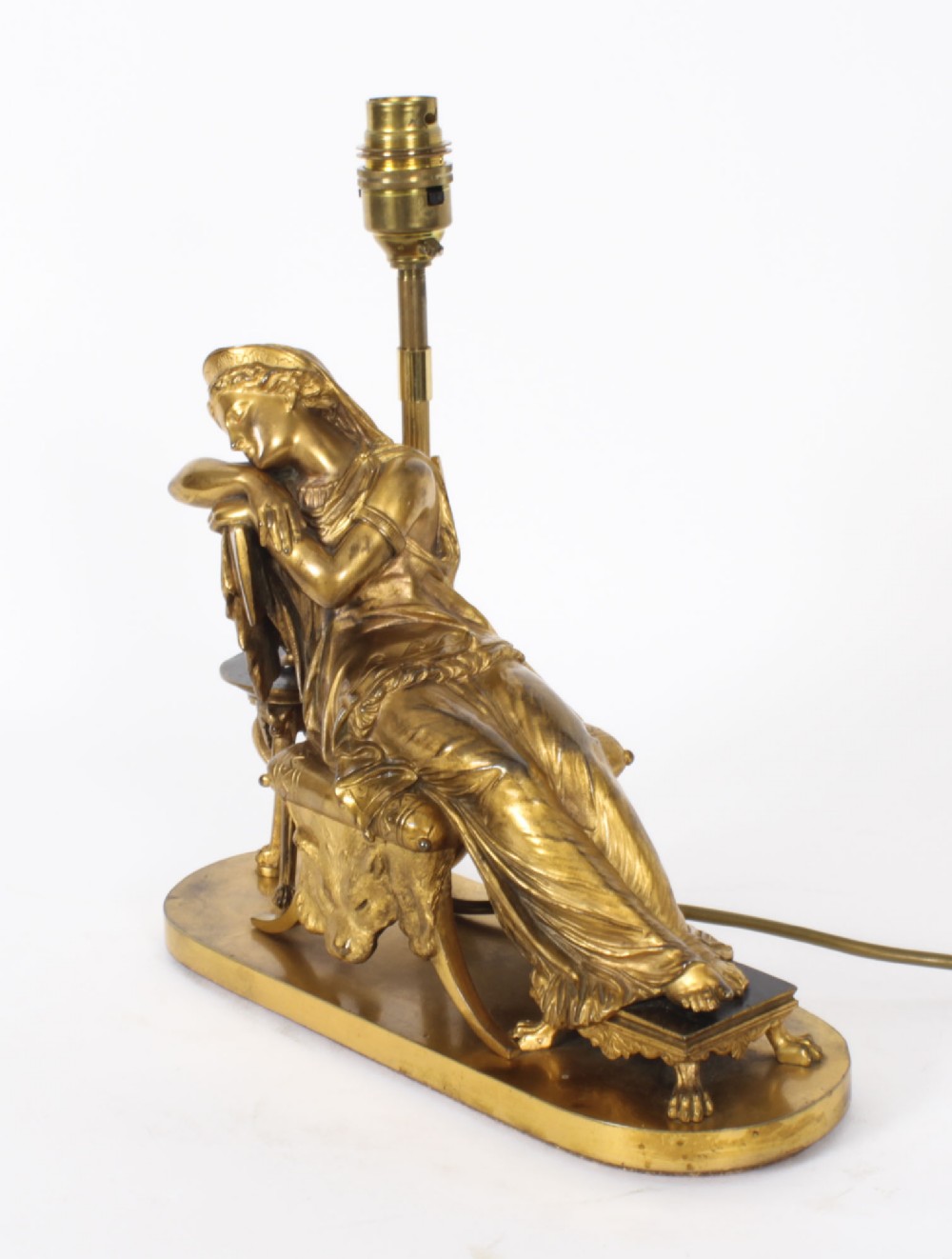
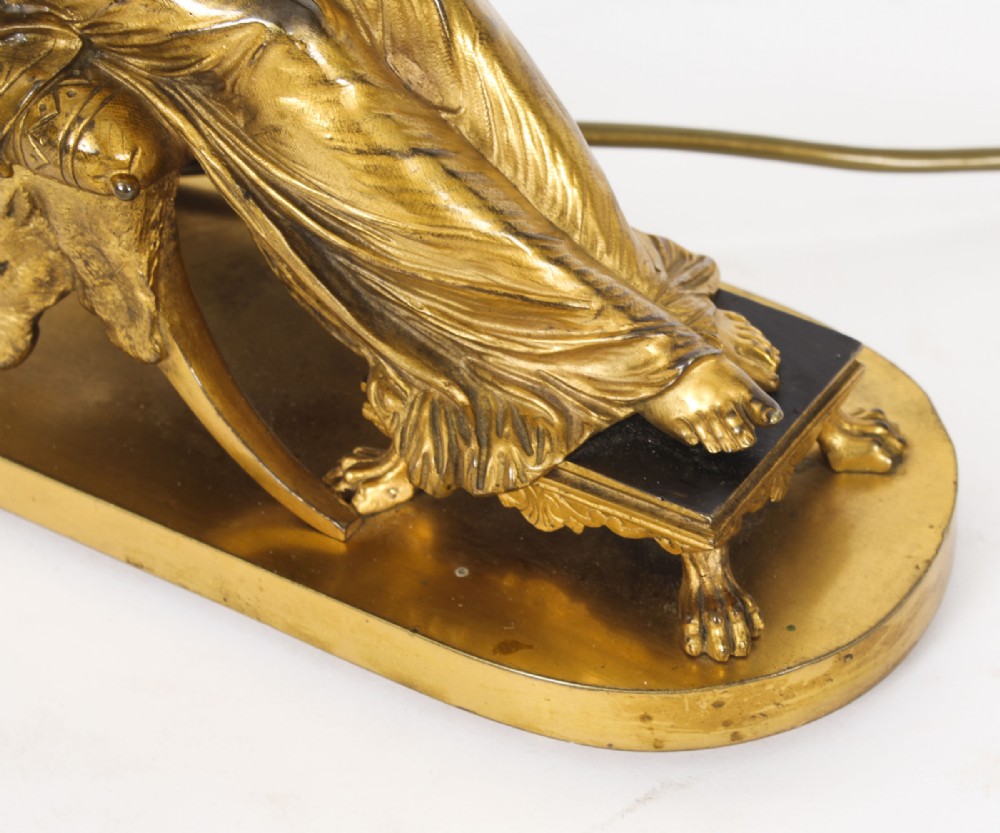
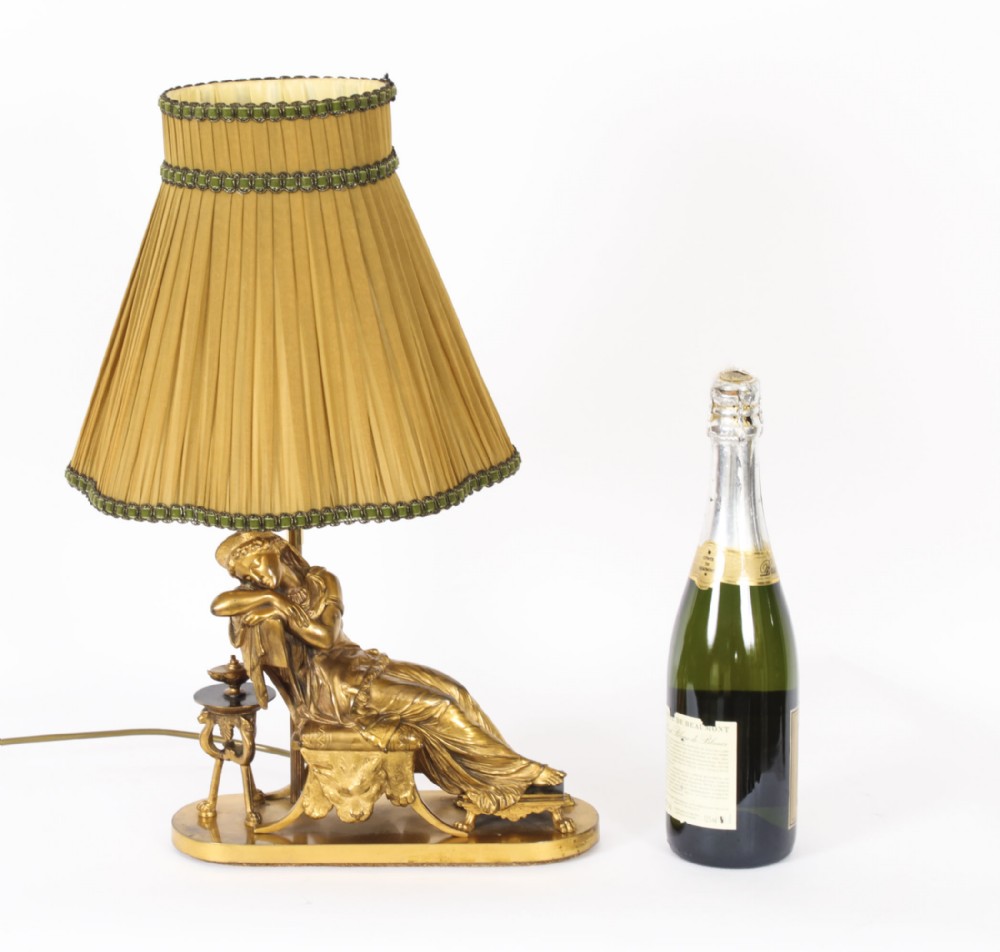
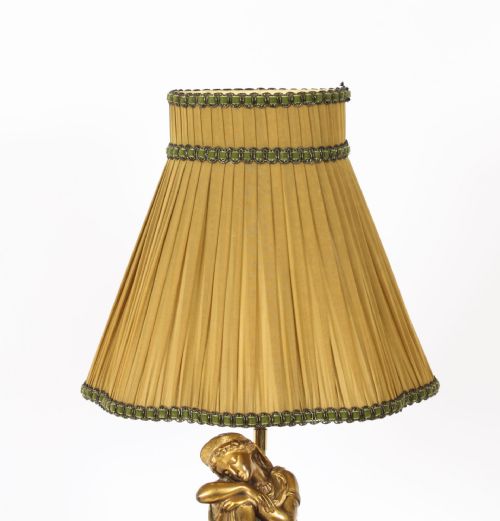
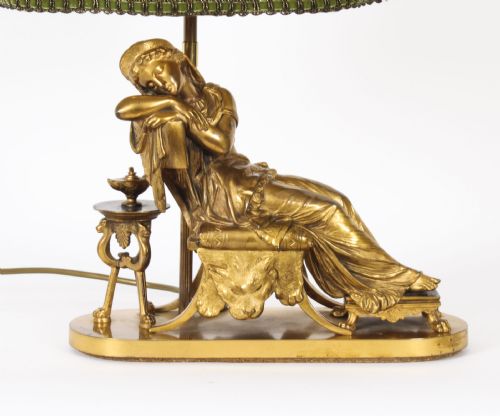
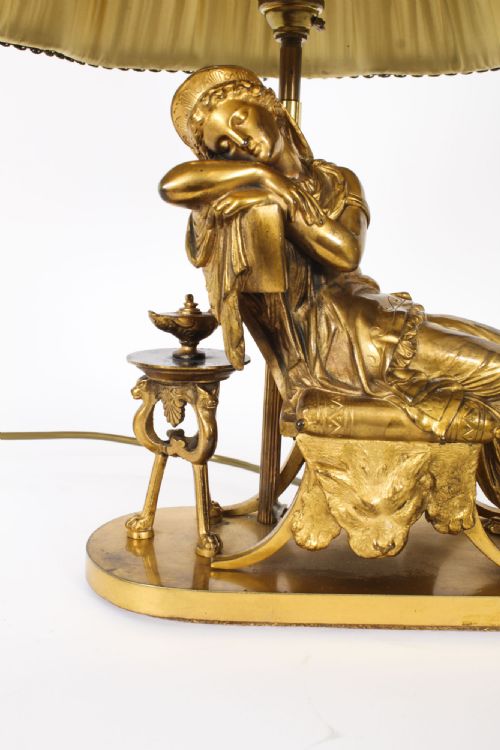
The ormolu sculpture is modelled as a classical maiden figure sleeping on a klimos chair, a table set with a lamp behind her, the oval gilt base mounted with a light fitting, complete with a mustard coloured pleated silk lampshade.
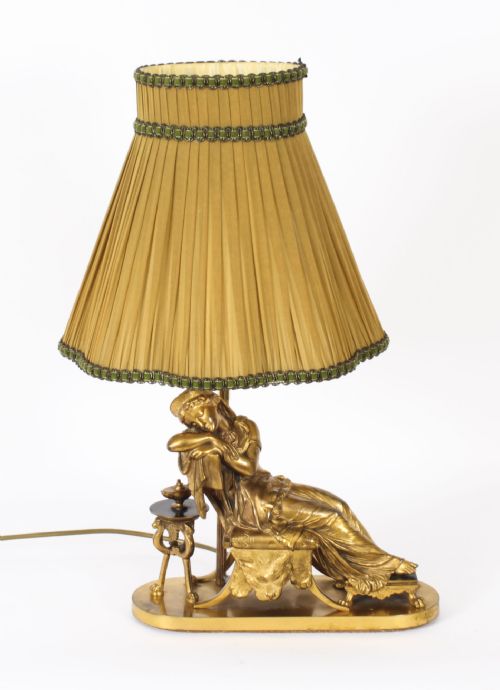
The sculpture later converted into a lamp.
Condition:
In excellent working condition having been beautifully cleaned and rewired in our workshops, please see photos for confirmation.
Dimensions in cm:
Height 30 cm x Width 30 cm x Depth 12 cm - Without Shade
Dimensions in inches:
Height 1 foot x Width 1 foot x Depth 5 inches - Without Shade
Ormolu - (from French 'or moulu', signifying ground or pounded gold) is an 18th-century English term for applying finely ground, high-carat gold in a mercury amalgam to an object of bronze.The mercury is driven off in a kiln leaving behind a gold-coloured veneer known as 'gilt bronze'.
The manufacture of true ormolu employs a process known as mercury-gilding or fire-gilding, in which a solution of nitrate of mercury is applied to a piece of copper, brass, or bronze, followed by the application of an amalgam of gold and mercury. The item was then exposed to extreme heat until the mercury burned off and the gold remained, adhered to the metal object.
Lost Wax Method
sometimes called by the French name of cire perdue or the Latin, cera perduta is the process by which a bronze or brass is cast from an artists sculpture.
In industrial uses, the modern process is called investment casting. An ancient practice, the process today varies from foundry to foundry, but the steps which are usually used in casting small bronze sculptures in a modern bronze foundry are generally quite standardised.
Our reference: A3795a
Regent Antiques has dated this piece to the 1890s.
We specialise in english and continental furniture, silver, porcelain and decorative items.
You can view the stock and full dealer information on the Regent Antiques Profile Page
Regent Antiques is a registered member of LAPADA CINOA
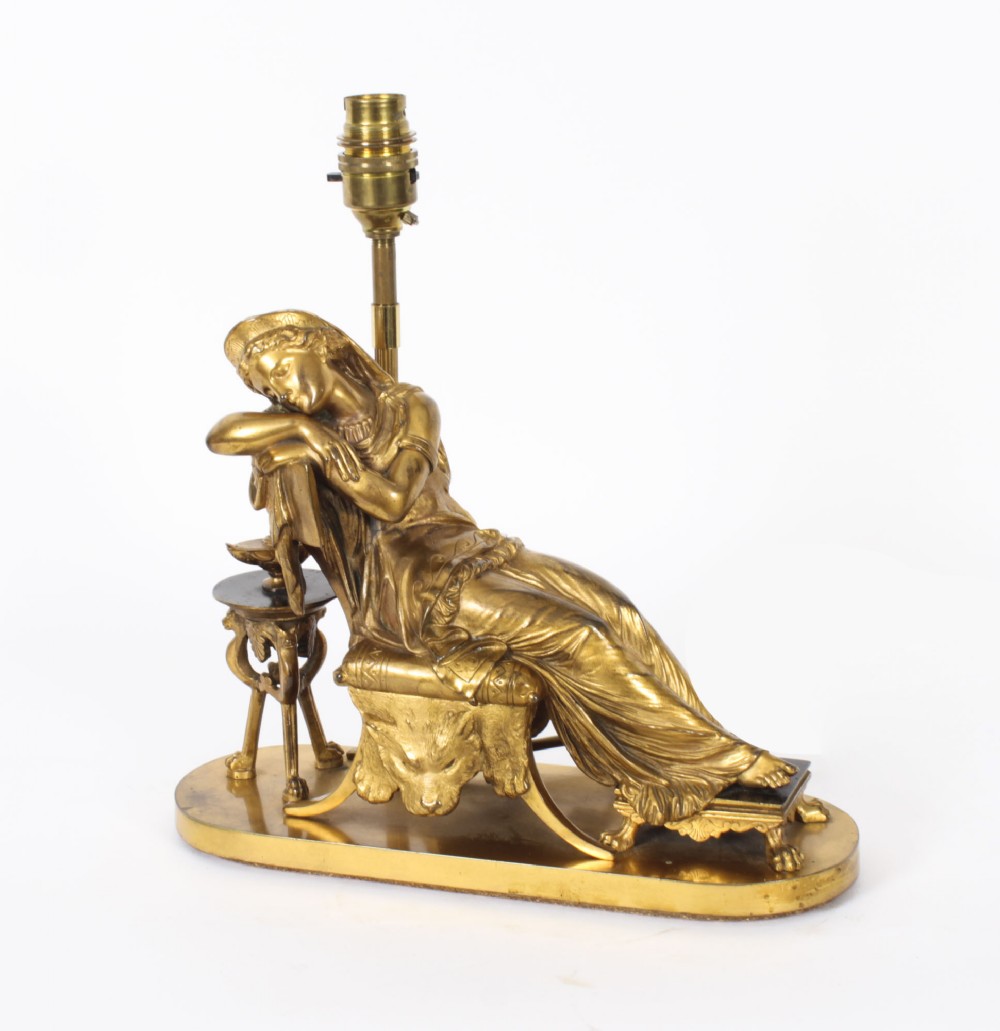
Antique French Ormolu Table Lamp Manner of Pierre-jules Cavelier 19th C