5,280  PAGES BROWSED TODAY PAGES TODAY 0  ANTIQUES UPLOADED TODAY NEW ARRIVALS
ID #SA1042868
FOR SALE
£6,500
Email
Save
Fine Scottish Two-day Marine Chronometer Signed and Numbered D. Mcgregor.
Alexander George Antiques Ltd.
for sale €7,605     $8,255
£6,500
Alexander George Antiques Ltd.

Alexander George Antiques Ltd.

Sellingantiques Verified Since Aug 2019
View Dealers Stock Page
  • About Us
    Offering carefully selected antique masterpieces from the 17th & 18th centuries
  • Trade Associations
    Alexander George Antiques Ltd. is a registered member of LAPADA 
Id #SA1042868
PDF SHARE
SAVE

Fine Scottish Two-day Marine Chronometer Signed and Numbered D. Mcgregor.

19th century
Description

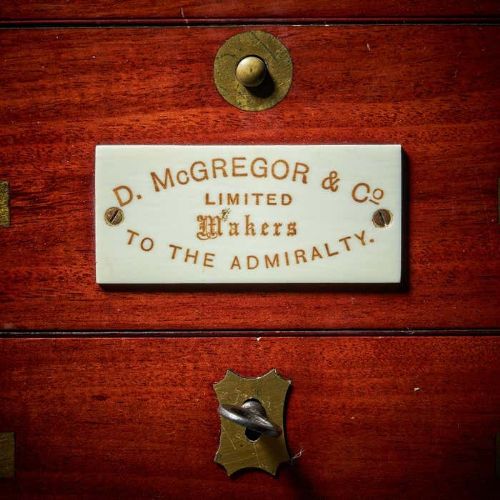
A Fine Scottish Two-Day Marine Chronometer Signed and Numbered D. McGregor Glasgow No 2241, c. 1870

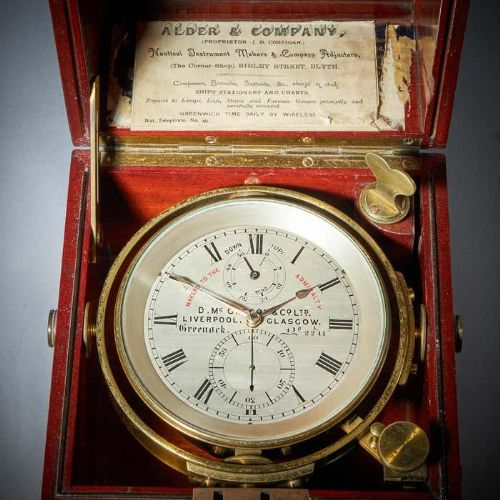
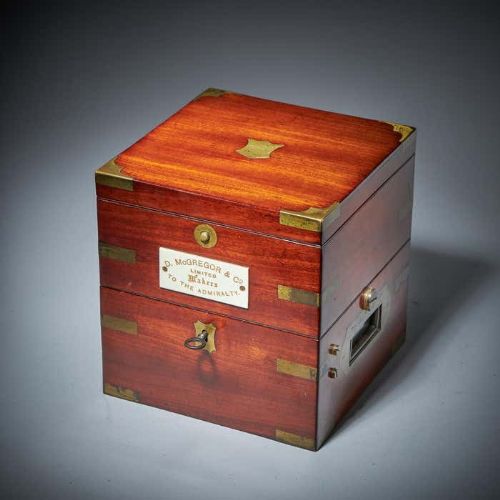
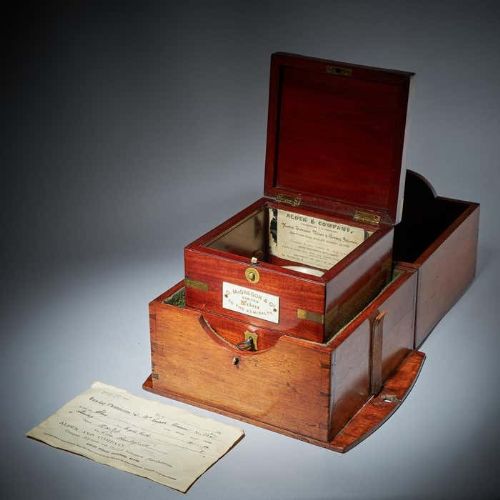
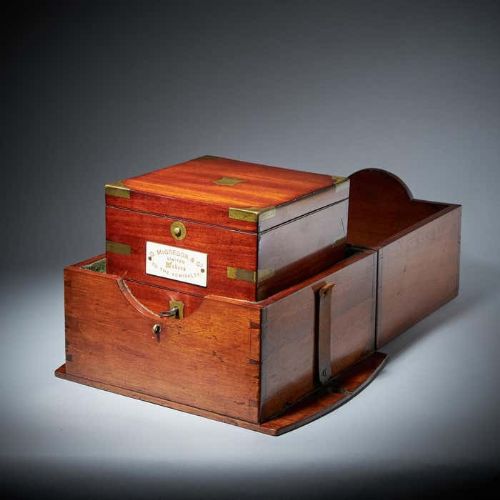
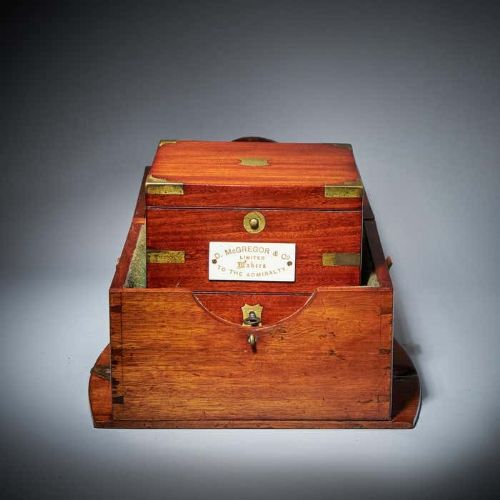
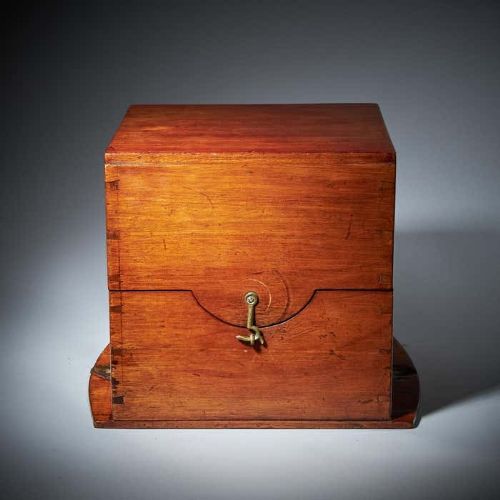
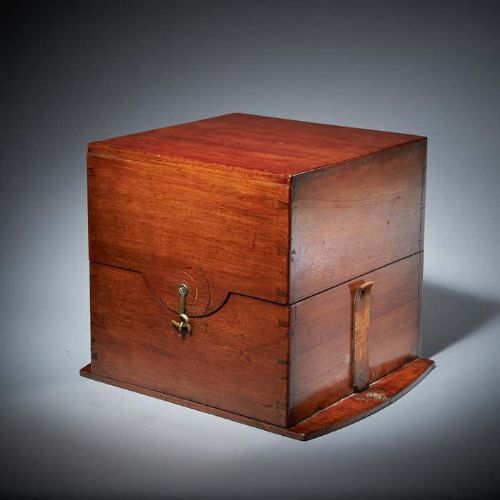
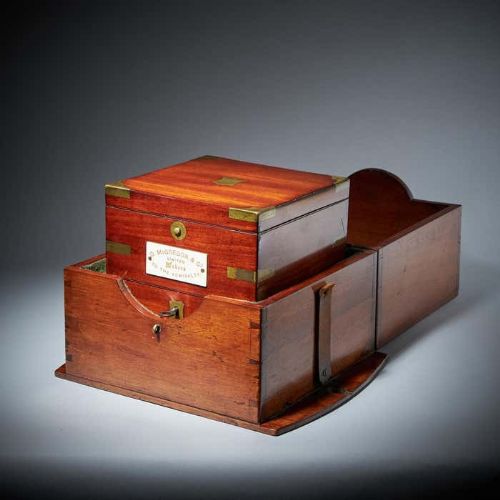
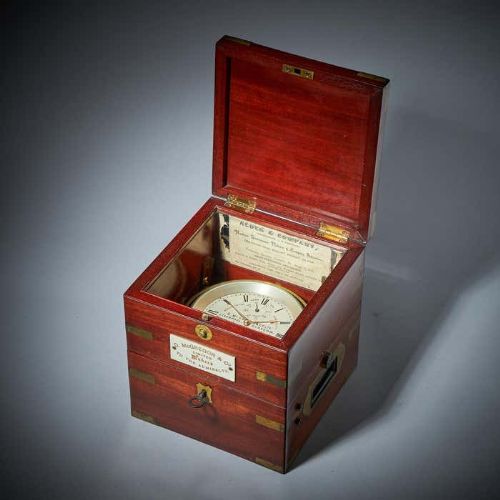
A classic beautifully produced 19th century Scottish chronometer in a three-tier mahogany case, made c. 1870. The typically constructed case consists of a lower and a glazed upper part, as well as a top lid. The lower part has two counter-sunk handles to the sides, while the front has a lock and key with an inlaid brass escutcheon. In the front of the upper part there is a brass button to lock the top lid. The movement is situated in a gimballed brass bowl, which can be secured for transport purposes by a turnable handle in the bottom right corner of the case. The 4" silvered dial is protected by a flat bevelled glass set in a brass bezel, screwed to the bowl. In addition, there is an original protective case, in which the chronometer can be placed to protect it from external hazards.
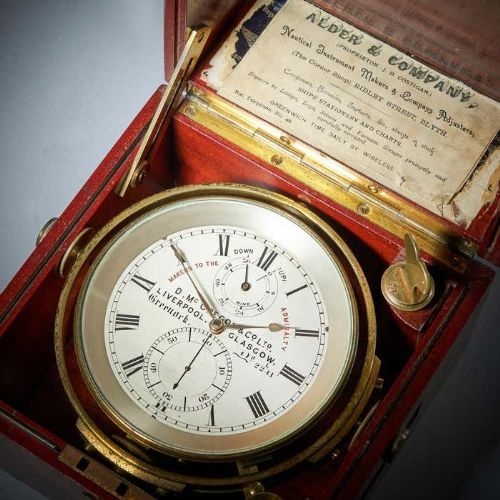
The maker has signed and numbered the chronometer on the silvered dial in the following manner:

D. McGregor & CO LTD

LIVERPOOL Glasgow

Greenock No 2241

The time is indicated by a fine pair of gilt brass hands on the silvered dial with a Roman chaptering, five-minute and minute divisions.
The seconds are indicated by a blued-steel hand on a separate chapter ring below the middle with Arabic ten-second, five-second and second divisions. Below the XII is up-and-down dial 0 - 56 (hours), indicating the state of winding.
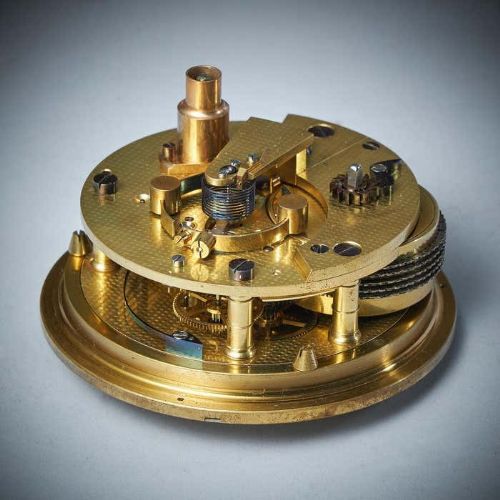
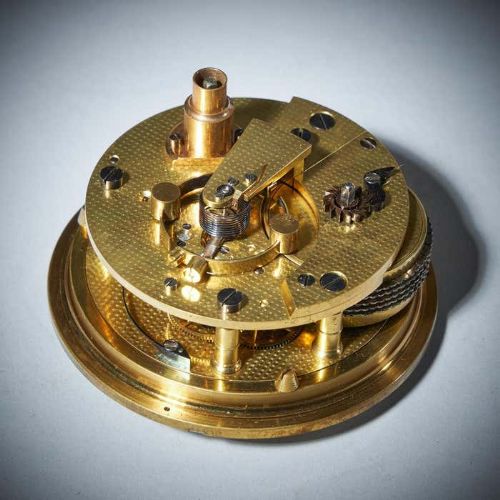
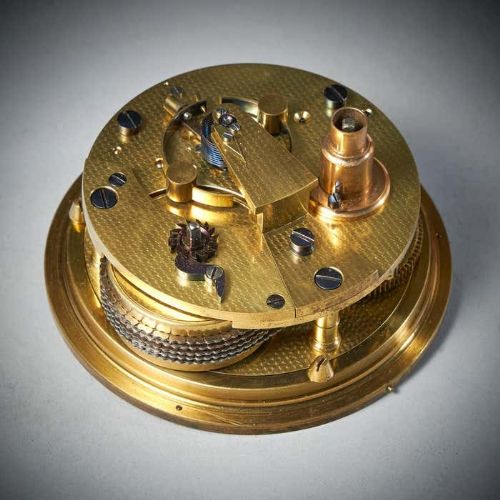
The two-day duration movement is constructed between two circular engine-turned plates and is driven by a spring in a spring barrel via a chain fusee. It has a so-called Earnshaw spring detent escapement with a compensated balance and helical spring. The chronometer is wound by a special key with a ratchet to prevent winding the clock in the wrong direction. The key can be stored in a hole in the top right corner of the case. The winding hole is covered by a sprung shutter.
Dimensions: 18x18x18cm

The maker:

Duncan McGregor started his business in Greenock in 1836, opened premises in Glasgow in 1844 and traded as D. McGregor & Co. from 1856 onwards. Branches were opened in Liverpool in 1879 and London in 1886. They advertised themselves as manufacturers of nautical, mathematical and optical instruments, chronometers and watches. They often made use of famous chronometer makers such as Kulberg and Mercer.

Literature: Tony Mercer, Chronometer Makers of the World, p. 195

Jonathan Betts, Marine Chronometers at Greenwich, Oxford, 2017

Physical Dimensions
Height
18cm (7.09")
Width
18cm (7.09")
Depth
18cm (7.09")
Declaration

Alexander George Antiques Ltd. has dated this Antique Marine Chronometer Clock to the 19th Century.

Reference Numbers
Sellingantiques Reference
SA1042868
Dealers Notes

Whether you are a collector or a first-time buyer the choice of pieces will inspire. Each has been carefully selected for its exceptional design and provenance, as well as in many instances its academic significance.

Originality and authenticity are paramount; and using our extensive knowledge and experience in furniture conservation and restoration we can ensure that our clients can buy with absolute confidence.

Description
A Fine Scottish Two-Day Marine Chronometer Signed and Numbered D. McGregor Glasgow No 2241, c. 1870
A classic beautifully produced 19th century Scottish chronometer in a three-tier mahogany case, made c.
Alexander George Antiques Ltd.

1870. The typically constructed case consists of a lower and a glazed upper part, as well as a top lid. The lower part has two counter-sunk handles to the sides, while the front has a lock and key with an inlaid brass escutcheon. In the front of the upper part there is a brass button to lock the top lid. The movement is situated in a gimballed brass bowl, which can be secured for transport purposes by a turnable handle in the bottom right corner of the case. The 4" silvered dial is protected by a flat bevelled glass set in a brass bezel, screwed to the bowl. In addition, there is an original protective case, in which the chronometer can be placed to protect it from external hazards.

fig 1. A nineteenth-century Scottish marine chronometer mounted in brass gimbals inside a brass-bound mahogany box with an open glass lid.
fig 1. Fine Scottish Two-day Marine Chronometer Signed and Numbered D. Mcgregor.

The maker has signed and numbered the chronometer on the silvered dial in the following manner:

D. McGregor & CO LTD

LIVERPOOL Glasgow

Greenock No 2241

The time is indicated by a fine pair of gilt brass hands on the silvered dial with a Roman chaptering, five-minute and minute divisions.

fig 2. A nineteenth-century Scottish marine chronometer mounted in brass gimbals inside a brass-bound mahogany box with an open glass lid.
fig 2. Fine Scottish Two-day Marine Chronometer Signed and Numbered D. Mcgregor.

The seconds are indicated by a blued-steel hand on a separate chapter ring below the middle with Arabic ten-second, five-second and second divisions. Below the XII is up-and-down dial 0 - 56 (hours), indicating the state of winding.

fig 3. A nineteenth-century Scottish marine chronometer mounted in brass gimbals inside a brass-bound mahogany box with an open glass lid.
fig 3. Fine Scottish Two-day Marine Chronometer Signed and Numbered D. Mcgregor.

The two-day duration movement is constructed between two circular engine-turned plates and is driven by a spring in a spring barrel via a chain fusee. It has a so-called Earnshaw spring detent escapement with a compensated balance and helical spring. The chronometer is wound by a special key with a ratchet to prevent winding the clock in the wrong direction. The key can be stored in a hole in the top right corner of the case. The winding hole is covered by a sprung shutter.

fig 4. A nineteenth-century Scottish marine chronometer mounted in brass gimbals inside a brass-bound mahogany box with an open glass lid.
fig 4. Fine Scottish Two-day Marine Chronometer Signed and Numbered D. Mcgregor.

Dimensions: 18x18x18cm

The maker:

Duncan McGregor started his business in Greenock in 1836, opened premises in Glasgow in 1844 and traded as D. McGregor & Co. from 1856 onwards. Branches were opened in Liverpool in 1879 and London in 1886. They advertised themselves as manufacturers of nautical, mathematical and optical instruments, chronometers and watches. They often made use of famous chronometer makers such as Kulberg and Mercer.

Literature: Tony Mercer, Chronometer Makers of the World, p. 195

Jonathan Betts, Marine Chronometers at Greenwich, Oxford, 2017

Height
18cm (7.09")
Width
18cm (7.09")
Depth
18cm (7.09")
Date of Manufacture

Alexander George Antiques Ltd. has dated this Antique Marine Chronometer Clock to the 19th Century.

Reference Numbers
Sellingantiques Ref
SA1042868
Alexander George Antiques Ltd.
Sellingantiques verified Since Aug 2019

Offering carefully selected antique masterpieces from the 17th & 18th centuries

Dealer Profile

You can view the stock and full dealer information on the Alexander George Antiques Ltd. Profile Page

Trade Associations

Alexander George Antiques Ltd. is a registered member of LAPADA 

PDF SHARE
SAVE
A nineteenth-century Scottish marine chronometer mounted in brass gimbals inside a brass-bound mahogany box with an open glass lid.
1 / 15
Archive I A nineteenth-century Scottish marine chronometer mounted in brass gimbals inside a brass-bound mahogany box with an open glass lid.

Fine Scottish Two-Day Marine Chronometer Signed and Numbered D. McGregor.
Archive II A nineteenth-century Scottish marine chronometer mounted in brass gimbals inside a brass-bound mahogany box with an open glass lid. View II
Archive III A nineteenth-century Scottish marine chronometer mounted in brass gimbals inside a brass-bound mahogany box with an open glass lid. View III
Archive IV A nineteenth-century Scottish marine chronometer mounted in brass gimbals inside a brass-bound mahogany box with an open glass lid. View IV
Archive V A nineteenth-century Scottish marine chronometer mounted in brass gimbals inside a brass-bound mahogany box with an open glass lid. View V
Archive VI A nineteenth-century Scottish marine chronometer mounted in brass gimbals inside a brass-bound mahogany box with an open glass lid. View VI
Archive VII A nineteenth-century Scottish marine chronometer mounted in brass gimbals inside a brass-bound mahogany box with an open glass lid. View VII
Archive VIII A nineteenth-century Scottish marine chronometer mounted in brass gimbals inside a brass-bound mahogany box with an open glass lid. View VIII
Archive IX A nineteenth-century Scottish marine chronometer mounted in brass gimbals inside a brass-bound mahogany box with an open glass lid. View IX
Archive X A nineteenth-century Scottish marine chronometer mounted in brass gimbals inside a brass-bound mahogany box with an open glass lid. View X
Archive XI A nineteenth-century Scottish marine chronometer mounted in brass gimbals inside a brass-bound mahogany box with an open glass lid. View XI
Archive XII A nineteenth-century Scottish marine chronometer mounted in brass gimbals inside a brass-bound mahogany box with an open glass lid. View XII
Archive XIII A nineteenth-century Scottish marine chronometer mounted in brass gimbals inside a brass-bound mahogany box with an open glass lid. View XIII
Archive XIV A nineteenth-century Scottish marine chronometer mounted in brass gimbals inside a brass-bound mahogany box with an open glass lid. View XIV
Archive XV A nineteenth-century Scottish marine chronometer mounted in brass gimbals inside a brass-bound mahogany box with an open glass lid. View XV
Enlarged Archival View
Telephone 07787 536199
Location
Buscot Manor
Buscot
Oxfordshire
SN7 8DA
United Kingdom

By appointment only.
Verified Since Aug 2019
Items For Sale 93
Items Sold 231
Alexander George Antiques Ltd.
Verified Since Aug 2019
View Dealer Info
Location: Buscot Manor, Buscot, Oxfordshire, SN7 8DA, United Kingdom, , By appointment only.
Verified
Aug 2019
For Sale
93
Sold
231
A nineteenth-century Scottish marine chronometer mounted in brass gimbals inside a brass-bound mahogany box with an open glass lid.
Fine Scottish Two-Day Marine Chronometer Signed and Numbered D. McGregor.
Ref: SA1042868
A nineteenth-century Scottish marine chronometer mounted in brass gimbals inside a brass-bound mahogany box with an open glass lid.
Detail View 1
Detail View 2
Detail View 3
Detail View 4
Detail View 5
Detail View 6
Detail View 7
Detail View 8
Detail View 9
Detail View 10
Detail View 11
Detail View 12
Detail View 13
Detail View 14
Archival Detail
Every single antique dealer on our platform is individually approved by our internal team. We verify their professional trade history, ethical standards, and photographic quality to ensure a secure, high-standard buying environment. Upon joining, every dealer agrees to a strict 9-point code of conduct. While issues can occasionally arise, our dealers typically resolve them swiftly and directly with the buyer. In fact, since our founding in 2002, Sellingantiques has only had to step in to help resolve an issue on roughly five occasions—a true testament to the quality of our dealers and their dedication to your happiness.
Our dealers are highly experienced in packing and shipping fragile, high-value antiques. Because you are in direct contact with the dealer, you will be able to easily go through all available shipping and insurance options together to ensure your item arrives safely.
Antiques are the ultimate green purchase. By choosing historical pieces over newly manufactured goods, you completely eliminate the carbon footprint of modern mass production while preserving exceptional, timeless craftsmanship.

A marine chronometer is a precise portable timekeeper used aboard vessels to determine longitude via celestial navigation. Two-day variants contain a spring mechanism engineered to run for forty-eight hours between windings.

These instruments typically comprise a precision brass movement mounted within brass gimbals, housed inside a fitted mahogany, rosewood, or walnut case with protective brass corner mounts and flush brass carrying handles.

Authentic examples feature maker signatures on the dial or ivory plaque, matching serial numbers, a gimbal mounting system designed to keep the dial level at sea, and a fitted winding key retained inside the wooden box.

Place the chronometer with its wooden lid open on an executive desk, library bookshelf, or console table alongside leather-bound volumes and brass instruments to create a focused display.

Store the wooden case in a stable climate away from direct sunlight and heat sources, wipe brass components gently using a soft microfibre cloth without abrasive chemicals, and have the mechanical movement inspected by a horologist.
items
Add keywords to the filter
Price
£100
£250000
Era
Movements
Material
Origin
Stock Location
Freshness
Online Payments
Categories