9,505  PAGES BROWSED TODAY PAGES TODAY 36  ANTIQUES UPLOADED TODAY NEW ARRIVALS
ID #SA1034077
SOLD
Email
Save
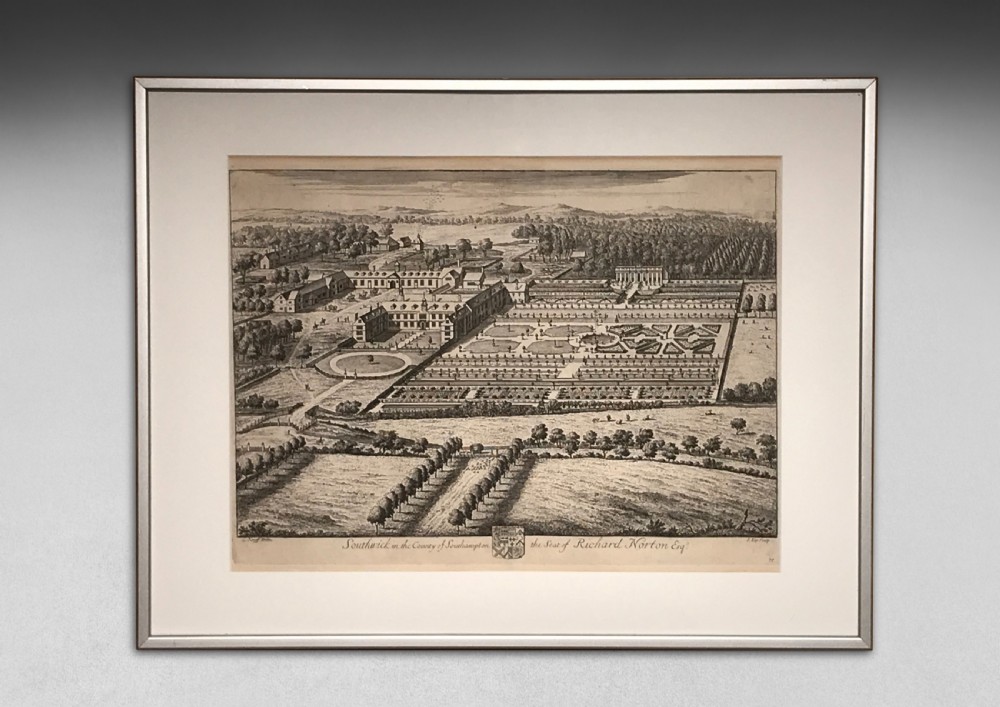
Engraving of Southwick in the County of Southampton by Johannes Kip
W.R. Harvey & Co. (Antiques) Ltd
sold SA1034077
Sorry, but this item has been sold.
W.R. Harvey & Co. (Antiques) Ltd

W.R. Harvey & Co. (Antiques) Ltd

Sellingantiques Verified Since Sep 2016
View Dealers Stock Page
  • About Us
    Specialists in 17th-18th and early 19th century fine english furniture, art, clocks and other objets d'art
  • Trade Associations
    W.R. Harvey & Co. (Antiques) Ltd is a registered member of LAPADA 
Id #SA1034077
PDF SHARE
SAVE

Engraving of Southwick in the County of Southampton by Johannes Kip

18th century
Description

No: 11134

A good Early 18th Century Engraving of Southwick in the County of Southampton, the seat of Richard Norton Esq, by Johannes Kip.

Circa 1724 Price: £325-00p.

Height: 20”, 51 cms / Width: 25”, 63.5 cms.

Richard Norton of Southwick Park (19 November 1615 – May 1691), was an English landowner and politician who sat in the House of Commons at various times between 1645 and 1691. He was a colonel in the parliamentary army in the English Civil War and for a time he commanded the Parliamentary forces besieging Basing House. He was Governor of Portsmouth for Parliament during the Civil War and for Charles II after the Restoration.

Norton was the son of Sir Daniel Norton of Southwick and his wife Honor White daughter of Sir John White of Southwick. The Norton family had settled long before at Alresford, Nutley, East Tisted, Southwick, near Portsmouth, and Rotherfield. His ancestor and namesake had been knighted at Basing House by Queen Elizabeth I.

Norton lived at the Manor House of Old Alresford when he was a young man.

He was Parliamentary Colonel during the Civil War. In January 1643 he led a force which garrisoned Warblington Castle. The castle soon fell when a Royalist force under Lord Hopton laid siege to it although Norton managed to escape. He was appointed Sheriff of Hampshire for 1643–44 by Parliament (Sir Humphrey Bennet had already been appointed by the Crown).

Norton is said to have distinguished himself in the Battle of Cheriton by bringing up a body of horse through by-ways, from his hunting knowledge of the country, to charge the rear of the enemy. He served under the Earl of Manchester, was a fellow Colonel with Cromwell in the Eastern Association. Oliver Cromwell was on familiar and intimate terms with him, addresses letters to him thus: “For my noble Friend, Colonel Richard Norton. These,” and commences “Dear Dick.” and distinguishing him in letters to his private friends by the appellation of “Idle Dick Norton”.

Clarendon says that the besiegers of Basing House were “united in this service under the command of Norton, a man of spirit and of the greatest fortune of all the rest” and speaks of “the known courage of Norton.” Mercurius Aulicus styles him “the great incendiary of Hampshire.”

Colonel Norton became Member of Parliament for Hampshire in 1645 as a Recruiter to the Long Parliament.

In April 1647, Norton was, for the second time, appointed Governor of Portsmouth for which he was to receive 12s. per day, with an additional 8s per day as Captain of Southsea Castle. In 1653 he sat in the Barebones Parliament, and was elected a member of the Council of State in the same year. Carlyle says of him, “Given to Presbyterian notions; was purged out by Pride; came back, dwindled ultimately into Royalism.” He was re-elected MP for Hampshire in 1654 for the First Protectorate Parliament and in 1656 for the Second Protectorate Parliament.

In 1660, he was elected MP for Hampshire again in the Convention Parliament which invited Charles II to return to his kingdom, and immediately upon the restoration Colonel Norton was once more appointed “Captain of the Town, Isle and Castle of Portsmouth”. He was elected MP for Portsmouth in the Cavalier Parliament.

He was returned for Hampshire again, in 1679, for the First Exclusion Parliament and for Portsmouth again in the Second Exclusion Parliament. He was re-elected MP for Portsmouth in 1681 and 1689 and for Hampshire again, in 1690.

Norton died in 1691. His portrait was destroyed when a Berkshire house was burnt circa 1800.

Johannes Kip (1653 – 1722) was a Dutch draughtsman, engraver, and print dealer who was active in England after producing works for the court of William of Orange in Amsterdam. Following the Glorious Revolution of 1688, Kip accompanied the Court to England and

Physical Dimensions
Height
51cm (20.08")
Width
63.5cm (25.00")
Depth
2cm (0.79")
Declaration

W.R. Harvey & Co. (Antiques) Ltd has dated this piece to the 18th Century.

Reference Numbers
Sellingantiques Reference
SA1034077
Dealers Internal Reference
11134
Dealers Notes

We offer free delivery within the UK. For deliveries Worldwide, please contact us for a quote and we will get back to you within 12 hours.

If you would like to view the item in person, our showrooms are open Monday to Saturday 9.30 - 5.30 and by appointment on Sunday.

Any questions, please contact us as soon as possible. We will endeavour to get you an answer within 24 hours - and hopefully much quicker!

Description
No: 11134

A good Early 18th Century Engraving of Southwick in the County of Southampton, the seat of Richard Norton Esq, by Johannes Kip.

Circa 1724 Price: £325-00p.

Height: 20”, 51 cms / Width: 25”, 63.5 cms.

Richard Norton of Southwick Park (19 November 1615 – May 1691), was an English landowner and politician who sat in the House of Commons at various times between 1645 and 1691.
W.R. Harvey & Co. (Antiques) Ltd

He was a colonel in the parliamentary army in the English Civil War and for a time he commanded the Parliamentary forces besieging Basing House. He was Governor of Portsmouth for Parliament during the Civil War and for Charles II after the Restoration.

Norton was the son of Sir Daniel Norton of Southwick and his wife Honor White daughter of Sir John White of Southwick. The Norton family had settled long before at Alresford, Nutley, East Tisted, Southwick, near Portsmouth, and Rotherfield. His ancestor and namesake had been knighted at Basing House by Queen Elizabeth I.

Norton lived at the Manor House of Old Alresford when he was a young man.

He was Parliamentary Colonel during the Civil War. In January 1643 he led a force which garrisoned Warblington Castle. The castle soon fell when a Royalist force under Lord Hopton laid siege to it although Norton managed to escape. He was appointed Sheriff of Hampshire for 1643–44 by Parliament (Sir Humphrey Bennet had already been appointed by the Crown).

Norton is said to have distinguished himself in the Battle of Cheriton by bringing up a body of horse through by-ways, from his hunting knowledge of the country, to charge the rear of the enemy. He served under the Earl of Manchester, was a fellow Colonel with Cromwell in the Eastern Association. Oliver Cromwell was on familiar and intimate terms with him, addresses letters to him thus: “For my noble Friend, Colonel Richard Norton. These,” and commences “Dear Dick.” and distinguishing him in letters to his private friends by the appellation of “Idle Dick Norton”.

Clarendon says that the besiegers of Basing House were “united in this service under the command of Norton, a man of spirit and of the greatest fortune of all the rest” and speaks of “the known courage of Norton.” Mercurius Aulicus styles him “the great incendiary of Hampshire.”

Colonel Norton became Member of Parliament for Hampshire in 1645 as a Recruiter to the Long Parliament.

In April 1647, Norton was, for the second time, appointed Governor of Portsmouth for which he was to receive 12s. per day, with an additional 8s per day as Captain of Southsea Castle. In 1653 he sat in the Barebones Parliament, and was elected a member of the Council of State in the same year. Carlyle says of him, “Given to Presbyterian notions; was purged out by Pride; came back, dwindled ultimately into Royalism.” He was re-elected MP for Hampshire in 1654 for the First Protectorate Parliament and in 1656 for the Second Protectorate Parliament.

In 1660, he was elected MP for Hampshire again in the Convention Parliament which invited Charles II to return to his kingdom, and immediately upon the restoration Colonel Norton was once more appointed “Captain of the Town, Isle and Castle of Portsmouth”. He was elected MP for Portsmouth in the Cavalier Parliament.

He was returned for Hampshire again, in 1679, for the First Exclusion Parliament and for Portsmouth again in the Second Exclusion Parliament. He was re-elected MP for Portsmouth in 1681 and 1689 and for Hampshire again, in 1690.

Norton died in 1691. His portrait was destroyed when a Berkshire house was burnt circa 1800.

Johannes Kip (1653 – 1722) was a Dutch draughtsman, engraver, and print dealer who was active in England after producing works for the court of William of Orange in Amsterdam. Following the Glorious Revolution of 1688, Kip accompanied the Court to England and

Height
51cm (20.08")
Width
63.5cm (25.00")
Depth
2cm (0.79")
Date of Manufacture

W.R. Harvey & Co. (Antiques) Ltd has dated this piece to the 18th Century.

Reference Numbers
Sellingantiques Ref
SA1034077
Dealers Internal Ref
11134
W.R. Harvey & Co. (Antiques) Ltd
Sellingantiques verified Since Sep 2016

Specialists in 17th-18th and early 19th century fine english furniture, art, clocks and other objets d'art

Dealer Profile

You can view the stock and full dealer information on the W.R. Harvey & Co. (Antiques) Ltd Profile Page

Trade Associations

W.R. Harvey & Co. (Antiques) Ltd is a registered member of LAPADA 

PDF SHARE
SAVE
Engraving of Southwick in the County of Southampton by Johannes Kip
1 / 1
Archive I Engraving of Southwick in the County of Southampton by Johannes Kip

Engraving of Southwick in the County of Southampton by Johannes Kip

Enlarged Archival View
Telephone 01993 706501
Location
86 Corn Street
Witney
Oxfordshire
OX28 6BU
United Kingdom
Verified Since Sep 2016
Items For Sale 112
Items Sold 543
W.R. Harvey & Co. (Antiques) Ltd
Verified Since Sep 2016
View Dealer Info
Location: 86 Corn Street, Witney, Oxfordshire, OX28 6BU, United Kingdom
Verified
Sep 2016
For Sale
112
Sold
543
Engraving of Southwick in the County of Southampton by Johannes Kip
Ref: SA1034077
Engraving of Southwick in the County of Southampton by Johannes Kip
Archival Detail
Every single antique dealer on our platform is individually approved by our internal team. We verify their professional trade history, ethical standards, and photographic quality to ensure a secure, high-standard buying environment. Upon joining, every dealer agrees to a strict 9-point code of conduct. While issues can occasionally arise, our dealers typically resolve them swiftly and directly with the buyer. In fact, since our founding in 2002, Sellingantiques has only had to step in to help resolve an issue on roughly five occasions—a true testament to the quality of our dealers and their dedication to your happiness.
Our dealers are highly experienced in packing and shipping fragile, high-value antiques. Because you are in direct contact with the dealer, you will be able to easily go through all available shipping and insurance options together to ensure your item arrives safely.
Antiques are the ultimate green purchase. By choosing historical pieces over newly manufactured goods, you completely eliminate the carbon footprint of modern mass production while preserving exceptional, timeless craftsmanship.
items
Add keywords to the filter
Price
£100
£250000
Era
Movements
Material
Origin
Stock Location
Freshness
Online Payments
Categories