Regent Antiques has dated this piece to the 1880s.
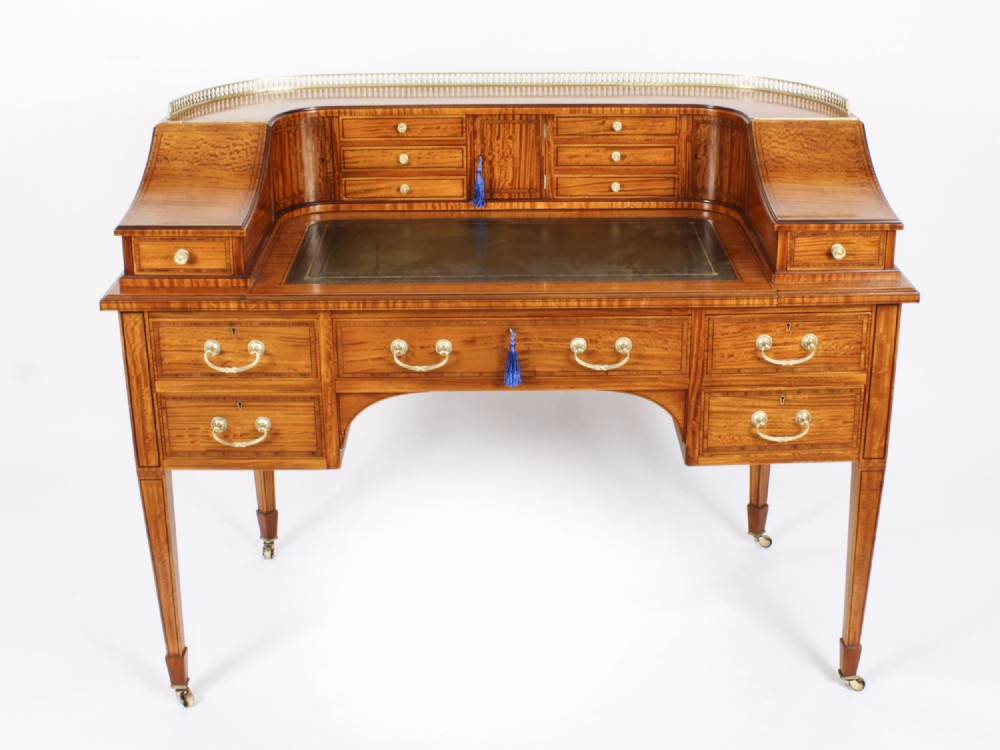
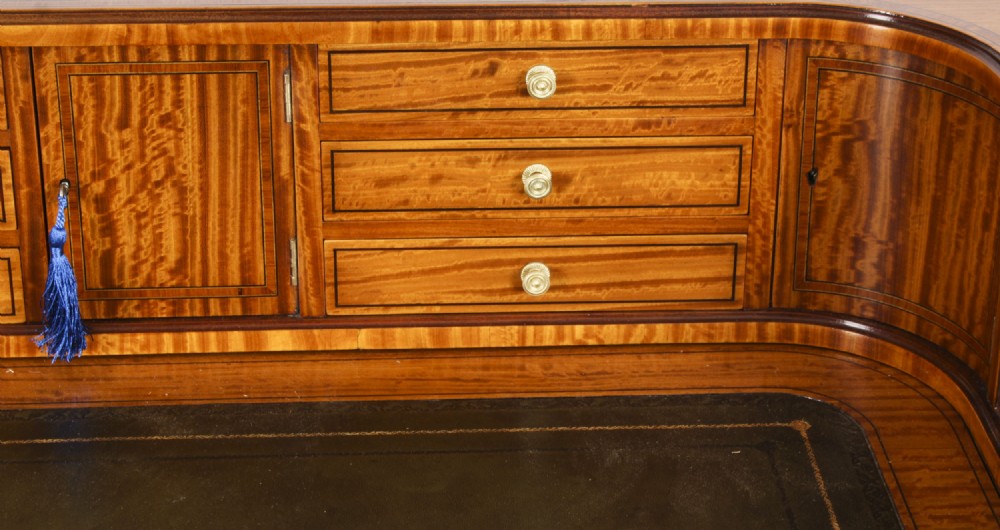
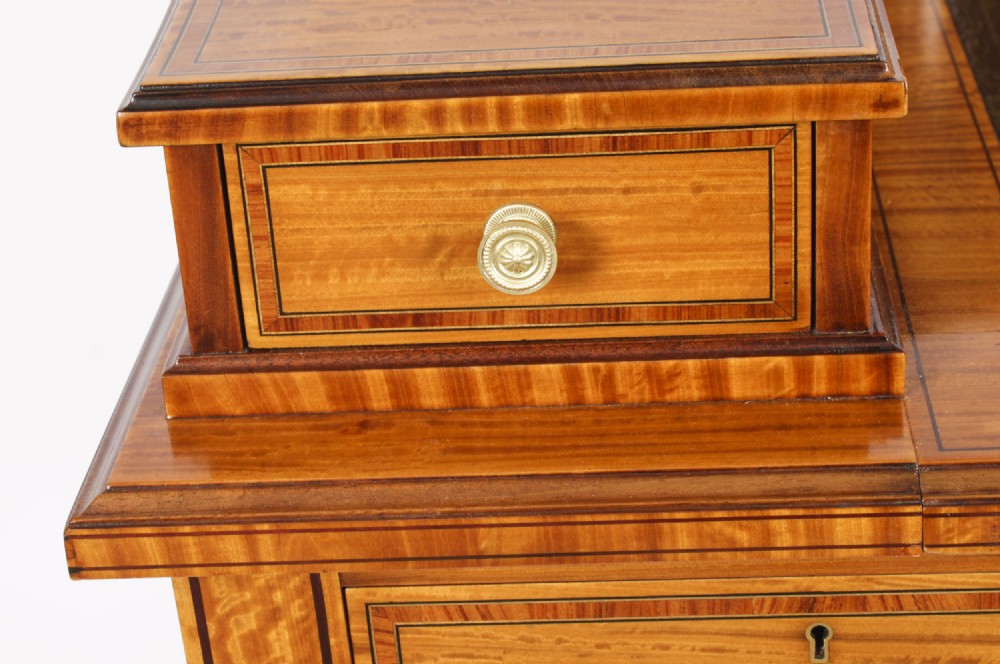
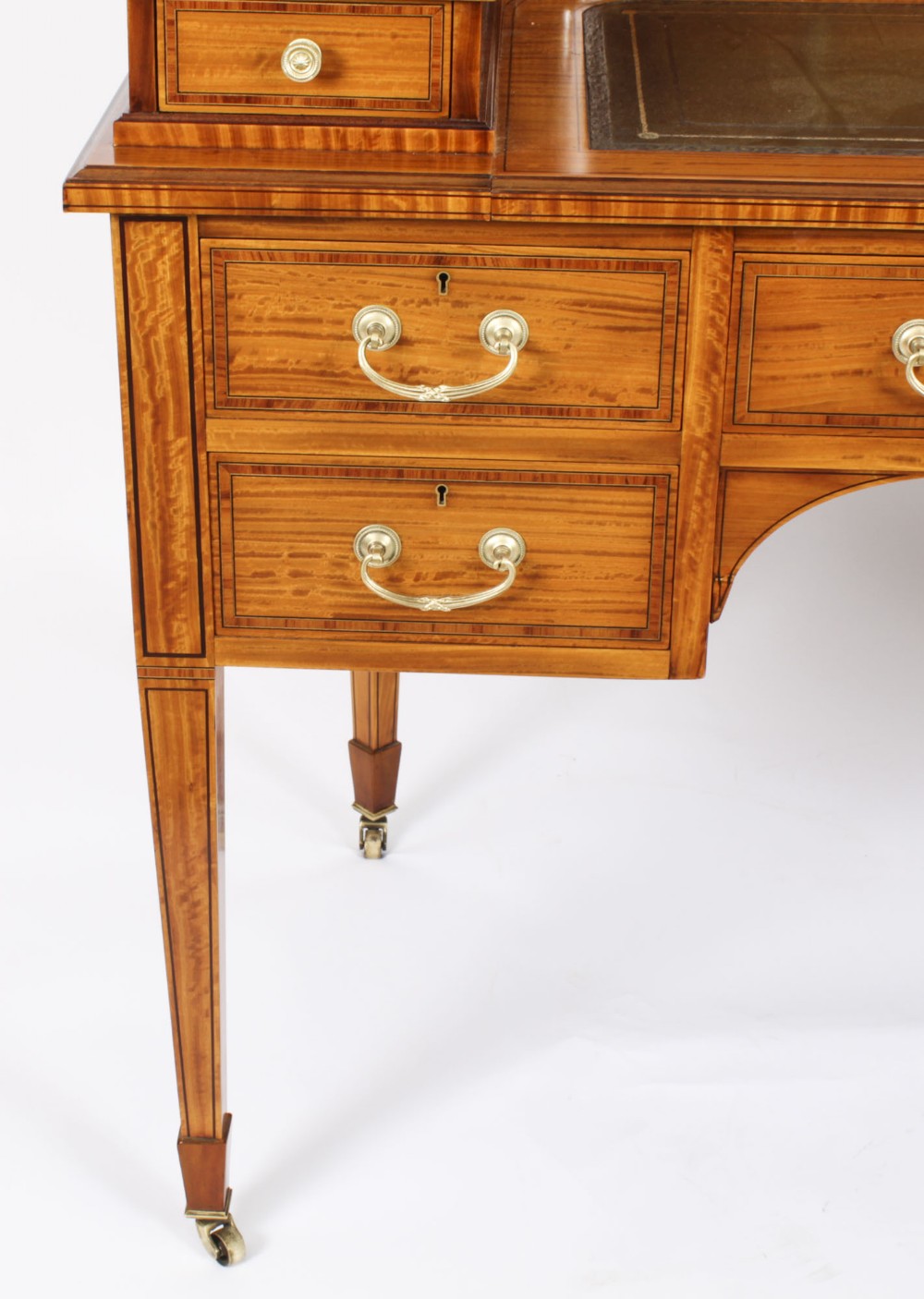
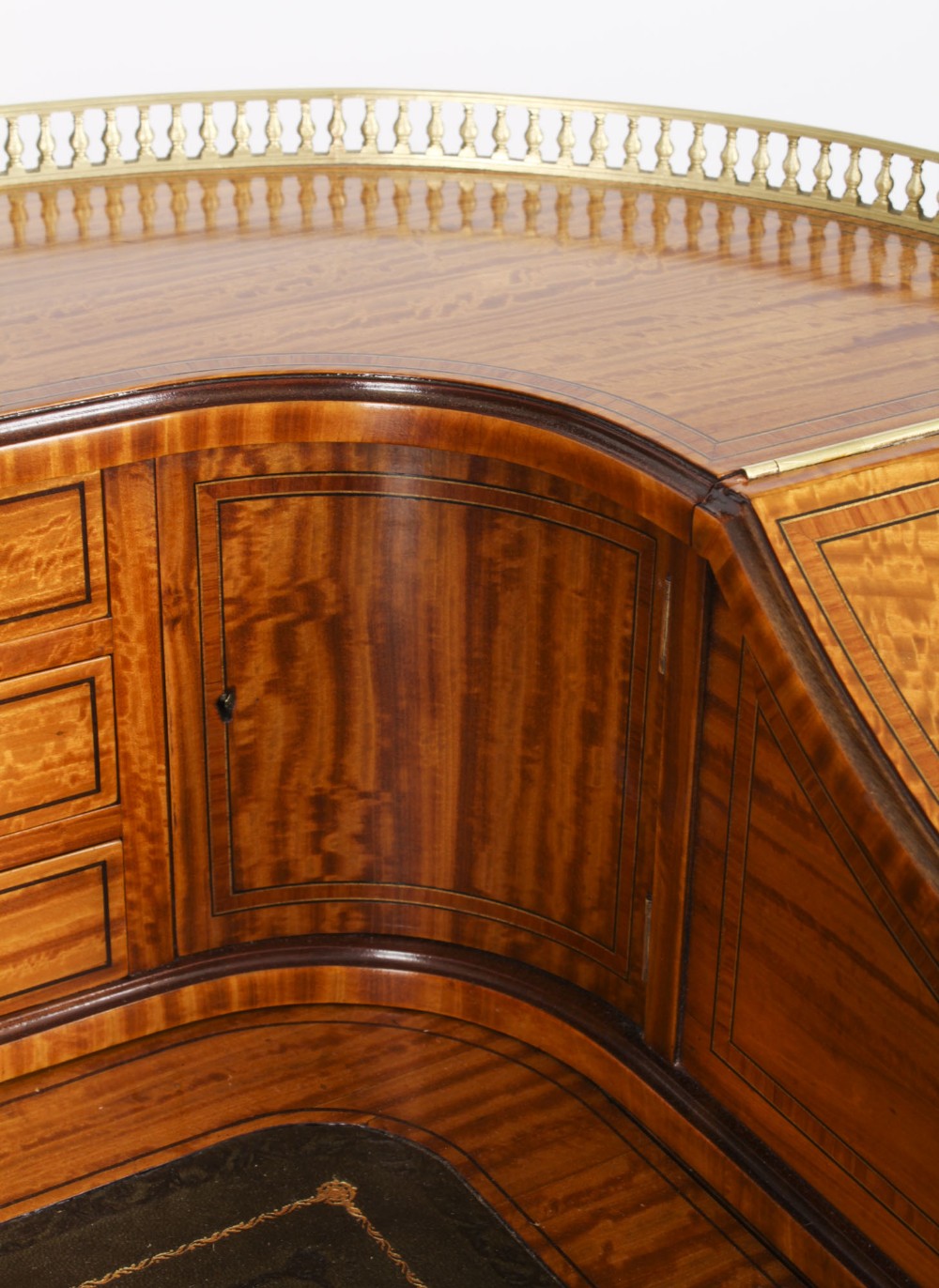
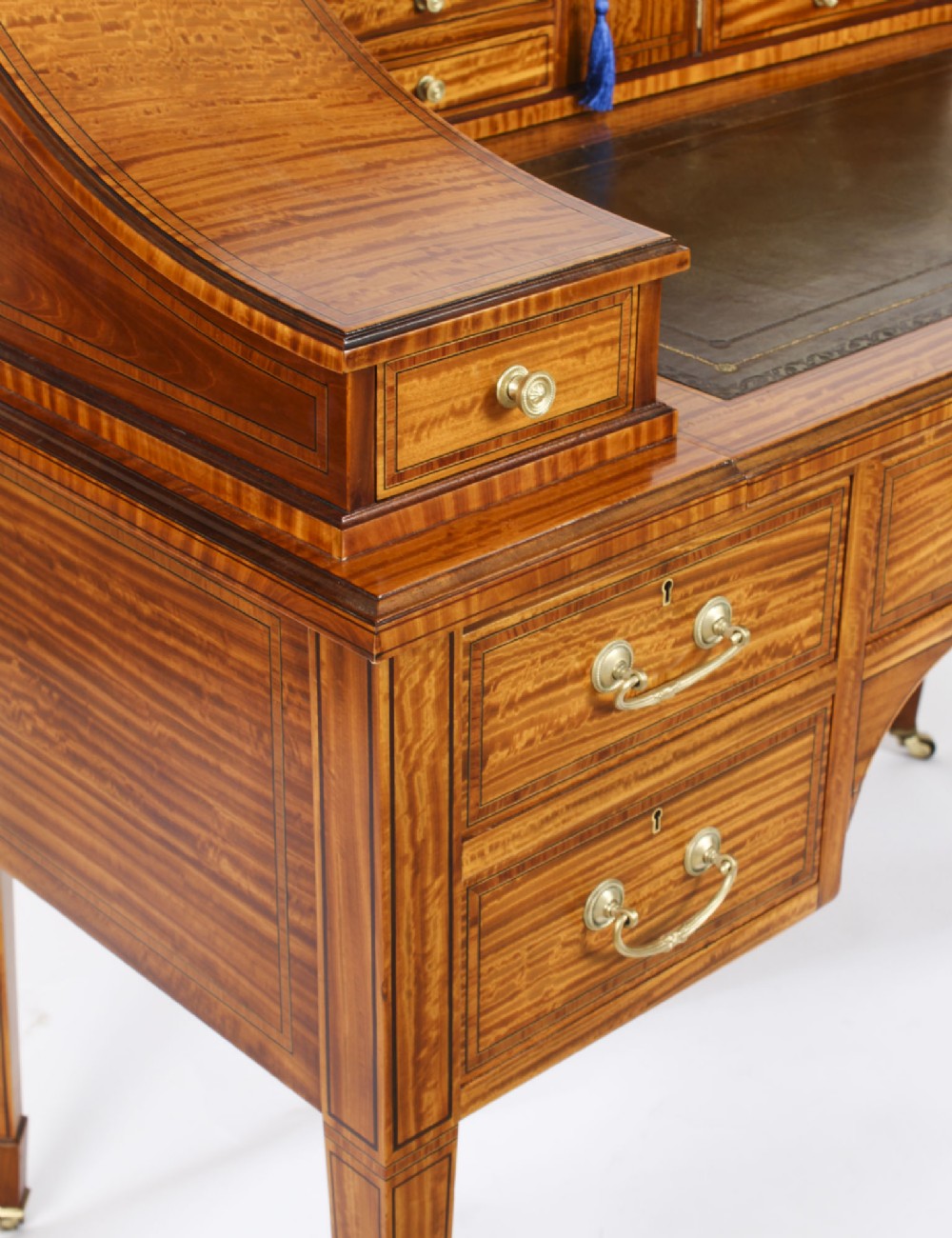
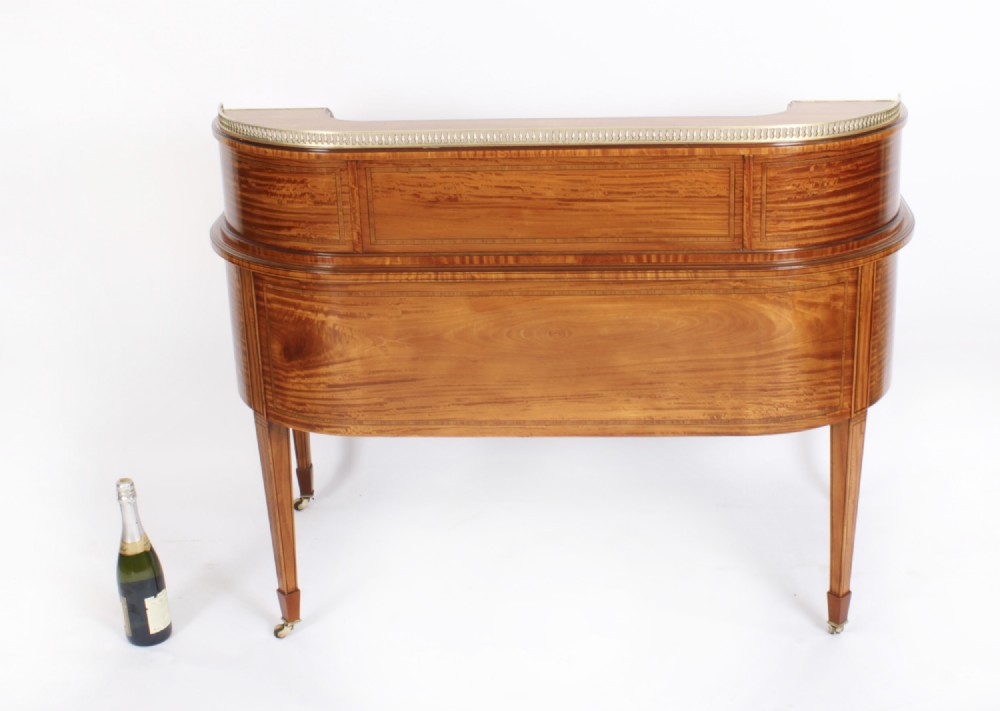
This beautiful desk is made from satinwood, which has been crossbanded in tulip wood bordered with boxwood and ebony lines It is superbly finished all round so it will look amazing in the centre of your study!!
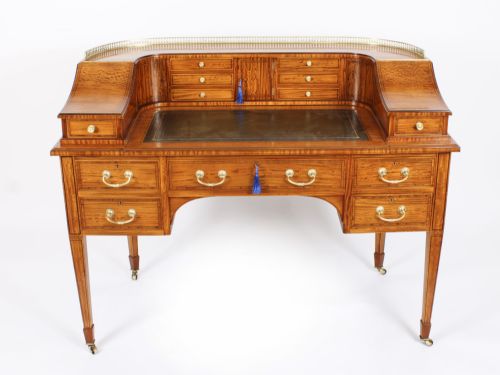
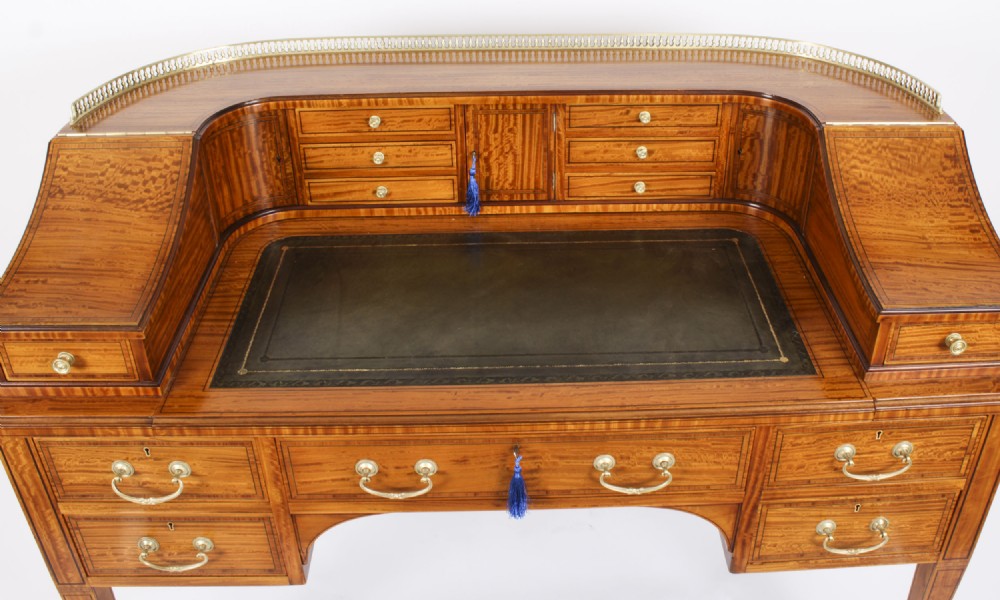
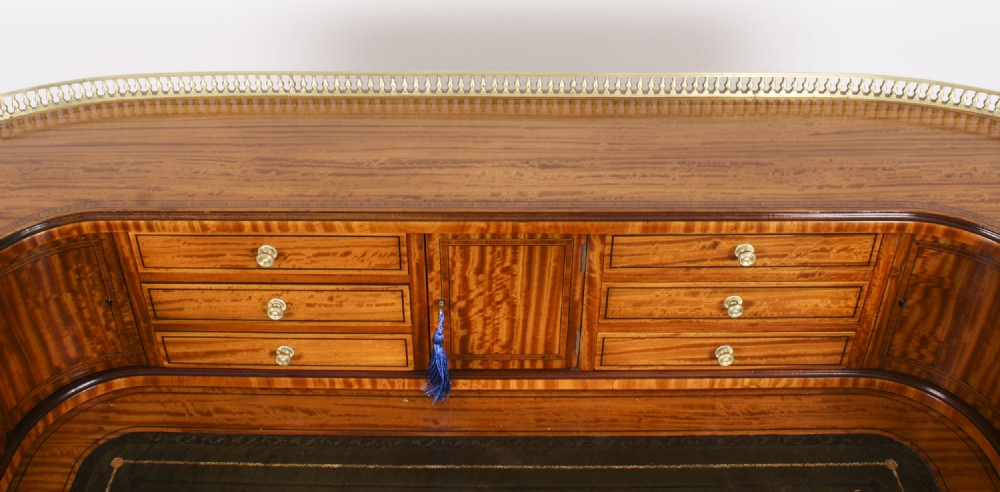
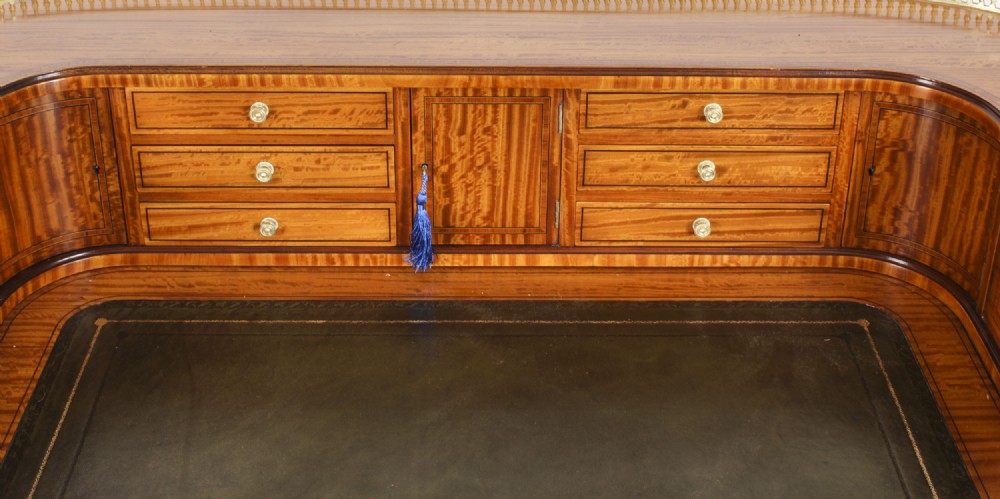
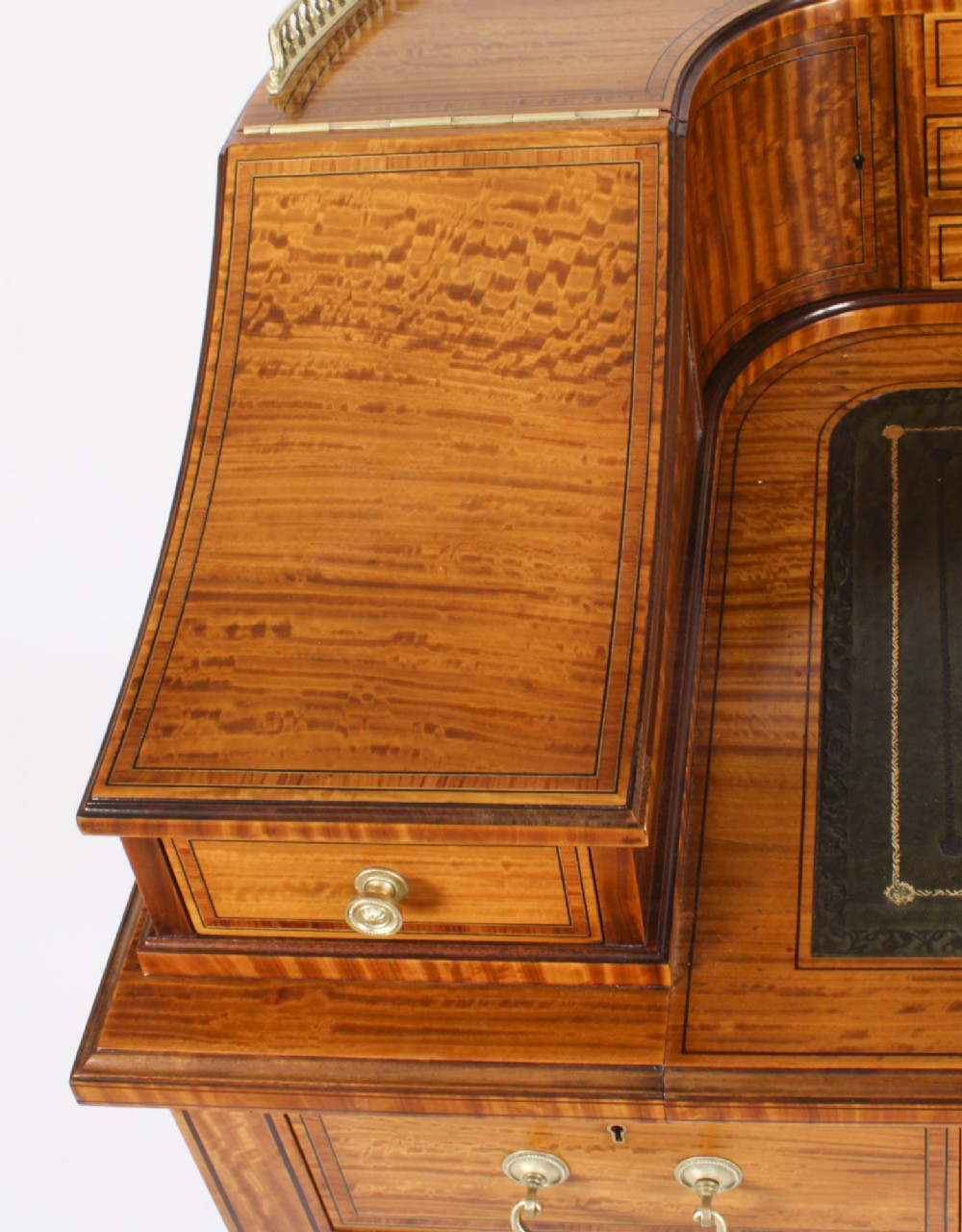
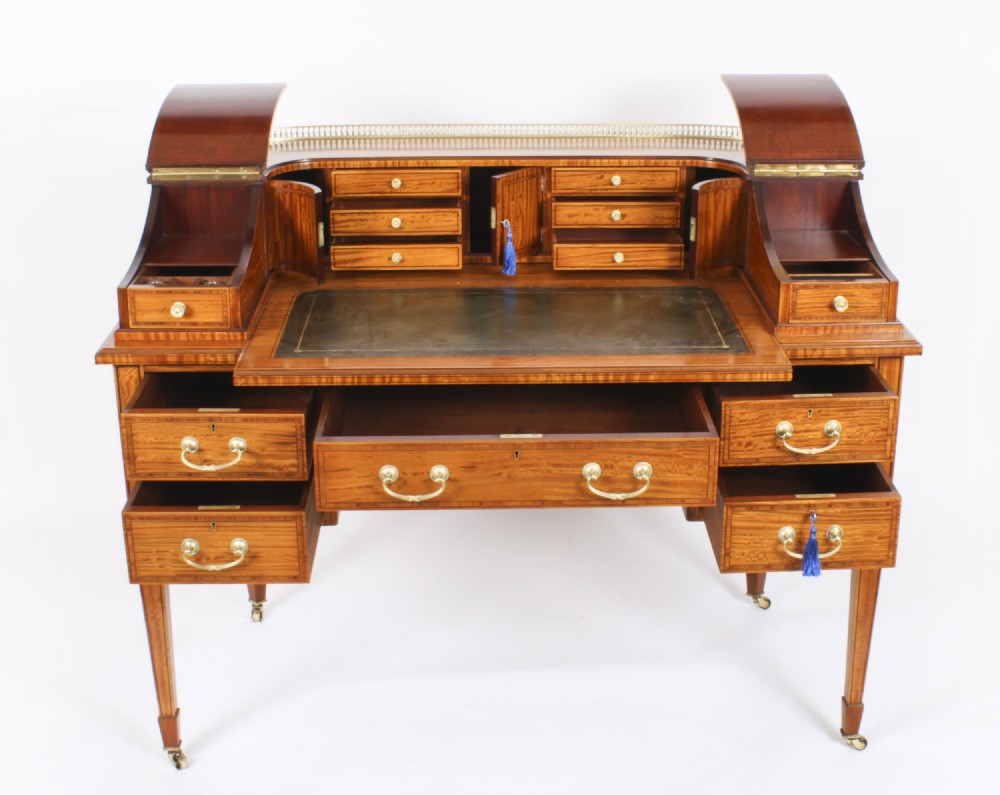
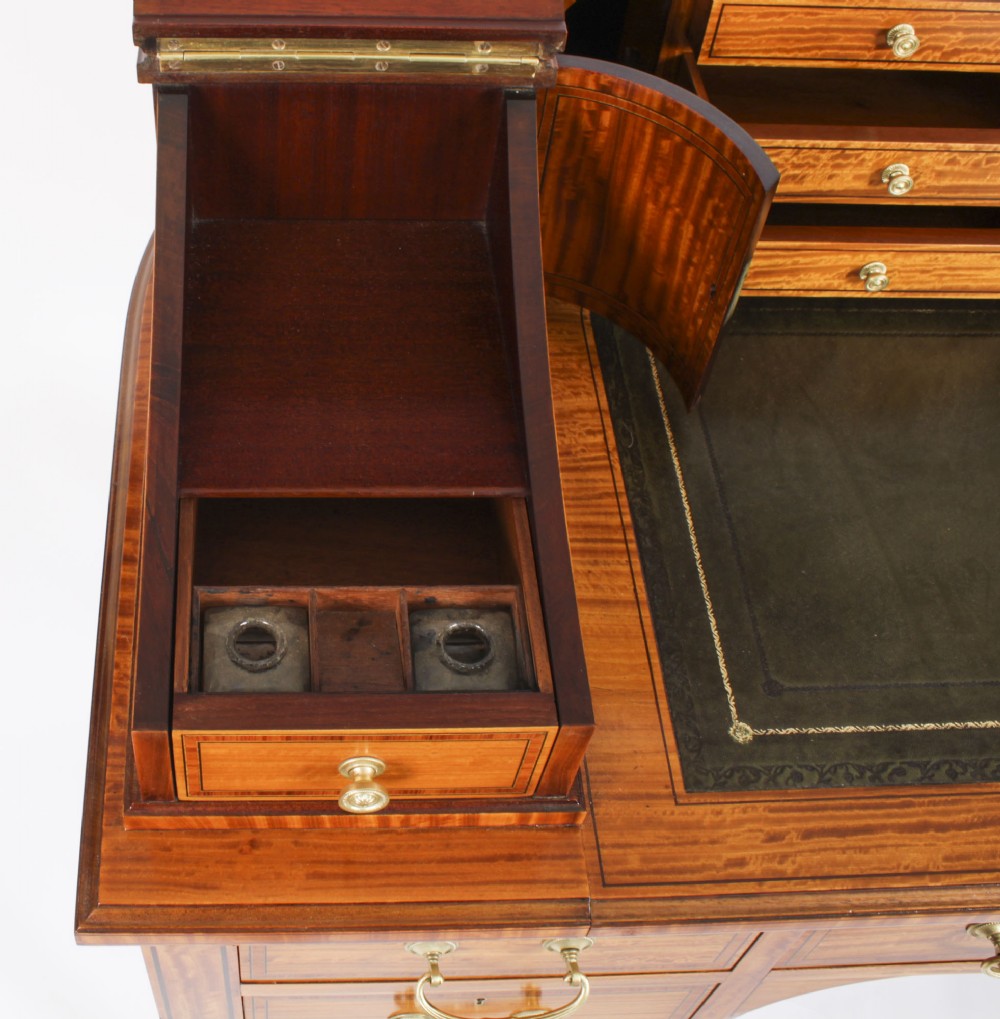
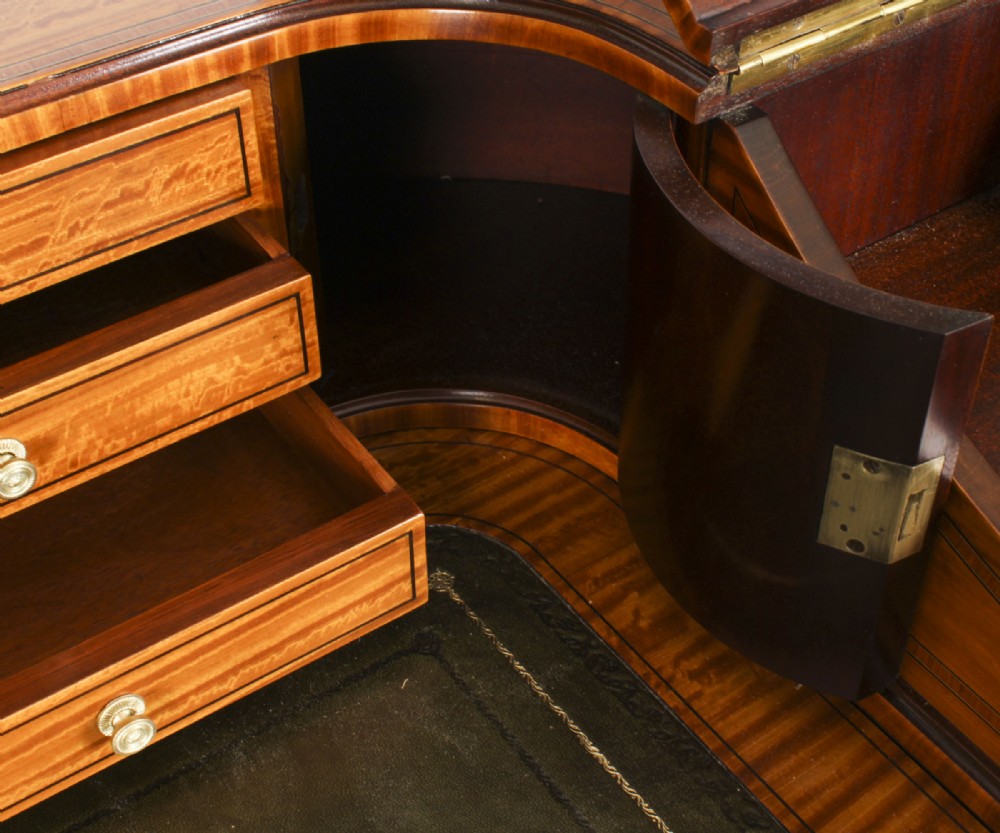
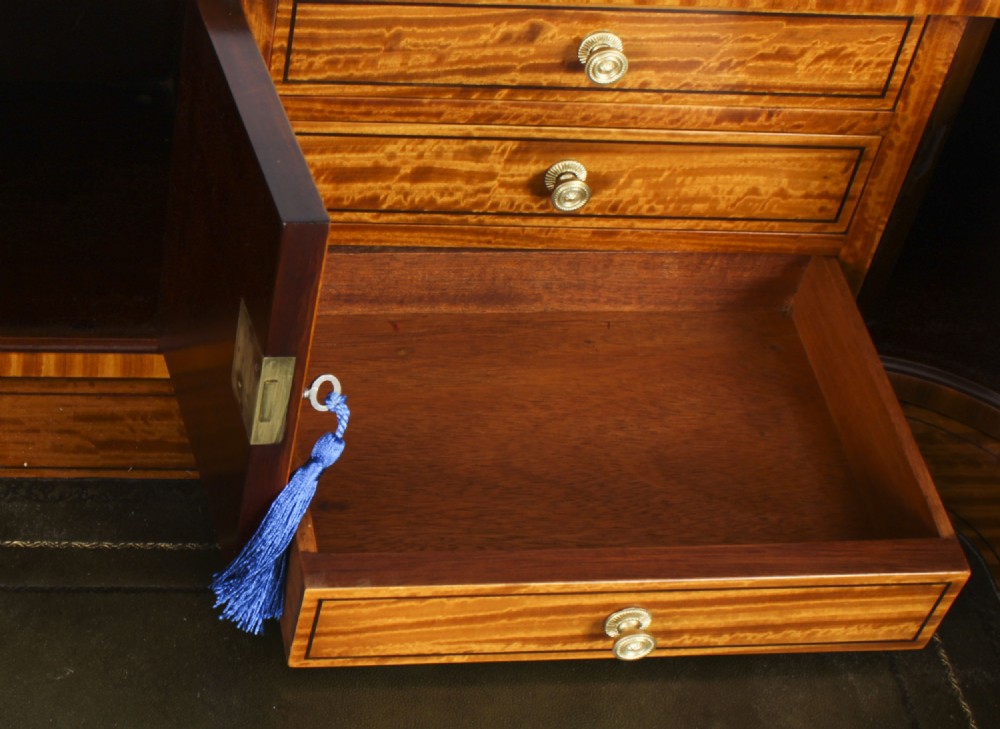
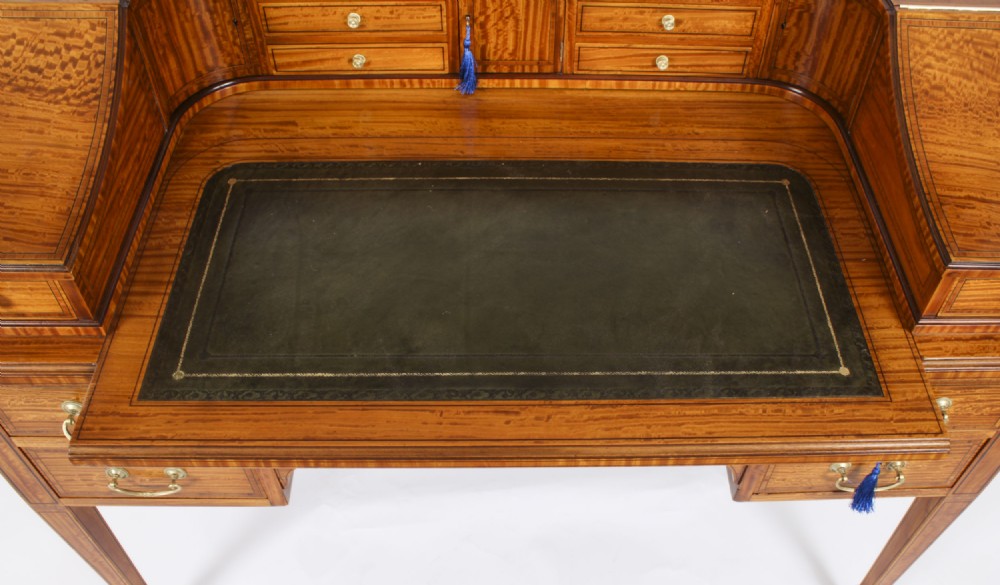
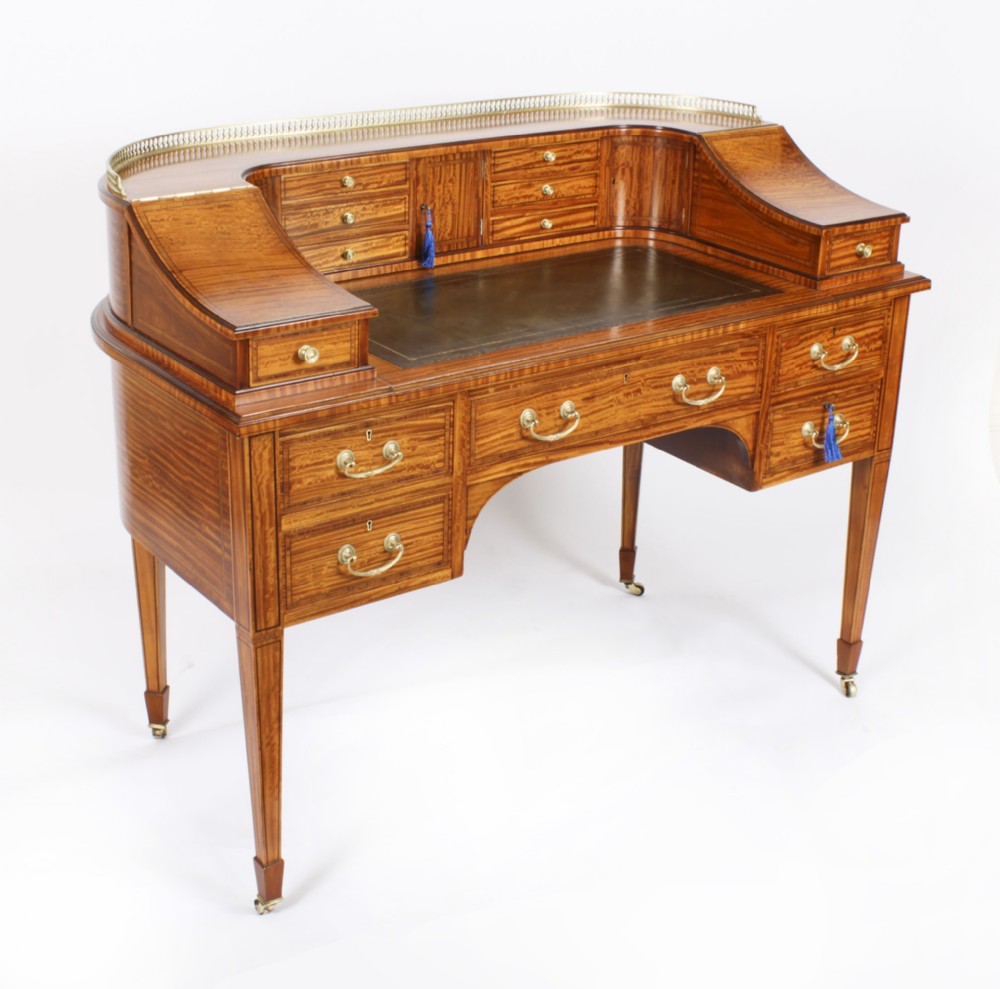
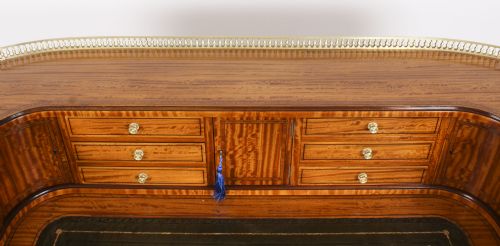
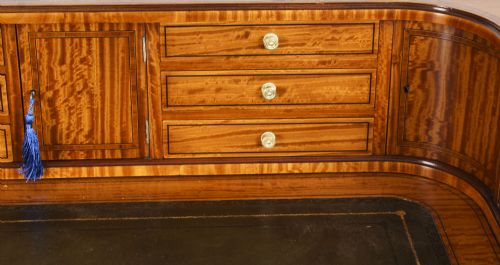
The curved superstructure with a brass baluster gallery rail, having a central enclosed cupboard, flanked to either side by three small drawers, a further enclosed cupboard to each side and a small drawer with curved hinged flap, having a pull out gold tooled black leather inset writing surface. This provides ample storage for all of your personal and business papers.
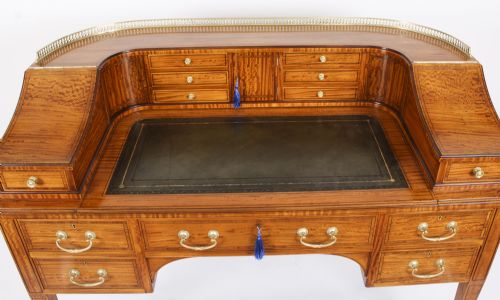
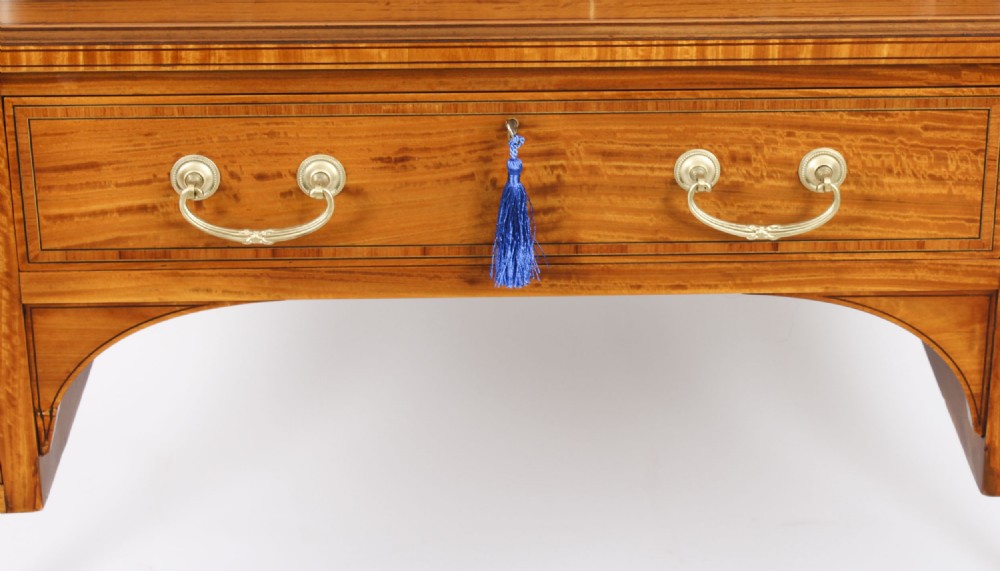
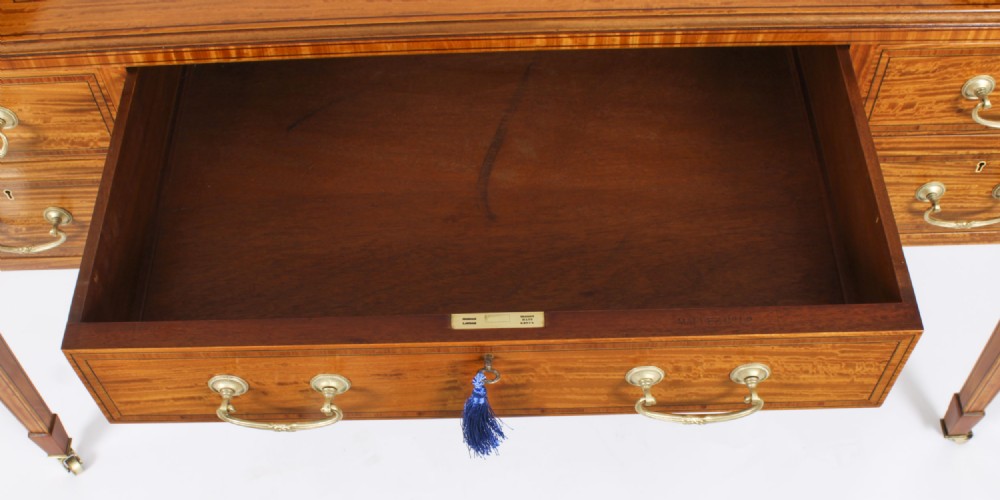
It has a capacious central frieze drawer flanked by two short drawers to either side. It is raised on square tapering legs that terminate in spade feet with brass castors.
It is fitted with the original brass locks, keys and brass drop handles.
Condition:
In excellent condition having been beautifully cleaned, French polished and waxed in our workshops, please see photos for confirmation.
Dimensions in cm:
Height 96 x Width 123 x Depth 64
Dimensions in inches:
Height 3 foot, 2 inches x Width 4 foot x Depth 2 feet, 1 inch
Carlton House Desk
is a specific antique desk form within the more general bureau à gradin form. This specific form is supposed to have been designed in 1790s for the Prince of Wales (who later became George IV) by George Hepplewhite. It is named after Carlton House, which was at the time the London residence of the Prince of Wales. This kind of desk is sometimes also known as a Carlton House writing table.
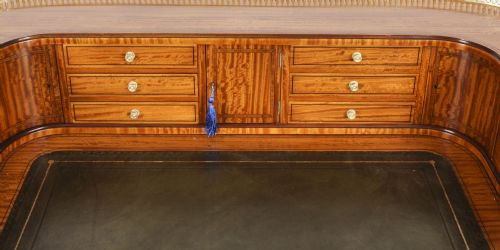
The desk is like a normal writing table but the small drawers above the surface form a "U" shape around the user instead of being merely set up in front of him as is usual in a typical bureau a gradin. Unlike other types of bureau a gradin the Carlton House desk usually offers no pigeonholes. There are usually small slopes over the two desktop drawers at the left and right ends of the "U" shape.
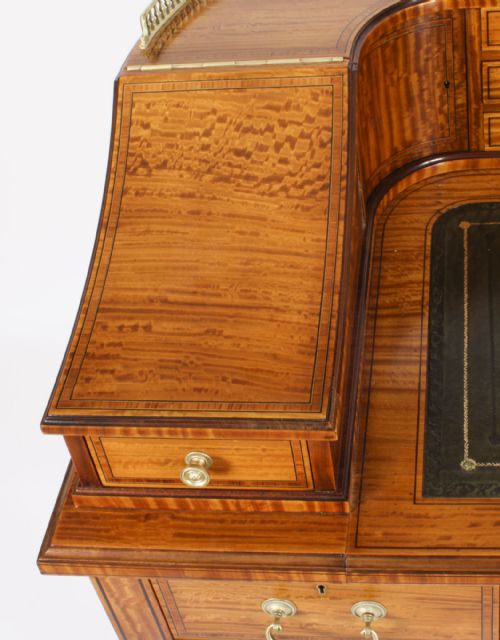
Drawings of this type of desk were presented by Hepplewhite in his famous design book the Cabinet Maker and Upholsterers Guide and by Thomas Sheraton in his own famous book of designs, The Cabinet Maker and Upholsterer's Drawing Book, thus ensuring its popularity.
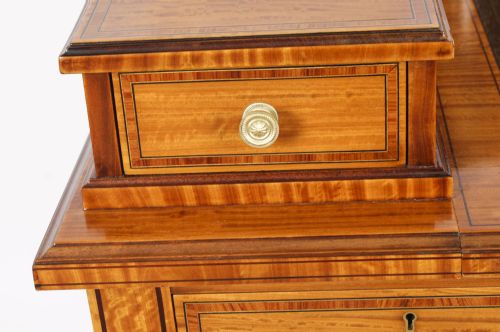
Satinwood
is a hard and durable wood with a satinlike sheen, much used in cabinetmaking, especially in marquetry. It comes from two tropical trees of the family Rutaceae (rue family). East Indian or Ceylon satinwood is the yellowish or dark-brown heartwood of Chloroxylon swietenia.
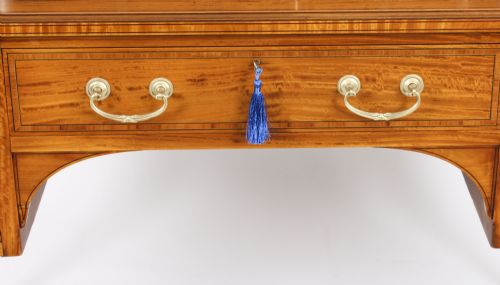
The lustrous, fine-grained, usually figured wood is used for furniture, cabinetwork, veneers, and backs of brushes. West Indian satinwood, sometimes called yellow wood, is considered superior. It is the golden yellow, lustrous, even-grained wood found in the Florida Keys and the West Indies.
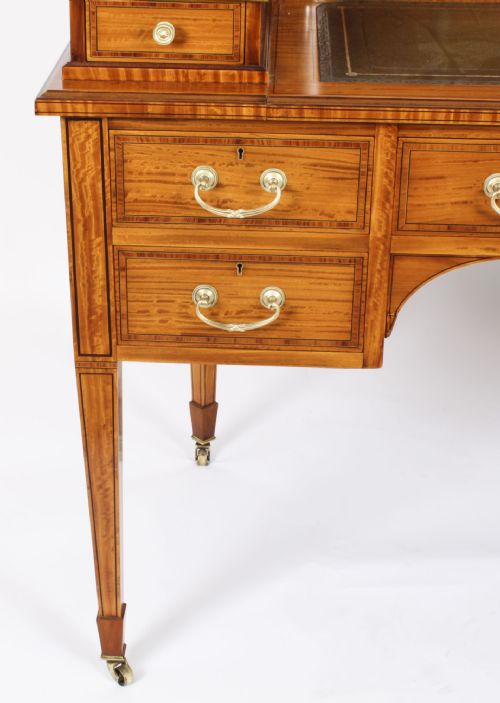
It has long been valued for furniture. It is also used for musical instruments, veneers, and other purposes. Satinwood is classified in the division Magnoliophyta, class Magnoliopsida, order Sapindales, family Rutaceae.
Our reference: A3566
Regent Antiques has dated this piece to the 1880s.
We specialise in english and continental furniture, silver, porcelain and decorative items.
You can view the stock and full dealer information on the Regent Antiques Profile Page
Regent Antiques is a registered member of LAPADA CINOA
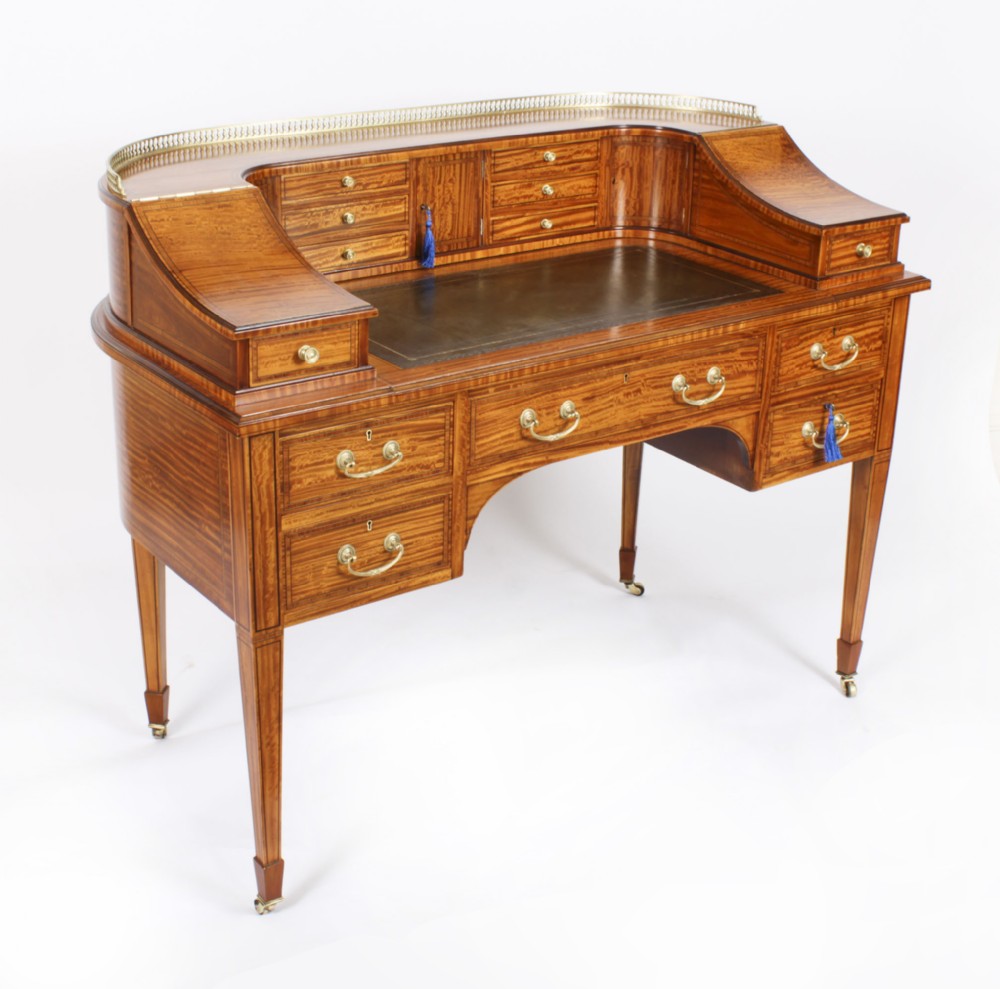
Antique Victorian Satinwood Carlton House Writing Desk 19th C