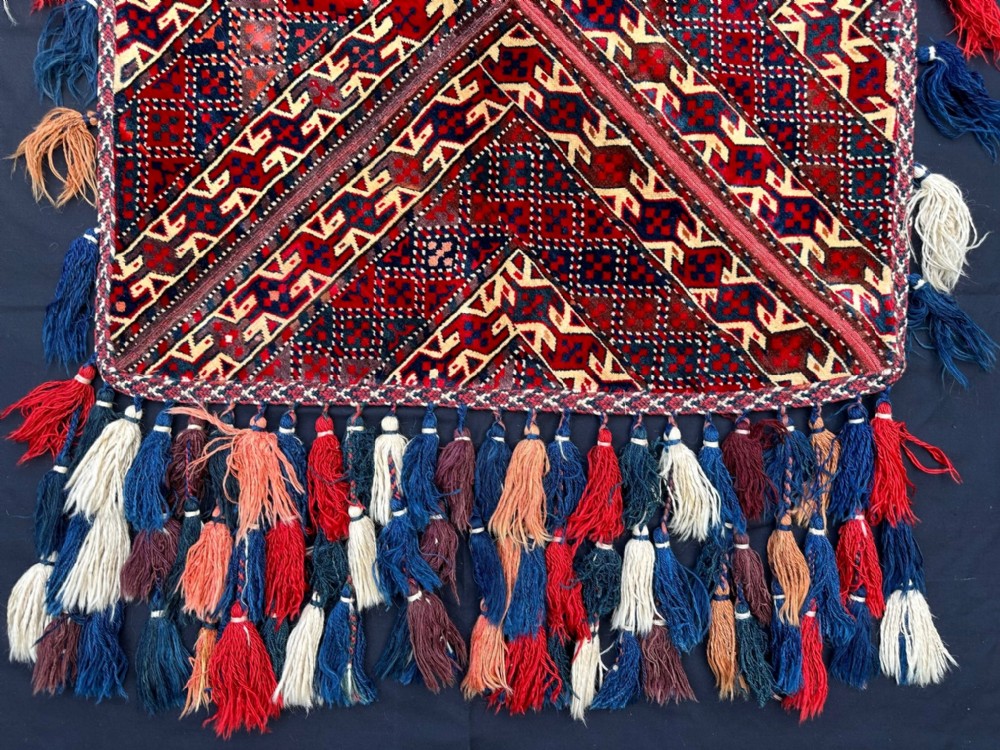
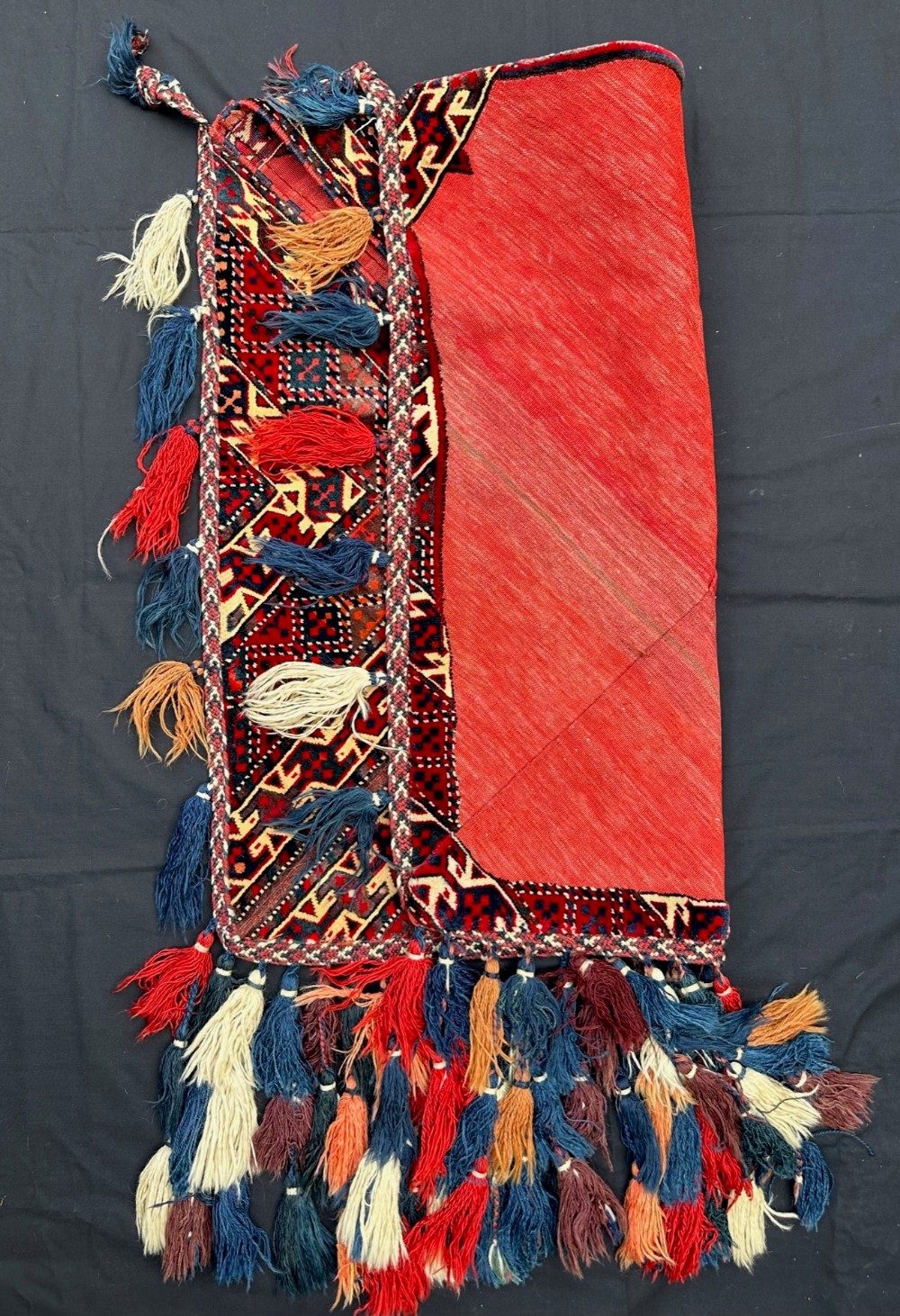
Brian MacDonald Antique Rugs & Carpets has dated this piece to the 1880s.
The bukcha is shaped like an envelope and was initially made to contain a large flat loaf of bread, symbolically important at the wedding ceremony.
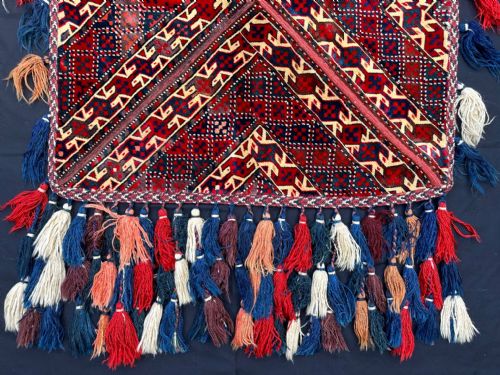
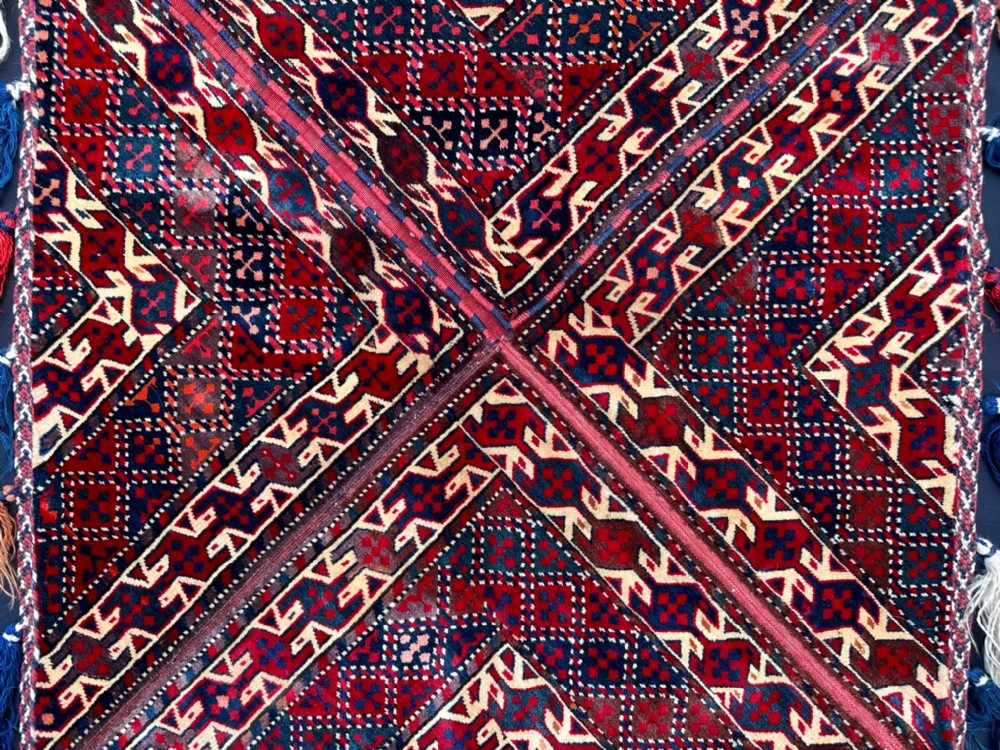
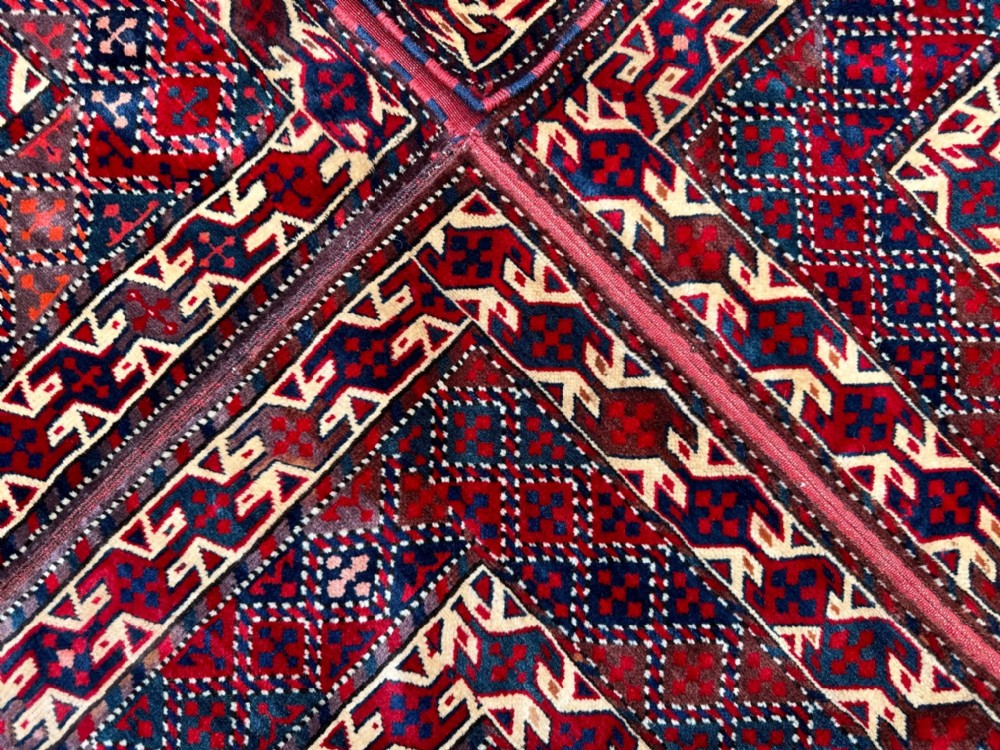
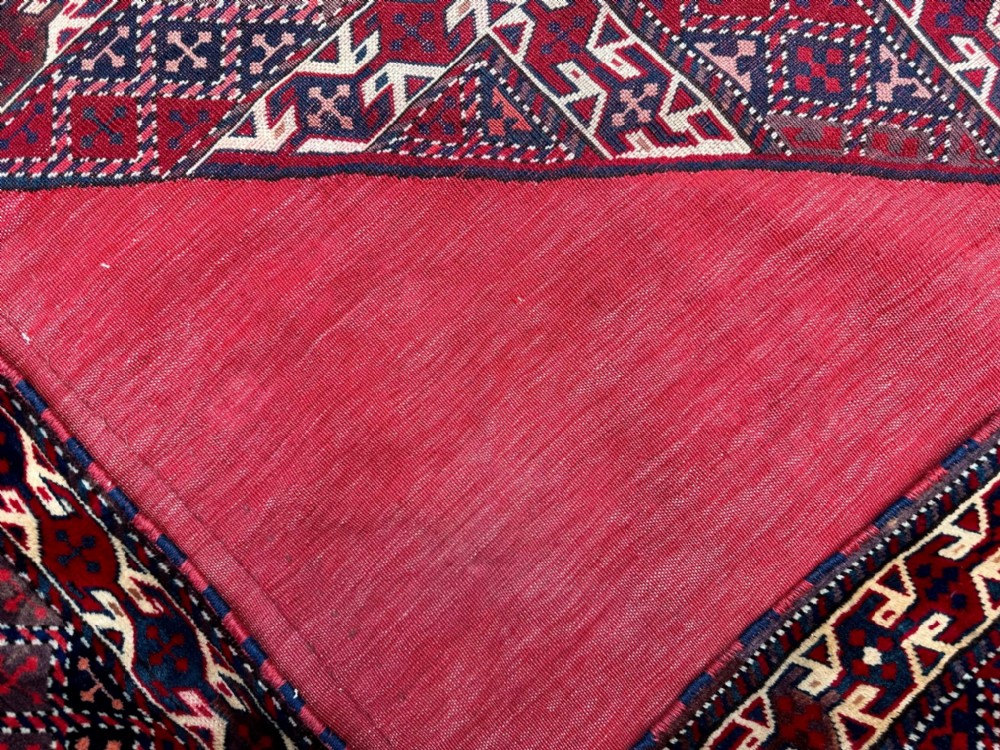
Afterwards, the bukcha was used by the bride for containing her most treasured small possessions including jewellery. The bukcha is made in a specific way: four triangles are knotted to the sides of a rectangular flat-weave kilim and, when folded inwards, they form an envelope shape. Three flaps are sewn together with the upper flap being left loose to act as the opener.
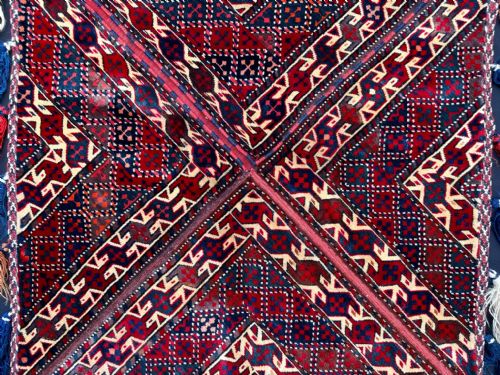
Considered to rank as one of the most highly regarded weavings in any Turkmen collection, bukchas are now extremely rare. This example, is completely preserved with its braided surrounding band containing tassels for good luck.
See a similar example on page 49 of my third edition 'Tribal Rugs - Treasures of the Black Tent'.
Size: 1.10 x 0.81m (3' 7" x 2' 8") incl. tassels; 81 x 81cm (2' 8" x 2' 8") without tassels.
Brian MacDonald Antique Rugs & Carpets has dated this piece to the 1880s.
Dealing in antique and old tribal rugs, dowry weavings and decorative carpets from the near east and central asia since 1979.
You can view the stock and full dealer information on the Brian MacDonald Antique Rugs & Carpets Profile Page
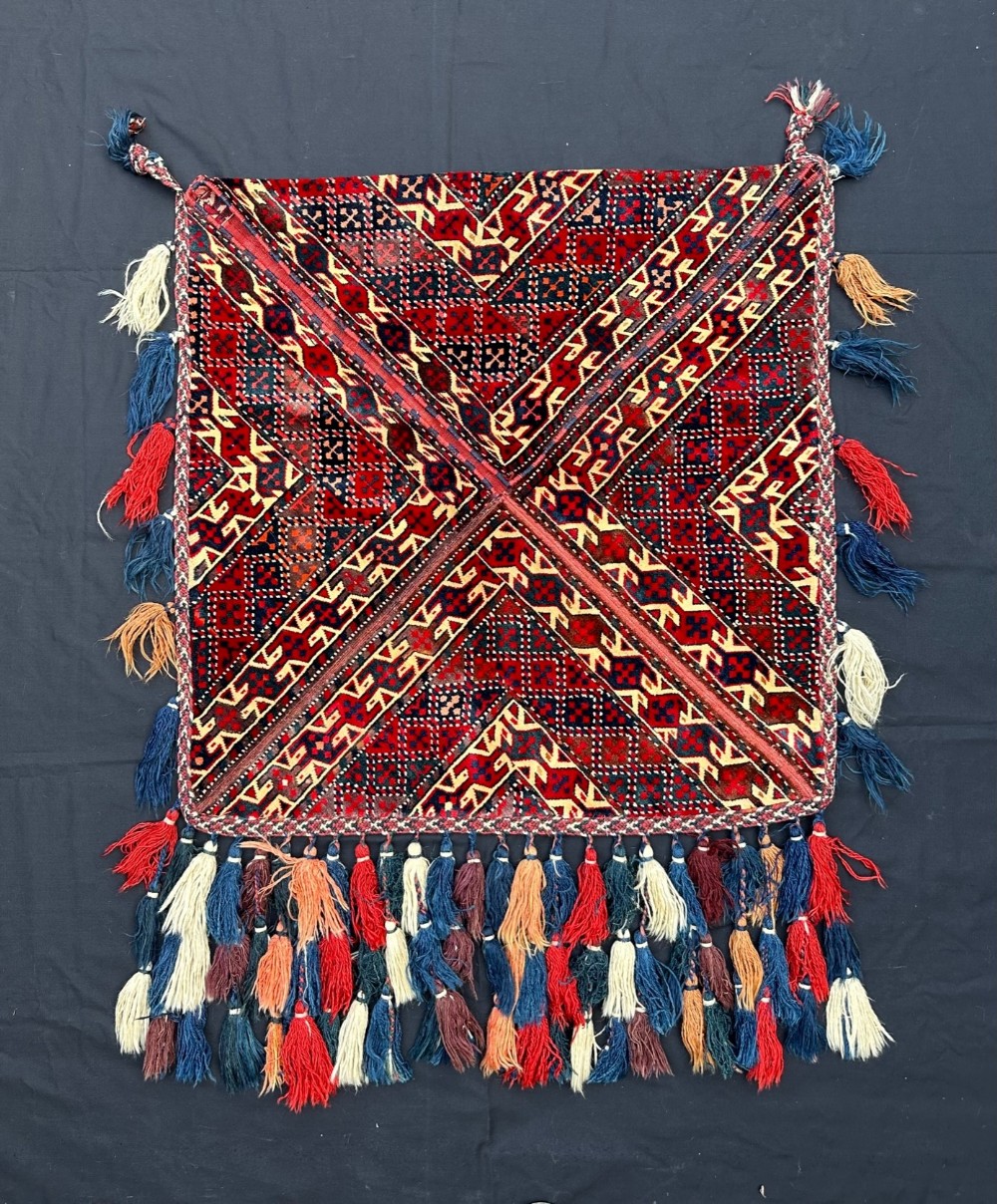
Antique Turkmen 'Bukcha', Yomut Tribe, Trans-Caspian Steppes, Turkmenistan, Central Asia.