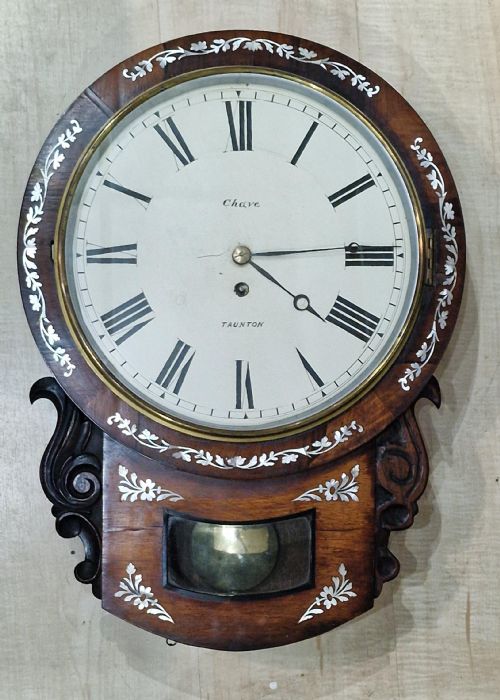
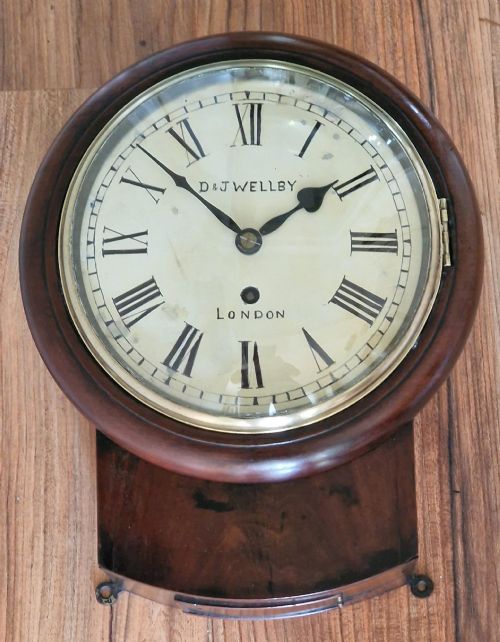
Heydays Antiques has dated this Drop Dial Fusee Clock to the 19th Century.

The back box is made from Oak with a long trunk and shaped base.
Tavern Clocks were First Used in in Pubs and other Retail Premises to Attract Passing People in During the Period From 1797 When William Pitt the Younger imposed heavy Taxes on Timekeepers. In response, it is said that Tavern Keepers Commissioned Large Wall Clocks and People would pop in to Check the Time. They are often known as "Act of Parliament Clocks".

Dial 11.75in
Height 43.5in or 110cm
Carved Dial Surround 16.5in or 42cm
Depth 7in or 17.75cm
The Link Chain 8 Day Fusee Mechanism has been Checked, Serviced and Tested to be in Good antique Working Order. Keeps Good Time. Fusee Mechanisms were used in clocks as far back as 1525 and were probably copied from example of Crossbow Windlass which goes back to before 1405. On the Crossbow, the idea was to make the Winding Easier. On Clocks, it is employed to even out the strength of the spring during its various tensions of wind. Thus keeping more Accurate Time Between Windings (usually 8 Days).
Please contact Robert via Messaging or on 07899 058752 to Discuss. Viewing/Collection Welcome by Appointment. Please Supply Your Postcode if You Require Shipping Options.
Heydays Antiques has dated this Drop Dial Fusee Clock to the 19th Century.
Specialising in personal attention for 17/18/19th c traditional longcase clocks & early 20th c triple weight quarter chiming musical clocks
You can view the stock and full dealer information on the Heydays Antiques Profile Page

Tavern Drop Dial Fusee Timepiece Clock 19th Century Oak & Mahogany