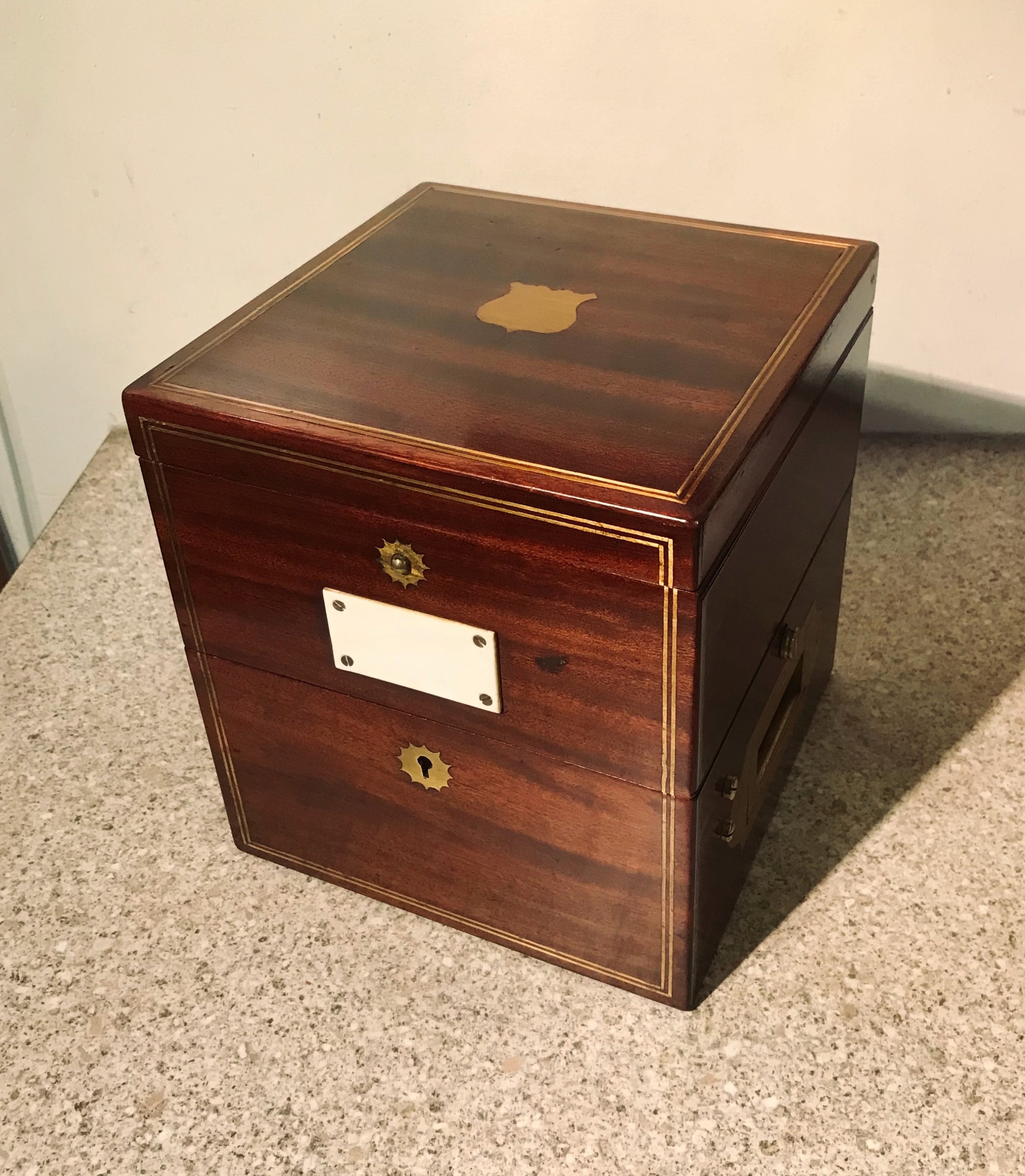
Quiet Street Antiques of Bath has dated this piece to the 1870s.
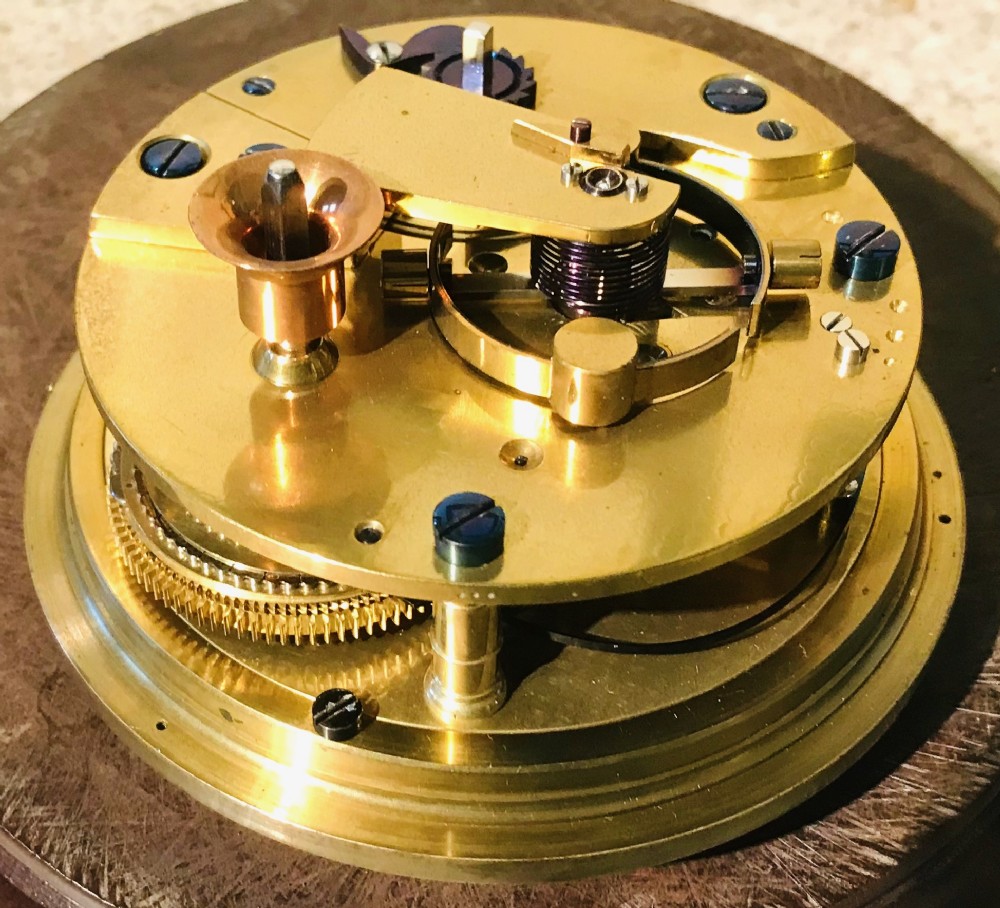
The signed and numbered movement is of traditional 56-hour duration, with chain-driven fusee incorporating maintaining power; Earnshaw-type spring detente escapement with bi-metallic balance and a blued steel helical hairspring with diamond endstone.
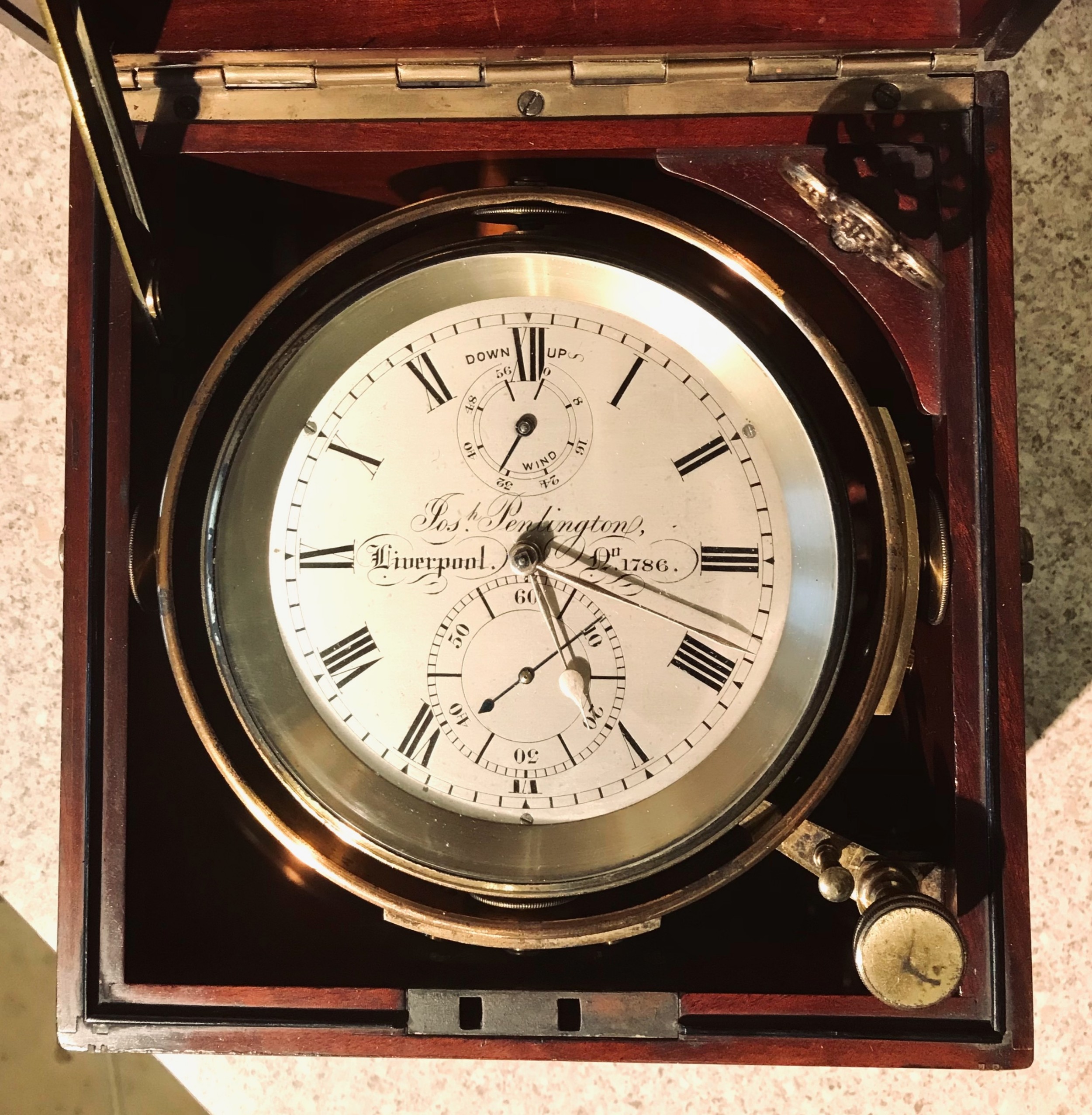
The dial is finely engraved and silvered with an “Up-and-Down” subsidiary dial below “XII”; subsidiary seconds dial and original gold hands. Engraved signature: Joseph Penlington, Liverpool and numbered 1786. (Joseph Penlington worked at St George’s Crescent North, Liverpool from 1848-1903.) The case measures approximately 7.5ins to all sides. circa 1860-1880.
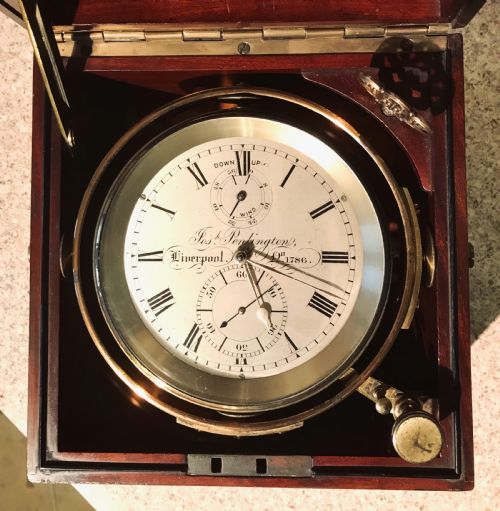
A marine chronometer is a precision timepiece that is carried on a ship and used to determine a ship’s position by celestial navigation. It is used to discover longitude by comparing GMT with the time at the current location from observations of celestial bodies. When first invented in the 18th century, it was a major technical achievement, as accurate knowledge of the time over a long sea voyage was vital for effective navigation. The first true chronometer was the life work of one man, John Harrison, spanning 31 years of persistent experiments and testing that revolutionized naval navigation.
Quiet Street Antiques of Bath has dated this piece to the 1870s.
Fine antiques at sensible prices
You can view the stock and full dealer information on the Quiet Street Antiques of Bath Profile Page

Fine Victorian 56-Hour Marine Chronometer